Navigating the gut-health aisle often lands shoppers staring at bottles packed with dozens of bacterial strains, wondering which one actually matters for their daily digestion. While broad-spectrum blends serve a purpose, people chasing targeted relief—bloating after meals, occasional irregularity, or immune support—need a strain-specific approach rather than a random microbial lottery.
I’m Emma — the founder and writer behind Baby Bangs. My analysis focuses strictly on scientific dosing, viability guarantees, and third-party testing practices to separate genuinely effective formulations from marketing-heavy capsules.
That is why this guide isolates the pure, strain-specific formulas worth your attention. Finding the right lactobacillus plantarum supplement means zeroing in on CFU count, delivery technology, and complementary prebiotic content that actually feeds this resilient rod-shaped bacterium once it reaches your gut.
How To Choose The Best Lactobacillus Plantarum Supplement
Picking a probiotic built around Lactobacillus plantarum means looking past generic CFU numbers and checking for strain viability, delivery mechanism, and supporting ingredients that guard this bacterium as it transits the upper GI tract. Here is what separates a shelf-stable, dose-consistent product from one that loses potency before the bottle is half-empty.
CFU Count and Realistic Dosing
CFU—colony-forming units—measures how many live bacteria enter each capsule, but bigger is not automatically better for L. plantarum. This particular strain is naturally hardy and acid-resistant compared to L. acidophilus, so doses between 10 and 60 billion CFU per serving typically suffice for maintenance and mild digestive complaints. Capsules advertising 100 billion-plus CFU often rely on multiple strains to inflate the total; a single-strain plantarum product hitting 20 billion is already considered a therapeutic dose for most adults.
Delivery Technology and Survivability
Stomach acid destroys unprotected probiotics. Look for labels that specify delayed-release capsules, acid-resistant beads, or spore-forming technology. Spore-based formulations use a dormant, heat-stable form of the bacterium that activates only in the small intestine, dramatically improving viability. Capsules that list “targeted release” or a protective enteric coating usually score higher on third-party acidity tests.
Complementary Prebiotics
Prebiotics are nondigestible fibers that feed L. plantarum after colonization. Organic inulin from chicory root is the most common additive; fructooligosaccharides and acacia gum also appear. A quality supplement uses prebiotics at a ratio that fuels the strain without triggering gas or bloating in sensitive users. If you react poorly to inulin, a plantarum product without added prebiotics is often a cleaner choice.
Quick Comparison
On smaller screens, swipe sideways to see the full table.
| Model | Category | Best For | Key Spec | Amazon |
|---|---|---|---|---|
| NatureWise Probiotics 60B | Mid-Range | Daily multi-strain immune support | 60B CFU, 17 strains + organic prebiotic | Amazon |
| Probiotic 65 Billion | Mid-Range | Targeted release, high CFU blends | 65B CFU, targeted-release capsule | Amazon |
| CLINICAL DAILY Smart Defense | Mid-Range | Spore-based, strain-specific stability | Spore-based; includes L. plantarum | Amazon |
| Physician’s CHOICE Probiotics 60B | Premium | Digestive overhaul with organic prebiotics | 60B CFU, 10 strains, organic prebiotic | Amazon |
| Supersmart L. Plantarum PostBiotic | Premium | Postbiotic purity, heat-treated strain | 20B CFU, heat-treated postbiotic caps | Amazon |
In‑Depth Reviews
1. Physician’s CHOICE Probiotics 60 Billion CFU

Physician’s CHOICE positions itself at the sweet spot of the category—delivering 60 billion CFU from 10 clinically studied strains, including a robust dose of Lactobacillus plantarum, paired with organic prebiotics from Jerusalem artichoke and chicory root. The organic prebiotic inclusion feeds the entire bacterial colony without relying on synthetic fructooligosaccharides, which can cause digestive upset in some users.
The delayed-release capsule design is a genuine differentiator for this price tier. By shielding the bacteria from stomach acid and releasing them in the lower intestine, this product avoids the viability cliff that hits unprotected powders and standard capsules. Users tracking bloating and occasional constipation typically report measurable improvement within two weeks of consistent use.
Third-party testing documentation is available on request, though not printed on the label. The one-month supply at this potency level is appropriate for a daily maintenance user who wants multi-strain coverage without diving into the premium postbiotic segment.
Why it’s great
- Organic prebiotics feed strains without synthetic filler
- Delayed-release capsule design maximizes bacterial survival past the stomach
- Established brand with easily accessible customer support for testing inquiries
Good to know
- Only one month supply per bottle at maintenance dosing
- Third-party testing is not printed directly on the label
2. Supersmart Lactobacillus Plantarum PostBiotic 20 Billion CFU
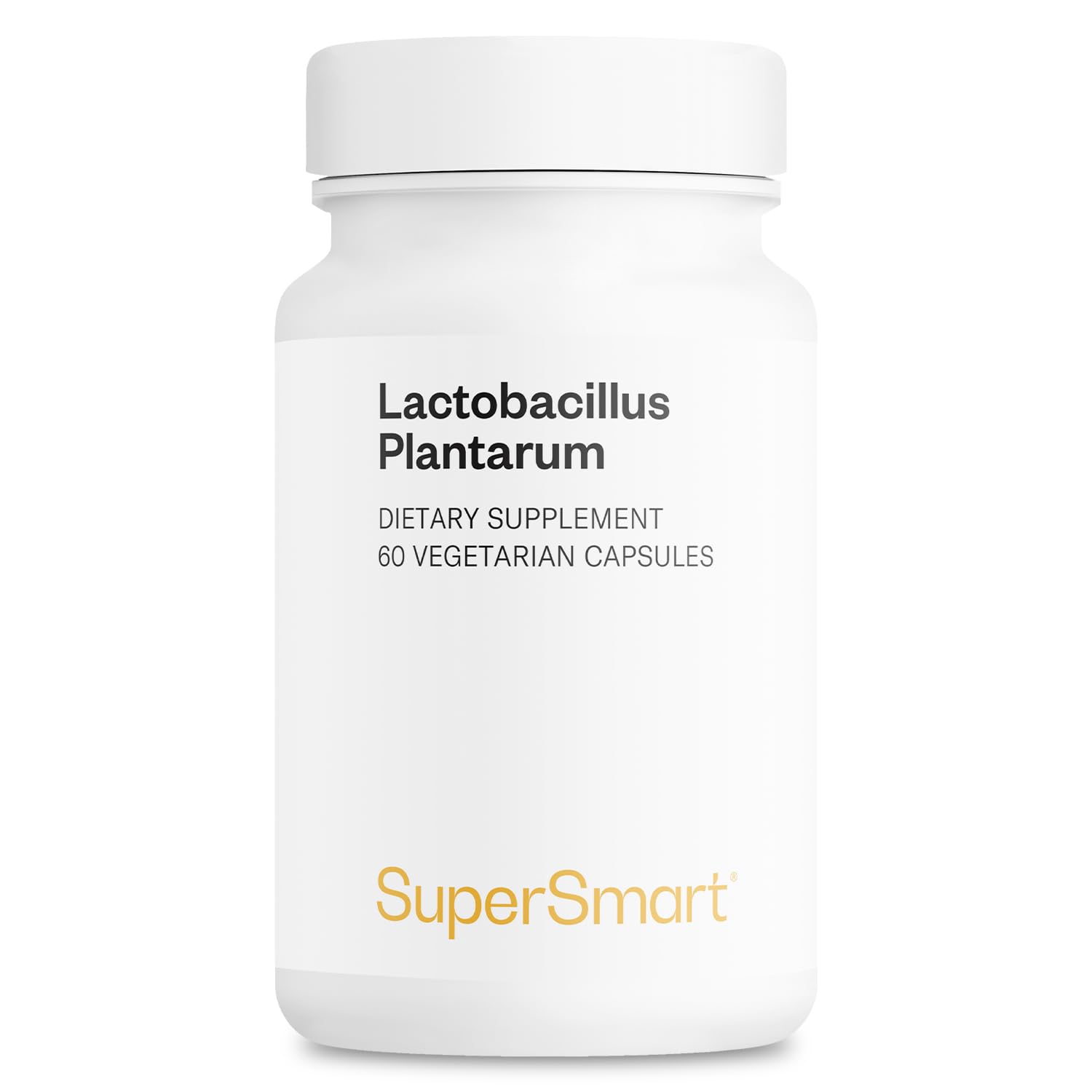
Supersmart diverges from the probiotic script entirely by offering a heat-treated postbiotic form of Lactobacillus plantarum (Immuno-LP20 strain). Unlike live probiotics, these cells have been pasteurized to permanently lock in their metabolic structure while eliminating viability requirements. The trade-off is clear: you lose colonization potential but gain absolute stability on the shelf, no refrigeration needed, and no loss of potency over time.
At 20 billion CFU per day (two vegetarian capsules), the dose is modest compared to multi-strain blends, but that is by design—postbiotics interact with the immune epithelium of the gut via surface molecules rather than live replication. This makes the product an interesting choice for immunocompromised individuals who are typically cautioned against live probiotics, or for anyone who wants the immune-modulating benefits of L. plantarum without transient colonization.
The non-GMO and gluten-free certification is printed clearly, and the capsule shell is cellulose-based rather than gelatin. For purists seeking a strain-specific, gut-immune axis product that skips the prebiotic bulk and live-bacteria complexity, Supersmart hits a clean, narrow target.
Why it’s great
- Heat-stabilized postbiotic eliminates viability loss and refrigeration
- Safe for immunocompromised users who cannot take live probiotics
- Non-GMO, gluten-free, and vegetarian-friendly across the board
Good to know
- No live colonization occurs, so gut-repopulation benefits are absent
- Dose is considered moderate compared to 60B+ multi-strain competitors
3. Probiotic 65 Billion with Prebiotic
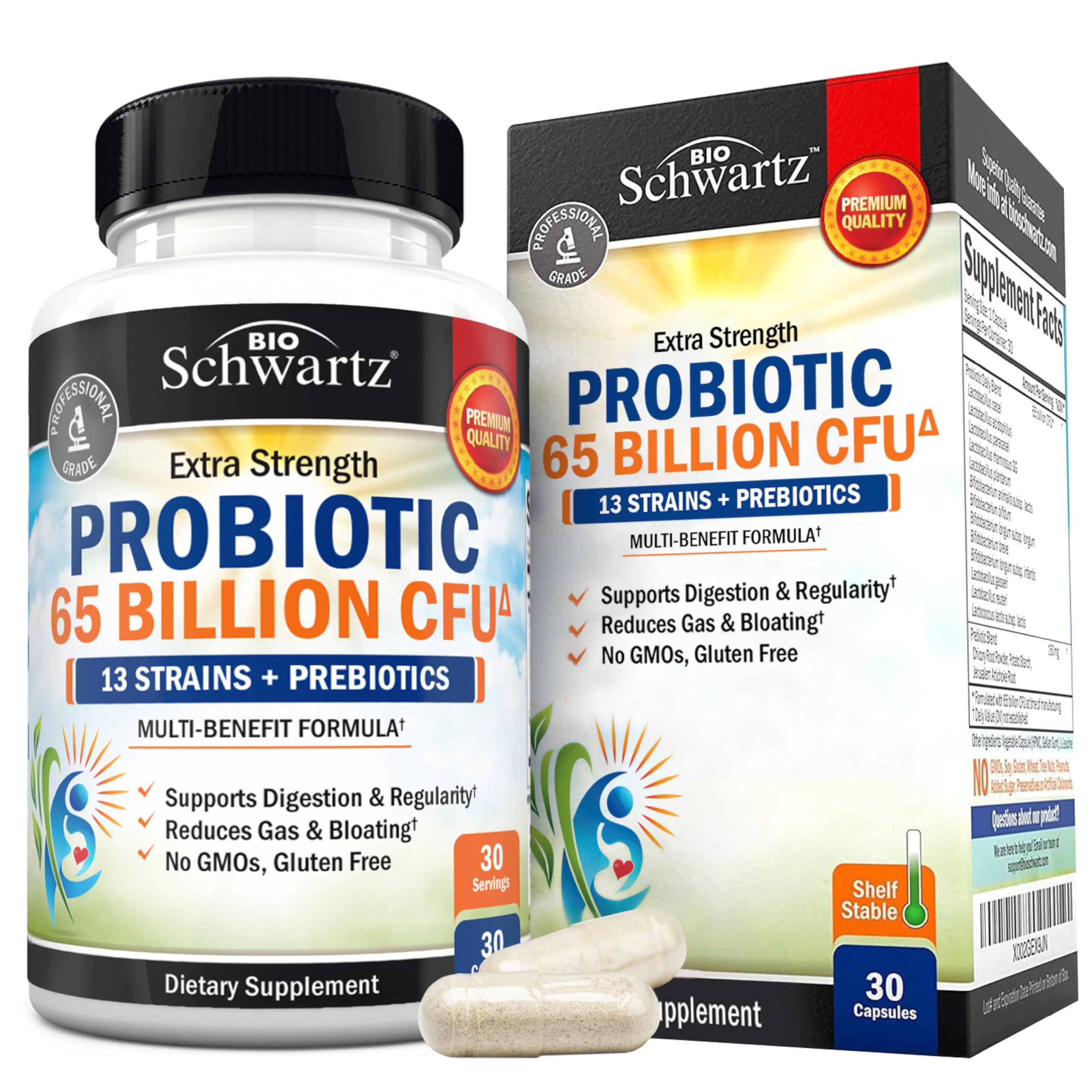
Pushing the CFU ceiling to 65 billion per capsule, this formula from a private-label manufacturer leans on targeted-release technology to drop that dense bacterial payload past the gastric acid barrier. The blend includes Lactobacillus plantarum alongside Lactobacillus acidophilus and Bifidobacterium lactis, giving it a broad-spectrum profile that still prioritizes the plantarum strain for digestive regularity.
The targeted-release capsule is the critical feature here—without it, 65 billion CFU would be largely wasted as stomach acid denatures unprotected bacteria. Shelf-stable and dairy-free, the product is designed for travelers or anyone who cannot store probiotics in the fridge. The inclusion of inulin-based prebiotic fiber adds fuel for colonization, though users with FODMAP sensitivity should test tolerability before committing.
Customer feedback consistently highlights reduced bloating within the first week, which aligns with the high CFU count delivering a large initial dose to the lower intestine. The bottle runs 30 capsules, matching a standard one-month cycle, and the price point lands firmly in the accessible range for everyday shoppers.
Why it’s great
- Very high CFU count compensates for unavoidable transit losses
- Targeted-release technology is documented and functional in stomach-acid simulation
- No refrigeration required; shelf-stable for travel
Good to know
- Broad multi-strain blend dilutes single-strain plantarum focus
- Inulin prebiotic may cause gas in FODMAP-sensitive individuals
4. NatureWise Probiotics 60 Billion CFU

NatureWise packs 60 billion CFU from 17 different strains, including Lactobacillus plantarum, with an organic prebiotic blend sourced from chicory root. The strain diversity is substantial—covering Lactobacillus, Bifidobacterium, and Streptococcus families—which appeals to users seeking broad gut-ecosystem support rather than a narrow, strain-specific intervention.
The organic prebiotic component is a genuine value-add at this price tier, providing soluble fiber that feeds the entire bacterial community. However, the capsule shell is a standard vegetarian HPMC capsule without a targeted-release outer coating. The manufacturer relies on the high CFU count to offset losses in the stomach, which is a common but less precise strategy than active delayed-release technology.
Vegetarian, gluten-free, and non-GMO certifications are clearly listed. For someone who wants a low-cost entry point into multi-strain probiotics with an organic prebiotic kick, NatureWise delivers the basics without overcomplicating the formula.
Why it’s great
- Organic prebiotic fiber feeds all 17 strains without synthetic filler
- High CFU count provides a generous bacterial load per serving
- Certified vegetarian, gluten-free, and non-GMO
Good to know
- Standard capsule lacks targeted-release acid protection
- 17-strain blend is broad, diluting the specific plantarum concentration
5. CLINICAL DAILY Smart Defense Mega Spore Probiotic

Smart Defense takes a fundamentally different delivery approach—spore-based probiotics using Bacillus subtilis as the dominant organism, with Lactobacillus plantarum included as a secondary strain. Spore-forming bacteria naturally withstand heat, stomach acid, and shelf-storage without requiring delayed-release encapsulation, making this formula exceptionally stable.
Because spore-based probiotics do not colonize the gut permanently—they germinate, perform their function, and pass through—the product is ideal for short-term microbiome modulation rather than long-term repopulation. The inclusion of L. plantarum in a spore-matrix is relatively rare; most spore products skip acid-sensitive lactobacilli entirely, so this blend offers a hybrid approach that combines spore resilience with lactobacillaceae diversity.
Vegan capsules and a clean label without prebiotic additives make this a solid option for anyone with FODMAP concerns or who reacts poorly to inulin. The dose is 60 capsules per bottle, giving a two-month supply at one capsule daily.
Why it’s great
- Spore technology guarantees nearly 100% survival through stomach acid
- No prebiotic fillers, ideal for FODMAP-sensitive or inulin-reactive users
- Two-month supply per bottle compared to standard 30-day multi-strain products
Good to know
- Lactobacillus plantarum is not the primary strain; Bacillus subtilis dominates
- Spore probiotics do not colonize, so continuous daily dosing is required
FAQ
Should I choose a live probiotic over a postbiotic for Lactobacillus plantarum?
How does the CFU count of a plantarum-only supplement compare to a multi-strain blend?
Is refrigeration necessary for Lactobacillus plantarum supplements?
Final Thoughts: The Verdict
For most users, the lactobacillus plantarum supplement winner is the Physician’s CHOICE 60 Billion because it balances a high, strain-diverse CFU count with organic prebiotics and a functional delayed-release capsule at an accessible tier. If you want pure strain-specific dosing without live bacteria, grab the Supersmart Lactobacillus Plantarum PostBiotic. And for exceptional shelf stability plus a spore-based matrix that bypasses stomach acid completely, nothing beats the CLINICAL DAILY Smart Defense Mega Spore.