A cutting board should be the most boring tool in your kitchen — a silent, stable work surface that never steals your focus. But cheap boards warp after a single wash, dull your knife edge in weeks, and harbor bacteria in deep grooves you can’t scrub clean. The right board disappears into your workflow; the wrong one fights you every meal.
I’m Emma — the founder and writer behind Baby Bangs. I’ve spent months analyzing cutting board materials, glue-free surface technologies, and real-world durability reports from home cooks who test their gear hard every day.
Whether you need an easy-clean plastic set for meal prep or a splinter-free bamboo slab for your chef’s knife, the right kitchen cutting boards come down to material stability, knife-friendliness, and whether they actually stay flat after repeated use.
How To Choose The Best Kitchen Cutting Boards
The biggest mistake shoppers make is picking a board solely by price or look without checking three things: material hardness versus your knives, moisture resistance over time, and whether the surface stays flat after a dishwasher cycle. A board that warps in a month costs more than a board that lasts three years.
Material Matters More Than Brand
Bamboo is hard but gentle on edges if the board is thick enough. Plastic is dishwasher-safe but develops knife-scar crevices that trap bacteria. Titanium sounds durable but blunts knives fast because the surface has no give. The best middle ground for most home cooks is a medium-density bamboo board with a glue-free surface that won’t leach formaldehyde into your onions.
Size and Thickness Affect Stability
A board under 12 inches long forces you to crowd ingredients. Thin boards (under half an inch) warp and slide more. Look for boards around 0.6 inches thick with at least a 15-inch length if you prep more than a single avocado. Reversible boards with juice grooves add flexibility without extra storage space.
Non-Slip and Care Requirements
Silicone or rubber edges keep the board planted while you chop. If you run boards through the dishwasher, plastic is your only truly safe option — bamboo and wood must be hand-washed and dried immediately to avoid cracking. Titanium cleans easily but requires careful knife technique to avoid edge damage.
Quick Comparison
On smaller screens, swipe sideways to see the full table.
| Model | Category | Best For | Key Spec | Amazon |
|---|---|---|---|---|
| Greener Chef Luxury Bamboo Set | Premium Bamboo | Knife-safe prep without toxins | Glue-free surface, 0.6″ thick | Amazon |
| Keechee Bamboo Cutting Board | Mid-Range Bamboo | Lightweight reversible daily board | Juice groove, 15″ length | Amazon |
| Freshware Wood Cutting Boards | Mid-Range Wood | Value two-board set for versatility | Dishwasher safe, set of 2 | Amazon |
| KitchenAid Classic Nonslip 2-Piece | Mid-Range Plastic | Dishwasher-safe high-traffic use | Non-slip edges, perimeter trench | Amazon |
| Titanium Cutting Board Double Sided | Specialty Metal | Sanitary non-porous surface | Pure titanium, wheat straw PP | Amazon |
In‑Depth Reviews
1. Greener Chef Luxury Bamboo Cutting Board Set of 3
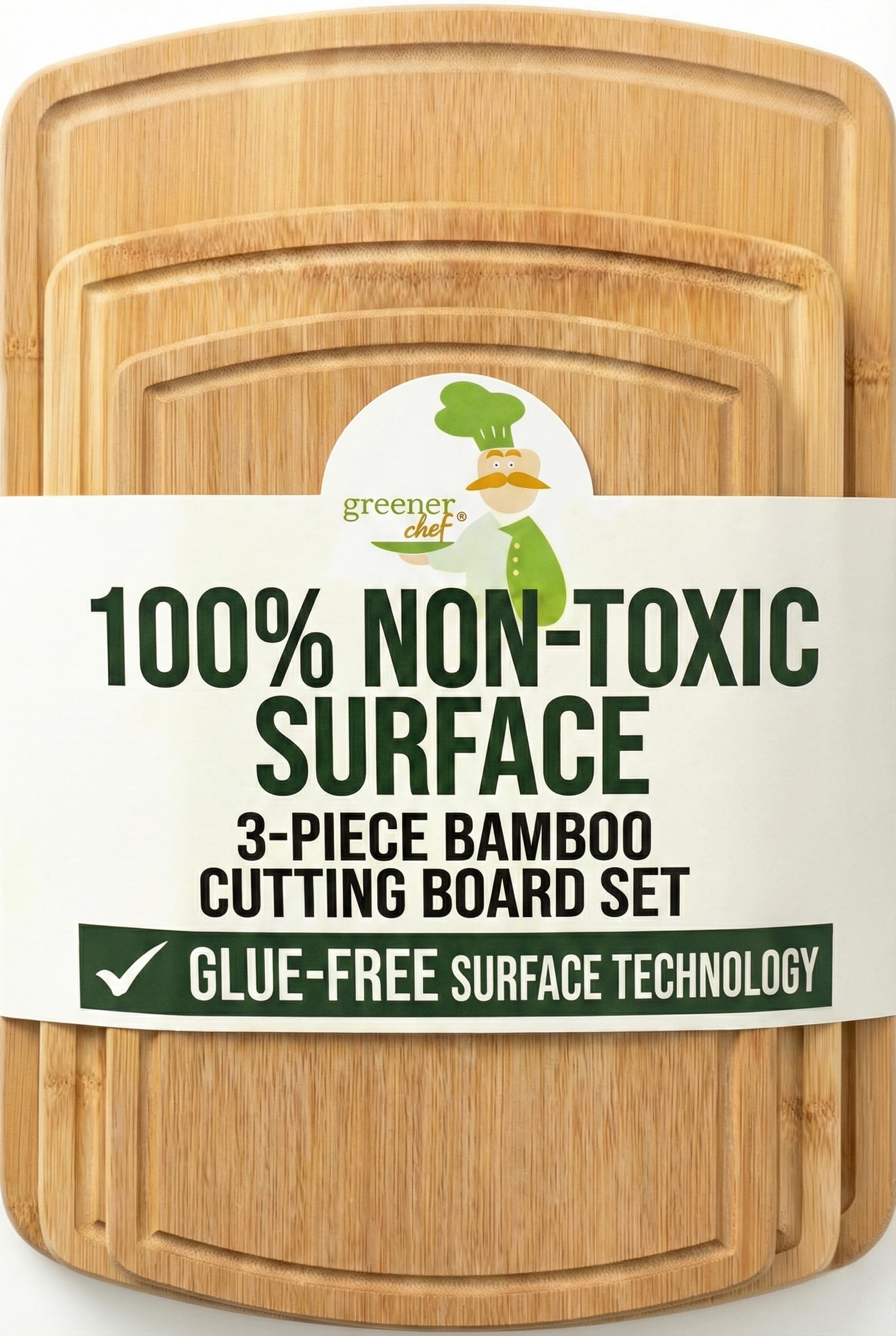
The Greener Chef set uses a patent-pending glue-free surface technology that removes formaldehyde and other adhesives from the cutting area — a genuine safety upgrade for anyone prepping raw poultry or fish. The three-board set offers spacious dimensions up to 18 by 12.5 inches, giving you room to break down a whole chicken without ingredients spilling over the edges.
At 0.6 inches thick, these boards strike a careful balance between lightweight handling and warp resistance. The rounded shape and juice groove catch runoff from slicing tomatoes or carving roasts. Because the surface contains no glue seams, there are no weak points where moisture can penetrate and cause delamination over time.
The trade-off is that bamboo needs hand-washing and oiling every few months to prevent drying and cracking. You cannot run these through a dishwasher. But with the lifetime replacement guarantee, a little care returns years of service — far better than throwing away a warped plastic board every season.
Why it’s great
- Glue-free construction eliminates formaldehyde exposure
- Three sizes cover everything from garlic to whole roasts
- Lifetime replacement guarantee reduces long-term waste
Good to know
- Hand-wash only — no dishwasher
- Requires periodic oiling to maintain surface
2. Keechee Dishwasher Safe Bamboo Cutting Board
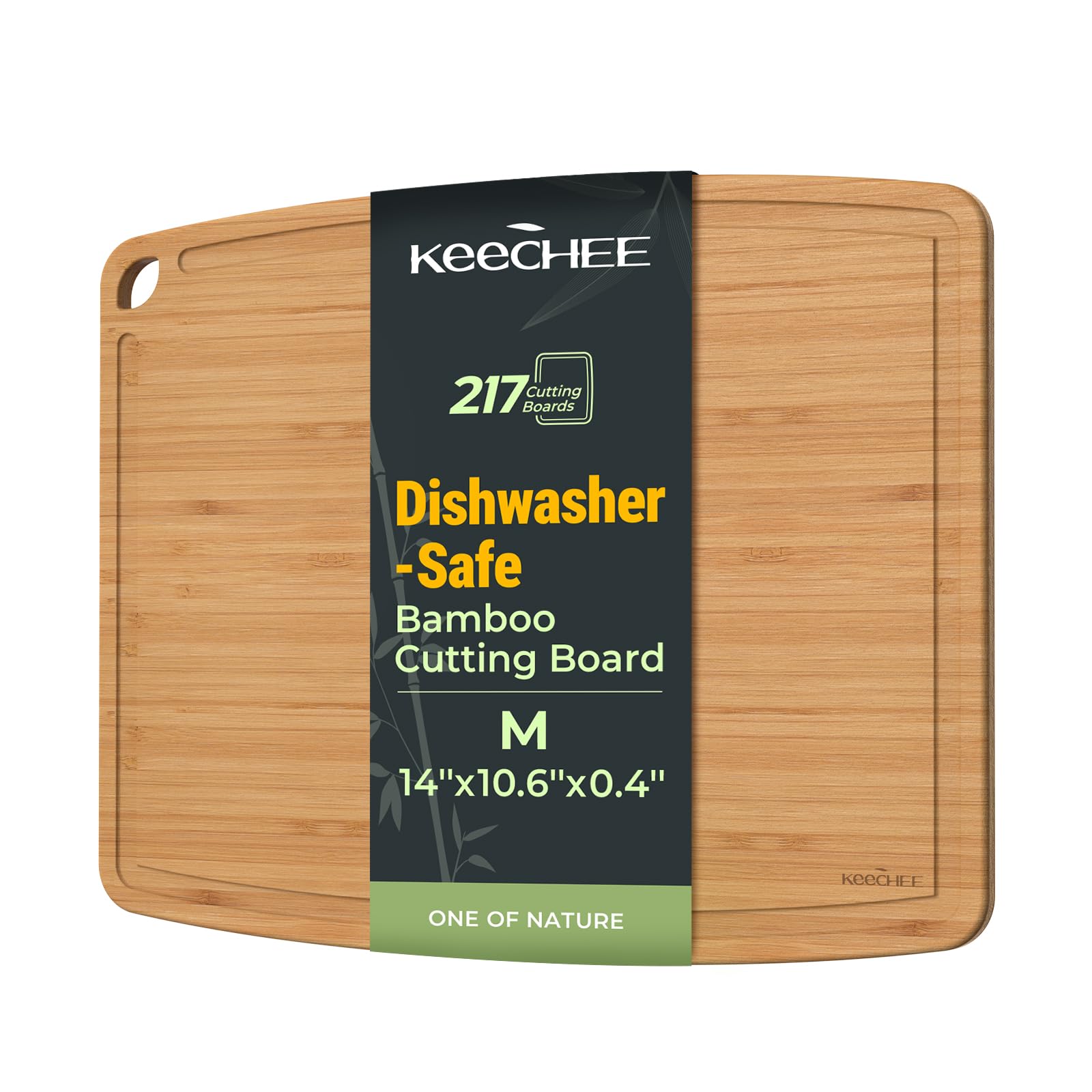
The Keechee board packs reversible design and a juice groove into a lightweight bamboo build that won’t weigh down your counter or your arms. Flip it over to keep raw meat juices separate from your vegetable prep without needing a second board — a practical space-saving trick for smaller kitchens.
Bamboo provides a solid cutting surface that resists knife scarring compared to softer woods, though it is slightly harder on blade edges than end-grain wood. The juice groove channels liquids away from the cutting area, which reduces mess when slicing watermelon or resting a roast right after searing.
While the board is marketed as dishwasher safe, repeated machine cycles can dry out bamboo and cause minor cracking over time. Occasional hand-washing and light oiling will extend its flat surface life considerably.
Why it’s great
- Reversible design separates raw and cooked foods easily
- Juice groove contains mess from juicy produce
- Lightweight bamboo is easy to lift and store
Good to know
- Dishwasher use may shorten lifespan
- Thinner profile may warp if soaked
3. Freshware Wood Cutting Boards Set of 2

The Freshware set delivers two solid wood boards — a medium 12 by 9 inches and a larger 15 by 11.25 inches — giving you dedicated surfaces for produce and proteins without doubling your board budget. The natural finish keeps added coatings minimal, which means less risk of peeling or flaking into your food.
These boards are labeled dishwasher safe, which adds convenience for quick sanitation after raw meat contact. The wood construction provides decent shock absorption for knife blades, though the surface will develop knife marks faster than bamboo or harder composites. That is normal for natural wood and does not affect performance.
Because the boards are slightly thinner than premium options, they can warp if exposed to high dishwasher heat regularly or left soaking in the sink. Hand-drying immediately after washing helps maintain the flat surface.
Why it’s great
- Two different sizes cover most prep tasks
- Dishwasher safe for easy cleanup
- Natural wood surface is gentle on knives
Good to know
- Thinner design may warp with repeated heat exposure
- Knife marks show quickly on the surface
4. KitchenAid Classic Nonslip 2-Piece Plastic Cutting Board Set
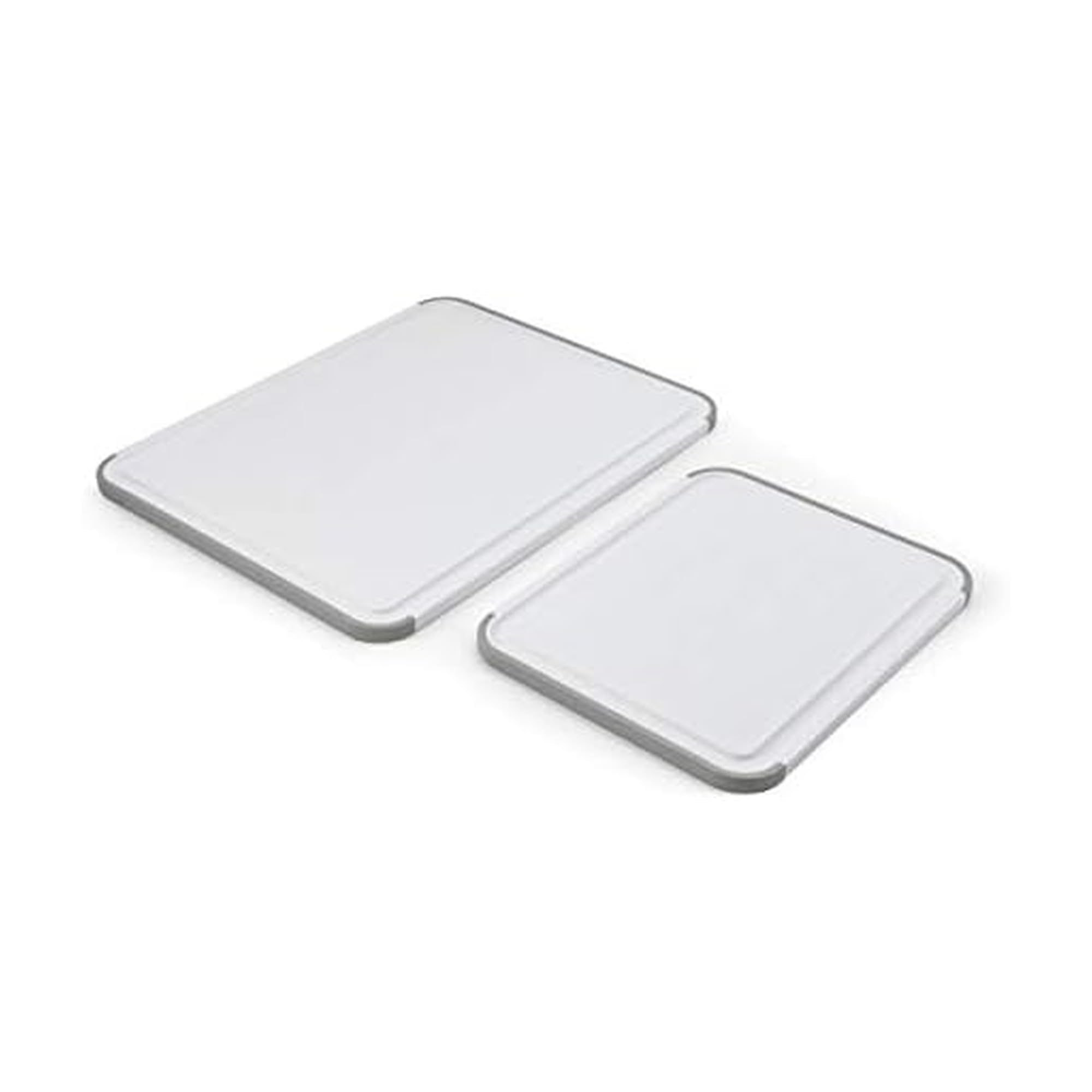
The KitchenAid set uses thick plastic construction with non-slip silicone edges that keep the board planted on your counter during aggressive chopping. The perimeter trench catches juices and crumbs before they run onto your counter, which reduces cleanup time after slicing wet ingredients like tomatoes or cooked beets.
Plastic is naturally non-porous and dishwasher-safe, making this set the most hygienic choice for raw meat prep — you can run both boards through a high-heat sanitization cycle without worrying about warping or cracking. The white and gray color options help you assign one board exclusively to poultry and the other to produce.
The downside is that plastic boards accumulate deep knife grooves over time, and those grooves become breeding grounds for bacteria if not scrubbed thoroughly. Replacing plastic boards every year or two is standard practice for anyone who preps meat regularly.
Why it’s great
- Non-slip edges stay put during heavy chopping
- Dishwasher safe with zero warp risk
- Perimeter trench contains runoff effectively
Good to know
- Knife scars develop quickly and harbor bacteria
- Plastic is harder on knife edges than wood
5. Titanium Cutting Board Double Sided Pure Titanium
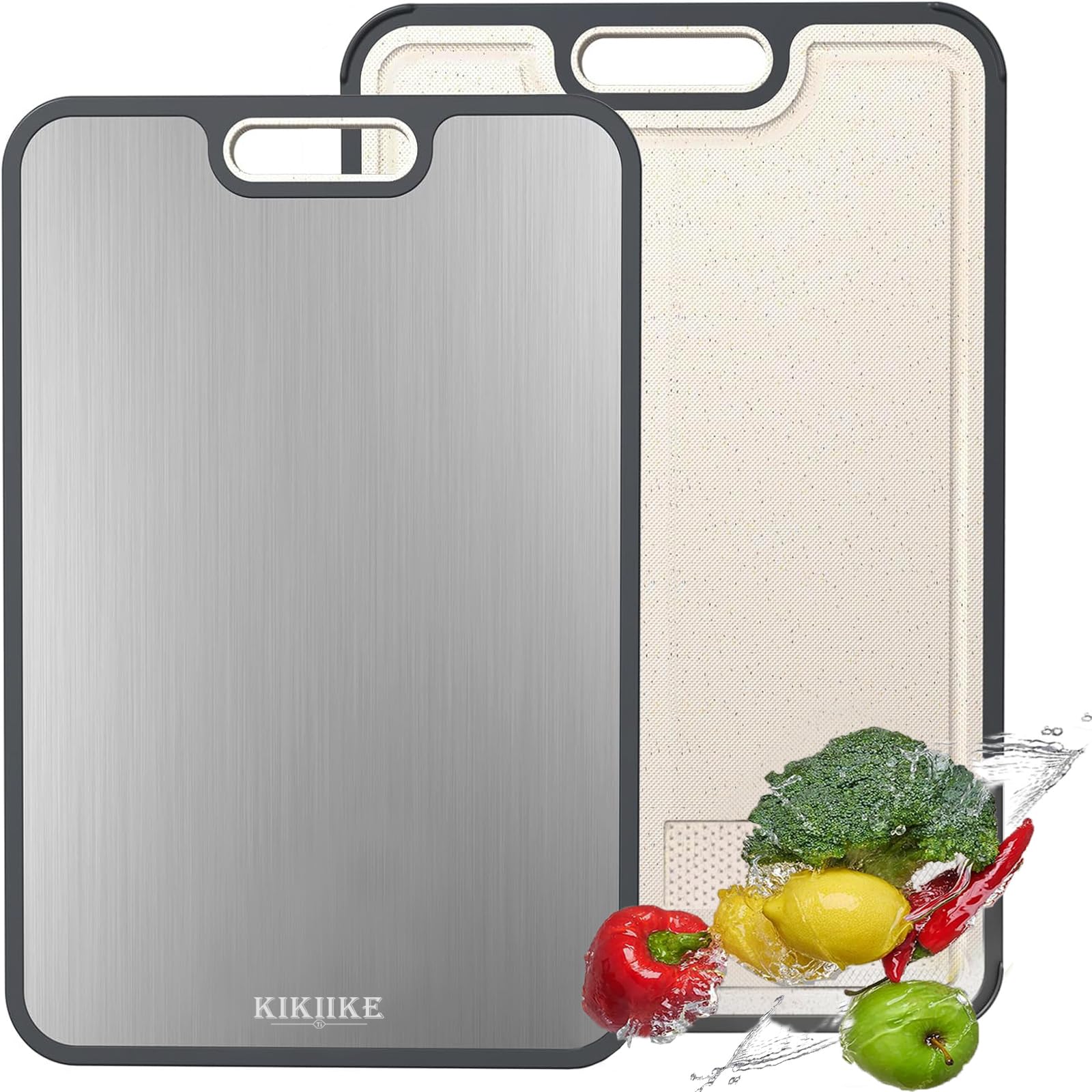
The titanium board offers a non-porous, stain-resistant surface that will never absorb juices or odors from garlic, onions, or raw fish. The large double-sided design gives you a pure titanium side and a wheat straw polypropylene side, so you can choose between a hard metal surface or a slightly softer composite depending on the task.
The titanium sheet resists corrosion and will not rust, which makes it suitable for outdoor kitchens or camping where moisture is constant.
The major drawback is that titanium has zero give, meaning it will dull your knife edge faster than any wood or plastic board. This board is best reserved for non-knife tasks like rolling dough, pounding meat, or serving cheese — not for daily chopping with a quality chef’s knife.
Why it’s great
- Non-porous surface resists bacteria and odors
- Double-sided with titanium and wheat straw PP
- Easy to clean and won’t rust or warp
Good to know
- Hard metal surface dulls knives quickly
- Not ideal for heavy daily chopping with quality blades
FAQ
Can I put bamboo cutting boards in the dishwasher?
How often should I replace my plastic cutting board?
Do titanium cutting boards ruin knives?
What does glue-free mean for a bamboo board?
How do I keep my wooden cutting board from warping?
Final Thoughts: The Verdict
For most users, the kitchen cutting boards winner is the Greener Chef Luxury Bamboo Set because the glue-free surface eliminates toxin exposure while the three sizes and lifetime guarantee make it a buy-once solution. If you want a dishwasher-safe option for high-traffic meat prep, grab the KitchenAid Nonslip Plastic Set. And for a sanitary non-porous board that stays flat forever, nothing beats the Titanium Cutting Board — just keep your sharp knives away from it.