A winter coat that fails you on a 15°F morning doesn’t just ruin your commute — it erodes your entire day’s momentum. The real test of an insulated winter coat isn’t how it looks in the closet, but whether you can stand still at a bus stop for twenty minutes without your core temperature dropping. That single metric separates a smart purchase from a regretful one.
I’m Emma — the founder and writer behind Baby Bangs. I’ve spent the last decade analyzing fabric insulation ratings, fill-power-to-weight ratios, and waterproof membrane breathability to separate the coats that actually perform from the ones that just look warm on a hanger.
This guide breaks down seven of the most reliable insulated winter coats on the market, comparing real-world warmth, weather resistance, and pocket utility so you can pick the right parka for your region and lifestyle without overpaying for features you’ll never use.
How To Choose The Best Insulated Winter Coats
Every winter coat claims to be warm, but the engineering details — insulation type, fill weight, shell fabric, and draft sealing — determine whether you’ll be comfortable at 10°F or shivering at 30°F. Focus on these four factors to cut through the marketing noise and buy a coat that matches your local climate and activity level.
Insulation Type: Down vs. Synthetic
Down insulation (duck or goose feathers) offers the highest warmth-to-weight ratio, but it loses all insulating power when wet. Synthetic insulation (Polyfill, Thermolite, Microtemp) maintains warmth even when damp and dries faster. For dry, frigid winters, down is superior. For wet snow, sleet, or coastal winters, synthetic is the safer choice.
Fill Power and Fill Weight
Fill power (measured in cubic inches per ounce) tells you the fluffiness of the down — 600 fill is standard, 800+ is premium. But fill weight (ounces of insulation) matters more for warmth. A coat with 8 ounces of 700-fill down will feel warmer than one with 4 ounces of 900-fill down. Always check both numbers.
Shell Fabric and Weather Resistance
Look for a nylon or polyester shell with a DWR (durable water repellent) coating, a waterproof membrane (like Omni-Tech or DryVent), or fully taped seams for heavy wet snow. The denier rating indicates fabric toughness — 20D is lightweight and packable, 70D is abrasion-resistant for rough daily wear.
Draft Sealing and Fit
A warm coat with a drafty hem or loose cuffs is a cold coat. Check for an internal drawcord at the hem, elasticized or Velcro cuffs, a tall collar that covers the chin, and a hood with a cinch cord that stays put in wind. The coat should be long enough to cover your lower back and sit over your hips when you bend forward.
Quick Comparison
On smaller screens, swipe sideways to see the full table.
| Model | Category | Best For | Key Spec | Amazon |
|---|---|---|---|---|
| The North Face Aconcagua 3 | Down Hooded | Dry, frigid winters | 700-fill goose down | Amazon |
| Columbia Heavenly Long | Synthetic Long | Lightweight warmth | Microtemp XF II insulation | Amazon |
| Columbia Suttle Mountain | Synthetic Parka | Midwest wet winters | Omni-Tech waterproof shell | Amazon |
| Tommy Hilfiger Puffer | Down Alternative | Fall and mild winters | Down alternative fill | Amazon |
| 33,000ft Women’s Coat | Waterproof Long | Tall women, rain/snow | Magnetic closure, double zip | Amazon |
| Rejork Extra Long Parka | Heavy Long Parka | Sub-zero extreme cold | Below-knee length, 0.2 kg | Amazon |
| Pioneer Camp Parka | Waterproof Parka | Windproof daily wear | 9 pockets, fleece lining | Amazon |
In‑Depth Reviews
1. THE NORTH FACE Men’s Aconcagua 3 Hooded Jacket

The Aconcagua 3 uses 700-fill goose down with a synthetic sheet insulation in the hood, shoulders, and cuffs to handle moisture-prone areas while keeping the core supremely warm. The shell carries a DWR finish that sheds light snow and freezing drizzle effectively, though fully taped seams are absent so extended heavy rain will eventually seep through. The attached three-piece hood includes a cinch cord that stays adjusted through a windy commute, and the cut is athletic but allows a midweight fleece underneath without restricting arm movement.
Users consistently note that the coat feels surprisingly light for how warm it runs in dry cold — multiple reviews praise it for comfortable wear into the low teens without layers. The pearl grey color received positive remarks for looking more premium in person, and the fully lined interior adds a soft feel against bare arms. A few buyers reported initial feather poking through the fabric, a common trait with down jackets that typically resolves after a few wears as the quills settle.
Durability looks strong for daily urban use. The nylon fabric shows no signs of abrasion on elbows or backpack straps, and the zipper operates smoothly without catching. If you need a single coat for a dry, cold winter and want the warmth-to-weight advantage of quality down, this is the pick to beat.
Why it’s great
- Exceptional warmth without bulk from 700-fill down
- Lightweight enough for layering or wearing alone
- Attached hood with cord holds position in strong wind
Good to know
- Some feather poking through fabric initially
- Not fully waterproof for heavy rain exposure
2. Columbia Womens Heavenly Long Hooded Jacket
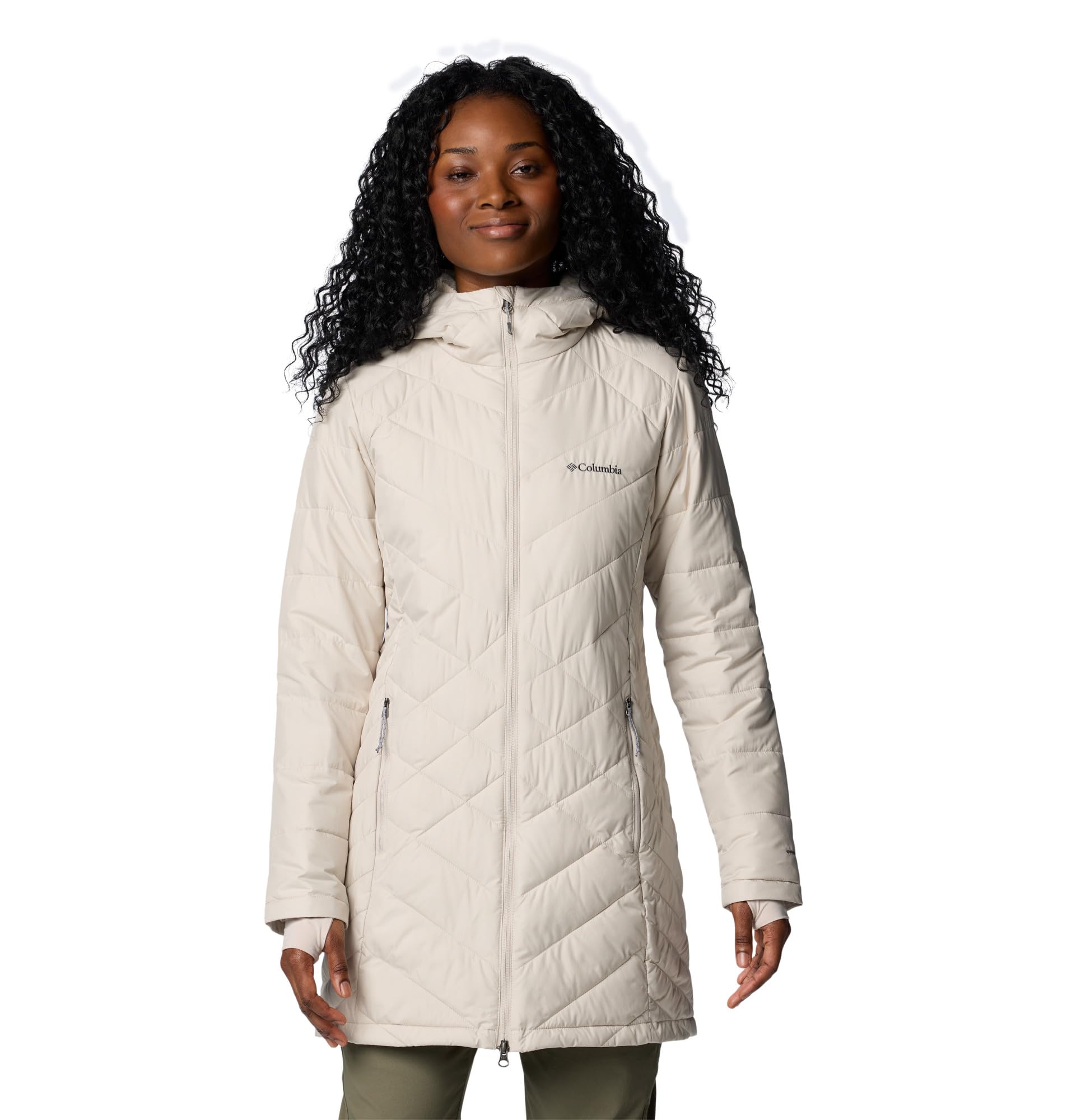
The Heavenly Long is a perennial favorite because it solves a specific contradiction: a coat that looks slim and feminine but actually holds heat. The Microtemp XF II synthetic insulation is thin enough to make the jacket packable yet retains warmth well into the low teens, according to multiple verified reviews from Michigan and Midwest winters. The long cut lands just above the knee on an average frame, covering the lower back and hips where heat loss often occurs, and the fleece-lined hood adds soft warmth without sacrificing peripheral vision.
Several returning buyers mention this is their second or even third purchase over five to six years, pointing to consistent quality and a design that the brand refined. A reviewer at 5’3″ and 116 pounds found the Small lands above the knee and was warm enough in 45 to 50°F with just a t-shirt, while a 5’5″ buyer at 190 pounds reported comfort in 10°F Michigan weather in the 2X. The interior zipper pocket is appreciated for securing valuables, and the exterior zippered hands sit at a flattering height.
The jacket is not waterproof — rain will wet through the shell — and the lack of a drawstring on the hood means it can shift in high winds. A few users noted the main zipper is left-handed orientation, which takes adjustment for right-handed users. If you want a genuinely warm coat that doesn’t look like a puffy marshmallow and packs into a suitcase for travel, this is the one.
Why it’s great
- Slimming cut that still provides winter-grade warmth
- Fleece-lined hood adds significant comfort
- Packs small for travel and storage
Good to know
- Not waterproof — avoid prolonged heavy rain
- Hood lacks a drawstring for wind adjustment
3. Columbia Women’s Suttle Mountain Long Insulated Jacket
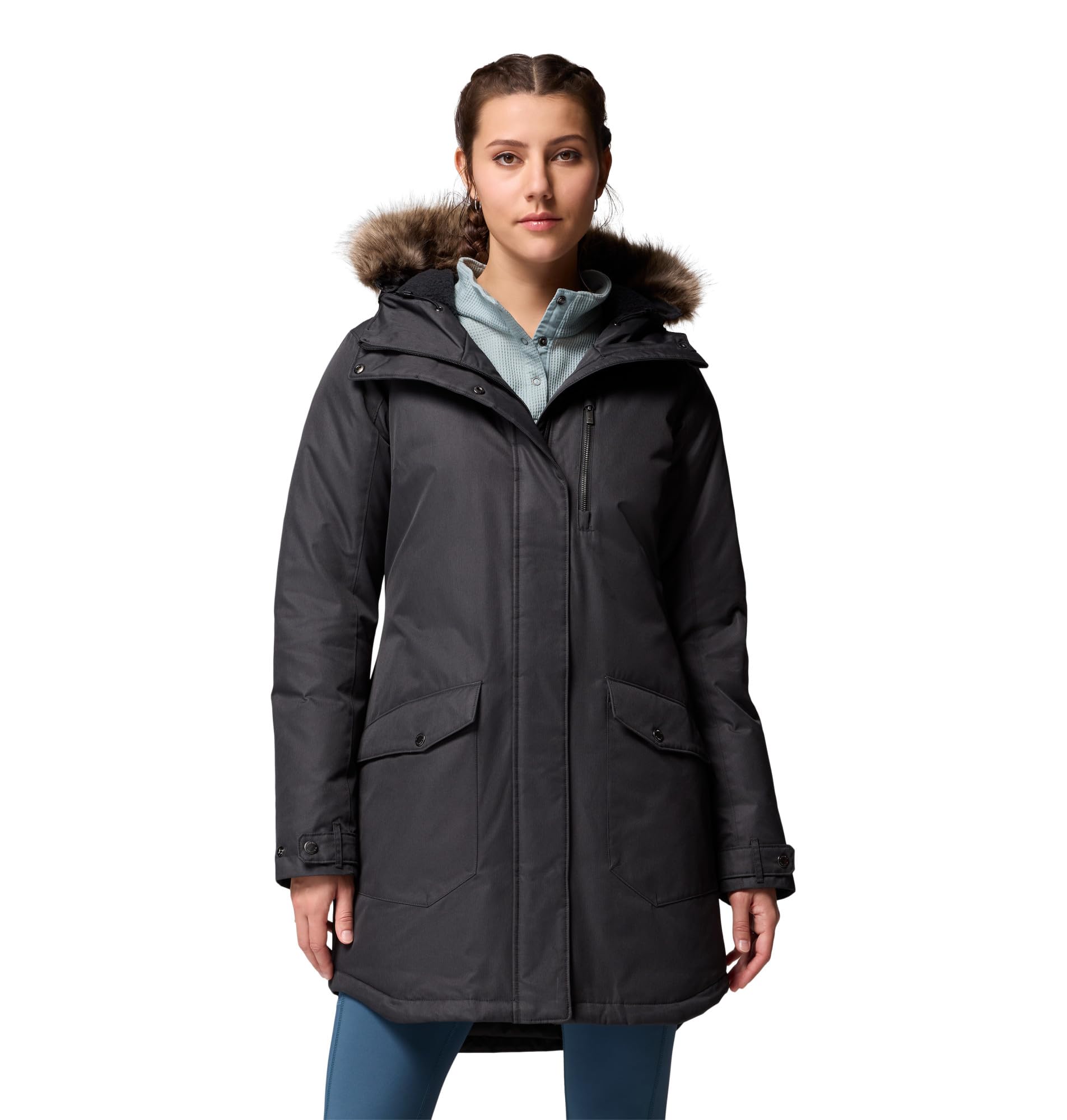
The Suttle Mountain stands apart from the Heavenly line by adding a fully waterproof Omni-Tech membrane to the synthetic insulation, making it the better choice for wet snow, sleet, and days when precipitation is a certainty. The long length covers the hips and upper thighs, and the insulated hood is roomy enough for a knit hat underneath without compressing the fill. Multiple reviews from Midwest winters confirm that the jacket blocks wind effectively and keeps the wearer dry even during extended snow exposure where previous coats would wet through.
The YKK zipper operates smoothly and a bottom snap and zipper combo allows the wearer to adjust ventilation when moving from cold outdoors to overheated indoor spaces. Reviewers noted that the jacket is heavier than they expected from a Columbia piece — this is because the Omni-Tech membrane and the insulation density add weight for real weather protection, not packability. A 5’5″, 160-pound reviewer found the size Large fit with room for a sweater, and the cut accommodates light layering without pulling across the shoulders.
The single interior chest pocket and two side pockets are functional but some users wished for deeper hand pockets. If your priority is staying dry in wet winter conditions over packability or slim styling, this coat delivers where its lighter siblings cannot.
Why it’s great
- Fully waterproof Omni-Tech shell for wet snow
- Long length seals out drafts at the hips
- Bottom zipper and snap for temperature regulation
Good to know
- Heavier than expected for a Columbia coat
- Only one chest pocket, hand pockets could be deeper
4. Tommy Hilfiger Men’s Down Alternative Hooded Puffer Jacket

Tommy Hilfiger’s down-alternative puffer offers a dressier fit than most technical winter coats, with a sleek aviator silhouette that works for casual and semi-casual settings. The synthetic fill eliminates the wet-weather risk of down while delivering warmth that reviewers tested comfortably into the 15 to 20°F range. The knit cuffs seal out drafts effectively, and the puffy neck collar with warm lining adds significant protection against wind sneaking in at the top.
Multiple buyers emphasized the importance of checking the size chart carefully — one reviewer originally wanted a Large, got a Medium (too small), then exchanged for an XL (perfect) at 6’0″ build. The sleeves run slightly long, which is actually a benefit for covering the wrists in cold weather, but the overall fit is regular and not boxy. The olive camouflage color received specific praise for looking sharp and avoiding the generic black or navy standard.
A few buyers mentioned the zipper can be slightly finicky, and the coat is not fully waterproof — it handles light snow and dry cold well but will wet through in sustained rain. For fall and mild winter wear where you want a branded, tailored look with reliable synthetic warmth, this delivers without the premium price tag of high-end down.
Why it’s great
- Stylish aviator cut for dressed-up wear
- Synthetic fill stays warm if damp
- Knit cuffs and warm neck collar block drafts
Good to know
- Check sizing carefully — sleeves run long
- Not fully waterproof for rainy conditions
5. 33,000ft Women’s Waterproof Insulated Coat with Hood
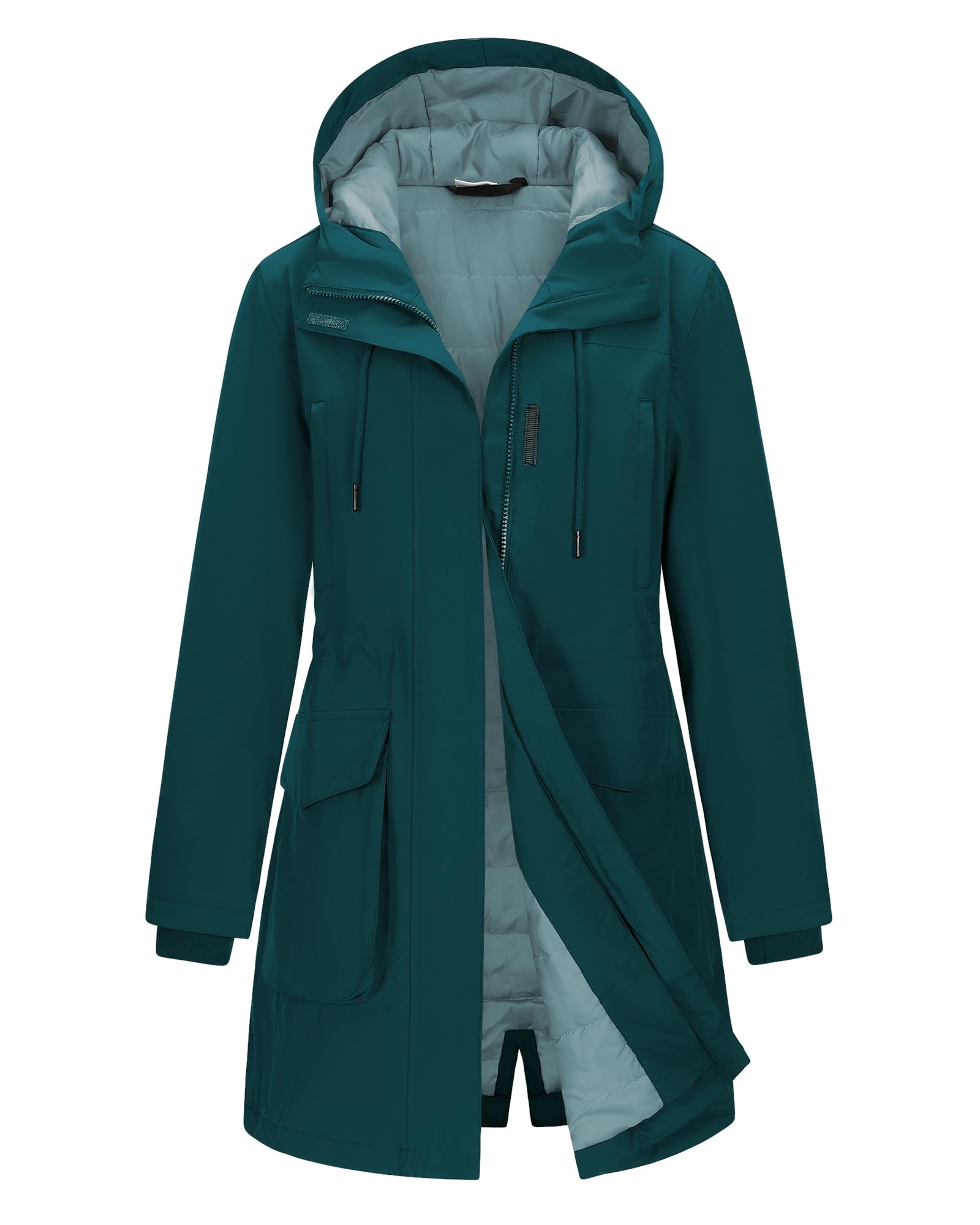
This coat was designed with the tall woman in mind — a 5’10” reviewer with a larger chest reported that the arm length fully covered her wrists without shoulder claustrophobia, a rare fit advantage that eliminates the gap between glove and sleeve. The waterproof shell held up in German rain and Midwest snow, though some moisture was reported at the thighs during a sustained downpour. The long A-line cut covers the hips and upper legs, making it genuinely functional for standing outside in sub-zero temperatures.
The magnetic front closure is a standout feature for usability — it snaps together easily with gloves on, eliminating the fumbling that cold fingers experience with buttons or snaps. The drawstring waist and the double zipper allow the coat to accommodate a pregnancy belly without pulling, a thoughtful detail that extends the coat’s usable lifespan. A 5’2″ reviewer found the coat flattering and warm for windy parking lot work, noting the dual zipper made sitting in a car comfortable.
A few downsides: the hood sits at the back of the head rather than wrapping around the face, which leaves some forehead exposed without a hat. The internal pocket layout is functional but the side pockets were noted as slightly low for some body types. For tall women or anyone who needs a genuinely long, waterproof coat that handles a growing belly, this is a rare and well-executed option.
Why it’s great
- Excellent arm and torso length for tall women
- Magnetic closure works easily with gloves
- Double zipper and drawstring waist accommodate pregnancy
Good to know
- Hood sits at back of head, not wrapping the face
- Side pockets sit low for some body types
6. Men’s Extra Long Parka Winter Coats Hooded Puffer Jacket (Rejork)
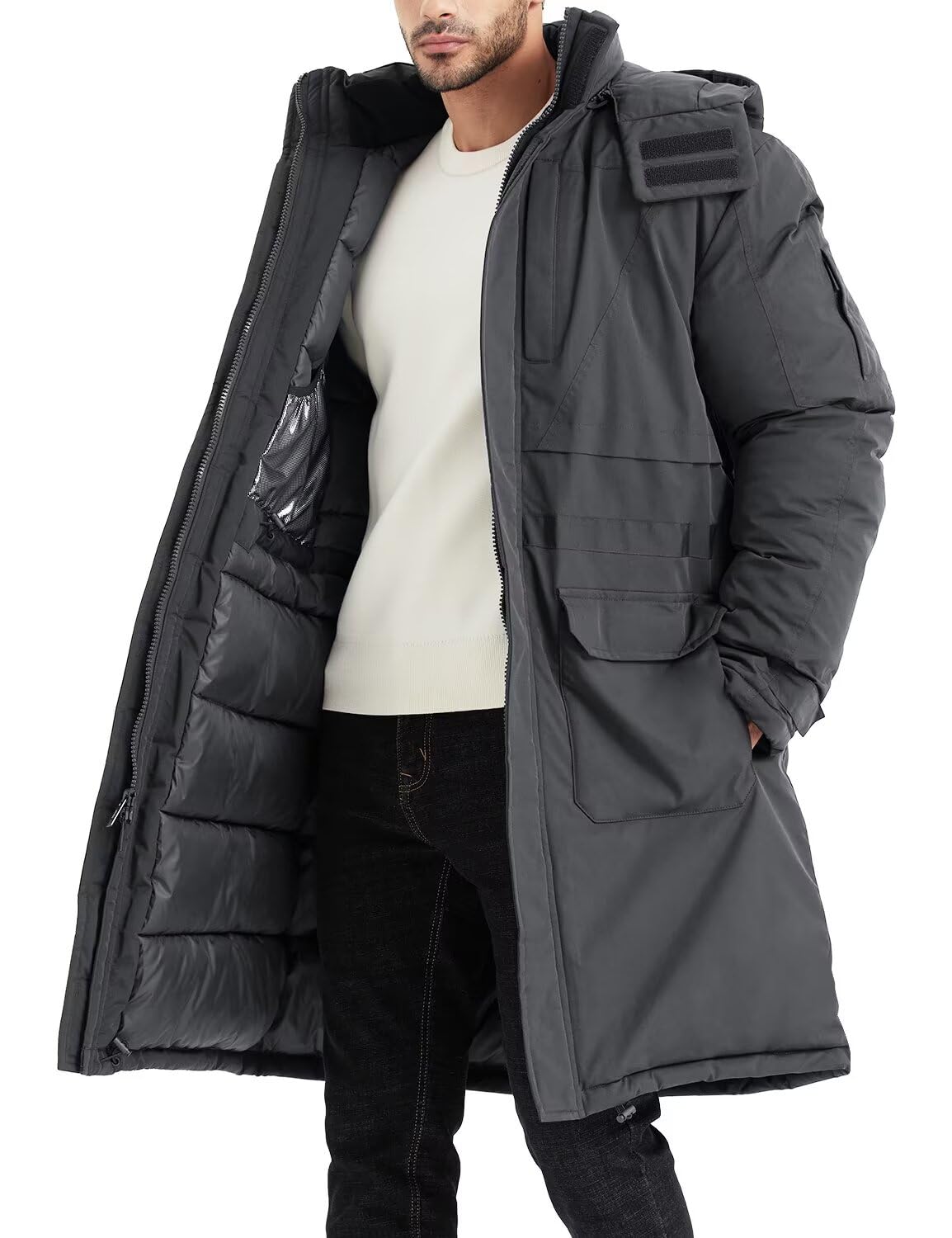
This parka is an extreme-cold specialist designed for the brutal lows of Chicago winters at 5°F with wind chill. The below-knee length, combined with a thick synthetic fill, traps enough heat that reviewers report sweating if the temperature is above 30°F. The coat uses a double closure system — a main zipper under a Velcro flap — that eliminates wind penetration even when standing still in gusty conditions. Thumbhole wristbands and internal sizing straps help seal the arms and keep the fill positioned correctly during movement.
Reviewers at 6’0″ to 6’2″ found the XXL roomy enough for heavy layering, though some wished they had chosen XL when wearing only a t-shirt. The internal storage is abundant, including a hidden arm pocket, multiple deep zippered pockets, and a secure chest pocket — all without exterior logos. One user wrote that the coat saved his marriage because he no longer complained about being cold during winter outings, which is about as practical a testimonial as any parka will get.
Build quality shows some trade-offs for the warmth value: the zipper tab can catch on the surrounding fabric, and the sleeve Velcro sticks to the jacket shell when not in use. A few owners noted weak seam stitching after a month of daily use in extreme conditions. For the warmth level alone, this parka competes with coats at triple the price, but the finish details reflect its budget origins. If you need maximum warmth for the lowest investment, this is your coat.
Why it’s great
- Exceptional warmth for sub-zero temperatures
- Below-knee length seals out drafts from all sides
- Numerous deep pockets including hidden arm pocket
Good to know
- Too warm for anything above freezing
- Zipper tab and Velcro can catch on fabric
7. Pioneer Camp Men’s Winter Coat Waterproof Fleece Lined Warm Winter Jacket

The Pioneer Camp parka offers a remarkable pocket layout that active users love — nine separate compartments including fleece-lined handwarmer pockets, chest pockets, and even arm pockets for quick-access items. The shell is listed as waterproof and reviewers confirmed that water beads on the surface rather than soaking through, while the fleece lining adds a soft interior layer that feels warm against the skin without an additional midlayer. The hood includes a brim that sheds rain from the face, and the drawstring hem seals out drafts effectively.
A reviewer who commutes by bike in sub-zero wind chill at 30+ mph praised the form-fitting wrist cuffs as a game-changer for keeping cold air from traveling up the sleeves. The relaxed fit accommodates heavy layering without looking baggy, and the coat is thick enough for winter wear without being suffocating. Multiple reviews note that the coat is dressy enough for evenings while still being functional for outdoor work, a balance that’s harder to achieve at this price point.
The primary complaint is that the exterior side pockets are not insulated — they sit on the surface of the fleece lining, meaning items placed in them will be cold against your hands. A few users found the sizing runs slightly large, so consider sizing down if you plan to wear only a base layer. For a feature-dense, waterproof parka with more pockets than most tactical jackets, this is an exceptional value.
Why it’s great
- Nine pockets including arm and chest compartments
- Waterproof shell with fleece lining for comfort
- Form-fitting wrist cuffs seal out wind
Good to know
- Exterior pockets are not insulated
- Sizing runs slightly large — consider sizing down
FAQ
How many ounces of fill do I need for a 15°F winter?
Should I buy a down coat or synthetic for wet coastal winters?
How do I know if the hood will stay on in wind?
What pocket configuration is best for daily commuter use?
How do I wash an insulated winter coat without ruining it?
Final Thoughts: The Verdict
For most users, the insulated winter coats winner is the The North Face Aconcagua 3 because it combines premium 700-fill down warmth with a lightweight build that doesn’t restrict movement. If you need full waterproofing for wet winters, grab the Columbia Suttle Mountain Long. And for extreme sub-zero temperatures where warmth trumps all other factors, nothing beats the Rejork Extra Long Parka.