Pickleball puts a unique stampede of forces through your feet: quick lateral cuts, sudden stops, and repetitive forward lunges that standard sneaker insoles were never designed to handle. The result is often plantar fasciitis, arch fatigue, or heel pain that sidelines players mid-game. A sport-specific insole is the simplest upgrade you can make to keep your feet fresh through a third-set tiebreak.
I’m Emma — the founder and writer behind Baby Bangs. I’ve spent years analyzing market trends, reading lab reports, and cross-referencing athlete reviews to understand the exact materials and construction that make a court insole actually work for lateral movement sports.
Whether you need rigid carbon-fiber energy return or plush gel for sensitive arches, this guide breaks down the best options available today across every price tier. Read on for the definitive list of the best insoles for pickleball on the market right now.
How To Choose The Best Insoles For Pickleball
Pickleball isn’t a straight-line sport, and your insole shouldn’t act like one. The right choice balances shock absorption for hard court landings with enough torsional stiffness to keep your foot stable during lateral pushes. Here are the three factors that separate a great pickleball insole from a generic one.
Arch Type and Support Depth
Flat feet tend to overpronate during side-to-side movement, putting strain on the arch and inner knee. High arches, by contrast, need a deeper heel cup and more longitudinal rigidity to prevent supination and ankle rolls. Choose an insole that matches your natural arch profile — low-profile performance insoles for low-to-normal arches, or structured carbon-fiber inserts for medium-to-high arches.
Heel Cup and Lateral Stability
In pickleball the heel rarely stays planted — it pivots. A shallow or loose heel cup allows micro-movements that can quickly lead to blisters, Achilles irritation, or even ankle sprains. Look for a deep, sculpted heel cup that wraps the calcaneus (heel bone) without shifting during aggressive direction changes.
Material Density and Court Feel
Soft memory foam feels great walking through a grocery store but compresses too much under the high-impact, rapid-response demands of pickleball. You want a material that strikes a middle ground: firm enough to return energy for explosive first steps, yet compliant enough to absorb landing shock. Closed-cell foams, gel pods, and carbon-fiber composites each offer different trade-offs in responsiveness versus cushion.
Quick Comparison
On smaller screens, swipe sideways to see the full table.
| Model | Category | Best For | Key Spec | Amazon |
|---|---|---|---|---|
| VKTRY Silver | Carbon Fiber | Energy return | Carbon fiber composite | Amazon |
| MOVE Game Day Pro | Performance | High arch stability | X-Frame torsional support | Amazon |
| Superfeet Green | High Arch | Firm structured support | Dense closed-cell foam | Amazon |
| SOLE Active Thin | Moldable | Custom orthotic fit | Heat-moldable EVA | Amazon |
| Move Game Day | Versatile | Arch and heel relief | Composite heel cushion | Amazon |
| CRUVHEAL Sport | Shock Absorption | Budget-friendly cushion | Gel pad impact zones | Amazon |
| Protalus T-100 Lite | Alignment | Overpronation control | Deepest heel cup design | Amazon |
In‑Depth Reviews
1. VKTRY Silver Performance Insoles
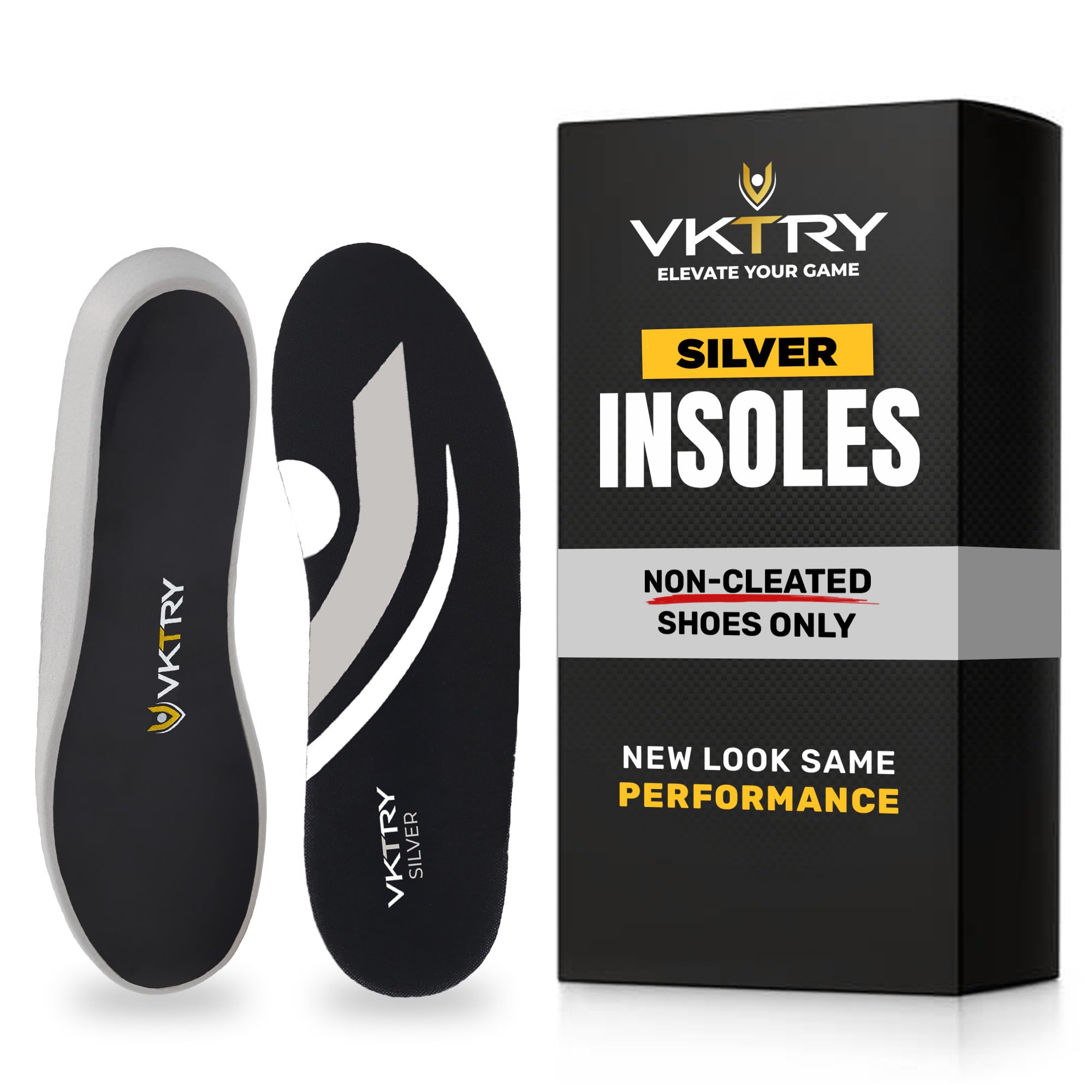
The VKTRY Silver insole stands apart because of its carbon-fiber composite construction — a material traditionally found in high-end cycling shoes and sprint spikes. That rigid plate delivers two things pickleball players need most: a consistent energy return during push-offs and a torsionally stable platform that resists twisting during lateral cuts. The arch cradle is medium-height and structured, so it stays locked in place even when you’re sliding into a low forehand dink.
At roughly 0.8 inches of stack height the Silver adds minimal bulk, making it a natural fit for low-profile court shoes like the ASICS Gel-Rocket or the K-Swiss Express. Users report that the heel pocket is deep enough to hold the calcaneus steady, cutting down on micro-blister formation during long sessions. The carbon plate also offers better long-term durability than foam-dominant insoles, which tend to pack out after a season of consistent play.
One consideration: the firmness level is significant. Players with very flat feet or a history of metatarsalgia may find the lack of forefoot cushioning too stiff for their liking. But if you prioritize explosive first-step energy return and midfoot torsional rigidity above plush step-in feel, the VKTRY Silver is the purest performance option on this list.
Why it’s great
- Carbon-fiber plate provides instant energy return for faster push-offs
- Deep heel cup and ergonomic arch stabilize foot during lateral direction changes
- Extremely durable construction that outlasts foam-based competitors
Good to know
- Very firm feel — not ideal for players who prefer plush cushioning
- Best suited for medium arches; low arches may need additional forefoot cushion
2. MOVE Game Day Pro
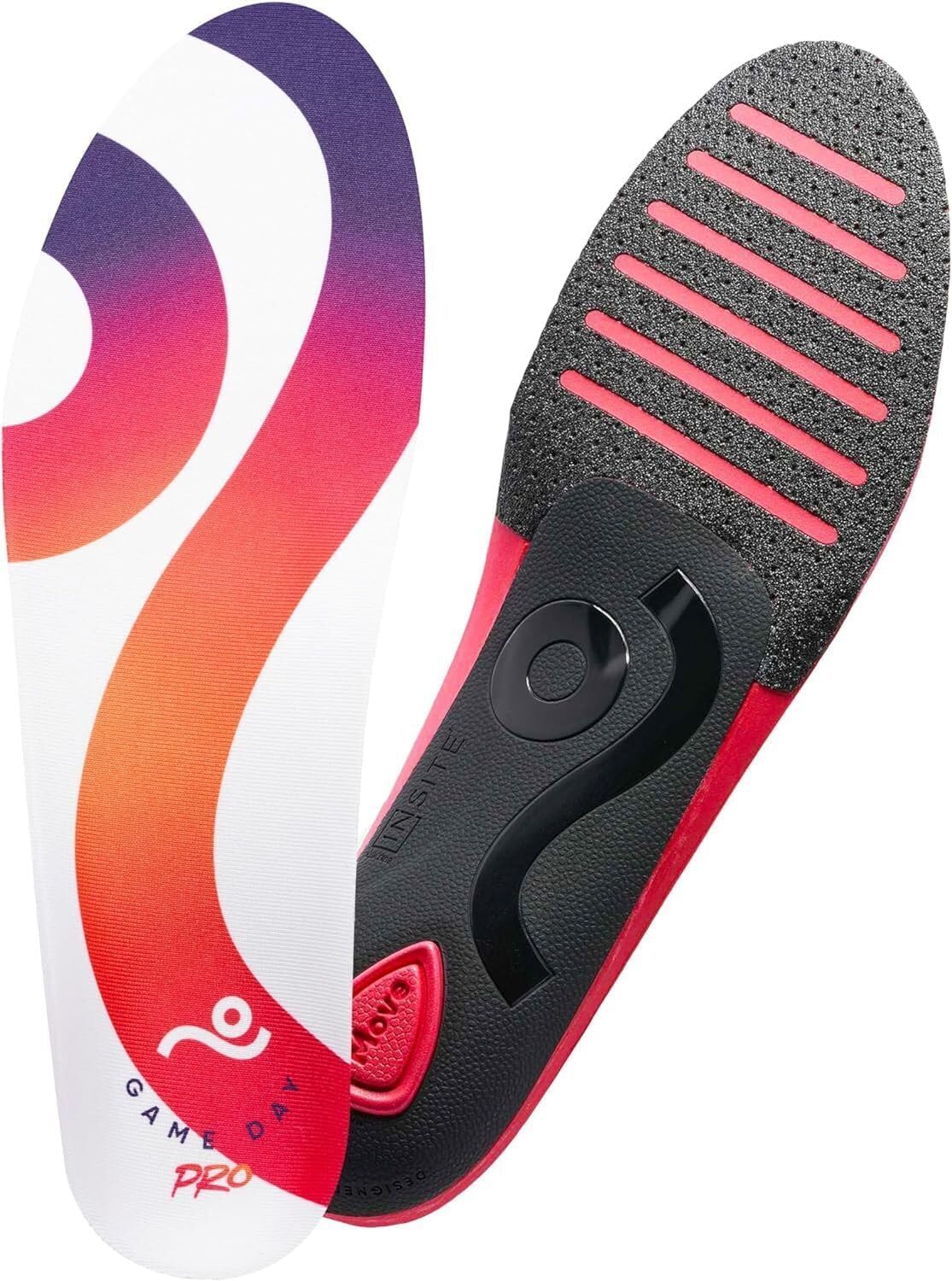
The MOVE Game Day Pro is the direct result of NBA All-Pro Damian Lillard’s input, and it shows in the construction. The insole uses an X-Frame torsional support system that bridges the heel and midfoot with a rigid arch bridge — a design that directly counteracts the overpronation typical during pickleball’s side-shuffle movements. The Active Heel Technology uses a semi-flexible plastic cradle that wraps the heel without creating pressure points, allowing quick pivots without friction.
Reviewers specifically call out the locked-in feel these provide during court sports; one dedicated pickleball player described them as a “total game changer for my pickleball shoes” citing reduced foot fatigue and no odor retention. The Pulsion Energyfoam midlayer is more responsive than standard EVA, meaning you get a springy push-off without the harshness of a pure carbon plate. The arch profile is high enough to support supination-prone feet but not so aggressive that it causes midfoot cramping during long rallies.
On the downside, the Pro version is noticeably thicker than standard Game Day insoles, so it may crowd the toe box in narrow court shoes. If your pickleball shoes already feel snug, you’ll want to try them on before committing. But for players with high arches and a history of heel pain, the Pro’s combination of cushioned landing and firm lateral support is hard to beat.
Why it’s great
- X-Frame torsional support stops heel slippage during lateral cuts
- Active Heel Technology cradles the heel without adding bulk
- Springy Energyfoam delivers responsive push-off for explosive first steps
Good to know
- Thicker profile may crowd narrow or tight-fitting court shoes
- Primarily designed for high arches — flat feet may feel unsupported
3. Superfeet All-Purpose Support High Arch (Green)
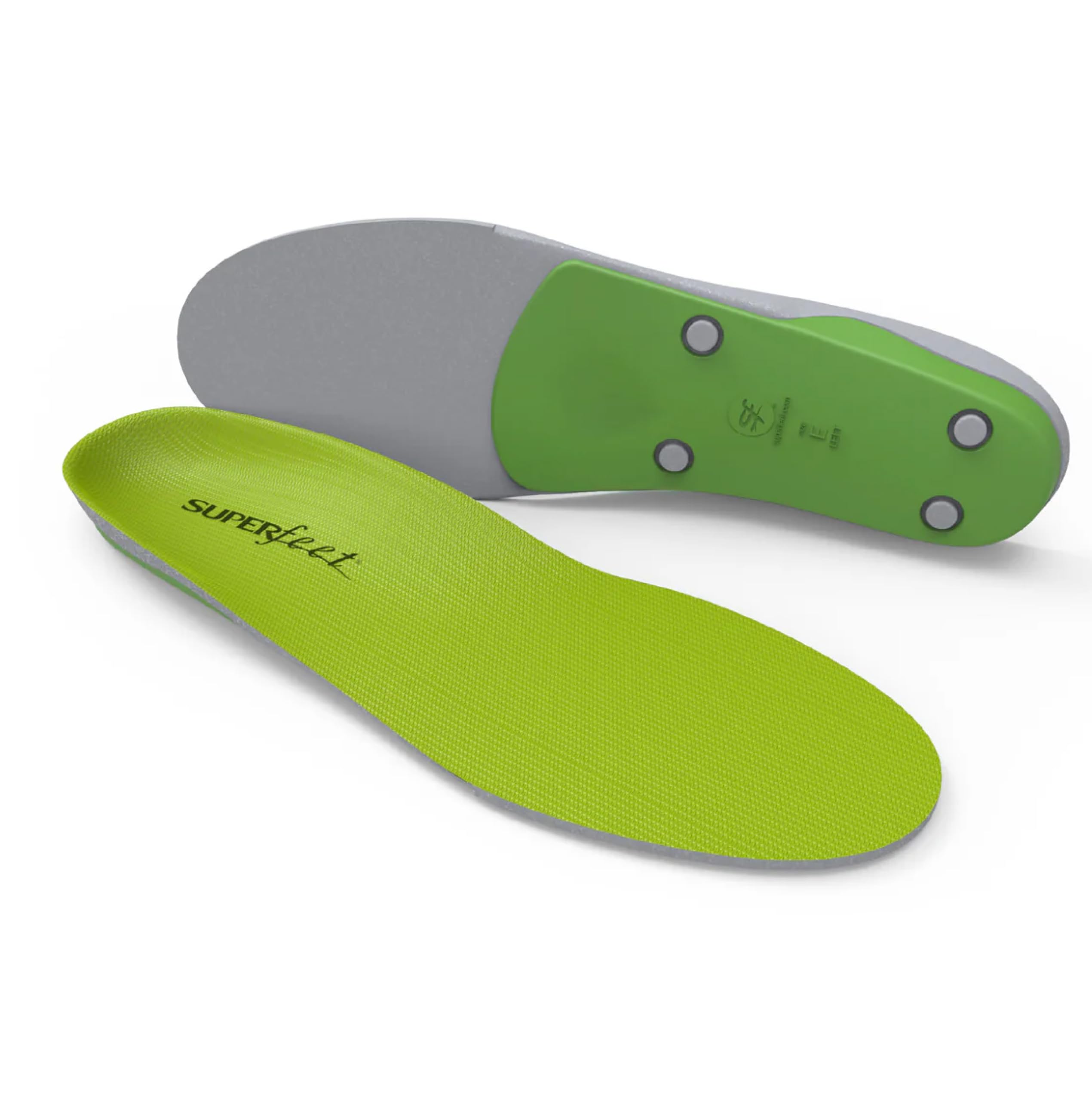
The Superfeet Green is a decade-long fixture in the insole market for a reason: its high-density closed-cell foam provides consistent, non-compressible support that doesn’t soften appreciably over time. For pickleball, that translates into a heel and arch that stay planted even after three hours of continuous court time. The deep, sculpted heel cup cradles the calcaneus firmly, which reduces the heel-slide that can cause Achilles irritation during repeated stopping motions.
Unlike gel or memory foam inserts, the Green insole requires a break-in period — typically 5–8 hours of wear before the foam contours to your foot’s pressure map. Several long-time users mention initial discomfort that resolves into relief, particularly for those managing plantar fasciitis. The trim-to-fit sizing means you can cut the forefoot to match the narrower profile of court-specific sneakers like the Babolat Jet or Nike Vapor.
The foam density is firm — noticeably firmer than the MOVE or SOLE options. This works well for players who want a stable, grounded feel underfoot without the bounce of a carbon plate. But if you prefer a cushioned landing on hard court surfaces, the lack of any gel or air pocket may feel harsh over long sessions. The moisture-wicking top cover does help control odor, a practical benefit for humid indoor courts.
Why it’s great
- High-density closed-cell foam provides long-lasting, non-compressing arch support
- Deep heel cup reduces heel slip and Achilles strain during quick stops
- Trim-to-fit design accommodates narrower court shoe profiles
Good to know
- Firm feel may be uncomfortable for players who prefer soft cushioning
- Requires a break-in period before full support is realized
4. SOLE Active Thin

The SOLE Active Thin takes a different approach: instead of trying to be the most rigid or the most cushioned insole, it focuses on becoming the most personalized. Its heat-moldable EVA base can be oven-heated and then walked on for a few minutes to create a custom contour of your exact foot shape — arch height, heel pocket, and metatarsal pressure points all get mapped into the material. For pickleball players with unique foot geometries, this eliminates the “one-size-fits-most” compromise.
At just 1.6mm thick in the forefoot, this is the slimmest insole on the list. That thin profile is a major advantage for court shoes with tight internal volume — common in lightweight pickleball-specific footwear from brands like HEAD or Selkirk. You get full-arch orthotic support and a zero-drop platform (no heel elevation) that keeps your foot low to the ground for better court feel. The deep heel cup also locks the rearfoot in place without adding midfoot bulk.
The trade-off is minimal shock absorption. There’s no gel or air layer, so the Active Thin prioritizes alignment and arch comfort over impact dampening. Players with a history of heel spurs or bone bruises may want to add a thin gel heel pad underneath. For those who need orthotic-level arch control in a barely-there package, however, the SOLE Active Thin is the most sophisticated option available.
Why it’s great
- Heat-moldable EVA creates a truly custom arch and heel contour
- Ultra-thin profile fits easily into low-volume court shoes
- Zero-drop design maintains natural foot position for better court feel
Good to know
- Minimal shock absorption — may not suit players with heel sensitivity
- Heat-molding requires oven prep; not an out-of-the-box fit solution
5. Move Game Day Performance Insoles

The standard Move Game Day insole shares the same lineage as the Pro but is tuned for a wider range of arch types — specifically low-to-normal arches. The composite heel layer uses a blend of resilient foam and a rigid heel insert that provides passive stability without the aggressive X-Frame of the Pro version.
The molded forefoot design creates a cupped profile that helps center the metatarsal heads, distributing pressure more evenly during forehand and backhand lunges. Reviewers specifically note that these insoles eliminated shin splints after years of struggle, a common complaint among players who transition from casual walking to competitive pickleball. The midfoot cushion is moderate — softer than the Superfeet Green but firmer than typical memory foam options.
The main limitation is that the arch support is less aggressive than the Pro or Superfeet models. Players with high, rigid arches may feel that the midfoot support flattens out after a few months of heavy use. For the majority of pickleball players — especially those still building foot strength and endurance — the standard Game Day insole provides an effective balance of comfort and performance without a break-in curve.
Why it’s great
- Molded forefoot design helps center metatarsals for better pressure distribution
- Composite heel cushion absorbs landing shock without sacrificing court feel
- Zero break-in period — comfortable from the first wear
Good to know
- Arch support is moderate and may compress over several months of heavy use
- Not ideal for high-arched feet that need more rigid midfoot support
6. CRUVHEAL Sport Shock Absorbing Insoles

CRUVHEAL’s Sport insole brings gel-based cushioning to the affordable end of the market without cutting corners on the features that matter for court play. Strategically placed gel pads in the heel and forefoot absorb the high-impact forces generated by pickleball’s lunging and jumping mechanics. The deep heel cup is lined with a non-slip gel coating that grips the shoe’s heel pocket, preventing the insole from shifting during aggressive lateral movements — a common issue with cheaper foam inserts.
Users with wider feet appreciate that the CRUVHEAL doesn’t feel cramped in the toe box, a problem with many sport-specific insoles that are cut narrow for performance footwear. The neutral arch profile means it doesn’t force your foot into a particular alignment — it simply cushions and stabilizes a neutral-to-low arch. The 3–7 day adaptation period is worth noting: these insoles have more structure than the thin foam pads many players are used to, so going straight to a full day of play may cause soreness.
Where the CRUVHEAL falls short is in total durability. The gel layer can feel less responsive after about four months of regular pickleball use, particularly in the heel strike zone. For the price, however, they represent a low-risk trial for players who are unsure whether an insole upgrade will solve their foot fatigue, or for those managing budget constraints without wanting a completely flat stock liner.
Why it’s great
- Gel pads in heel and forefoot provide targeted shock absorption for court impact
- Non-slip gel heel coating keeps insole locked in place during lateral cuts
- Wide-profile design fits naturally in roomier court shoes
Good to know
- Gel layer may compress and lose responsiveness after 4–5 months of regular use
- Neutral arch offers less active support than structured orthotic insoles
7. Protalus T-100 Lite Insoles

The Protalus T-100 Lite is engineered around a single claim: the deepest heel cup on the market. That design choice is directly relevant to pickleball because deep heel cups stabilize the rearfoot during pivots, reducing excessive inward or outward movement that can travel up the kinetic chain to the knee and hip. The patented alignment technology uses a rigid heel and arch bridge to guide the foot into its natural neutral position with every step, making it particularly valuable for overpronators who feel knee soreness after long matches.
Despite having a firm orthotic-level support structure, the T-100 Lite is surprisingly thin. It sits low enough in the shoe that you won’t feel pressure on the top of the foot — a common complaint with thicker insoles inside court shoes. The dynamic arch support adapts to your gait cycle, stiffening during push-off and relaxing during the swing phase, which helps reduce fatigue over extended play. Users recovering from stress fractures or chronic heel pain have reported noticeable relief after switching from stock liners.
The catch is that “deep heel cup” and “firm arch support” mean the T-100 Lite feels very rigid out of the box. Some users describe it as “extremely firm” and note that it requires a break-in period of several hours before the support feels natural. It’s also not designed for low-volume shoes; the heel cup thickness can push the foot slightly forward in shoes with very snug heel pockets. For players who need aggressive overpronation control and don’t want a bulky insole, the Protalus T-100 Lite is a precision tool.
Why it’s great
- Deepest heel cup design available, stabilizing rearfoot during lateral movement
- Dynamic arch support adapts to gait cycle, reducing foot fatigue
- Thin profile fits comfortably inside court shoes without crowding toe box
Good to know
- Very firm feel requires a break-in period of several hours
- Heel cup thickness may lift the foot in slim-fitting shoe heel pockets
FAQ
Can I use running insoles for pickleball?
How do I know if I need high or low arch insoles?
Do insoles need a break-in period before court play?
Will thick insoles crowd my pickleball shoes?
How often should I replace my pickleball insoles?
Final Thoughts: The Verdict
For most players, the best insoles for pickleball winner is the VKTRY Silver because its carbon-fiber composite delivers unmatched energy return and lateral stability for the stop-and-go demands of the court. If you want custom arch contouring and a barely-there fit, grab the SOLE Active Thin. And for aggressive overpronation control with the deepest heel cup on the market, nothing beats the Protalus T-100 Lite.