Most people pit cardio against muscle growth, assuming one cannibalizes the other. That binary thinking ignores a biological reality: the right cardio machine doesn’t just burn calories—it loads your muscles under tension through resistance, incline, and full-body engagement, driving hypertrophy while your heart rate climbs.
I’m Emma — the founder and writer behind Baby Bangs. I’ve spent years analyzing biomechanics and equipment specs, focusing on how different resistance profiles and movement patterns affect muscle fiber recruitment during steady-state and HIIT sessions.
The problem is that most cardio machines are designed for weight loss, not for stimulating muscle protein synthesis. This guide breaks down how to pick a cardio machine for muscle building based on real mechanical specs and load capability, not marketing fluff.
How To Choose The Best Cardio Machine For Muscle Building
The standard shopping mistake is looking at the machine type instead of the load mechanism. A treadmill with a high horsepower motor and auto-incline can still build leg mass if you walk at a steep grade with heavy weight, whereas a poorly-designed elliptical with low magnetic resistance will never challenge your glutes or hamstrings past the warm-up phase. You need to match the machine’s core mechanical load to your specific hypertrophy goals.
Resistance Mechanism Matters More Than Machine Type
Magnetic resistance systems provide smooth, quiet tension but cap out at lower peak loads unless the flywheel is heavy. Hydraulic resistance, like the Gazelle Glider uses, creates progressive friction that mimics concentric/eccentric loading better for moderate muscle activation. Electromagnetic resistance on premium recumbents and ellipticals offers the widest range and most precise control for periodized training plans. If your goal is to maintain or build mass, avoid air resistance or self-powered units that rely solely on your speed—they don’t allow constant tension at slow, controlled tempos.
Stride and Incline Dictate Which Muscles Fire
A long stride (18+ inches) recruits the glute max and hamstrings more aggressively, especially when paired with an incline that pushes the hip into deep flexion. Shorter strides target the quads and hip flexors, which is fine for conditioning but suboptimal for posterior chain development. Look for machines with power-adjustable stride and incline so you can manipulate the lever arm and muscle length-tension relationship during each workout. Fixed-geometry machines limit your ability to shift the stimulus as your strength improves.
Weight Stack Integration for Progressive Overload
The purest way to build muscle on a cardio machine is to combine it with a cable or weight stack system. Functional trainers and recumbent cross trainers with selectorized stacks (150 lbs or more) allow you to treat your cardio session as a circuit of loaded pulls, presses, and leg drives without restacking plates. For beginners, a machine with 100-150 lbs of stack capacity is adequate. For intermediate lifters, you’ll want at least 165 lbs per side with a 2:1 pulley ratio to hit back and leg compound movements effectively.
Quick Comparison
On smaller screens, swipe sideways to see the full table.
| Model | Category | Best For | Key Spec | Amazon |
|---|---|---|---|---|
| SOLE E95S Elliptical | Premium Elliptical | Power adjustable stride for deep glute recruitment | 18–24 inch power adjustable stride | Amazon |
| Body-Solid BFFT10B Functional Trainer | Cable Machine | Combining resistance training with HIIT circuits | 190 lb weight stack per side | Amazon |
| Inspire Fitness FTX | Functional Trainer | Full body strength & cardio in one compact station | 165 lb weight stacks, sliding pulleys | Amazon |
| 3G Cardio Elite RB X Recumbent Bike | Recumbent Bike | Low-impact leg mass with 16 electromagnetic levels | 49 inch length, 350 lb capacity | Amazon |
| Sunny Health & Fitness Recumbent Cross Trainer | Cross Trainer | Upper and lower body simultaneous work | 16 electromagnetic resistance levels | Amazon |
| NordicTrack T Series Treadmill | Incline Treadmill | Steep incline walking for posterior chain | iFIT platform, smart incline | Amazon |
| YOSUDA 3-in-1 Elliptical | Climber/Elliptical Hybrid | Stepping function for glute isolation | 45 degree climbing angle, 16 resistance levels | Amazon |
| Marcy Multifunction Home Gym | Weight Stack Machine | Resistance-based cardio circuits | 150 lb selectorized weight stack | Amazon |
| ATEEDGE Treadmill | Budget Incline Treadmill | High incline, low cost for hill walking | 15% auto incline, 3 HP motor | Amazon |
| Gazelle Glider Edge | Glider/Resistance Hybrid | Full body resistance with hydraulic tension | 10 resistance levels, 18 inch stride | Amazon |
| REP Fitness AB-3000 FID Bench | Adjustable Weight Bench | Core and compound press during cardio circuits | 1000 lb capacity, FID positions | Amazon |
In‑Depth Reviews
1. SOLE E95S Elliptical

The SOLE E95S is the only elliptical on this list with a power-adjustable stride that goes from 18 to 24 inches, letting you shift the hip angle mid-session to load the glutes and hamstrings deeper than a fixed-stride machine. The 20 resistance levels use a magnetic eddy current brake system that provides constant tension, which is critical for maintaining time under tension during slow eccentric phases—a core driver of muscle fiber recruitment.
The 13.3 inch touchscreen and SOLE+ app integration add convenience, but the real value is the 400 lb weight capacity and the heavy flywheel that creates smooth inertia even at low RPMs. You can grind at a slow cadence with high resistance and still get a fluid motion, which is exactly what you want for hypertrophy-oriented cardio. The reverse motion also activates the quadriceps differently, giving you an extra variable to manipulate.
Assembly is involved—expect to use a magnetic screwdriver for the handlebar covers—and the fan is weak, but the mechanical build is solid. For pure leg muscle building with zero impact on the knees and hips, this machine is the most flexible option in the premium tier.
Why it’s great
- Power adjustable stride allows glute vs quad targeting mid-workout
- Magnetic resistance maintains constant tension at low cadence
- 400 lb weight capacity supports heavy users
Good to know
- Requires 8 foot ceiling due to height
- Assembly is time-consuming; plastic covers are finicky
- Heart rate sensors on static handles only, not moving arms
2. Body-Solid BFFT10B Functional Trainer

This functional trainer is the bridge between cardio and strength. The 190 lb weight stack per side with a 2:1 pulley ratio means you get smooth cable resistance for chest presses, rows, and overhead work that can be performed in high-rep circuits to elevate your heart rate while loading the muscle. The 180-degree swivel pulleys allow you to change the vector of resistance instantly, which is essential for keeping the muscles under constant tension rather than relying on momentum.
The steel frame is heavy-duty, and the ball-bearing pulleys run quietly enough for apartment use. The no-cable-change design lets you transition from a lat pulldown to a chest press in seconds, maintaining the intensity of your circuit.
Note that the weight plates are concrete-filled plastic, which is standard at this price point, and the 190 lb stack may feel light for advanced lifters performing bilateral exercises. A plate holder is available for extra load, and you can also hook a barbell to the low pulley for hip thrusts. This unit is small enough to fit in a bedroom corner but heavy enough at 330 lbs to stay planted during explosive moves.
Why it’s great
- 190 lb stack provides progressive overload for most users
- Swivel pulleys allow varied resistance angles for muscle confusion
- Compact footprint fits in smaller home gyms
Good to know
- Weight plates are concrete/plastic, not solid steel
- Instructions are minimal; expect a 1-hour assembly with some trial and error
- Occasional lubrication needed for smooth pulley movement
3. Inspire Fitness FTX Functional Trainer

The Inspire FTX packs two 165 lb weight stacks and sliding pulleys into a frame less than 40 inches wide, making it one of the most space-efficient functional trainers on the market. The pulleys glide friction-free, and the cable path is smooth enough for high-rep, high-tempo circuits that keep your heart rate elevated while the weight stacks deliver progressive resistance. This machine is ideal for the muscle-building cardio approach: you can perform cleans, presses, and rows in a circuit with minimal rest and still get the strength stimulus.
The included accessory kit—tricep rope, D-handles, curl bar, and chin/dip belt—covers the basics, though you will eventually want to add ankle straps and a straight bar for more variety. The digital platform subscription with Centr by Chris Hemsworth is a nice add-on for programming, but the machine works perfectly in manual mode. The weight stacks are not upgradeable beyond the stock 165 lbs, so advanced users should consider the FT1 or FT2 models for heavier loads.
Delivery comes on a pallet and the unit weighs over 500 lbs, so plan for two strong people to move it. Assembly is straightforward if you follow the manual, and the build quality feels commercial-grade. For anyone who wants to merge strength training and conditioning in a single station, this is the cleanest solution under the premium tier.
Why it’s great
- Sliding pulleys allow seamless transition between exercises
- Compact footprint with dual stacks for bilateral work
- Includes quality handles and tricep rope
Good to know
- Weight stacks not upgradeable; choose FT1/FT2 for more load
- Heavy pallet delivery requires assistance
- Pulley spread may limit very wide flyes for tall users
4. 3G Cardio Elite RB X Recumbent Bike

Recumbent bikes are often dismissed as non-builders, but the 3G Cardio Elite RB X changes that with 16 levels of electromagnetic resistance that stay consistent regardless of pedal speed. The narrow Q-factor (distance between pedals) puts the hips and knees in a more ergonomically correct position, which allows better force transfer to the glutes and quads during high-resistance intervals. At 49 inches long, it is compact enough for tight spaces but still accommodates users up to 6’5″.
The seat adjusts 25 positions forward/back and 5 tilt positions, so you can find the exact hip angle that maximizes glute activation. The Airflow Mesh Flex backrest conforms to your spine, which is crucial for longer sessions where you want to grind at low RPMs without lumbar fatigue. The FTMS Bluetooth connectivity lets you use third-party apps for structured interval programming.
No membership is required—the 12 preprogrammed workouts and 3 HR-controlled programs are fully functional offline. Customer service is excellent, with a lifetime frame warranty and 7-year parts coverage. This bike won pink the Consumer Reports recumbent bike test for good reason; it is built for durability and biomechanical correctness, not just comfort.
Why it’s great
- Narrow Q-factor improves hip and knee alignment under load
- 25-position seat adjustment lets you target different leg angles
- Lifetime frame warranty and responsive customer support
Good to know
- Assembly required; instructions are minimal
- Basic control panel; no built-in workout video
- 115 lbs, but rolls easily through doorways
5. Sunny Health & Fitness Recumbent Cross Trainer

This recumbent cross trainer combines a recumbent bike frame with moveable handles and elliptical foot pedals, allowing simultaneous upper and lower body resistance work. The 16 electromagnetic resistance levels provide a wide enough range for progressive overload, and the Bluetooth SunnyFit app offers 1,000+ trainer-led workouts that can be structured for muscle endurance. The seat slide adjuster works while seated, so you can shift positions during your session to change the muscle focus.
The step-through design makes it easy to mount for users with limited mobility, and the padded seat with mesh backrest prevents discomfort during longer sessions. Users with hip bursitis and post-surgery rehab have reported significant quad and glute strengthening without joint pain. The integrated heart rate handle sensors let you track training zones without a chest strap.
The display is functional but slightly outdated, and the user-defined programs reset when the machine powers off, which is annoying if you use custom profiles. The arm handles are slightly narrow for broad-shouldered users. Overall, though, this is one of the few machines that genuinely works the upper and lower body together under resistance, making it efficient for muscle building in limited time.
Why it’s great
- Dual-action handles and pedals work arms and legs simultaneously
- Step-through design easy to mount for all mobility levels
- Quiet magnetic resistance suitable for apartment use
Good to know
- User programs do not save after power off
- Arm handles feel narrow for taller users
- Seat may cause slight sliding during intense sessions
6. NordicTrack T Series Treadmill

A treadmill for muscle building? Yes, but only if you use the incline function strategically. The NordicTrack T Series has auto incline up to 12% and speeds up to 10 MPH, but the muscle-building application is steep incline walking at a slow pace with a weighted vest or backpack. The 2.6 CHP motor handles sustained high incline without overheating, and the 18-inch x 55-inch deck gives enough room for a natural stride at incline grades.
The iFIT platform includes AI coaching that can auto-adjust the incline based on your heart rate zone, which is useful for keeping you in the hypertrophy zone without manual fiddling. Google Maps integration lets you simulate hilly terrain, forcing posterior chain engagement. The Bluetooth connectivity syncs with Strava and Apple Health for tracking volume over time.
At this price point, the T Series is not the sturdiest treadmill available for heavy users—the 2.6 HP motor is adequate for walking and jogging but not for sprint intervals above 8 MPH for heavy individuals. The handrails are also narrower, so carrying dumbbells during incline walks requires caution. If your plan is to walk at a 10-12% grade for 45 minutes three times a week, this machine will build your calves and glutes without stressing your knees.
Why it’s great
- Auto incline up to 12% for posterior chain loading
- iFIT AI adjusts incline automatically for targeted zone training
- Compact folding design saves space
Good to know
- Motor limited to walking and jogging; not for heavy sprint intervals
- Handrails are narrow; carrying dumbbells is awkward
- Display panel can vibrate during use
7. YOSUDA 3-in-1 Elliptical
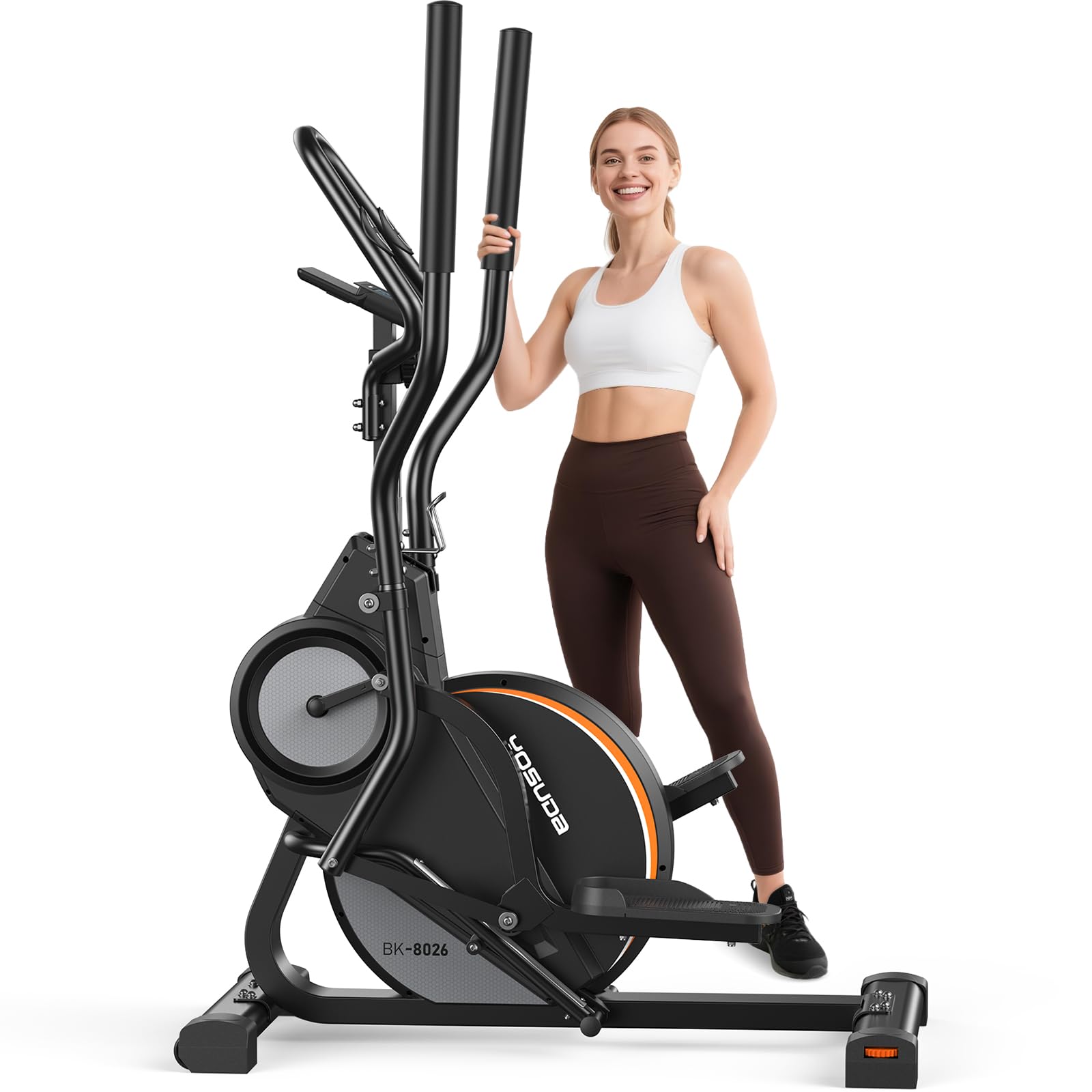
The YOSUDA 3-in-1 machine functions as an elliptical, a stair climber, and a cardio climber, but its standout feature for muscle building is the 45-degree climbing angle that forces the glutes and hamstrings into deep hip extension. The 15.5-inch stride is shorter than premium ellipticals, but the inclined body position compensates by increasing the time under tension on the posterior chain. The 18 lb flywheel provides enough momentum for smooth transitions between eccentric and concentric phases.
The 16 resistance levels use magnetic resistance, so there is no friction wear and the machine is ultra quiet. Users report significant leg improvement within three weeks of daily use, which is a good indicator of the load stimulus. The Bluetooth connectivity with Kinomap and Fed App adds structured climbing routes that vary the resistance profile automatically, preventing adaptive plateaus.
Assembly is straightforward but the machine is heavy at 94 lbs, so plan for two people. The pedals are large and comfortable, accommodating users with shoe sizes up to US 13. The main limitation is the 300 lb weight capacity, which may be tight for users who want to add a weight vest. Still, for the price, this machine delivers a genuine climbing-specific strength stimulus that most ellipticals at this price point cannot match.
Why it’s great
- 45 degree climbing angle targets glutes and hamstrings effectively
- Magnetic resistance is whisper quiet for home use
- Bluetooth app integration provides structured climbing routes
Good to know
- 300 lb weight capacity limits vest- or plate-loaded sessions
- Shorter stride may not suit users over 6 feet tall
- Heavy box; solo assembly is difficult
8. Marcy Multifunction Home Gym

The Marcy MWM-989 is a selectorized weight stack machine with 150 lbs of resistance, dual action press arms, and a removable preacher curl pad. While it is not a pure cardio machine, its design enables high-rep circuits that elevate heart rate while loading muscle groups in a fixed path—ideal for beginners who want to build baseline strength while maintaining a conditioning element. The weight stack pin lets you jump between loads quickly, keeping rest periods short.
The steel frame is heavy-duty and the dual action press arms allow chest press and butterfly exercises without changing attachments. The leg station provides seated leg extensions and curls, which are important for quad and hamstring development. The 150 lb stack is adequate for upper body work and leg extensions, though you may outgrow it for compound leg movements within a few months.
Assembly takes about 3 hours because the cable routing is finicky—the top cable length is short, so users over 5’7″ may not get full range of motion on the lat pulldown without an extender. The included attachments are basic, so plan to add a tricep rope and ankle strap for variety. For the price, this is a solid entry-level resistance machine that can be used in a circuit format for muscle-building cardio.
Why it’s great
- Weight stack pin allows fast transitions for circuit training
- Dual press arms offer chest and butterfly in one movement
- Leg station isolates quads and hamstrings effectively
Good to know
- Top cable is short; tall users may need an extender
- Assembly takes 3+ hours with careful cable routing
- 150 lb stack becomes limiting for advanced leg exercises
9. ATEEDGE Treadmill

The ATEEDGE budget treadmill offers a 15% auto incline and a 0.5-10 MPH speed range, driven by a 3 HP peak motor. For muscle building, the key spec is the incline range—15% is steep enough to force the glutes and calves into significant mechanical tension, especially when combined with low speed and a weight vest. The 18-inch wide belt provides stability for heavier users, and the double-layer shock absorption system protects the knees during high-incline walks.
The folding mechanism is space-saving, and the Bluetooth app integration adds structured interval programming. The dual device holder is convenient for watching form videos during incline sessions. Users report that the assembly is straightforward and the operation is quiet enough for apartment living.
The motor is rated for walking and light jogging, not sustained running at high incline. The 350 lb capacity is generous for this price tier, but the frame does flex slightly under heavy loads at max incline. If you plan to use this machine strictly for incline walking (10-15% grade, 2-4 MPH, 30-45 minutes), it delivers excellent muscle activation for the cost. The warranty and customer service are basic, so treat this as a solid entry-level unit rather than a long-term investment.
Why it’s great
- 15% auto incline provides steep grade for posterior chain work
- Wide 18-inch belt offers stability for heavy users
- Folds compactly for small spaces
Good to know
- Motor is best for walking, not sustained running
- Frame may flex slightly under heavy load at max incline
- Basic warranty and customer support
10. Gazelle Glider Edge

The Gazelle Glider Edge uses a hydraulic resistance mechanism rather than magnetic braking, which creates a progressive resistance curve that increases tension as you push harder. This mimics the concentric/eccentric loading pattern of actual strength exercises, making it one of the few low-cost machines that genuinely builds muscle through full-body movement. The 18-inch stride combined with the arm levers engages the chest, back, and legs synergistically.
The steel frame is sturdy at up to 300 lbs, and the anti-slip foot platforms provide secure footing during lateral movements. The built-in computer tracks distance, time, speed, and a rough calorie estimate, which is adequate for basic training. The folding design reduces to a compact footprint for storage.
The resistance range is limited to 10 levels, and the hydraulic mechanism can feel inconsistent at the high end under max force output. Serious bodybuilders may find the max resistance too light for continued progress beyond the first few months. However, for users rehabbing from injury or seeking a low-impact full-body resistance workout that elevates heart rate, the Gazelle is unmatched at this price point. Users with Achilles tendon issues or limited mobility also report significant benefits.
Why it’s great
- Hydraulic resistance creates progressive concentric/eccentric loading
- Full-body movement engages chest, back, and legs simultaneously
- Folding design saves space in small apartments
Good to know
- 10 resistance levels become limiting for advanced users
- Hydraulic mechanism can feel inconsistent at max settings
- Max weight capacity of 300 lbs may restrict heavy users
11. REP Fitness AB-3000 FID Bench

This is not a cardio machine in the traditional sense, but the REP AB-3000 FID bench is a critical component for any muscle-building cardio circuit because it enables compound pressing and core work at multiple angles. The flat, incline, and decline positions allow you to hit every major muscle group while keeping rest periods short, turning your workout into a conditioning session. The 1000 lb weight capacity makes it stable enough for heavy dumbbell work between cardio intervals.
The steel frame is welded and the high-density foam padding is wide enough for all body types. The seat and back pad adjust independently, so you can set the hip angle to match the exercise and joint mechanics. The integrated wheels make it portable, and the folding design means it can be stored against a wall when not in use.
Assembly takes about 45 minutes, and the instructions are sparse—a single diagram—so expect some trial and error with bolt spacing. Some users report a gap between the seat and back pad in flat position, which can be mildly uncomfortable during heavy decline work. Overall, this bench is a functional tool for turning any cardio machine into a full-body circuit station.
Why it’s great
- FID positions allow full-body compound movements in a circuit
- 1000 lb capacity handles heavy dumbbell work safely
- Folding design and wheels make it portable
Good to know
- Assembly instructions are minimal; expect some frustration
- Gap between seat and back pad in flat position
- Heavy at 89 lbs, not ideal for frequent moving
FAQ
Can I really build muscle with a cardio machine, or is that just marketing?
What is the difference between magnetic and electromagnetic resistance for muscle building?
Should I choose an elliptical, a treadmill, or a functional trainer for building leg muscle?
Final Thoughts: The Verdict
For most users, the cardio machine for muscle building winner is the SOLE E95S Elliptical because its power adjustable stride and 20 levels of magnetic resistance let you target specific leg angles under constant tension, directly driving glute and quad hypertrophy. If you want a weight-stack-based approach that blends strength and conditioning into one station, grab the Body-Solid BFFT10B Functional Trainer. And for low-impact posterior chain work with zero joint stress, nothing beats the 3G Cardio Elite RB X Recumbent Bike.