If you spend hours staring at a screen or wake up with that gritty sandpaper feeling in your eyes, you know not all drops are created equal. The market is flooded with formulas packed with preservatives and vasoconstrictors that only mask the problem. Finding a truly gentle, effective solution means knowing exactly what to look for on the ingredient list.
I’m Emma — the founder and writer behind Baby Bangs. I’ve spent hundreds of hours reviewing dry eye relief products, analyzing ingredient labels, and cross-referencing customer feedback with clinical studies to find the formulas that actually work without the junk.
Whether you have mild dryness, moderate discomfort, or a chronic condition, choosing the right formula can mean the difference between temporary relief and lasting comfort. This guide cuts through the marketing to help you pick the best all natural eye drops for your specific needs.
How To Choose The Best All Natural Eye Drops
When you’re dealing with irritated, dry eyes, the wrong bottle can make things worse. The most important decision isn’t the brand — it’s the ingredient list. You need to match the viscosity and formulation to how dry your eyes actually are, while avoiding chemicals that cause rebound redness or long-term damage.
Look for Preservative-Free Formulas
Preservatives like benzalkonium chloride (BAK) are common in multi-dose bottles, but they can break down the tear film over time. If you use drops more than four times a day, a preservative-free formula is essential. Single-dose vials are the safest bet because they contain zero preservatives and stay sterile until you open them.
Check the Active Lubricant
The active ingredient dictates how long the relief lasts. Thinner agents like Polyvinyl Alcohol provide quick, short-term wetting, while thicker ones like Hydroxyethyl cellulose and Glycerin create a more protective, longer-lasting layer. For moderate to severe dryness, choose a formula with a higher viscosity lubricant that stays on the eye longer.
Match the Drops to Your Use Case
Consider when and how you use drops. Do you need a daily dose for screen fatigue, or are you treating a chronic condition like Sjögren’s syndrome or MGD? For occasional use, a compact multi-dose bottle is convenient. For nightly routines or severe symptoms, single-dose vials offer superior sterility and a thicker, more soothing formula.
Quick Comparison
On smaller screens, swipe sideways to see the full table.
| Model | Category | Best For | Key Spec | Amazon |
|---|---|---|---|---|
| Optase Dry Eye Intense Drops | Single-Dose Vials | Moderate to severe dry eye | Glycerin 0.2% — high viscosity | Amazon |
| Rain Preservative Free Drops | Single-Dose Vials | Severe/chronic dryness | CMS Eye Moisture technology | Amazon |
| OPTASE Allegro Lubricant Drops | Multi-Dose Bottle | Daily dry eye & allergies | Hydroxyethyl cellulose formula | Amazon |
| Refresh Classic Lubricant Drops | Single-Dose Vials | Mild/occasional dryness | Polyvinyl Alcohol 1.4% | Amazon |
In‑Depth Reviews
1. Optase Dry Eye Intense Drops
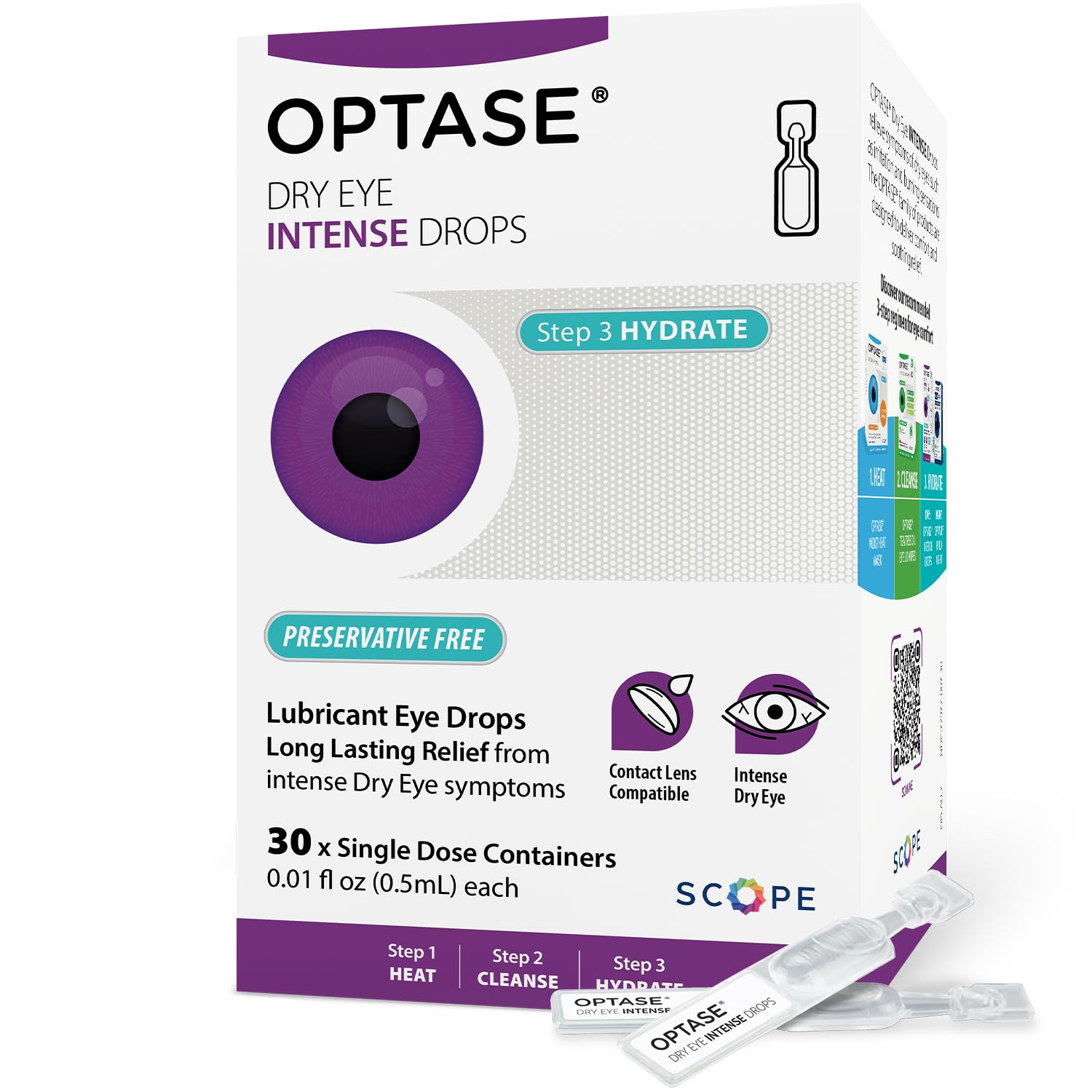
Optase Dry Eye Intense Drops are the heavy-hitter of this list, specifically designed for moderate to severe dry eye symptoms. The formula uses Glycerin at 0.2% as the primary lubricant, which creates a noticeably thicker, more protective layer on the eye compared to lighter polymer-based drops. This higher viscosity translates directly into longer-lasting relief — many users report that it outlasts standard Refresh drops by a significant margin.
The 30-count single-dose vial format is ideal for those who need a sterile, preservative-free solution for nightly use. Because each vial is a one-time application, there is zero risk of bacterial contamination or preservative-related irritation. This makes it a strong choice for sensitive eyes that react poorly to multi-dose bottles. Users with contact lenses also report no residue or clouding, which is a common complaint with thicker gel drops.
Two practical trade-offs: the vials are small, and if you only use drops occasionally, some product may go to waste between uses. Also, while the cost per application is higher than a multi-dose bottle, the clinical-grade sterility and doctor-recommended formulation justify the premium for those with chronic symptoms.
Why it’s great
- Long-lasting moisture outlasts most OTC drops
- Completely preservative-free with single-dose sterility
- Doctor recommended for moderate to severe dry eye
Good to know
- Single-dose format can feel wasteful for light users
- Premium pricing compared to multi-dose alternatives
2. Rain Preservative Free Eye Drops

Rain positions itself as a premium artificial tear for those who have tried everything else without success. The key differentiator here is the proprietary CMS Eye Moisture technology, which is designed to hydrate the ocular surface longer than standard saline-based drops. For users with conditions like Sjögren’s syndrome — where the eyes produce virtually no natural tears — this formulation has provided measurable relief where cheaper drops failed entirely.
The drops come in single-dose vials, ensuring a preservative-free, sterile application every time. This makes them suitable for high-frequency use without the risk of preservative toxicity building up in the tear film. Despite being a thicker formula, they are labeled as contact lens compatible, and most users report no blurring or residue.
However, there are some mechanical quirks. A handful of users have noted that the vials require significant pressure to dispense the drops, which can be frustrating during a dry eye flare-up. Additionally, the premium price point is the highest on this list, making it an investment best reserved for those with chronic, severe symptoms rather than occasional mild dryness.
Why it’s great
- Effective for severe cases like Sjögren’s syndrome
- Long-lasting moisture without blurring
- Completely preservative-free and sterile
Good to know
- Vial design can be difficult to squeeze
- Highest cost per application in this review
3. OPTASE Allegro Lubricant Eye Drops

OPTASE Allegro is engineered for daily comfort against environmental irritants like pollen, dust, and wind. Its active ingredient is Hydroxyethyl cellulose (HEC), a moderate-viscosity lubricant that sits between the thin wetting of classic Refresh and the heavy coating of Glycerin-based drops. This makes it versatile — it provides enough lubrication for screen-related dryness without leaving you with the heavy, sticky feeling of a gel.
The multi-dose bottle is the standout feature here. It is designed to deliver up to 300 drops while remaining preservative-free, thanks to a specialized dispensing system that maintains sterility for up to three months. This is a significant convenience advantage over single-dose vials, especially for users who need drops throughout the day at work or on the go. It is also explicitly contact lens compatible, with no reported clouding.
The most common criticism is the dispensing mechanism itself. Several users found the bottle difficult to squeeze consistently — sometimes requiring multiple attempts to release a drop. This is a minor ergonomic issue, but one that matters when your eyes are already irritated. Despite this, the combination of a preservative-free multi-dose bottle and a balanced HEC formula makes it a strong mid-range daily driver.
Why it’s great
- Preservative-free in a convenient multi-dose bottle
- Balanced viscosity for all-day use
- Works well with contact lenses
Good to know
- Bottle can be difficult to dispense
- Not as thick for severe dry eye
4. Refresh Classic Lubricant Eye Drops

Refresh Classic is the no-frills entry point into preservative-free eye drops. Its active ingredients are Polyvinyl Alcohol (1.4%) and Povidone (0.6%), a classic combination that has been used for decades to temporarily relieve dryness. This is the thinnest formula on the list — it works by spreading a watery film over the eye to reduce friction and irritation. It is excellent for flushing out dust or relieving that quick morning dryness.
The 30-count single-dose vial format ensures each application is sterile and preservative-free, which is a huge plus at this tier. For infrequent users, these individual vials are perfect for keeping in a desk drawer, car, or first aid kit without worrying about a bottle expiring. They are also compatible with sensitive eyes and have no risk of rebound redness.
The catch is that the relief is short-lived compared to the thicker HEC or Glycerin-based drops. For moderate to severe dryness, you may find yourself reaching for a second vial within an hour. The packaging also arrives in a simple envelope, and several customers reported receiving a crushed box — though the inner vials remained intact. It’s a solid, honest product for mild symptoms, but not the right choice for chronic dry eye sufferers.
Why it’s great
- Sterile, preservative-free single-dose vials
- Great for occasional use and sensitive eyes
- Reliable classic formula for immediate wetting
Good to know
- Short duration of relief vs. thicker drops
- Outer box often arrives damaged in shipping
FAQ
What does “preservative-free” mean on an eye drop label?
Can I use these drops if I wear contact lenses?
Why does my eye feel drier after using some drops?
Final Thoughts: The Verdict
For most users, the best all natural eye drops winner is the Optase Dry Eye Intense Drops because it provides the longest-lasting, preservative-free relief for moderate to severe dryness, backed by a doctor-recommended formula and sterile single-dose vials. If you want a convenient, everyday bottle for environmental irritants, grab the OPTASE Allegro Lubricant Eye Drops. And for severe chronic conditions like Sjögren’s syndrome, nothing beats the Rain Preservative Free Eye Drops.