The difference between a bowl of limp, mushy noodles and a perfectly chewy, nutty-tasting soba comes down to one thing: the buckwheat-to-wheat ratio. Most packages labeled “buckwheat noodles” contain filler wheat flour that turns to paste the second you look away from the stove. Real buckwheat soba holds a firm, bouncy bite and carries a distinct earthy flavor that wheat pasta simply cannot replicate.
I’m Emma — the founder and writer behind Baby Bangs. I’ve spent years digging through ingredient labels and testing cook times across dozens of buckwheat noodle brands to separate the ones that deliver authentic texture from those that just look the part.
Whether you need a gluten-free base for cold dipping sauce or a hearty ramen bowl that won’t dissolve mid-slurp, finding the true best buckwheat noodles means understanding what percentage of buckwheat actually made it into the bag.
How To Choose The Best Buckwheat Noodles
Buckwheat noodles live or die by their ingredient list. A package that leads with wheat flour will never deliver the same nutty flavor or resilient bite as one that leads with buckwheat flour. Before you buy, understand these three decision points.
Check the buckwheat percentage first
In Japan, soba containing at least 40% buckwheat can legally be called soba, but premium options hit 80% or even 100%. The higher the buckwheat content, the more fragile the noodle becomes during cooking. 100% buckwheat noodles require gentle handling and precise timing, but reward you with a rich, earthy taste and a tender-yet-firm texture. Blended noodles with wheat hold up better to aggressive boiling and reheating, but trade away the signature buckwheat aroma.
Decide between gluten-free and traditional blends
True 100% buckwheat noodles are naturally gluten-free, but they are also more delicate. If you have celiac disease or a gluten sensitivity, look for packages explicitly labeled gluten-free and check that the only ingredient is buckwheat flour. Traditional soba blends add wheat flour and sometimes yam flour for elasticity and a silkier mouthfeel. These blends survive longer cook times and are easier to rinse without breaking apart, making them more forgiving for weeknight meals.
Look at the sodium content
Many mass-market buckwheat noodles include added salt as a preservative and texture stabilizer. If you are watching your sodium intake or building a low-sodium meal plan, seek out no-salt-added options. Brands that skip the salt tend to have a cleaner, purer buckwheat taste and let the dipping sauce or broth shine without competing saltiness.
Quick Comparison
On smaller screens, swipe sideways to see the full table.
| Model | Category | Best For | Key Spec | Amazon |
|---|---|---|---|---|
| Hakubaku Premium No Salt Soba | Traditional Blend | Restaurant-quality cold soba | Stone-milled buckwheat, wheat, yam; no salt | Amazon |
| BAYU STORE 100% Buckwheat Soba | 100% Buckwheat | Pure buckwheat flavor, gluten-free diets | 100% buckwheat flour, no wheat added | Amazon |
| Big Green Organic Buckwheat Soba | Organic | USDA organic, clean ingredient soba | 100% organic buckwheat; USDA Organic; gluten-free | Amazon |
| ONETANG Buckwheat & Brown Rice Ramen | Ramen Style | Quick-cooking ramen bowls and stir-fries | Buckwheat & brown rice; low sodium; vegan | Amazon |
| Sukina Buckwheat Soba Noodles | Value Bulk | Budget-friendly family-size servings | 48 oz bulk bag; slightly lower buckwheat ratio | Amazon |
In‑Depth Reviews
1. Hakubaku Premium No Salt Soba Noodle (3-Pack)

Hakubaku nails the restaurant-quality experience that home cooks chase. The noodle uses stone-milled buckwheat as the first ingredient, then adds wheat and yam for a resilient, bouncy chew that holds up beautifully whether served cold with tsuyu or hot in a simple broth. The absence of added salt makes this a standout — the buckwheat flavor comes through clean and nutty without any metallic salt aftertaste.
Each 9.5 oz package in the three-pack cooks in six to seven minutes with zero oil or salt required in the water. The traditional Japanese Sobayu ritual — drinking the mineral-rich cooking water after the noodles are done — is a nice touch that speaks to the brand’s authenticity. Families and regular soba eaters will appreciate the multipack format and the forgiving texture that survives a quick rinse without shattering.
Several long-time soba buyers on Amazon noted this is the closest they have found to the noodles served at Japanese soba-ya restaurants, praising the balanced chew and the fact that buckwheat leads the ingredient list rather than wheat. The only recurring feedback involves delivery freshness window — checking the expiration date on arrival is wise.
Why it’s great
- Authentic restaurant-grade texture with stone-milled buckwheat and yam for elasticity
- Zero added salt means pure, clean buckwheat taste and low-sodium control
- Three-pack provides solid value for regular soba eaters
Good to know
- Contains wheat and yam — not suitable for gluten-free diets
- Delivery freshness can vary; check the expiration date promptly
2. BAYU STORE Authentic Japanese 100% Buckwheat Soba Noodles
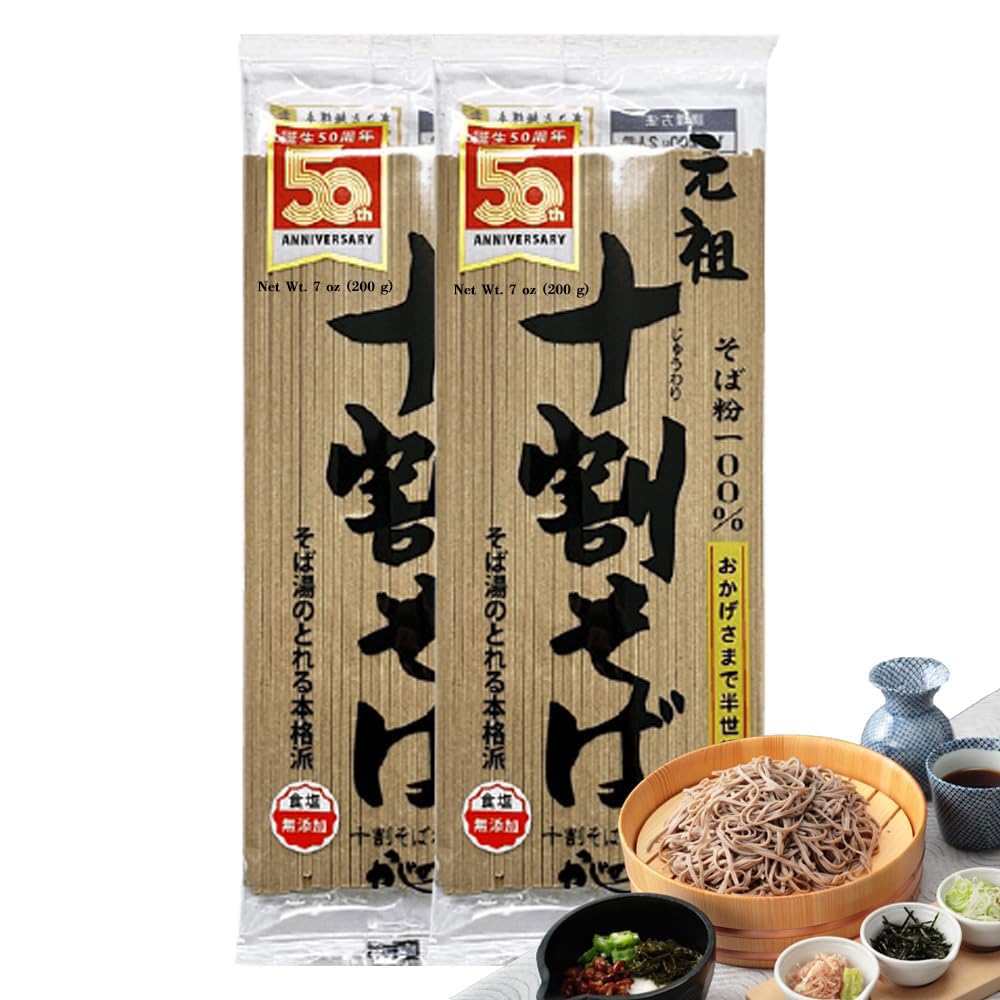
For anyone strictly avoiding wheat, BAYU STORE delivers a true ju-wari (100% buckwheat) soba with zero wheat flour in the ingredient list. The noodles cook up with a tender, slightly crumbly texture that is characteristic of pure buckwheat — not as bouncy as a wheat blend, but intensely nutty and earthy. They hold their shape best when handled gently and rinsed under cold water immediately after draining.
Each bag contains 200 grams, sold in a two-pack, making it a decent portion for a few meals. The flavor is the real draw here: rich buckwheat notes that deepen when served with a warm dipping sauce or simple soy-based broth. Several reviewers on Amazon noted that these noodles thickened their broth nicely, a sign of high buckwheat content releasing natural starches during cooking.
The biggest catch is the price point relative to portion size. Several buyers mentioned the noodles taste excellent but feel expensive for the amount you get. Also, the packaging lacks detailed cooking instructions in English, so first-timers should look up proper 100% buckwheat soba technique — undercook slightly and handle with care.
Why it’s great
- Genuine 100% buckwheat with no wheat filler — ideal for gluten-free diets
- Deep, nutty buckwheat flavor that enhances broth and dipping sauces
- Quick cook time; ready in just a few minutes
Good to know
- Portions are small; two-pack covers only a few servings
- Higher price per ounce compared to blended alternatives
- No English cooking instructions included on the package
3. Big Green Organic Food Buckwheat Soba Angel Hair Pasta
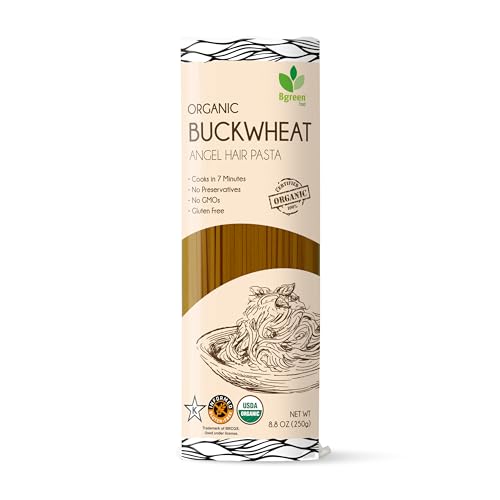
Big Green Organic Food keeps the ingredient panel impossibly short: organic buckwheat and water. That is it. The USDA Organic and Star-K kosher certifications add an extra layer of trust for shoppers who prioritize certified clean sourcing. The angel hair cut means these noodles cook fast — under four minutes — and absorb sauces readily without turning into a paste.
The texture leans slightly sticky right out of the pot, which is a common trait for 100% buckwheat pasta. A thorough cold rinse after cooking separates the strands and firms up the bite beautifully. Several home cooks on Amazon reported that this brand works especially well with pesto and vegetable-heavy dishes, where the mild buckwheat flavor complements rather than overpowers the toppings.
The one drawback is the bouncy texture is less pronounced than traditional Japanese soba blends because there is no wheat or yam to add spring. The buckwheat taste is also more subtle than some standalone soba brands — one reviewer noted they were switching to compare it against a stronger-flavored competitor. Still, for organic purity at a fair price, Big Green is a solid daily driver.
Why it’s great
- Two-ingredient list: organic buckwheat and water — exceptionally clean
- USDA Organic and Star-K kosher certified
- Angel hair shape cooks quickly and pairs well with vegetable sauces
Good to know
- Texture is slightly sticky; needs a thorough cold rinse after boiling
- Buckwheat flavor is more subtle than some 100% buckwheat competitors
4. ONETANG Organic Buckwheat & Brown Rice Ramen Noodle

ONETANG takes a different route by blending organic buckwheat with brown rice flour instead of wheat, creating a gluten-free ramen-style noodle that holds a curly shape and resists turning to mush in hot broth. Each 2.47 oz pack in the 12-pack is individually portioned, making it dead simple to grab one for a quick lunch without guessing serving sizes. The low sodium formulation (no added salt) keeps the focus on the grain flavors.
The cooking window is narrow — the noodles go from perfectly tender to soft quickly, so setting a timer is non-negotiable. Multiple Amazon reviewers with food-sensitive kids reported that these noodles reheat well in the microwave with broth and don’t fall apart like other gluten-free ramen options. The slightly thicker, udon-like shape gives each bite a satisfying chew that works equally well in stir-fries and cold noodle salads.
On the downside, several buyers experienced mushiness when they cooked beyond the recommended time or left the noodles sitting in hot liquid. The brown rice flour adds a subtle sweetness that some traditional soba purists may find distracting. And each single-serve pack is relatively small, so heartier appetites will need two packs per meal.
Why it’s great
- Gluten-free buckwheat and brown rice blend — no wheat or yam
- Individually wrapped portions for easy meal prep and portion control
- Curly shape holds up well in ramen broth and stir-fry dishes
Good to know
- Cook time is precise; overboiling leads to mushy results quickly
- Single-serve size is small; larger portions require two packs
- Brown rice adds a mild sweetness that changes the flavor profile
5. Sukina Buckwheat (Soba) Noodle, 48 oz
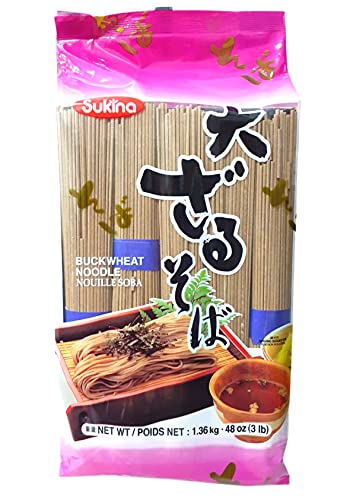
Sukina offers the largest single-bag portion on this list at a full 48 ounces, making it the obvious pick for families, meal preppers, or anyone who goes through soba by the pound. The noodles are more wheat-forward than the premium picks — the buckwheat content is lower, which translates to a firmer, more pasta-like chew that is very forgiving during cooking and reheating. There is a subtle burnt aroma some buyers noticed out of the bag, though it does not carry through into the finished dish.
Multiple verified Amazon buyers praised the reasonable cost per ounce and the fact that the noodles taste good across a range of dishes, from simple cold salads to heartier stir-fries. The cooking window is wider than 100% buckwheat options, so you can boil these without watching the clock nervously. One reviewer summed it up as “reasonable priced and taste great,” which hits the value proposition squarely.
The trade-offs are clear: the flavor profile is less complex than higher-buckwheat soba, and the texture leans more toward standard wheat pasta than artisanal soba. If your priority is budget-friendly bulk volume over nuanced buckwheat taste, Sukina fits the bill. Picky soba purists will notice the difference immediately.
Why it’s great
- Massive 48 oz bag provides the lowest cost per ounce in this guide
- Wheat-heavy blend is forgiving to cook — low risk of mushiness
- Versatile texture works for cold soba, stir-fry, and soup alike
Good to know
- Lower buckwheat ratio means milder flavor and less authentic soba bite
- Some buyers reported a faint burnt odor before cooking
FAQ
What is the difference between 100% buckwheat soba and blended soba?
How do I keep buckwheat noodles from turning mushy?
Are all buckwheat noodles gluten-free?
Final Thoughts: The Verdict
For most users, the best buckwheat noodles winner is the Hakubaku Premium No Salt Soba because it delivers authentic stone-milled flavor, a bouncy restaurant-style texture, and zero added salt — all packed in a convenient three-pack that suits regular eating. If you need strictly gluten-free noodles with 100% buckwheat purity, grab the BAYU STORE 100% Buckwheat Soba. And for budget-friendly bulk volume that the whole family can eat without stress, nothing beats the Sukina 48 oz Buckwheat Soba.