A wobble board that isn’t challenging enough gets boring fast, but one that demands pro-level reflexes will end up in the closet after a single face-plant. The best balance board for beginners sits right in the middle — stable enough to build confidence, flexible enough to keep your core guessing. This guide breaks down the entry-level market so you can pick the right platform for your first wobble.
I’m Emma — the founder and writer behind Baby Bangs. I’ve spent years researching gear for physical therapy, home fitness, and active workspaces, analyzing build materials, weight ratings, and surface textures to separate products that actually train stability from those that just look the part.
Every board reviewed here was selected for its beginner-friendly design, safety features, and track record with real users starting out. This is your complete resource for finding the balance board for beginners that fits your space, your body, and your confidence level.
How To Choose The Best Balance Board For Beginners
Picking a first balance board means ignoring flashy marketing about pro-athlete training and focusing on three things: stability at the starting position, surface grip underfoot, and floor-scratch protection. New users need a wider base and moderate dome height so the tilt feels intentional rather than chaotic.
Diameter and Dome Shape
Boards with a 15–17 inch diameter offer the best balance between room for foot placement and manageable tilt range. Smaller boards tip faster and require quicker reflexes. Larger boards feel more stable but reduce the movement arc, which is fine for desk use but limits core activation for standing exercise.
Surface Texture and Floor Safety
A textured top layer prevents foot slip whether you’re barefoot or in socks. Check for rubberized grip pads or etched wood grain. On the bottom, look for soft EVA or rubber bumpers that keep the board from sliding on hardwood, tile, or thin carpet without leaving marks.
Weight Capacity and Material
Entry-level boards typically support 250 to 350 pounds. Solid wood or high-density plywood with a clear finish resists warping and cracking better than pressed particleboard. Avoid boards with a painted top — the finish wears quickly under foot friction and looks ragged after a few months.
Quick Comparison
On smaller screens, swipe sideways to see the full table.
| Model | Category | Best For | Key Spec | Amazon |
|---|---|---|---|---|
| ProsourceFit Wooden Balance Board | Wobble | All-around core training | 15.75-inch diameter, 300 lb limit | Amazon |
| StrongTek Professional Wooden Balance Board | Wobble | 360-degree challenge | 17.5″ x 13.5″, 350 lb limit | Amazon |
| Woodure Wobble Board Woodure | Wobble | Space-saving storage | 13.5″ x 17″, 350 lb limit | Amazon |
| 2-in-1 Wooden Balance & Slant Board Woodure | Wobble/Slant | PT and calf stretching | 4 incline angles, 350 lb limit | Amazon |
| WOOD CITY Wobble Board | Rocker | Family and kid play | 35″ long, 480 lb limit | Amazon |
| Fitlaya Fitness Balance Board Trainer | Rocker | Sports simulation training | 29.1″ maple board, 350 lb limit | Amazon |
| Gaiam Evolve Balance Board Standing Desk | Rocker | Office and desk use | 27″ x 12″, 250 lb limit | Amazon |
In‑Depth Reviews
1. ProsourceFit Wooden Balance Board

The ProsourceFit board hits the sweet spot for entry-level users with a 15.75-inch diameter that provides ample foot placement without being oversized. The textured PP plastic surface on top of a solid wood core keeps your soles planted during side-to-side and multi-directional rocking, even in socks. Customer reviews consistently note its non-slip performance on both hardwood and thin carpet without scratching floors.
Weighing just over three pounds, it is easy to carry from room to room or toss under a desk during work hours. The low 2.5-inch height reduces the tilt range slightly compared to pro boards, which is exactly what a beginner needs — enough movement to engage the core and ankles without that feeling of tipping over the edge. Users recovering from ACL surgery and knee osteoarthritis specifically praise its stability for rehab protocols.
Rated at 300 pounds maximum weight, it accommodates a wide range of body types. The one catch is that the plastic dome base can feel slippery on smooth hardwood if the bottom protection pads aren’t positioned carefully. A quick fix is placing it on a thin rug or non-slip mat during initial sessions.
Why it’s great
- Generous 15.75-inch surface area for confident foot placement
- Lightweight and portable enough for desk-to-floor transfer
- Textured top layer prevents slipping in bare feet or socks
Good to know
- Bottom can slide on smooth hardwood without a mat
- Not recommended for high-risk balance rehabilitation by the manufacturer
2. StrongTek Professional Wooden Balance Board

The StrongTek board is a step up in both size and challenge. Its 17.5 x 13.5 inch platform offers a generous stance width, while the cross-shaped base allows 360-degree tilt that moves freely in all directions. New users benefit from the extra surface area — your feet can shift position as you learn to control the wobble without stepping off the board.
Construction from Lauan hardwood plywood gives it durability for 5 to 10 years of regular use, per customer feedback. The non-slip top layer is described as aggressively grippy yet comfortable for barefoot training. A majority of reviews mention its effectiveness for post-surgery PT, particularly for knee replacement and ankle fracture recovery, because the broad base lets physical therapists guide incremental tilt ranges.
Rated at 350 pounds, it handles heavier users without creaking or flexing. The main complaint is that the four edge protector pads on the bottom have unreliable adhesive — they tend to peel off after several weeks. Removing them entirely or replacing with stronger furniture pads solves the issue.
Why it’s great
- Large platform provides stable foot placement for beginners
- Cross-shaped base delivers true 360-degree motion
- Constructed from durable Laun hardwood with a grippy top surface
Good to know
- Bottom adhesive pads may fall off and need replacement
- Taller dome requires more ankle engagement than flatter boards
3. Woodure Wobble Board

This Woodure wobble board packs a 350-pound weight capacity into a footprint small enough to slide under a bed or sofa. At 13.5 x 17 inches, the board feels narrower than the ProsourceFit option, which means your foot positioning needs to be more deliberate. That is a net positive for beginners — it forces you to stand center and engage your core from the first wiggle.
Assembly is minimal (pre-drilled holes for the base), and the non-slip top surface is removable and replaceable. Several customers use it daily for vestibular therapy at home, performing head and upper body movements while standing on the board to retrain balance systems. It works on both carpet and hard flooring, though users recommend anti-slip shoes on smooth surfaces.
The narrow width limits side-to-side rocking range compared to wider models, which reduces the risk of ankle overextension for new users. The trade-off is that advanced exercises like deep squats or lunges feel cramped. The board also lacks edge protector pads, so on bare hardwood it can shift slightly during aggressive movement.
Why it’s great
- Very compact for easy storage under furniture
- High 350-pound weight limit for a small board
- Effective for targeted vestibular and balance therapy at home
Good to know
- Narrow platform limits foot spacing for larger users
- No floor protection pads may cause slight shifting on bare hardwood
4. 2-in-1 Wooden Balance & Slant Board by Woodure

This 2-in-1 board from Woodure gives beginners two training tools in one package: a wobble board for dynamic balance work and a slant board with four adjustable incline angles for calf and Achilles stretching. The dual function makes it especially appealing for physical therapy patients who need both strengthening and flexibility work in a single session.
The balance mode uses a rounded base that tilts in all directions, while the slant mode props up at 10, 15, 20, or 25 degrees. Customers recovering from total knee replacement and pad exercises report that the incline settings allow gradual progression without needing separate equipment. The non-slip top surface and anti-scratch feet prevent floor damage during transitions between modes.
Rated at 350 pounds, the solid wood construction feels durable, though some units have shipped with small cosmetic defects or loose screws that require tightening on arrival. The board also feels slightly narrow for users with larger feet — the platform is designed for efficient stance rather than wide placement.
Why it’s great
- Two training modes reduce the need for separate equipment
- Four incline settings allow gradual stretch progression
- Non-slip top and floor-friendly feet protect surfaces
Good to know
- Narrow platform may feel limited for larger foot sizes
- Some units arrive with minor cosmetic flaws or loose screws
5. WOOD CITY Wobble Board

The WOOD CITY board is a curved rocker-style board rather than a dome-based wobble board. At 35 inches long, it functions as both a balance trainer and an open-ended play item for kids and adults. Beginners find the rocker motion less intimidating than 360-degree tilt because the movement is limited to forward-backward oscillation — you control the range simply by shifting your weight.
Made from natural wood with eco-friendly lacquers, the board supports up to 480 pounds, making it the highest weight capacity on this list. Parents report that their 2-to-4-year-olds use it as a bridge, slide, ramp for toy cars, or a lounge chair. Adults in the same household use it for yoga poses, stretching, and standing desk fidgeting.
The wide 11.8-inch width accommodates both feet flat, and the lack of a center pivot point means no sudden tipping. The main downside is that the open-ended rocker design does not strengthen rotational ankle stability the way a 360-degree wobble board does. Also, because it is essentially a large curved plank, it takes up floor space and cannot be stored vertically as easily as smaller wobble boards.
Why it’s great
- Rocker motion is more predictable and less intimidating for total beginners
- Extremely high 480-pound weight limit suits the whole family
- Natural wood construction with multiple creative play uses
Good to know
- Does not train 360-degree or lateral ankle stability
- Large footprint makes storage more challenging
6. Fitlaya Fitness Balance Board Trainer

The Fitlaya board is the only entry on this list that uses a rocker + free roller combination, closely mimicking the feel of surfing, skateboarding, and snowboarding. The 29.1-inch maple platform sits on a cylindrical roller, giving you front-to-back and slight side tilt control that depends entirely on your foot pressure. Beginners need to start near a wall or with a spotter because the roller introduces an additional degree of instability compared to fixed-base wobble boards.
Canadian maple construction gives the board a dense, premium feel that resists warping even with repeated use. The anti-slip surface is etched into the wood grain rather than applied as a sticky pad, so it does not peel or degrade over time. Customers consistently praise its ability to keep kids and teens engaged — several reviews note that it successfully pulled grandchildren away from video games for hours of practice.
The 350-pound weight limit is generous for a roller board, but the rolling motion places higher demands on balance than dome-based wobble boards. Beginners who want to prepare for slope sports will appreciate the sport-specific movement, but those solely looking for core stability or physical therapy should stick with a fixed-base design. Some users report the plastic end cap on the roller pops off after extended use, though it presses back on easily.
Why it’s great
- Directly simulates surfing, skating, and snowboarding balance
- Canadian maple build is dense, rigid, and warp-resistant
- Engaging design keeps younger users motivated to practice
Good to know
- Roller design is more challenging and requires initial spotting
- Plastic end cap on the roller may periodically pop off
7. Gaiam Evolve Balance Board Standing Desk
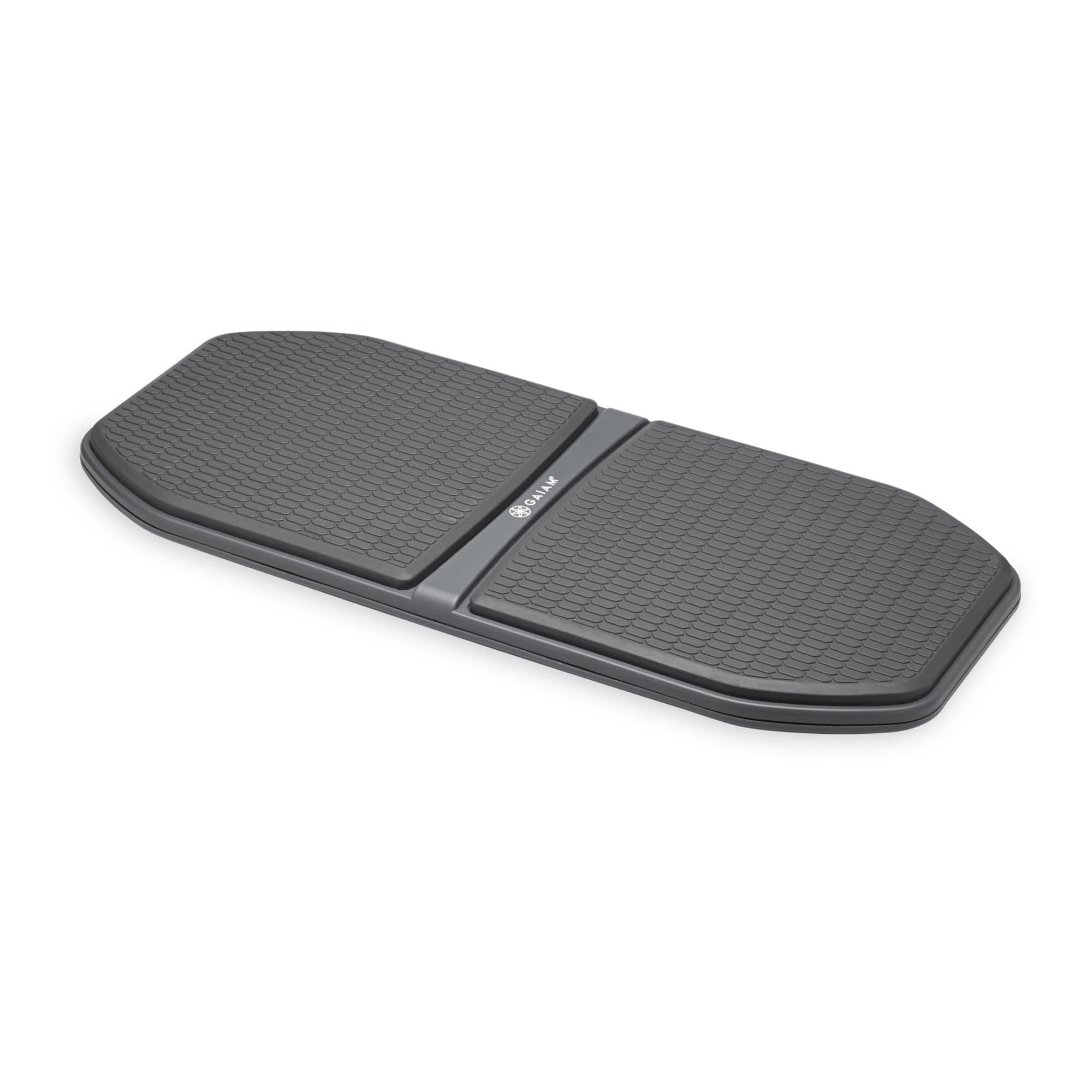
The Gaiam Evolve is purpose-built for standing desk use, with a low-profile curved base that rocks forward-backward and side-to-side without requiring active balancing effort. The 27 x 12 inch platform is wide enough to allow subtle foot shifting while you type, and the honeycomb non-slip texture keeps your shoes planted during prolonged standing sessions. Customers report being able to comfortably stand on it for four to five hours without back or knee fatigue.
Unlike dome-style wobble boards that demand constant micro-adjustments, the Gaiam rocker encourages passive movement that engages stabilizing muscles without disrupting focus. The integrated cushioning layer provides comfort over hard flooring, though some users note that the cushioned top layer can peel near the center after several months of daily use. The 250-pound weight capacity is lower than competitor boards, so larger users should verify sizing.
A few customers report a creaking sound developing after about two months of use, particularly during side-to-side rocking. The noise appears to come from the curved base joint and is loud enough to disturb coworkers in quiet office environments. For home office use this is less of a concern, but open-plan desk workers should test the unit during the return window.
Why it’s great
- Low-profile rocker design supports subtle motion during work
- Wide platform accommodates comfortable foot shifting
- Honeycomb non-slip texture stays secure on carpet and hardwood
Good to know
- 250-pound weight capacity is lower than most competitors
- Cushioned top layer may peel at center over time
- Creaking sound can develop after extended use
FAQ
How long until a beginner can stand steadily on a balance board?
Can I use a balance board on carpet without damaging the fibers?
What exercises should a beginner do on a balance board?
Final Thoughts: The Verdict
For most users, the balance board for beginners winner is the ProsourceFit Wooden Balance Board because its 15.75-inch diameter, textured surface, and low dome height provide the safest, most confidence-building first experience. If you want a 360-degree challenge with a larger platform for progressive training, grab the StrongTek Professional Wooden Balance Board. And for family-friendly play that doubles as a balance tool, nothing beats the WOOD CITY Wobble Board.