Dull baked goods, lifeless smoothies, and flat lattes are the telltale signs of a culinary matcha that’s past its prime or simply low-grade. The difference between a vivid, grassy-sweet creation and a muddy, bitter disappointment is entirely in the powder you choose.
I’m Emma — the founder and writer behind Baby Bangs. My research focuses on sourcing transparency, harvest seasons, and the measurable flavor profiles that separate functional cooking matcha from premium daily blends.
Whether you are blending it into batters or whisking it for a morning latte, the right pick transforms your kitchen routine. This guide breaks down the top options to help you find the best culinary matcha that actually delivers bold color and balanced taste.
How To Choose The Best Culinary Matcha
Culinary matcha is designed for mixing into recipes, but not all powders handle heat or dairy the same way. A vibrant green color, minimal bitterness, and a fine grind are non-negotiable for consistent results in baked goods, smoothies, and lattes.
Harvest Year & Origin
First-harvest (ichibancha) leaves from Japan yield a brighter green color and a sweeter, more umami-forward flavor profile. Later harvests or non-Japanese sources often turn dull brown when heated and carry more astringency. Always check the origin statement on the package.
Grind Size & Texture
A stone-ground powder with a particle size under 40 microns dissolves evenly into batters and cold liquids. Coarser or machine-ground powders leave a gritty mouthfeel in smoothies and clump in hot preparations, ruining both texture and presentation.
Packaging for Freshness
Matcha degrades rapidly when exposed to light, air, and heat. Resealable pouches or airtight tins are essential for culinary users who open the bag repeatedly. A vacuum-sealed inner lining or nitrogen flush further preserves the vibrant chlorophyll color for weeks after opening.
Quick Comparison
On smaller screens, swipe sideways to see the full table.
| Model | Category | Best For | Key Spec | Amazon |
|---|---|---|---|---|
| Midori Spring Gold No.2 | Mid-Range | Bold nutty lattes & cold brew | 5-cultivar Kyoto blend | Amazon |
| Jade Leaf Culinary Grade | Mid-Range | Baking & smoothies | 100g resealable pouch | Amazon |
| FKRO Tea Master’s Organic | Mid-Range | Everyday ceremonial lattes | Single-origin Kagoshima | Amazon |
| Jade Leaf Ceremonial Grade | Premium | Usucha & delicate baking | First harvest Uji blend | Amazon |
| Naoki Matcha Fragrant Yame | Premium | Traditional usucha & koicha | Silver award Yame blend | Amazon |
In‑Depth Reviews
1. Midori Spring Gold No.2
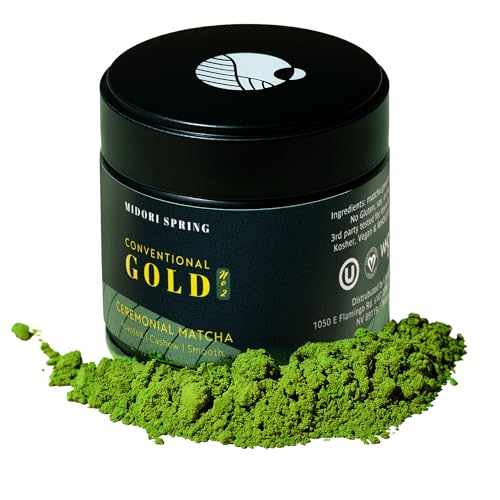
Midori Spring’s Gold No.2 stands out for its deliberately roasted profile — a nutty, toasty flavor with umami undertones that makes it unusually approachable for a mid-range matcha. The blend draws on five carefully selected cultivars from Kyoto farms, which gives it a complexity you rarely find at this tier. Reviewers consistently praise its bold, creamy body and near-total absence of bitterness, even in cold preparations.
Third-party lab testing for metals and purity is a welcome layer of transparency, and the small-batch stone grinding preserves the vibrant green color. Users report sharp mental clarity without jitters, which aligns with the naturally occurring L-theanine content from shade-grown first-harvest leaves. The nutty flavor profile works beautifully in lattes and baked goods, though purists may want a more traditional grassy note for ceremonial-style whisking.
The 70g package is modest, but the quality per gram justifies the price for anyone who wants a daily driver that doubles as a culinary star. Vegan and kosher certification further broaden its appeal for households with dietary restrictions.
Why it’s great
- Unique nutty-roasted flavor that cuts bitterness completely
- Third-party lab tested for purity and contaminants
- Premium Kyoto 5-cultivar blend for layered taste
Good to know
- Roasted profile may not suit purists wanting classic grassy notes
- Smaller package size compared to some culinary options
2. Jade Leaf Culinary Grade Matcha

Jade Leaf’s culinary-grade matcha is the workhorse of the category, offering a generous 100g resealable pouch that yields approximately 50 lattes or up to 100 traditional usucha servings. Sourced from the tea fields of Uji and Kagoshima, this powder delivers a rich, distinctive flavor and a vibrant green color that holds up well in batters and smoothies. The resealable packaging is a practical advantage for users who open the bag repeatedly over several weeks.
Customer reviews highlight its smooth texture and lack of bitter aftertaste, especially when blended with milk or incorporated into recipes. The naturally occurring caffeine clocks in at 16–24mg per serving — roughly a quarter of a standard coffee — making it a viable option for those reducing caffeine intake. The pouch format is less ideal for very humid environments, but storing it in the refrigerator after opening mitigates clumping.
Organic certification adds a layer of trust, and the straightforward single-ingredient list appeals to wellness-focused buyers. While it lacks the ultra-fine grind of premium ceremonial grades, its consistency in cooking and drink applications makes it the most cost-effective choice for high-volume use.
Why it’s great
- Massive 100g pouch with resealable seal for daily use
- Blends smoothly in batters and cold drinks without clumping
- Organic certified from trusted Japanese tea regions
Good to know
- Grind is slightly coarser than premium ceremonial grades
- Must be refrigerated after opening for peak freshness
3. FKRO Tea Master’s Organic Ceremonial Grade
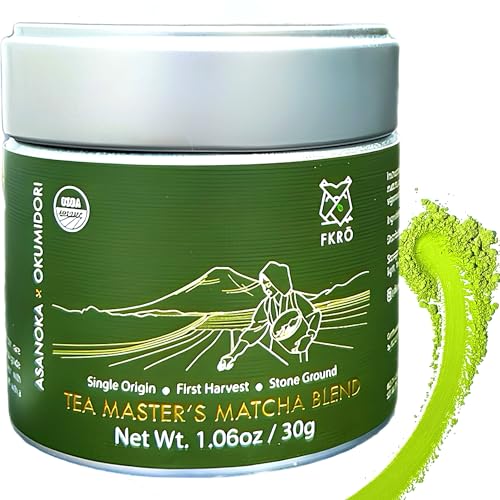
FKRO’s offering comes from the Nishi family farm in Kagoshima, selected by a 4th-generation Japanese tea master who also holds a national tea appraisal title. The use of the rarer Asanoka cultivar alongside Okumidori creates a nutty, rounded flavor with hints of nori and sweet potato — a notably complex profile for a mid-priced ceremonial matcha. Each gram delivers 19mg of L-theanine and 80mg of caffeine, producing the steady, jitter-free energy that matcha drinkers seek.
The 30g tin preserves freshness well, and users consistently report a smooth texture that whisks easily without clumps. Reviews describe a deep green color with a mildly sweet, non-bitter taste that works equally well for traditional usucha and modern lattes. The monthly fresh shipment from Japan is a unique logistical perk that ensures the powder hasn’t sat in a warehouse for months.
While the tin size is modest, the quality-to-price ratio is strong for those who prioritize single-origin provenance and expert curation. It’s an excellent entry point for someone who wants ceremonial-grade experience without stepping into the premium price bracket.
Why it’s great
- Curated by a 4th-generation tea master and national champion
- Rare Asanoka cultivar adds complex nutty-sweet depth
- Monthly fresh shipments from Japan for peak flavor
Good to know
- 30g tin is small for heavy cooking use
- Nutty profile may not suit those wanting very grassy matcha
4. Jade Leaf Organic Ceremonial Grade
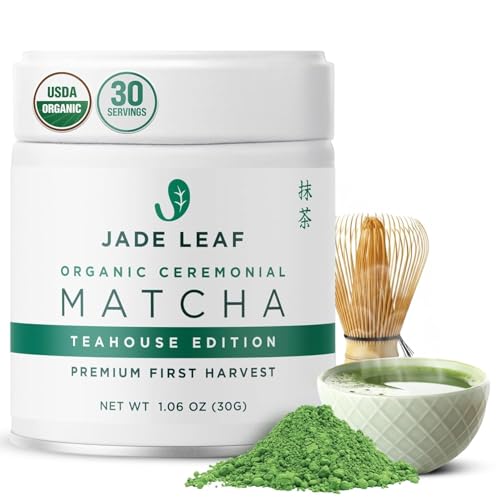
Jade Leaf’s ceremonial-grade matcha is the first-harvest version of their popular culinary powder, sourced from the same trusted Uji and Kagoshima farms but using only the youngest spring leaves. The result is an exceptionally smooth sip with light, nutty notes and a delicate floral sweetness that sets it apart from the more robust culinary edition. The 30g tin is airtight and blocks light, preserving the vivid green color and fine grind for up to 60 days after opening.
Users who have stuck with this brand for years praise its consistent quality — no batch variation, no bitterness, and a naturally creamy texture that requires minimal whisking. The L-theanine content supports the calm-focus effect that matcha drinkers value, with roughly 30–40mg of caffeine per serving. For culinary applications that demand a delicate flavor — like shortbread cookies or light cakes — this grade avoids overpowering other ingredients.
The tin is smaller than the culinary pouch, which means higher cost per gram. For daily lattes and traditional usucha, however, the refined flavor and reliable sourcing make it a solid premium choice that competes with luxury brands at a more accessible price point.
Why it’s great
- First-harvest leaves for sweet, floral, non-bitter taste
- Airtight tin protects against light and humidity
- Consistent quality across multiple purchases over years
Good to know
- Smaller 30g size means higher cost per gram
- Delicate flavor may get lost in strong baking recipes
5. Naoki Matcha Fragrant Yame Blend

Naoki Matcha’s Fragrant Yame Blend is a Silver award-winner at Japan’s national tea competition, and the reason is immediately clear in the cup. Sourced from Yame, Fukuoka — a region known for wide temperature swings that concentrate sweetness in the leaves — this powder delivers buttery, floral, and naturally sweet notes with an incredibly smooth finish. The 100g pack offers 50 servings, making it a generous premium option for daily traditional usucha or koicha preparations.
Users describe the texture as finely stone-milled to the point where sifting is unnecessary, and the vibrant green color persists even when blended with oat milk or other dairy alternatives. Reviews note very little bitterness, even when prepared strong, and a clean energy boost without crashes. The larger pack size is unusual for premium ceremonial matcha and gives it strong value relative to smaller tins from other brands.
It is best enjoyed in its pure form — traditional whisking without milk or sweetener — to fully appreciate the natural sweetness. For those who primarily use matcha in lattes or baked goods, the subtle floral notes might be partially masked, making this one better suited to purists who drink matcha straight.
Why it’s great
- Silver award-winning blend with buttery, floral sweetness
- Fine stone grind requires no sifting before whisking
- Large 100g pack offers strong value for premium grade
Good to know
- Delicate flavor is best enjoyed as straight usucha or koicha
- Floral notes may not stand out in heavy culinary recipes
FAQ
What is the difference between culinary and ceremonial matcha?
Can I use ceremonial matcha for baking and cooking?
Why does some matcha turn brown or yellow when used in baking?
Final Thoughts: The Verdict
For most users, the best culinary matcha winner is the Jade Leaf Culinary Grade Matcha because it offers the best balance of bold color, smooth taste, and generous volume for daily cooking and lattes. If you want a nutty, full-bodied flavor that stands out in cold brew and lattes, grab the Midori Spring Gold No.2. And for traditional usucha ceremonies where pure sweetness matters most, nothing beats the Naoki Matcha Fragrant Yame Blend.