Standing on concrete for eight, ten, or twelve hours is a different animal than walking on it. Concrete offers zero give, and that relentless hardness radiates shock straight up through your heels, knees, and lower back. Choosing the wrong boot turns a hard day into a painful one, while the right pair absorbs impact, supports your arches, and keeps your feet dry even when the slab gets wet.
I’m Emma — the founder and writer behind Baby Bangs. I’ve spent years analyzing work boot construction, comparing foam densities, outsole compounds, and insole support systems to find the models that truly protect your body on unyielding surfaces.
This guide breaks down the top contenders for the best boots for standing on concrete all day, focusing on the specific features that reduce fatigue and keep you moving safely.
How To Choose The Best Boots For Standing On Concrete All Day
Concrete is a brutal surface because it absorbs virtually no impact. Every step sends a shockwave up your body. The right boot interrupts that shockwave through a combination of midsole cushioning, supportive footbed, and a stable heel. Ignoring any of these three elements guarantees foot fatigue within hours.
Prioritize Midsole Cushioning Over Tread Patterns
On concrete, you don’t need deep lugs for mud traction. You need a thick, energy-returning midsole — typically EVA or polyurethane foam — that compresses under load and rebounds. Look for brands that specify their cushioning system by name, like DuraShocks or Timberland PRO’s anti-fatigue technology. The midsole is your primary defense against concrete.
Match Toe Protection to Your Environment
Steel toes offer the highest impact protection but add considerable weight. Composite and alloy toes run lighter, making them preferable for all-day stationary work where extra poundage accelerates fatigue. Alloy toes are thinner-walled than composite, which can give more interior room, but composite toes don’t conduct temperature. Choose based on whether you need less weight, more space, or temperature neutrality.
Insoles Are the Second Line of Defense
Factory insoles are often thin and break down fast. The best concrete boots either ship with a high-quality orthotic insert or have a removable footbed you can swap for a custom or aftermarket support insole. Look for boots with at least a 5mm removable insole — you’ll want to replace it every four to six months to maintain support.
Don’t Overlook Waterproofing for Indoor Slabs
Even indoors, concrete can be damp, and wet floors create slip hazards. A waterproof membrane like Gore-Tex or a proprietary waterproof leather keeps your feet dry from both external moisture and sweat if the boot breathes properly. Avoid non-breathable rubber linings on concrete — they trap sweat and turn the boot into a humidity chamber.
Quick Comparison
On smaller screens, swipe sideways to see the full table.
| Model | Category | Best For | Key Spec | Amazon |
|---|---|---|---|---|
| Timberland PRO Endurance 8″ Steel Toe | Steel Toe | Value pick with premium support | 6.4 lbs per pair | Amazon |
| Timberland PRO Powertrain Alloy Toe | Alloy Toe | Lightweight wide-feet comfort | Alloy toe, under 5 lbs | Amazon |
| Wolverine Rev Ultraspring CarbonMax | Composite Toe | Sneaker-like feel, heavy walking | DuraShocks cushioning | Amazon |
| AZXPROT 6″ Soft Toe Wedge | Soft Toe | Budget-friendly soft toe | Wedge sole, 2.8 lbs | Amazon |
| KEEN Utility Kenton Comp Toe | Composite Toe | Wide toe box, oily floors | 3.0 lbs, 1028751 | Amazon |
| Merrell Windoc Steel Toe | Steel Toe | All-day outdoor + concrete wear | 4.19 lbs, M Select Dry | Amazon |
| ARIAT Turbo Chelsea Carbon Toe | Carbon Toe | No-lace convenience, long durability | 1.79 lbs (carbon toe) | Amazon |
| Orthofeet Granite Steel Toe | Steel Toe | Orthopedic support, wide toe box | Removable orthotic insole | Amazon |
| New Balance Calibre Composite Toe | Composite Toe | Easy on/off with side zipper | Side zipper, waterproof | Amazon |
In‑Depth Reviews
1. Timberland PRO Men’s Endurance 8 Inch Steel Safety Toe Waterproof Work Boots

These boots land in the premium-value sweet spot by delivering RedWing-level support at roughly half the investment. The 8-inch shaft and steel toe provide solid protection, while the anti-fatigue technology midsole noticeably reduces the leg fatigue that builds during 10-hour shifts on concrete. Multiple reviewers working 65-hour weeks on cement confirm no blistering and dramatically reduced foot and back soreness compared to previous boots.
The waterproof membrane handles moderate rain and puddles well, maintaining dry feet through wet warehouse conditions. The outsole grips well on grease, wet surfaces, and even seaweed — a surprisingly tough test for a concrete-oriented boot. At 6.4 pounds per pair, they are not the lightest option, but the weight feels distributed evenly rather than clunky.
After six months of daily use, cosmetic wear appears on the leather, but structural integrity holds up perfectly. The speed-lace system saves time at the start and end of each shift. If you want the best balance of concrete-specific cushioning, protective features, and waterproofing without crossing into luxury pricing, this is the pair to beat.
Why it’s great
- Anti-fatigue midsole delivers noticeable shock absorption on concrete
- Exceptional heel, arch, and back support for extended standing
- Durable waterproof construction with strong slip resistance
Good to know
- Steel toe limits toe wiggle for some wearers
- Leather shows cosmetic scuffs faster than premium hides
2. Timberland PRO Men’s Powertrain Alloy Toe Hiker Shoes

Timberland PRO built the Powertrain as a middle ground between a hiker and a work boot, and it works brilliantly for concrete standing. The alloy toe shaves weight compared to steel while still meeting safety standards, and the mid-height shaft provides ankle support without restricting movement. Reviewers consistently call it “lightweight” — a critical advantage when your feet stay in the same position for hours.
The boot accommodates wide feet comfortably straight out of the box, a genuine relief for anyone who has fought cramped toe boxes in traditional work boots. Paired with Dr. Scholl’s gel insoles, one reviewer reports wearing them 9-10 hours daily without discomfort. The outsole offers excellent grip on both rough terrain and smooth indoor floors, making it versatile if your day includes both.
Breathability is a strong point — the boot keeps feet cooler than average, which helps when standing on concrete indoors gets warm. The waterproofing handles wet conditions without complaint. If you want a lighter, more nimble boot that still protects against impact and puncture, the Powertrain fits the bill without the heft of a full leather 8-inch boot.
Why it’s great
- Lightweight alloy toe reduces fatigue during all-day standing
- Excellent out-of-box comfort for wide feet
- Breathable design keeps feet cooler on indoor concrete
Good to know
- Not as heavy-duty as full 8-inch leather boots
- Some may want more arch support than the stock insole provides
3. WOLVERINE Men’s Rev Ultraspring DuraShocks CarbonMax Vent Mid Industrial Boot

Wolverine’s DuraShocks cushioning system is the headline feature here, and it delivers on concrete. The midsole compresses noticeably under load and springs back, giving each step a softer landing. The CarbonMax composite toe is lighter than steel and doesn’t conduct cold, making this a strong all-season choice for indoor concrete work.
The boot flexes enough to feel almost like a sneaker — multiple reviewers note this. One plumber reports driving in these boots comfortably, something rare in a work boot. The wide fit accommodates thicker socks without pinching. For jobs requiring ladders and walking 19 miles a day, the seam integrity holds up well with no discoloration reported.
A few reviewers note the upper isn’t fully waterproof, so standing in puddles could lead to damp socks. The composite toe also means slightly less top protection than steel, though this rarely matters on flat concrete. For all-day standing and walking on hard floors, the Wolverine offers a flexible, highly cushioned ride that keeps feet fresher longer.
Why it’s great
- DuraShocks midsole provides excellent compression and rebound on concrete
- Composite toe is lightweight and temperature-neutral
- Flexible construction feels like a sneaker for all-day wear
Good to know
- Upper is not fully waterproof
- Laces stay tied longer than any boot tested
4. Work Boots for Men, 6″ Soft Toe Wedge Sole Waterproof Safety Boots by AZXPROT
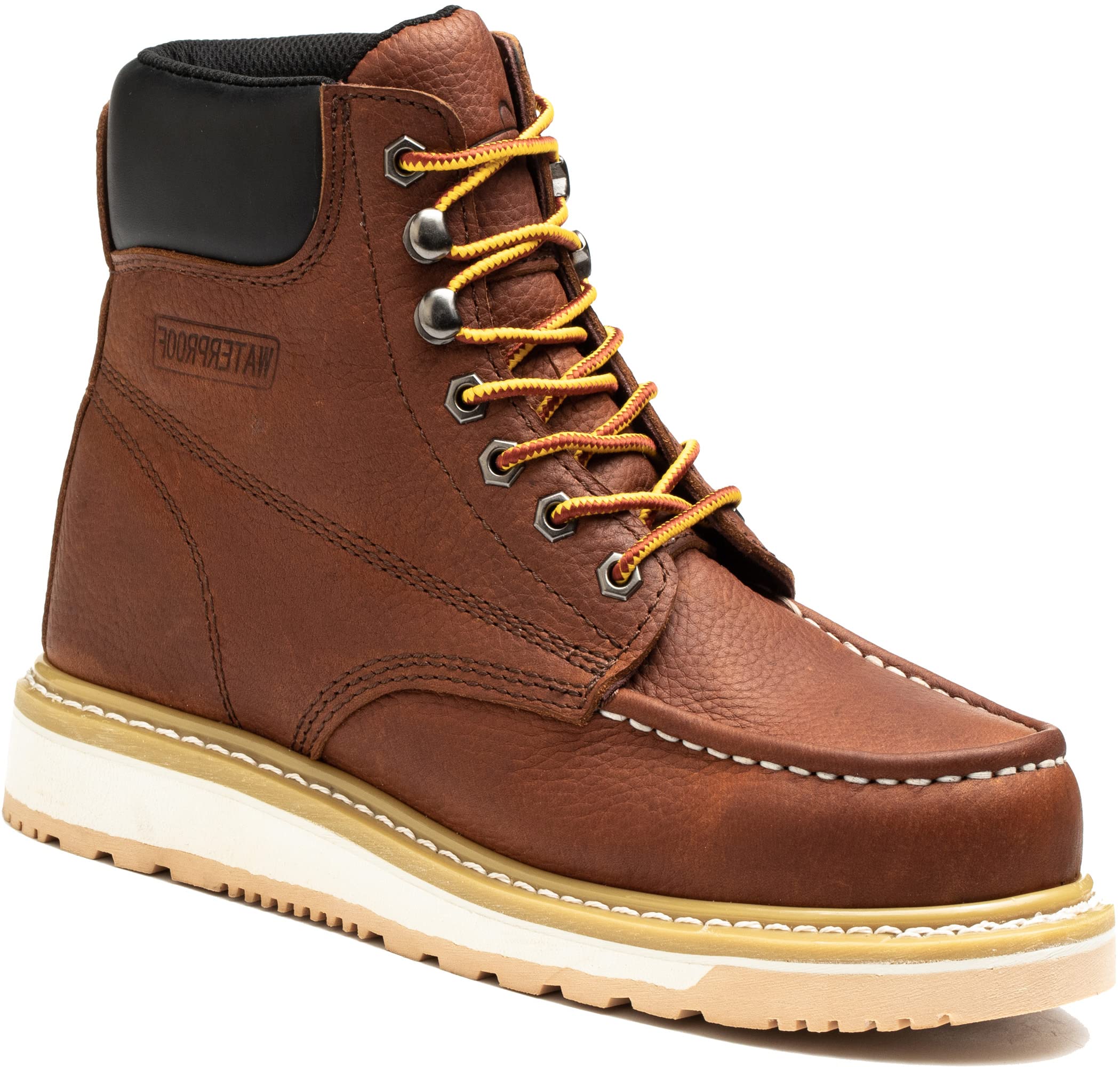
For workers who don’t require a safety toe, AZXPROT delivers solid value with a classic wedge sole design. The wedge distributes weight evenly across the foot, reducing pressure points on concrete. The soft toe construction keeps weight lower than any steel or composite alternative, and reviewers call the boots “comfy” and “true to size” straight out of the box.
The waterproofing is adequate for light exposure but not full submersion — one reviewer notes water resistance only “to an extent.” The leather is medium-weight and breaks in quickly. The wedge sole provides good grip on wet surfaces, which is essential when concrete gets slippery from moisture or spills.
Make sure you order correctly — sizing runs slightly small for some, and the boots are a bit heavier than the wedge profile suggests. The soft toe obviously doesn’t protect against dropped objects, so this is purely for standing and walking on concrete without impact hazards. For the price, it’s a comfortable, functional entry-level option.
Why it’s great
- Wedge sole distributes weight evenly for concrete standing
- Soft toe keeps weight and cost low
- Quick break-in with true-to-size fit
Good to know
- No safety toe protection for impact hazards
- Limited waterproofing compared to premium options
5. KEEN Utility Kenton Mid (Comp Toe)

KEEN is known for its generous toe box, and the Kenton Mid delivers exactly that — ample room for toes to splay naturally, which reduces cramping during long standing hours on concrete. The boot is remarkably lightweight at around 3 pounds, making it feel closer to a hiking shoe than a work boot. The composite toe provides electrical hazard protection and won’t trigger metal detectors.
Traction on smooth, oily concrete stands out as exceptional. One reviewer specifically notes the grip excels on transmission fluid-covered floors, which is a demanding test. The boot isn’t truly waterproof — water can seep in at the sole edge — but it is water-resistant enough for light moisture. The fit runs slightly wide, accommodating thicker socks well.
The stock insole could use more cushioning for some; a replacement orthotic insert improves comfort noticeably. The composite toe is lighter than steel, and the boot runs cool in warm-weather conditions. If you prioritize foot spread and natural toe movement on hard flat surfaces, the Kenton Mid is a top pick.
Why it’s great
- Wide toe box prevents toe cramping during long standing hours
- Excellent grip on oily and smooth concrete surfaces
- Lightweight composite toe with electrical hazard rating
Good to know
- Not fully waterproof — water can seep at sole edge
- Stock insoles may need upgrading for maximum comfort
6. Merrell Men’s Windoc Waterproof Steel Toe Mid
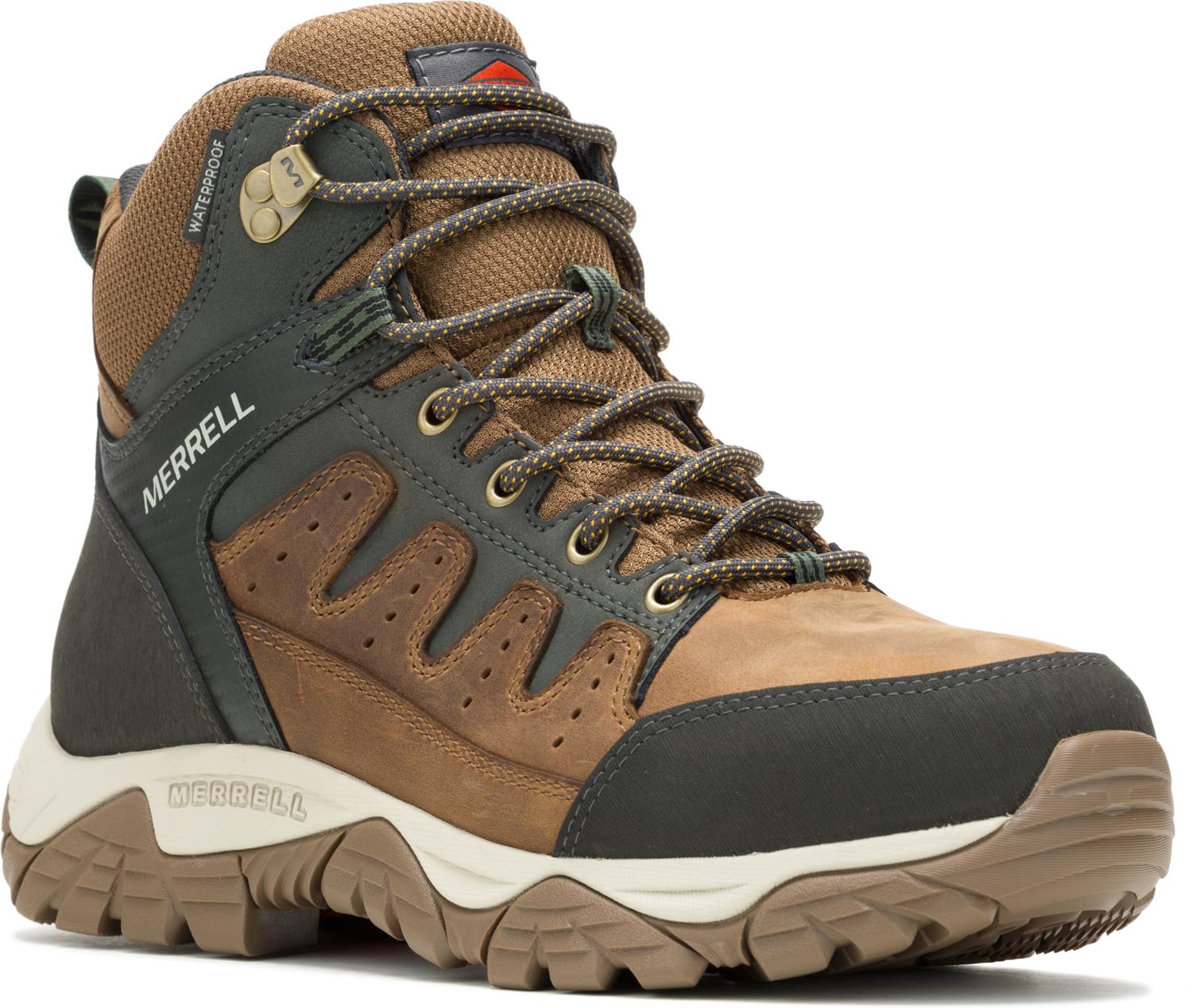
Merrell brings hiking boot comfort to the work site with the Windoc, offering the best out-of-box feel in this roundup. Reviewers consistently report zero break-in pain, even for full construction shifts. The M Select Dry membrane keeps feet dry through moderate rain and puddles, and the steel toe meets safety requirements without excessive weight — the boot comes in at just over 4 pounds.
The mid-height ankle support is excellent for uneven terrain transitions between concrete and dirt, while the outsole grips well on loose surfaces. One lineman working 10-hour outdoor shifts reports these as the most comfortable steel toe boots he has worn. The boot also works well for post-knee surgery recovery, suggesting forgiving heel-to-toe transition.
Heavy daily use in water, mud, and cement can cause the steel toe crease to rip and waterproofing to degrade after 6 months, though this is typical for boots in that abuse profile. The rubber sole can separate if pushed hard in extreme conditions. For standard concrete standing with occasional outdoor walkways, the Windoc delivers instant comfort that few competitors match without a break-in period.
Why it’s great
- Zero break-in period with immediate all-day comfort
- Excellent waterproofing for wet concrete conditions
- Strong ankle support for mixed terrain
Good to know
- Steel toe crease may tear under extreme abuse
- Stock insoles may need replacement for best support
7. ARIAT Turbo Chelsea Waterproof Carbon Toe EH

Ariat’s Chelsea boot design with a carbon toe eliminates laces while retaining safety compliance, a major convenience for quick on-and-off during the day. The carbon toe weighs almost nothing — the boot feels drastically lighter than any steel toe competitor. Reviewers report no break-in needed for the heel and sole, delivering immediate comfort for 9-hour standing shifts.
Durability is a standout: one heavy user lasted 18 months of daily use, surviving being run over by a zero-turn mower. Another reviewer in nuclear and welding work got 1.5 years before the safety toe wore through. The waterproofing holds up well through wet conditions, and the boot maintains its shape even through heavy abuse.
The composite toe design does reduce interior space more than steel toe, so wide-footed buyers should size up and plan for a 4-5 day break-in period for the toe box. The outsole can feel slippery on inclined steel surfaces, so grip is best on flat concrete. For standing on concrete all day with minimal lace hassle and maximum lifespan, the ARIAT Turbo is a premium investment that pays back in longevity.
Why it’s great
- Exceptional longevity — 18 months typical under heavy use
- Carbon toe is ultralight and comfortable all day
- No-lace Chelsea design for fast on/off
Good to know
- Toe box runs small; size up for wide feet
- Outsole can slip on inclined steel surfaces
8. Orthofeet Men’s Orthopedic Granite Waterproof Slip Resistant Work Boot

Orthofeet positions itself firmly in the orthopedic niche, and the Granite boot delivers exactly that — a wide toe box, a supportive orthotic insole, and a steel toe for protection. The boot is comfortable straight out of the box, with no break-in period. The wide toe box is specifically designed to accommodate foot conditions like bunions, making it ideal for anyone whose feet have suffered from years of narrow boots.
Slip resistance on snow and ice gets high marks, which is a strong indicator the outsole compound performs on smooth concrete as well. The waterproofing keeps feet dry through six months of regular wear. In heavy equipment environments with oil, grease, and sparks, the boot holds up comparably to big names like Danner and KEEN.
The stock insole — while excellent initially — has been reported to wear out after about two weeks for some users, turning the boot into a harder platform. Replacing the insole restores comfort immediately. If you need a steel toe boot that accommodates wide feet and provides orthopedic-level support from day one, the Orthofeet Granite is the most purpose-built option in this roundup.
Why it’s great
- Orthopedic insole and wide toe box reduce foot pain instantly
- Excellent slip resistance on snow, ice, and concrete
- No break-in period for most wearers
Good to know
- Stock insoles may wear out faster than the boot
- No higher-ankle version available in this line
9. New Balance Calibre Composite Toe Work Boots – EH, PR, Non-Slip Leather Safety Shoes
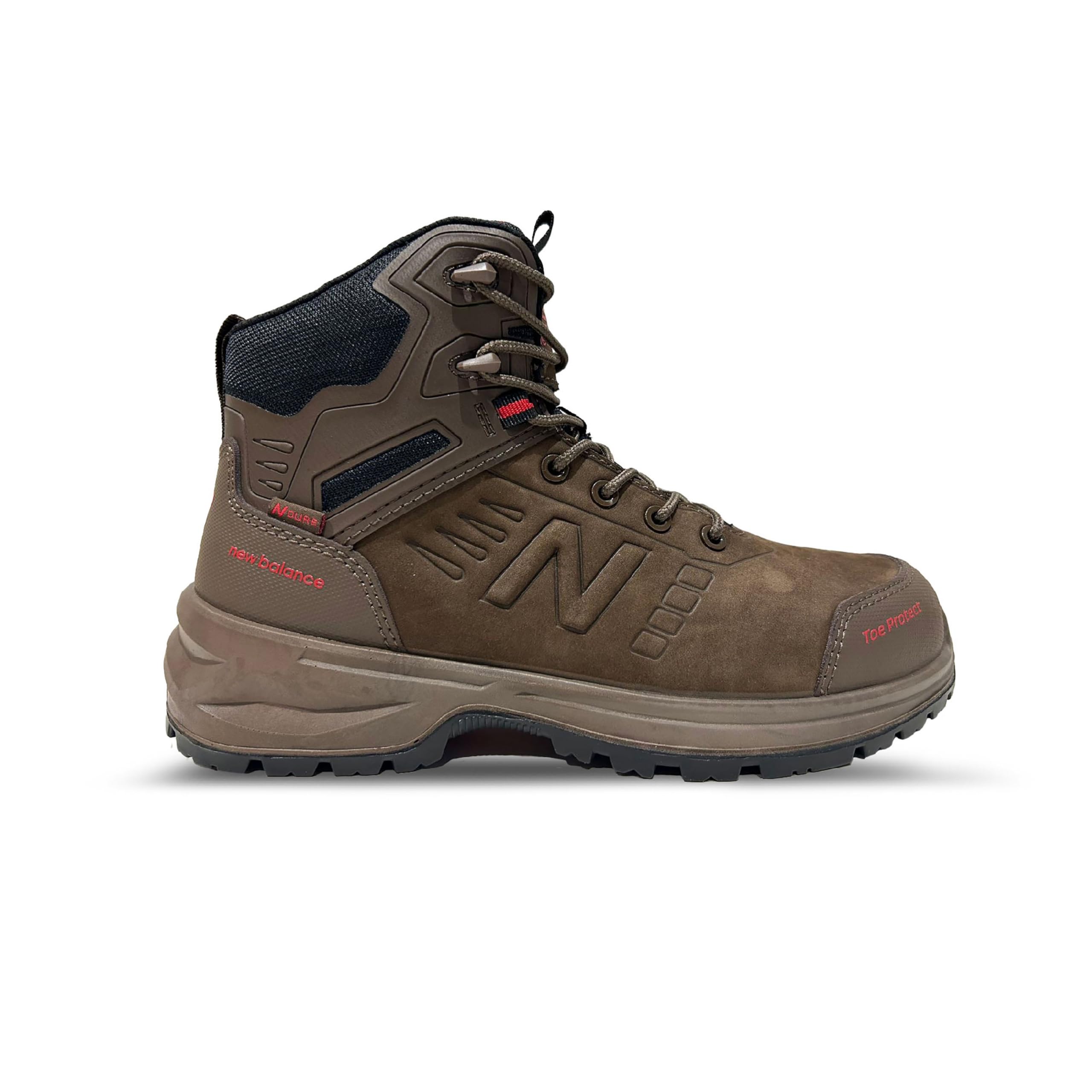
New Balance brings its athletic shoe DNA into the work boot category with the Calibre, and the side zipper is the standout feature. It allows easy on and off without retying laces — a simple luxury that pays off multiple times per day. The composite toe is among the lightest in this roundup, and the waterproofing performs well against weekly power washing without letting moisture through.
The toe box is wider than typical work boots, and sizing up one half-size accommodates thicker socks comfortably. After a month of heavy warehouse use — 10-hour days with 3-4 miles of walking — the boot held up well with no structural degradation. The removable insole is comfortable out of the box but can be swapped for a custom orthotic if needed.
The leather scuffs more easily than premium-grade options, and breathability is limited — some users unzip the boot midday to air out sweaty feet. The lacing system uses eyelets instead of hooks near the top, which can make tight lacing tricky for those with large ankles. For the price, the Calibre offers strong value with a modern convenience feature that few competitors match.
Why it’s great
- Side zipper allows fast and easy on/off without relacing
- Lightweight composite toe with durable waterproofing
- Wider toe box accommodates thick socks and orthotics
Good to know
- Leather scuffs easily compared to premium hides
- Breathability is limited for hot indoor environments
FAQ
Why do my feet hurt more on concrete than on other floors?
Should I buy a boot with a wedge sole for concrete work?
How often should I replace the insoles in my concrete boots?
Final Thoughts: The Verdict
For most users, the best boots for standing on concrete all day winner is the Timberland PRO Endurance 8 Inch Steel Toe because it delivers anti-fatigue cushioning, waterproof protection, and high-value pricing that competes with boots costing far more. If you want ultralight convenience with a no-lace design, grab the ARIAT Turbo Chelsea Carbon Toe. And for orthopedic needs or wide feet that require immediate comfort without break-in, nothing beats the Orthofeet Granite Steel Toe.