Yellow, thickened, and crumbling toenails that refuse to respond to over-the-counter creams or home remedies signal a stubborn fungal infection that has likely burrowed deep into the nail bed. The challenge isn’t finding a treatment; it’s finding one with a proven active ingredient at a concentration strong enough to penetrate the hard keratin layers where the fungus thrives.
I’m Emma — the founder and writer behind Baby Bangs. I’ve spent years dissecting the chemical compositions of topical antifungals, cross-referencing clinical studies on undecylenic acid and tolnaftate, and analyzing real-user feedback to separate effective formulations from marketing fluff.
This guide cuts through the clutter to identify the best antifungal nail treatment options based on their active ingredient strength, delivery system, and practical application routine for lasting results.
How To Choose The Best Antifungal Nail Treatment
Selecting an effective antifungal nail treatment requires more than grabbing the first product with good reviews. You need to match the active ingredient’s mechanism to the severity of your infection and commit to a consistent application schedule that spans months, not weeks.
Active Ingredient Concentration
The cornerstone of any topical treatment is the active antifungal agent. Undecylenic acid at 25% concentration is the most potent non-prescription option available, directly attacking fungal cell membranes. Tolnaftate 1% is a synthetic antifungal that works effectively on surface-level infections and dermatophytes like athlete’s foot. Clotrimazole is another common option, but clinical evidence often points to undecylenic acid’s superior penetration for nail-specific use. Skip treatments that rely solely on essential oils without a clinically proven primary active ingredient.
Penetration Aids and Delivery Systems
A fungal infection lives beneath the nail plate, not on its surface. A treatment that cannot penetrate the nail keratin is ineffective. Look for formulations that include 42% urea gel, which softens and thins the nail plate, creating pathways for the antifungal to reach the nail bed. Liquid solutions with a brush applicator offer better control and coverage than creams or sprays. The combination of a potent antifungal with a penetration enhancer like urea dramatically increases the likelihood of success.
Application Consistency and Commitment Timeline
No topical treatment works overnight. Expect to apply the solution twice daily for at minimum 4-6 months to see the infected nail grow out and be replaced by clear growth. Products that offer a two-step system — a daytime liquid and nighttime patch — simplify the routine and improve compliance. Kit-based options reduce the risk of skipping doses. If you cannot commit to a twice-daily routine for half a year, a topical treatment may not be the right approach for your infection.
Quick Comparison
On smaller screens, swipe sideways to see the full table.
| Model | Category | Best For | Key Spec | Amazon |
|---|---|---|---|---|
| Treatonic Kit | Kit | All-day treatment routine | 25% Undecylenic Acid + Patches | Amazon |
| FungaBlend 10 Tolnaftate | Liquid | Surface & dermatophyte infections | 1% Tolnaftate + 10 Plant Medicines | Amazon |
| FungaBlend 10 Urea 42% | Gel | Penetration & nail thinning | 42% Urea Gel | Amazon |
| Toelieva by Baar | Oil | Daily maintenance & prevention | 25% Undecylenic Acid in Olive Oil | Amazon |
| Gemächlich ZuHause Pen | Pen | Travel-friendly application | Undecylenic Acid + Tea Tree Oil | Amazon |
In‑Depth Reviews
1. Treatonic Toenail Fungus Treatment Kit
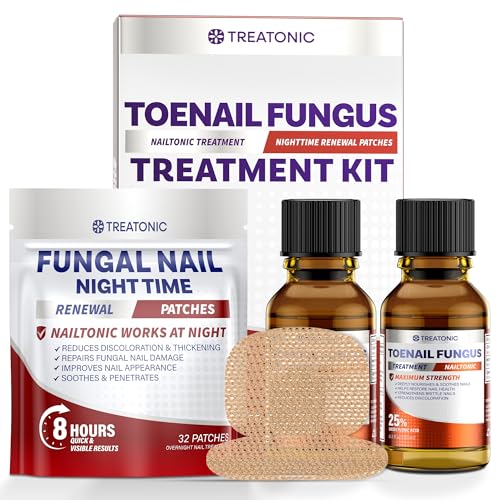
The Treatonic Kit delivers a complete two-step system that addresses the compliance problem head-on: a 25% undecylenic acid liquid for daytime application and breathable nighttime renewal patches that lock in ingredients for eight hours of targeted action. This dual approach ensures the active ingredient stays in contact with the nail bed longer than a single daily application could achieve.
Customer reports indicate visible improvement in yellow discoloration and nail brittleness within the first week of nightly use, though the consensus is clear that results accelerate when you file the nail surface lightly before each application. The patches stay put under socks or shoes, which is a practical advantage for active users who cannot afford a disruptive treatment routine.
The main drawback is the price point, which sits higher than standalone liquids. Additionally, some users report marginal progress even after 60 days, which aligns with the biological reality that infected nail growth takes months to fully replace. The product also requires a consistent morning-and-night schedule; missing doses slows progress considerably.
Why it’s great
- Two-step system (liquid + patch) maintains 24/7 treatment coverage
- Patches stay in place during sleep and under footwear
- High 25% undecylenic acid concentration is clinically potent
Good to know
- Higher price compared to single-step liquids
- Patches may cause minor skin irritation if left on too long
- Requires strict twice-daily consistency for best results
2. FungaBlend 10 Tolnaftate 1% Solution

FungaBlend 10 pairs a clinically proven synthetic antifungal — tolnaftate at 1% — with a proprietary blend of ten therapeutic-grade plant medicines, creating a hybrid formula that targets dermatophytes like Trichophyton rubrum while supporting nail health botanically. The clear, odorless liquid dries quickly and leaves no visible residue, making it a socially discreet option for daily use.
User reviews consistently highlight that consistent twice-daily application is non-negotiable. Missing even a few doses can allow the fungus to rebound. The brush applicator is functional but some users note that it cannot reach the bottom of the bottle, leading to product waste. The flimsy brush head struggles to coat the tight crevices between the nail and skin.
The product is podiatrist-developed and backed by a money-back guarantee. Its primary limitation is the bottle size — at 0.5 fluid ounces, you will need to repurchase multiple times over the typical 4-6 month treatment period, which adds up in cost. Pairing this with the FungaBlend 10 Urea 42% gel can significantly improve penetration and speed up results.
Why it’s great
- Tolnaftate 1% is a well-documented antifungal effective against dermatophytes
- Dries clear and odorless — suitable for daily wear
- Podiatrist-developed with a satisfaction guarantee
Good to know
- Small 0.5 oz bottle requires frequent repurchases
- Brush design wastes product and struggles with nail-skin crevices
- Missing doses causes fungus to resurface quickly
3. FungaBlend 10 Urea 42% Nail Gel

This urea 42% gel is not a standalone antifungal; it is a penetration enhancer that softens and thins the nail plate, creating channels for an antifungal (like the FungaBlend 10 Tolnaftate solution) to reach the nail bed. Without this step, many topical antifungals sit on the nail surface and never contact the infection. Users who file their nails paper-thin before applying see dramatically faster results.
Customer feedback emphasizes that the gel does work, but it can weaken the nail structure and cause redness or soreness around the nail folds during the thinning process. This is an expected side effect of urea’s mechanical action, not a sign of infection. Applying it only to the nail top (not the surrounding skin) reduces irritation.
The 1 oz bottle provides more volume than the tolnaftate sibling, but the gel is thick and requires careful measurement to avoid waste. It is best used as part of a paired regimen rather than in isolation. If you have a particularly thick or yellowed nail, this gel is almost mandatory for any topical treatment to work.
Why it’s great
- 42% urea effectively softens and thins the nail plate for deeper penetration
- Pairs directly with the FungaBlend 10 tolnaftate for a complete protocol
- Non-prescription alternative to prescription urea 40% gels
Good to know
- Can cause nail weakening and skin redness during use
- Not an antifungal; must be used with a separate antifungal product
- Thick consistency requires careful application to avoid waste
4. Baar Products Toelieva Antifungal Liquid Solution

Toelieva combines a maximum 25% undecylenic acid concentration with organic olive oil and grapefruit seed extract, offering a potent antifungal in a nourishing oil base that also addresses dry, brittle nails and cuticle health. The liquid is easy to brush onto the affected nail and surrounding skin, and the mild olive oil scent is far more tolerable than chemical-based alternatives.
The downside is the oily texture, which can feel messy and requires a light hand to avoid dripping. Some units have arrived with loose lids, causing leakage during transit. The oil base also means the product does not dry as quickly as alcohol-based solutions, so you need to allow a few minutes of absorption before putting on socks or shoes.
Long-term users report that consistent twice-daily application over 4-6 months leads to full nail renewal from the bed outward. The product is excellent as a maintenance treatment after the active infection is controlled, and its relatively affordable price per ounce makes it a practical choice for ongoing prevention.
Why it’s great
- High 25% undecylenic acid concentration for potent antifungal action
- Organic olive oil base nourishes dry, brittle nails and cuticles
- Affordable price per ounce for long-term daily use
Good to know
- Oily texture can feel messy and requires absorption time
- Lid may loosen during shipping causing leakage
- Results require 4-6 months of consistent twice-daily application
5. Gemächlich ZuHause Toenail Fungus Pen Treatment
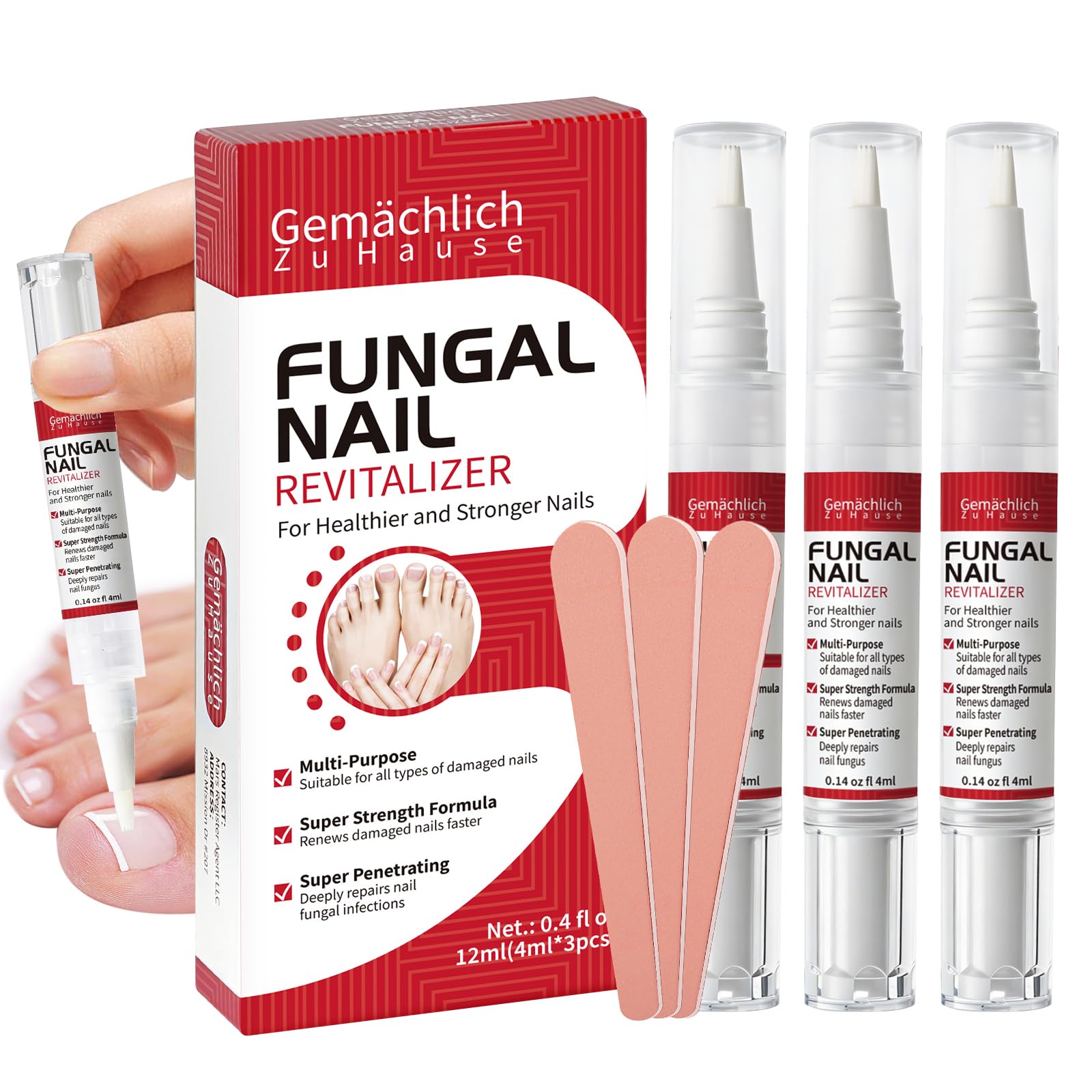
This pen format is designed for portability and mess-free application. The twist mechanism feeds the gel into a brush tip, allowing precise targeting of the affected nail without dripping or waste. The formula includes undecylenic acid and salicylic acid along with tea tree oil, making it a multi-pronged approach that exfoliates dead nail tissue while fighting fungus.
Customer experiences are split. Some users report visible improvement after three weeks of consistent use, while others finished the entire pen with zero change. This inconsistency likely stems from the formulation’s lower concentration of undecylenic acid compared to dedicated liquid solutions, making it more effective for mild or early-stage infections than for established fungal growth.
The pen provides three units, which is convenient for travel or keeping one at work. The product is marketed as gentle for sensitive skin, and the botanical extracts reduce the risk of irritation. For mild cases or as a supplemental treatment between stronger applications, this pen has a place. For a deeply embedded infection, a higher-concentration liquid is a better first choice.
Why it’s great
- Convenient twist-and-brush pen format for precise, mess-free application
- Contains both undecylenic acid and salicylic acid for dual action
- Travel-friendly and easy to carry in a bag or pocket
Good to know
- Lower active concentration may be insufficient for advanced infections
- Mixed user results — some see no improvement at all
- Three-pen set runs out quickly if used twice daily on multiple nails
FAQ
How long does it take for an antifungal nail treatment to work?
Should I file my nail before applying the treatment?
Final Thoughts: The Verdict
For most users, the best antifungal nail treatment winner is the Treatonic Toenail Fungus Treatment Kit because its two-step system (25% undecylenic acid liquid plus nighttime patches) ensures the active ingredient stays in contact with the nail bed around the clock, maximizing treatment efficacy. If you want a podiatrist-developed synthetic antifungal with a proven track record, grab the FungaBlend 10 Tolnaftate. And for severely thickened nails that block penetration, nothing beats the FungaBlend 10 Urea 42% Gel as a pre-treatment to open pathways for the antifungal to reach its target.