Finding a cleanser that removes sunscreen and makeup without triggering rosacea’s telltale flushing, stinging, or papules is a specific kind of skincare frustration. Many oil-based formulas rely on essential oils or harsh surfactants that disrupt a compromised moisture barrier, turning a simple wash into a reactive event.
I’m Emma — the founder and writer behind Baby Bangs. My research focuses on the intersection of barrier function, ingredient thresholds, and how non-foaming lipid cleansers interact with sensitized, erythema-prone skin.
After combing through formulations and real user feedback, this guide breaks down the cleansing oil for rosacea options that prioritize non-comedogenic oils, minimal ingredient decks, and proven soothing profiles without stripping the acid mantle.
How To Choose The Best Cleansing Oil For Rosacea
Choosing a cleansing oil for rosacea is less about marketing claims like “soothing” and more about cold-hard ingredient exclusion. A single aromatic plant extract can trigger neurovascular flushing that lasts for hours. You need to evaluate the formula by three specific criteria: carrier oil composition, emulsifier type, and absence of reactive additives.
Prioritize The Base Oils
The oil base determines whether the cleanser will calm or provoke your skin. Look for high-linoleic oils such as sunflower, grapeseed, or olive squalane — these mimic the skin’s natural sebum and help restore barrier integrity. Avoid oils high in oleic acid, like straight olive or avocado, which can disrupt the stratum corneum in sensitized skin. Non-comedogenic rating (score of 0-1) is non-negotiable for rosacea subtypes prone to papules.
Check The Emulsification System
A poor emulsifier leaves a film that traps heat and bacteria against the skin, encouraging inflammation. The best emulsifiers for rosacea are mild non-ionics like PEG-20 glyceryl triisostearate or polyglyceryl-based systems that rinse completely with water without requiring a second aggressive cleanse. If the oil turns into a clean milk upon contact with water, the emulsifier is doing its job.
Eliminate All Reactive Additives
This is the strictest filter. Any cleansing oil containing essential oils (lavender, tea tree, peppermint, citrus), botanical extracts from the Asteraceae family (chamomile, echinacea), or denatured alcohol is immediately disqualified for rosacea. Fragrance, even natural, is a primary vasodilator. Stick to formulas with fewer than 10 ingredients where every compound serves a functional purpose.
Quick Comparison
On smaller screens, swipe sideways to see the full table.
| Model | Category | Best For | Key Spec | Amazon |
|---|---|---|---|---|
| DearKlairs Cleansing Oil | Mid-Range | Sensitive, dry skin | 6 plant oils, no synthetic fragrance | Amazon |
| DHC Deep Cleansing Oil | Mid-Range | Blackhead-prone, combo skin | Organic olive oil base, vitamin E | Amazon |
| Bioderma Sensibio Micellar Oil | Premium | Dermatologist-recommended sensitive | Oil-to-milk micellar technology | Amazon |
| Hanskin BHA Pore Cleansing Oil | Mid-Range | Oily, acne-prone skin | Salicylic acid + jojoba oil | Amazon |
| Clinique Redness Solutions Cleanser | Premium | Clinically diagnosed rosacea | Creamy, oil-free, probiotic technology | Amazon |
In‑Depth Reviews
1. DearKlairs Cleansing Oil
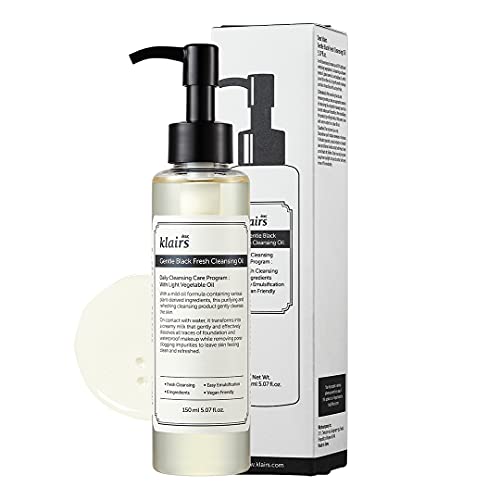
The DearKlairs Cleansing Oil uses a minimal deck of six plant oils that avoids every common rosacea trigger: no essential oils, no denatured alcohol, and no artificial fragrance. Its composition relies on non-comedogenic esters that dissolve sunscreen and waterproof makeup without requiring aggressive rubbing, which is critical for skin that capillaries easily.
User feedback consistently highlights that this formula does not sting the eyes or leave a heat sensation on the cheeks — a common complaint with other oil cleansers. The emulsification is fast and complete, turning into a light milk that rinses clean without a greasy film. For rosacea subtypes that lean dry or dehydrated, the inclusion of low-irritant oils like sunflower and jojoba provides a gentle lipid replenishment that does not trigger reactive flushing.
One consideration is that the bottle is relatively small at 5.07 ounces, and the thin texture requires two pumps for full face coverage. However, the concentration means a single bottle lasts several months with daily use, and the price per use is well within a reasonable monthly skincare budget.
Why it’s great
- Six-ingredient formula reduces risk of reactive contact dermatitis.
- Emulsifies fully without leaving barrier-disrupting residue.
- No eye stinging reported even with heavy mascara.
Good to know
- Packaging is smaller than standard cleansing oils at 150 mL.
- Thin consistency may require two pumps for full facial coverage.
2. DHC Deep Cleansing Oil
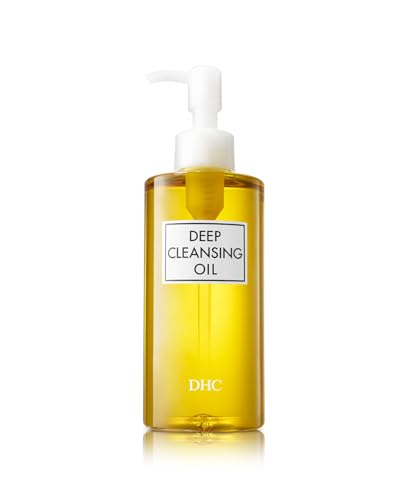
For the rosacea user, the olive oil component is a double-edged sword — high-oleic oils can be slightly more occlusive for sensitized skin, but the refined grade used here minimizes the polyphenol content that might cause irritation in some individuals.
Long-term users report that this oil breaks down sebaceous filaments around the nose and chin area with consistent use, which is relevant for rosacea subtype 2 where papules and blocked pores overlap. The texture is thicker than the DearKlairs oil, providing more slip for gentle massage without dragging the skin. The emulsification requires thorough water mixing, and reviewers emphasize that a full double cleanse is important to avoid any breakout potential from leftover oil.
Another notable feature is the presence of rosemary leaf oil, which for some rosacea patients can be too stimulating. However, user reviews across a decade show that the majority of sensitive-skin users tolerate it well, citing its ability to leave skin soft without stripping the acid mantle. This is best suited for those whose rosacea is stable rather than in a flare phase.
Why it’s great
- High slip reduces mechanical friction during massage.
- Effective at dissolving sebaceous filaments and blackheads.
- Vitamin E provides antioxidant support for barrier repair.
Good to know
- Contains rosemary leaf oil — not ideal during active rosacea flares.
- Requires thorough double cleanse to avoid pore occlusion.
3. Bioderma Sensibio Micellar Cleansing Oil
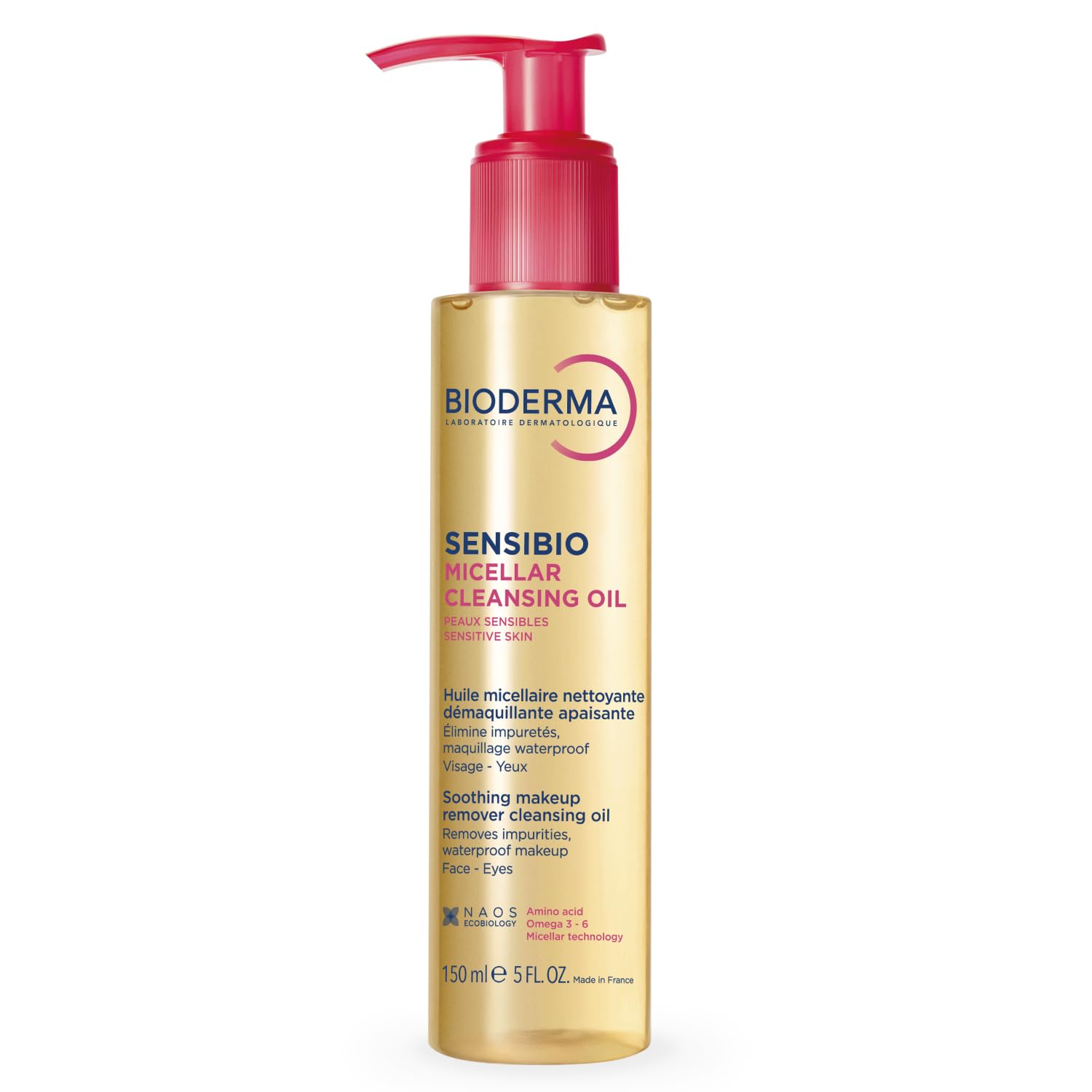
The Bioderma Sensibio Micellar Cleansing Oil represents a crossover between a traditional oil cleanser and micellar technology, designed specifically for sensitive, reactive skin. Its oil-to-milk transition is one of the smoothest in the category, leveraging micro-emulsion droplets that encapsulate impurities without requiring aggressive rubbing. For rosacea, this translates to less vasodilation from friction during the cleansing step.
Formulated with ethylhexyl palmitate and amino acids, this cleanser is free of soap, fragrance, and alcohol. Multiple reviewers with self-reported rosacea state that this is the only oil cleanser that doesn’t cause their skin to tighten or flush post-rinse. The presence of omega 3-6 fatty acids adds a barrier-support function that dry rosacea subtypes benefit from during winter months or when using topical retinoids.
The main trade-off is that some users with heavy, long-wearing makeup find it requires two passes for complete removal. For everyday sunscreen and light makeup, one application suffices. This is a premium-tier option in terms of ingredient quality, and its dermatological testing makes it a solid entry point for someone new to oil cleansing with reactive skin.
Why it’s great
- Micellar encapsulation minimizes friction and mechanical irritation.
- Omega 3-6 supports barrier function for dry rosacea types.
- Dermatologist-tested and confirmed non-comedogenic.
Good to know
- Heavy waterproof makeup may need a second cleanse pass.
- Slightly higher price per ounce than Korean oil cleansers.
4. Hanskin BHA Pore Cleansing Oil
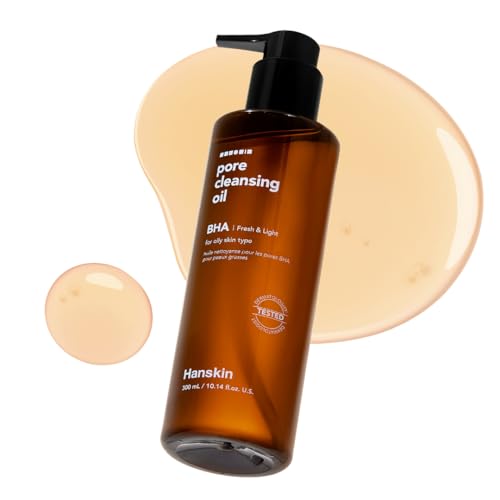
The Hanskin BHA Pore Cleansing Oil is formulated specifically for oily and combination skin, incorporating beta hydroxy acid to address congestion and sebum control. For rosacea that presents with papules or pustules (subtype 2), the inclusion of salicylic acid can help keep pores clear, but it must be used with caution — BHA can be too exfoliating for skin in a flare state.
The base oils include jojoba and olive oil, supplemented with fruit extracts (orange, lemon, grapefruit) in the formulation. These citrus extracts pose a risk for some rosacea patients due to their natural acidic content and potential photosensitizing effect, though user reviews note that the actual concentration in the wash-off product appears low. The texture is a gel-like oil that transforms into a creamy foam upon water contact, which is a unique mechanical feel that some users find more refreshing.
This product is best reserved for those with robust barrier function who need targeted pore management alongside cleansing. It is not suitable for rosacea with significant erythema or telangiectasia. The fragrance-free claim holds true in practice — there is no added synthetic scent, though the botanical extracts impart a faint natural aroma that most users describe as tolerable.
Why it’s great
- Salicylic acid targets papules and blackheads in subtype 2 rosacea.
- Jojoba oil base closely mimics human sebum for gentle cleansing.
- Large 300 mL bottle offers strong value for daily use.
Good to know
- Contains citrus extracts that may irritate highly reactive skin.
- Not recommended during active flares with broken capillaries.
5. Clinique Redness Solutions Soothing Cleanser
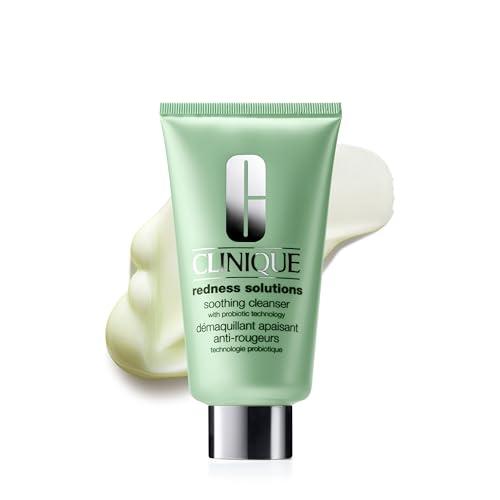
The Clinique Redness Solutions Soothing Cleanser is a creamy, oil-free formula that diverges from the traditional oil-based approach. It is specifically positioned for rosacea-prone skin, incorporating probiotic technology to support a healthy microbiome — a factor linked to reduced inflammation in the skin’s deeper layers. For those whose rosacea presents with persistent background redness rather than just breakouts, this cleanser focuses on cooling and calming rather than deep pore dissolution.
Users report an immediate cooling sensation upon application, which helps manage the subjective heat that accompanies rosacea flares. The formula is fragrance-free, allergy-tested, and soap-free, meeting the strictest sensitivity criteria. Clinical testing backs its use for erythema reduction over a four-week period, though this is a chronic management tool rather than a quick fix. Many long-term users cycle this product with an oil cleanser for days when they need a completely friction-free wash.
The downside is its limited capacity for removing heavy makeup or waterproof sunscreen — additional cleansing steps may be necessary. The price point places it in the premium tier, and the 150 mL tube lasts about two months with twice-daily use. For diagnosed rosacea patients who struggle with vasodilation from any oil-based product, this is a targeted alternative that prioritizes barrier calm over lipid replenishment.
Why it’s great
- Probiotic technology reduces background erythema over time.
- Immediate cooling sensation helps manage flare heat.
- Dermatologist-developed specifically for rosacea subtypes.
Good to know
- Not an oil — does not dissolve waterproof sunscreen as effectively.
- Premium pricing per ounce compared to standard cleansers.
FAQ
Can I use a cleansing oil every day if I have rosacea?
Will a cleansing oil make my rosacea redness worse?
What ingredient should I avoid in a cleansing oil for rosacea?
Final Thoughts: The Verdict
For most users, the cleansing oil for rosacea winner is the DearKlairs Cleansing Oil because its six-ingredient formula removes all common triggers while cleansing effectively. If you want a barrier-supporting luxury feel, grab the Bioderma Sensibio Micellar Cleansing Oil. And for diagnosed rosacea patients who prefer a completely oil-free, cooling formulation, nothing beats the Clinique Redness Solutions Soothing Cleanser.