Numbness, tingling, and burning in the feet and lower legs aren’t just uncomfortable — they interfere with sleep, walking, and daily life. The right external pressure can stimulate circulation and calm those nerve signals, but the wrong sock can worsen symptoms or cut off blood flow entirely.
I’m Emma — the founder and writer behind Baby Bangs. I’ve spent the last several years analyzing the material science, compression gradients, and fabric compositions that determine whether a medical-grade sock actually delivers nerve symptom relief or simply squeezes your calf for show.
After sorting through dozens of models by stitch density, pressure rating accuracy, seam construction, and real user reports on diabetic and neuropathic tolerance, I’ve found the five pairs that actually deliver. This guide breaks down exactly what makes a set of compression socks for neuropathy safe, effective, and worth your time.
How To Choose The Best Compression Socks For Neuropathy
Picking the right pair for nerve-related leg and foot issues means looking past generic marketing claims. You’re balancing enough pressure to stimulate blood flow against the risk of aggravating sensitive or desensitized skin. Focus on four factors first.
Graduated Compression vs. Uniform Pressure
Every genuine medical sock uses graduated compression — tightest at the ankle, loosening as it moves up the calf. This design pushes pooled blood upward toward the heart, which is the mechanical mechanism that reduces swelling and improves circulation. Uniform-pressure socks (often called “support socks”) can actually restrict flow at the knee, which is the last thing neuropathy needs. Look for the mmHg rating printed on the packaging, and confirm the manufacturer specifies graduated design.
Material Composition and Skin Tolerance
Neuropathy often coexists with dry skin, reduced sensation, or diabetes-related fragility. Synthetic-heavy blends (high polyester or nylon content) trap heat and moisture, creating a breeding ground for irritation or fungal issues. Cotton or merino wool blends breathe better and wick sweat away from the skin. For neuropathy, aim for a fabric blend that is at least 20–30 percent natural fiber, and always check that the toe seam is flat — a raised seam rubbing against desensitized toes can cause unnoticed damage.
Pressure Rating: 15–20 vs. 20–30 mmHg
Lower-grade compression (8–15 mmHg) provides light support but rarely moves the needle on nerve-related swelling or pain. The therapeutic window for neuropathy sits at 15–20 mmHg for mild symptoms and 20–30 mmHg for moderate to pronounced swelling or post-surgical recovery. Beginners or those with arterial insufficiency should start at the lower end of this range. A rating above 30 mmHg typically requires a prescription and careful vascular screening.
Sizing Accuracy: Measure Your Calf and Ankle, Not Your Shoe
Shoe size alone is a terrible guide for compression socks. Calf circumference and ankle circumference determine whether the sock fits snug enough to apply pressure without rolling, binding, or creating a tourniquet effect. Take measurements using a flexible tape at the narrowest part of the ankle and the widest part of the calf. Compare those numbers against the brand’s specific size chart — not a universal chart — before clicking buy. An improper fit is the most common reason neuropathy socks fail.
Quick Comparison
On smaller screens, swipe sideways to see the full table.
| Model | Category | Best For | Key Spec | Amazon |
|---|---|---|---|---|
| VIM & VIGR Cotton | Graduated Cotton Knit | Doctor-recommended long-term use | 20–30 mmHg, 63% cotton blend | Amazon |
| Sockwell Men’s Pulse OTC | Merino Wool Firm | Warmth without overheating | Firm graduated, wool blend | Amazon |
| Women’s Therapeutic Pack | Variety 6-Pack | Multiple pairs for daily rotation | 15–20 mmHg, reinforced heel | Amazon |
| Medical Compression 20-30 (3 Pair) | Graduated 3-Pack | All-day clinical wear | 20–30 mmHg, flat toe seam | Amazon |
| Dr. Motion 4-Pair Women’s | Budget 4-Pack | Entry-level mild compression | Mild 15–20 mmHg, knee-high | Amazon |
In‑Depth Reviews
1. VIM & VIGR Cotton Graduated Compression Socks

This is the pair that doctors repeatedly recommend for diabetic and neuropathic patients, and the reason is clear from the fabric composition. VIM & VIGR uses a 63 percent cotton blend that breathes significantly better than the standard nylon-polyester hybrids dominating the category. For anyone with neuropathy-related dry skin or sensitivity, that breathability difference reduces moisture buildup and the itchiness that follows 8+ hours of wear.
The graduated compression ranges from 20–30 mmHg, which hits the therapeutic sweet spot for moderate edema and nerve symptom management. Users report a snug fit that doesn’t bind at the knee or leave deep ring marks at the calf — a common complaint with cheaper socks. The toe box is roomier than average, reducing pressure on desensitized toes, though the foot portion runs slightly long for shoe sizes below 8.
On the downside, the higher cotton content means these socks take longer to air dry than synthetics, and the price per pair sits at the premium end.
Why it’s great
- Breathable cotton blend reduces skin irritation risk
- True 20–30 mmHg graduated pressure for therapeutic effect
- Roomier toe box protects desensitized nerves
- Excellent long-term durability with proper care
Good to know
- Foot portion may fit loosely on smaller feet (size 7 and below)
- Higher cost per pair than budget multi-packs
- Requires line drying to preserve fabric integrity
2. Sockwell Men’s Pulse OTC Firm Graduated Compression Sock
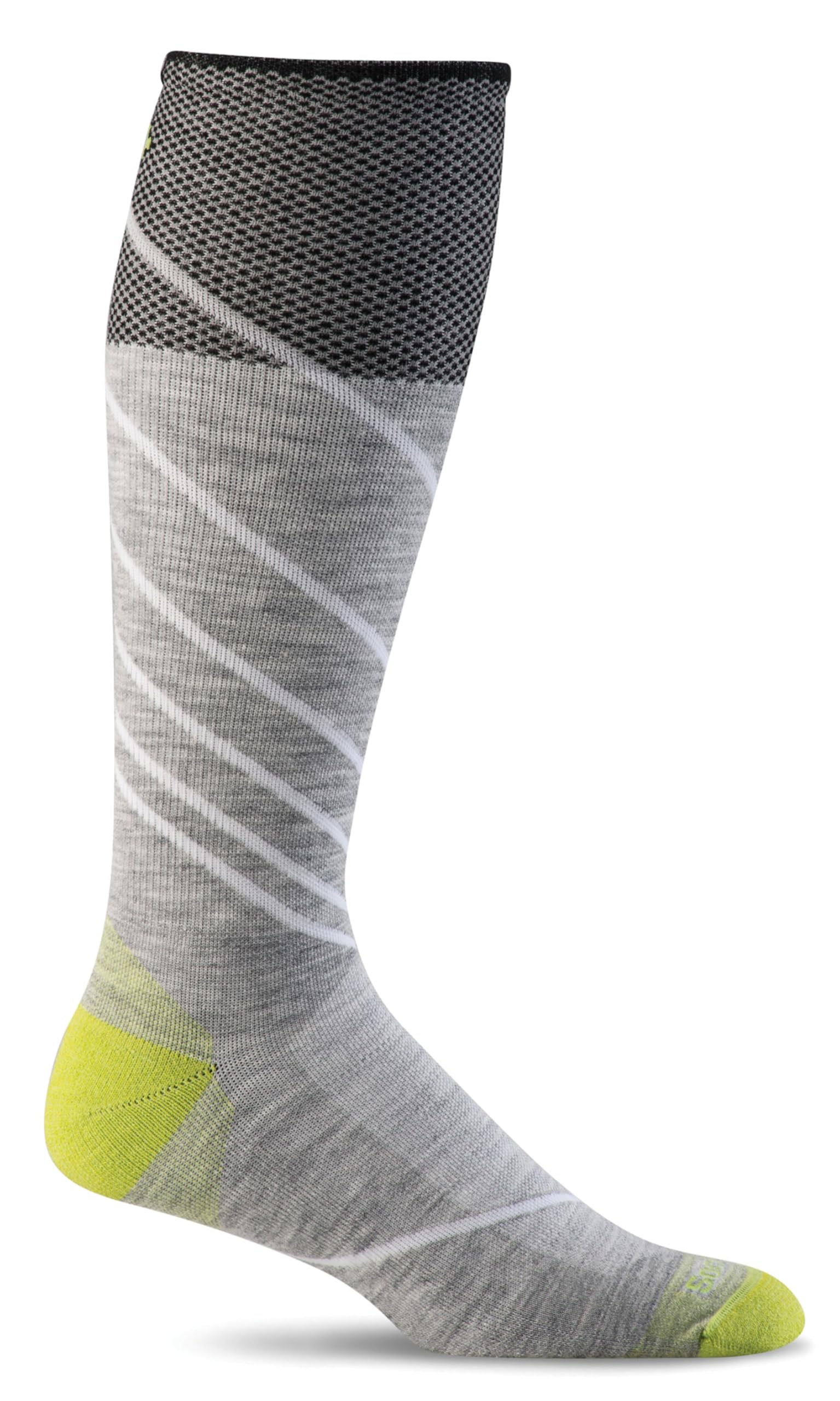
Sockwell’s Pulse model earns consistent praise from users who need compression for post-surgical recovery or chronic lower leg swelling tied to neuropathy. The merino wool blend sets it apart — wool naturally regulates temperature, wicks moisture, and resists odor, all of which matter when you’re wearing a tight sock for 10+ hours. For neuropathy patients whose legs feel cold due to poor circulation, the wool provides gentle warmth that synthetics don’t match.
The graduated compression is labeled “firm” and reviewers consistently confirm that the gradient feels accurate and even from ankle to calf. Several long-term users have noted that these socks held their elasticity for over three years with regular washing, a durability metric most budget socks can’t touch. The fabric doesn’t trap heat the way polyester-based compression socks do, which reduces the sweaty, clammy feeling that leads to skin breakdown.
The trade-off is price and seam longevity — some reviewers report internal seam loosening after several months, which creates indentations that can irritate sensitive skin. The calf fit runs tighter than average, so those with 17-inch-plus calves may need to size up carefully. Availability in non-black colors is a plus for daily wear.
Why it’s great
- Merino wool provides warmth without overheating sensitive legs
- Superior graduated compression that maintains all-day effectiveness
- Excellent long-term elasticity retention reported over years
- Moisture-wicking natural fiber reduces skin irritation risk
Good to know
- Internal seams may loosen after extended use causing indentations
- Higher price point per pair
- Fits snug on large calves; measure carefully
3. Women’s Compression Socks Therapeutic Graduated (Pack of 6 Pairs)
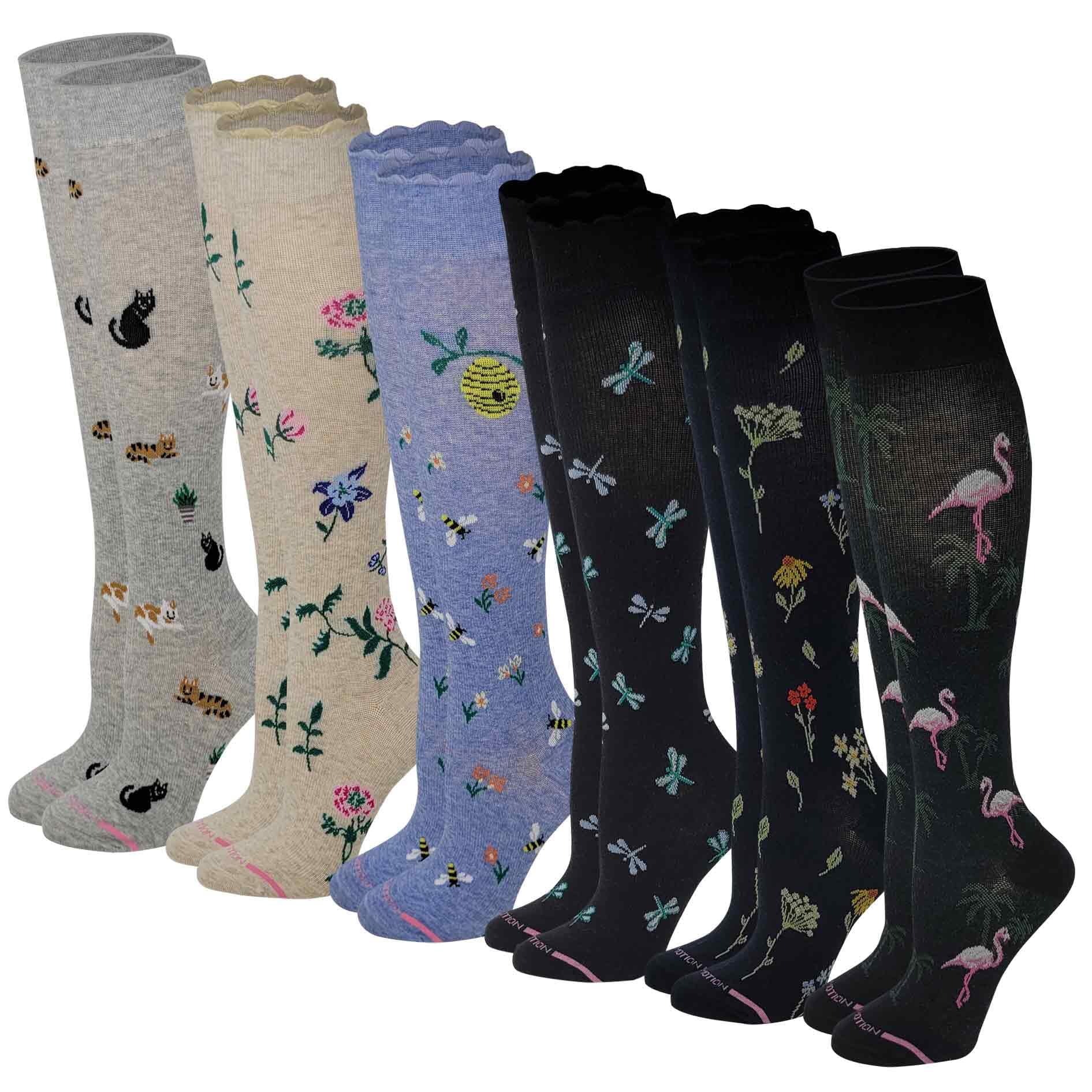
This 6-pair offering from Soxland hits a sweet spot for women who need daily rotation without washing socks every night. The compression rating sits at 15–20 mmHg, which makes it a solid entry point for mild neuropathy symptoms or for users who find 20–30 mmHg too constrictive. The graduated design distributes pressure evenly, and reviewers specifically mention the absence of a “tourniquet effect” at the top band, a common problem with poorly designed knee-highs.
The fabric is softer than many therapeutic brands, and the toe area is reinforced without a bulky seam that rubs against desensitized skin. The package includes multiple color assortments, which is a genuinely useful feature for anyone who wants to differentiate between compression levels if they also own higher-pressure pairs. Several reviewers reported using these post-blood clot and post-pregnancy with noticeable swelling reduction by the end of the day.
The main limitation is the lower pressure ceiling — anyone dealing with pronounced edema or doctor-recommended 20–30 mmHg therapy should look at one of the other options above. A handful of users with very small feet (size 5 or below) found the toe area slightly roomy, but the stretch fabric accommodated them. The prints and patterns are a nice bonus for those tired of clinical black or beige.
Why it’s great
- Six pairs allow daily rotation without constant laundry
- Comfortable 15–20 mmHg pressure suitable for mild symptoms
- Reinforced heel and flat toe seam reduce irritation
- Cute designs and colors move past clinical aesthetics
Good to know
- Not strong enough for moderate to severe edema
- Slightly loose toe area for very small feet (size 5 and under)
- Assortments are pre-packed; no custom selection per pair
4. Medical Compression Socks 20-30 mmHg for Men Women (3 Pairs)
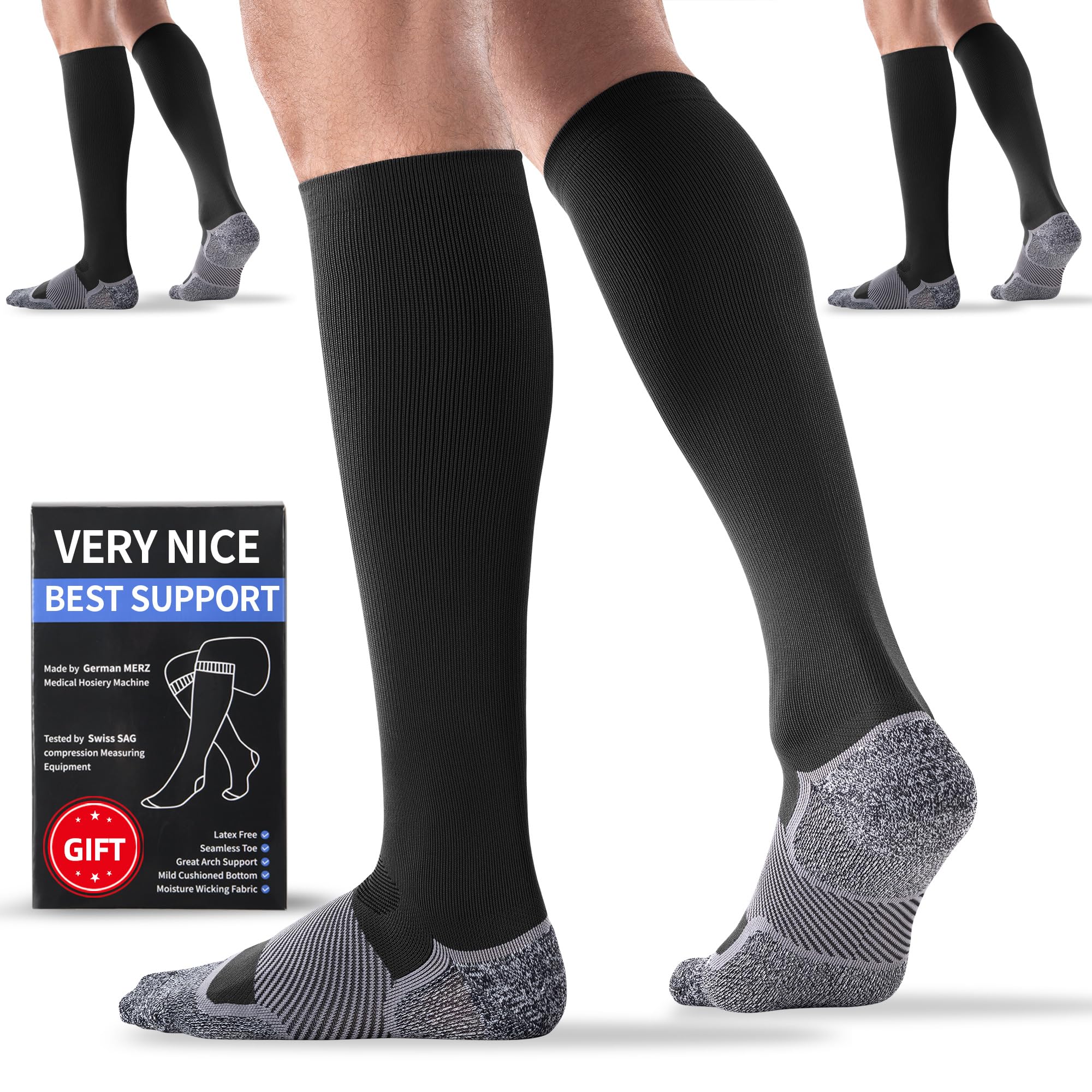
This 3-pair set from Bbfrey delivers the 20–30 mmHg therapeutic range at a per-pair cost that undercuts most premium brands while maintaining quality that impressed nursing students and clinical workers in reviews. The graduated compression is noticeably stronger at the ankle and gradually decreases up the calf, matching the recommended gradient for venous and lymphatic support. Users with shoe sizes up to 10.5 and calf circumferences around 14.5 inches reported an accurate fit from the S/M sizing.
The fabric stands out for its flat toe seam construction — a detail that prevents the friction point that causes unnoticed skin damage in neuropathic feet. Multiple reviewers noted that the socks stayed in place for 11-hour clinical shifts without slipping or rolling, which points to well-calibrated top-band tension rather than an overly aggressive grip. The material feels denser than most budget 3-packs, suggesting a higher knit density that maintains compression longer.
The only notable downside is the limited color and pattern range compared to lifestyle-focused brands. The L/XL sizing also runs slightly generous in the foot — users with narrower heels might experience some bunching. For anyone needing reliable 20–30 mmHg pressure for long days on their feet, this set competes well with pairs costing twice as much per unit.
Why it’s great
- Accurate 20–30 mmHg graduated pressure for therapeutic use
- Flat toe seam prevents irritation on sensitive or neuropathic toes
- Stays in place for 11+ hours during clinical or nursing shifts
- Strong value per pair in the 3-pack format
Good to know
- Limited color and pattern options
- Foot portion may feel long for narrow heels
- Higher starting price than basic cotton support socks
5. Dr. Motion 4 Pairs Graduated Compression Knee-hi Women’s Socks

Dr. Motion’s 4-pair women’s pack is a solid budget-friendly introduction to graduated compression for mild neuropathy symptoms or general leg fatigue. The compression level is lighter than the other options on this list, making it more appropriate for early-stage discomfort, airplane travel, or all-day standing where you want gentle support without the intensity of a 20–30 mmHg sock. Users consistently describe the pressure as “mild but effective” and note that the socks are easier to pull on than firmer medical-grade alternatives.
The fabric blend holds up well through repeated washing, and several reviewers reported using these for elderly relatives with diabetes-related swelling, observing immediate improvement in ankle edema. The knee-high length stays put without rolling, and the classic black color looks professional under trousers or scrubs. For someone who isn’t sure if compression will help their neuropathy, this is a low-stakes way to test the effect.
The primary drawback is sizing: the manufacturer’s sizing chart runs narrow, and women with shoe size 9.5 wide or larger report pressure and rubbing at the ankle bone and heel. The mild compression also means it won’t be enough for anyone whose doctor recommends 20–30 mmHg for significant edema. But for the price per pair, it’s the most accessible entry point on this list.
Why it’s great
- Entry-level price point for testing compression therapy
- Mild graduated pressure suitable for beginners or travel
- Easy to pull on and off compared to higher mmHg socks
- Holds up well in the wash; good for daily rotation
Good to know
- Not strong enough for moderate to severe neuropathy symptoms
- Sizing runs narrow; not recommended for women’s 9.5W+ shoes
- Ankle area may rub on wider feet
FAQ
Can compression socks cure neuropathy?
What mmHg level is best for diabetic neuropathy?
How do I measure my calf correctly for compression socks?
Why does the toe seam matter for neuropathy?
Should I wear neuropathy compression socks to bed?
Final Thoughts: The Verdict
For most users, the compression socks for neuropathy winner is the VIM & VIGR Cotton Graduated Compression Socks because the high cotton content reduces skin irritation risk while delivering the therapeutic 20–30 mmHg pressure that actually moves the needle on swelling and nerve symptoms. If you want a broad rotation of pairs with cute designs at a slightly lower pressure, grab the Women’s Therapeutic Pack of 6. And for a budget-friendly entry point to test whether compression helps your specific symptoms, nothing beats the Dr. Motion 4-Pair Pack.