Building a strong core isn’t about endless crunches or flashy machines. It’s about finding equipment that forces your deep stabilizer muscles to work, supports progressive overload, and fits into your home without turning the living room into a commercial gym. You need tools that are versatile, durable, and proven to deliver real results.
I’m Emma — the founder and writer behind Baby Bangs. I’ve spent years analyzing home gym market trends and stress-testing core training equipment to find what actually holds up under daily use and delivers measurable strength gains.
After comparing dozens of options across stability, resistance, and durability benchmarks, I’ve assembled this guide covering best core workout equipment that targets your abs, obliques, and lower back from every angle.
How To Choose The Best Core Workout Equipment
Selecting core gear requires matching your equipment to your training style and space. A stability ball demands room to sprawl; a foldable bench needs a corner to lean. Understand what each tool requires from you — not just in reps, but in setup and consistency.
Instability vs. Progressive Load
Core muscles respond best to two stimuli: instability and resistance. Unstable surfaces (balls, half-ball trainers, wobble boards) force your deep stabilizers to fire constantly, building endurance and balance. Weighted benches and ab rollers with rebound technology add resistance, allowing strength gains beyond what bodyweight alone provides. The best core routine uses both approaches.
Footprint and Storage
A 26-inch BOSU trainer needs about 5 square feet when in use but deflates flat. A 68-pound chest press machine with folding arms takes up 8 square feet but stays assembled. Consider how much floor space you are willing to dedicate permanently versus what you can stow away. Foldable benches with integrated wheels bridge that gap for smaller homes.
Weight Capacity and Build Quality
Core equipment undergoes repetitive, often explosive movement. A stability ball rated for 500 pounds static load gives you safety margin for dynamic movements. A bench with a 1,000-pound capacity supports progressive overload as your lifts grow. Look for reinforced steel frames, anti-slip bases, and high-density foam that won’t compress after six months of use.
Adjustability for Progressive Overload
Flat-only benches limit your core engagement angles. A unit offering incline, decline, and flat positions lets you shift load onto different regions of your abs and lower back. Independent converging arms on a press machine also help correct strength imbalances between your left and right sides, which is common after years of unilateral core work.
Quick Comparison
On smaller screens, swipe sideways to see the full table.
| Model | Category | Best For | Key Spec | Amazon |
|---|---|---|---|---|
| WONDER CORE Slide Fit | Ab Roller | Stable guided core movements | 4-wheel design, 264 lb capacity | Amazon |
| ZELUS Balance Ball | Half Ball Trainer | Unstable surface training + rehab | 8-inch height, 660 lb max | Amazon |
| BOSU Balance Trainer | Balance Trainer | Proven stability & strength work | 26-inch diameter, 300 lb capacity | Amazon |
| Rep Fitness AB-3000 FID | Weight Bench | Heavy-duty incline/decline lifting | 1,000 lb capacity, folds | Amazon |
| GMWD Chest Press V1 | Press Machine | Independent arms + core press | 1,200 lb load, folding design | Amazon |
| VUSIGN Foldable Bench | Weight Bench | Budget-friendly full-body training | 600 lb capacity, folds flat | Amazon |
| Body Sport Exercise Ball | Stability Ball | Versatile ball for core & desk | 500 lb static weight, 85 cm | Amazon |
In‑Depth Reviews
1. WONDER CORE Slide Fit

The WONDER CORE Slide Fit is a heavy-duty ab roller board designed to keep you stable when standard wheels wobble. Its four-wheel base prevents tipping, and the two-way automatic rebound technology assists you on the return stroke — crucial for building control without straining your lower back. The frame is primarily metal and dense plastic, rated for 264 pounds, which is solid for a non-bench core tool.
Three resistance modes let you dial in assistance: both sides on for maximum rebound, one side for moderate help, or both off for unassisted work. This makes it suitable for complete beginners and seasoned lifters alike. The included knee pad is thin, so consider using a separate mat for longer planks. The Slide Fit companion app offers guided workouts and progress tracking, though some users find the interface clunky.
Owners consistently praise the stability compared to traditional ab wheels — no more leaning side to side on extension. It supports core rollouts, ab tucks, bridges, and lower body slides, effectively covering the full anterior chain. If you want a dedicated core tool that does not rely on balance alone, this board delivers controlled resistance in a compact footprint.
Why it’s great
- 4-wheel design eliminates instability and lateral rolling common with single-wheel rollers
- Two-way rebound assists the return stroke, reducing lower back strain
- Three resistance modes allow progression from assisted to full bodyweight
Good to know
- Included knee pad is thin; recommend an additional mat for floor exercises
- Resistance settings feel subtle — may not satisfy advanced users seeking heavy load
- Must not be used on carpet; only hard, smooth floors
2. ZELUS 25in. Balance Ball Trainer

The ZELUS Balance Ball combines a 25-inch wide flat base with an 8-inch high inflated dome, creating a controlled unstable surface. Standing or kneeling on the dome forces your transverse abdominis and obliques to engage constantly. The ABS base is textured with anti-slip TPR matting that grips the floor firmly even during dynamic movements like squat jumps or plank variations.
Two included resistance bands with cushioned handles attach to the base, adding an upper-body pull element to core work. The foot pump inflates the PVC ball quickly, and the inflation port is designed to minimize wear. Users report the ball holds air well over weeks, though some deflation occurs over months of heavy use — a quick top-up resolves it.
This trainer is popular for rehab contexts — ankle and foot recovery, balance retraining, and low-impact stability work. It also excels for core-specific drills like pikes, knee tucks, and mountain climbers. The unit weighs enough to feel planted but is portable if you need to move it between rooms. Just check that the metal clamps for the resistance handles are included — a small number of units arrive without them.
Why it’s great
- Dual-surface platform (hard base + inflated dome) for varied instability drills
- Anti-slip TPR base stays put on hardwood and tile during active movement
- Resistance bands expand training beyond core to upper body pulling exercises
Good to know
- Requires periodic re-inflation as PVC dome slowly loses air over months
- Some units shipped missing the metal clamps for resistance handles
- Heavy enough that moving between rooms is doable but not effortless
3. BOSU Balance Trainer

Its 26-inch diameter rubber dome sits on a rigid black platform, supporting up to 350 pounds. Standing, kneeling, or lying on the dome forces your core to stabilize continuously, building endurance that transfers directly to compound lifts and daily movement.
Inflating the dome takes 7-10 minutes using the included pump, and the ball holds air reliably — users report consistent tension years after purchase. The non-slip surface provides enough traction for bare feet, shoes, and yoga mats. Because the platform is solid, you can incorporate weighted squats, single-leg stands, and push-ups without worrying about the base sliding.
What sets the BOSU apart is its versatility: flip it dome-down for a wobble board effect that challenges ankle stability and lower core control. It stacks well with other equipment — place it under a weight bench for instability bench press, or combine with bands for rotational core work. If you want one piece of durable gear that grows with your core capacity, this trainer is your best long-term investment.
Why it’s great
- Decade-proven durability — holds air and retains shape under heavy daily use
- Can be used dome-side up or flipped for wobble board instability variations
- Non-slip platform and dome surface accommodate shoes, bare feet, and yoga mats
Good to know
- Inflation easiest when the rim is suspended between chair arms — standard method can be tricky
- Plug insertion requires careful alignment to prevent slow leaks
- Bulky when inflated; deflates flat but re-inflation takes 7-10 minutes
4. Rep Fitness AB-3000 FID Bench

The Rep Fitness AB-3000 is a commercial-grade adjustable bench built for heavy core-integrated lifting. It offers flat, incline, and decline positions — the decline angle is especially valuable for targeting your lower rectus abdominis while keeping your hips locked in place. The frame is thick alloy steel supporting up to 1,000 pounds, giving you room to load up for weighted sit-ups, decline Russian twists, and incline crunches.
Assembly requires 45 minutes to 2 hours depending on your mechanical confidence. The instructions are minimal (a single diagram), and some users encounter misaligned threaded anchors or missing washers. Rep Fitness is responsive to replacements, but the variable assembly experience is worth noting. Once built, the bench is rock-solid with no wobble during heavy sets.
Integrated wheels make it portable despite the 109-pound weight, and the folding mechanism reduces storage footprint significantly. The high-density foam padding stays comfortable for sessions lasting over an hour. The gap between the seat pad and back pad when flat is a minor annoyance for some users, but does not affect core exercise stability. If you’re serious about progressive overload on core exercises, this bench handles the load.
Why it’s great
- Full flat/incline/decline range for targeting all areas of the core
- 1,000-pound weight capacity supports heavy weighted core work and bench pressing
- Integrated wheels and folding design for moving and storage in home gyms
Good to know
- Assembly instructions are minimal and can lead to 2-hour build sessions
- Occasional quality control issues like misaligned anchors or missing hardware
- Noticeable gap between seat and back pad when bench is in flat position
5. GMWD Chest Press Machine V1
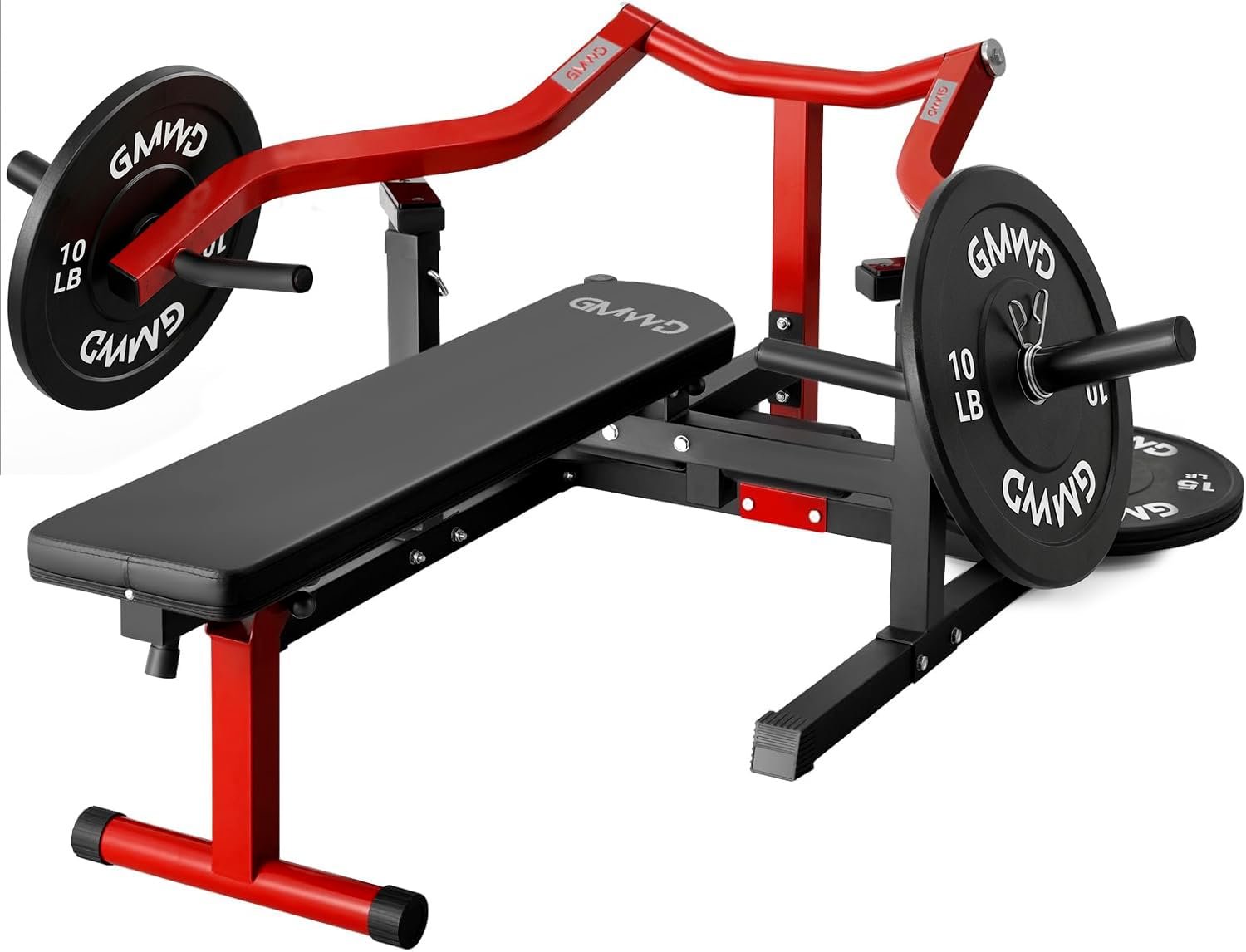
The GMWD V1 is a folding press machine with independent converging arms, each adjustable across 11 positions. While marketed as a chest press, the independent arms force your obliques and transverse abdominis to stabilize each side separately — correcting strength imbalances that standard barbell presses miss. The frame is built from 2 x 2 inch 14-gauge steel, rated for 1,200 pounds total load, with 200 pounds capacity per weight holder.
Assembly takes under 30 minutes for most users, though you will need a socket wrench. The detachable weight sleeves accept both 1-inch and 2-inch plates, adding convenience. The folding design collapses to 35.4 x 30.5 x 54 inches, saving over 80% floor space. Some units arrive with minor cosmetic issues like dented arms, but customer service is responsive with replacements or partial refunds.
For core training specifically, you can perform suitcase lifts, single-arm presses, and rotational work that challenges your anti-rotation stability. The leg attachment adjusts to two positions, enabling decline sit-ups that target the lower abs. It is a comprehensive home gym solution for users who want press capacity alongside serious core engagement without dedicating a room to equipment.
Why it’s great
- Independent arms with 11 positions each correct left/right core strength imbalances
- Folds to under 8 square feet footprint for small-space home gyms
- Accepts both 1-inch and 2-inch plates via detachable sleeves
Good to know
- Some units arrive with cosmetic denting on arms despite functional integrity
- Assembly instructions are minimal with tiny drawings — need socket wrench
- Weight spindles face the back, making plate access difficult when placed against a wall
6. VUSIGN Foldable Weight Bench
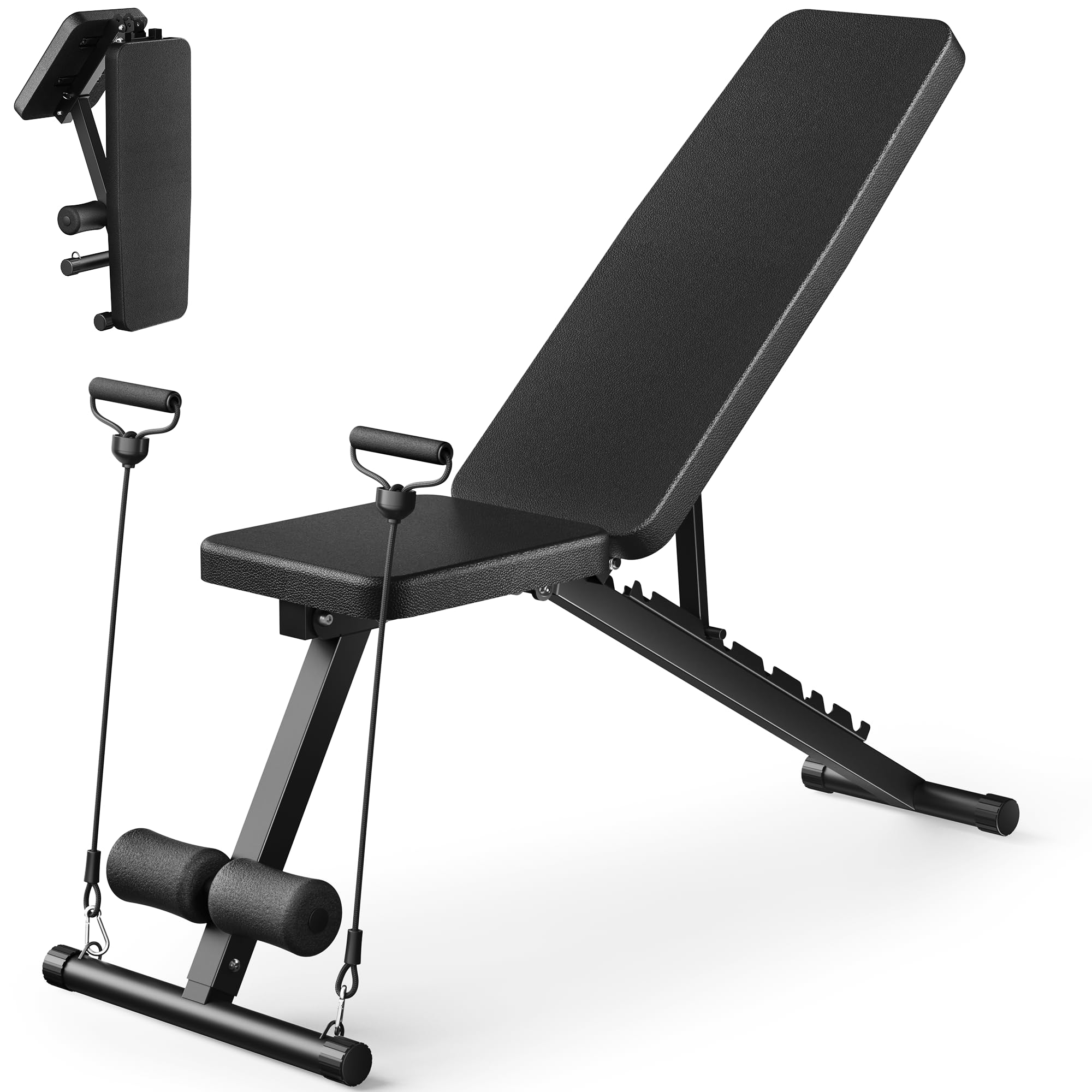
The VUSIGN Adjustable Weight Bench is a highly affordable foldable bench offering incline, decline, and flat positions along with two included resistance bands. The steel frame supports 600 pounds, which covers most home lifters training for core strength with added weight. The backrest adjusts from 69° incline down to -36° decline, giving you the angles needed for targeted ab work like decline crunches and incline reverse crunches.
Assembly is straightforward with a handful of nuts and bolts — most users complete it under 30 minutes. The bench folds by pulling two connecting pins, collapsing to 16.7 x 7.8 x 29.5 inches for storage. The foam padding is covered in a breathable, sweat-proof leather that is easy to wipe down after sweaty core sessions. Some taller users note the ankle/foot roller is not height-adjustable, which can limit positioning for decline exercises if you are over 6 feet.
The resistance bands add variety for standing core rotations and banded crunches, though they are light-duty. The bench feels stable with 25-pound dumbbells but shows slight movement under heavier loads — it is better suited for moderate weight and high-rep core circuits than one-rep max heavy pressing. For the price, it delivers impressive adjustability and core training variety without dominating your space.
Why it’s great
- Three adjustable positions (incline/decline/flat) for comprehensive core targeting
- Folds to a compact 16.7 x 7.8 inches for storage in closets or under beds
- Included resistance bands enable standing core and banded ab exercises
Good to know
- Ankle/foot roller is not height-adjustable — may not fit taller users for decline holds
- Feels stable at moderate loads but can show slight movement under heavy weight
- Foam padding is adequate for core work but thinner than premium bench options
7. Body Sport Exercise Ball
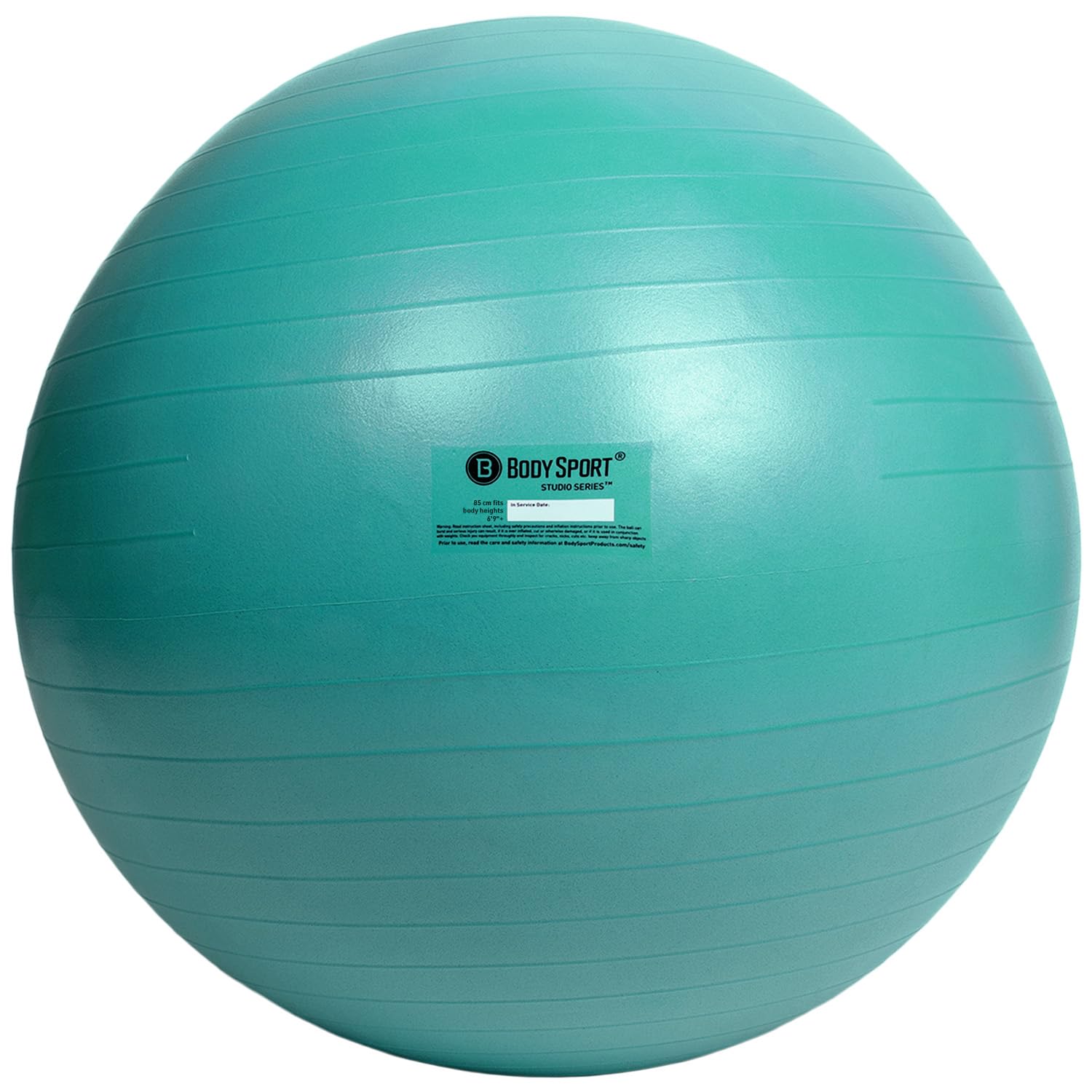
The Body Sport Exercise Ball is a professional-grade stability ball that doubles as a desk chair, stretching aid, and core training tool. Available in color-coded sizes from 45 cm to 85 cm, the ball features a ridged surface for grip during planks, crunches, and pikes. The PVC-ABS construction supports up to 500 pounds static weight, making it durable enough for busy home gyms and commercial facilities.
The included hand pump inflates the ball in about 20 minutes, and the packaging includes two plugs plus a removal tool. Some users note a strong initial plastic or petroleum smell that dissipates within a day. Sizing is critical — the 85 cm ball is suitable for users around 6’9” and taller; shorter users should downsize to 65 cm or 55 cm based on their height. Using the ball as a desk chair works well when you select the correct size so your hips are level with or slightly above your knees.
As a core tool, the stability ball requires constant micromuscular engagement to remain balanced. This builds endurance in the deep spinal stabilizers and obliques more effectively than floor exercises. The ball also integrates with resistance bands for added load. It is the most space-efficient core tool in this guide — deflates fully for storage and costs less than most single gym sessions.
Why it’s great
- Durable PVC-ABS construction with a 500-pound static weight capacity
- Ridged surface provides secure grip during sweaty core exercises
- Can double as an ergonomic desk chair for passive core engagement during work
Good to know
- Initial plastic/petroleum smell is strong but dissipates within 24 hours
- Sizing is critical — 85 cm ball is too large for most users under 6’9”
- Hand pump works but inflation takes about 20 minutes of steady effort
FAQ
How do I choose the right size stability ball for core exercises?
Can I use a half-ball trainer if I have lower back issues?
Is a foldable weight bench stable enough for heavy decline sit-ups?
Do ab rollers with automatic rebound build core strength differently than standard wheels?
Final Thoughts: The Verdict
For most users, the best core workout equipment winner is the WONDER CORE Slide Fit because its four-wheel stability and adjustable rebound resistance accommodate beginners and advanced athletes alike, targeting the entire anterior chain without lower back strain. If you want a foundational instability tool trusted by clinics and teams for two decades, grab the BOSU Balance Trainer. And for heavy progressive overload on core lifts with a bench that folds away after use, nothing beats the Rep Fitness AB-3000 FID.