A cycling shoe that pinches across the ball of your foot turns every ride into a battle against numbness and hot spots. For riders with wide feet, this isn’t a minor fit preference — it’s a fundamental mechanical mismatch that compromises power transfer, comfort, and ultimately your time on the bike. The right pair should wrap your foot without squeezing, hold your heel securely, and distribute pedal force across your entire forefoot, not just the center strip. Finding that combination requires looking past standard D-width sizing and understanding the specific last shapes, closure systems, and sole stiffness ratings that separate a tolerable shoe from one that actually fits.
I’m Emma — the founder and writer behind Baby Bangs. I’ve spent the last decade analyzing cycling shoe construction, studying last-volume data, and cross-referencing real-world feedback from riders with E and EE width feet to separate brands that actually accommodate width from those that just claim to.
This guide breaks down eight models built or recommended for wider feet, comparing sole stiffness, closure adjustability, toe-box volume, and real-world fit reports so you can pick the pair your feet deserve. After years of research on this topic, I’m confident this is the definitive resource on cycling shoes for wide feet that actually delivers the actionable insight riders need.
How To Choose The Best Cycling Shoes For Wide Feet
Wide feet in cycling shoes cause more than discomfort — they create mechanical inefficiency. A shoe that’s too narrow can pinch the metatarsal heads, causing numbness and forcing you to pedal with the outside edge of your foot, which throws off your pedal stroke. The three factors below determine whether a shoe genuinely accommodates width or just markets itself that way.
Last Volume and Insole Width at the Forefoot
The “last” is the three-dimensional mold around which a shoe is built. Standard lasts are D width with a tapered toe box that squeezes the pinky toe. A genuine wide last has an E or EE forefoot measurement (98–102mm at the ball of the foot for most size-42 equivalents) and doesn’t pinch as the shoe tapers toward the toe. The Sidi Mega last and the Shimano Dynalast are two examples where the widening is engineered into the shape, not just the material stretch. Check the removable insole — measure its width at the widest point and compare it to the outline of your own foot drawn on paper.
Closure System Uniform Pressure Distribution
Three equal-width velcro straps create a single tension line across the top of the foot, which can crush a wide instep. A single BOA dial, by contrast, distributes tension through a lace that wraps across the entire midfoot, allowing 1mm micro-adjustments that let you dial in pressure without hot spots. Turn-lock systems (Shimano’s, Sidi’s) offer similar precision. The best approach for wide feet combines a lower-forefoot strap or dial with a midfoot closure that secures the heel independently — the BOA-plus-strap hybrids on the Giro Cadet are a good example of this design.
Sole Stiffness and Cleat Platform
A too-flexible sole (50–70 N/mm) lets the wide part of your foot splay past the pedal’s edge, causing instability and poor power transfer. A nylon/glass composite sole rated at 80–100 N/mm provides a stiff enough platform for recreational and intermediate riders without being harsh. Carbon soles (120+ N/mm) are stiffer and more efficient for racers, but they also require a precise fit because they don’t conform to your foot shape. Regardless of stiffness, look for a sole that has a flat, wide cleat recess area — some narrow lasts taper the sole, giving you less real estate to position your cleat correctly for your stance width.
Quick Comparison
On smaller screens, swipe sideways to see the full table.
| Model | Category | Best For | Key Spec | Amazon |
|---|---|---|---|---|
| Giro Cadet (BOA version) | Road/Indoor | BOA micro-adjustability for irregular feet | Carbon composite sole (high stiffness) | Amazon |
| Sidi Aertis Mega | MTB/Clipless | Dedicated EE wide last, proven shape | Turn-lock closure, Mega last | Amazon |
| Giro Rincon | MTB/Clipless | BOA versatility with a durable trail sole | Nylon/glass fiber sole (80 N/mm) | Amazon |
| Shimano SH-RC302 | Road | Lightweight road shoe, forgiving forefoot | Turn-lock closure, Dynalast shape | Amazon |
| Giro Cadet (original version) | Road/Indoor | BOA + strap hybrid for precise midfoot fit | Carbon composite sole (high stiffness) | Amazon |
| Crankbrothers Stamp Lace | MTB/Flat | Roomier toe box for flat-pedal riders | Sticky rubber gum sole, lace closure | Amazon |
| Giro Stylus | Road/Entry-Level | Budget-friendly introduction to clipless | Nylon/glass fiber sole (60 N/mm) | Amazon |
| Endura Hummvee | MTB/Casual | Casual fit for neighborhood rides | Slip-resistant sole, lace/velcro closure | Amazon |
In‑Depth Reviews
1. Sidi Aertis Mega Mountain Clipless Shoes

The Sidi Aertis Mega is one of the few cycling shoes that doesn’t just stretch a standard last — it’s built on Sidi’s dedicated Mega last, which provides a true EE width fit throughout the entire forefoot and toe box. The turn-lock closure system replaces the traditional ratchet buckle with a micro-adjustable dial that lets you dial in pressure in tiny increments, a significant advantage for wide-footed riders who need uniform tension across a broader metatarsal span. The sole is stiff enough for efficient power transfer during trail riding and indoor trainer sessions, though serious climbers may want a full-carbon plate for maximum stiffness.
Real-world feedback from riders with wide, flat feet (colloquially described as “flintstone feet”) confirms that these shoes eliminate the side-squeezing and pinky-toe numbness that plague standard-width models. Multiple long-term users report having worn their previous pair of Sidi Megas for over 15 years, which speaks to the build quality and the engineered width retention over time. The closure system also makes entry and exit fast, which is practical for rides with frequent stops. The shoe accommodates 2-bolt MTB cleats and fits well with most clipless pedal systems.
Some reviewers with exceptionally wide feet (EE and above) at size 10 found that even the Mega last was still tight across the midfoot, suggesting that while Sidi’s Mega is the market leader for width, riders with very high-volume feet may need to size up half to a full size. The shoe’s stiffness is adequate for recreational and moderate training but may flex more than desired during hard, out-of-the-saddle climbing efforts. Overall, this is the most reliable wide-specific cycling shoe available.
Why it’s great
- Genuine EE Mega last designed for width, not just stretch
- Turn-lock dial offers precise, uniform micro-adjustment
- Proven durability that regularly exceeds a decade of use
Good to know
- Still too narrow for some very wide, high-volume feet at standard size
- Lacks full carbon stiffness for elite climbing performance
- Premium-positioned tier, reflecting the dedicated-wide-last construction
2. SHIMANO SH-RC302 Bicycle Shoes
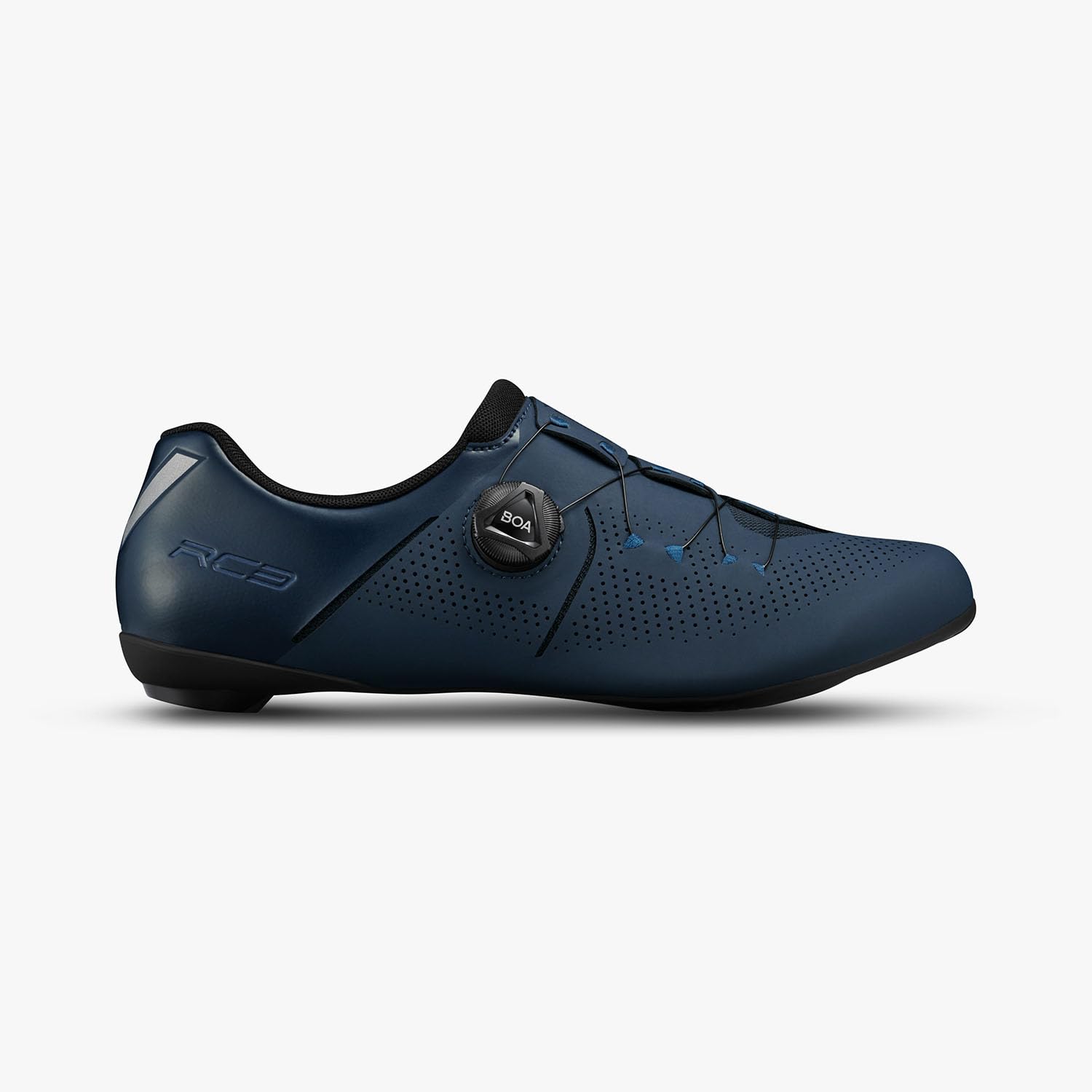
Shimano’s SH-RC302 uses the brand’s Dynalast shape, which is engineered with a slightly wider forefoot and a more gradual toe taper than traditional road racing shoes. This makes it one of the better options for riders who need extra width in the toe box without stepping up to a dedicated EE model. The turn-lock closure (similar to BOA in concept) provides quick, even tensioning across the midfoot, and the shoe weighs less than many competitors in its class, making it suitable for long road rides and triathlon training where foot swelling is a concern.
Reviewers consistently note that sizing up half a size from normal shoe size creates a roomy but secure fit, and that the bottom air channel provides effective ventilation during warm-weather rides. The shoe’s stiffness is rated for recreational to intermediate performance — it’s not a full-carbon racing shoe, but it offers good power transfer for its weight and price tier. The synthetic upper holds its shape over time and resists stretching, which helps maintain the fit if you start with the correct size. The cleat mounting plate uses a standard 3-bolt road pattern.
Some users report that the turn-lock mechanism can feel slightly less refined than BOA dials, and that the bottom plate may shift over extended use, requiring occasional retightening. The width at the ball of the foot is generous but not expansive — riders with very wide feet (EE-plus) may still feel pressure after long rides. The SH-RC302 is best suited for road cyclists who need a lightweight, well-ventilated shoe with a forgiving forefoot and don’t require extreme width.
Why it’s great
- Dynalast shape offers a naturally wider forefoot taper
- Lightweight construction with excellent airflow from bottom channel
- Turn-lock closure is fast and provides even pressure
Good to know
- Turn-lock mechanism can need occasional retightening over time
- Not wide enough for very high-volume or EE-plus feet
- Mid-range stiffness may not satisfy hard-charging racers
3. Giro Cadet Men Clipless Road Cycling Shoes (BOA Version)

The Giro Cadet (BOA version) is a road cycling shoe that combines a stiff carbon composite sole with a BOA L6 dial and a single velcro strap at the toe. This hybrid closure system is particularly effective for wide and irregular feet because the BOA dial adjusts tension across the entire midfoot in 1mm increments, while the strap locks down the forefoot independently. Riders with E to EE width who have struggled with single-point pressure from velcro-only closures report that this design eliminates hot spots and allows them to fine-tune fit by section rather than accepting uniform tightness.
The carbon composite outsole is stiff enough for efficient power transfer during road rides and indoor cycling sessions, yet retains enough flex for walking comfort off the bike. The Synchwire upper is a stitch-less, thermo-bonded mesh that vents well and distributes closure tension evenly across the top of the foot. Multiple users with wide feet confirm that the BOA system allows them to loosen the midfoot without loosening the entire shoe, which is the main advantage over traditional ladder-lock closures. The shoe works with both 2-bolt and 3-bolt cleat patterns, adding versatility.
Some riders find the shoe runs slightly small in length and width, and recommend ordering a half-size up. The toe box is roomy but not exceptionally wide — the shoe’s main asset for wide feet is the BOA’s ability to customize midfoot pressure, not the width of the last itself. Long-term reviews note that the BOA dial can accumulate dust after off-road use and may require occasional cleaning to maintain smooth operation. Overall, the Cadet is a strong choice for road cyclists and indoor riders who need precise, real-time fit adjustment across a wide midfoot.
Why it’s great
- BOA dial with forefoot strap allows independent section tensioning
- Carbon composite sole balances stiffness with light weight
- Works with both 2-bolt and 3-bolt cleat patterns
Good to know
- Runs slightly small; order half-size up for proper fit
- BOA knob can get sticky after dusty rides
- Last width is moderate, not a dedicated EE design
4. Giro Cadet Men Clipless Road Cycling Shoes (Original Version)
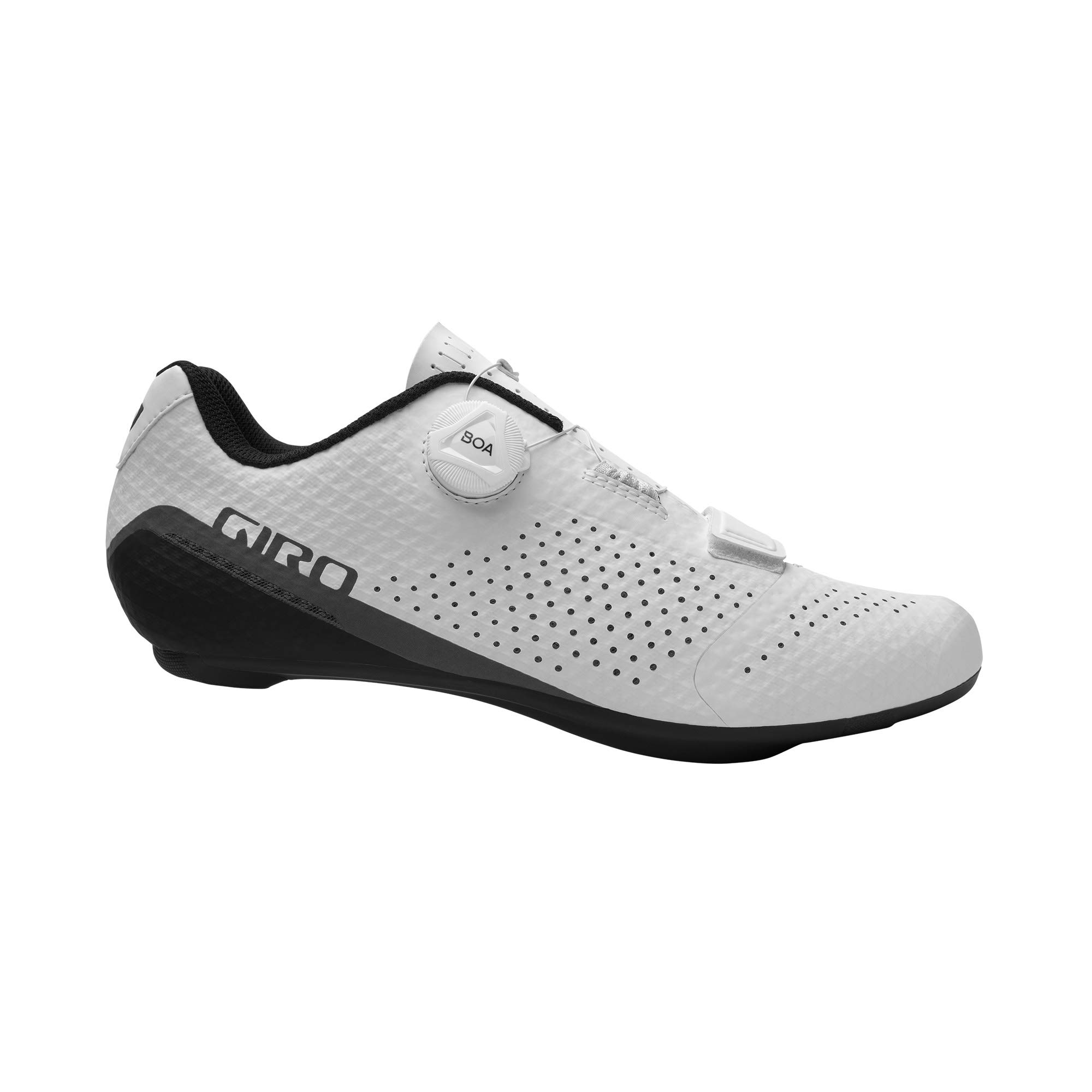
This original version of the Giro Cadet shares the same Synchwire upper and carbon composite sole as the BOA version, but it uses a different colorway and is often available at a slightly different price point. The fundamental fit characteristics are identical — the BOA L6 dial and velcro strap combination that makes this model effective for wide feet is present here as well. The shoe works well for riders who need the BOA’s micro-adjustability to accommodate a wider forefoot without buying a dedicated wide-last shoe.
Real-world feedback from users with E to EE width feet confirms that the BOA system eliminates pressure points that fixed velcro straps create, and that the stiff sole provides good power transfer for road and indoor cycling. The shoe is also compatible with multiple cleat systems (2-bolt and 3-bolt), which adds flexibility for riders who swap between road and indoor setups. The reflective details improve low-light visibility, a practical touch for commuting or early rides. The build quality is consistent with Giro’s mid-range offerings, with synthetic uppers that resist stretching.
Like the BOA version, this shoe runs slightly small and fits best when ordered half a size up. The width at the ball of the foot is comparable to standard D-width lasts — riders with very wide feet (EE-plus) will appreciate the BOA adjustability but should not expect a dedicated wide last. The BOA dial can be affected by grit if used off-road, requiring cleaning. This version is essentially the same excellent shoe as the BOA Cadet, differentiated mainly by color and price availability.
Why it’s great
- BOA + strap closure provides precise sectional fit adjustment
- Carbon composite outsole for efficient power transfer
- Versatile cleat compatibility with 2-bolt and 3-bolt systems
Good to know
- Runs small; order half-size up
- Standard D-width last, not a dedicated wide design
- BOA dial may need cleaning after dusty rides
5. Giro Rincon Cycling Shoe
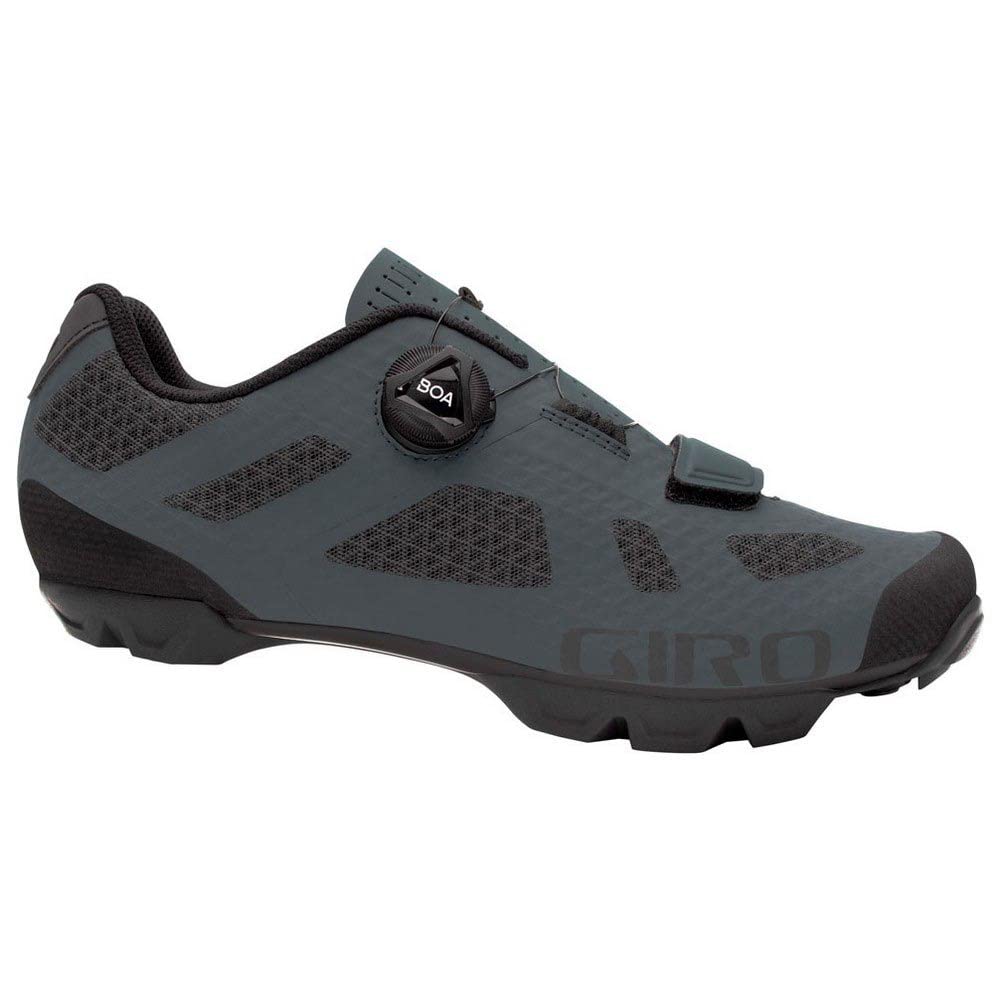
The Giro Rincon is a mountain biking shoe that uses a BOA L6 dial paired with a single velcro strap, offering the same section-specific tensioning advantage that helps wide-footed riders avoid hot spots. The sole is a nylon and glass fiber composite rated at approximately 80 N/mm stiffness — a middle ground that’s stiff enough for efficient pedaling on singletrack but compliant enough for comfortable walking during hike-a-bike sections. The outsole features over-molded heel and toe pads for durability when scrambling over rocks or roots, making it a practical choice for trail riders who spend time off the saddle.
The Synchwire upper in the Rincon provides excellent airflow and structural integrity, and the BOA dial’s 1mm micro-adjustments let riders with wide forefeet loosen the midfoot zone without making the entire shoe sloppy. The universal 2-bolt cleat pattern works with standard MTB pedals, and the sole’s flat profile provides a stable platform for cleat positioning. Long-term users report the shoes hold up well through multiple seasons of trail riding, with the BOA mechanism remaining reliable as long as it’s rinsed after dusty rides.
Some reviewers note that the shoe runs narrow through the forefoot for a trail-specific model — the width at the ball of the foot is closer to a standard road last than a dedicated MTB wide last. Riders with EE-width feet may need to size up half to a full size, and the bootie-style heel cup can feel snug if you have a wide heel. The BOA dial’s low position on the tongue can also be tricky to adjust while riding. The Rincon is a versatile, well-made trail shoe that works best for riders with moderately wide forefeet who want BOA precision on dirt.
Why it’s great
- BOA L6 dial provides forefoot-specific tension adjustment
- Nylon/glass sole balances pedaling stiffness with walkability
- Durable over-molded outsole pads for off-bike sections
Good to know
- Runs narrow in forefoot for a trail shoe
- May need half to full size up for very wide feet
- BOA dial position can be awkward to adjust mid-ride
6. Crankbrothers Stamp Lace Flat, MTB Shoes

The Crankbrothers Stamp Lace is a flat-pedal mountain bike shoe that offers a noticeably roomier toe box than most flat pedal shoes in its class. For cyclists who refuse clipless or who switch between flat and clipless setups, this shoe provides a wide, stable platform that accommodates E-width forefeet without pinching. The lace closure is traditional but effective — you can micro-adjust tension by skipping eyelets or tying looser at the forefoot, giving you some of the same section-specific fit control that BOA provides. The sticky rubber gum sole delivers exceptional grip on pinned flat pedals.
The shoe’s build is thick and durable, with a polyester weave upper that resists abrasion from pedal pins. The sole is stiff enough to support power transfer but has enough flex for walking comfort. A lace hideaway pocket on the tongue prevents laces from catching on drivetrain components, a thoughtful detail for trail riding. Multiple long-term users report the sole lasting 1,200 to 1,500 miles before losing significant grip, placing it among the most durable flat pedal shoes available. The toe box’s generous volume makes it a standout choice for wide-footed riders who prefer flat pedals.
The shoe runs half to a full size small in both length and width, so ordering up is essential for a comfortable fit. Some reviewers with narrow heels have found the roomy toe box makes the shoe feel loose in the heel, requiring thick socks or aftermarket insoles to dial in heel hold. The lace closure lacks the on-the-fly adjustability of BOA, so you need to stop to make fit changes. The Stamp Lace is best for mountain bikers who prioritize toe box width and sole durability over instant adjustability.
Why it’s great
- Genuinely roomy toe box for wide forefeet
- Exceptional sole durability (known to exceed 1,200 miles)
- Sticky gum rubber provides excellent pedal grip
Good to know
- Runs half to full size small; always order up
- Heel hold can be loose for narrow heels
- Lace closure requires stopping to adjust mid-ride
7. Giro Stylus Cycling Shoe
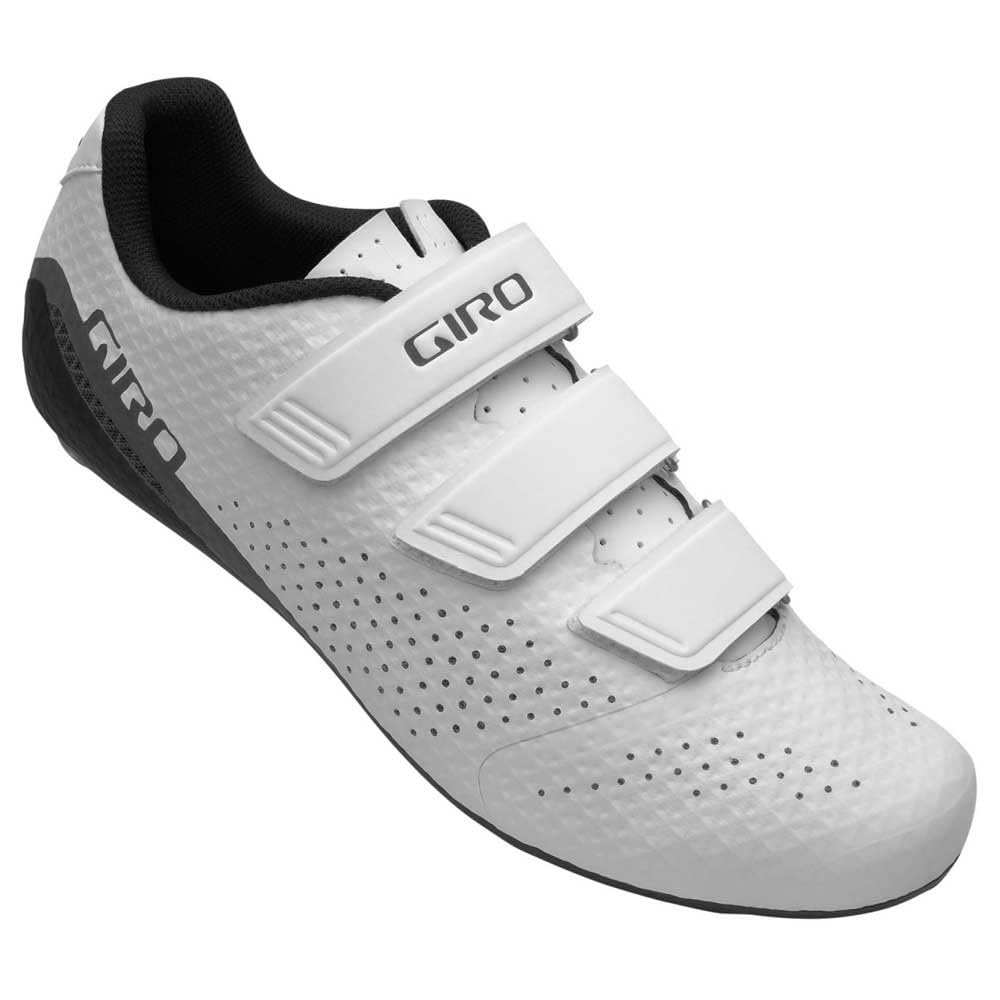
The Giro Stylus is an entry-level road cycling shoe that offers a surprisingly comfortable fit for riders with modestly wide feet, thanks to its Synchwire upper that stretches slightly under tension and its three wide velcro straps. While the straps lack the micro-adjustability of BOA or turn-lock systems, they apply pressure across a broad area of the forefoot and midfoot, reducing the pinching that narrow single-point straps can cause. The nylon and glass fiber sole provides a stiffness of around 60 N/mm, which is adequate for recreational rides, commuting, and indoor cycling.
The shoe uses a universal 3-bolt and 2-bolt cleat pattern, giving riders flexibility to choose their pedal system. It weighs just 272 grams per shoe, making it lightweight for its price tier, and the reflective accents improve visibility in low light. Several users with wider feet report being able to wear the Stylus comfortably after a short break-in period, with the Synchwire upper conforming to the shape of the foot without creating persistent hot spots. The shoe is also available in multiple colorways, including white, which is a classic choice for road riders.
The Stylus runs somewhat narrow at the ball of the foot, and multiple users recommend going half a size up for adequate toe room. The three strap system cannot be adjusted independently per foot zone — tightening the midfoot also tightens the forefoot, which limits precision for irregular foot shapes. The sole stiffness is fine for casual riding but will flex noticeably during hard efforts. The Stylus is a great starting point for new cyclists or budget-conscious riders, but those with truly wide feet (E-plus) will quickly outgrow its fit constraints.
Why it’s great
- Lightweight (272g) and breathable Synchwire upper
- Universal cleat pattern works with 3-bolt and 2-bolt pedals
- Wide velcro straps distribute pressure over forefoot
Good to know
- Runs narrow at ball of foot; size up for wider feet
- Three straps lack independent zone tensioning
- Sole stiffness (60 N/mm) flexes under hard pedaling
8. Endura Men’s Hummvee Mountain Cycling Shoes

The Endura Hummvee is a casual clipless mountain bike shoe that emphasizes comfort and walkability over performance stiffness. It uses a combination of laces and a single velcro strap at the ankle, allowing some degree of tension customization across the forefoot and instep. The sole is slip-resistant and designed for off-bike traction, making this shoe a practical choice for commuters, urban riders, and casual trail cyclists who walk frequently. For wide-footed riders, the lace closure provides better forefoot adjustability than fixed velcro straps, though the range is limited by the lace pattern.
Users who have tried the Hummvee report that it fits true to size for standard-width feet, but several with wide feet note that it runs small in the forefoot and length, requiring sizing up at least half a size for a comfortable fit. The shoe’s casual aesthetic — including suede-style synthetic overlays — makes it less conspicuous off the bike than traditional cycling shoes, which appeals to riders who use their bike for errands or social rides. The cushioning is more generous than most clipless shoes, which reduces pedal feel but increases walking comfort.
The shoe’s primary limitation for wide-footed riders is its inconsistent sizing. Multiple reviewers with size 11 feet report that the 11.5 fits more like a 10.5 in width, suggesting that the last is on the narrower side of average. The combination of a narrow forefoot and a sole that’s designed for casual walking rather than stiff power transfer makes this shoe unsuitable for riders who need precise fit and efficient pedaling. The Hummvee works best as a casual, low-intensity shoe for riders who don’t have extreme width requirements and prioritize off-bike comfort.
Why it’s great
- Lace and velcro closure provides some forefoot adjustability
- Slip-resistant sole with good off-bike traction
- Comfortable cushioning for walking and casual rides
Good to know
- Runs small and narrow; size up at least half size
- Casual sole stiffness limits pedaling efficiency
- Inconsistent width sizing across different colorways
FAQ
Can I make a standard cycling shoe fit my wide feet by stretching the material?
Is a BOA dial better than three velcro straps for wide feet?
Can I use wide cycling shoes with my existing clipless pedals?
How much should I size up for a wide cycling shoe?
Are expensive carbon-sole cycling shoes worth it for wide feet?
Final Thoughts: The Verdict
For most riders, the cycling shoes for wide feet winner is the Sidi Aertis Mega because it’s one of the few models built on a dedicated EE last, meaning the width is engineered into the shoe from the start rather than added as an afterthought. If you want the precise on-the-fly fit adjustment that BOA provides for an irregular midfoot, grab the Giro Cadet (BOA version). And for flat-pedal riders who refuse clipless but need a roomy toe box, nothing beats the Crankbrothers Stamp Lace for its proven sole durability and genuine forefoot space.