Fungal acne is a misnomer—it’s actually a yeast overgrowth (Malassezia) that standard acne washes often make worse by feeding the problem with oils and fatty acids. Finding a cleanser that targets the fungus without stripping your moisture barrier is the real battle, and one wrong bottle can set you back weeks.
I’m Emma — the founder and writer behind Baby Bangs. I’ve spent years analyzing the chemical composition of thousands of skincare products to identify the exact ingredients that either starve Malassezia yeast or trigger it.
After breaking down every formula by its lipid profile, active antifungal agents, and pH balance, the only cleanser for fungal acne worth your shelf space are the ones that combine proven antifungals with truly non-comedogenic bases.
How To Choose The Best Cleanser For Fungal Acne
A common mistake is grabbing a salicylic acid or benzoyl peroxide face wash, which targets bacterial acne but does nothing—or worse—for fungal overgrowth. Malassezia feeds on specific fatty acid chains (C12-C24). The first rule: scan the ingredient list for oils like coconut oil, shea butter, and esters derived from fatty acids, and avoid them. A truly effective cleanser for fungal acne will either be oil-free entirely or use only non-feeding synthetic emollients.
Antifungal Actives Matter More Than Anything
Tea tree oil (at 500 ppm or higher), tolnaftate (1%), pyrithione zinc, selenium sulfide, and ketoconazole are proven antifungal agents. A cleanser with at least one of these actives at therapeutic levels has a real chance of suppressing yeast colonies. The non-fungal anti-inflammatory ingredients (niacinamide, cica, ceramides) are helpful for healing the skin barrier, but they should never replace a primary antifungal. If a “fungal acne” wash lacks a documented antifungal, it’s simply a gentle cleanser in disguise.
Texture and pH Balance Are Non-Negotiable
Fungal acne often coexists with a compromised moisture barrier, which means harsh sulfate foaming agents can cause stinging and redness. A gel or cream-to-foam texture that cleanses without overscrubbing is ideal. The ideal pH for a cleanser targeting fungal acne is between 4.5 and 6.0—within the natural acid mantle range. Alkaline soaps disrupt the skin’s pH, creating an environment where yeast proliferates more aggressively. Look for “pH-balanced” or “non-stripping” on the label.
Quick Comparison
On smaller screens, swipe sideways to see the full table.
| Model | Category | Best For | Key Spec | Amazon |
|---|---|---|---|---|
| PHARMBANNER Tea Tree Antifungal Body Wash | Premium Antifungal | Body & face folliculitis | Tea tree oil + olive oil | Amazon |
| Probliva Antifungal Body Wash with Tolnaftate | Medicated Relief | Stubborn ringworm, jock itch | 1% Tolnaftate + tea tree | Amazon |
| La Roche-Posay Toleriane Purifying Foaming Cleanser | Malassezia-Safe Daily | Sensitive, normal to oily skin | Niacinamide + Ceramide-3 | Amazon |
| CeraVe Hydrating Facial Cleanser | Budget Barrier Repair | Dry & sensitive fungal-prone skin | 3 Ceramides + Hyaluronic Acid | Amazon |
| ESSENHERB Tea Tree Relief Foam Cleanser | Everyday Prevention | Blackhead & oil control | 500ppm Tea Tree Oil + Cica | Amazon |
In‑Depth Reviews
1. PHARMBANNER Tea Tree Antifungal Body Wash

This premium formula uses tea tree oil at a concentration strong enough to tackle tinea versicolor, folliculitis, and fungal acne on both the face and body. The addition of olive oil is a clever balance—it locks in moisture without feeding Malassezia because the fatty acid profile lacks the specific C12-C24 chains that trigger yeast growth. Users report visible clearing of brown/white spots and bumps within 5–7 days of daily use.
What sets it apart from standard tea tree washes is the “how” of its formulation: it’s a gel that lathers lightly, rinses completely clean without a greasy film, and leaves the skin refreshed rather than tight. It targets the root fungal cause while soothing the inflammation that often accompanies it, making it a two-in-one solution for those who have been battling stubborn, itchy bumps.
The 5.29-ounce bottle is compact, but the concentrated gel spreads easily—a dime-size amount covers the full face. It’s also free from parabens and sulfates, so it won’t disrupt a sensitive skin barrier that’s already under attack from yeast overgrowth.
Why it’s great
- Provides fast, visible relief for tinea versicolor and fungal acne
- Non-drying formula with hydrating olive oil base
- Versatile—effective on face, chest, back, and body
Good to know
- Slightly higher cost per ounce than drugstore options
- Tea tree scent may be strong for sensitive noses
2. Probliva Antifungal Body Wash with Tolnaftate
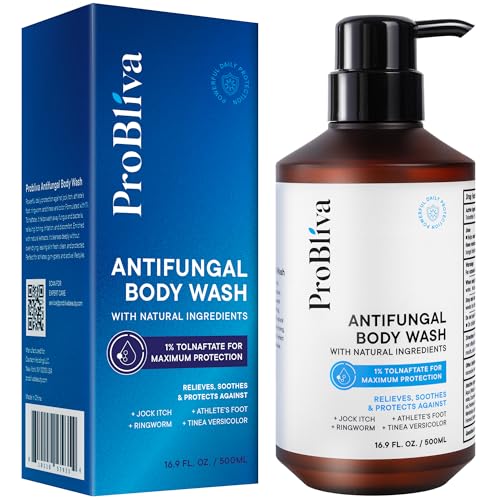
If your fungal acne is accompanied by itching, redness, or athlete’s foot–like symptoms, this medicated wash packs the pharmaceutical punch of 1% tolnaftate—a synthetic antifungal that starves yeast by blocking ergosterol production in the cell membrane. Few face/body washes in this category contain tolnaftate, which is typically reserved for creams, making this a unique and potent option.
The formula goes beyond just the antifungal agent: tea tree oil provides botanical antifungal backup, while witch hazel and aloe vera soothe the inflammatory response. Menthol offers an immediate cooling relief that users describe as “instantly stopping the itch.” It lathers nicely enough for full-body use, yet is gentle enough for the back, chest, and even the scalp—areas where fungal acne frequently spreads.
Customer feedback confirms it clears tinea versicolor spots under the breasts and on the torso within a week of daily use. The 12-ounce bottle is generous, and a single pump covers several body areas. It’s a strong choice for those who want both antifungal treatment and itch management in one step.
Why it’s great
- Contains 1% tolnaftate, a proven clinical antifungal
- Cooling menthol provides immediate itch relief
- Large 12-ounce pump bottle for full-body use
Good to know
- Medicinal smell may be noticeable
- May feel too strong for very sensitive facial skin daily
3. La Roche-Posay Toleriane Purifying Foaming Cleanser

The La Roche-Posay Toleriane Purifying Foaming Cleanser is a dermatologist-favorite for a reason: it is one of the few mainstream foaming cleansers that is completely Malassezia-safe, containing zero oils or fatty-acid esters that feed yeast. Its foaming action comes from coco-glucoside, a gentle surfactant, rather than harsh sulfates, making it ideal for skin that is both fungal-prone and sensitive.
Niacinamide takes center stage here, helping to regulate sebum production and reduce the redness that accompanies inflammatory fungal breakouts. Ceramide-3 reinforces the skin barrier, which is often compromised by frequent washing. The Prebiotic Thermal Water in the formula helps maintain a healthy pH, keeping the acid mantle intact and hostile to yeast overgrowth.
Users consistently remark that it “does not trigger breakouts” and leaves the skin feeling clean without a tight, dry sensation. It works particularly well for those who need a reliable daily cleanser that simply doesn’t add fuel to the fire. It lacks a direct antifungal active, so it is best paired with a separate treatment.
Why it’s great
- Completely oil-free and Malassezia-feeding-ingredient-free
- Barrier-supporting niacinamide and ceramide-3
- Gentle foaming that doesn’t strip or irritate
Good to know
- No direct antifungal active (needs a partner treatment)
- May be too gentle for heavy makeup removal
4. CeraVe Hydrating Facial Cleanser
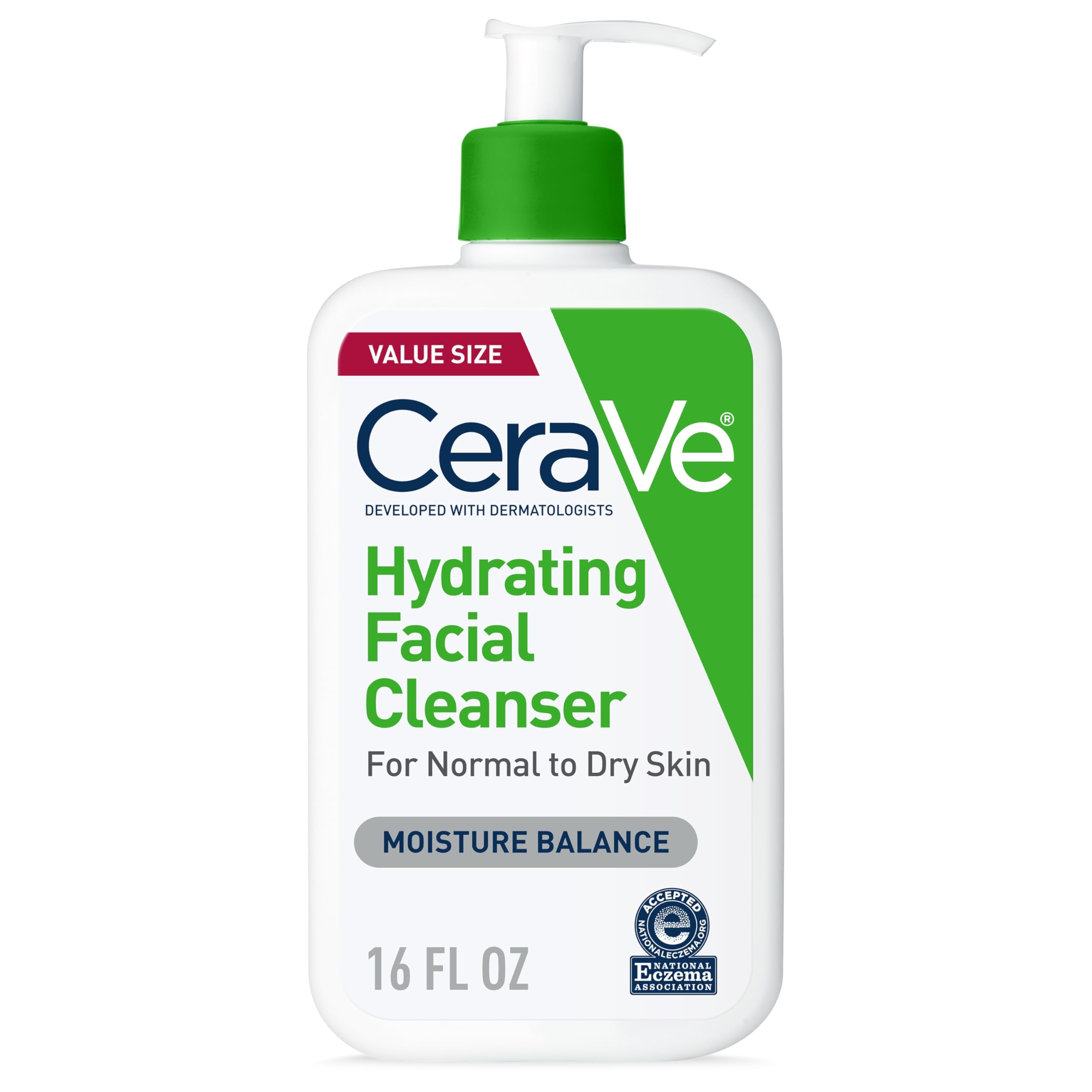
The CeraVe Hydrating Facial Cleanser is a budget-friendly, non-foaming cream that is frequently overlooked in the fungal acne conversation because it doesn’t have an antifungal tagline. But its ingredient deck is surprisingly Malassezia-safe: no oils, no fatty-acid esters, and a base of ceramides and hyaluronic acid that strengthens the skin barrier without feeding yeast. It is certified by the National Eczema Association, a strong signal for skin that is already in a reactive state.
For those whose fungal acne is accompanied by significant dryness or a disrupted skin barrier, this cleanser is a lifesaver. The lotion-like texture dissolves dirt and makeup without any foam, meaning zero stripping of natural oils. The three essential ceramides (1, 3, 6-II) help replenish the lipid barrier that frequent antifungal washing can erode over time.
The 16-ounce bottle offers tremendous value. It is not a standalone treatment for active fungal acne, but it is the most effective and affordable daily cleanser to use in rotation with an antifungal spot treatment or mask. The lack of fragrance makes it a safe bet for those who react to scented products.
Why it’s great
- Zero oils or fatty-acid esters that feed Malassezia
- Extremely gentle, non-foaming texture for compromised skin
- Large, affordable 16-ounce bottle
Good to know
- No direct antifungal ingredient
- Non-foaming texture may not feel “clean” to some users
5. ESSENHERB Tea Tree Relief Foam Cleanser
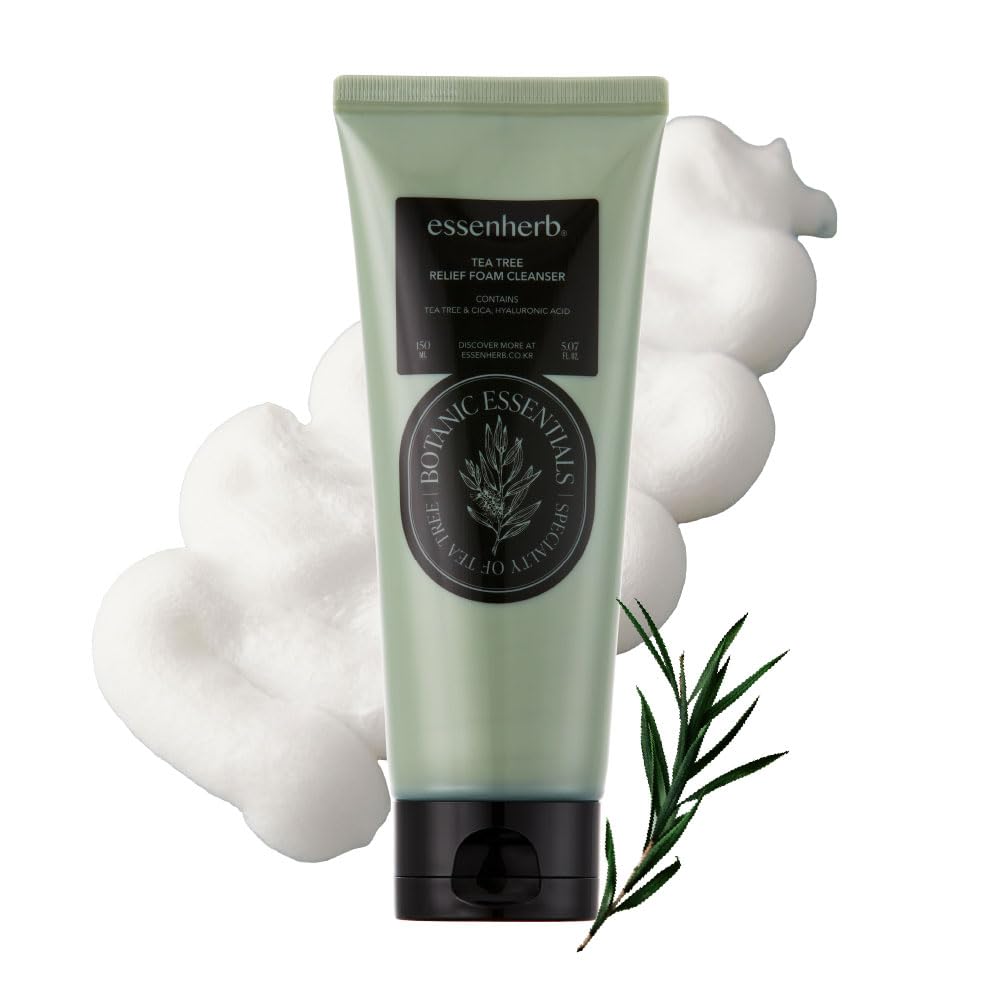
The ESSENHERB Tea Tree Relief Foam Cleanser is a Korean skincare–style foam that positions itself as an everyday anti-breakout wash for acne-prone and sensitive skin. The key spec is its 500ppm tea tree oil concentration—a moderate level that is effective for maintenance and mild fungal acne without being irritating. It also contains centella asiatica (cica), which is excellent for calming redness and inflammation.
Where this cleanser shines is its texture: rich, creamy bubbles that lift away excess sebum and dead skin cells from pores without leaving a tight sensation. Users with rosacea and sensitive skin have reported that it does not cause burning or drying, which is often a problem with higher-concentration tea tree products. It provides a “clean and clarified finish” that feels refreshing in the morning.
While the tea tree oil provides mild antifungal activity, it is not strong enough to tackle a full-blown fungal acne flare on its own. It works best as a preventive or maintenance cleanser for those who have cleared their active infection and want to keep yeast at bay. The 5.07-ounce tube is travel-friendly and a little goes a long way.
Why it’s great
- Gentle foam texture suitable for sensitive, rosacea-prone skin
- Cica blend soothes redness while tea tree fights fungus
- Concentrated formula — pea-sized amount lasts months
Good to know
- Tea tree concentration may be insufficient for active fungal flare-ups
- Scented tea tree aroma may not suit fragrance-free preferences
FAQ
Can a cleanser alone cure fungal acne?
How often should I wash my face if I have fungal acne?
Will salicylic acid make fungal acne worse?
Can I use a dandruff shampoo as a fungal acne cleanser?
Final Thoughts: The Verdict
For most users, the cleanser for fungal acne winner is the PHARMBANNER Tea Tree Antifungal Body Wash because it delivers a potent tea tree oil dose combined with a hydrating olive oil base that doesn’t feed Malassezia. If you want a medicated option with active ingredient backup, grab the Probliva Antifungal Body Wash with Tolnaftate. And for a gentle daily cleanser that simply won’t trigger a flare, nothing beats the La Roche-Posay Toleriane Purifying Foaming Cleanser.