Dust isn’t just unsightly—it’s a constant assault on your respiratory system, settling on every surface and triggering allergies, asthma, and that frustrating cycle of sneezing and dusting that never seems to end. A dedicated air purifier is the only way to stop fighting dust at the source, but not every filter on the market is built to handle the specific size and weight of household dust particles.
I’m Emma — the founder and writer behind Baby Bangs. I spend my days analyzing particulate filtration specs, CADR ratings for dust-specific capture, and real-world customer data to separate the machines that genuinely reduce airborne dust from those that just move it around.
After combing through hundreds of verified reviews and lab-tested performance metrics, I’ve narrowed the field down to the models that actually deliver cleaner air. This guide covers the most reliable air purifiers for dust in 2025, breaking down what makes each one effective for your home.
How To Choose The Best Air Purifier For Dust
Dust particles range from large visible fibers (around 10 microns) to respirable fine dust (under 2.5 microns) that penetrates deep into lung tissue. The right purifier needs the filter media to trap these across the range and the airflow to cycle your room’s air multiple times per hour. Here’s what to scrutinize before buying.
Dust-Specific CADR Rating
CADR (Clean Air Delivery Rate) is the industry standard for measuring how many cubic feet of air per minute a purifier removes of a specific pollutant. For dust control, the dust CADR number is your primary metric—ignore the smoke and pollen numbers when targeting dust. Aim for a dust CADR that is at least 50% of your room’s square footage value for adequate cleaning. Higher dust CADR means faster and more effective particle removal.
True HEPA vs. HEPA-Type Filtration
True HEPA filters capture 99.97% of particles at 0.3 microns—the most penetrating particle size—and this standard is critical for fine dust. HEPA-type or “HEPA-like” filters lack independent certification and may allow a significant fraction of dust particles to pass through. The filter media density and depth also matter: thicker pleated filters hold more dust before clogging, maintaining airflow and CADR over longer periods.
Air Changes Per Hour (ACH) and Room Coverage
An air purifier must turn over the air in your room at least 4 times per hour for effective dust control, and 6 times per hour is ideal for high-dust environments (homes with pets, carpets, or nearby construction). Check the manufacturer’s ACH claims at the highest fan speed—divide the CADR by the room volume (length x width x height) to calculate your real ACH. Oversizing slightly ensures your machine doesn’t have to run at maximum noise to keep up.
Washable Pre-Filter for Large Dust
A washable pre-filter is a game-changer for dust management. It captures the larger visible dust and pet hair before they reach the HEPA element, extending the main filter’s life by months. Look for a machine with a pre-filter that can be easily removed, rinsed under a tap, and dried—this one feature alone can cut your annual filter replacement costs by half while maintaining peak performance.
Quick Comparison
On smaller screens, swipe sideways to see the full table.
| Model | Category | Best For | Key Spec | Amazon |
|---|---|---|---|---|
| Coway Airmega AP-1512HH | Mid-Range | Best Overall Dust Control | Dust CADR 246 | Amazon |
| Blueair DustMagnet 5440i | Premium | Dust Magnet Tech | 99% dust capture before settling | Amazon |
| Levoit Core 300-P | Budget | Value and Quiet Operation | Dust CADR 153 | Amazon |
| GermGuardian AC4825W | Budget | Allergen and Odor Control | 0.1 micron particle capture | Amazon |
| BLUEAIR Blue 111 | Premium | Whole Home Dust Reduction | Covers 3,385 sq ft | Amazon |
| AirDoctor AD2000 | Premium | Ultrafine Dust & VOC Removal | Captures 0.003 micron particles | Amazon |
| Coway Airmega 250 | Premium | Large Room Dust Master | Covers 1,860 sq ft | Amazon |
In‑Depth Reviews
1. Coway Airmega AP-1512HH
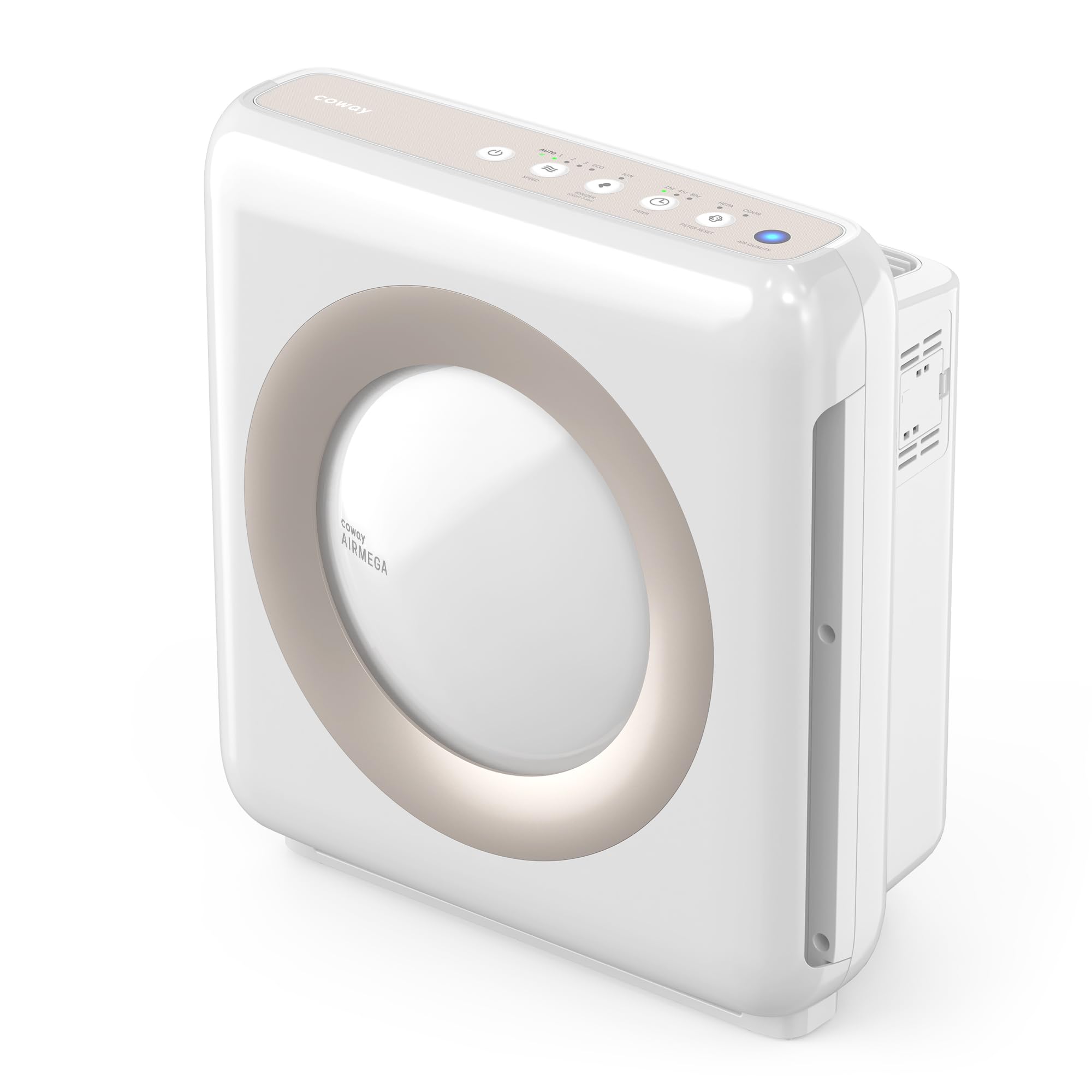
The Coway Airmega AP-1512HH commands the top spot for dust control because of its outstanding dust CADR of 246, which is the highest in this comparison for a mid-range unit. This means it can exchange the air in a 361 sq ft room over 4 times per hour on high, aggressively pulling dust out of circulation before it settles on surfaces. The four-stage filtration—washable pre-filter, deodorization carbon filter, True HEPA, and Vital Ion—works in concert to handle dust from large visible fibers down to 0.3 micron particulates.
Real-world performance from verified buyers confirms its dust-fighting ability: one reviewer in New York City reported the unit cleared wildfire smoke haze from “red to blue” in about five minutes, and multiple users noted a visible reduction in settled dust on furniture within the first week of use. The pollution sensor automatically adjusts fan speed based on real-time air quality, so when you’re cooking or vacuuming (stirring up dust), the Coway kicks into higher gear without manual intervention. Noise levels range from a nearly inaudible 24.4 dB on low to 53.8 dB on high, which is manageable for a machine moving this much air.
On the maintenance front, the washable pre-filter is a standout for dust-heavy households—rinse it under the tap every two weeks, and the True HEPA filter only needs replacement once a year, keeping ongoing costs low. The filter replacement indicator separately tracks the pre-filter cleaning schedule and HEPA filter lifespan, removing guesswork. One minor trade-off: there’s no WiFi connectivity or app, so you rely on the on-unit controls and color-coded air quality LED, but for a machine focused purely on dust reduction, the simplicity works in its favor.
Why it’s great
- Highest dust CADR in its class for superior particle capture
- Washable pre-filter dramatically extends HEPA filter life
- Real-time air quality sensor with responsive auto mode
- Quiet enough for bedroom use at low speeds
Good to know
- No smart home or WiFi connectivity
- Bulky footprint for small spaces
2. Blueair DustMagnet 5440i

The Blueair DustMagnet 5440i takes a unique approach to dust—it uses dual air intakes and vortex airflow to keep dust particles airborne, then electrostatic charges cluster them together and attract them to charged stainless steel pre-filters. Blueair claims this method captures 99% of dust before it settles, which is a fundamentally different strategy from passive filtration. For homes where visible dust accumulation on surfaces is the primary frustration, this design directly addresses that pain point.
HEPASilent technology combines electrostatic and mechanical filtration to remove 99.97% of particles down to 0.1 micron while operating at up to 67% less noise than traditional HEPA-only units. On low speed, the unit runs at just 30 dB—quieter than a whisper—and uses only 7 watts of power, making it one of the most energy-efficient options for continuous operation. Verified buyers frequently mention that the overall dust level in their homes was “noticeably better after a few weeks,” with multiple cat owners reporting a significant drop in airborne dander and dust.
The smart features add convenience: WiFi connectivity via the Blueair app provides real-time air quality tracking, and the unit is compatible with Amazon Alexa for voice control. Night Mode dims the LED lights and drops fan speed for uninterrupted sleep. However, replacement filters cost around each, which is higher than average, and the unit’s 357 sq ft coverage means it’s best suited for medium-sized rooms rather than whole-home dust control. The Grey finish and modern design are a bonus for style-conscious buyers, but the filter cost is a recurring consideration.
Why it’s great
- Electrostatic dust capture prevents particles from settling
- Extremely quiet and energy-efficient on low speeds
- Smart app and Alexa integration for remote control
Good to know
- Replacement filters are relatively expensive
- Best performance is limited to medium rooms
3. Levoit Core 300-P

The Levoit Core 300-P delivers an exceptional dust CADR of 153 for a sub- unit, making it the most cost-effective dust fighter in this lineup. Its 56W high-torque motor moves air at 143 CFM, refreshing a 222 sq ft room almost five times per hour. The 3-in-1 filtration (pre-filter, True HEPA, and activated carbon) handles dust, pollen, and pet dander while also absorbing odors from smoke and cooking.
Customer reviews consistently highlight its near-silent operation in Sleep Mode—just 24 dB—which is quieter than most competitors’ low-speed settings. Verified users report that it “helps a lot with dust and allergies” and that the room feels “fresher” within a few days. The multiple filter options (Toxin Absorber, Smoke Remover, Pet Allergy) let you customize the filtration for your specific dust and odor challenges, a flexibility uncommon at this tier. The touch controls, display dimming, and timer (2, 4, 6, or 8 hours) add thoughtful convenience for bedside or office use.
On the downside, its room coverage maxes out at 1,073 sq ft when run continuously on low, but for effective dust removal in a single bedroom or home office, it is perfectly matched. The AHAM Verifide certification provides independent validation of its CADR claims, which is rare at this price point. Replacement filters are affordable, and the compact 8.7-inch diameter footprint means it fits on a nightstand or desk without dominating the space.
Why it’s great
- Excellent dust CADR for the price point
- Near-silent Sleep Mode at 24 dB
- Multiple specialized filter options available
- AHAM Verifide certified performance
Good to know
- Best suited for small to medium rooms
- Replacement filters must be genuine Levoit for best results
4. GermGuardian AC4825W

The GermGuardian AC4825W is a tower-style air purifier that combines True HEPA filtration with an optional UV-C light for reducing airborne bacteria and mold spores—a useful feature for dust allergy sufferers who also deal with dampness-related allergens. The 3-layer filtration includes a charcoal pre-filter for odors and a HEPA filter that captures 99.97% of particles as small as 0.1 microns, which covers fine dust, smoke, and pet dander.
With a coverage area of up to 743 sq ft per hour and the ability to clean a 153 sq ft room in just 12.5 minutes, it’s a fast-acting option for bedrooms and living spaces. Customer reviews from asthmatic households are particularly positive: one reviewer noted it “helped avoid catching pneumonia from a visitor” and significantly reduced “stuffy nose and dust” after months of use. The washable pre-filter traps larger dust and hair, and the UV-C bulb is independently verified to produce zero ozone, so it’s safe for continuous use.
The main trade-off is noise: on the highest speed it is noticeably loud, making it less ideal for a nursery or quiet office. The 3-speed dial and UV button are simple to use, but the bright blue UV light cannot be turned off separately (it’s always on when the UV function is active), which some users find distracting at night. Filters are widely available and reasonably priced, and the unit’s tall, slim profile saves floor space.
Why it’s great
- True HEPA with UV-C for comprehensive particle and germ reduction
- Fast cleaning for medium rooms under 15 minutes
- Washable pre-filter extends HEPA life
Good to know
- High speed is loud for a bedroom
- UV light cannot be fully dimmed at night
5. BLUEAIR Blue 111
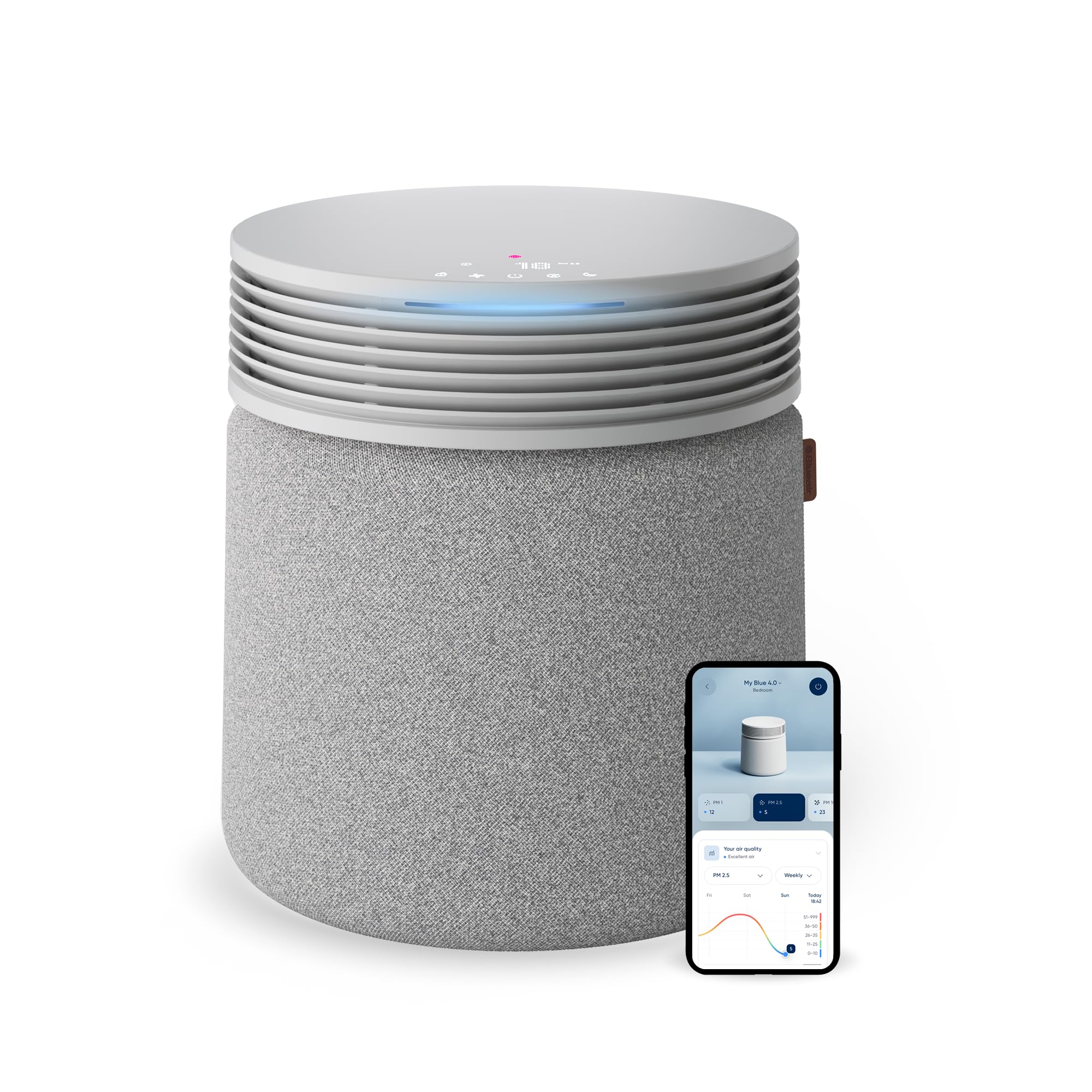
The BLUEAIR Blue 111 is designed for large homes and open floor plans, offering coverage up to 3,385 sq ft in one hour—making it the widest-reaching dust purifier in this selection. Its HEPASilent filtration technology removes dust, pollen, wildfire smoke, pet dander, and odors using a combination of electrostatic and mechanical filtration, claiming quieter operation and lower energy consumption than traditional HEPA alone.
Built-in smart sensors continuously monitor air quality and automatically adjust fan speed, and the Blueair app lets you track air quality, control settings, and monitor filter life from your phone. Customers repeatedly call out its “quiet, effective” performance and “fresher, cleaner air with reduced dust and odors.” The machine’s dual function as a stylish side table is a practical bonus—the flat top surface and modern grey finish allow it to blend into living room decor without looking like an appliance.
The trade-offs are that replacement filters are expensive, and the app has been described by some users as “unstable” or “slow.” For dust control across an entire floor, the upfront investment is significant, but the combination of massive coverage and low ongoing energy costs can offset the initial price over several years of continuous operation.
Why it’s great
- Exceptional coverage for large homes and open layouts
- Very low power consumption on low speed
- Smart sensors and app for real-time air quality monitoring
Good to know
- Replacement filters are a significant recurring expense
- App performance can be inconsistent
6. AirDoctor AD2000
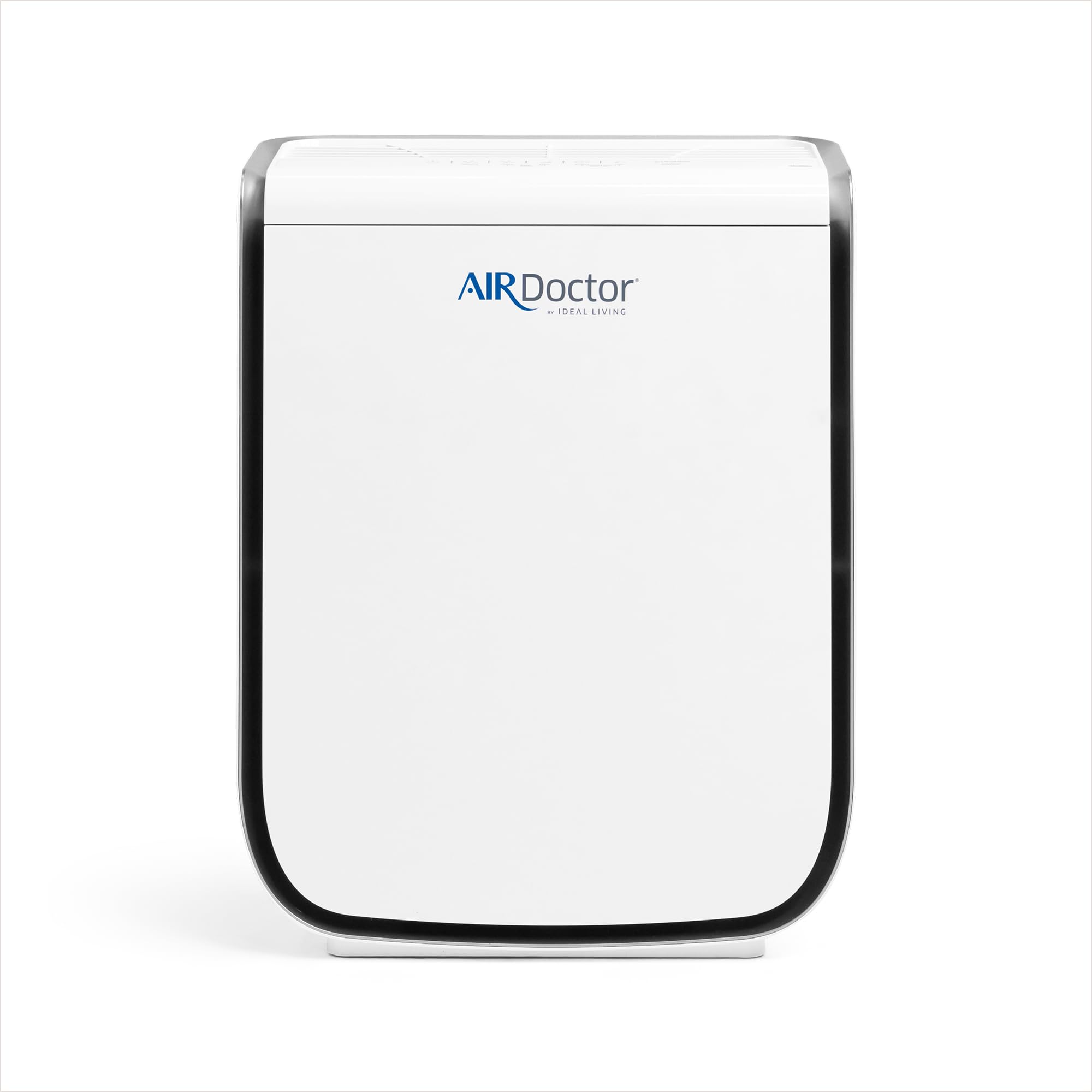
The AirDoctor AD2000 stands apart with its hospital-grade UltraHEPA filtration, which captures 99.99% of airborne particles at 0.003 microns—100 times smaller than the standard HEPA requirement. This makes it exceptionally effective against ultrafine dust particles that bypass other filters, as well as VOCs, smoke, mold spores, and bacteria. The premium activated carbon filter, made with potassium permanganate, specifically targets gases and odors that often accompany household dust from cooking and cleaning.
The AD2000 cleans a 305 sq ft room in 15 minutes on high and covers up to 1,220 sq ft in an hour. Its Auto Mode with AirDoctor Halo PM2.5 sensors provides color-coded air quality feedback and automatic fan speed adjustments, including a Boost mode when dust spikes occur. Verified buyers report “amazing dust reduction” and one customer noted the unit eliminated a VOC smell from a new couch “the very next day.” The 3-stage filtration (pre-filter, carbon, UltraHEPA) can be vacuumed monthly, and the carbon filter is replaced every 6 months with the UltraHEPA lasting a full year.
At 30 dB in quiet mode, the AD2000 is barely noticeable during sleep, and its FSA/HSA eligibility is a practical benefit for users managing medical conditions related to dust and allergies. The drawback is the price—it is one of the more expensive options per square foot of coverage—and replacement filter packs are not cheap. Additionally, some early units had sensor issues (loud operation, poor odor detection), though the manufacturer’s customer service appears responsive in replacing defective units.
Why it’s great
- UltraHEPA captures particles 100x smaller than standard HEPA
- Premium carbon filter effectively removes VOCs and odors
- Auto mode with real-time PM2.5 sensor for adaptive dust control
Good to know
- High upfront cost and expensive replacement filters
- Reported quality control issues with some early units
7. Coway Airmega 250

The Coway Airmega 250 is the larger sibling of the AP-1512HH, designed to handle spaces up to 1,860 sq ft with the same proven HyperCaptive filtration system. Its combination of a washable pre-filter, activated carbon filter, and True HEPA filter removes 99.97% of 0.3-micron particles while additionally reducing 99% of VOCs and odors. For dust control in large rooms, open-concept apartments, or main living areas, this unit offers the raw power and coverage to make a measurable difference.
The Smart Mode automatically adjusts fan speed based on real-time air quality readings from the built-in pollution sensor, and Rapid Mode fires the fan to maximum when dust levels spike—such as during vacuuming or cooking. User reviews from large New York City apartments confirm the unit “significantly reduced settled dust” and handled Canadian wildfire smog, “turning air from red to green in about an hour.” The 24/7 air quality indicator provides constant visibility into your home’s dust load, and the timer lets you schedule operation to match your daily routine.
Unlike many premium purifiers, the Airmega 250 does not include WiFi connectivity, which some users appreciate as a way to avoid smart home complexity. The filter replacement costs are impressively low: the pre-filter is washable and the True HEPA/carbon combo only needs replacing once per year, with annual filter costs around . The unit is larger and heavier (20.5 pounds) than most competitors, so it is not designed for frequent room-to-room movement. However, for a stationary dust solution in a large space, it delivers outstanding long-term value.
Why it’s great
- Massive 1,860 sq ft coverage for whole-home dust control
- Washable pre-filter with very low annual filter costs
- Smart Mode and Rapid Mode for responsive dust management
Good to know
- Large and heavy, not easily portable
- No WiFi or smart home integration
FAQ
How long does it take to see a reduction in visible dust on surfaces?
Can one air purifier handle dust in an entire house?
Is it worth buying a purifier with a UV-C light for dust control?
How often should I replace the filters in a dust-focused air purifier?
Does placing the purifier on the floor vs. a table affect dust capture?
Final Thoughts: The Verdict
For most users, the air purifiers for dust winner is the Coway Airmega AP-1512HH because it combines the highest dust CADR in its class, a washable pre-filter that keeps maintenance low, and quiet operation that works in a bedroom or living room without dominating the space. If you want electrostatic technology that actively prevents dust from settling on surfaces, grab the Blueair DustMagnet 5440i. And for large open floor plans or whole-home dust reduction, nothing beats the Coway Airmega 250 with its 1,860 sq ft coverage and exceptionally low annual filter costs.