That split-second encounter with a hot pan, a splash of grease, or a searing iron leaves a mark that demands immediate, intelligent care. Reaching for a random bandage only invites sticking, tearing, and infection, turning a minor injury into a drawn-out ordeal. The right dressing does the opposite: it cools, shields, and actively supports the skin’s natural repair process without causing secondary pain at removal time.
I’m Emma — the founder and writer behind Baby Bangs. I’ve spent years analyzing medical-grade wound care products, comparing their material science, and verifying the specific performance claims that actually matter when the heat is on.
Whether you’re stocking a kitchen first-aid kit or treating a scald on the job, the absolute best burn dressing must be sterile, non-adherent, and able to maintain a moist healing environment while managing the heat transfer from the wound site.
How To Choose The Best Burn Dressing
Not all dressings share the same chemistry. The wrong pick can fuse to a weeping wound or fail to pull heat away. Focus on these three differentiators to zero in on the right product for your burn severity and setting.
Material Technology: Hydrogel vs. Petrolatum vs. Honey
Each material type serves a distinct phase of healing. Hydrogel dressings, typically composed of over 90% water, excel at the critical first step: pulling heat out of the tissue and providing immediate soothing relief for minor and partial-thickness burns. Petrolatum-based dressings, like Xeroform, create a low-adherence, occlusive barrier ideal for low-exudating wounds and skin graft sites, keeping the wound bed moist without macerating it. Medical-grade Manuka honey dressings offer antimicrobial activity and are a strong choice for wounds at risk of infection, though they require moisture for dry wounds to prevent sticking.
Non-Adherent Engineering and Exudate Management
The primary pain point of a burn dressing is removal. Non-adherent dressings use a special mesh or a gel layer that prevents the pad from fusing to the wound bed as exudate dries. For weeping burns, a dressing with high absorbency that still releases cleanly is essential. Hydrogel pads are naturally non-stick because they maintain moisture at the contact layer. Petrolatum gauze uses a petrolatum coating as a physical release liner. Avoid dry gauze directly on a burn — it will cause micro-tears at every change.
Sterility and Kit Composition
Every burn dressing you place on a second-degree or open wound must be sterile — look for individually wrapped, sealed packaging. Consider whether you need a standalone dressing or an all-in-one burn kit. A kit that pairs hydrogel dressings with sterile gauze rolls, medical tape, and medical shears offers immediate usability during an emergency. For kitchen or bag storage, a compact, sealed packet of burn gel or a small hydrocolloid dressing may be more practical than a full-sized hospital roll.
Quick Comparison
On smaller screens, swipe sideways to see the full table.
| Model | Category | Best For | Key Spec | Amazon |
|---|---|---|---|---|
| Dimora Hydrogel Wound Dressing | Hydrogel | Immediate cooling relief | 1.7″ x 3″ hydrogel pads | Amazon |
| EverOne Emergency Burncare Gel | Burn Gel | Portable multi-use gel | 0.9g packets, 144 count | Amazon |
| EVERLIT Burn Kit | Complete Kit | All-in-one emergency response | 30 pieces with waterproof film | Amazon |
| POLYNEW Xeroform Petrolatum Dressing | Petrolatum Gauze | Hospital-grade non-adherent layer | 5″x9″ petrolatum gauze, 25 pack | Amazon |
| Kastormed Honey Gauze Dressing | Manuka Honey | Antimicrobial wound care | 4″ x 4″, sterile, medical-grade honey | Amazon |
In‑Depth Reviews
1. Dimora Hydrogel Wound Dressing
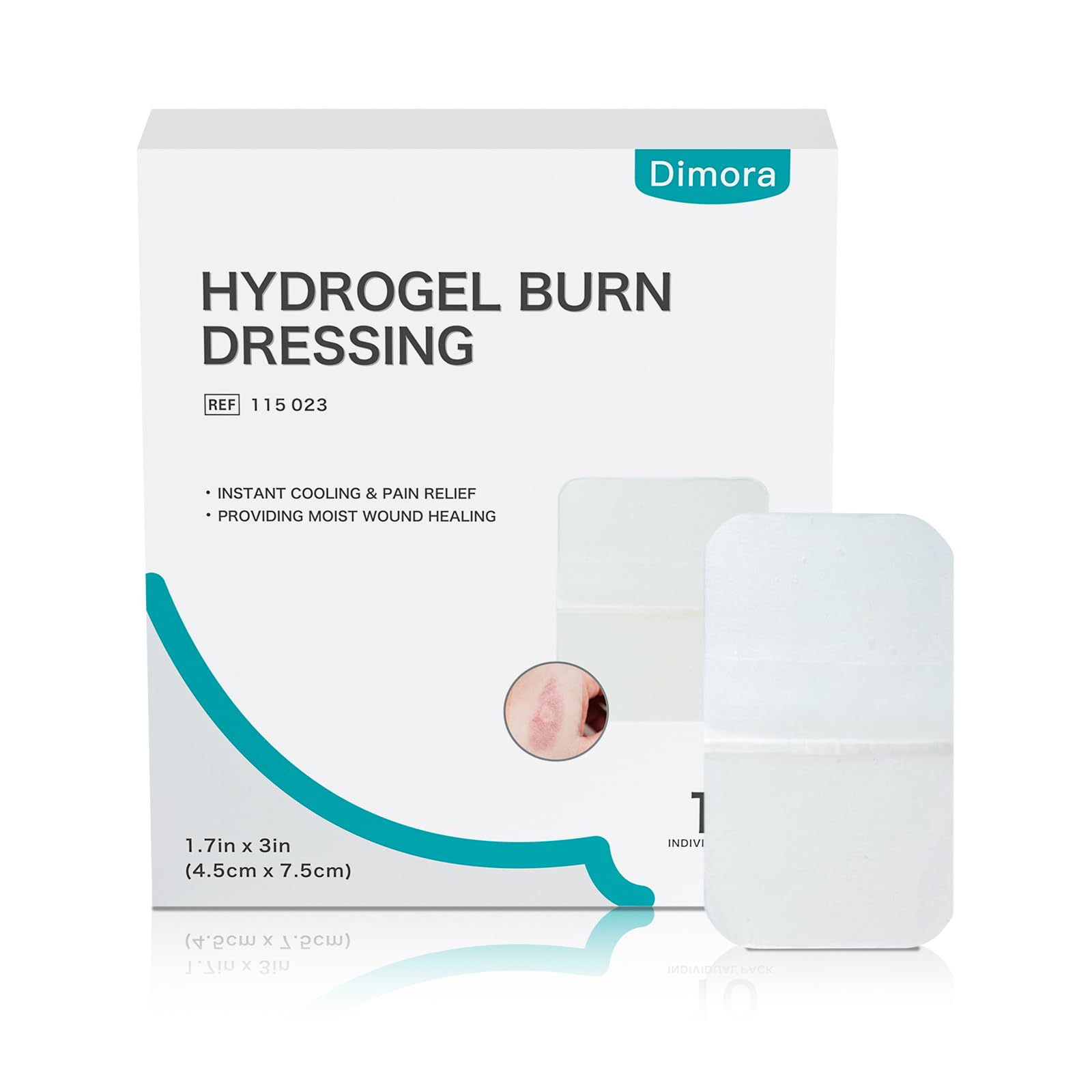
This dressing hits the bullseye for at-home burn care by combining a hydrogel core with a protective backing layer. The hydrogel rapidly absorbs and disperses heat from the wound site, providing an immediate cooling sensation that users consistently describe as “soothing” for minor burns from cooking, steam, and hot water. At 1.7 by 3 inches, the pad size works well for blisters, cuts, and even cracked nipples from breastfeeding, giving it unusual versatility in a single package.
The material stays moist against the skin and does not adhere to the wound bed, solving the agonizing problem of tearing off dried gauze. Users with second-degree burns and radiation burns report zero skin pulling at removal, and the pad holds up well even when secured with Coban or a transparent film overlay. It is entirely unscented and free of essential oils, which matters for sensitive or compromised skin.
The only trade-off is the count: a 10-pack runs through quickly if you are treating a larger area or changing dressings after every shower. The single-pad wrapper keeps each one sterile until needed, but the price per dressing sits at the mid-to-premium end of the category. For daily kitchen mishaps, the payoff in healing speed and pain reduction justifies the spend.
Why it’s great
- Hydrogel pulls heat out instantly for real cooling relief.
- Non-adherent removal — no tearing of new skin.
- Hypoallergenic and latex-free for sensitive skin.
Good to know
- Need to change after showering; reusability is limited.
- Individually wrapped but pricey per pad compared to bulk gauze.
2. EverOne Emergency Burncare Gel Packets

When you need to treat a burn immediately and there is no sink or clean gauze in sight, these individual 0.9-gram gel packets become your strongest asset. Each packet delivers a single dose of hydrogel infused with tea-tree oil, a natural antimicrobial that also cools on contact. The key advantage here is deployment: tear the packet, squeeze the gel over the burn, and halting of thermal damage begins within seconds — no measuring, no mess.
Users consistently report that the gel provides instant, long-lasting relief for first-degree and second-degree sunburns, scalds, and even chemical burns. The tea-tree component is noticeable but not overwhelming, and the gel does not stain clothing or leave a sticky residue after drying. At 144 packets per box, this is a bulk solution ideal for camp kitchens, workshop first-aid stations, or any scenario where you want to toss a few packets into a backpack without worrying about shelf life.
The main limitation is the packet format itself: the opening can be tough to tear cleanly, especially with burned or wet fingers. Also, each packet contains a modest amount of gel — enough to cover an average palm-sized burn, but you may need two or three for a larger area. If you prefer a patch-and-forget approach rather than a gel application, move up to the hydrogel pads.
Why it’s great
- Compact, portable packets fit any go-bag or kitchen drawer.
- Tea-tree oil adds antimicrobial coverage to the cooling effect.
- Massive 144-count value for multi-site or multi-user households.
Good to know
- Packets can be difficult to tear open under stress.
- Gel volume per packet is small; larger burns need multiple.
3. EVERLIT Burn Kit with Hydrogel-Foam Dressings

This is the most comprehensive burn-first-aid package in the lineup, bundling large hydrogel-foam burn dressings, burn gel packets, sterile non-stick pads, gauze rolls, medical-grade PE tape, and precision shears into one organized kit. The star components are the sterile waterproof film dressings that let you shower, bathe, or even hit the beach without exposing the wound to bacteria — a major quality-of-life improvement when treating a burn that takes days to heal.
The hydrogel-foam dressings are infused with aloe vera and tea-tree oil, providing dual-action cooling plus deodorizing for wounds that may produce odor. The kit includes enough consumables to manage multiple burn events without needing to go to the pharmacy mid-healing. Users in high-risk environments — kitchens with children, workshops, outdoor campsites — value having every tool in one sealed bag rather than hunting for individual components.
At a mid-range price point, the kit delivers professional-grade components that retired nurses and wound care specialists recommend for general preparedness. The only catch is that the sheer number of pieces means the kit takes up more drawer space than a simple box of dressings. If you want a dedicated burn station rather than a single dressing, this is the most integrated solution available.
Why it’s great
- Waterproof film dressings allow showering while the wound stays protected.
- Aloe and tea-tree infusion cools and deodorizes the wound site.
- Includes gauze, tape, and shears for complete emergency management.
Good to know
- Kit bulk takes up more space than individual dressing packs.
- Components are not individually repurchasable — you buy the whole kit again.
4. POLYNEW Xeroform Petrolatum Dressing

Xeroform petrolatum dressing is the gold-standard primary contact layer used in wound care clinics and surgical settings, and this POLYNEW version brings that same formulation to the home user. The finely woven mesh gauze is impregnated with a blend of petrolatum and Bismuth Tribromophenate, creating a low-adherent barrier that sits directly against the wound bed without sticking. It is specifically designed for low-exudating wounds: partial-thickness burns, lacerations, skin graft sites, and newly sutured wounds.
Users who have dealt with stubborn, slow-healing wounds — especially diabetics and caregivers of elderly patients — report that this dressing matches the performance of hospital brands at a friendlier per-unit cost. The 5 by 9 inch size is generous, allowing you to cut the gauze down to the exact wound shape without losing sterility of the remaining pieces in the pack. Because each dressing is individually wrapped, you can stock up without worry about the whole box being contaminated.
The petrolatum texture is undeniably “gooey” — it slides on the wound and requires a secondary gauze wrap or tape to stay in place. This is not a standalone bandage; it needs a cover. For minor burns that are still oozing, the petrolatum layer can feel slippery against the skin. If you prefer a self-adhesive, gel-based pad that stays put without extra wrapping, a hydrogel dressing will be more convenient.
Why it’s great
- Identical formulation to clinical Xeroform used in hospitals.
- Large 5″x9″ size can be cut to fit irregular wound shapes.
- Excellent for low-exudate burns, grafts, and surgical incisions.
Good to know
- Petrolatum feels greasy and requires an outer bandage to stay put.
- Not ideal for high-exudate wounds; the mesh can become oversaturated.
5. Kastormed Manuka Honey Gauze Dressing

This sterile mesh tulle dressing is infused with medical-grade Manuka honey sourced from the Leptospermum plant, giving it potent antimicrobial properties that combat biofilm formation on burns and other chronic wounds. The honey’s osmotic effect draws exudate out of the wound while maintaining a moist environment for cell migration. It is particularly effective for wounds with a risk of infection: diabetic foot ulcers, pressure sores, spider bites, and second-degree burns.
Users treating diabetic wounds and brown recluse spider bites report that the honey dressings significantly reduced pain and cleared up infection faster than standard treatments. The gauze is designed to release the honey as wound exudate enters it, and for dry wounds, moistening the dressing with saline before application prevents sticking. The 4 by 4 inch square fits most burn sites, and the individually wrapped packaging ensures sterility until the moment of use.
The main drawback is that the gauze can feel less moist than expected out of the package, and some users have experienced adherence to dry wounds if they skip the saline pre-moistening step. The cost per dressing is also higher than standard petrolatum or hydrogel options. This is a specialty product — ideal for users who need honey’s antimicrobial action, but overkill for a simple hot-water scald that a hydrogel pad can handle more cheaply.
Why it’s great
- Medical-grade Manuka honey provides active antimicrobial protection.
- Osmotic action draws out wound exudate while keeping the bed moist.
- Painless removal when properly moistened, ideal for chronic wounds.
Good to know
- Can stick to dry wounds; pre-moisten with saline to avoid pain.
- Higher per-dressing cost than hydrogel or petrolatum alternatives.
FAQ
Can I use a regular adhesive bandage on a burn?
How often should I change a hydrogel burn dressing?
What is the difference between first-degree and second-degree burn dressings?
Final Thoughts: The Verdict
For most users, the best burn dressing winner is the Dimora Hydrogel Wound Dressing because its immediate cooling action, true non-adherent properties, and versatile sizing handle the vast majority of household burns without complication. If you need a portable bulk solution for outdoor kits, grab the EverOne Burncare Gel Packets. And for all-in-one emergency readiness or situations that require waterproof coverage, nothing beats the EVERLIT Burn Kit.