A cooking apron sits between you and a spattering pan of hot oil, but most of them fail the moment a splash of tomato sauce hits the fabric. A good one should repel grease, survive dozens of hot washes, and still look presentable when you set the plate down. For anyone who cooks daily — whether at home or in a professional kitchen — the difference between a workhorse apron and a flimsy one becomes obvious after the first real meal.
I’m Emma — the founder and writer behind Baby Bangs. I’ve spent months cross-referencing stitch patterns, fabric weights, and customer complaint threads to isolate the cooking aprons that actually hold their seam integrity past the first washing cycle.
This guide breaks down five models tested against kitchen heat, oil splatter, and repeated laundering cycles. Whether you need a rugged denim bib for the grill or a breathable linen layer for prep work, these picks represent the best cooking aprons that balance durability, fit, and practical pocket layouts without cutting corners on material.
How To Choose The Best Cooking Aprons
Choosing a kitchen apron used to mean grabbing whichever cotton bib was cheapest on the rack. But after reading hundreds of verified reviews and digging into seam failures, fabric shrinkage, and pocket weaknesses, I’ve found that three factors separate an apron you’ll still use next year from one you’ll toss after a month.
Fabric weight and weave
The fabric’s ounce weight is the single most concrete predictor of how an apron behaves. A 10 ounce twill cotton sits in the sweet spot: heavy enough to block splatter but not so stiff that you fight the fabric for the first dozen wears. Lighter linen around 6 ounces breathes beautifully for prep work but won’t stop a hot oil splash from reaching your shirt. Denim at 12 ounces offers brute-force protection but needs a break-in period. Look for the ounce spec in the listing — if it isn’t listed, assume the fabric runs thin.
Neck comfort and strap design
Standard neck-loop aprons dig into the cervical spine after an hour of flipping and plating. Crossback models route the strap over each shoulder, distributing the apron’s weight across the upper back rather than the neck. This single design change prevents that sore-spot feeling on the back of the neck and keeps the bib centered on your torso. If you have a larger bust or broader shoulders, crossback construction also eliminates the awkward side-gap that traditional straps create.
Pocket utility and reinforcement
A pocket that sags under a thermometer or a smartphone is worse than no pocket at all. The best aprons use double-stitched seams with bartack reinforcement at stress corners — small dense zigzag stitches that stop the thread from pulling out under weight. Two large hip pockets and one chest pocket provide enough storage for a probe thermometer, a towel, a sharpie, and a phone without weighing the bib down. Check that the hip pockets sit low enough that items don’t interfere with your arm swing during chopping and plating.
Quick Comparison
On smaller screens, swipe sideways to see the full table.
| Model | Category | Best For | Key Spec | Amazon |
|---|---|---|---|---|
| Caldo Crossback Kitchen Apron | Crossback Cotton | Neck relief during long cooks | 10.5 oz cotton twill | Amazon |
| Caldo Linen Kitchen Apron | Linen Blend | Lightweight daily prep wear | 90% linen, 10% cotton | Amazon |
| DingSay Trendy Denim Apron | Denim Bib | Heavy splatter protection | 12 oz denim | Amazon |
| DingSay Trendy Twill Apron | Cotton Twill | Budget-friendly all-rounder | 10 oz twill cotton | Amazon |
| Chef Works Ridgewood Apron | Entry-Level Denim | Simple, affordable coverage | Denim croon fabric | Amazon |
In‑Depth Reviews
1. Caldo Crossback Kitchen Apron

This midweight twill apron lands at 10.5 ounces per square yard — enough mass to block splashes without feeling like a lead bib. The crossback strap routes over the shoulders instead of the neck, solving the cervical fatigue problem that plagues every standard neck-loop apron during multi-hour sessions. Users working eight-hour shifts reported zero neck strain after two months of daily use, and the strap hardware uses metal grommets that withstand repeated tugging without ripping through the fabric.
The two hip pockets sit low enough to hold a phone and a towel without interfering with your arm swing. One reviewer noted the apron fits a 44-inch bust comfortably, which matters because traditional bib aprons often create side gaps on larger frames. The fabric resists liquid penetration during active cooking — oil splatters bead on the surface rather than soaking through instantly — and the cotton twill softens with washing while maintaining its structural weave.
Seam endurance is the only real watchpoint. A few users in high-volume kitchens reported seam tears after snagging the apron on equipment handles. For home cooks who aren’t brushing against speed racks and shelving all day, this shouldn’t be an issue. The terracotta and navy color options look sharp after repeated machine washes, making it equally at home on a professional line or a backyard grill station.
Why it’s great
- Crossback design eliminates neck strain completely
- 10.5 oz twill cotton blocks splatter effectively
- Fits larger bust sizes without side gaps
- Pockets stay usable without interfering with movement
- Holds up to frequent machine washing with minimal fading
Good to know
- Seam construction may be vulnerable to snags in commercial kitchens
- Limited color selection compared to basic models
- Cotton can shrink slightly if dried on high heat
2. Caldo Linen Kitchen Apron

Linen brings a different play to the apron game. This Caldo apron uses 90 percent linen with 10 percent cotton, a blend that breathes noticeably better than any cotton twill or denim option. If you work in a hot kitchen or tend to run warm while cooking, this fabric moves air through the weave and dries fast when damp. The trade-off is splatter protection — linen won’t stop a hot oil explosion the way a heavier cotton does. It resists staining naturally, but oil that does sit will require immediate treatment to prevent a lasting mark.
The cut runs generous at 33 inches tall by 27 inches wide, with 40-inch waist ties that wrap around and tie in front. Reviewers consistently mention the soft hand feel and the way the fabric drapes without feeling stiff. The two deep hip pockets and one chest pocket provide enough storage for prep tools, and the adjustable neck strap lets you dial in the fit. The navy color option looks clean enough for barista work or front-of-house serving.
Several buyers noted how light the apron feels during long cooking sessions. One tall reviewer at 6’4″ found the length covered his chest to mid-thigh perfectly. The weave is loose enough that on a bright counter, the fabric can appear slightly sheer — something to consider if you prefer opaque coverage. For moderate splatter and daily prep, this linen apron offers the most comfortable wear of any option here.
Why it’s great
- Breathable linen-cotton blend prevents overheating
- Dries quickly after washing or wiping
- Generous cut fits tall frames well
- Linen resists staining better than standard cotton
- Adjustable neck and waist straps for a custom fit
Good to know
- Lighter weave shows oil stains if not treated promptly
- Fabric is somewhat sheer in bright light
- Not ideal for heavy splatter or deep frying work
3. DingSay Trendy Denim Apron

Denim at 12 ounces per square yard is the heaviest fabric in this lineup, and it shows in the brass-tacks protection level. This DingSay model uses pre-washed cotton denim with a fashion-wash effect that hides minor splatters better than solid colors. The fabric weight creates a real barrier — hot oil, red sauce, and wine splashes hit the denim and stop there. The break-in period is real; expect the apron to feel stiff for the first three to four wears until the denim loosens up across the shoulders and waist.
The pocket layout mirrors the professional standard: two large hip pockets with double-stitched bartack reinforcement plus a chest pocket sized for a phone. A towel loop sits on the right side. The black denim version avoids the blue-denim look entirely, making it feel more like a piece of kitchen gear than a fashion statement. The 26.5-inch width and 33-inch length cover from mid-chest to upper thigh on most body types.
Buyers consistently call out the quality-to-price ratio. The metal hardware on the neck strap feels substantial, and the waist ties at 40 inches allow a double wrap for smaller frames. Pre-washing reduces the dye-bleed risk, but washing separately for the first few cycles is still smart. If your cooking involves regular deep frying, grilling, or sauce-heavy braising, this denim apron will outlast every lighter alternative without showing wear.
Why it’s great
- 12 oz denim provides maximum splatter protection
- Bartack reinforcement at all pocket stress points
- Fashion-wash finish hides stains between washes
- Durable metal hardware on adjustable neck strap
- Substantial fabric weight feels protective, not flimsy
Good to know
- Requires several wears to break in the stiff denim
- Heavier fabric may feel warm in non-AC kitchens
- Initial wash may release excess dye
4. DingSay Trendy Twill Apron
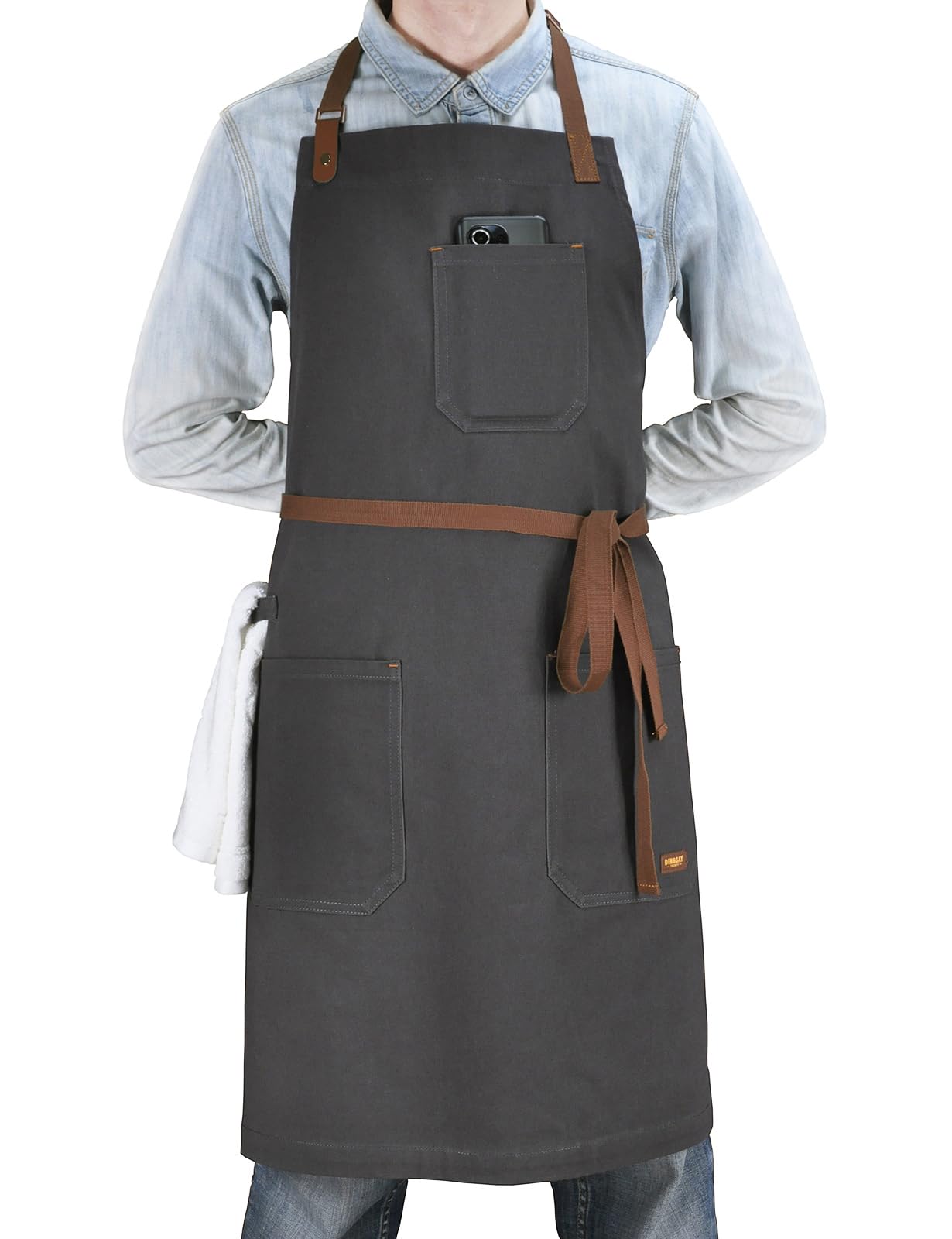
This twill apron from DingSay hits the 10-ounce cotton sweet spot at a price point that makes it easy to own two for rotation. The fabric is handcrafted from 100 percent cotton twill — softer out of the package than the denim version and ready to wear immediately with no break-in period. Double-stitched pockets with bartack details mirror the reinforcement found on pricier models, and the metal accessories on the neck webbing feel secure rather than cheap.
The 27-inch width and 34-inch height provide generous coverage, and the adjustable neck strap paired with 40-inch waist ties fits a wide range of body types. The three-pocket layout includes a chest pocket sized for a phone and pen plus two large tool pockets. The dark grey color hides minor stains well and looks professional enough for front-of-house use. Users report the fabric softens more with each wash cycle while retaining its shape.
The consistent feedback across dozens of verified reviews points to one complaint: a strong chemical smell straight out of the package. Multiple buyers noted the apron needed two or three washes before the manufacturing odor faded completely. Once the initial smell is gone, the apron performs as well as cotton bibs costing nearly twice as much. For someone needing a reliable backup apron or a first entry into proper kitchen gear, this twill model represents the most practical dollar-for-dollar value.
Why it’s great
- 10 oz cotton twill offers solid protection without stiffness
- Double-stitched bartack pockets hold tools securely
- Generous 34-inch length provides full torso coverage
- Dark grey color hides everyday cooking stains
- No break-in period — comfortable from the first wear
Good to know
- Strong chemical smell requires multiple washes to remove
- Fabric may feel slightly flimsy compared to denim alternatives
- Neck strap adjustment hardware can loosen over time
5. Chef Works Ridgewood Apron

The Ridgewood apron from Chef Works uses a denim croon fabric — a term describing a mid-weight denim weave that’s lighter than true jean material but heavier than standard cotton sheeting. It lands in a useful middle ground: enough structure to keep its shape over a shirt but not so heavy that it feels like you’re wearing a jacket. Multiple verified buyers noted the fabric thickness surprised them in a good way, offering solid protection without the stiffness typical of budget denim.
This apron is about simplicity. It doesn’t have the multi-pocket configuration or towel loop of the more advanced models. What it offers is an uncomplicated design that fits a tween through an adult body — one reviewer confirmed the adjustable neck strap made it work for her entire family. The fabric holds up well in the wash, hiding splatters effectively. The whole thing is built around a straightforward proposition: affordable coverage that keeps your clothes clean.
The main downside is packaging. One buyer ordered it as a gift and reported it arrived in a clear plastic bag that was torn, making it impossible to present as a wrapped present. If you’re buying for yourself, this doesn’t matter. If it’s destined to be a gift, plan to unwrap and repackage it. For a no-frills apron that delivers on its core promise of keeping shirts stain-free without costing a lot, the Ridgewood gets the basic job done.
Why it’s great
- Denim croon fabric provides good protection without excessive weight
- Unisex design fits a broad range of body sizes from tween to adult
- Machine washable and holds up well after repeated cycles
- Simple design eliminates unnecessary frills and potential failure points
- Color and texture quality exceed expectations at this tier
Good to know
- Arrives in plain, often torn plastic packaging unsuitable for gifting
- Limited pocket space — only basic storage options
- No towel loop or specialized features for professional use
FAQ
How often should I wash a cooking apron?
Does a heavier apron always mean better protection?
Can I put my apron in the dryer?
What does bartack reinforcement mean on an apron?
Final Thoughts: The Verdict
For most users, the cooking aprons winner is the Caldo Crossback Kitchen Apron because it solves the neck fatigue problem with its shoulder-distributed strap design while maintaining a 10.5-ounce twill build that blocks splatter without overheating. If you want breathable comfort for prep-heavy shifts, grab the Caldo Linen Kitchen Apron. And for brute oil-and-grease protection that looks good doing it, nothing beats the DingSay Trendy Denim Apron.