A torn meniscus turns every step, pivot, or squat into a gamble. That sudden sharp stab when your knee buckles isn’t just painful — it stalls recovery and deepens the injury. The right brace doesn’t just mask the ache; it controls rotation, limits dangerous flexion, and unloads the torn cartilage so you can move without fear.
I’m Emma — the founder and writer behind Baby Bangs. My research focuses on evaluating the mechanical design, hinge quality, and real-world fit data across the most common meniscus support braces available today.
Whether you’re navigating post-op rehab, managing a chronic tear without surgery, or returning to sport after a bucket-handle tear, the goal remains the same: find a brace for torn meniscus that locks out instability without locking you out of your life.
How To Choose The Best Brace For Torn Meniscus
Choosing the wrong brace for a meniscus tear can worsen the injury or waste weeks of recovery time. You need a device that specifically addresses the mechanical demands of a torn meniscus — not just a generic knee sleeve. Focus on these three non-negotiable features.
Hinge Type and ROM Control
A torn meniscus is vulnerable during deep flexion and rotational loads. Look for a brace with bilateral hinges that allow you to set a hard stop on both flexion and extension. Adjustable range-of-motion (ROM) dials, typically from 0° to 120°, let your orthopedist lock the knee at a safe angle during the early healing phase and gradually open it as you regain strength. A brace without ROM control is little more than a compression sleeve — helpful for swelling, useless for protecting a torn meniscus.
Anti-Migration and Fit System
A brace that slides down your thigh is worse than no brace at all — it shifts the hinge off-axis, misaligns support, and can actually torque the knee. Prioritize designs with multiple adjustable straps (four points of contact is the gold standard), a non-slip silicone or gel lining on the inner thigh cuff, and telescoping calf and thigh sleeves that accommodate different leg lengths. Measure your thigh at a point six inches above the kneecap and your calf at a point six inches below — this is the industry standard for determining the correct size.
Activity Level and Bracing Tiers
Your daily activity dictates the level of bracing you need. For simple walking and basic daily living after a mild tear, a hinged sleeve with side stabilizers and a patella strap (like the NEENCA) may suffice. For post-op recovery or a complex tear that requires strict immobilization, you need a full-frame brace with telescoping bars and a four-point leverage system (like the Breg T Scope or DonJoy Performance BIONIC FULLSTOP). If you plan to return to pivoting sports, a premium brace with hyperextension control is mandatory.
Quick Comparison
On smaller screens, swipe sideways to see the full table.
| Model | Category | Best For | Key Spec | Amazon |
|---|---|---|---|---|
| DonJoy Performance BIONIC FULLSTOP | Premium | Return to pivoting sports | Four-point leverage system | Amazon |
| Breg T Scope Premier | Premium | Post-op rehabilitation | Precise ROM stops 0-120° | Amazon |
| DonJoy Drytex Sport | Mid-Range | Ligament/meniscus injury recovery | Breathable Drytex fabric | Amazon |
| GHORTHOUD Hinged ROM | Mid-Range | Cost-conscious rehab with ROM control | Removable 2-side stabilizers | Amazon |
| NEENCA Knee Brace | Budget-Friendly | Daily compression and mild support | Patella gel pads + spring stabilizers | Amazon |
In‑Depth Reviews
1. DonJoy Performance BIONIC FULLSTOP Knee Brace

This is the closest thing to a custom-fit brace you can buy off the shelf. The BIONIC FULLSTOP uses a four-point leverage system that creates a dampening cycle — each time you approach full extension, the hinge applies resistance that trains you to stay out of the at-risk position. For a meniscus tear, especially one involving a bucket-handle or displaced fragment, this active training is invaluable. Reviewers consistently report that it prevents the knee from shifting and rolling during high-demand activities like football and skiing.
The neoprene build with compression and thermal regulation means you won’t overheat during extended wear, but this is still a substantial brace at 2.5 pounds. The anti-migration technology works well — the straps hold position even during pivoting motions. A separate compression sleeve underneath is recommended to prevent the plastic hinge edge from rubbing or cutting the opposite leg, a complaint noted by some buyers. The hook-and-loop closure system allows for micro-adjustments to the fit.
This brace does not offer adjustable ROM stops like a post-op immobilizer; instead, it focuses on functional support for active individuals. It excels for moderate ligament sprains, patella instabilities, and meniscus injuries where the goal is to return to sport. The price reflects its status as a serious medical-grade device — several users compare it favorably against custom-fitted braces they’ve owned.
Why it’s great
- Four-point leverage system actively dampens hyperextension
- Anti-migration design keeps the brace locked in place
- Medical-grade support suitable for football, skiing, and basketball
Good to know
- Heavier than other options at 2.5 pounds
- Hinge edges can be sharp without a sleeve underneath
2. Breg T Scope Premier Post-Op Knee Brace

The Breg T Scope Premier is the brace most orthopedists reach for after meniscus surgery, and for good reason. Its telescoping calf and thigh sleeves adjust to fit body types ranging from youth to large adults — one reviewer noted it works for heights from 4’11” to 6’2″. The precise flexion and extension stops are controlled by four independent dials, two on each side, allowing your doctor to lock the knee at specific angles during the critical healing phase.
Users who have worn both this and cheaper alternatives consistently call it their favorite brace for daily use. The ventilation is superior to the DonJoy, the weight is manageable at just over 2 pounds, and the pads hold the leg securely without excessive bulk. One reviewer managed to avoid surgery entirely for a torn meniscus by using this brace to stabilize the knee during physical therapy. The main drawback is that the side dial can be uncomfortable for side sleepers, and the neoprene can develop an odor after weeks of continuous use.
The fit customization is a standout feature. Each strap uses a Velcro closure that locks the front and back panels independently, so you can fine-tune the tension. The padding is removable for washing, which helps with the odor issue. For anyone needing a true post-op brace with no-compromise ROM control, this is the standard to beat.
Why it’s great
- Four independent ROM dials for precise flexion/extension control
- Telescoping sleeves fit a wide range of body types and leg lengths
- Removable padding for easy cleaning
Good to know
- Side dial can be uncomfortable for side sleepers
- Neoprene may develop odor after extended wear
3. DonJoy Drytex Sport Hinged Knee Brace
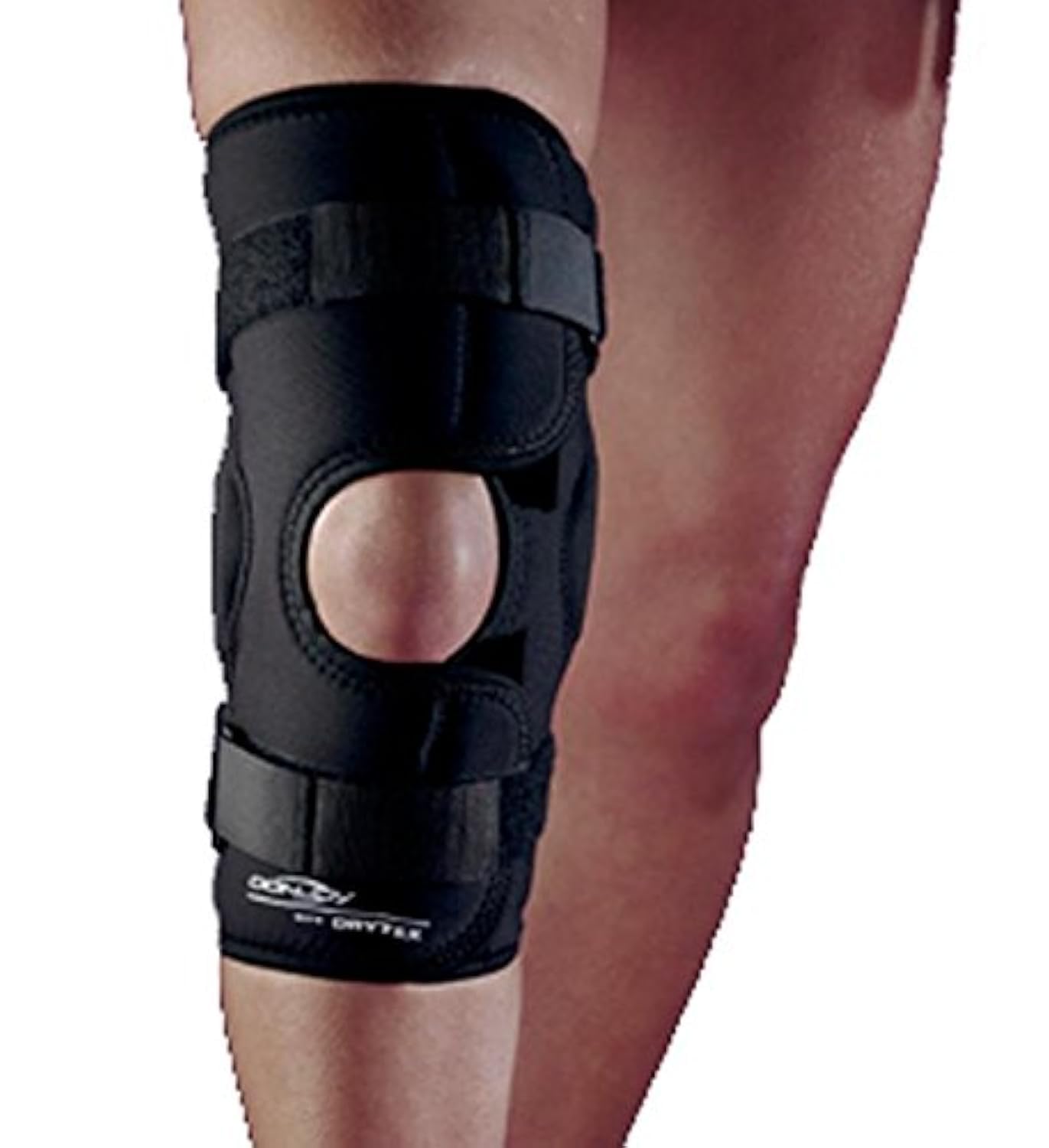
The DonJoy Drytex Sport is the same brace many orthopedists hand out in their clinics, and for a good reason: it strikes a strong balance between support and breathability. The Drytex fabric wicks moisture away, which is a major advantage over neoprene-heavy designs if you plan to wear the brace for full days or during light activity. The bilateral hinges provide solid lateral and medial stability, making it suitable for the sub-acute phase of a meniscus injury or for protecting a root repair after the locked brace has been removed.
Sizing is the single biggest frustration here — one user reported that an XL was too large even after wearing it in, while a Large was tight. You absolutely must measure your thigh and calf precisely at the six-inch marks above and below the kneecap, as DonJoy’s sizing chart is otherwise unreliable. Once you get the right fit, the brace is comfortable, easy to put on and take off, and holds up well over several years of repeated use (one user wore theirs for years before the straps stretched).
Some users report minor rubbing from the seam near the cutout behind the knee. Wearing the brace over a thin compression sleeve or a light pant leg solves this problem entirely. For a proven, mid-range hinged brace that doesn’t break the bank, this is a reliable choice.
Why it’s great
- Breathable Drytex fabric for all-day wear
- Sturdy bilateral hinges for medial/lateral stability
- Orthopedist-recommended design with proven track record
Good to know
- Sizing is inconsistent; careful measurement required
- Seam behind the knee may rub on bare skin
4. GHORTHOUD Hinged ROM Knee Brace
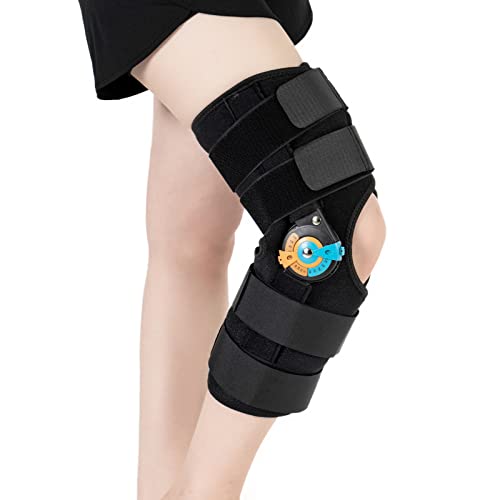
The GHORTHOUD offers features usually reserved for braces costing several times more — adjustable ROM dials (0° to 120°) and removable side stabilizers that let you convert it from a post-op immobilizer to a lighter sports brace as you heal. The dual-hinge design with locking dials provides genuine protection against the dangerous end-range motions that can re-tear a meniscus.
The Lycra fabric is comfortable and offers good compression, which aids blood flow and reduces swelling. However, the brace has a tendency to slide down the leg, a recurring complaint from users. The open patella design reduces pressure on the kneecap and prevents unwanted displacement, which is helpful for meniscus tears that involve the patellofemoral joint. Some users report that the hinges start squeaking after a few days of use, and the Velcro can be uncomfortable against bare skin.
For the price, this is a surprising amount of functionality. It is a good choice if you need ROM control for a moderate tear but aren’t ready to invest in a premium medical-grade brace. The build quality is adequate for daily walking and basic rehab, but it lacks the durability and anti-migration engineering of the DonJoy or Breg options.
Why it’s great
- Dual adjustable ROM dials for flexion and extension limits
- Removable hinges allow conversion to a lighter sports brace
- Open patella design reduces kneecap pressure
Good to know
- Tendency to slide down the leg during activity
- Hinges can develop squeaking over time
5. NEENCA Knee Brace with Patella Tendon Strap

The NEENCA is a compression-based sleeve with additional support elements rather than a true hinged brace. It features two spring stabilizers on the sides, a patellar tendon strap, and anatomically contoured gel pads that surround the kneecap. This design excels at providing gentle support, heat retention, and pain relief for mild meniscus irritation or general knee arthritis.
Several users with meniscus tears and osteoarthritis reported significant relief, especially when walking stairs or standing for extended periods. The fabric is breathable, fast-drying, and comfortable enough for all-day wear or even sleeping. The anti-slip gel dots help prevent the sleeve from rolling down during light activity, though some users find that the inner rubber lining is not aggressive enough to prevent sliding down the thigh on longer walks.
The side stabilizers offer minimal structural support compared to a true hinged brace — they are flexible spring coils, not rigid metal bars. This brace is best suited for a small, stable tear where you need swelling control and a gentle reminder to keep the knee aligned. It is not appropriate for post-op recovery, large complex tears, or any activity involving pivoting or rapid direction changes.
Why it’s great
- Comfortable enough for sleep and all-day wear
- Patella gel pads and tendon strap target kneecap stability
- Breathable, moisture-wicking fabric
Good to know
- Side stabilizers are flexible springs, not rigid hinges
- Not suitable for high-demand activity or post-op rehab
FAQ
Can I wear a compression sleeve instead of a hinged brace for a meniscus tear?
How do I measure my leg for a meniscus brace?
Final Thoughts: The Verdict
For most users, the brace for torn meniscus winner is the DonJoy Performance BIONIC FULLSTOP because it delivers medical-grade support with a four-point leverage system that actively protects against hyperextension and rotational loads during sport or heavy activity. If you need precise ROM control for strict post-op rehabilitation, grab the Breg T Scope Premier. And for a lighter, breathable brace suitable for daily recovery and light movement, nothing beats the reliability of the DonJoy Drytex Sport.