Standing on concrete for ten hours doesn’t just test your willpower—it grinds down your joints one step at a time. The right pair of insoles changes that equation entirely, turning your work boots into a legitimate recovery tool rather than just another piece of PPE.
I’m Emma — the founder and writer behind Baby Bangs. Over the years, I’ve combed through hundreds of footbed designs, analyzed foam densities, and studied how construction workers rate arch support, heel cup stability, and moisture-wicking performance under real job-site conditions.
Below, I break down the seven most reliable contenders for the insoles for construction workers, each tested against the specific demands of long shifts, heavy loads, and unforgiving surfaces.
How To Choose The Best Insoles For Construction Workers
Construction work is a unique test for footwear accessories because the variables are extreme: hard surfaces, heavy loads, long durations, and temperature swings. A good insole for an office worker can fail within a week on a job site. The filtering process starts with three non-negotiable criteria.
Arch Support Profile and Foot Type
Not all arch support is created equal. Low-profile arch supports intended for casual sneakers won’t prevent the metatarsal collapse that happens after six hours on rebar. Look for insoles that specify their arch height (low, medium, high) and offer a structured heel cup that cradles the calcaneus. Workers with flat feet need a firmer medial post; those with high arches require deeper metatarsal padding.
Shock Absorption and Energy Return
Concrete transfers shock directly up the kinetic chain. An insole’s midsole foam—typically EVA, polyurethane, or a proprietary blend—determines how much of that impact gets absorbed before it reaches your knees and lower back. Thicker foam isn’t always better if it lacks rebound; you want a material that compresses under load but recovers shape quickly so you don’t bottom out halfway through a shift.
Boot Compatibility and Fit
Work boots have less volume than athletic shoes, especially in the toe box. Trim-to-fit insoles are the standard, but some brands run bulkier than others. Check the insole’s total stack height and whether it sits flat inside your boot without crowding the toes or lifting your heel out of the pocket. Moisture-wicking top covers are also critical—cotton liners soak up sweat and invite blisters, while synthetic blends with Agion or similar treatments keep feet dry and odor-free.
Quick Comparison
On smaller screens, swipe sideways to see the full table.
| Model | Category | Best For | Key Spec | Amazon |
|---|---|---|---|---|
| MOVE All Day Comfort Insole | Premium Foam | All-day standing on concrete | X-Frame Torsional Support Plate | Amazon |
| Superfeet Work Cushion | Premium Support | Heavy flooring and extended shifts | 12-month shape retention | Amazon |
| CURREX HikePro | Activity-Specific | Uneven terrain and heavy loads | Decoupled heel cup with anti-slip | Amazon |
| Standing All Day Heavy Duty Support | Gel Orthotic | Plantar fasciitis and high arches | PU, Gel, TPU hybrid construction | Amazon |
| Timberland PRO Insite Technology | Mid-Range Work | Standard work boots with plastic arch | Plastic arch support frame | Amazon |
| Ariat Energy Max Work Insole | Budget Work | Everyday durability and odor defense | Agion antimicrobial moisture liner | Amazon |
| Dr. Scholl’s Heavy Duty Support | Value Wide-Fit | Workers over 200 lbs with wide feet | Extra supportive heel cushioning | Amazon |
In-Depth Reviews
1. MOVE All Day Comfort Insole
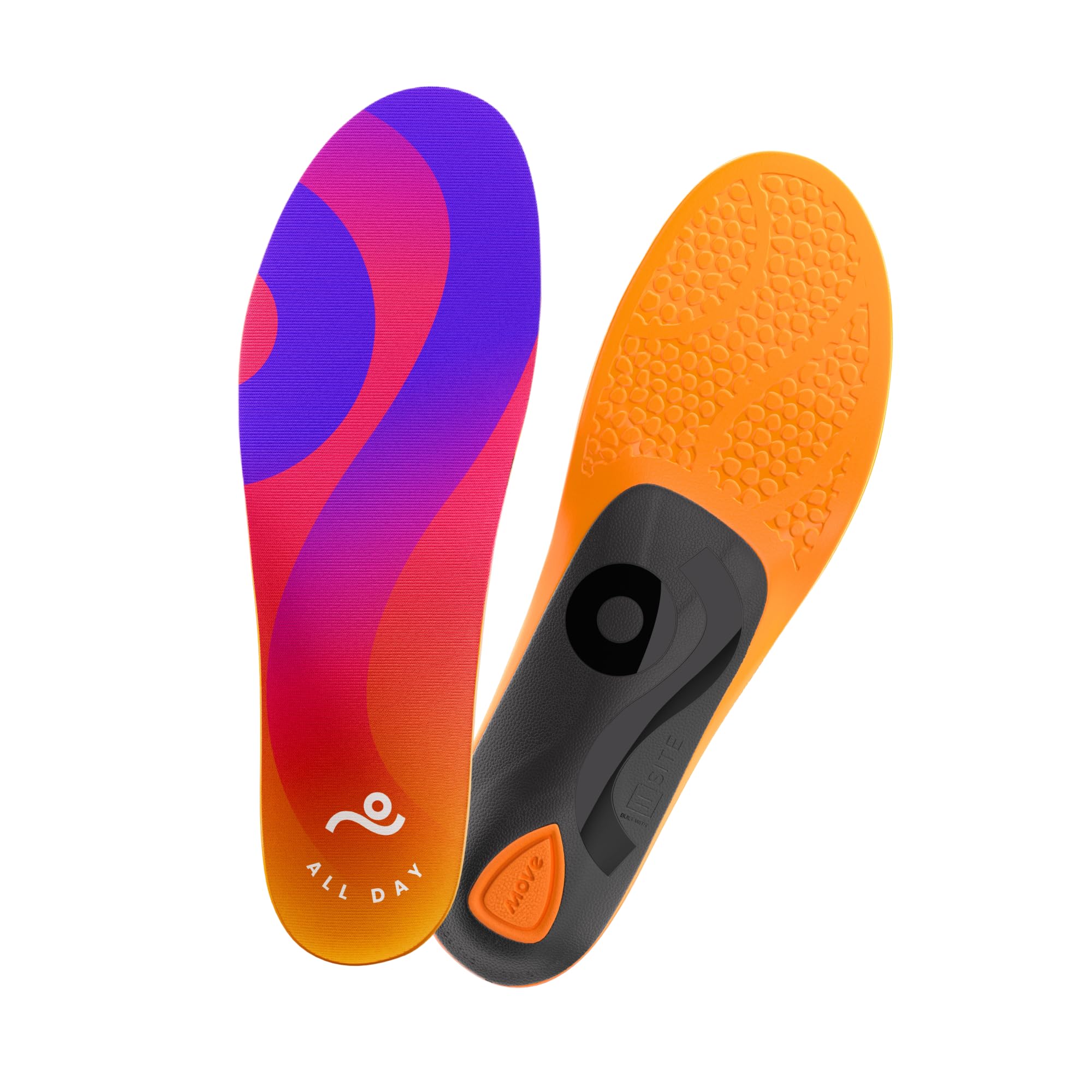
The MOVE insole gets the top spot because it solves the two biggest problems construction workers face: impact absorption and midfoot stability. The X-Frame Torsional Support system is a rigid plate embedded in the midsole that prevents your arch from collapsing under load, which is exactly what you need when you’re carrying materials across a slab. The Recharge Foam has a noticeable bounce that reduces the jarring sensation of each heel strike on concrete, and users consistently report it eliminates foot fatigue even after 12-hour days.
What sets this apart from cheaper alternatives is the layering strategy: a thick, open-cell foam base for shock, a stiffer support frame for stability, and a top layer that wicks moisture without feeling plasticky. The heel cup is deeper than most all-day insoles, which keeps the calcaneus locked in place during lateral movements. It’s not cheap, but the engineering justifies the investment.
One note on fit: these run slightly thicker in the forefoot compared to standard insoles. If your work boots have a low-volume toe box, you may need to size up in the boot or test the fit before committing. Users with flat feet will appreciate the strong medial arch, though those with very high arches might find it a bit aggressive.
Why it’s great
- Rigid X-Frame prevents arch collapse during heavy loads
- Recharge Foam provides noticeable energy return on concrete
- Deep heel cup locks the foot in place for lateral stability
Good to know
- Forefoot thickness may crowd low-volume boots
- Premium price point, but the engineering justifies it
2. Superfeet Work Cushion Insoles
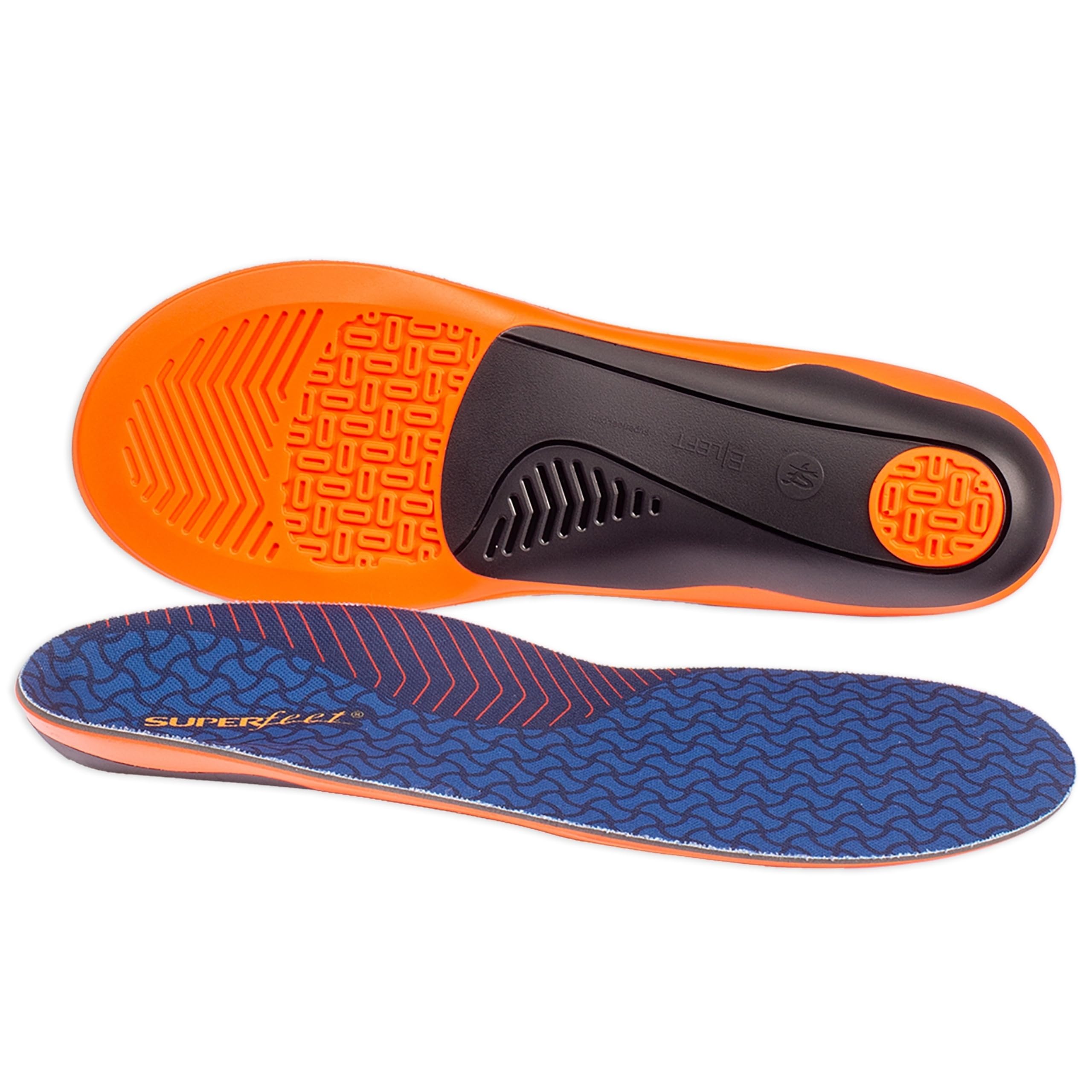
Superfeet has a well-earned reputation for insoles that hold their structural integrity longer than the competition, and the Work Cushion model is built specifically for the 10-hour standing shift. The key difference here is the heel cradle design: a firm, deep cup that cups the heel bone and limits pronation, paired with a flexible arch that accommodates all arch heights without forcing a specific posture. The anti-fatigue cushioning is dense rather than plush, which means it won’t pack out after three months of daily use.
The MoistureWick top cover is a practical upgrade for anyone working in humid conditions or wearing non-breathable leather boots. Users report that after two years of heavy use, the insoles still provide significant support—a testament to the polyurethane foam’s resilience. The trim-to-fit sizing is straightforward, with clear lines marked for different boot sizes, and the insoles sit flat in most work boots without curling at the edges.
One downside: the arch support is moderate rather than aggressive, so if you have severely fallen arches or require a maximum-support orthotic, you may need something with a higher medial post. Also, the heel cup is quite deep, which can feel obtrusive if you’re not used to a locked-in heel pocket.
Why it’s great
- Polyurethane foam maintains shape for up to 12 months
- Deep heel cradle limits pronation and stabilizes the stride
- MoistureWick top reduces odor and keeps feet dry
Good to know
- Moderate arch may not suit severe flat feet
- Heel cup depth takes a few wears to get used to
3. CURREX HikePro Insoles

CURREX designed the HikePro for trail work, but the same features that make it excellent for uneven terrain translate directly to construction sites with loose gravel, dirt, or rebar exposure. The decoupled heel cup is the standout feature: it wraps the heel independently from the rest of the insole, allowing your foot to track naturally on sloped surfaces while still maintaining a locked-in feeling. The SuperGrip anti-slip surface on the heel prevents your foot from sliding forward during descents—or during any job site movement that involves inclines or ladders.
The 3D Dynamic Arch system comes in low, medium, and high profiles, which is rare in work-oriented insoles. This means you can dial in the exact arch support you need rather than accepting a one-size-fits-all approach. The EVA base is recycled and treated with air vent technology to promote breathability, and users consistently note that the cushioning absorbs shock without making the boot feel mushy.
On the flip side, the HikePro is built for mobility, not maximum durability at a single standing position. If your job involves hours of static standing on concrete rather than walking or hiking, the foam may compress more quickly than a thicker standing-dedicated insole. The sizing runs slightly small, so you’ll want to confirm your foot length against their chart before trimming.
Why it’s great
- Decoupled heel cup allows natural foot tracking on uneven ground
- Three arch support profiles for customized fit
- SuperGrip anti-slip heel prevents forward slide
Good to know
- Foam may compress faster during static standing
- Sizing chart requires careful attention before trimming
4. Standing All Day Heavy Duty Support Insole
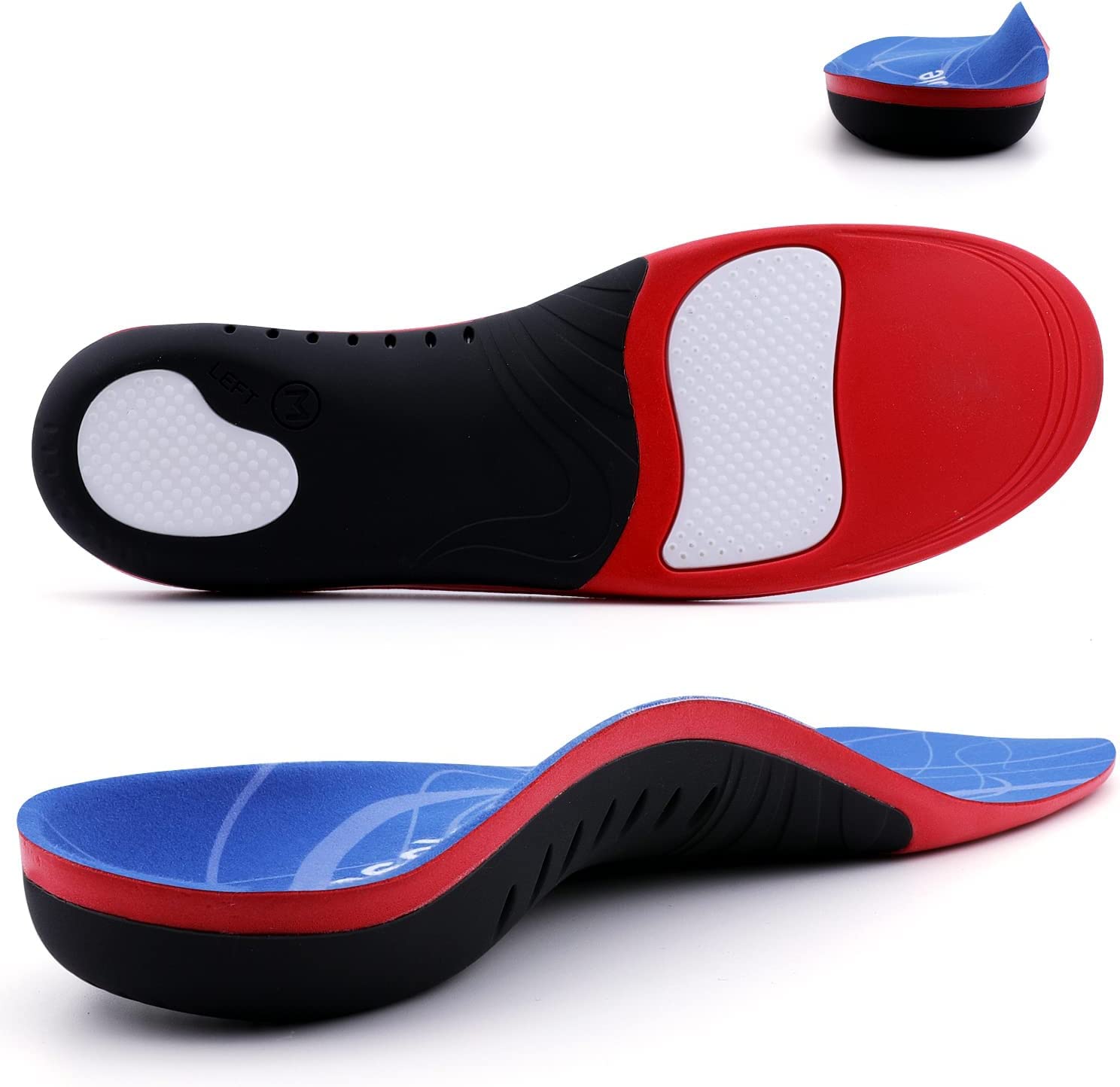
This insole takes a different approach by combining three materials—polyurethane for structure, gel for shock absorption, and thermoplastic polyurethane for arch reinforcement—into a single footbed that targets high arches and plantar fasciitis specifically. The result is an insole that feels rigid under the arch but forgiving under the heel and forefoot, which is the right balance for workers who need correction without sacrificing comfort.
Users working 12-hour shifts on concrete report that these insoles eliminated arch pain and even helped with hairline fracture recovery, which speaks to the rigidity of the TPU frame. The gel layer in the heel and ball reduces the peak impact force that causes metatarsalgia, and the deep heel cup doubles as a pronation control mechanism. For the price, this is one of the few insoles that offers a true orthotic-level correction without requiring a prescription.
The main trade-off is durability: some users report that the support begins to wane after a few weeks of heavy use, and the insoles can develop a squeaking sound as the layers shift. Also, the sizing runs narrow—those with extra-wide feet (4E) may find the insoles don’t fill the shoe width, leaving a gap at the sides.
Why it’s great
- Triple-material construction (PU, gel, TPU) for targeted support
- Excellent arch rigidity for high-arch and plantar fasciitis relief
- Gel layer reduces peak impact under heel and forefoot
Good to know
- Support may degrade faster than premium alternatives
- Some units develop squeaking over time
- Narrow fit unsuitable for extra-wide boots
5. Timberland PRO Insite Technology AFT Footbed

Timberland’s own footbed is often overlooked because it’s sold as a standalone insole rather than bundled with boots, but the Insite Technology AFT Footbed holds its own as a dedicated work insole. The key component is a plastic arch support frame that runs the length of the midfoot—it’s rigid enough to resist bending under heavy loads but thin enough to avoid adding bulk. This makes it an ideal swap for factory insoles in Timberland PRO boots or any work boot with a low-volume interior.
Users who walk 6,000 steps a day on job sites note that the plastic arch provides consistent support that doesn’t sag over time, and the footbed’s overall shape conforms well to standard work boot lasts without requiring aggressive trimming. The cushioning is moderate—firmer than the MOVE or Superfeet options—which some reviewers prefer because it doesn’t compress and lose support halfway through a shift. Several users with 10-to-13-hour days report that their feet feel as fresh at the end of the shift as they did in the morning.
Where this insole falls short is versatility: it’s clearly designed for medium to high arches and may not provide enough correction for flat feet or severe pronation. The plastic frame also adds stiffness that can feel unnatural when walking on soft ground or climbing ladders.
Why it’s great
- Plastic arch frame provides long-lasting, non-sagging support
- Low-profile design fits well in standard work boots
- Consistent cushioning that doesn’t bottom out mid-shift
Good to know
- Not suitable for flat feet or severe pronation
- Plastic frame feels stiff on uneven terrain
6. Ariat Energy Max Work Insole
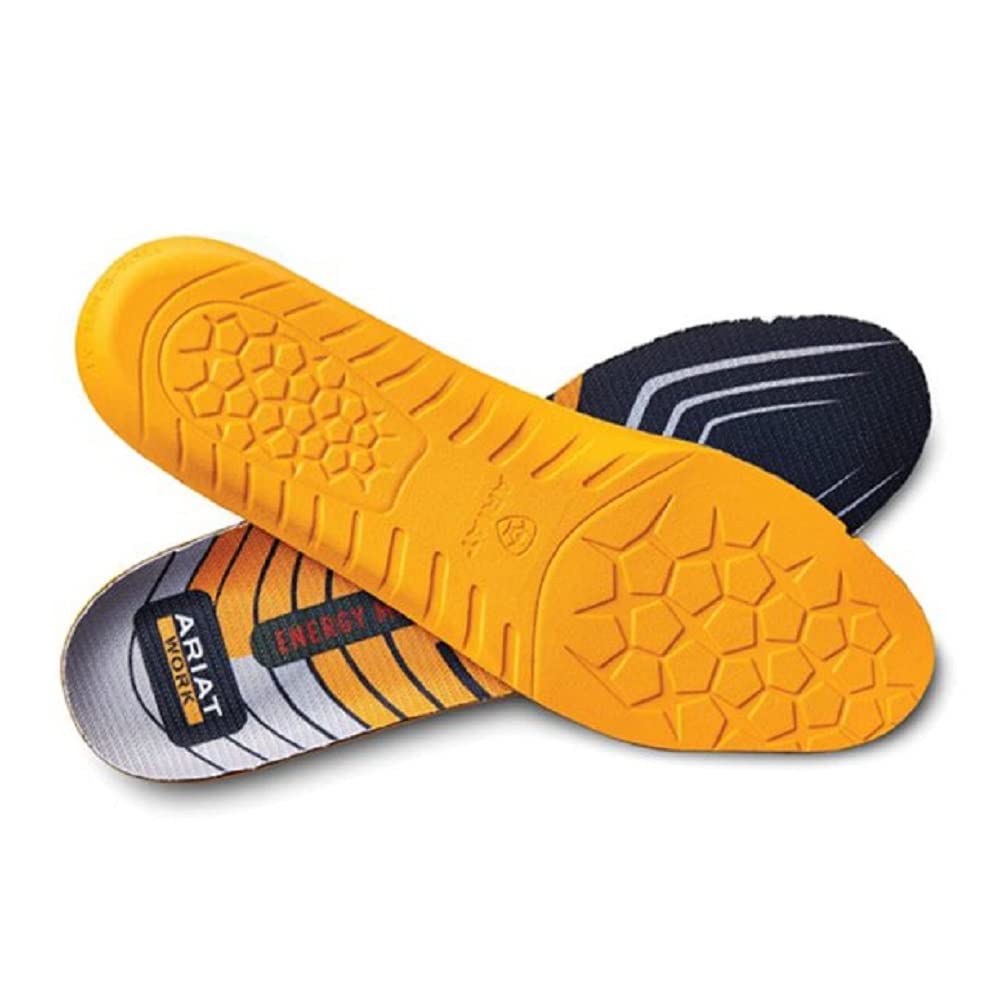
The Ariat Energy Max is the budget-friendly entry point that doesn’t cut corners on the essentials. The rebound foam layer cradles the foot and dissipates pressure, while the open-cell foam regulates temperature to keep feet cooler than standard closed-cell insoles would. The real differentiator here is the Agion antimicrobial liner, which actively suppresses odor-causing bacteria—a major plus for anyone dealing with sweaty boots and long shifts.
Users consistently report that these insoles fit true to size without needing trimming, which is rare in this category, and that they provide a noticeable improvement over stock boot insoles for back and foot pain. The moisture wicking is effective enough that some reviewers on their second pair say the insoles consistently keep feet dry even in leather-lined boots. The rebound foam is not as dense as premium options, but it offers a softer feel that many workers prefer.
The trade-off is that the rebound foam compresses faster than polyurethane alternatives—expect to replace them every four to six months with heavy use. Also, the arch support is mild, so if you need significant correction for fallen arches or plantar fasciitis, this may not provide enough lift.
Why it’s great
- Agion antimicrobial liner controls odor effectively
- True-to-size fit with no trimming required
- Open-cell foam keeps feet cooler than standard insoles
Good to know
- Rebound foam compresses faster than polyurethane options
- Mild arch support insufficient for severe pronation
7. Dr. Scholl’s Heavy Duty Support Insole
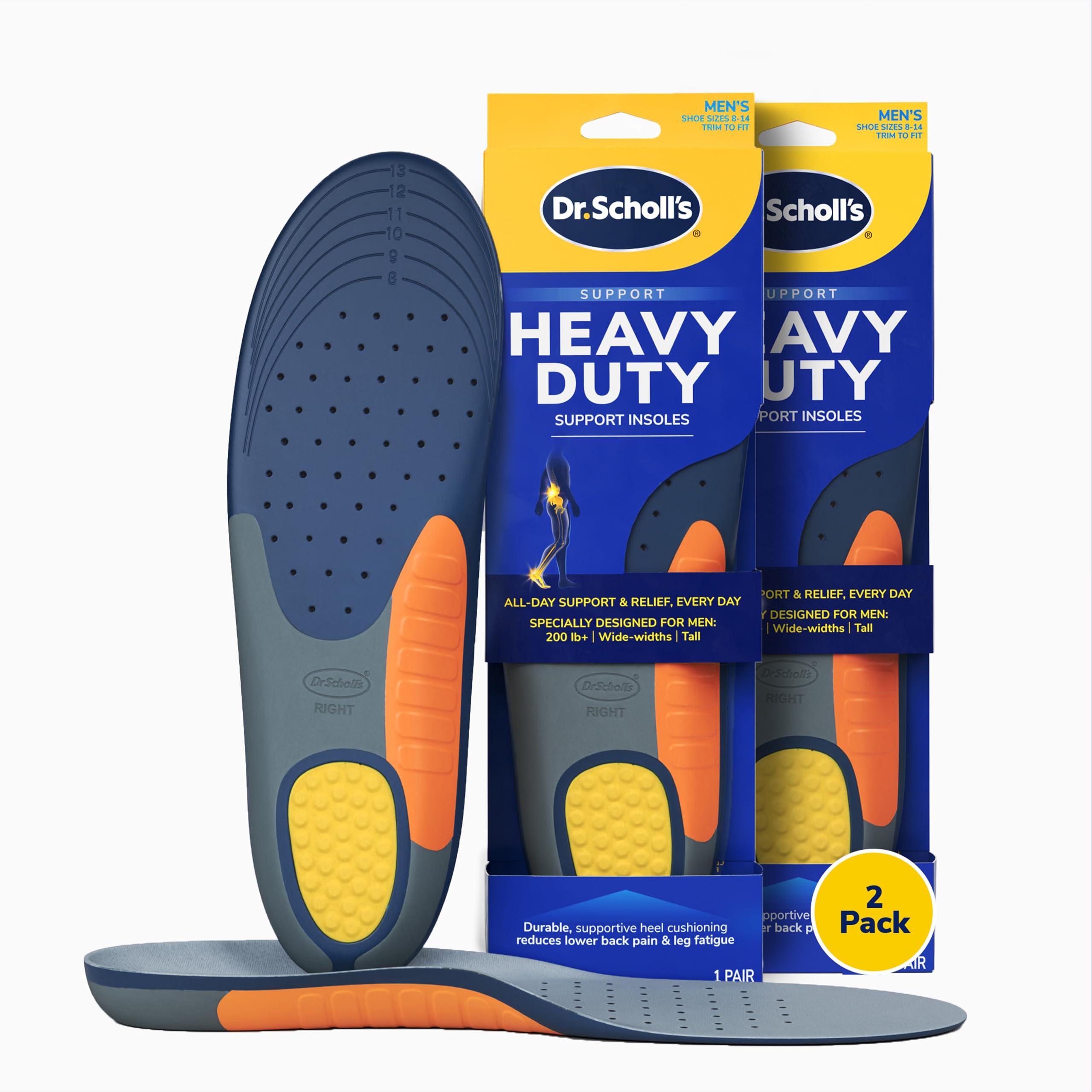
Dr. Scholl’s Heavy Duty Support insoles fill a specific niche: workers over 200 pounds with wide feet who need substantial cushioning without a custom orthotic price tag. The extra supportive heel cushioning is designed to reduce lower back pain and leg fatigue, and the shock-absorbing foam is noticeably thicker than standard Dr. Scholl’s products. The trim-to-fit design includes clear cutting guides for different boot sizes, and the insoles sit well in wide work boot lasts.
Customer feedback heavily emphasizes the arch support: users with flat feet and fallen arches report that the reinforced arch holds its shape and reduces knee and back fatigue effectively. The heel cushioning is particularly praised for absorbing impact when stepping off curbs or ladders. Two pairs per package make this a strong value proposition for workers who need spares for different boots or who expect to rotate insoles as they wear out.
The primary complaint involves the trimming process—the thick foam is difficult to cut cleanly with standard scissors and may require heavy-duty shears. Some users with extra-wide feet (4E) still find the insoles don’t fill the shoe width completely. Additionally, the firm arch can feel awkward during the first few wears as your feet adjust to the higher support profile.
Why it’s great
- Reinforced arch holds shape under heavy loads and reduces fatigue
- Thick heel cushioning absorbs impact effectively
- Two pairs per package offer good value for spares
Good to know
- Thick foam is difficult to trim with standard scissors
- May not fully fill extra-wide 4E boots
- Firm arch requires a break-in period
FAQ
How often should I replace insoles used in construction work boots?
Can I use running insoles in my work boots instead of work-specific ones?
Do I need to trim insoles that are too long for my boot?
Final Thoughts: The Verdict
For most users, the insoles for construction workers winner is the MOVE All Day Comfort Insole because it combines a rigid stability plate with high-rebound foam that actually reduces fatigue on concrete. If you want 12-month shape retention and a proven brand, grab the Superfeet Work Cushion. And for uneven terrain and heavy load carriage, nothing beats the CURREX HikePro with its decoupled heel cup and three-arch system.