Watching your child favor one leg or complain about tired feet after a short walk is a red flag that their arches aren’t doing their job. Overpronation in kids isn’t just about flat-looking feet — it’s a gait issue where the ankle rolls inward excessively, throwing the entire kinetic chain off balance. The right insole can realign that motion, reduce fatigue, and prevent the domino effect of knee, hip, and back pain that often follows.
I’m Emma — the founder and writer behind Baby Bangs. I’ve spent years analyzing pediatric foot health products, digging into biomechanical data, and separating marketing fluff from real structural support when it comes to growing feet.
This guide breaks down the top five contenders so you can confidently choose the best insoles for overpronation kids that actually fit, hold up to daily play, and correct the roll without causing new discomfort.
How To Choose The Best Insoles For Overpronation Kids
Not every arch-support insert is designed to handle the dynamic stress of a child’s gait. Overpronation requires a specific structural approach that goes beyond simple cushioning. Focus on these three factors to avoid wasting money on insoles that look supportive but collapse within weeks.
Heel Cup Depth and Stability
The heel cup is the anchor. A shallow or flexible cup allows the ankle to keep rolling inward, defeating the purpose of the insole. Look for a rigid, deep U-shaped cup that literally cups the calcaneus bone — this creates a mechanical block against inward rotation. Products with a “stabilizing heel cup” or “deep heel cradle” are the ones that actually work for pronation control.
Arch Profile and Material Firmness
A soft foam arch that squishes flat under weight is useless for overpronation. You need a firm, structured arch that doesn’t compress under the child’s body weight. Polyurethane (PU) bases or hard TPU shells provide the resistance needed to lift the arch and hold it. 3/4 length designs often use denser material precisely because they lack the length to spread the force otherwise.
Fit Within the Shoe and Adaptability
Kids’ shoes have less internal volume than adult models. An insole that is too thick at the heel or too wide across the midfoot will crowd the toe box and cause the child to refuse wearing them. Measure the shoe’s internal depth after removing the original sock liner. Full-length insoles like the PowerStep offer precise sizing with no trimming, but 3/4 length options like the KidSole fit more shoe types without altering heel height.
Quick Comparison
On smaller screens, swipe sideways to see the full table.
| Model | Category | Best For | Key Spec | Amazon |
|---|---|---|---|---|
| PowerStep Pinnacle Junior | Premium Full Length | High activity & severe pronation | Neutral arch with dual-layer cushioning | Amazon |
| Footlogics Fun Kids | Premium 3/4 Length | Growing pains & Sever’s disease | Podiatrist-developed deep heel cup | Amazon |
| Bacophy Kids Arch Support | Mid-Range Full Length | Active kids with flat feet | Air cushion shock absorption | Amazon |
| FiotSkep Kids Orthotics | Mid-Range Full Length | All-day wear & beginners | Gel heel cushion with anti-slip strips | Amazon |
| KidSole Neon Shield | Budget-Friendly 3/4 Length | Slim-fit shoes & casual use | 3/4 length with traction grip pads | Amazon |
In‑Depth Reviews
1. PowerStep Pinnacle Junior Insoles

The PowerStep Pinnacle Jr. is the gold standard for kids with diagnosed overpronation, often recommended directly by pediatric podiatrists. Its full-length design features two layers of premium cushioning over a rigid neutral arch shape that cradles both the arch and heel. This creates a stable platform that limits excess motion at the ankle, knee, and hip during high-impact activities like running and jumping. The polyester top layer wicks moisture, keeping feet dry during sweaty play sessions.
The neutral arch profile is a deliberate choice — it doesn’t force the foot into an exaggerated position but rather supports the natural alignment. Multiple verified reviews confirm that this insole outperformed custom orthotics costing significantly more. One parent noted their child with an ankle growth plate sprain experienced immediate pain relief while running. The only catch is the transition period: PowerStep advises wearing them only a few hours per day during the first week to let the feet adapt to the firm support.
These insoles are ordered by shoe size, so no trimming is required, which eliminates the guesswork of cutting lines. They fit well in athletic shoes, but may crowd tighter casual footwear. If your child’s overpronation is moderate to severe and they are active in sports, this is the most reliable option on the market.
Why it’s great
- Podiatrist-recommended for severe pronation and Sever’s disease
- No trimming required — sold by exact shoe size
- Dual-layer cushioning with rigid arch control
- Made in the USA with 30-day satisfaction guarantee
Good to know
- Requires a gradual transition period for first-time users
- Higher price point than other kids’ insoles
- May not fit well in very shallow or narrow shoes
2. Footlogics Fun Kids Orthotic Shoe Insoles

Developed by Australian podiatrists, the Footlogics Fun Kids insole uses a 3/4 length design that stops short of the toes, leaving room for growing feet and making it compatible with a wider range of shoe styles — including school shoes and sports sneakers. The deep heel cup is the standout feature here, providing firm containment for the calcaneus to limit inward roll. The arch support is substantial yet forgiving, which explains why many parents report that their children stopped complaining about leg pain within a few days.
The fun blue design with a cartoon character isn’t just cosmetic — it actually helps with compliance. Kids are more willing to wear insoles that look like part of their gear rather than a medical device. The lightweight cushioning material absorbs shock without adding unnecessary bulk. Because it is 3/4 length, it also tends to slide forward in some shoes; several reviews mention the lack of a sticky backing, so you may need to secure it with double-sided tape in certain footwear.
Parents whose children suffer from Sever’s disease (heel pain at the growth plate) have found this insole particularly effective. The heel cup elevates the heel slightly, reducing tension on the Achilles tendon while still correcting pronation. It fits toddler sizes up to big kids, and the design allows the insole to remain usable as the foot grows, extending its lifespan compared to full-length inserts.
Why it’s great
- Deep heel cup provides excellent pronation control
- 3/4 length fits more shoe types and allows toe room
- Podiatrist-designed with proven pain relief for Sever’s disease
- Kid-friendly design improves daily compliance
Good to know
- Tends to slide forward in shoes without adhesive
- Not suitable for very narrow shoes despite 3/4 design
- Heel-only design may not suit kids who need full arch wrap
3. Bacophy Kids Arch Support Insoles
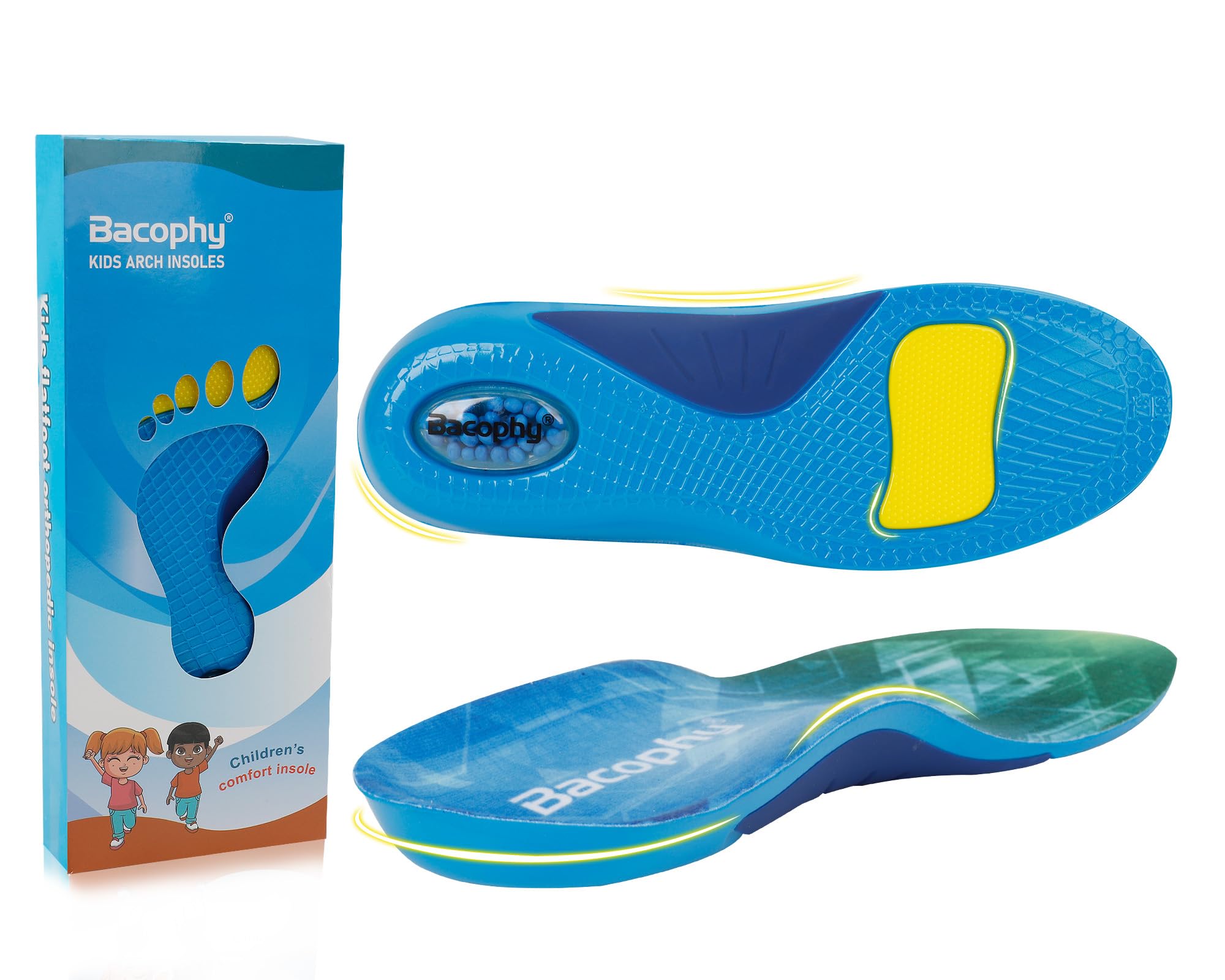
The Bacophy insole introduces an air cushion pad under the heel instead of the typical hard TPU shell, making it a compelling option for kids who complain about hard-feeling orthotics. This air cushion absorbs impact during running or jumping, reducing the stress transmitted to the heel growth plate. The forefoot features an additional gel pad under the metatarsal area, which helps prevent ball-of-foot pain that often accompanies flat feet and pronation.
The arch support is 3 cm tall at its peak — noticeably firmer than most entry-level insoles. The top layer is a velvet fabric that wicked moisture and kept feet dry even during hot weather, according to multiple verified reviews. Parents noted improvements in ankle rolling within the first week, with one son reporting that his ankles no longer rolled inward while wearing tennis shoes. The full-length design helps distribute pressure evenly but also means these insoles are thicker than 3/4 options.
The trade-off with the thicker build is shoe compatibility. Bacophy explicitly warns that these insoles are best for shoes with deeper heel counters. If your child wears low-top sneakers or Vans-style flats, the added thickness may push the foot too high, causing heel slip or toe crowding. However, for active kids who wear proper athletic shoes, the cushioning and support combo is hard to beat at this tier.
Why it’s great
- Air cushion heel pad reduces impact on growth plates
- Moisture-wicking velvet fabric keeps feet dry
- Firm 3 cm arch support corrects pronation quickly
- Gel forefoot pad prevents metatarsal pain
Good to know
- Thicker build requires deep shoes for proper fit
- Not suitable for low-profile or minimalist footwear
- Some kids may find arch height too aggressive initially
4. FiotSkep Kids Arch Support Orthotics

The FiotSkep insole is designed as an all-day solution for kids who stand, walk, or play for extended periods. It features a gel heel cushion that provides targeted relief for heel pain, combined with a deep heel cup that stabilizes the foot during landing. The anti-slip strips on the bottom help keep the insole in place, which is a common point of failure in other budget-friendly insoles. The PU foam base offers moderate firmness — enough to support the arch without feeling like a rock.
What sets this insole apart is its emphasis on a humanized high arch support that is specifically tailored for children’s foot structure. It’s not simply a scaled-down adult insole. The arch post is positioned to assist in promoting a better gait pattern without overcorrecting. Verified reviews from parents of toddlers and children up to age 9 note that the insoles helped correct overpronation and reduced complaints of leg and hip pain. One physical therapist even recommended this brand for a toddler with flat feet.
The cut lines on the bottom are a starting point, but several reviewers mention that you’ll need to trim further for a perfect fit in narrow shoes. It’s also thicker than the average sock liner, so check your child’s shoe depth before committing. For the price, it offers a balanced mix of cushioning and structural support that works well as a first orthotic trial before moving to a more expensive option.
Why it’s great
- Gel heel cushion provides immediate pain relief for tender heels
- Anti-slip strips prevent shifting inside shoes
- Recommended by physical therapists for toddlers
- Moderate arch height works well for first-time users
Good to know
- Cut lines require additional trimming for narrow shoes
- Thicker design may crowd low-top sneakers
- Foam may compress faster than premium PU options
5. KidSole Neon Shield 3/4 Length Arch Support Insole

The KidSole Neon Shield takes a different approach with its 3/4 length slim design that omits the heel counter, making it the most versatile option for fitting into shoes with limited internal depth, such as Crocs, Vans, and Jordans. The soft but strong foam material is designed to mold to the child’s foot over time, providing a custom feel without a break-in period. The traction grip pads on the bottom prevent the insole from sliding forward — a common pain point with 3/4 designs.
This insole focuses specifically on flat feet and pronation disorders, with an arch profile that is firm enough to correct alignment but gentle enough for casual wear. Parents of flat-footed 8-year-olds report that the insole eliminated foot pain during walks and hikes that were previously unbearable. One reviewer noted that the insoles saved their son from pain on short walks, and he could now enjoy trail walks without complaint. The slim profile also means it doesn’t lift the heel too high, which helps maintain proper shoe fit.
The main trade-off is that the arch support is less aggressive than full-length competitors. For severe overpronation, this may not provide enough motion control. Additionally, a few reviewers found the insole too wide for very narrow sneakers, causing tightness that led to arch discomfort. It works best as a daily support for mild to moderate pronation in shoes that can’t accommodate thicker inserts. If your child wears trendy sneakers with slim profiles, this is the most practical choice.
Why it’s great
- Ultra-slim 3/4 design fits narrow and low-profile shoes
- Grip pads prevent sliding inside footwear
- Foam molds to foot shape over time for custom feel
- Proven pain relief during walks and hikes
Good to know
- Arch support is less aggressive — not ideal for severe pronation
- Some users report width issues in very narrow sneakers
- May cause tightness if shoe volume is already limited
FAQ
Can my child wear these insoles in all their shoes?
How long does it take for a child to adjust to orthotic insoles?
What size insole should I buy for my child?
Final Thoughts: The Verdict
For most users, the insoles for overpronation kids winner is the PowerStep Pinnacle Junior because it combines podiatrist-grade arch support with a full-length design that doesn’t compromise on motion control. If you want a more budget-friendly option that fits a wider variety of shoe types, grab the Footlogics Fun Kids. And for kids who wear slim-profile sneakers and need a discreet solution, nothing beats the KidSole Neon Shield.