Your feet take thousands of steps daily, and if your current insoles leave your arches aching by noon, it’s time for an upgrade. A good insole does more than pad your step—it realigns your foot’s natural posture, absorbs shock, and prevents the fatigue that radiates up through your knees and lower back.
I’m Emma — the founder and writer behind Baby Bangs. I have spent years analyzing foot-care hardware, from drugstore foam to podiatrist-grade orthotics, comparing arch height, heel-cup depth, and material density to find what actually works for standing, running, and walking all day.
After reviewing dozens of models and thousands of verified buyer experiences, I have narrowed the market down to the five that deliver real relief. Here is my complete guide to the insoles for shoes that keep your feet happy from morning to night.
How To Choose The Best Insoles For Shoes
Not all insoles are created equal—a soft foam pad that feels great in sneakers can collapse inside a work boot after two shifts. The right insole depends on your arch type, your activity, and the volume of your shoe. Here are the three factors that matter most.
Arch Support Height: Low, Medium, or High?
Your arch dictates which insole profile will support rather than fight your foot. Flat feet (low arches) need a gentle lift that encourages natural pronation. Neutral or medium arches are the most forgiving and work with most structured insoles. High arches require a pronounced contour to fill the gap under the foot—without it, pressure concentrates on the heel and ball, causing pain. Check your wet footprint: a full imprint means low arch, a narrow band means high arch, and a moderate curve means medium.
Heel Cup Depth and Stability
The heel cup cradles your calcaneus and controls how your foot lands. A shallow cup (under 6mm) offers minimal guidance and suits casual walking. A deep cup (8mm or more) locks the heel in place, reducing overpronation and relieving plantar fascia strain. If you suffer from heel spurs or plantar fasciitis, prioritize a deep, rigid heel cup that keeps the fat pad centered under the bone.
Material Density and Break-In
Foam density determines how long an insole retains its shape. Open-cell EVA feels soft out of the box but compresses within weeks. Higher-density polyurethane or closed-cell EVA takes longer to break in but lasts months longer. Structured orthotic shells (often found in premium insoles) use a rigid base for support topped with a forgiving foam layer—these require a gradual break-in of 2–3 hours per day for the first week.
Quick Comparison
On smaller screens, swipe sideways to see the full table.
| Model | Category | Best For | Key Spec | Amazon |
|---|---|---|---|---|
| GoSkala Professional Medium Arch | ATHLETIC | Medium arches, active wear | USA PORON cushioning layer | Amazon |
| Superfeet Run Cushion Medium Arch | PREMIUM | Runners, medium arches | Adaptive Comfort Technology | Amazon |
| Superfeet Run Cushion Low Arch | PREMIUM | Low arches, plantar fasciitis | Moisture-wick top cover | Amazon |
| Walkhero Arch Support Inserts | WORK | All-day standing, work boots | Rigid biomechanical shell | Amazon |
| BestHalo Heavy Duty High Arch | HEAVY DUTY | High arches, 220+ lbs | Gel + EVA shock absorption | Amazon |
In‑Depth Reviews
1. GoSkala Professional Medium Arch Support Insoles
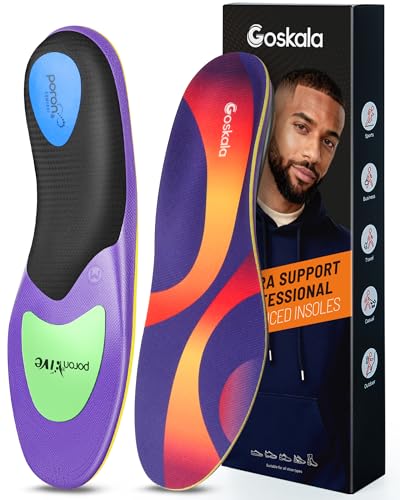
The GoSkala insole strikes a rare balance between immediate plushness and long-term structure. Its claim to fame is the USA PORON cushioning layer—a high-rebound foam that returns energy with every step rather than sinking flat after a few weeks. Nurses and warehouse workers report all-day comfort without the bottoming-out sensation that cheaper EVA foam produces.
The three-dimensional support cradle lifts the forefoot, arch, and heel simultaneously, distributing pressure evenly across the foot. The deep U-shaped heel cup is rigid enough to control overpronation but doesn’t force a correction that feels unnatural. For medium-arch wearers who split time between standing and moving, this insole adapts seamlessly to both demands.
One mild trade-off: the purple color is cosmetic but the added volume can make a snug shoe feel tight. A few users with low-volume footwear report needing to trim the forefoot for proper fit. That said, for the combination of immediate relief and durability, this is the most versatile option on the list.
Why it’s great
- PORON cushioning maintains rebound longer than standard EVA
- Deep heel cup stabilizes gait without rigidity
- Works for both athletic activity and all-day standing
Good to know
- May add noticeable height in low-volume shoes
- Purple color is cosmetic, not functional
2. Superfeet Run Cushion Medium Arch Insoles

Superfeet built its reputation on biomechanical precision, and the Run Cushion delivers exactly that. The patented Adaptive Comfort Technology flexes with the foot during the gait cycle—rigid enough under the arch to prevent collapse, yet forgiving enough at the forefoot to allow natural toe-off. Runners report that the insoles reduce heel-strike vibration that can radiate up into the shins and knees.
The medium arch profile is calibrated for neutral runners who don’t need aggressive pronation control. The deep heel cup cradles the calcaneus without creating pressure points on the Achilles insertion. Unlike many insoles, this one drops right into zero-drop running shoes without raising the heel excessively, preserving the shoe’s natural geometry.
At the premium end of the market, these are an investment. But multiple buyers who replaced custom podiatrist orthotics say the Run Cushion provides 90 percent of the benefit at a fraction of the cost. Wide-footed users should note the medium-width shape may feel snug in volume-heavy shoes.
Why it’s great
- Adaptive Comfort Technology tracks natural foot movement
- Fits zero-drop running shoes without heel lift
- Durable enough to outlast multiple shoe rotations
Good to know
- Premium price point may exceed casual buyer budgets
- Not ideal for wide-width feet
3. Superfeet Run Cushion Low Arch Insoles

For runners and walkers with flat or fallen arches, the Low Arch variant of Superfeet’s Run Cushion line provides targeted lift without forcing the foot into an unnatural curve. The Adaptive Comfort Technology here is tuned specifically for lower arch profiles—the support plate sits flatter but still offers structured guidance for overpronation control.
A standout feature is the moisture-wicking top cover, which actively pulls sweat away from the foot. This matters for anyone logging miles in warm weather or wearing insoles in non-breathable work boots. The trim-to-fit design is straightforward: measure against the existing insole, mark, and cut along the printed lines. Most users in the recommended size range (7.5–9 men / 8.5–10 women) need no trimming at all.
Buyers with chronic plantar fasciitis report that the Low Arch insole reduces morning heel pain within the first week. A minority experienced a mild burning sensation on the soles during longer walks—possibly the foot adjusting to a new support profile. Overall, this is the go-to pick for low arches at a premium build quality standard.
Why it’s great
- Low arch profile corrects overpronation without overcorrecting
- Moisture-wick cover keeps feet dry during activity
- Trim-to-fit accommodates most shoe brands
Good to know
- Some users report sole burning sensation during break-in
- Premium pricing similar to Superfeet Medium Arch
4. Walkhero Arch Support Inserts for Men and Women
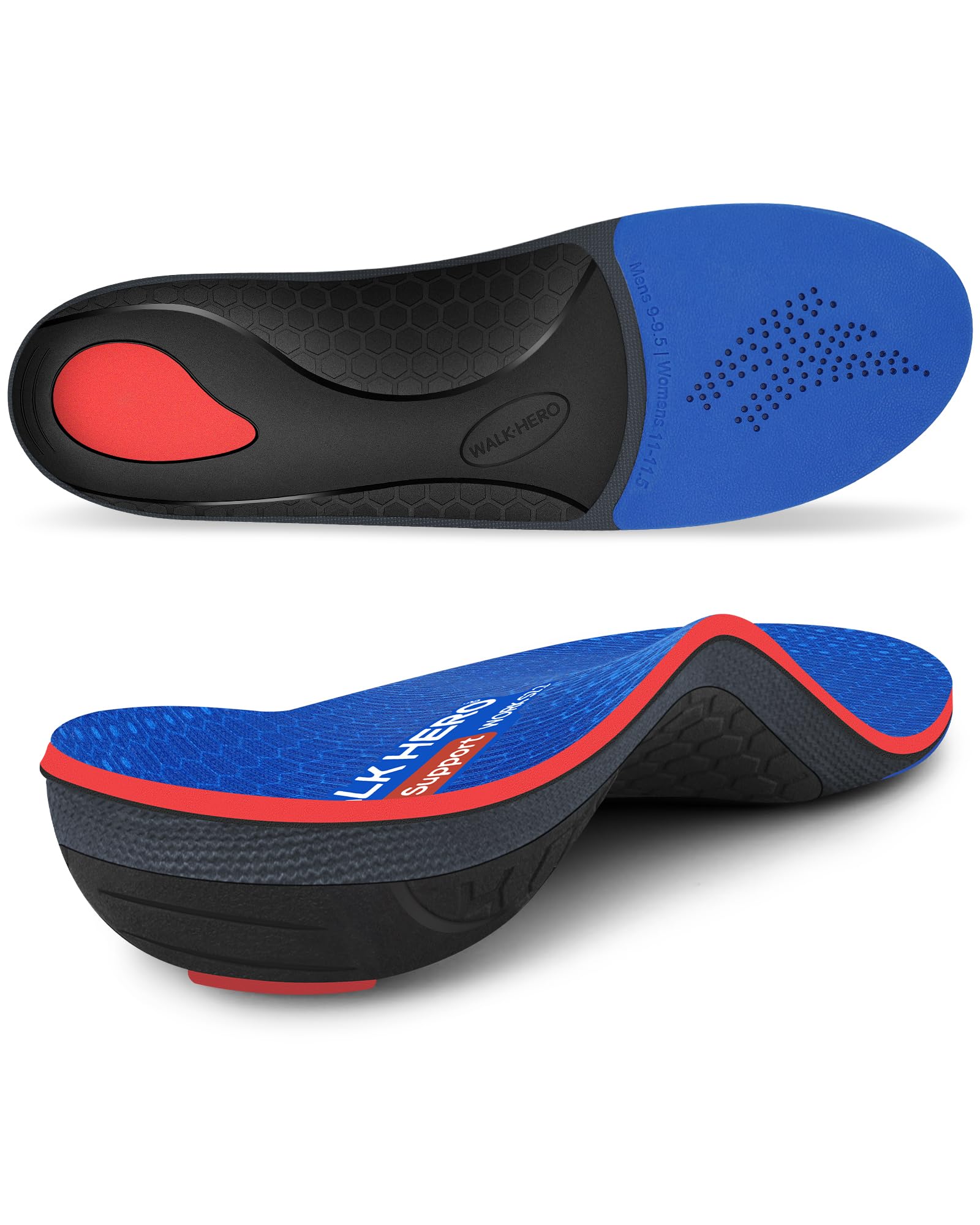
Walkhero targets a specific audience: people who stand or walk on hard surfaces for eight-plus hours a day. The rigid biomechanical shell provides immediate, firm arch support that doesn’t collapse under heavy static pressure. Teachers, nurses, and warehouse workers consistently report that these insoles eliminate the afternoon foot fatigue that standard foam pads cannot touch.
The dual-layer cushioning pairs a dense EVA base with a softer foam top layer, creating a two-zone feel—stable underneath, forgiving on top. The deep heel cup centers the fat pad and reduces the heel-strike shock that travels up through the knees. Available in 12 standard sizes, these require no trimming, which eliminates a common point of frustration with trim-to-fit designs.
The break-in period is real: Walkhero recommends 2–3 hours a day for the first one to two weeks. Jumping into a full shift on day one can cause discomfort as the foot adjusts to the rigid arch cradle. Some users with very flat feet found the support too aggressive. For medium-to-normal arches in work footwear, however, this is the most durable budget-friendly option available.
Why it’s great
- Rigid shell maintains shape under heavy static loads
- Dual-layer EVA and foam for stable-yet-comfortable feel
- No trimming required—true size-fit system
Good to know
- Requires gradual break-in for full comfort
- Rigid arch may feel aggressive for very flat feet
5. BestHalo Heavy Duty Plantar Fasciitis Insoles
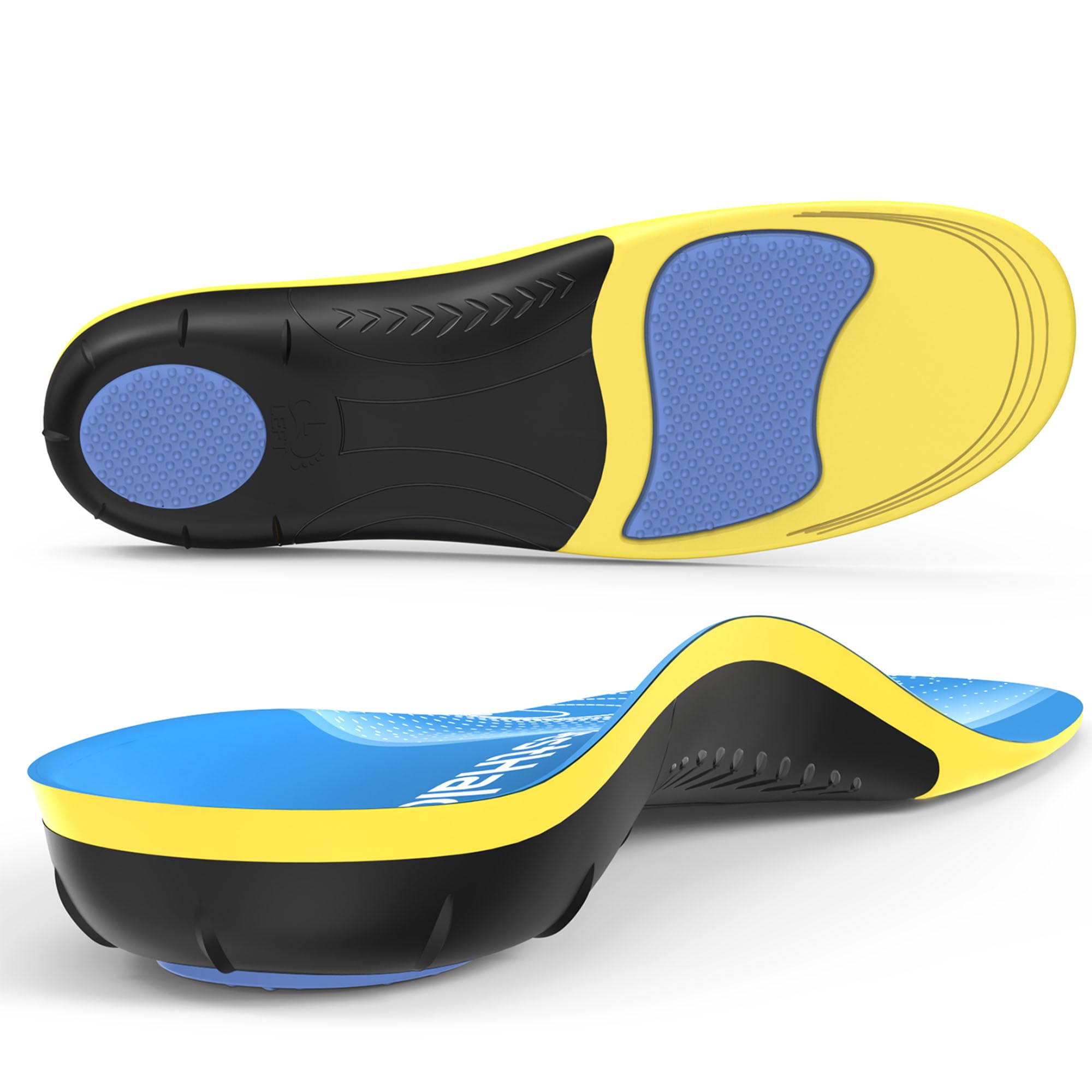
BestHalo makes the rare claim that it specializes in high arches for heavier users (220 pounds and up), and the design follows through. The arch contour is aggressive—taller and steeper than standard insoles—which fills the void under a high-arched foot and distributes weight evenly across the plantar surface. Users with chronic heel pain from plantar fasciitis report noticeable relief within the first week.
The gel cushioning pad sits beneath the EVA foam at the heel, absorbing high-impact shock that standard foam would transfer directly to the calcaneus. The deep heel cup adds a layer of stability that prevents the heel from sliding laterally inside a work boot or sneaker. The trim-to-fit lines accommodate most shoes, though the added volume means they work best in roomier footwear.
The break-in can be intense—some buyers with sensitive feet experienced new pain in the first two weeks as their arches adapted to the high contour. A minority found the support too rigid for daily use. But for high-arched individuals struggling with foot pain, this insole provides structured relief that soft insoles cannot replicate.
Why it’s great
- Aggressive high arch contour for significant arch voids
- Gel heel pad absorbs high-impact shock
- Designed for heavier users with durable materials
Good to know
- Break-in can cause temporary discomfort
- Not suitable for low arches or neutral feet
FAQ
How long does it take to adjust to new insoles with rigid arch support?
Can I use the same insoles for running shoes and work boots?
What arch height should I choose if my feet are between low and medium?
Final Thoughts: The Verdict
For most users, the insoles for shoes winner is the GoSkala Professional Medium Arch because it combines USA PORON cushioning with a three-dimensional support cradle that works for both standing and moving. If you are a runner with medium arches and want premium biomechanics, grab the Superfeet Run Cushion Medium Arch. And for high-arched individuals needing aggressive support under heavy loads, nothing beats the BestHalo Heavy Duty High Arch.