Two-year-olds are wired for exploration—every drawer they open, block they stack, or button they push is a tiny brain-building moment. The right toys turn that natural curiosity into real developmental wins, but the market is flooded with plastic junk that delivers noise instead of learning.
I’m Emma — the founder and writer behind Baby Bangs. I’ve spent years analyzing how specific textures, interactive triggers, and open-ended challenges affect fine motor skill acquisition and cognitive growth in toddlers.
After sorting through dozens of the most hyped options, I narrowed the field to five standout choices that actually deliver. This guide breaks down the best learning toys for 2 year olds by what they teach, how they hold up, and which child they suit best.
How To Choose The Best Learning Toys For 2 Year Olds
A two-year-old’s brain is forming connections at a staggering rate—synaptic density peaks around this age. The toys you pick can either reinforce focus and problem-solving or encourage passive swiping. The best choices invite hands-on manipulation, offer clear cause-and-effect feedback, and survive enthusiastic chewing, dropping, and throwing.
Material Safety & Construction
Solid wood with hand-sanded edges and non-toxic, food-grade finishes is the gold standard. Avoid toys that rely on thin veneers, composite wood, or glossy paints that chip. For plastic components, look for BPA-free claims and thick-walled parts that won’t crack under a toddler’s grip.
Developmental Stage Alignment
Not all “2+” toys are equal. Some are better suited to 18-month-olds, others to almost-3-year-olds. Prioritize toys that require pincer grip (picking up small sticks or coins), wrist rotation (turning a screwdriver or handle), and one-to-one correspondence (placing one item per slot). These micro-skills build handwriting readiness and spatial reasoning.
Open-Ended Play Potential
The best toys don’t do the thinking for the child. A set of wooden sticks, discs, and a tube forces the toddler to experiment: “Does this fit? Which angle works?” Electronic toys that only light up and talk back often entertain but teach less. Prefer toys where the child is the active agent.
Portability & Storage
Two-year-olds want to carry their treasures everywhere. A toy that packs into a small box or drawstring bag encourages independent clean-up and makes car rides, restaurant waits, and travel smoother. Bonus points if the storage container doubles as a play surface.
Quick Comparison
On smaller screens, swipe sideways to see the full table.
| Model | Category | Best For | Key Spec | Amazon |
|---|---|---|---|---|
| HarVow LED Busy Board | Light-Up Board | Cause & Effect + Color Recognition | 13 switches, 24 LEDs, solid wood | Amazon |
| SMALL FISH 3-in-1 Montessori | Fine Motor Set | Pincer Grip + Spatial Awareness | 16 sticks, 14 popsicle sticks, 10 discs | Amazon |
| Alotwan Talking Flash Cards | Speech/Reader | Vocabulary Building + Speech Therapy | 255 double-sided cards (510 words) | Amazon |
| Hieoby Wooden Tool Set | STEM Tool Kit | Construction Play + Problem Solving | 29 pieces, 3-in-1 toolbox/bench/case | Amazon |
| Sesame Street Cookie’s Counting Jar | Interactive Number Toy | Counting + Number Recognition | 10 chunky cookies, 20+ phrases/sounds | Amazon |
In‑Depth Reviews
1. HarVow LED Busy Board
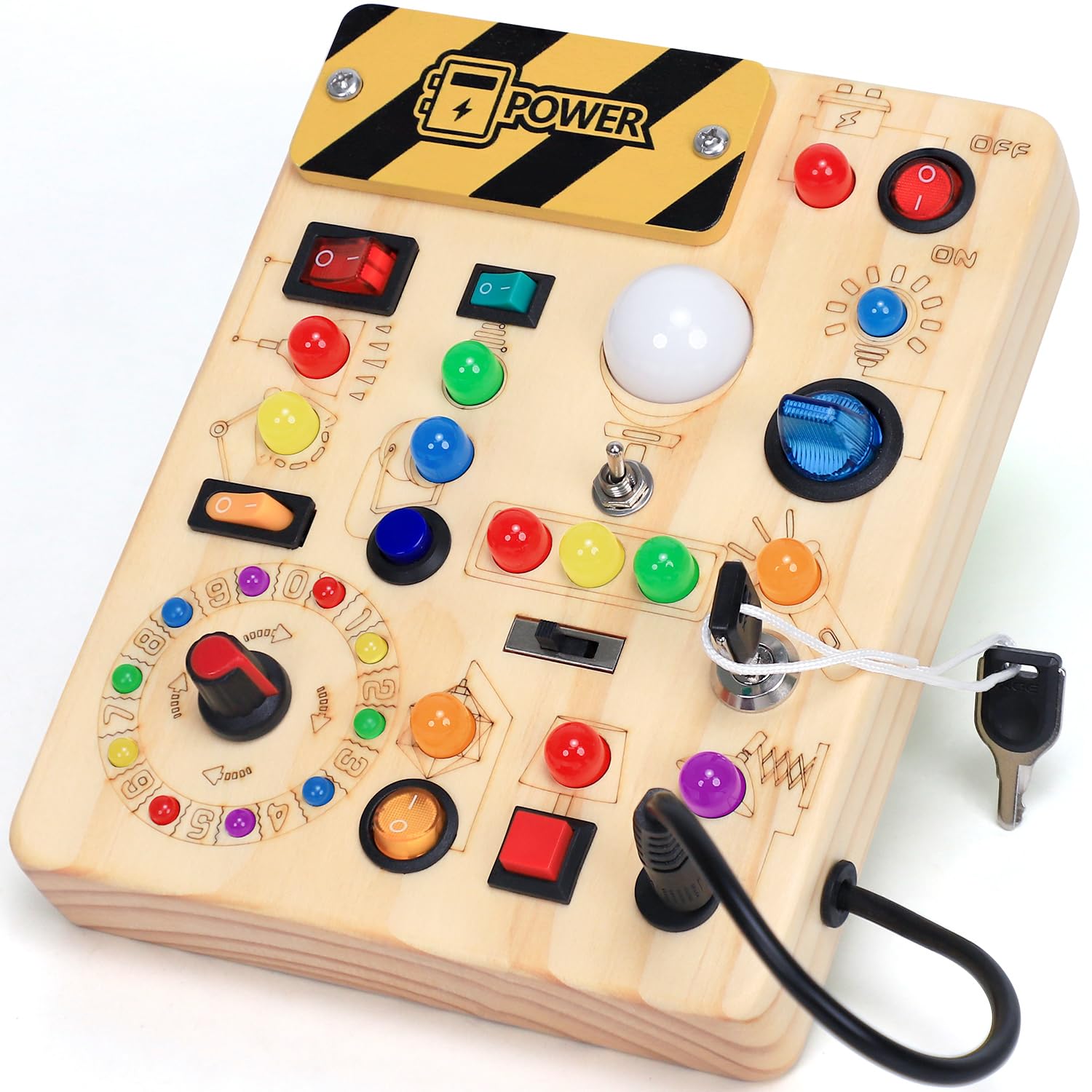
The HarVow board hits the sweet spot between sensory excitement and genuine skill-building. Its 13 distinct switches (toggle, push, slide, rocker) each trigger a unique LED pattern, teaching cause-and-effect in a way that feels like magic to a two-year-old. The solid natural wood construction—hand-sanded with zero splinters—is a rare find at this tier; most competitors use MDF or thin plywood.
What pushes this past a gimmick is the subtle calibration. The LED brightness is toned down to protect developing eyes, yet vivid enough to hold attention. The master power switch gives caregivers control of battery drain, and the backside engraving of A–Z and 0–9 adds an unexpected literacy bonus. At 6.7 x 5.3 x 1.1 inches, it slips into a diaper bag easily.
Two AAA batteries are required (not included), but the single master off-switch means they’ll last through weeks of daily use. The compact size and lightweight feel make it ideal for car rides, restaurant tables, or quiet time at home. For a two-year-old obsessed with flipping light switches, this is pure gold.
Why it’s great
- Solid wood frame with smooth, splinter-free finish
- 13 distinct switch types teach varied cause-and-effect
- Calibrated LED brightness is safe for toddler eyes
- Portable size with engraved alphabet on reverse
Good to know
- Requires 2 AAA batteries (not included)
- No sound component—purely visual/tactile feedback
2. SMALL FISH 3-in-1 Montessori Toy

This is the ultimate “quiet concentration” toy. The core of the set is a beech wood tube with three interchangeable lids: one with a slit for popsicle sticks, one with holes for colored rods, and one with a coin slot. Each lid forces the child to use a different wrist angle and grip strength, which builds the fine motor dexterity that leads to good pencil control later.
The 16 colorful sticks, 14 popsicle sticks, and 10 coin discs are made from Romanian and German beech, finished with a food-grade, non-toxic coating. The pieces are thick enough to survive toddler jaw strength but sized perfectly for small hands. The separate storage lid (which the child can open independently) teaches object permanence and clean-up habits naturally.
The included canvas drawstring bag makes this a travel-friendly option. At 5.63 x 3.94 x 5.95 inches, the tube is compact but sturdy. For a two-year-old who craves repetitive, satisfying actions (inserting, dumping, re-inserting), this toy delivers hours of focused play without batteries or screens.
Why it’s great
- Solid European beech wood with food-grade safety coating
- Three lid types target different fine motor skills
- Canvas drawstring bag for easy portability
- Teaches color sorting, spatial reasoning, and object permanence
Good to know
- Pieces can be lost if not stored in the bag
- No electronic feedback—purely mechanical play
3. Alotwan Talking Flash Cards
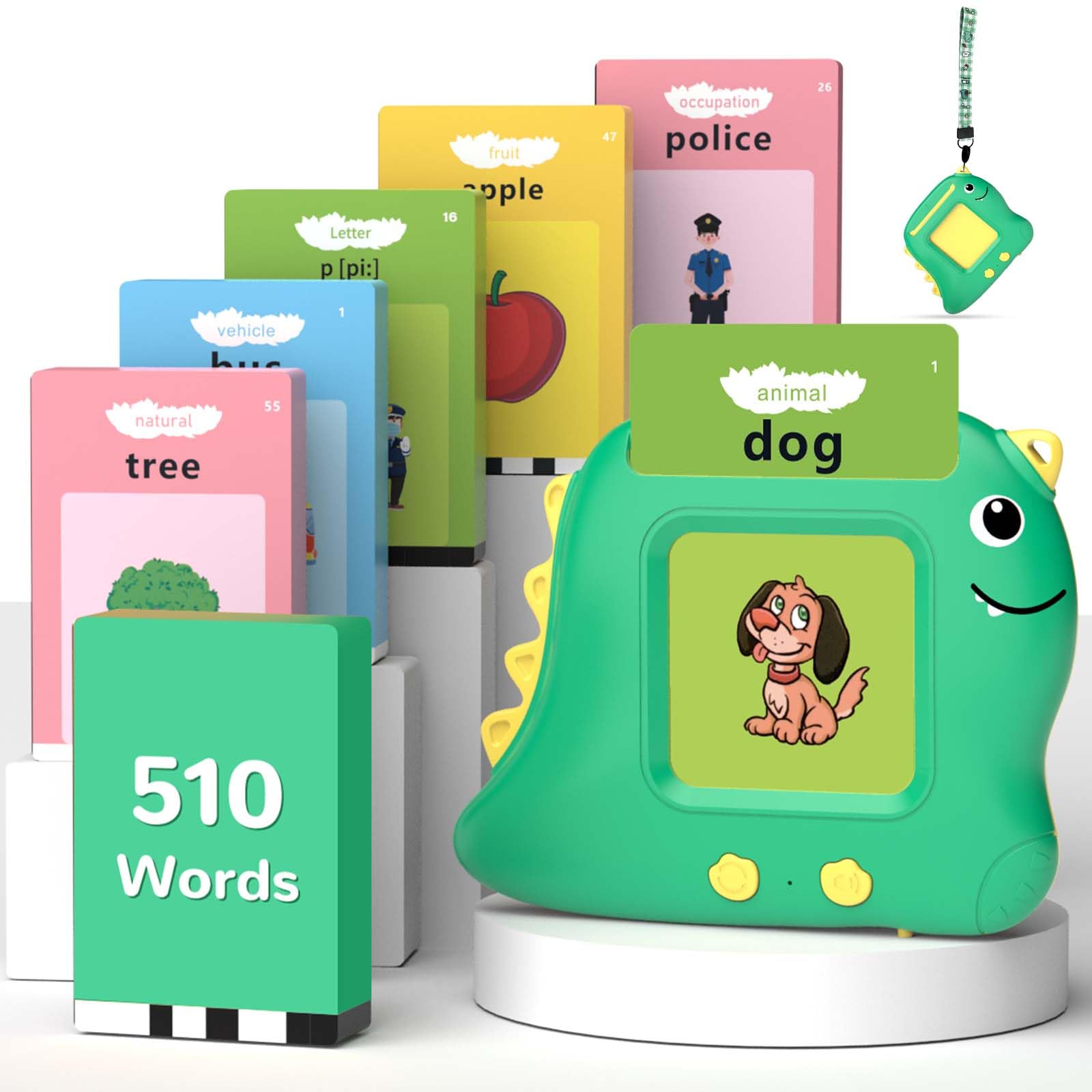
If your two-year-old is starting to mimic sounds but doesn’t yet have the vocabulary to name objects, this talking flash card system bridges that gap. The dinosaur-shaped reader scans double-sided cards and pronounces the word clearly, with some cards also playing the object’s corresponding sound (a car engine, a lion roar). The teacher-approved 255-card set covers 31 themes—far broader than most competing sets, which top out at 100–150 words.
The technology here is simple but effective: no screen, no app, no Wi-Fi. The child inserts the card, hears the word, and can press the repeat button to reinforce memory. The cards are noticeably thicker than budget alternatives, resisting bends from enthusiastic toddler handling. The dual-sensor barcode system eliminates mismatched sounds, a common frustration with cheaper readers.
For children with speech delays or autism, the combination of visual image and clear audio provides multi-sensory reinforcement. The set comes with a wrist strap lanyard and a storage bag, making it easy to bring to speech therapy sessions or on road trips. The only catch is that Amazon has had inventory mix-ups—verify the language version upon arrival.
Why it’s great
- 510 sight words across 31 teacher-approved themes
- Thick, durable cards resist toddler bending
- Dual-sensor barcode eliminates card-reader mismatches
- Portable with wrist strap and storage bag included
Good to know
- Requires USB charging (cable included)
- Amazon warehouse has occasionally shipped wrong language versions—verify
4. Hieoby Wooden Tool Set (29 Pieces)

Two-year-olds love mimicking adults, and this 29-piece wooden tool set lets them “fix” things just like Mom or Dad. The set includes a saw, hammer, wrench, screwdriver, gears, screws, nuts, nails, and building blocks—all sized for toddler hands but still robust enough for real twisting and turning. The toolbox itself flips over to become a workbench, then converts into a carrying case with an attachable handle.
The STEM value here is substantial. Aligning gears, threading nuts onto bolts, and using a screwdriver to rotate a screw all require bilateral coordination (using both hands together) and spatial planning. The bright colors and multiple assembly options (flower, windmill, scooter) mean the play evolves as the child’s skills grow. The wooden pieces are solid, with smooth edges and non-toxic paint that passes the toddler chew test.
The 3-in-1 design solves the storage problem elegantly—everything fits back inside the toolbox, encouraging clean-up habits. At 8 x 5 x 5 inches, it’s a bit bulkier than the other options here but still manageable for a child to carry. For a two-year-old who wants to build, dismantle, and rebuild, this is the most versatile open-ended construction toy in this lineup.
Why it’s great
- 29 pieces including gears, screwdriver, and hammer for STEM play
- 3-in-1 design: toolbox, workbench, and carrying case
- Solid wood construction with non-toxic, smooth finish
- Encourages bilateral coordination and spatial planning
Good to know
- Slightly bulkier than other options for travel
- Small pieces (nuts, nails) require supervision during play
5. Sesame Street Cookie’s Counting Jar
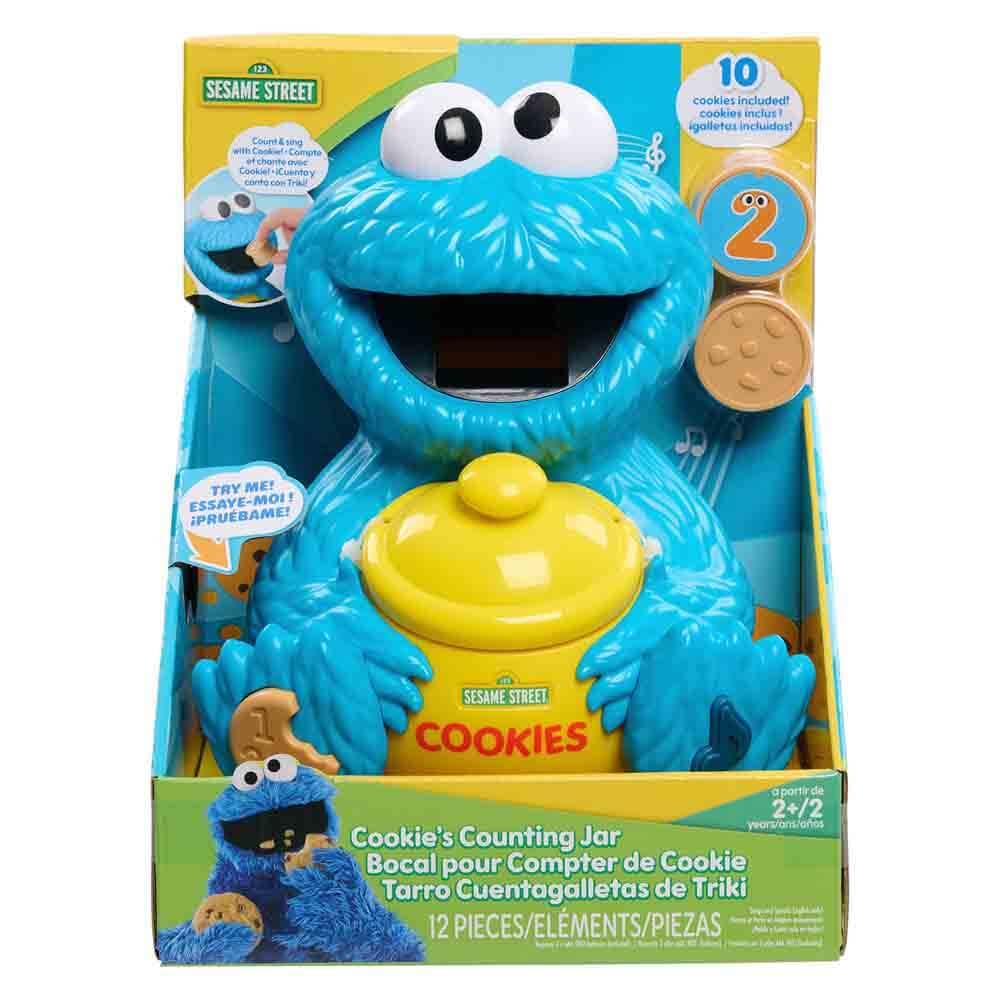
Cookie Monster is a toddler icon, and this counting jar leverages that familiarity to teach number recognition and counting. The 7.65-inch jar comes with 10 chunky cookies, each labeled with a digit and a matching number of chocolate chips. When the child pushes a cookie into the slot in Cookie Monster’s mouth, the toy counts aloud. Press the cookie button, and Cookie Monster asks for a specific number—correct choices get verbal praise.
The build quality is solid for a plastic toy: the cookie jar base feels dense, the lid clicks securely, and the chunky cookies are large enough to pose no choking hazard. The 20+ phrases and the “Who Stole the Cookie From the Cookie Jar” sing-along add variety that keeps two-year-olds coming back. Batteries are included (3x AAA), so it works straight out of the box.
Where this toy really shines is in its one-to-one correspondence training. Each cookie has both the numeral and a countable quantity (the chips), so the child learns that “3” equals three objects. For a child who adores Sesame Street and is ready for early math concepts, this is a gentle, fun entry point. Clean-up is simple—all cookies store inside the jar.
Why it’s great
- Teaches number recognition and counting with Cookie Monster’s voice
- Chunky cookies with both numeral and chip quantities
- Batteries included for immediate play
- Easy storage—all cookies fit inside the jar
Good to know
- Plastic construction—less durable than wood options
- Limited to counting and number themes only
FAQ
How many pieces is too many for a two-year-old?
Should I choose Montessori-style wooden toys or electronic interactive toys?
How do I verify a toy is actually safe and non-toxic?
What if my two-year-old still puts toys in their mouth?
Final Thoughts: The Verdict
For most users, the best learning toys for 2 year olds winner is the HarVow LED Busy Board because it combines solid wood durability, 13 different cause-and-effect challenges, and a perfectly portable size—all without needing a screen. If you want to build pincer grip and wrist rotation, grab the SMALL FISH 3-in-1 Montessori Toy. And for vocabulary growth in a screen-free format, nothing beats the Alotwan Talking Flash Cards.