Finding a running shoe that controls overpronation without feeling like you strapped bricks to your feet is rare. Most stability models trade heft for control, leaving runners with tired legs before the first mile is done. The search for a true lightweight stability shoe forces you to examine not just a brand’s reputation, but the actual foam compound, the density of the medial post, and the heel-to-toe drop that suits your stride.
I’m Emma — the founder and writer behind Baby Bangs. I’ve spent months poring over foam formulations, outsole rubber coverage, and medial support geometry across the major running shoe lines to separate the legit lightweight stability contenders from the heavy ones that just wear the label.
Whether you’re logging daily recovery miles or pushing for a half-marathon PR, the right pair keeps your gait aligned without slowing you down. This guide breaks down nine models that lead the category of best lightweight stability running shoes and explains exactly what makes each one worth your time.
How To Choose The Best Lightweight Stability Running Shoes
Lightweight stability shoes sit in a narrow sweet spot. Drop the medial post too much and you lose pronation control. Add too much foam density and you gain ounces that kill turnover. The key is understanding which three specs matter most for your foot mechanics.
Medial Support Density vs. Guide Rail Systems
Traditional stability shoes use a firm medial post — a dense chunk of foam on the arch side that slows overpronation. Newer models like the Brooks Glycerin GTS and the New Balance Fresh Foam X Vongo use guide rail technology, a bumper that runs along the heel. Guide rails allow for a softer overall ride while still correcting excessive inward roll, making them a better fit for runners who need mild to moderate stability without the plank-like feel.
Foam Compound and Stack Height
A lightweight stability shoe is only as good as its midsole compound. Premium foams like New Balance Fresh Foam X and Saucony PWRRUN PB offer high energy return at a lower weight than standard EVA. Stack height — the amount of foam between your foot and the ground — also affects stability. Too low (under 20mm) reduces cushion for long miles. Too high (over 35mm) can feel unstable for overpronators. Look for a stack between 24mm and 32mm for the best balance.
Heel-to-Toe Drop
Drop is the difference in height between the heel and forefoot. Most stability runners do well with an 8mm to 12mm drop, which encourages a heel-strike pattern that makes the medial post more effective. A lower drop (4mm to 6mm) shifts load to the midfoot and reduces the leverage of the stability features. If you land on your midfoot, lean toward a lower drop with a wider platform for lateral support.
Quick Comparison
On smaller screens, swipe sideways to see the full table.
| Model | Category | Best For | Key Spec | Amazon |
|---|---|---|---|---|
| Brooks Glycerin GTS 23 (Women’s) | Premium | Maximum cushion + Guide Rails | 32mm stack, Guide Rails system | Amazon |
| New Balance Vongo V6 (Women’s) | Premium | Soft stability, daily trainer | Fresh Foam X, 28mm stack | Amazon |
| New Balance More V6 (Women’s) | Premium | Max cushion, recovery miles | Fresh Foam X, 34mm stack | Amazon |
| Saucony Hurricane 24 (Men’s) | Premium | Long runs, heavy pronation | PWRRUN PB frame, 30mm stack | Amazon |
| ASICS GT-2000 14 (Men’s) | Mid-Range | Everyday stability trainer | LITETRUSS, 26mm stack | Amazon |
| Brooks Glycerin GTS 23 (Men’s) | Mid-Range | Guide Rail support, plush ride | 32mm stack, Guide Rails | Amazon |
| Mizuno Wave Inspire 21 (Men’s) | Mid-Range | Firm, responsive ride | Wave plate, 24mm stack | Amazon |
| Saucony Hurricane 24 (Women’s) | Mid-Range | Balanced support, moderate price | PWRRUN frame, 30mm stack | Amazon |
| ASICS GT-1000 13 (Women’s) | Value | Budget stability, short runs | LITETRUSS, 24mm stack | Amazon |
In‑Depth Reviews
1. Brooks Women’s Glycerin GTS 23 Supportive Running Shoe
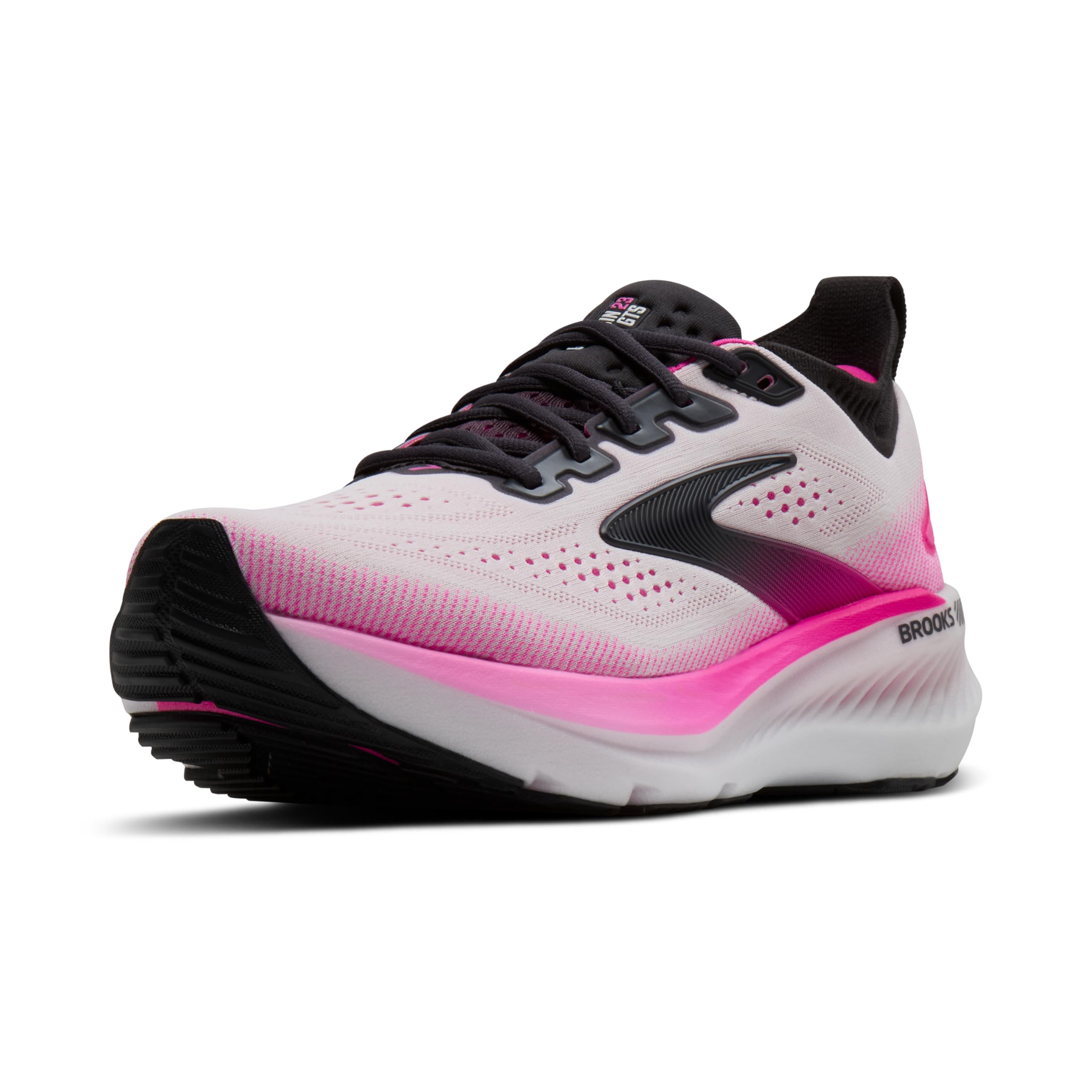
Brooks took the plush Glycerin platform and added their Guide Rails system to create a stability shoe that actually feels like a premium neutral trainer. The Guide Rails are thermoplastic bumpers along the heel that gently nudge your foot back into alignment without the rigid medial post that makes traditional stability shoes clunky. At a 32mm stack height, you get substantial underfoot cushion for long runs, yet the shoe’s overall weight stays competitive because Brooks used a nitrogen-infused DNA LOFT v3 foam that is lighter than standard EVA.
The upper uses a engineered mesh that breathes well on hot pavement days and wraps the midfoot without creating pressure points. I noticed minimal heel slippage thanks to the internal heel counter design, which is a common complaint with max-cushion models. The outsole has strategic rubber placement under the heel and forefoot that held up well on asphalt, though I’d avoid wet loose gravel because the exposed foam sections can feel slippery.
For runners who need moderate pronation control but refuse to sacrifice cushion feel, this is the shoe that threads the needle. It works best as a daily trainer for paces above 8:00/mile, but its weight means you won’t want it for fast interval work. The fit runs true to size for medium-volume feet; narrow-footed runners may want to size down half a shoe.
Why it’s great
- Guide Rails provide stability without a stiff medial post
- Nitrogen-infused foam is both light and highly responsive
- Plush 32mm stack absorbs impact on long pavement miles
Good to know
- Heavier than true lightweight trainers like the GT-2000
- Exposed foam outsole lacks grip on loose terrain
- Best suited for moderate overpronation, not severe cases
2. New Balance Women’s Fresh Foam X Vongo V6 Running Shoe
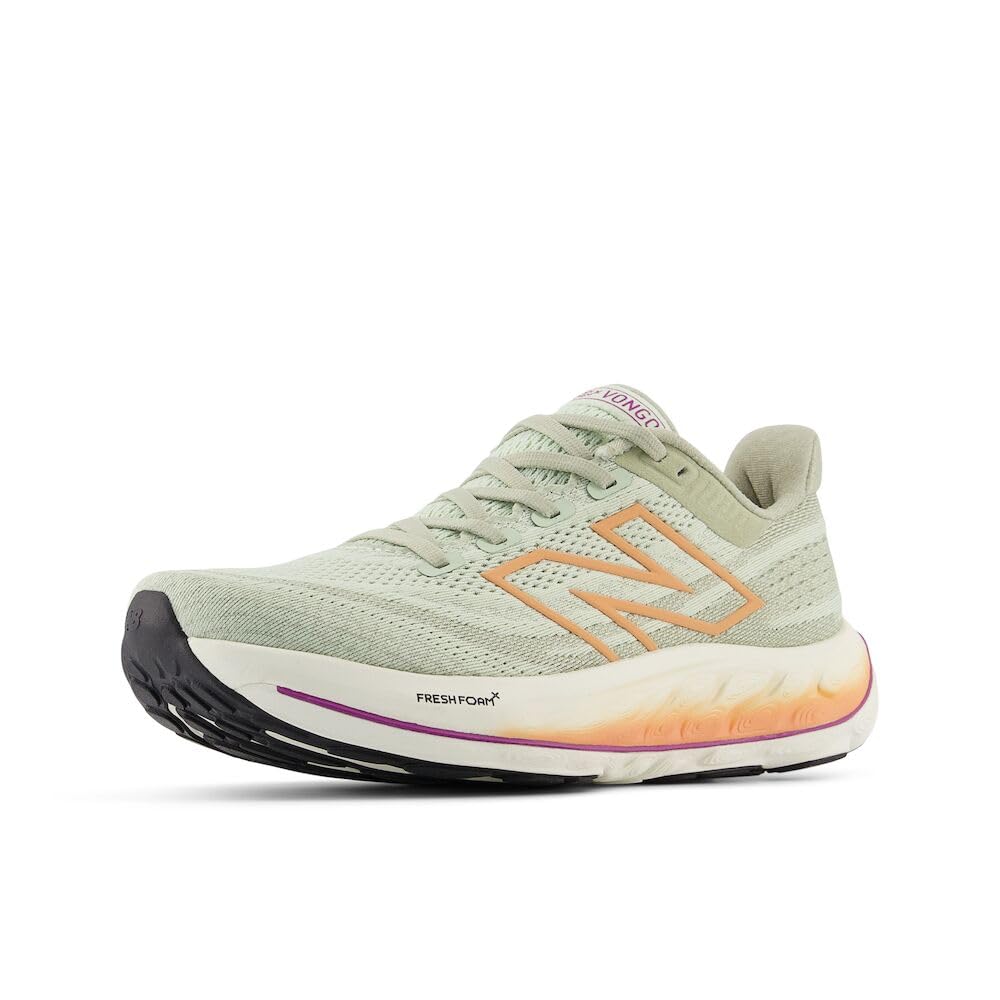
The Vongo V6 is New Balance’s answer to the stability runner who wants a soft landing without the heavy weight. It uses the Fresh Foam X compound, which is their most premium midsole formulation — it’s about 15% lighter than standard Fresh Foam and delivers a noticeably bouncier toe-off. The medial support comes from a wider platform and a slightly denser foam column on the arch side rather than a traditional post, so the transition feels more natural through the gait cycle.
With a 28mm stack height, the Vongo sits right at the threshold between moderate and max cushion. It’s enough foam for a half-marathon but low enough to maintain ground feel for tempo runs. The upper is a soft knit material that adapts well to foot swelling on longer runs, though it lacks the structured heel counter of the Brooks Glycerin GTS, so some runners with narrow heels may experience slight lift. The outsole rubber coverage is generous, including under the medial side where stability shoes often wear fastest.
This shoe shines for runners who land midfoot or forefoot and want a stability shoe that doesn’t force a heel-strike platform. The 6mm drop is lower than the typical 8-12mm found in most stability models, which shifts the support more evenly across the foot. If you’re a heel striker with severe overpronation, you might find the Vongo too forgiving — the Brooks GTS line would serve you better.
Why it’s great
- Fresh Foam X is remarkably light and bouncy for a stability shoe
- 6mm drop suits midfoot and forefoot strikers
- Generous outsole rubber placement improves durability
Good to know
- Soft knit upper may cause heel slippage for narrow heels
- Mild stability features are not enough for severe overpronation
- Midfoot volume is generous, can feel loose for low-volume feet
3. New Balance Women’s Fresh Foam X More V6
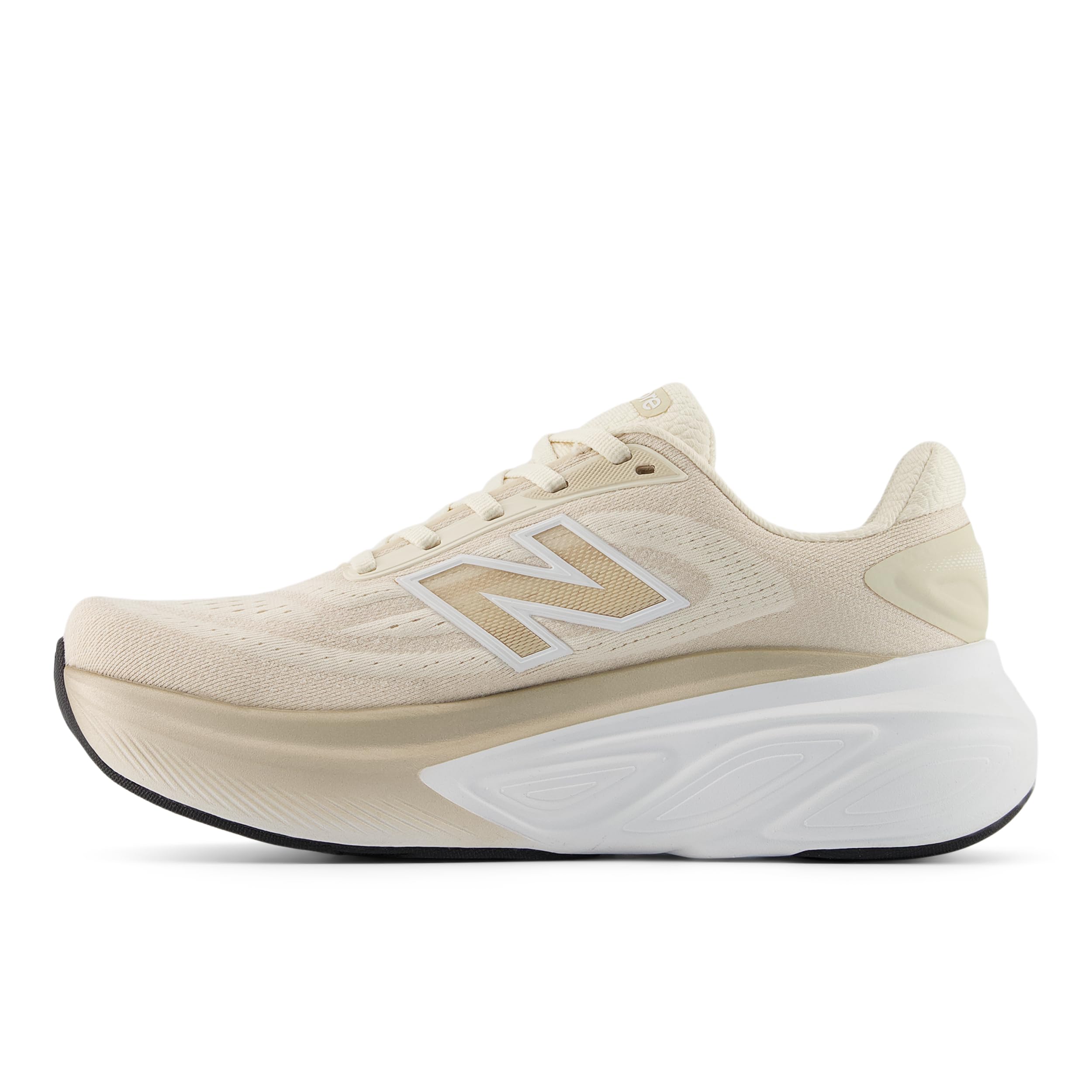
The Fresh Foam X More V6 is not a traditional stability shoe — it’s a max-cushion cruiser that uses a super-wide platform and a stable foam geometry to provide a inherently stable ride. New Balance calls this “inherent stability” because the shoe doesn’t have a medial post or guide rails; instead, the 34mm stack is so wide and the rocker profile so pronounced that your foot naturally stays centered. This makes it a unique entry in the lightweight stability category, because it’s genuinely light for a shoe with this much foam.
The Fresh Foam X compound is the same premium material used in the Vongo, but tuned slightly softer for pure absorption. The ride is plush bordering on marshmallowy — perfect for recovery days when your legs are heavy from previous workouts. The 4mm drop is low, encouraging a more natural gait, and the wide base means even a heavy overpronator won’t roll over the edge. The outsole has full rubber coverage, which is unusual for a max-cushion shoe, adding significant durability for a trainer that could easily last 500+ miles.
The trade-off is responsiveness. The More V6 feels dead if you try to pick up the pace below 8:30/mile. It’s a slow-mileage shoe designed for easy runs and long, slow distance. If your goal is a lightweight stability shoe that can handle speed work, look to the GT-2000 or the Hurricane instead. The fit is generous in the toe box and midfoot, accommodating wide feet without requiring a wide size.
Why it’s great
- Extremely wide base provides inherent stability without posts
- Fresh Foam X delivers plush, quiet ride for recovery miles
- Full rubber outsole adds serious long-term durability
Good to know
- Not responsive enough for tempo runs or speed work
- 34mm stack can feel unstable for runners with narrow feet
- 4mm drop is low for heel strikers used to 10-12mm drops
4. Saucony Men’s Hurricane 24 Sneaker
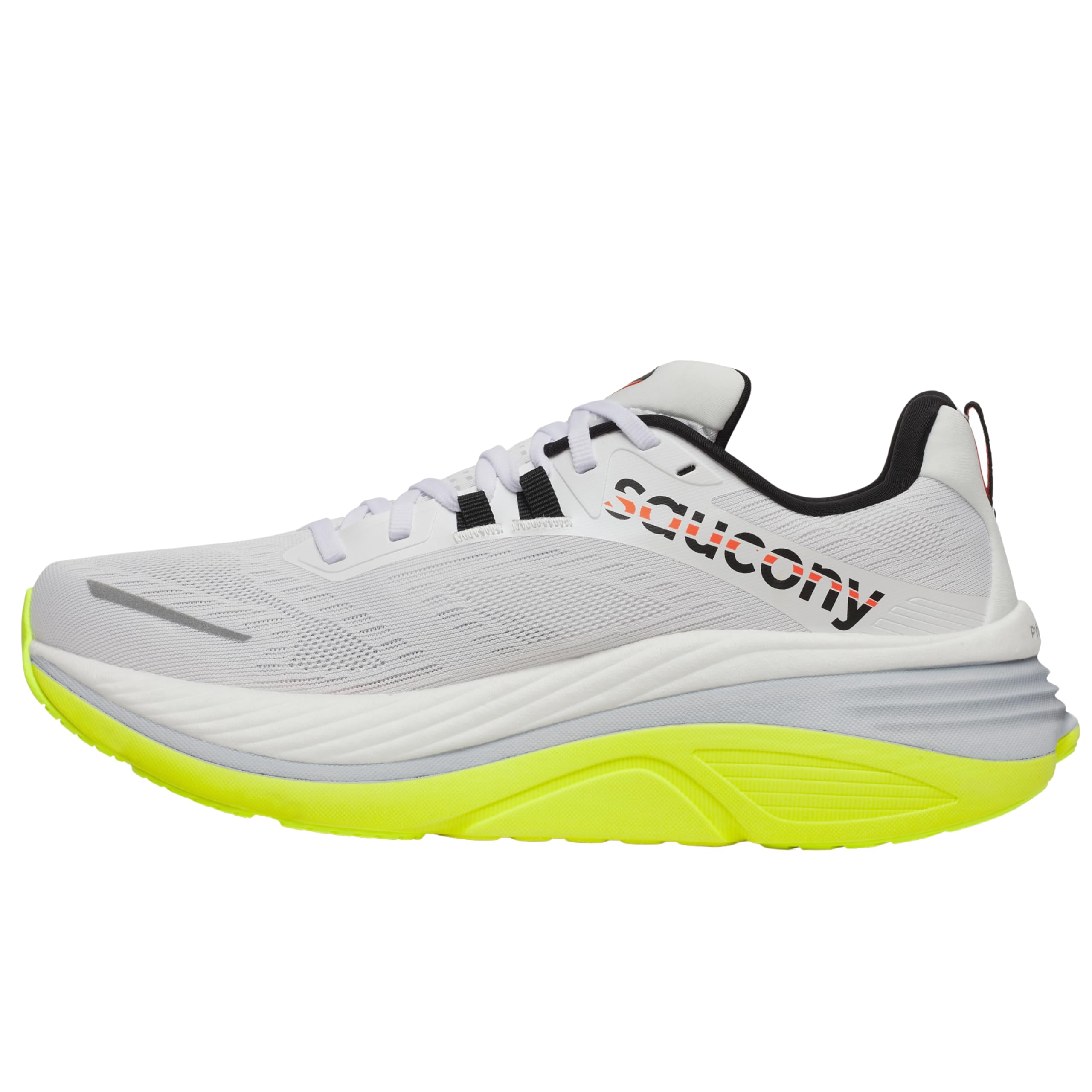
The Hurricane 24 is Saucony’s top-tier stability offering, and it uses a full-length PWRRUN PB midsole — the same Pebax-based foam found in their racing shoes. This is significant because Pebax is lighter and more resilient than standard polyurethane or EVA foam, which directly addresses the weight issue that plagues stability shoes. The result is a stability shoe that weighs about 10.5 ounces in men’s size 9, competitive with many neutral daily trainers.
The stability comes from a medial post made of PWRRUN Frame, a denser carrier that wraps the PWRRUN PB core. This dual-density construction provides more aggressive pronation control than the Guide Rails on the Brooks Glycerin GTS, making it a better fit for runners with moderate to severe overpronation. The 30mm stack height strikes a balance between cushion and ground feel, and the 8mm drop accommodates heel strikers well. The upper uses a engineered mesh with decent structure, though it runs slightly warm in hot weather compared to the more open knit of the New Balance options.
Where the Hurricane 24 really pulls ahead is in long-run comfort. The PWRRUN PB foam maintains its bounce well past mile 10, whereas standard EVA stability shoes tend to pack down and feel flat. If you’re logging half-marathon or marathon miles and need reliable pronation control without the weight penalty, this is the strongest candidate among the premium options. The outsole uses XT-900 carbon rubber in high-wear zones, which is durable, but the forefoot flex grooves are more prominent than on the GT-2000, creating slight noise on hard pavement.
Why it’s great
- PWRRUN PB foam is race-shoe quality, lighter than standard stability foams
- Aggressive medial post provides excellent control for heavy overpronators
- Bounce holds up well past 10 miles for long training runs
Good to know
- Upper runs warm in hot conditions due to denser mesh
- Forefoot flex grooves can create noise on hard surfaces
- Premium tier price point is higher than mid-range alternatives
5. ASICS Men’s GT-2000 14 Running Shoes
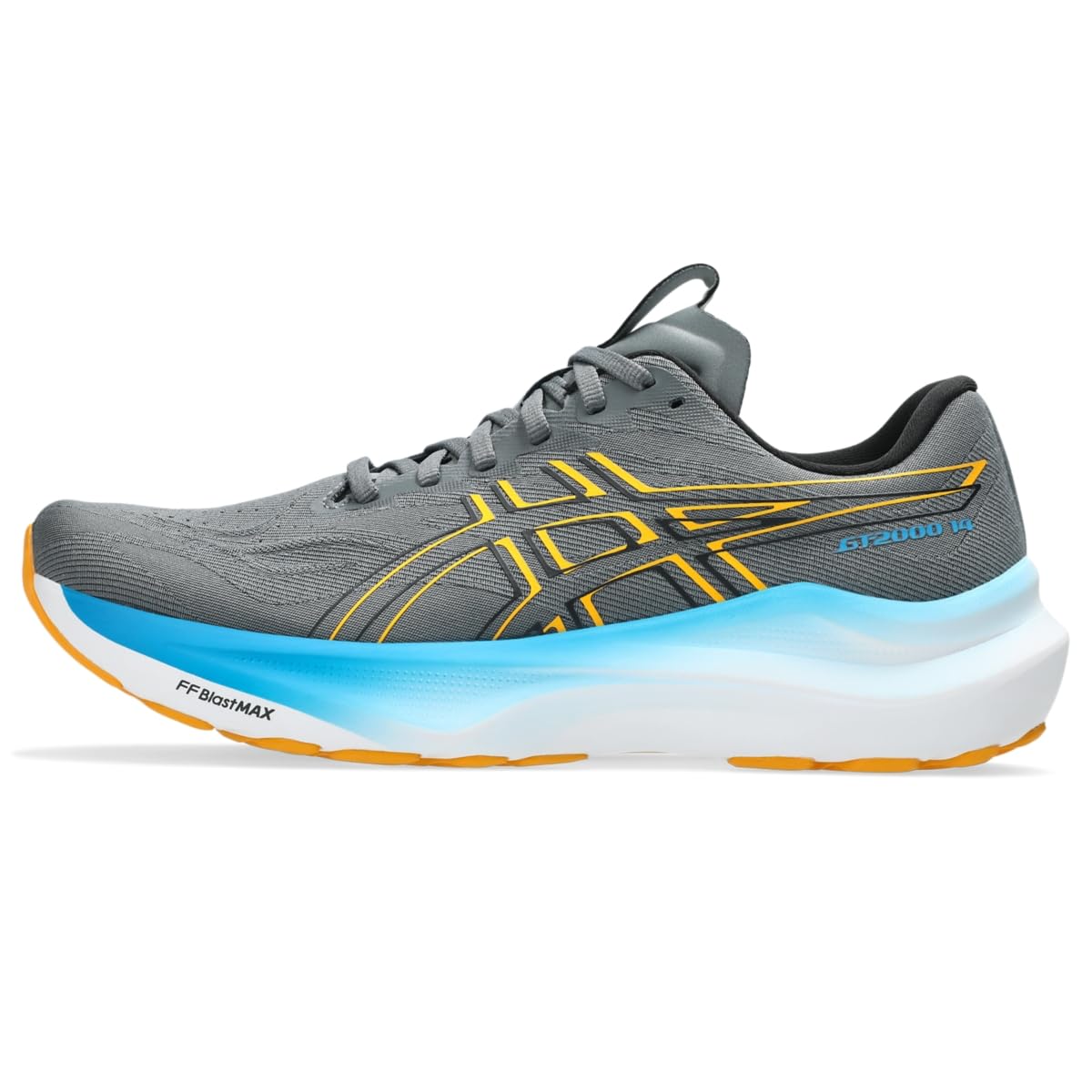
The GT-2000 14 is a classic stability workhorse that ASICS has continuously refined, and the 14th iteration is the lightest yet. It uses ASICS’s LITETRUSS technology, which replaces the bulky medial post of earlier GT-2000 models with a lighter, more flexible support system that runs along the medial side of the midsole. The shoe still provides solid pronation control, but the reduced density means less weight and a smoother transition from heel strike to toe-off compared to the older Trusstic system.
The midsole uses FlyteFoam Blast, a lightweight foam that offers good energy return without the premium price tag of Pebax or Fresh Foam X. The 26mm stack height is moderate, delivering decent impact protection for daily training while keeping the shoe low enough for good ground feel on faster runs. The mesh upper is structured and breathable, with a traditional lace-up closure that allows for lock-down fit adjustments. The outsole has generous AHAR rubber placement, which gives the GT-2000 excellent durability for a mid-range shoe — expect 400-500 miles before the midsole noticeably degrades.
The trade-off is that the GT-2000 doesn’t feel as plush underfoot as the Brooks Glycerin GTS or the New Balance Vongo. The FlyteFoam Blast is firmer and less bouncy, which some runners prefer for stability, but others may find harsh on long runs. This shoe is best suited for runners who want reliable, no-nonsense stability at a very competitive price point. It works well for distances up to 10 miles and for runners who alternate between road and packed gravel.
Why it’s great
- LITETRUSS provides effective stability at a lighter weight than older posts
- AHAR rubber outsole is very durable, great value for the price
- Breathable mesh upper adapts well to warm weather running
Good to know
- FlyteFoam Blast is firmer and less bouncy than premium foams
- Moderate stack height may feel insufficient for runners over 180 lbs
- Not as plush as the Hurricane or Glycerin GTS for recovery miles
6. Brooks Men’s Glycerin GTS 23 Supportive Running Shoe
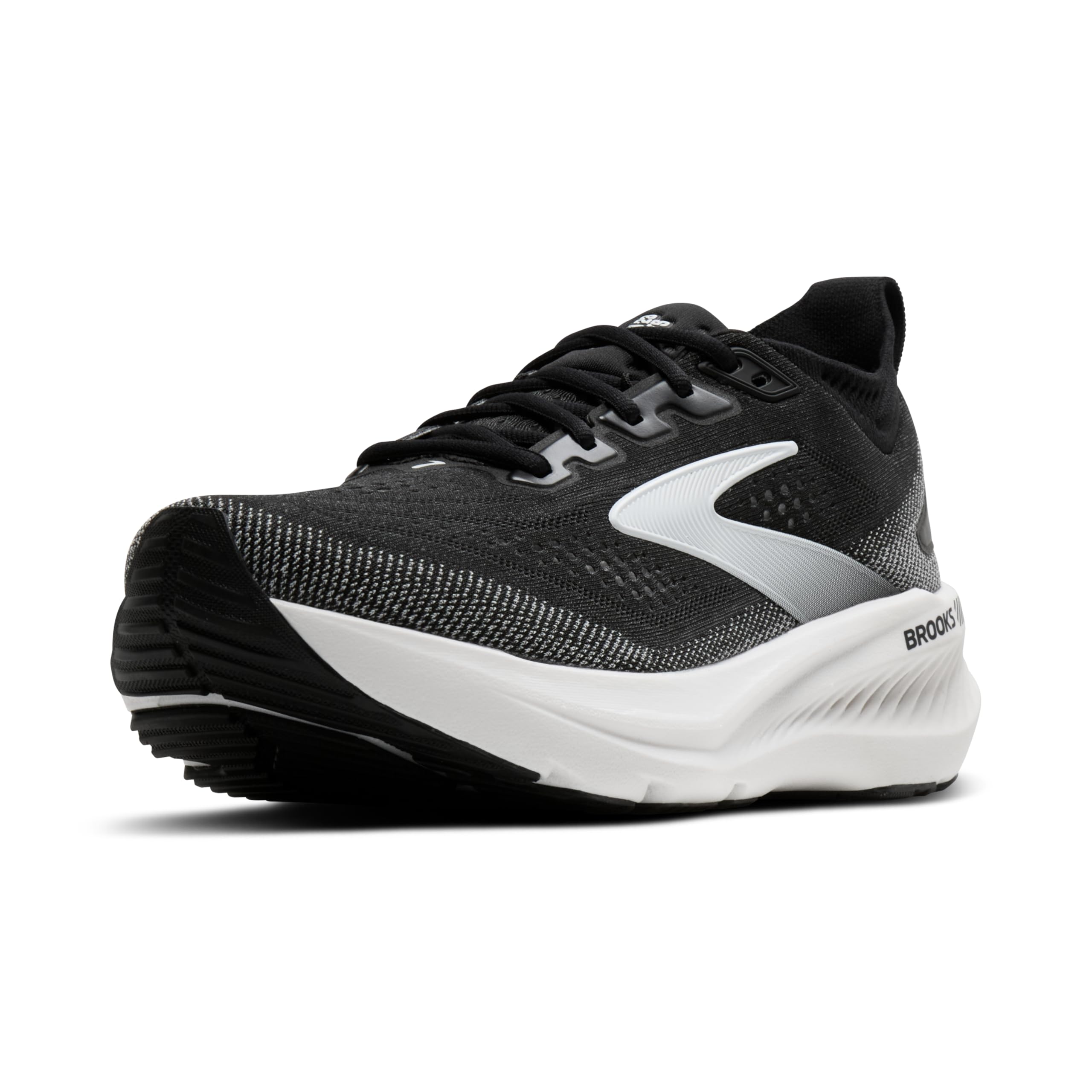
The men’s version of the Glycerin GTS 23 shares the same DNA LOFT v3 foam and Guide Rails system as the women’s model, offering the same plush yet stable ride. The shoe is designed for runners who need mild to moderate overpronation control but want to avoid the harsh, stiff feel of traditional stability shoes. The Guide Rails are particularly effective for runners who have good form but occasionally roll inward under fatigue, providing subtle guidance rather than aggressive correction.
The 32mm stack height delivers substantial underfoot comfort for long pavement miles, and the nitrogen-infused foam maintains its resilience well through the life of the shoe. The upper is a step above the previous generation in terms of breathability, using a airy mesh that doesn’t trap heat. The heel counter is well-padded and locks the foot securely, which is important for a max-cushion shoe where heel slippage can become an issue at higher mileage. The outsole has durable rubber under the heel and forefoot, though the midfoot section is exposed foam, which may show wear faster if you drag your feet.
One consideration is the weight. While the Glycerin GTS is lighter than the original Glycerin due to the nitrogen-infused foam, it still weighs about 10.8 ounces in a men’s size 10, which is on the higher side for the lightweight stability category. Runners looking for a shoe for speed work or race day may find it too heavy. Its sweet spot is easy runs, long slow distance, and recovery days where cushion and stability are the primary concerns.
Why it’s great
- Guide Rails offer subtle stability without a stiff medial post
- Nitrogen-infused foam is plush and durable for long miles
- Excellent heel lock-down prevents slippage on longer runs
Good to know
- Heavier than other mid-range stability options
- Exposed foam midfoot is a wear point for foot draggers
- Best for easy and recovery paces, not speed work
7. Mizuno Men’s Wave Inspire 21 Running Shoe
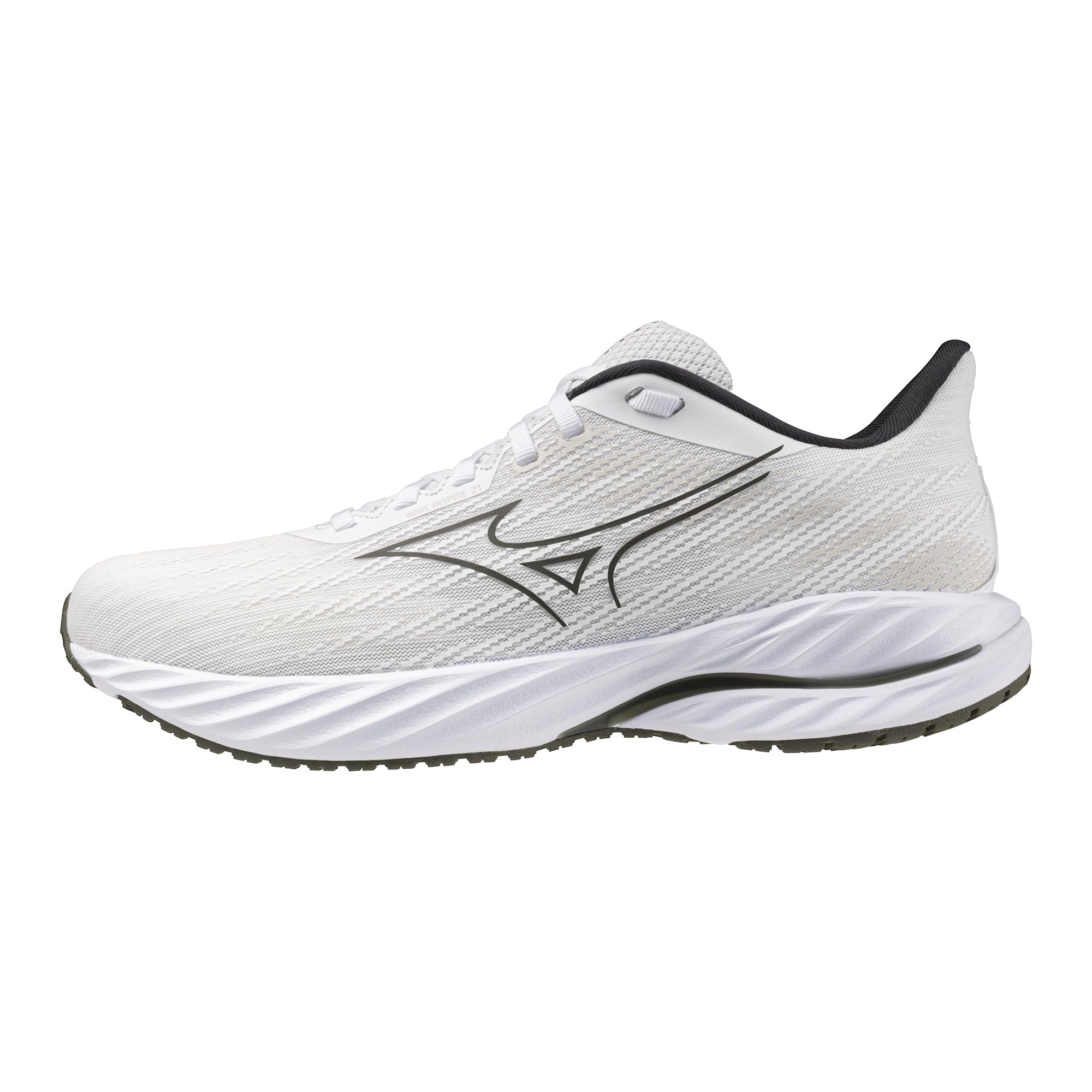
Mizuno takes a completely different approach to stability with the Wave Inspire 21. Instead of foam-based medial posts or guide rails, it uses a Wave Plate — a corrugated thermoplastic shank embedded in the midsole that provides structure and controls pronation. This design means the Wave Inspire feels firmer and more responsive than any of the foam-only competitors on this list. The 24mm stack height is the lowest among the nine shoes reviewed, giving excellent ground feel and a snappy toe-off.
The midsole uses Mizuno’s Enerzy foam, which is softer than the earlier U4icX formulations but still firmer than Fresh Foam X or PWRRUN PB. The combination of the Wave Plate and a denser foam creates a ride that is stable and predictable, especially at faster paces. The upper is a simple, well-structured mesh that doesn’t stretch over time, providing consistent lockdown even after 200 miles. The outsole has X10 carbon rubber in high-wear zones, which is one of the most durable compounds in running shoes.
The trade-off for the responsive ride is that the Wave Inspire 21 is less plush for recovery miles. If you have sensitive joints or need maximum cushion for long slow runs, the Brooks Glycerin GTS or the New Balance More V6 will feel more forgiving. The Wave Inspire is best for runners who want a stability shoe that doesn’t compromise on feedback — ideal for tempo runs, short races, and runners who prioritize a firm, connected feel underfoot. The fit is true to size for medium feet but may feel snug in the toe box for wide-footed runners.
Why it’s great
- Wave Plate provides excellent stability without heavy foam
- Low 24mm stack offers superb ground feel and responsiveness
- X10 outsole rubber is extremely durable for high mileage
Good to know
- Firm ride is not plush enough for easy recovery runs
- Toe box may be snug for wide-footed runners
- Best suited for runners who land on midfoot or forefoot
8. Saucony Women’s Hurricane 24 Sneaker
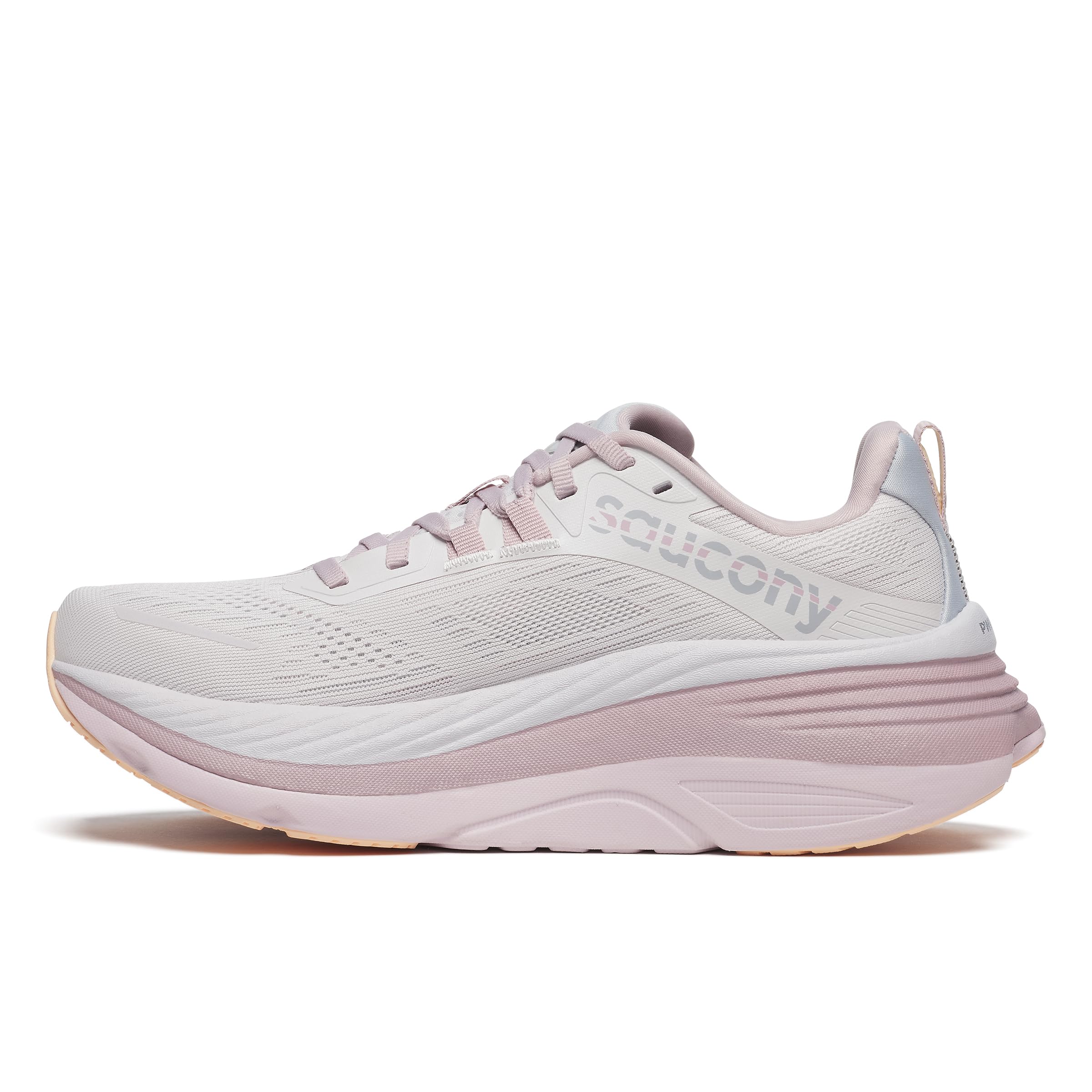
The women’s Hurricane 24 shares the same dual-density PWRRUN Frame construction as the men’s version, delivering reliable pronation control for moderate to heavy overpronators. Where it differs is in the fit and the upper design, which are tuned specifically for women’s foot anatomy — slightly narrower heel, more volume in the toe box, and a lower instep. The 30mm stack height provides good impact protection for daily training without feeling too lofty.
The ride is firmer than the Brooks Glycerin GTS but more forgiving than the Mizuno Wave Inspire. The PWRRUN Frame carrier provides a noticeable stability shelf under the arch, and the PWRRUN core foam delivers decent energy return for the price tier. The upper uses a breathable mesh with an internal heel counter that does a solid job of locking the heel in place. The outsole uses Saucony’s iBR+ rubber in the heel and forefoot, which is lighter than traditional carbon rubber but sacrifices some durability — expect around 350-400 miles before the outsole shows significant wear.
This shoe is a strong option for runners who want a traditional stability feel with a modern, lighter-weight construction. It works well for distances from 5K to half-marathon and handles moderate pace changes well. If you’re a heavier runner or put in high weekly mileage, the men’s Hurricane 24 or the Brooks Glycerin GTS may offer better durability and cushioning retention over the long term. The fit is true to size for medium-volume feet.
Why it’s great
- Dual-density PWRRUN Frame provides reliable pronation control
- Women’s specific fit addresses narrower heels and lower instep
- 30mm stack offers good cushion for daily training without being bulky
Good to know
- iBR+ outsole rubber wears faster than carbon rubber alternatives
- Firmer ride may not suit runners who want a plush feel
- Best for moderate overpronation, not severe cases
9. ASICS Women’s GT-1000 13 Running Shoes
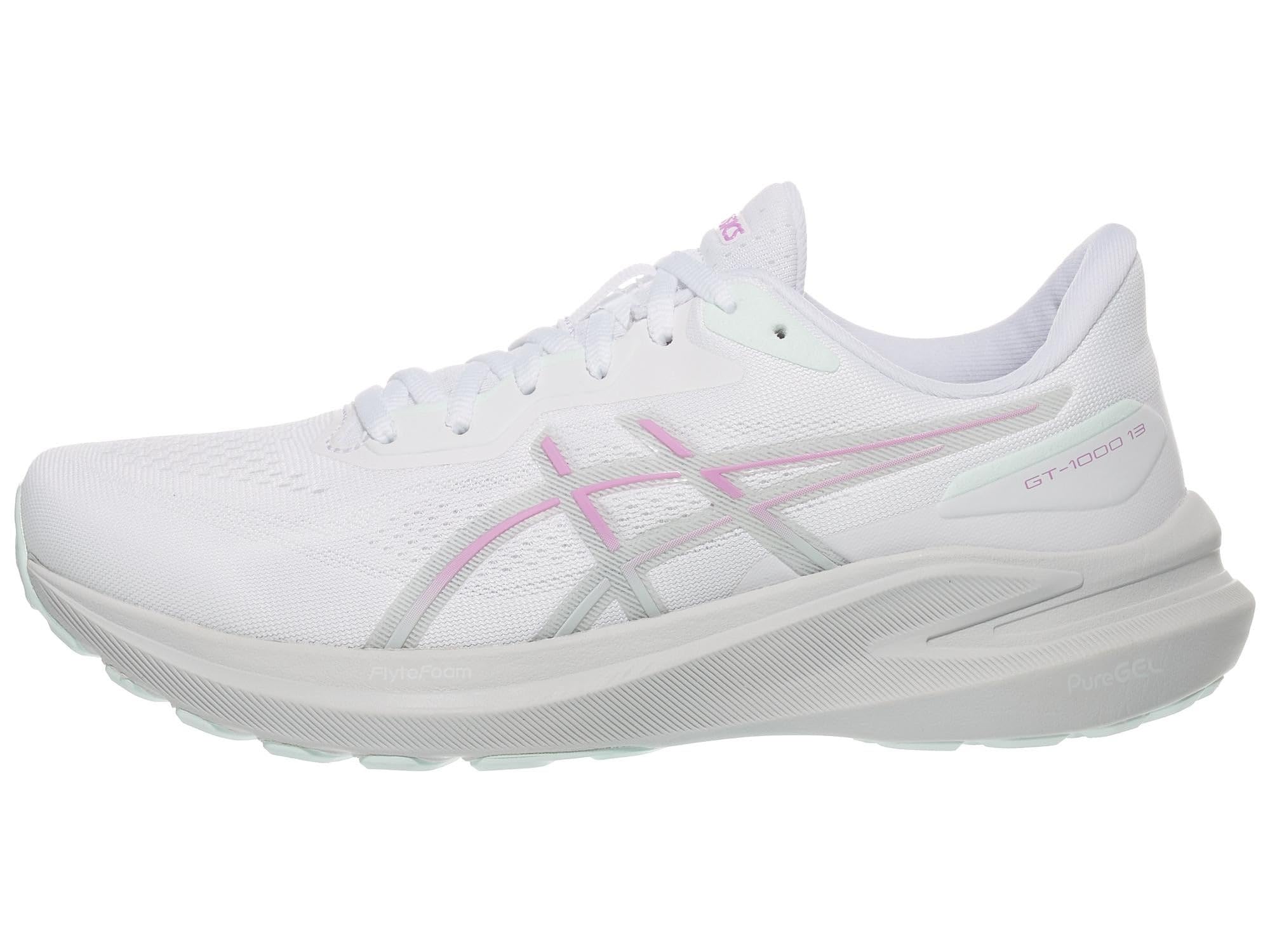
The GT-1000 13 is ASICS’s entry-level stability shoe, designed to provide the core features of the GT-2000 at a lower price point. It uses the same LITETRUSS support system — a lighter medial post that reduces weight compared to older ASICS stability models. The 24mm stack height is the lowest of any shoe in this review, offering minimal cushioning but excellent ground feel. This makes the GT-1000 13 a good choice for shorter runs and for runners who prefer a lower, more connected ride.
The midsole uses AmpliFoam, ASICS’s standard EVA compound, which is firmer and less resilient than the FlyteFoam Blast used in the GT-2000. The shoe lacks the bounce of the higher-end models, but it also avoids the squishiness that some runners dislike in max-cushion shoes. The upper is a straightforward engineered mesh that breathes adequately but lacks the structure of the more expensive options, meaning the fit can feel sloppy if you don’t cinch the laces properly. The outsole has AHAR rubber in the heel and forefoot, providing decent durability for a budget shoe.
The trade-off is that the GT-1000 13 has a shorter effective lifespan than the GT-2000 or the premium options. The midsole loses its cushioning properties around the 250-300 mile mark, and the upper may show wear at the lace eyelets sooner than expected. However, for runners on a tight budget who need basic pronation control for shorter distances (3-6 miles), the GT-1000 13 offers a functional, no-frills platform that won’t break the bank. The fit runs true to size for medium-volume feet.
Why it’s great
- LITETRUSS provides effective stability at a budget-friendly price
- Low 24mm stack offers excellent ground feel for shorter runs
- AHAR outsole rubber is reasonably durable for the price tier
Good to know
- AmpliFoam midsole loses cushioning after 250-300 miles
- Upper lacks structure, may feel sloppy without tight lacing
- Minimal bounce and energy return compared to premium foams
FAQ
What is the minimum stack height I should look for in a lightweight stability shoe?
Can I use a lightweight stability shoe for speed work or racing?
What is LITETRUSS and how does it differ from a traditional medial post?
How many miles should I expect from a lightweight stability shoe before replacing it?
Final Thoughts: The Verdict
For most runners, the best lightweight stability running shoes winner is the Brooks Women’s Glycerin GTS 23 because it marries Guide Rail stability with a genuinely plush, nitrogen-infused foam that remains competitive in weight. If you want a responsive, low-to-ground stability shoe for tempo work, grab the Mizuno Wave Inspire 21. And for maximum cushion recovery days where inherent stability matters more than posts, nothing beats the New Balance Fresh Foam X More V6.