Finding a low-carb hamburger bun that doesn’t disintegrate into a pile of crumbs the second you add a patty is a genuine challenge. Most options on the market trade structural integrity for a lower carb count, leaving you with a sad, gummy mess that fails the most basic burger test: holding together from first bite to last. That’s the exact pain this guide solves.
I’m Emma — the founder and writer behind Baby Bangs. I’ve spent months analyzing the macronutrient profiles, ingredient lists, and structural resilience of every major low-carb bun brand to find the ones that actually deliver on texture and taste.
The market is flooded with keto-friendly options that crumble under pressure, but I’ve narrowed it down to the five that pass the real-world burger test. This is your no-fluff guide to the absolute best low-carb hamburger buns that won’t sabotage your macros or your meal.
How To Choose The Best Low-Carb Hamburger Buns
Not all low-carb buns are created equal. Some rely heavily on resistant wheat starch to cut carbs, while others use a blend of almond flour, oat fiber, or vital wheat gluten. The key is understanding what’s inside the bun before you toss it on the grill.
Net Carbs vs. Total Carbohydrates
Almost every brand advertises net carbs, which subtracts fiber and sugar alcohols from total carbs. This works for keto dieters, but the glycemic impact depends on the type of fiber used. Insoluble fiber from oat hulls and resistant starch from tapioca affect blood sugar differently. Look for buns with at least 10g of dietary fiber per serving to ensure the net carb number is meaningful and not padded with sugar alcohols that can cause bloating.
Structural Integrity and Texture
A low-carb bun that crumbles on the first bite defeats the entire purpose of a hamburger bun. The best buns use a combination of vital wheat gluten (for chew), resistant wheat starch (for structure), and a small amount of oat or pea fiber (for moisture retention). Buns that rely solely on almond or coconut flour tend to be dense and dry, while those with too much chicory root fiber can taste artificially sweet or cause digestive discomfort when eaten hot.
Ingredient Quality and Seed Oils
Many budget-friendly low-carb buns use soybean or canola oil as the fat source, which some buyers prefer to avoid. Premium options use olive oil, avocado oil, or butter. Check the ingredient list for hydrogenated oils or excessive preservatives—these shorten the bun’s shelf life and affect flavor. Also, seeded buns (sesame, poppy, everything seasoning) add a +1 to texture but can make the bun slightly heavier, so weigh that against your topping preferences.
Quick Comparison
On smaller screens, swipe sideways to see the full table.
| Model | Category | Best For | Key Spec | Amazon |
|---|---|---|---|---|
| Hero Classic Hamburger Buns | Premium | Best overall texture | 1g net carb, 22g fiber | Amazon |
| Keto Culture Baking Hamburger Buns | Mid-Range | High volume pack | 1 net carb, zero sugar | Amazon |
| Franz Bakery Keto Buns (Mix pack) | Mid-Range | Bun variety pack | 1 net carb, 8 burger + 8 hot dog | Amazon |
| Dave’s Killer Burger Buns Done Right | Mid-Range | Organic ingredients | Organic whole wheat, 1.1 lb pack | Amazon |
| Schar Gluten-Free Hamburger Buns | Specialty | Gluten-free & sourdough | Certified GF, 4-pack | Amazon |
In‑Depth Reviews
1. Hero Classic Hamburger Buns
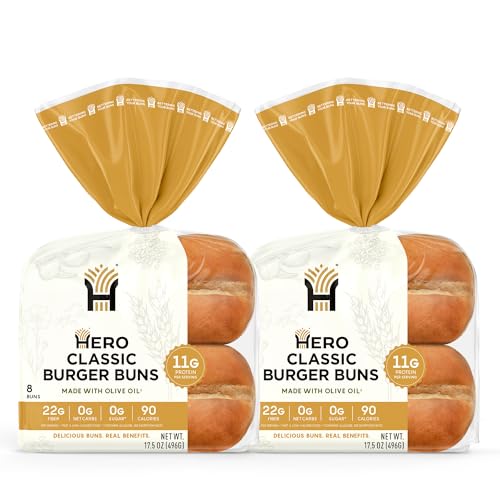
Hero’s Classic Hamburger Buns set a new bar for what a low-carb bun can be. The texture is remarkably close to a traditional white bun—soft with a slight chew and a golden-brown exterior that toasts beautifully without falling apart. At 1g net carb and 22g of dietary fiber per bun, this is one of the most macro-efficient options on the market, especially considering it also packs 11g of protein.
The ingredient list is where Hero stands apart from the competition. They use resistant wheat starch and oat fiber as the backbone, with heart-healthy olive oil instead of cheap seed oils. This translates to a clean taste that doesn’t have the chalky aftertaste common in almond-flour-based buns. Customers consistently praise its similarity to a fast-food-style bun, with many reporting it holds up well under heavy toppings like pulled pork or a double cheeseburger.
Storage is straightforward—enjoy within ten days of receiving or freeze for up to six months. The only real catch is price, as this is a premium-tier product. But considering you’re getting 16 buns per pack (two 8-count packs) with industry-leading macros, the cost per bun is competitive when compared to other high-quality low-carb alternatives. The seeded version adds a subtle crunch that elevates the experience even further.
Why it’s great
- Industry-leading 22g of dietary fiber per bun keeps you full and supports gut health
- Olive oil as the fat source avoids inflammatory seed oils common in competing brands
- Toasts evenly and holds structural integrity under heavy burger patties and sauces
Good to know
- Premium price tier — cost per bun is higher than mid-range options
- Contains wheat gluten, so it is not suitable for gluten-free diets
- Some buyers report the buns are slightly smaller in diameter than standard artisan buns
2. Keto Culture Baking Hamburger Buns

Keto Culture’s Hamburger Buns are the workhorse of the low-carb bun category—a reliable, no-nonsense option that delivers 1g net carb and zero sugar across a generous 16-count pack (two 12.5-ounce boxes). The buns come baked fresh and have a soft, fluffy interior with a golden-brown crust that takes well to toasting. They’re designed specifically for keto dieters who need a dependable bun without breaking the bank per serving.
The texture is slightly denser than Hero’s, but still miles ahead of the crumbly cardboard many low-carb buns degrade into. Customers consistently mention these hold up well for both burgers and breakfast sandwiches, though they benefit from a light toast to firm up the exterior. The flavor profile is neutral—no weird aftertaste from sugar alcohols or chicory root—which makes them a versatile base for any topping combination.
Each bun is individually packaged to maintain freshness, and the pack includes a keto lifestyle guide, which is a nice touch for those new to the diet. The main trade-off is the ingredient list: Keto Culture uses wheat protein isolate and resistant corn starch, which some buyers find less clean than Hero’s olive-oil-based formula. Still, for a mid-range price point that delivers consistent texture and reliable macros, these buns are a solid daily driver for burger night.
Why it’s great
- 16 buns per pack offers excellent value for high-volume families or meal prep
- Zero sugar and 1 net carb fits strict keto, Atkins, and low-carb diets without compromise
- Soft, neutral flavor that pairs well with any burger, sandwich, or even sloppy joes
Good to know
- Denser texture than premium options—can feel slightly heavy if not toasted
- Contains wheat protein isolate, which may not suit those avoiding processed wheat derivatives
- Packaging can arrive crushed in transit, affecting the appearance of some buns
3. Franz Bakery Keto Hamburger & Hot Dog Buns

Franz Bakery’s mix pack solves a specific problem: you want low-carb buns for both burgers and hot dogs without committing to two separate purchases. This pack gives you 8 hamburger buns and 8 hot dog buns, all with 1g net carb and zero sugar per serving. It’s a smart solution for summer grilling, cookouts, or families where half the table wants a burger and the other half wants a frank.
The buns share the same foundational formula as Keto Culture (unsurprising, given the similar ingredient philosophy—resistant starch and wheat protein isolate). The texture is soft and fluffy when fresh, though it dries out faster than premium options if not sealed properly after opening. The hot dog buns are particularly well-received for their ability to hold a grilled sausage without splitting, a common failure point in gluten-free and low-carb hot dog buns.
Franz includes a keto lifestyle guide with the pack, which adds a small educational value for newcomers. The main downside is consistency: some batches arrive with a gummy texture, especially if the buns were stored in a cold warehouse during shipping. Toasting is highly recommended to restore structural integrity. For the price, getting 16 buns across two formats makes this a versatile buy for anyone who wants variety without doubling their grocery bill.
Why it’s great
- Includes both hamburger and hot dog buns in one pack—perfect for versatile meal prep
- Zero sugar and low net carbs make it suitable for strict keto and low-carb lifestyles
- Soft texture that toasts up nicely with a golden brown crust
Good to know
- Some batches arrive with a gummy texture if stored improperly during shipping
- Hot dog buns are slightly shorter than standard—may not fit extra-long sausages
- Relies on processed starches rather than clean whole-food ingredients
4. Dave’s Killer Burger Buns Done Right

Dave’s Killer Bread is a household name for clean-label, organic baked goods, and their Burger Buns Done Right continue that tradition. This 2-pack contains 16 total buns (8 per pack), each made with organic whole wheat flour, organic oats, and sunflower seeds. They’re not ultra-low-carb like the keto-specific options above—each bun has about 22g of total carbs with 4g of fiber—but they are a significantly cleaner choice than standard supermarket buns, with no artificial preservatives or high-fructose corn syrup.
The texture is where Dave’s shines: a hearty, substantial bun that can handle a thick grass-fed patty, caramelized onions, and all the fixings without getting soggy. The sunflower seeds add a pleasant crunch, but they also shorten the shelf life compared to fully sealed keto buns.
The biggest draw here is ingredient transparency. Dave’s uses organic grains and no GMOs, which appeals to buyers who prioritize clean eating over pure carb restriction. If your diet allows for moderate carbs and you want a bun that tastes like real bread, this is the option. The trade-off is the carb count—these won’t keep you in ketosis—and the fact that they’re best purchased from a local store or refrigerator section rather than shipped, as shipping can affect the texture.
Why it’s great
- Certified organic whole grains with no artificial preservatives or high-fructose corn syrup
- Hearty, chewy texture that stands up to heavy burger toppings without falling apart
- Sunflower and oat blend provides a nutty flavor that complements grass-fed beef
Good to know
- Higher total carb count (22g per bun) — not suitable for strict keto or low-carb diets
- Some batches arrive with a gummy texture due to shipping temperature fluctuations
- Best purchased fresh from a store rather than shipped for optimal texture and taste
5. Schar Gluten-Free Hamburger Buns (4-Pack)
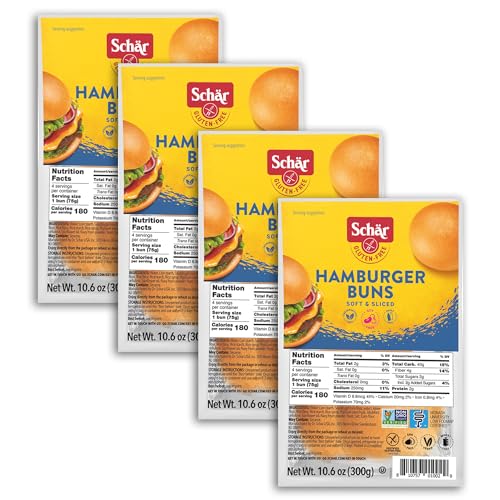
Schar’s Gluten-Free Hamburger Buns occupy a unique niche: they are certified gluten-free, made with sourdough, and contain no wheat, lactose, or GMOs. This makes them a safe choice for those with celiac disease or gluten sensitivities who still want a bun that tastes like it belongs at a barbecue. Each pack contains 4 buns, and they’re designed to be stored at room temperature until opened, then refrigerated in an airtight container.
The sourdough base gives these buns a distinct tangy flavor that works well with grilled meats—especially burgers, pulled chicken, or spicy sausages. The texture is firm on the outside with a soft crumb inside, but it is noticeably denser than wheat-based buns. They toast beautifully and hold together under moderate toppings, though very wet sandwiches (think sloppy joes or juicy burgers with lots of sauce) can cause the bun to break down faster than a gluten-containing alternative.
The price point is the main friction point: at a premium per-bun cost, these are more of a special-occasion buy than a weekly staple for most people. However, the ingredient quality is exceptional for a gluten-free product—no cellulose fillers, no weird gums, and a short, recognizable ingredient list. If gluten intolerance is a non-negotiable boundary for you, Schar is the best option currently available for low-carb-adjacent eating without the gluten.
Why it’s great
- Certified gluten-free and wheat-free, safe for celiacs and those with gluten sensitivities
- Sourdough base provides a tangy, complex flavor that elevates the burger experience
- Clean ingredient profile with no artificial additives, GMOs, or lactose
Good to know
- High per-bun price—only 4 buns per pack, making it a premium per-serving cost
- Denser, firmer texture than wheat-based buns; can feel heavy to some palates
- Not a low-carb bun per se—check the label for total carb content if you’re tracking strict keto macros
FAQ
Why do some low-carb buns fall apart so easily?
Can low-carb hamburger buns be frozen for later use?
Are there any low-carb bun options that also serve as dinner rolls?
Final Thoughts: The Verdict
For most users, the low-carb hamburger buns winner is the Hero Classic Hamburger Buns because they combine the lowest net carbs (1g) with an industry-leading 22g of dietary fiber, a clean olive-oil-based ingredient list, and a texture that actually holds together through a full burger. If you want volume and value without sacrificing macros, grab the Keto Culture Baking Hamburger Buns. And for gluten-free eaters who need a certified-safe bun that tastes like sourdough, nothing beats the Schar Gluten-Free Hamburger Buns.