Standard soy sauce delivers a punishing sodium wallop — a single tablespoon can pack nearly 40% of your daily recommended intake. Cutting salt without sacrificing the deep, fermented umami backbone of real soy sauce is the specific challenge that separates a genuinely good low-sodium bottle from a watery imposter.
I’m Emma — the founder and writer behind Baby Bangs. I’ve spent the last several months analyzing the nutritional panels, brewing methods, and sodium-per-serving ratios of the most popular reduced-sodium soy sauces on the market to find which bottles actually deliver on flavor.
Whether you are managing blood pressure, following a heart-healthy diet, or simply want to control your salt intake without losing the savory punch your stir-fry deserves, this guide breaks down the real contenders for the title of best low-sodium soy sauce.
How To Choose The Best Low-Sodium Soy Sauce
Not all low-sodium soy sauces are created equal. Some achieve a lower salt count by simply watering down the brew, while others rely on extended fermentation and higher-quality ingredients to retain a robust umami profile. Here are the three factors that matter most when shopping this category.
Sodium Per Serving vs. Sodium Reduction Percentage
Brands often trumpet a catchy percentage like “50% Less Sodium” or “75% Less Sodium,” but the real number to check is the milligrams of sodium per teaspoon or tablespoon. A sauce that starts with an extremely high baseline can still be relatively salty even after a steep percentage cut. Always flip the bottle and read the actual Nutrition Facts panel.
Brewing Method and Ingredient Integrity
Authentic, traditionally brewed soy sauce uses whole soybeans, wheat, salt, and water — fermented over months or years. Cheap low-sodium versions often use acid-hydrolyzed soy protein, which produces a harsher, one-dimensional flavor. Look for bottles that list “brewed” or “fermented” on the label, and scan for ingredients like koji culture or natural sea salt.
Tamari, Shoyu, or Alternative Base
Tamari is a Japanese-style soy sauce traditionally made without wheat, making it naturally gluten-free and often slightly thicker and richer in flavor. Shoyu contains wheat and offers a lighter, slightly sweeter profile. Some low-sodium products use a base of coconut aminos or other soy-free ingredients — these are a different category entirely and rarely mimic the true taste of soy sauce.
Quick Comparison
On smaller screens, swipe sideways to see the full table.
| Model | Category | Best For | Key Spec | Amazon |
|---|---|---|---|---|
| San-J Organic Tamari Lite | Mid-Range | Best Overall | 50% less sodium, organic whole soy | Amazon |
| Best of Thailand Lite Dark Soy | Budget-Friendly | Best Value | 75% less sodium, 2-pack 47.3 oz total | Amazon |
| Ocean’s Halo No Soy Sauce | Mid-Range | Best Soy-Free Alternative | Soy-free, 310 mg sodium per serving | Amazon |
| Kikkoman Less Sodium GF Tamari | Premium | Best Bulk Buy / Kitchen Staple | 40% less sodium, gluten-free, 64 oz | Amazon |
| Ohsawa Nama Shoyu | Premium | Best Artisan / Traditional Flavor | Unpasteurized, aged 1.5 years in cedar | Amazon |
In‑Depth Reviews
1. San-J Organic Gluten Free Tamari Soy Sauce with 50% Less Sodium
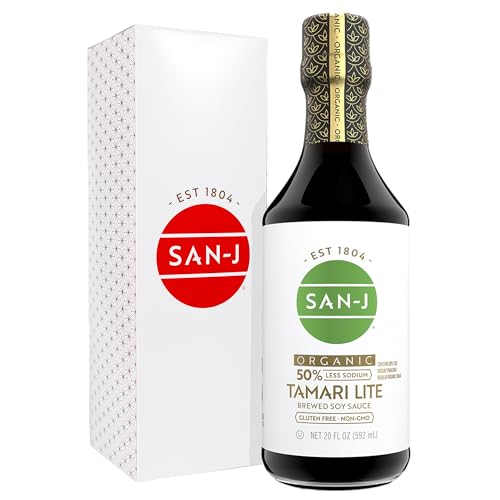
San-J has been brewing tamari for eight generations, and it shows in the depth of flavor this bottle delivers despite a 50% sodium reduction. The ingredients are refreshingly minimal — water, organic whole soybeans, salt, and a touch of alcohol for freshness — with no artificial preservatives or colors. That rich, savory punch you expect from a premium tamari is intact, making this an easy swap for anyone transitioning to lower sodium.
The 20-ounce bottle is a practical size for everyday cooking, and the tamari base means it’s naturally wheat-free and certified by the Gluten-Free Certification Organization. In side-by-side taste tests, this sauce holds its own against full-sodium competitors, offering a robust umami that thinner reduced-salt options often lack.
If you are looking for a single go-to bottle that balances authentic fermented flavor with meaningful sodium reduction, San-J’s Tamari Lite is the most reliable pick in this category. It earns the top spot because it solves the core problem — cutting salt without cutting taste — better than any other option here.
Why it’s great
- Rich, full tamari flavor that doesn’t taste watered down
- Certified gluten-free and made with organic non-GMO soybeans
- Eight-generation brewing heritage ensures consistent quality
Good to know
- Some may prefer a stronger wheat-based shoyu note
- Price per ounce is higher than conventional soy sauces
2. Best of Thailand Japanese Style Barrel Aged Lite Dark Soy Sauce

This two-bottle pack delivers a staggering 47.3 fluid ounces of low-sodium soy sauce at a price that undercuts almost every competitor per ounce. The 75% sodium reduction is among the most aggressive in this roundup, and customer feedback consistently reports that the umami balance remains surprisingly intact, with notes of sweet and bitter complementing the salty-savory core.
The sauce is naturally barrel-aged using traditional Asian brewing methods, and the squeezable dispenser bottles make portion control effortless. It’s also certified kosher and free of MSG. For households that go through soy sauce quickly — stir-fry dinners, marinades, dipping bowls — this value-oriented set is hard to beat.
The trade-off is that the flavor profile is slightly lighter and less complex than a premium tamari or nama shoyu. But for the price and volume, it is an exceptional choice for anyone prioritizing both sodium reduction and kitchen economy.
Why it’s great
- Aggressive 75% sodium reduction with good flavor retention
- Excellent per-ounce value with two large squeeze bottles
- Barrel-aged using traditional methods, no MSG added
Good to know
- Flavor depth is lighter than premium tamari options
- Contains wheat, not suitable for gluten-free diets
3. Ocean’s Halo Organic Less Sodium No Soy Sauce

For those who need to avoid soy entirely due to allergies or sensitivities, Ocean’s Halo offers a genuinely low-sodium alternative that still scratches the umami itch. Each serving contains just 310 mg of sodium, and the sauce is USDA Organic, vegan, and gluten-free. It is not a soy sauce in the traditional sense — it is a proprietary brew made from coconut aminos and other plant-based ingredients — but it comes closer to the real thing than any other soy-free product on the market.
Customer reviews highlight how well this works as a direct replacement in stir-fries, marinades, and dipping scenarios. The flavor is slightly sweeter and less pungent than fermented soy sauce, but the difference is minor enough that most households won’t feel compelled to keep two bottles. The 10-ounce bottle is smaller than typical soy sauce containers, which reflects the higher cost of organic, soy-free ingredients.
If you have a diagnosed soy allergy or are following an elimination diet, Ocean’s Halo is the most satisfying low-sodium soy sauce alternative available.
Why it’s great
- Zero soy, ideal for allergy sufferers and elimination diets
- USDA Organic, vegan, and gluten-free certified
- Lowest sodium count among soy sauce alternatives tested
Good to know
- Flavor is slightly sweeter than real fermented soy sauce
- Smaller 10 oz bottle and higher per-ounce cost
4. Kikkoman Less Sodium Gluten Free Tamari Soy Sauce
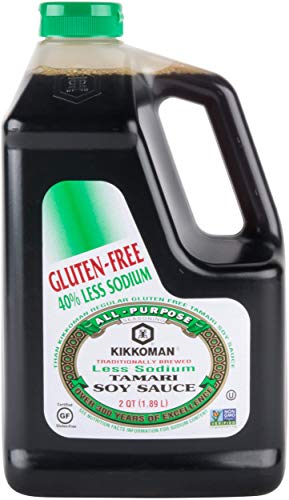
Kikkoman is a household name for a reason, and their Less Sodium Gluten Free Tamari delivers exactly what the label promises: a 40% reduction in sodium compared to their standard gluten-free tamari, with the same savory umami richness the brand is known for. The half-gallon container is a serious bulk purchase — 64 fluid ounces — making it the obvious choice for commercial kitchens, frequent entertainers, or families that cook large batches of Asian-inspired meals weekly.
Because this is a tamari, it is naturally gluten-free and has a slightly thicker body than traditional soy sauce, which clings beautifully to stir-fried vegetables and proteins. The sodium per serving is moderate — not the lowest on this list, but low enough to make a meaningful dietary difference when used daily.
The only caveat is the sheer volume. If you have limited pantry space or don’t use soy sauce regularly, this container may go stale before you finish it. But for heavy users, the per-ounce cost is unbeatable.
Why it’s great
- Massive 64 oz container offers the lowest per-ounce cost
- Trusted Kikkoman quality with consistent umami flavor
- Gluten-free and 40% less sodium than the regular version
Good to know
- Bulk size may be impractical for small households
- Sodium reduction is lower (40%) than some competitors
5. Ohsawa Nama Shoyu, Organic and Aged in 150-Year Cedar Kegs

Ohsawa Nama Shoyu is not trying to be a mass-market condiment. This is an unpasteurized, organic shoyu made by a Japanese brewing family whose lineage spans over a century. The soybeans and whole wheat are fermented in Akita cedar barrels for a minimum of 1.5 years, a process that yields a complex, mellow umami flavor far deeper than any standard soy sauce. Because it is raw and unpasteurized, the natural enzymes remain active, contributing to a rich, aromatic bouquet that completely changes what you expect from a low-sodium product.
The sodium level is naturally lower than mass-produced sauces because the long fermentation develops flavor without relying on heavy salt. Ingredients are limited to organic soybeans, organic whole wheat, sun-dried sea salt, and mountain spring water — no additives, no shortcuts. This is a condiment for serious cooks who treat soy sauce as a centerpiece ingredient rather than a background note.
The price tag is the highest in this guide, and the smaller 32-ounce bottle reflects the artisan production scale. But for pure, unadulterated, living shoyu flavor with naturally lower sodium, Ohsawa is in a class of its own.
Why it’s great
- Unpasteurized and naturally fermented for exceptional umami depth
- Aged in traditional cedar kegs for over 1.5 years
- Minimal, organic ingredients with no additives
Good to know
- Premium price reflects artisan production scale
- Contains wheat, not suitable for gluten-free diets
FAQ
Does low-sodium soy sauce taste noticeably different from regular soy sauce?
Which low-sodium soy sauce has the lowest actual sodium per serving?
Can I use low-sodium soy sauce for dipping sushi without ruining the flavor?
Understanding the Specs
Sodium Per Serving (mg)
This is the single most important number on the label. Standard soy sauce can contain 900 to 1,000 mg of sodium per tablespoon. A good low-sodium option should fall between 300 and 550 mg per tablespoon. Pay attention to serving size — some brands list per teaspoon (5 ml) instead of per tablespoon (15 ml), which makes the number look smaller than it really is.
Brewing Method: Brewed vs. Hydrolyzed
Authentic soy sauce is traditionally brewed using koji mold, soybeans, and wheat, then aged for months. This creates complex flavor compounds that carry through even at reduced sodium levels. Acid-hydrolyzed soy protein is a faster, cheaper method that produces a harsher taste. The ingredient list will clearly differentiate them — look for “fermented” or “brewed” on the front label.
Final Thoughts: The Verdict
For most users, the best low-sodium soy sauce winner is the San-J Organic Tamari Lite because it delivers the richest, most authentic umami flavor with a meaningful 50% sodium reduction and clean organic ingredients. If you want the absolute best per-ounce value and don’t mind a lighter profile, grab the Best of Thailand Lite Dark Soy. And for artisan flavor purity and the lowest sodium among traditionally brewed options, nothing beats the Ohsawa Nama Shoyu.