A yoga and Pilates mat sits between you and the floor — which means its thickness, width, and grip determine whether your practice builds strength or creates joint pain. The wrong mat slides under downward dog, compresses to nothing on hard tiles, or forces taller frames into awkward, cramped poses. The right mat disappears beneath you, letting muscle work and breath flow without distraction.
I’m Emma — the founder and writer behind Baby Bangs. I’ve spent years analyzing the material science, foam densities, grip surfaces, and alignment features that separate a short-lived budget mat from a true practice companion.
After sorting through 40+ options on material composition, non-slip performance, eco-certification, and real-world durability, I’ve locked in the seven mats that actually deliver. This analysis of the current best yoga and pilates mat field breaks down why each one earns a spot based on its specific construction and use case.
How To Choose The Best Yoga and Pilates Mat
The difference between a mat you love and one you replace in three months comes down to four factors: material type, thickness, surface area, and grip texture. Each one directly affects comfort, stability, and longevity.
Material: NBR vs TPE vs Natural Rubber
NBR (Nitrile Butadiene Rubber) is the cheapest foam option — thick, soft, and heavy. It delivers plush joint cushioning but has poorer long-term durability and absorbs sweat over time. TPE (Thermoplastic Elastomers) is lighter, more eco-friendly, and offers better grip when wet, but generally comes in thinner profiles (6-7mm). Natural rubber with a polyurethane top layer provides the best all-condition grip and density, but it is heavier and costs more — and some users dislike the initial rubber smell.
Thickness and Joint Protection
Mats below 6mm are fine for experienced practitioners with good alignment and padded studio floors. In the 6-8mm range you get a solid balance of stability and comfort — most TPE mats live here. At 10mm and above (common with NBR), joint cushioning is the priority, but deep balancing poses like Ardha Chandrasana (Half Moon) become less stable because the foam compresses unevenly under weight.
Width and Usable Surface
Standard mats are 24 inches wide — fine for most body types, but restrictive for wide-legged stances in Warrior II or lateral Pilates side-lying work. A 32-inch or wider mat eliminates the constant edge-checking that interrupts flow. Taller practitioners also benefit from lengths of 72 inches or more. If you are over 5’8″, an 84-inch mat is a serious upgrade for savasana and lunges.
Grip in Dry and Wet Conditions
Closed-cell TPE and PU-coated rubber hold grip even when hands and feet sweat. NBR mats, despite textured surfaces, turn slippery once moisture builds up. If you practice hot yoga or vigorous Vinyasa, prioritize mats with explicit “wet grip” claims — the material matters more than surface texture alone.
Quick Comparison
On smaller screens, swipe sideways to see the full table.
| Model | Category | Best For | Key Spec | Amazon |
|---|---|---|---|---|
| Plyopic Ultra-Grip Pro | Premium | Hot yoga & wet-grip stability | 1.7mm polyurethane + rubber | Amazon |
| Hatha Yoga Large TPE | Premium | Spacious at-home practice | 72″x48″x1/2″ TPE | Amazon |
| Gogokiwi Extra Wide 36″ | Mid-Range | Plus-size & wide stance poses | 72″x36″x6.35mm RecFoam | Amazon |
| Gruper TPE Alignment | Mid-Range | Home practice without instructor | 72″x32″x6mm/8mm TPE | Amazon |
| MRZZATA Extra Long | Mid-Range | Tall users & full-body coverage | 84″x32″x7mm TPE | Amazon |
| Primasole Eco PER | Value | Eco-conscious budget pick | 68″x24″x10mm PER resin | Amazon |
| Gaiam Essentials 10mm | Budget | Maximum joint cushioning | 72″x24″x10mm NBR | Amazon |
In‑Depth Reviews
1. Plyopic Ultra-Grip Pro Yoga Mat
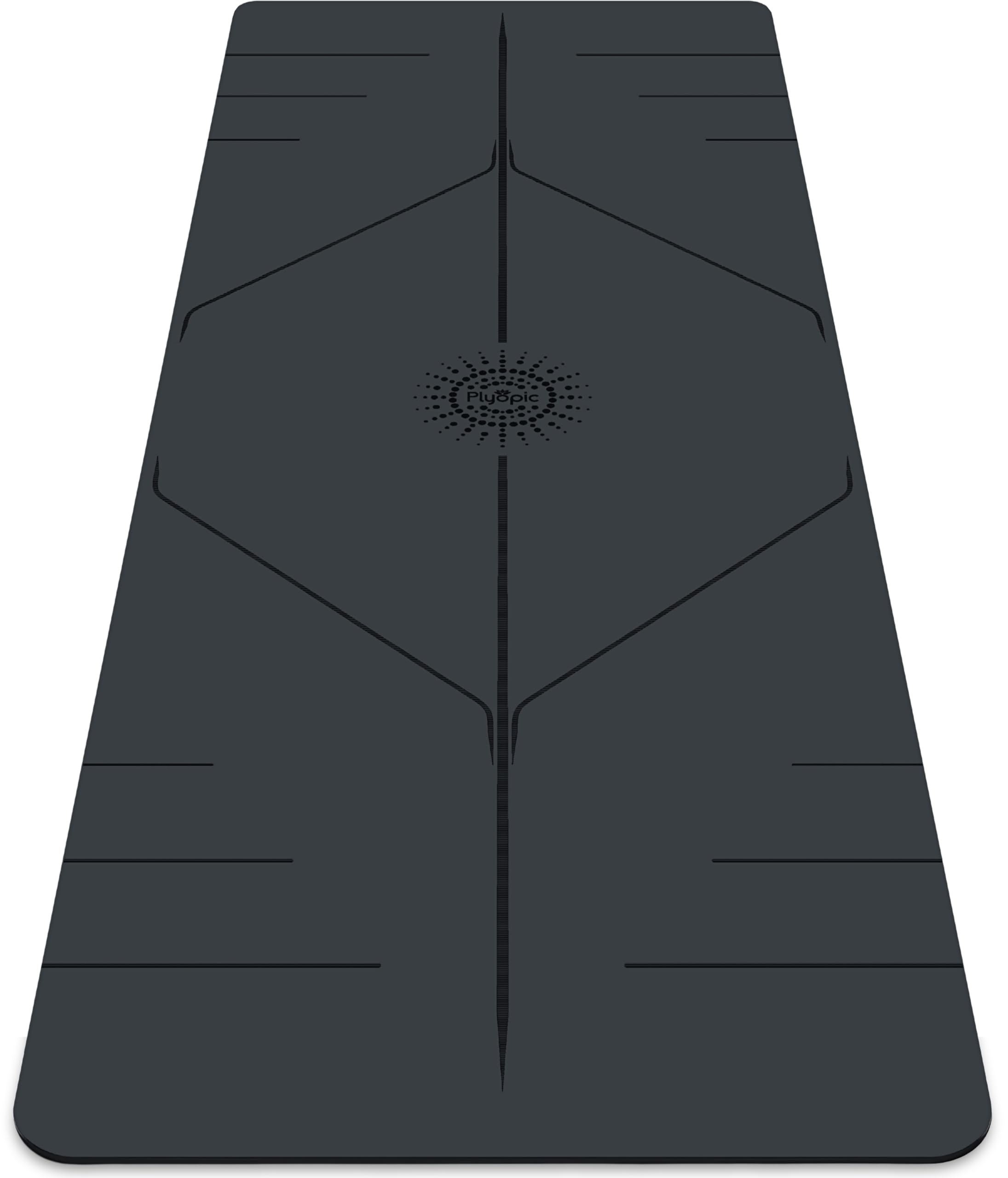
The Plyopic Ultra-Grip Pro is built for practitioners who sweat — a lot. Its top layer is a thin polyurethane coating bonded to a dense natural rubber base, creating a surface that actually becomes grippier when wet rather than slick. At 1.7mm thick, this is not a joint-cushioning mat; it is a performance surface for experienced yogis who need absolute hand and foot lock-in during hot Vinyasa, Bikram, or Ashtanga.
Alignment lines run the full length of the mat, giving you a visual reference for hand and foot placement without needing to crane your neck. The rubber base grips hardwood and studio floors tenaciously — no creeping forward during forward folds or lunges. It weighs about 5.3 pounds, so it is portable enough for class but dense enough to stay planted.
The main trade-off is thickness. At just over 4.3mm total, this mat offers minimal padding for knees in tabletop or prone poses on hard subfloors. It also carries a distinct natural rubber odor for the first week of use. But if your priority is zero-slip performance in sweaty conditions, this mat outperforms every other option on this list by a wide margin.
Why it’s great
- PU surface grips harder when wet — ideal for hot yoga
- Rubber base stays anchored on all hard floor types
- Alignment lines run full length for form correction
Good to know
- Very thin — minimal joint cushioning for knees
- Strong rubber smell initially takes days to fade
- Higher price point than mid-range options
2. Hatha Yoga Large TPE Yoga Mat

At 72 inches long by 48 inches wide and a half-inch thick, the Hatha Yoga Large TPE mat redefines what “personal space” means in a home practice. This is effectively a four-foot-wide practice surface — nearly double the width of a standard mat — giving you room for lateral Pilates movements, wide Warrior II stances, and partner stretches without ever touching the floor. The TPE material is phthalate-free, lightweight relative to its size, and fully recyclable at end of life.
The non-slip texture on both sides delivers reliable traction during dry practice. The high-density construction resists tearing and deformation better than budget NBR mats, and the half-inch thickness provides genuine joint relief for knees, hips, and wrists. Two bundling ribbons are included for storage, though the sheer size means it does not roll up as compactly as a standard mat.
The weight is the main consideration — at nearly nine pounds, this is a stay-at-home mat rather than a carry-to-class option. It is also 72 inches long, so very tall users (over 6 feet) may find their feet hanging off the edge in savasana. But for home studio setups where floor space is ample, this mat offers the most square footage of any option reviewed.
Why it’s great
- 48-inch width eliminates edge anxiety during lateral movements
- Half-inch TPE foam cushions joints without sacrificing stability
- Eco-friendly material with no phthalates
Good to know
- Weighs nearly nine pounds — not travel-friendly
- Length may be short for practitioners over six feet
- Bulky roll requires dedicated storage space
3. Gogokiwi Extra Wide Yoga Mat
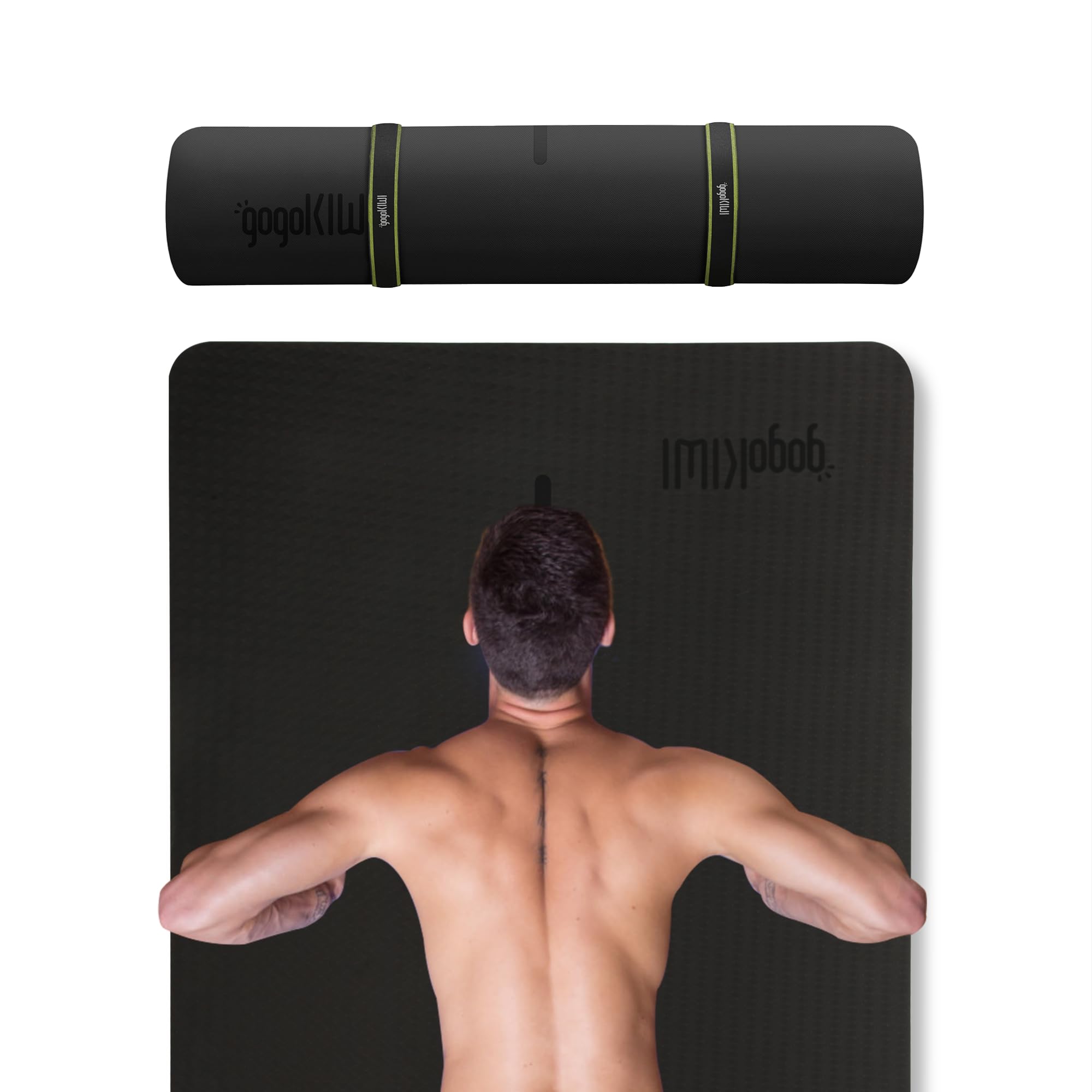
The Gogokiwi Extra Wide mat splits the difference between standard and massive — 36 inches wide instead of 24, giving plus-size practitioners and taller men room to spread out without committing to a full 48-inch surface. At 6.35mm thick, it provides a middle-ground cushion that works for both floor-based Pilates and standing balance poses. The RecFoam material is 100% recyclable and has a closed-cell structure that resists moisture absorption.
The dual-sided design is a practical touch — one side with a pattern, the other solid — letting you flip based on grip preference or mood. A center alignment line runs the length of the mat, which helps with symmetrical pose placement during solo home practice. At 2.7 pounds, it is genuinely lightweight and comes with a double-use strap that also serves as a stretching aid.
The potential shortcoming is surface grip during hot practice. The RecFoam texture handles dry sessions well, but in sweaty conditions the grip drops off compared to a PU-coated rubber mat. It also lacks the extreme tear resistance of denser TPE options. But for a mid-range mat that prioritizes width and portability at a reasonable investment, this is a strong contender.
Why it’s great
- 36-inch width suits larger frames and wide stances
- Lightweight 2.7-pound carry weight with included strap
- Center alignment line aids form during solo practice
Good to know
- Grip declines noticeably in hot, sweaty conditions
- RecFoam can tear if handled roughly or used with shoes
- Thinner than some mid-range competitors at 6.35mm
4. Gruper TPE Yoga Mat with Alignment Mark

The Gruper TPE mat is specifically designed for practitioners who practice alone at home without an instructor. A printed alignment system on the mat surface guides hand and foot placement for common poses — a functional tool for correcting asymmetries in Downward Dog, Plank, and standing postures. The mat is available in two thickness variants: 6mm for stability in standing work and 8mm for extra joint cushioning during floor-based sequences.
The double-layer construction combines a textured TPE top surface with a wavy non-slip bottom that grips studio floors without sliding. The material resists tearing better than standard NBR and is easier to clean — a damp cloth restores the surface. At 32 inches wide, it offers a meaningful width upgrade over standard 24-inch mats without the bulk of a 48-inch model. A carrying bag and strap are included.
The alignment marks are printed on the surface and can fade over time with frequent cleaning, especially if you use harsh detergents. The 6mm version also offers noticeably less joint protection on hard floors for knee-intensive poses. But as a guided-teaching tool for home practitioners, the Gruper mat delivers more pedagogical value per dollar than any other mat at this tier.
Why it’s great
- Alignment marks guide hand and foot placement for solo practice
- Available in 6mm or 8mm thickness options
- 32-inch width gives extra lateral room
Good to know
- Alignment printing may fade with repeated cleaning
- 6mm version offers limited knee cushioning on hard floors
- Not designed for hot yoga — grip drops when wet
5. MRZZATA Extra Long & Wide Thick Yoga Mat

For practitioners over 5’8″, the MRZZATA mat solves a persistent problem: standard 68- or 72-inch mats leave your head, heels, or both hanging off the edge during savasana and lunges. At 84 inches long and 32 inches wide, this mat provides full-body coverage for taller frames. The 7mm TPE thickness hits the sweet spot between stability and cushioning — enough padding to protect knees in low-lunge but firm enough for balance poses like Tree and Half Moon.
The double-sided non-slip design uses a textured top surface and wavy rubber bottom that grips hardwood and carpet alike without sliding. The TPE material is free of latex, PVC, and heavy metals — a genuinely eco-conscious construction that stays odor-free from day one. At 2.5 pounds, it is surprisingly light for its size and rolls up easily with the included dual-use strap (which doubles as a stretching band).
The main limitation is width: 32 inches is generous compared to standard mats but still narrower than the 36- or 48-inch options for those who need extreme lateral room. The surface texture also has less wet-grip performance than a natural rubber mat, so heavy sweating requires occasional hand-towel breaks. But for tall practitioners who have been making do with undersized mats, this is the single most practical upgrade available.
Why it’s great
- 84-inch length accommodates taller practitioners up to 6’4″
- 7mm TPE balances cushion and balance stability
- Very lightweight for its size at 2.5 pounds
Good to know
- 32-inch width still restrictive for very wide stances
- Wet grip is adequate but not premium-grade
- Strap doubles as a stretching band, not a carry case
6. Primasole Yoga Mat Eco-Friendly Material

The Primasole mat uses PER (polymer environmental resin) — a material that avoids the dioxin generation issues associated with PVC production while still delivering a 10mm cushioning profile. For environmentally conscious buyers on a budget, this represents a meaningful step up from standard NBR mats. The double-layer construction combines an embossed surface with a textured bottom for grip during standing poses and Pilates floor work.
At 68 inches long by 24 inches wide, the dimensions are standard — neither extra long nor extra wide. The 10mm thickness provides genuine knee and wrist relief for beginners and seniors practicing on hard floors. The mat comes with both a carrying case and a strap, which is a practical bonus at this price tier. Total weight is a manageable 3.3 pounds, making it easy to carry to class.
The PER material has a slightly tackier feel than TPE, which helps with dry grip but can attract lint and pet hair during storage. The surface also shows compression marks over time if you store heavy objects on top of it. It is not designed for hot yoga — sweat breaks down the surface grip relatively quickly. But for home practice, gentle yoga, and Pilates at a low environmental cost, this mat delivers solid value.
Why it’s great
- Eco-friendly PER material avoids PVC toxins
- 10mm thickness protects joints on hard floors
- Includes both a carrying case and strap
Good to know
- Standard 24-inch width may feel narrow for some users
- Not suitable for hot yoga or heavy sweating
- PER surface attracts lint and shows compression marks
7. Gaiam Essentials 10mm Thick Yoga Mat

The Gaiam Essentials mat is the thickest option on this list at 10mm of NBR foam, and it is the go-to choice for anyone whose primary concern is joint comfort during floor-based practice. The plush cushioning absorbs pressure from hard tile, wood, and concrete, making it ideal for seniors, those with knee or hip sensitivity, and beginners building strength in kneeling and prone poses. The textured foam surface provides acceptable dry grip for low-impact movement.
At 72 inches long and 24 inches wide, dimensions are standard. The mat includes an adjustable carrying strap for easy transport, and the low-odor NBR formulation typically airs out within 48 hours — some users report no smell at all. It works well for stretching, physical therapy, and general home fitness routines where comfort takes priority over precision balance work.
The critical trade-off is that NBR foam compresses unevenly under heavy loads, making deep balancing poses like Hand-to-Big-Toe or Warrior III noticeably less stable than on a thinner, denser mat. The open-cell structure also absorbs sweat and moisture over time, leading to gradual breakdown and surface pitting — several users report small holes developing after a few weeks of use. It is best understood as a comfort-first, performance-second mat for gentle practice.
Why it’s great
- 10mm NBR foam offers maximum joint cushioning available
- Texture grips floors without sliding in dry practice
- Low initial odor and easy to wipe clean
Good to know
- Soft foam compresses unevenly — poor for standing balances
- Prone to surface pitting and small tears with regular use
- Standard width feels narrow during wide-legged poses
FAQ
What thickness is best for both yoga and Pilates?
Why do some yoga mats feel slippery when I sweat?
Are TPE mats better than NBR mats?
Final Thoughts: The Verdict
For most users, the best yoga and pilates mat winner is the Plyopic Ultra-Grip Pro because it delivers unmatched wet-grip performance and a stable, dense surface that serves both yoga balance work and Pilates stability. If you want maximum joint cushioning for floor-based practice, grab the Gaiam Essentials 10mm. And for tall practitioners who need extra length without sacrificing portability, nothing beats the MRZZATA Extra Long 84-inch mat.