A fresh tattoo is an open wound, and the wrong aftercare product can turn your new art into a faded, irritated mess. The market is flooded with thick petroleum-based ointments that smother the skin, fragrance-heavy lotions that sting, and “natural” balms that simply don’t have the occlusion power to protect healing ink. Navigating this shelf requires knowing which ingredients actually promote recovery without compromising the tattoo’s final clarity.
I’m Emma — the founder and writer behind Baby Bangs. I’ve spent years comparing the formulation science behind occlusive barriers, humectants, and botanical healing agents to determine what truly works for fresh tattoos versus what is just clever marketing.
This guide cuts through the noise to deliver the definitive ranking of the best tattoo aftercare products based on ingredient integrity, healing speed, and user-reported outcomes.
How To Choose The Best Tattoo Aftercare Products
Selecting the right aftercare formula means balancing three competing demands: the wound needs a protective barrier against dirt and bacteria, it must remain hydrated enough to avoid scabbing, and it needs oxygen to breathe for proper cellular regeneration. The product you choose dictates the balance between these forces.
The Occlusion vs. Breathability Tradeoff
Ointments like Aquaphor and CeraVe Healing Ointment create a high-occlusion seal that locks moisture in and keeps contaminants out. This is ideal for the first 48-72 hours when the tattoo is essentially an open wound. However, heavy petrolatum bases can clog pores and trap heat, leading to folliculitis or slow healing in people with oily or acne-prone skin. Breathable water-based foams (like H2Ocean’s formula) let the skin exchange oxygen but require more frequent reapplication because they absorb and evaporate faster.
Ingredient Safety for Healing Skin
The best tattoo aftercare products are fragrance-free, dye-free, and free of common irritants like lanolin or mineral oil. Active ingredients like panthenol (pro-vitamin B5) promote fibroblast activity and tissue repair. Bisabolol (chamomile-derived) reduces inflammation and redness. Ceramides reinforce the damaged skin barrier. Avoid any formula with essential oils in high concentrations during the first week — even “natural” oils like tea tree or lavender can cause contact dermatitis on broken skin.
Application Texture and Absorption
Thick balms and ointments stay on the surface longer, meaning you apply less frequently (2-3 times daily) but risk staining clothes and bedding. Lightweight creams and foams absorb quickly, needing 4-5 applications per day, but they are far more comfortable under clothing and won’t leave a greasy residue. Your lifestyle and tattoo location should guide this choice — a large back piece under a work shirt is better served by a fast-absorbing cream than a heavy balm.
Quick Comparison
On smaller screens, swipe sideways to see the full table.
| Model | Category | Best For | Key Spec | Amazon |
|---|---|---|---|---|
| Stories & Ink Aftercare Cream | Premium Cream | Fast healing & itch relief | Panthenol + Bisabolol formula | Amazon |
| CeraVe Healing Ointment | Premium Ointment | Dry/cracked sensitive skin | 3 Essential Ceramides + HA | Amazon |
| H2Ocean Ocean Foam | Water-Based Foam | Breathable non-greasy healing | Alcohol-free pump foam | Amazon |
| Aquaphor Healing Ointment | Classic Ointment | Affordable multi-purpose wound seal | Water-free petrolatum base | Amazon |
| Ebanel Tattoo Balm | Herbal Balm | Ink brightening & old tattoo revival | Mango butter + Manuka oil | Amazon |
In‑Depth Reviews
1. Stories & Ink Aftercare Cream
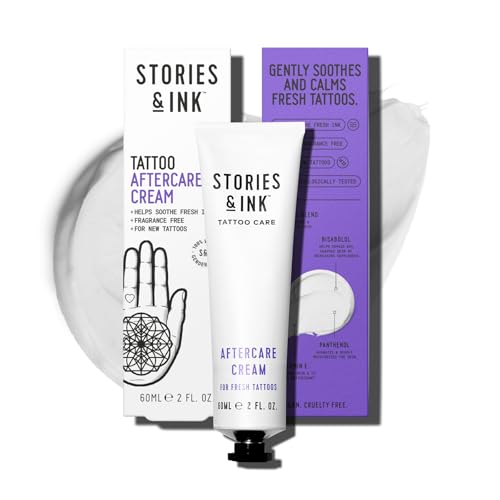
This UK-developed cream sits at the top of the list because it directly addresses the two biggest complaints with traditional ointments: itching and suffocation. The formulation uses panthenol to accelerate keratinocyte migration (closing the wound faster) and bisabolol to calm the inflammatory response that triggers the maddening itch phase. Multiple verified reviews report healing time cut in half compared to Aquaphor, with significantly less peeling. The texture is a thick, scentless cream that absorbs cleanly without leaving a greasy film on clothes or bedding — a critical advantage for tattoos on visible or high-friction areas.
Studio-tested at the brand’s own UK tattoo parlor, this cream is dermatologically approved and independently patch tested for sensitive skin. It contains no petrolatum or skin-suffocating ingredients, meaning the tattoo can breathe while remaining hydrated for hours after each application. The 2 oz tube is economical — users report needing only a pea-sized amount twice daily, making the premium price point more accessible over the full healing cycle.
The only trade-off is that the lighter, breathable formula requires more careful hygiene during the first 48 hours than a heavy occlusive ointment would. For people in dusty or high-exposure environments, you may need to pair this with a saniderm bandage for the initial wound-closure stage. But for healing speed, comfort, and final ink clarity, this is the benchmark product in the category.
Why it’s great
- Dramatically reduces itching and irritation during the peel phase
- Non-greasy, fast-absorbing texture perfect for clothing-covered tattoos
- Petrolatum-free formula allows skin to breathe naturally
Good to know
- Lighter occlusion means more frequent application in the first 2 days
- Premium price per ounce compared to drugstore alternatives
2. CeraVe Healing Ointment
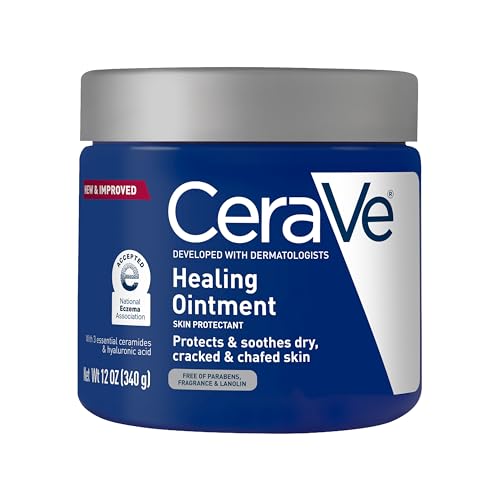
CeraVe brings dermatological rigor to the tattoo aftercare space with a formulation that goes beyond simple petrolatum occlusion. The inclusion of three essential ceramides (1, 3, and 6-II) actively repairs the lipid barrier that tattooing destroys, while hyaluronic acid draws moisture into the upper dermal layers. This is not a tattoo-specific product, but the ingredient profile directly addresses the compromised skin barrier of a fresh tattoo better than most dedicated aftercare balms. The 12 oz tub offers exceptional value for those who want a single product for both tattoo recovery and general dry skin maintenance.
The texture is thicker than standard petroleum jelly — it melts into the skin upon contact rather than sitting on top — which means a small amount covers a large area. Users report it works especially well for overnight treatment, acting as a “slugging” layer that delivers deep hydration by morning. It is fragrance-free, lanolin-free, and non-comedogenic, certified by the National Eczema Association, making it safe for people with sensitive skin conditions who are getting tattooed.
The downside is the inherent greasiness of any high-occlusion formula. Despite CeraVe’s non-greasy marketing claims, the petrolatum base will transfer to clothing and sheets if applied too thickly. It is also less ideal for the first 24 hours on large color-pack tattoos where you want the skin to breathe slightly. Use this as your nighttime sealant and transition to a lighter cream during the day for best results.
Why it’s great
- Ceramide complex actively rebuilds the damaged skin barrier
- Dermatologist-recommended, National Eczema Association approved
- Large tub provides massive value for multi-use households
Good to know
- Thick petrolatum base can feel greasy and stain fabrics
- Too occlusive for some skin types, may cause clogged pores
3. H2Ocean Ocean Foam
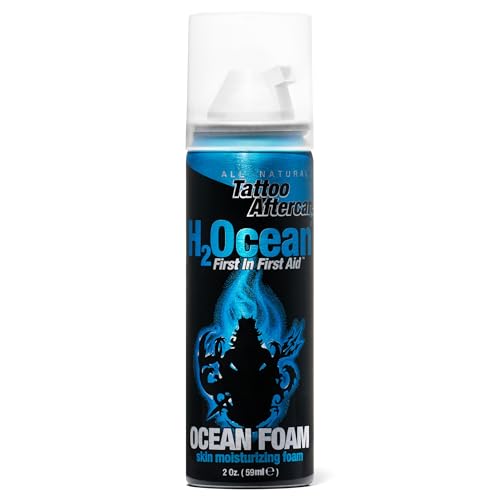
H2Ocean occupies a unique niche as the original water-based tattoo aftercare foam, a formula that dispenses as a mousse and absorbs almost instantly without any greasy residue. The key differentiator is the Red Sea salt base — not table salt, but a mineral-rich solution containing over 82 trace elements that support the skin’s natural ion exchange during healing. This nutrient profile, combined with an alcohol-free, fragrance-free, and dye-free formulation, makes it one of the gentlest products for freshly wounded skin. Users consistently report faster healing with less peeling than they experienced with petroleum-based alternatives.
The foam format is genuinely innovative for tattoo aftercare. The pump dispenses a controlled amount that spreads easily without requiring direct finger contact with the healing tattoo — reducing contamination risk. It is recommended to keep the bottle refrigerated, which adds a cooling, soothing effect that is particularly welcome for large, inflamed pieces. The breathable formula is ideal for tattoos in high-movement areas like the ribs, inner arm, or back of the knee where heavy ointments would cake and crack.
There are two trade-offs to consider. First, the foam format requires more frequent reapplication (4-5 times daily) compared to ointments, which may be inconvenient for some. Second, some users detect a faint mineral scent that, while mild, is not completely odorless. The 2 oz bottle also runs through faster than a tub of ointment, increasing the long-term cost per healing session. For maximum benefit, use H2Ocean as your daytime moisturizer and a heavier ointment at night.
Why it’s great
- Breathable water-based formula won’t suffocate the tattoo
- Pump foam dispenses hygienically without finger contact
- Mineral-rich Red Sea salt supports natural healing processes
Good to know
- Requires frequent reapplication (4-5 times daily)
- Faint mineral scent may be noticeable to sensitive noses
4. Aquaphor Healing Ointment
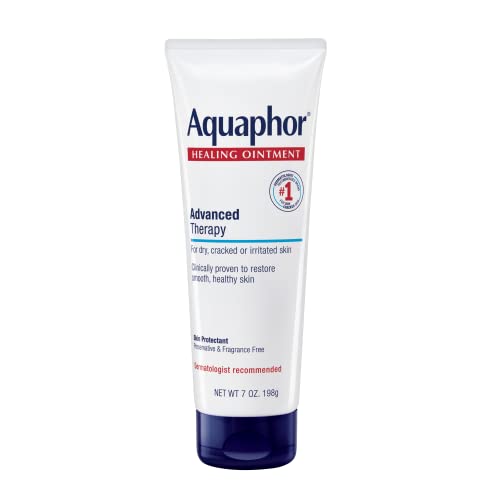
Aquaphor is the default recommendation from most tattoo artists for a reason — its water-free, petrolatum-heavy formula creates the most reliable occlusive barrier available at any price point. The absence of water means no evaporation cooling that can dry out the wound, and the thick consistency keeps bacteria out while the skin seals itself. Countless verified five-star reviews from people with difficult-to-heal tattoos confirm its effectiveness, particularly for heavy blackwork and linework where scabbing is a concern. Licensed professionals specifically praise it for managing dry, cracked hands from constant hand washing — a testament to its barrier repair capability.
The 7 oz tube delivers exceptional volume for the budget-friendly tier, lasting through multiple healing sessions or serving as a general family ointment for dry skin, chapped lips, and minor wounds. It is fragrance-free and contains no preservatives, making it safe for even the most reactive skin. The tube format is also more hygienic than a jar, reducing the risk of introducing bacteria into the product.
However, Aquaphor’s heavy texture is its primary limitation. It does not absorb — it sits on top of the skin, meaning it will transfer to anything it touches. This is manageable for the first few days but becomes frustrating during the second week of healing when you still need protection but want to wear normal clothes. Some users report that the lack of breathability can trap heat and moisture, leading to “over-moisturization” that delays scab formation. Use Aquaphor for the initial wound-stage only, then switch to a lighter formula around day 4-5.
Why it’s great
- Gold-standard occlusive barrier for fresh wounds
- Large 7 oz tube offers outstanding value per application
- Proven track record across decades of tattoo aftercare
Good to know
- Heavy greasy texture stains clothes and bedding
- Too occlusive for prolonged use after the first few days
5. Ebanel Tattoo Balm
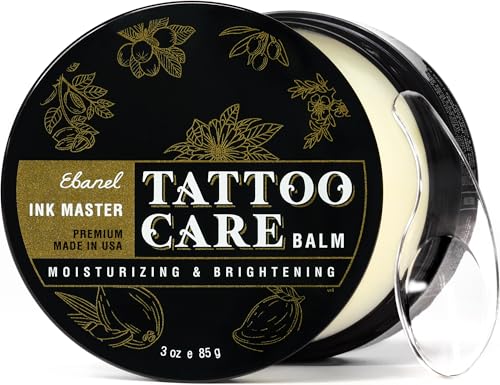
Ebanel positions itself as an all-stage balm — designed for use before, during, and after tattooing — but its strongest performance is in the ink-brightening and old-tattoo-revival category. The formula is built on a base of mango butter, shea butter, sweet almond oil, and coconut oil, delivering deep fatty-acid nutrition that helps dehydrated, older tattoos regain contrast and clarity. The inclusion of manuka oil and frankincense provides antiseptic and anti-inflammatory benefits that support healing without the harshness of synthetic preservatives. Users with eczema specifically note that this balm does not aggravate their condition, which is rare for a multi-ingredient botanical product.
The balm is manufactured in an FDA-registered, cGMP-certified facility and is dermatologist-tested, cruelty-free, and paraben-free. It spreads easily and absorbs without leaving a greasy residue, making it comfortable for all-day wear. The 3 oz tub is generously sized for the price point, and the subtle herbal scent from the essential oils is pleasant without being overpowering — though “fragrance-free” enthusiasts should note this is definitely scented.
The primary caveat for fresh tattoos is the ingredient complexity. With over a dozen botanical extracts and essential oils, there is a higher risk of contact dermatitis on broken skin compared to simpler formulations like Aquaphor or CeraVe. Several users explicitly state they would not use this on a brand-new tattoo but find it excellent for month-old ink. For this reason, Ebanel is best positioned as a secondary product — use a basic occlusive for week one, then transition to this balm for long-term color maintenance and moisturization.
Why it’s great
- Rich botanical butter base visibly brightens older, faded tattoos
- Manuka oil and frankincense reduce redness without synthetic chemicals
- Safe for eczema-prone skin, non-greasy absorption
Good to know
- Complex essential oil blend can irritate brand-new, broken skin
- Scented formula, not suitable for fragrance-sensitive users
FAQ
Can I use regular body lotion on a fresh tattoo?
How many times a day should I apply tattoo aftercare?
Is it safe to use coconut oil or shea butter on a new tattoo?
Why does my tattoo sting when I apply aftercare?
Final Thoughts: The Verdict
For most users, the best tattoo aftercare products winner is the Stories & Ink Aftercare Cream because it delivers the fastest healing times with the least itching and zero greasy residue, making it the most user-friendly option for modern tattoo care. If you want a dermatologist-tested, budget-friendly option that doubles as a general skin repair ointment, grab the CeraVe Healing Ointment. And for the absolute best breathable, water-based formula that won’t suffocate your ink during daytime wear, nothing beats the H2Ocean Ocean Foam.