Standing on concrete for hours is a different kind of exhausting. The unforgiving surface transmits shock straight through your heels, knees, and lower back, turning an eight-hour shift into a full-body endurance test. The right footwear changes that dynamic entirely, using targeted cushioning, stable platforms, and arch support to diffuse that punishing impact before it reaches your joints.
I’m Emma — the founder and writer behind Baby Bangs. I’ve analyzed hundreds of work and walking shoes to understand which sole compounds, midsole densities, and footbed geometries actually reduce fatigue on hard, unyielding surfaces.
This guide breaks down the specific construction details that make a shoe effective on concrete. Whether you’re in healthcare, construction, or simply logging miles on pavement, finding the right shoes for concrete means prioritizing materials and design over marketing claims.
How To Choose The Best Shoes For Concrete
Concrete is effectively a wall you stand on. Unlike asphalt, wood, or tile, concrete has almost zero natural give, which means your shoe’s midsole and footbed are solely responsible for absorbing every step. Choosing wrong leads to heel pain, arch strain, and accelerated joint wear over months of daily use.
Prioritize Midsole Cushioning Over Outsole Thickness
The midsole is the foam layer between the outsole and your foot. A thick, dense EVA or polyurethane midsole is the primary shock absorber on concrete. Look for terms like “memory foam,” “cloud-like,” or “cushioned” in the midsole specs — but also check that the foam isn’t so soft that it bottoms out under your body weight after a few weeks. A mid-range density that rebounds quickly provides the best long-term fatigue reduction.
Arch Support and Heel Stability Are Non-Negotiable
Concrete forces your foot to flatten with every step, which stresses the plantar fascia. Shoes with a structured heel counter (the firm cup at the back) and a built-in arch contour — not just a flat footbed — keep your foot aligned. Removable insoles are a strong indicator that the shoe accommodates orthotic inserts, which is a major advantage for anyone with pre-existing arch issues or flat feet.
Slip Resistance and Outsole Rubber Compound
Concrete can be wet, oily, or dusty depending on the environment. A slip-resistant outsole uses a specific rubber compound and tread pattern to maintain grip on slick surfaces. Look for shoes explicitly marked with “slip-resistant” or “electrical hazard” ratings, which indicate the rubber formulation and tread depth have been tested for wet traction. A flat, smooth outsole will send you sliding on damp concrete.
Weight and Breathability for Long Wears
A heavy shoe fatigues your legs faster on concrete. Lightweight construction — often achieved with mesh uppers and EVA midsoles — reduces energy expenditure per step. Breathable mesh uppers also prevent moisture buildup inside the shoe, which is critical for 8-10 hour shifts. Leather uppers offer durability and water resistance but add weight and can trap heat. Choose based on your climate and need for protection versus comfort.
Quick Comparison
On smaller screens, swipe sideways to see the full table.
| Model | Category | Best For | Key Spec | Amazon |
|---|---|---|---|---|
| Orthofeet Lava Stretch | Premium Walking | Bunion relief & orthotic customization | Removable insole + arch support inserts | Amazon |
| Dansko XP 2.0 Clogs | Premium Work Clog | Long shifts on hard floors (nursing) | Slip-resistant outsole + rocker bottom | Amazon |
| New Balance 574 Core | Mid-Range Sneaker | All-day walking & casual wear | ENCAP midsole cushioning system | Amazon |
| Rockport Eureka Walking | Budget Walking | Lightweight casual walking on concrete | Lightweight EVA midsole | Amazon |
| Skechers Cankton Steel Toe | Budget Work | Job sites requiring safety toe protection | Steel toe + memory foam insole | Amazon |
| Reebok Sublite Cushion | Budget Safety Toe | Hot environments needing breathable safety shoes | Alloy toe + mesh upper (breathable) | Amazon |
In‑Depth Reviews
1. Orthofeet Men’s Orthopedic Lava Stretch Breathable Walking Sneaker

The Orthofeet Lava Stretch is engineered specifically for concrete surfaces, with a focus on accommodating orthotic customization. Its removable insole sits over a multi-layer ergonomic footbed that includes built-in arch support and metatarsal pads — features that directly combat the flattening effect of hard flooring. The stretchable upper material provides enough give for bunions and swollen feet, a common complaint among those who stand all day.
The outsole uses a slip-resistant rubber compound that maintains grip on smooth concrete, though it is not rated for wet environments. Owners report immediate relief from bunion pain and heel discomfort, with several noting the shoe feels broken-in from the first wear. The package includes additional arch support spacers and foam pads, allowing fine-tuning of the fit without aftermarket purchases.
Durability is solid for a premium walking shoe — the outsole shows even wear after months of daily use, and the mesh upper resists stretching out of shape. The trade-off is a slightly higher price point and a design that leans more orthopedic than athletic, but for concrete-specific foot fatigue, the customization options make it a standout choice.
Why it’s great
- Orthotic-grade removable insole with included arch support spacers
- Extra-wide toe box designed to relieve bunion pressure
- Breathable stretch upper adapts to foot swelling over long shifts
Good to know
- Not slip-resistant on wet surfaces — avoid oily or wet concrete
- limited color options compared to casual sneakers
- Slightly heavier than minimalist walking shoes
2. Dansko Women’s XP 2.0 Clogs
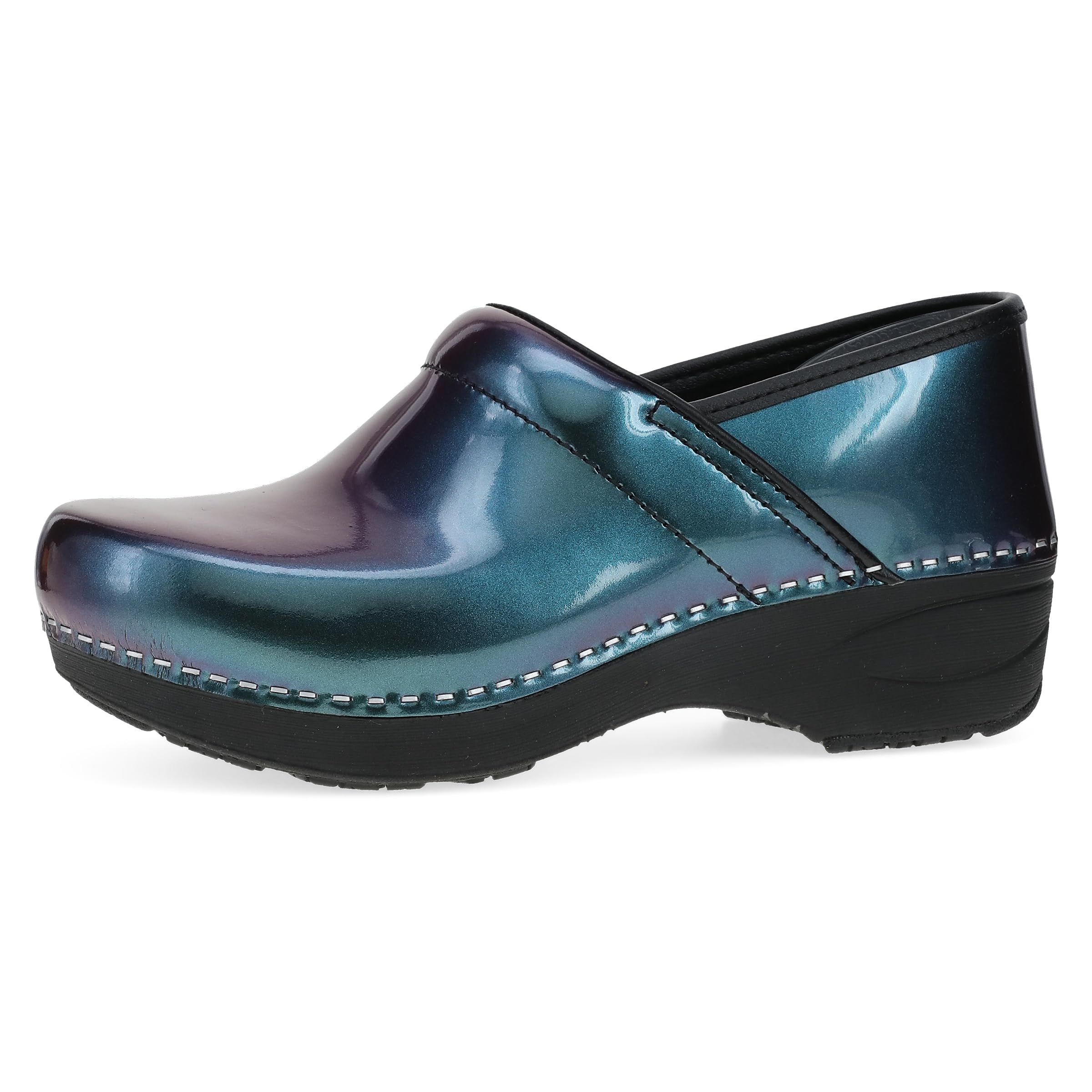
Dansko’s XP 2.0 clogs are a reference standard in nursing and food service for a reason: the rocker bottom sole creates a smooth walking motion that reduces the energy required to push off concrete. The polyurethane outsole is formulated for slip resistance on wet and greasy surfaces, and the heel cup is structured to hold the foot securely without a back strap — a design that took years of iteration to perfect.
The footbed is firm rather than plush, which provides consistent support across a 12-hour shift without the midsole breaking down. Users report that this firmness, combined with the elevated heel (about 3 inches), changes their walking mechanics enough to relieve lower back strain on concrete. The wide sizes accommodate orthotics, though the natural arch contour is already pronounced.
Longevity is exceptional: multiple reviewers report getting 8-plus years from a single pair with the outsole still intact and the footbed still supportive. The trade-off is a break-in period of several days, during which the stiff upper can rub the heel. The clogs also run slightly large, so sizing down a half size is common advice. For anyone spending 10+ hours daily on concrete, the durability per dollar is unmatched.
Why it’s great
- Slip-resistant outsole tested on wet and oily concrete surfaces
- Rocker bottom sole reduces heel-strike impact during long walks
- Known for lasting years with minimal degradation of support
Good to know
- Requires a break-in period — stiff upper initially
- Firm footbed not suitable for those who prefer soft cushioning
- Runs large; sizing down is recommended
3. New Balance Men’s 574 Core Sneaker

The New Balance 574 is a decades-old silhouette that remains relevant for concrete walking because of its ENCAP midsole technology — a dense EVA core wrapped in polyurethane that provides a stable, cushioned platform. Unlike trend-driven sneakers with oversized foam that degrades quickly, the 574’s midsole maintains its shape and shock absorption over hundreds of miles on pavement. The flat outsole design also provides a natural walking glide, which reduces the micro-adjustments your feet make on rough concrete.
Available in up to 4E width, the 574 accommodates wide feet without pinching the toes — a critical factor for anyone who experiences foot spread after hours of standing. The suede and mesh upper is breathable but not waterproof, making it best for indoor concrete environments or dry outdoor conditions. The classic grey and white colorway pairs with most work-appropriate attire.
Consistent owner feedback highlights the “broken-in-from-day-one” feel and the versatility between work and casual wear. The main limitations are a lack of slip resistance on wet surfaces and a midsole that is firmer than modern maximalist shoes. For budget-conscious buyers who need reliable all-day comfort on dry concrete without safety-toe requirements, the 574 delivers consistent performance.
Why it’s great
- ENCAP midsole provides durable shock absorption for high-mileage walking
- Available in 4E width for natural foot splay on concrete
- Timeless style transitions from work to casual settings
Good to know
- Outsole not slip-resistant on wet surfaces
- Midsole is firmer than modern ultra-cushioned shoes
- Upper is not water-resistant — avoid puddles
4. Rockport Men’s Eureka Walking Shoe

The Rockport Eureka Walking Shoe hits a rare balance: a leather upper that looks professional enough for casual office environments paired with an EVA midsole that reduces concrete fatigue without looking like a sneaker. Users report the shoe holds up well after two years of regular use, with the outsole remaining intact even after thousands of steps on pavement. The leather is stain-resistant, which extends the shoe’s appearance lifespan considerably.
The footbed is moderately cushioned — less supportive than the Orthofeet and less plush than a memory foam model, but adequate for 4-6 hours of continuous standing. The fit tends to run a half-size large, which is notable because a snug fit improves heel stability on concrete. Owners with wide feet specifically praise the true double-E width sizing, noting the shoe accommodates orthopedic inserts without feeling cramped.
One caveat is the outsole traction: several buyers report the shoe is slippery on damp floors, so these are best for dry concrete environments. The tongue can also dig into the ankle if not laced carefully, a minor design issue that appears in some units. For the price point, the build quality — all-leather construction, sturdy seams, and good sole grip on dry surfaces — outperforms most competitors in the budget bracket.
Why it’s great
- All-leather upper with stain resistance for a professional look
- True wide width (2E) accommodates inserts and foot swelling
- Lightweight EVA midsole reduces step fatigue on dry concrete
Good to know
- Outsole is slippery on wet or damp concrete surfaces
- Tends to run a half-size large — size down
- Tongue stitching may irritate the ankle on some units
5. Reebok Men’s Rb4041 Sublite Cushion Safety Toe Athletic Work Shoe

For environments requiring safety toe protection — warehouses, fab shops, manufacturing — the Reebok Sublite Cushion is one of the few options that prioritizes breathability alongside impact protection. The alloy toe is significantly lighter than steel, reducing the overall shoe weight. The mesh upper allows airflow that keeps feet cooler in hot environments, with multiple users confirming comfort in temperatures exceeding 110°F.
The Sublite midsole foam provides a soft underfoot feel that compares favorably to non-safety athletic shoes. The wide toe box is a standout feature, allowing natural toe splay that counteracts the fatigue of standing on concrete. The outsole uses a grip pattern that is slip-resistant on most factory and warehouse floors, though it is not rated for wet outdoor use. The removable insole is a plus, as the factory foam tends to compress after several months, and swapping in an aftermarket orthotic restores the lost support.
Durability is moderate — the mesh upper holds up well, but the foam midsole shows wear faster than leather safety boots. Multiple owners report the shoe lasting about a year before the midsole loses its bounce. For the price, it offers an excellent weight-to-protection ratio, and the alloy toe passes ASTM standards without the heavy feeling of steel. The only consistent complaint is a lack of water resistance — wet concrete will soak through the mesh quickly.
Why it’s great
- Lightweight alloy toe reduces foot fatigue compared to steel-toe alternatives
- Breathable mesh upper designed for hot indoor concrete environments
- Wide toe box allows natural foot splay and reduces fatigue
Good to know
- Mesh upper is not water-resistant — avoid wet concrete conditions
- Original insoles compress and require replacement within months
- Midsole foam degrades faster than leather safety boots
6. Skechers Men’s Cankton Steel Toe Construction Shoe
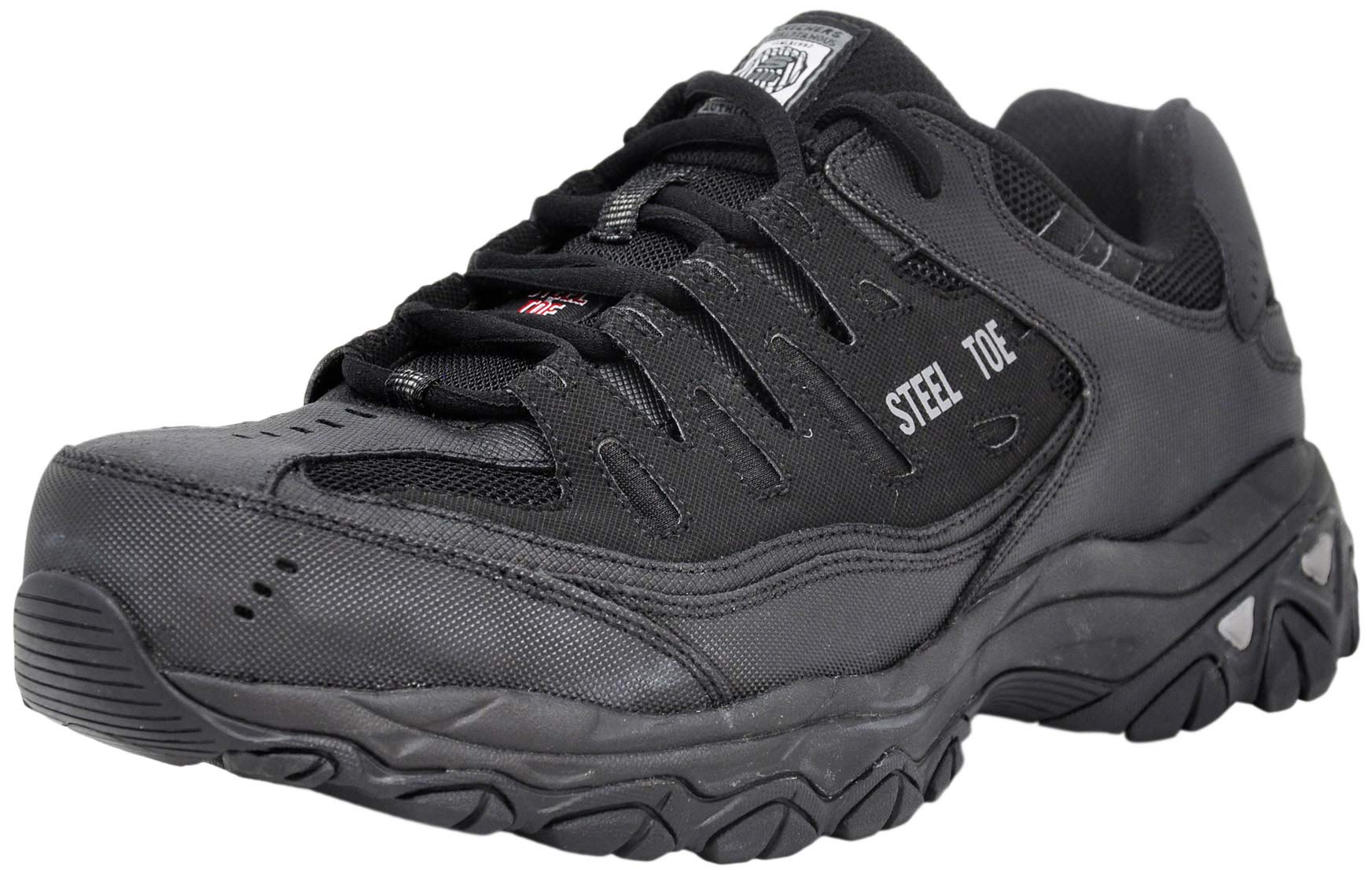
The Skechers Cankton fills a specific niche: a budget-priced steel-toe work shoe that is surprisingly lightweight for its protection class. The relaxed fit is noticeably roomy through the toe and midfoot, which accommodates thicker socks or foot swelling during long shifts. The memory foam insole provides immediate plushness that many users compare favorably to more expensive work boots, though the foam compresses more quickly than denser materials.
The outsole is water-resistant and grippy on most surfaces — concrete, warehouse floors, job site gravel — but loses traction on ice or soapy wet surfaces. The electrical hazard rating adds a layer of safety for those working near live circuits. The shoe’s weight is its biggest differentiator: at roughly the same heft as a heavy sneaker, it avoids the leg fatigue that comes with traditional steel-toe boots.
Long-term reports are mixed. The memory foam insoles typically develop visible compression indentations within six months, but the outsole and upper hold up well beyond that point. Several owners note the steel toe is bulky and the shoe feels stiff initially, requiring a break-in period of about a week. For environments where a steel toe is mandatory and the budget is tight, the Cankton offers the best weight-to-price ratio in its class.
Why it’s great
- Lightweight steel-toe construction reduces fatigue on long concrete shifts
- Water-resistant outsole handles damp concrete and job site debris
- Relaxed fit accommodates wide feet and orthotic inserts
Good to know
- Memory foam insoles compress quickly — expect replacement within months
- Steel toe adds weight compared to alloy-toe competitors
- Stiff upper requires a break-in period of several days
FAQ
Why do my feet hurt more on concrete than on asphalt or wood?
Can I use running shoes for standing on concrete all day?
What does “slip-resistant” actually mean for concrete shoes?
Should I size up or down for concrete-specific work shoes?
Final Thoughts: The Verdict
For most users, the shoes for concrete winner is the Orthofeet Lava Stretch because it offers the most customizable support system with removable insoles, arch spacers, and a bunion-friendly toe box that directly addresses the foot-flattening effect of concrete. If you want slip resistance and a rocker bottom for 12-hour healthcare shifts, grab the Dansko XP 2.0 Clogs. And for a lightweight daily walker that looks good and supports wide feet, nothing beats the New Balance 574 Core.