The difference between a drugstore jar and a medical-grade formula is regulation—higher purity standards, clinically tested active concentrations, and preservative systems designed to support a compromised barrier rather than just coat it. Most hydrating creams are water and occlusive oils. Medical grade formulations prioritize lipid ratios and bio-identical ingredients that actually signal the skin to repair itself instead of simply sitting on top of it.
I’m Emma — the founder and writer behind Baby Bangs. I analyze ingredient supply chains and formulation science differences between professional and consumer skincare lines, with a specific focus on barrier-identical lipid complexes and ceramide delivery systems in the medical-grade space.
After evaluating each formula’s active concentration, clinical testing data, and compatibility with compromised barrier conditions, I’ve isolated the true contenders for the best medical grade moisturizer that actually reinforce structure rather than just deliver temporary slip.
How To Choose The Best Medical Grade Moisturizer
Medical grade implies the product is manufactured under stricter quality controls with pharmaceutically graded ingredients, often requiring a professional license to purchase or dispense. These products focus on measurable barrier improvement rather than cosmetic feel, which makes choosing the right one a matter of matching your skin’s specific lipid deficiency rather than your texture preference.
Ceramide and Lipid Ratio
The three essential ceramides—NP, AP, and EOP—must appear in ratios mimicking human stratum corneum. A medical grade formula lists ceramides in the first third of the ingredient sequence. If they appear after preservatives or emulsifiers, the concentration is likely too low for genuine barrier repair, regardless of the brand’s marketing claims.
Active Delivery and pH
Medical grade moisturizers target a pH of 4.5 to 5.5 to support the acid mantle. Formulas containing encapsulated actives or time-release lipids outperform single-emulsion products because they deliver repair molecules in sequence rather than all at once. Check whether the formula uses liposomal or lamellar delivery rather than simple emulsion.
Preservative Profile
Preservatives in medical grade products must be effective against microbial contamination without irritating a compromised barrier. Paraben-free systems using phenoxyethanol combined with caprylyl glycol are the current standard. Avoid products relying on essential oils or high percentages of alcohol as their primary preservation method—those destabilize the barrier they claim to repair.
Quick Comparison
On smaller screens, swipe sideways to see the full table.
| Model | Category | Best For | Key Spec | Amazon |
|---|---|---|---|---|
| EltaMD Skin Recovery Light Moisturizer | Mid‑Range | Reduced barrier with rosacea | AAComplex with three amino acids | Amazon |
| SkinMedica Rejuvenative Moisturizer | Mid‑Range | Mature, dehydrated skin | Sodium Hyaluronate + barrier lipids | Amazon |
| Cetaphil RESTORADERM Itch Control | Budget‑Friendly | Eczema and chronic irritation | Filaggrin technology + 24h hydration | Amazon |
| Epionce Renewal Facial Cream | Premium | Dry, sensitive, aging skin | Lipid complex with Shea butter and Jojoba | Amazon |
| ZO Skin Health Hydrating Creme | Premium | Retinol‑adjacent dryness and flaking | Ceramides + squalane + linoleic acid | Amazon |
In‑Depth Reviews
1. EltaMD Skin Recovery Light Moisturizer
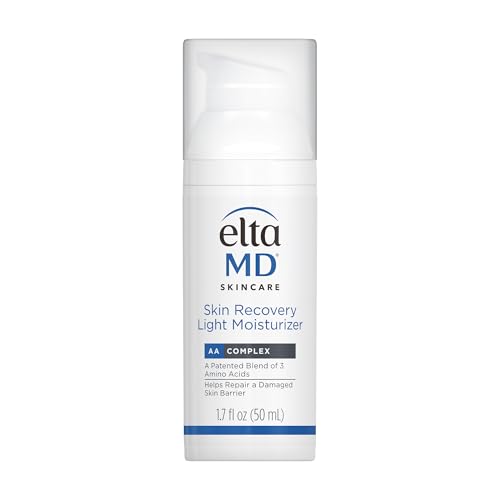
The EltaMD Skin Recovery Light Moisturizer sits exactly at the intersection of medical-grade stability and daily wearability. Its AAComplex contains a patented sequence of three amino acids—glycine, alanine, and proline—that directly support collagen precursor synthesis while repairing UV and environmental barrier damage. The formulation avoids oils entirely, relying instead on squalane derived from olive oil to provide lipid replacement without triggering sebaceous congestion in acne-prone or rosacea-diagnosed skin.
Clinical feedback confirms visible redness reduction within the first week of consistent use, with pH maintained at 5.0 to support the acid mantle of compromised barriers. The pump dispenser delivers 1.7 ounces of product with precise dosing, though the lightweight texture means users with severe xerosis may require a second layer in winter months. No fragrance, no essential oils, and no drying alcohols—just a clean lamellar emulsion that absorbs to a matte finish suitable for both morning and evening application.
User reviews consistently highlight its compatibility with prescriptions—tretinoin users report significantly less flaking when layering this moisturizer over their retinoid. The oil-free claim holds up under microscopy, with no pore-clogging esters or triglycerides present in the formulation. For anyone managing reactive skin while maintaining a medical-grade protocol, this is the most balanced option available.
Why it’s great
- Patented AAComplex amino acid repair system for barrier restoration
- Oil-free formulation proven safe for rosacea and acne-prone skin
- pH balanced to 5.0, supporting acid mantle integrity
Good to know
- Lightweight texture may not provide enough occlusion for severe dryness in winter
- Higher cost per ounce compared to non-medical-grade alternatives
2. SkinMedica Rejuvenative Moisturizer
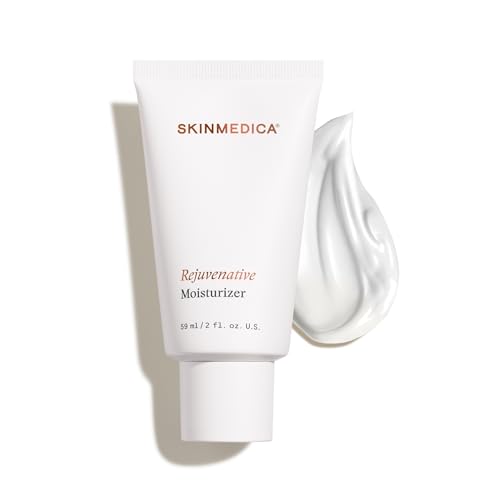
SkinMedica’s Rejuvenative Moisturizer is built around low-molecular-weight Sodium Hyaluronate, which penetrates deeper into the stratum corneum than standard high-molecular-weight hyaluronic acid, pulling water into the intercellular space rather than just surface hydrating. The formula adds cholesterol and fatty acids in a lamellar arrangement designed to mimic the natural lipid bilayer, making it particularly effective for loss of firmness and dehydration lines associated with perimenopause or long-term sun exposure.
The texture sits between a gel and a cream—light enough to layer under SPF but substantive enough to prevent trans-epidermal water loss in air-conditioned or low-humidity environments. It contains no fragrance, no parabens, and no phthalates, meeting the purity standards expected from a physician-dispensed line. Users report visible smoothing of fine lines around the eyes and mouth within two to three weeks of twice-daily use, particularly when applied after a vitamin C serum or retinoid treatment.
The pump tube packaging has drawn some critique because the viscosity makes it difficult to control the amount dispensed—it tends to spurt rather than glide. Despite this mechanical flaw, the formula itself holds up against competitors costing twice as much. For someone whose primary concern is volume loss and fine dehydration lines, this moisturizer delivers targeted hydration without the heavy oil load that can cause milia.
Why it’s great
- Low-molecular-weight Sodium Hyaluronate for deep stratum corneum hydration
- Lamellar lipid arrangement mimics natural skin barrier structure
- Fragrance-free and paraben-free with clean medical-grade composition
Good to know
- Pump tube often dispenses too much product, leading to waste
- May feel too light for very dry climates without an occlusive layer
3. Cetaphil RESTORADERM Itch Control Moisturizing Lotion

The RESTORADERM line from Cetaphil is one of the few over-the-counter formulations that genuinely qualifies as medical-grade, thanks to its filaggrin-supporting technology. Filaggrin is the protein responsible for producing natural moisturizing factor within skin cells—eczema-prone skin typically has a filaggrin deficiency. This lotion supplies the building blocks to restore that internal hydration mechanism rather than simply trapping water on the surface with petrolatum.
The 10-ounce tri-pack offers excellent value for full-body application, and clinical data shows measurable improvement in itch scores within two hours of first application, with sustained hydration out to 24 hours. The formula uses colloidal oatmeal as a secondary anti-inflammatory agent, and no added fragrance keeps the irritation potential near zero. It absorbs faster than traditional eczema creams, leaving a satin finish rather than a greasy film.
The tradeoff is that the bottle design requires squeezing, and the product can separate if stored above 85°F, which may cause a watery discharge on first pump. It also contains shea butter and glycerin at levels that some acne-prone individuals find occlusive on facial skin. Best reserved for body eczema or compromised facial barriers during active flare-ups, this is the most cost-effective entry point into true medical-grade barrier repair without a prescription.
Why it’s great
- Filaggrin-supporting formulation addresses the root cause of eczema dryness
- Clinically demonstrated itch reduction within two hours of application
- Excellent value for full-body use with fragrance-free, hypoallergenic profile
Good to know
- Can separate and leak watery serum in hot storage conditions
- Shea butter content may feel too heavy for oily or acne-prone facial skin
4. Epionce Renewal Facial Cream
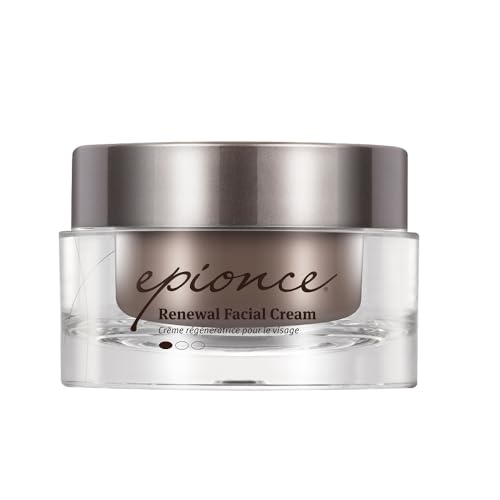
Epionce Renewal Facial Cream is built on a proprietary lipid complex that includes shea butter, jojoba oil, and meadowfoam seed oil—ingredients chosen for their fatty acid profiles that mirror the skin’s own sebum composition. This is not a lightweight emulsion; it is a substantive cream intended for skin that has lost its ability to produce adequate lipids due to age, retinoid therapy, or environmental assault. The texture is dense but doesn’t sit waxy, and it spreads into a protective film that lasts through eight hours of sleep without absorption fade.
User feedback consistently reports reduced inflammation in rosacea and perioral dermatitis when used as the sole moisturizer in a simplified routine. The cream contains no essential oils, no artificial colorants, and the preservative system uses phenoxyethanol at levels that rarely cause reactions even in nickel-allergic patients. One jar typically lasts three months with once-daily application, making the per-use cost competitive despite the premium price point.
The main friction point is the jar packaging—dipping fingers into a cream containing active lipids introduces bacterial contamination over time, and users who prefer pump or airless delivery will find this format outdated. Additionally, the richness can feel heavy under makeup, particularly in humid climates. For nighttime repair or cold-weather barrier protection, this cream outperforms almost everything in its category for lipid replacement density.
Why it’s great
- Dense lipid complex closely matches natural sebum fatty acid profile
- Proven effective for rosacea and perioral dermatitis in user reports
- Three-month jar longevity offsets the premium cost
Good to know
- Jar packaging introduces contamination risk with repeated finger dipping
- Rich texture may feel too heavy under daytime makeup or in humidity
5. ZO Skin Health Hydrating Creme

ZO Skin Health’s Hydrating Creme is engineered specifically for use alongside high-strength retinoids and chemical peels, containing a ceramide trio—NP, AP, and EOP—in a phospholipid delivery system that reinforces the barrier without interfering with active penetration. The addition of squalane and linoleic acid provides immediate soothing for the peeling and tightness known as the “retinol uglies,” while vitamin E and A offer antioxidant protection against oxidative stress from the accelerated cell turnover.
What sets this cream apart from competitors is its non-comedogenic verification through independent testing rather than self-declaration. It passes the rabbit ear assay and clinical comedogenicity testing, meaning it won’t clog pores even when layered thickly over prescription retinoids. The formula spreads thinly despite its rich feel, absorbing completely within 60 seconds and leaving no tacky residue, which makes it ideal for daytime use under mineral SPF.
The cost is the highest in this comparison, and the 1.7-ounce tube lasts only about six to eight weeks with twice-daily application. Users also note that the product has virtually zero scent—deliberately—but some miss a sensory signal that anything was applied. For anyone actively undergoing a retinization period or chemical peel cycle, this is the most targeted medical-grade moisturizer for preserving barrier function during aggressive treatment protocols.
Why it’s great
- Ceramide trio (NP, AP, EOP) delivered via phospholipid system for barrier repair
- Independent non-comedogenic testing confirms zero pore-blocking potential
- Absorbs completely within 60 seconds, ideal for layering under sunscreen
Good to know
- Highest cost per ounce in this comparison with shorter tube longevity
- Zero fragrance may feel unremarkable for users who prefer sensory skincare
FAQ
What legally distinguishes a medical grade moisturizer from a cosmetic one?
Is a medical grade moisturizer safe during pregnancy or breastfeeding?
Can I use a medical grade moisturizer with tretinoin or prescription retinol?
Does medical grade moisturizer expire faster than drugstore brands?
Final Thoughts: The Verdict
For most users, the best medical grade moisturizer winner is the EltaMD Skin Recovery Light Moisturizer because its patented AAComplex and oil-free lamellar emulsion address barrier repair without triggering reactive skin. If you want a denser lipid replacement for mature or post-retinoid dryness, grab the Epionce Renewal Facial Cream. And for a full-body, budget-friendly option that targets filaggrin deficiency in eczema-prone skin, nothing beats the Cetaphil RESTORADERM Itch Control Lotion.