Choosing a breast pump that delivers hospital-grade suction, clinical reliability, and long-term durability is one of the most critical decisions a pumping mother will make. The difference between a standard electric pump and a true medical-grade device often comes down to motor longevity, vacuum consistency, and the ability to establish or maintain milk supply for premature or NICU infants.
I’m Emma — the founder and writer behind Baby Bangs. I’ve spent years analyzing hospital-grade pumping hardware, from vacuum calibration specs to closed-system hygiene protocols, helping parents find the right fit for home, work, and exclusive pumping routines.
This guide breaks down the highest-performing options available today so you can confidently choose the best medical grade breast pump for your family’s specific needs.
How To Choose The Best Medical Grade Breast Pump
Not all pumps labeled “hospital grade” meet the same clinical standards. The term generally refers to a closed-system pump with a motor designed for multi-user durability, strong and consistent vacuum pressure, and the ability to establish or maintain milk supply in challenging circumstances. Before you commit to a model, focus on four factors that separate true medical-grade performance from marketing claims.
Closed-System Hygiene and Overflow Protection
A closed-system pump uses a physical barrier — usually a membrane or backflow protector — to prevent breast milk from entering the tubing or motor. This is non-negotiable for medical-grade status because it eliminates cross-contamination between users and protects the motor from moisture damage. Open-system pumps require tube cleaning and can harbor mold in hidden crevices, which is why hospitals exclusively use closed designs.
Vacuum Range and Adjustability
Medical-grade pumps typically offer a maximum vacuum between 250 mmHg and 300 mmHg, with multiple levels of adjustability. A wider vacuum range allows you to find the exact suction that triggers milk ejection without causing nipple pain. Pumps with separate cycle speed and vacuum controls give you more fine-tuned control than models that tie both parameters to a single dial.
Battery Life and Portability
Traditional hospital pumps are corded, but the best home-use medical-grade models now include rechargeable batteries. A fully charged battery should support at least four to six pumping sessions before needing a recharge. Lightweight builds and ergonomic handles matter if you plan to move between rooms, pump in the car, or bring the pump to work. Wearable medical-grade options exist, but they generally sacrifice some motor power for discreet portability.
Double-Pumping Efficiency and Cycle Mimicry
Double pumping — extracting from both breasts simultaneously — increases prolactin levels and saves time. Look for a pump that supports true dual action with independent or synchronized controls. The best medical-grade pumps use two-phase expression technology that mimics a baby’s fast-suck initiation followed by slower, deeper draws. This pattern has been clinically proven to increase milk yield compared to constant-speed suction.
Quick Comparison
On smaller screens, swipe sideways to see the full table.
| Model | Category | Best For | Key Spec | Amazon |
|---|---|---|---|---|
| Medela Symphony | Premium | NICU & exclusive pumping | Two-Phase Expression, +18% milk yield | Amazon |
| Willow 360 | Premium | Leak-proof wearable use | Hospital-grade suction, 7 levels | Amazon |
| Spectra Synergy Gold | Premium | Independent side-by-side control | Dual-adjustable vacuum per breast | Amazon |
| Medela Sonata | Mid-Range | Smart hospital-strength pumping | Responsive vacuum technology | Amazon |
| Spectra S1 Plus | Mid-Range | Portable rechargeable performance | Natural nursing cycle mimicry | Amazon |
| eufy Heated Pump S1 | Mid-Range | Gentle heat and app control | 300 mmHg suction + HeatFlow | Amazon |
| Annabella Double Pump | Mid-Range | Tongue-simulation technology | Adjustable shield 18-24mm | Amazon |
| Ardo Alyssa-To-Go | Mid-Range | Automatic power pumping | Memory Plus session recall | Amazon |
| Elvie Stride Plus | Mid-Range | Hands-free wearable pumping | -300 mmHg in single cup | Amazon |
In‑Depth Reviews
1. Medela Symphony Breast Pump
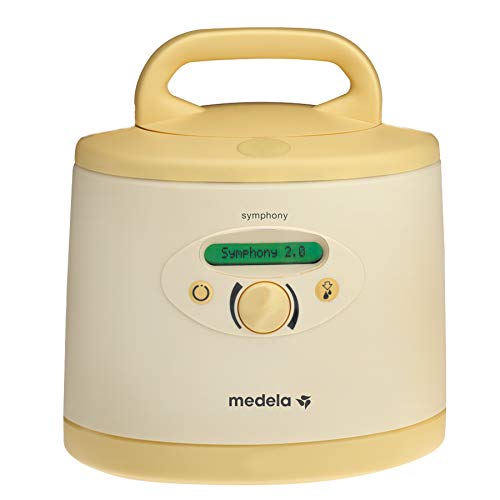
The Medela Symphony is the gold standard that hospitals place in NICUs and postpartum recovery rooms — it is the reference point for clinical-grade performance. Its 2-Phase Expression technology mimics the fast initiation suckling and slower deep-draw rhythm of a nursing infant, with published data showing 18% more milk expressed during double pumping sessions compared to single-phase pumps. The motor uses a fully closed system with overflow protection, meaning milk never contacts the tubing or internal mechanism, which is essential for multi-user hygiene and long-term motor longevity.
This pump requires the separately sold Symphony Double Pumping Kit (model 67099), which includes tubing, valves, membranes, breast shields, and bottles. The unit itself is corded, so portability is limited to wherever an outlet is available — there is no rechargeable battery option. The tradeoff is a motor built for daily clinical use that can handle exclusive pumping for years without vacuum degradation, a claim few home-grade pumps can make.
Users consistently report that the Symphony establishes milk supply even in cases where other pumps failed, particularly for mothers of preemies or those inducing lactation. The vacuum is powerful but comfortable because the pump adjusts automatically to the user’s Maximum Comfort Vacuum level. The main drawbacks are the high investment and the need to purchase the kit separately, but for families who prioritize proven clinical outcomes, this remains the undisputed leader.
Why it’s great
- Clinically proven two-phase expression boosts milk yield
- True closed system prevents milk from entering the motor
- Longest-lasting motor for exclusive and NICU pumping
Good to know
- Requires separate pumping kit purchase (model 67099)
- Corded design limits mobility to wall outlets
- Bulkier and heavier than portable home pumps
2. Willow 360 Wearable Breast Pump

The Willow 360 redefines what a wearable pump can achieve by integrating hospital-grade suction into a fully in-bra, leak-proof form factor. Its patented latch technology allows you to bend over, recline, or even lie down without spills — a feat no other wearable pump replicates reliably. Seven levels of suction strength deliver consistent vacuum performance comparable to traditional medical-grade pumps, while the app interface and Apple Watch compatibility allow hands-free control from anywhere in the room.
The rechargeable battery supports up to five pumping sessions per charge, which is generous for a wearable unit. Cleaning is simplified with just two dishwasher-safe parts, and the lack of external tubes or motors makes it extremely discreet under clothing. The pump comes with a one-year non-transferable manufacturer warranty, but the warranty is voided if purchased from unauthorized sellers, so buying directly or from verified Amazon listings is critical.
Some users report a learning curve with the flip-and-latch assembly technique, and the milk bags can collect air if not positioned perfectly, triggering premature “full” readings. Replacement parts are also needed more frequently than with traditional pumps. Still, for working mothers who need true portability without sacrificing suction quality, the Willow 360 offers an unmatched combination of freedom and clinical-grade performance.
Why it’s great
- Leak-proof in any position, even lying down
- Seven hospital-grade suction levels with app control
- Dishwasher-safe with only two parts to clean
Good to know
- Warranty voided if purchased from unauthorized resellers
- Milk bags can give false full readings with air pockets
- Requires practice to master the latching technique
3. Spectra Synergy Gold Portable
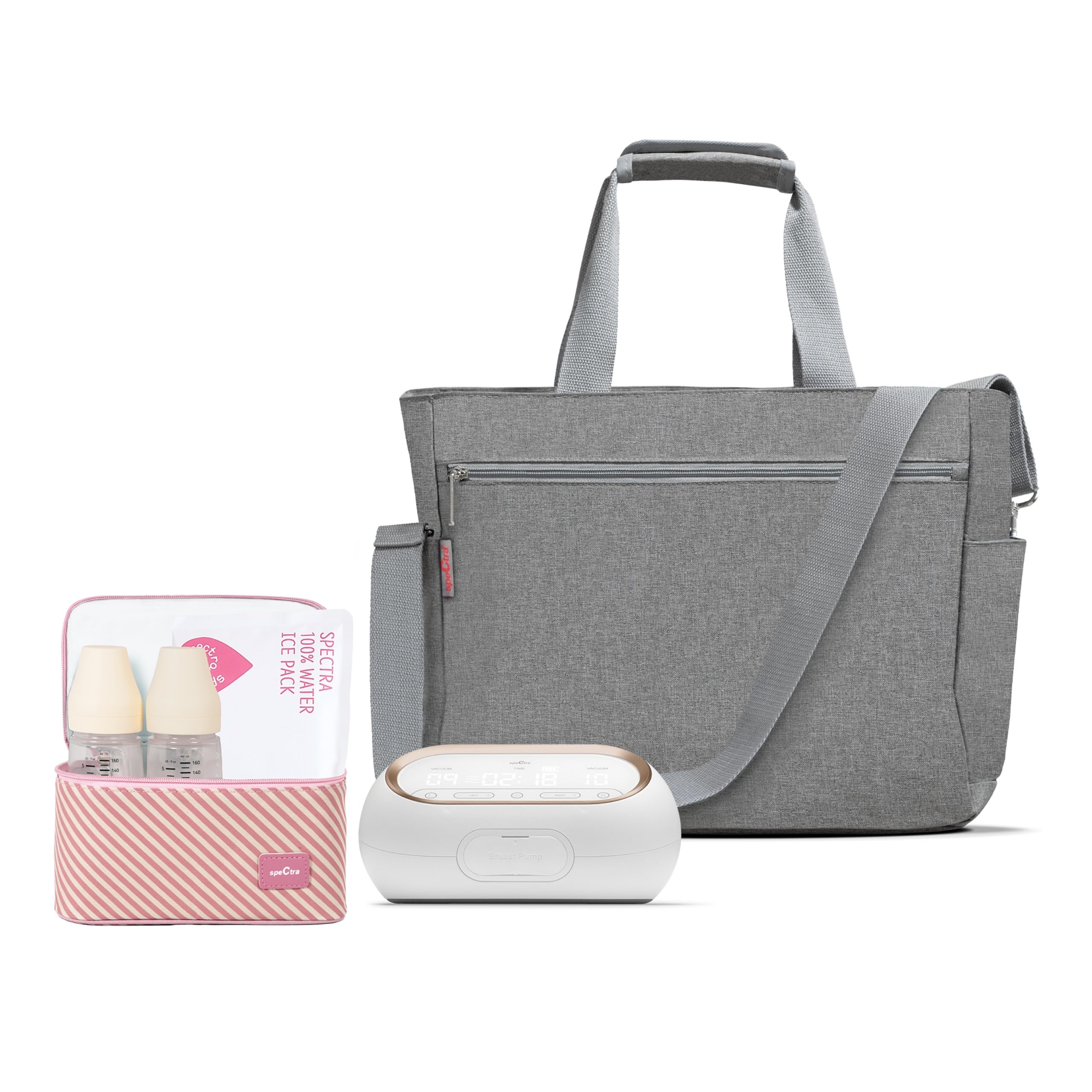
The Spectra Synergy Gold stands apart from virtually every other pump on the market because it allows you to adjust vacuum strength and cycle speed independently for each breast. This is a game-changer for mothers whose breasts respond differently to suction — you can run one side at a higher vacuum while the other runs gentler, both simultaneously. The closed-system backflow protector creates a physical barrier between milk and the motor, preserving hygiene and performance over years of use.
This model includes a built-in nightlight, touch screen interface, and timer controls, making middle-of-night pumping sessions easier to manage without turning on bright overhead lights. The pump is portable and rechargeable, though some users report that battery life diminishes after several months of heavy use. All parts that contact breast milk are BPA and DEHP free, which is a non-negotiable safety feature for sensitive newborns and preemies.
Output reports from users are strong — many exclusive pumpers find they get more milk with the Synergy Gold than with their previous wearables or single-motor pumps. The learning curve is minimal because the interface is intuitive. The main tradeoff is that the independent motor system adds weight and bulk compared to single-motor pumps, and the battery does not last as long as the Spectra S1 Plus in real-world multi-session use.
Why it’s great
- Independent left/right vacuum and cycle controls
- Closed-system backflow protector for hygiene
- Nightlight and touch screen for late-night pumping
Good to know
- Battery life can degrade with frequent heavy use
- Heavier than single-motor portable pumps
- Higher price point reflects dual-motor hardware
4. Medela Sonata Smart Breast Pump
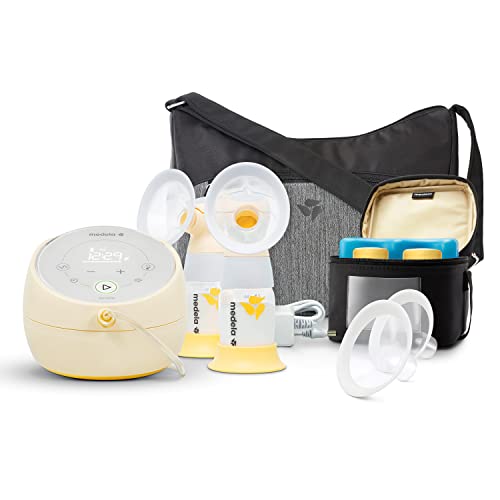
The Medela Sonata is essentially the Symphony’s portable, app-connected sibling — it delivers hospital-strength suction with responsive vacuum technology that adjusts in real time to maintain consistent milk flow. The pump weighs less than 2.5 pounds and includes a built-in handle, making it one of the lighter traditional motor pumps available. Its rechargeable battery provides up to 1.5 hours of cord-free use, which covers about two full pumping sessions before needing a recharge.
This model uses the PersonalFit Flex breast shield system, which 21 and 24mm inserts are included, and the touch screen interface allows you to control suction levels without fumbling for physical buttons. The closed system with overflow protection prevents milk from backing into the tubing, a critical design feature that extends motor life and prevents bacterial growth. The Sonata also connects to the Medela Family app for session tracking and personalized pumping insights.
Some users note occasional software glitches on the touch screen, usually resolved by restarting the pump. Battery life is adequate but not exceptional — heavy exclusive pumpers may need to charge between every two sessions. The overall build quality and suction consistency mirror the hospital Symphony, and users frequently report that the Sonata empties them faster and more completely than previous pumps they have used, making it a reliable mid-range choice for daily use.
Why it’s great
- Hospital-strength suction with responsive vacuum tech
- Lightweight 2.5 lb design with built-in handle
- Touch screen interface with Medela Family app support
Good to know
- Touch screen can experience occasional glitches
- Battery lasts about 1.5 hours per charge
- Included bag may vary between tote or backpack
5. Spectra S1 Plus Premier Rechargeable Pump

The Spectra S1 Plus has earned a loyal following among lactation consultants and exclusive pumpers for its reliable closed-system motor, rechargeable battery, and natural nursing cycle technology that mimics an infant’s feeding rhythm. The pump supports single or double pumping with 12 levels of adjustable vacuum and 70 cycles per minute in letdown mode, transitioning to slower deeper suction in expression mode. The battery holds a charge for multiple sessions and allows true cord-free pumping — you can take it into the car, around the house, or to work without hunting for an outlet.
This model ships with the full “Premier” accessory kit including a grey tote bag, bottles, cooler, and all tubing components. The closed-system backflow protectors prevent moisture from reaching the motor, a feature that Spectra engineers specifically designed to prolong the pump’s lifespan. All milk-contact parts are BPA and DEHP free, meeting the safety standards required for medical-grade classification.
The S1 Plus is not a wearable pump — it is a traditional motor unit with tubes and flanges — so you cannot move around with complete freedom during a session. The suction is powerful but not painful, and most users find they achieve full drainage in 15 to 20 minutes. For mothers who want hospital-grade reliability without the high rental cost of a Symphony, the S1 Plus offers the best balance of portability, performance, and long-term value.
Why it’s great
- Rechargeable battery supports true cordless use
- Closed-system backflow protectors extend motor life
- Natural nursing cycle with 12 adjustable vacuum levels
Good to know
- Traditional motor design — not wearable or hands-free
- Bulky with accessories included in the tote bag
- Requires replacing backflow membranes periodically
6. eufy Heated Breast Pump S1
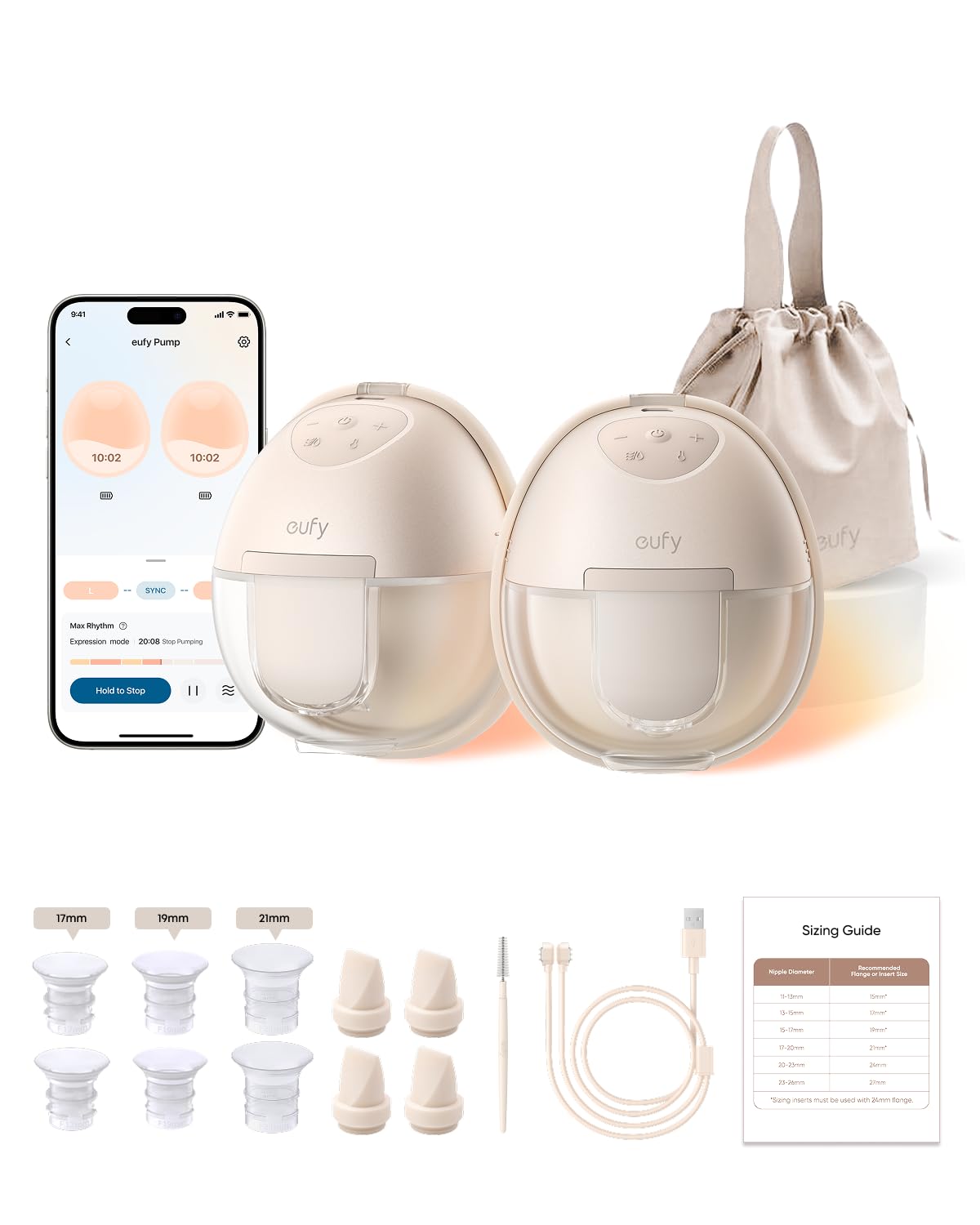
The eufy Heated Pump S1 introduces a genuinely new feature to the medical-grade pumping category — integrated heating. The HeatFlow technology applies gentle warmth to the breast flange during pumping, which helps prevent clogged ducts and can increase milk output by approximately 30%, based on user feedback from over 300 testers. The pump offers up to 300 mmHg of strong suction, which is at the upper end of wearable pump capability, and it fits nipples sized 17 to 24mm with a 105° ergonomic flange angle designed for comfort.
The pump is fully app-controlled, allowing you to select from four preset rhythms, create custom patterns, or follow expert-recommended cycles. At 46 dB, it is whisper-quiet and discreet under clothing, with a leak-proof double seal that keeps milk contained even during movement. All skin-contact parts are made from BPA-free, food-grade materials, and the slim profile fits easily into a standard nursing bra without obvious bulk.
Some users report that the heating element adds complexity — if you experience suction or heating issues, eufy provides troubleshooting guidance in the Q&A. The long-term durability of the heating mechanism is still being tested by the community, but early reviews are overwhelmingly positive for output and comfort. For mothers prone to clogs or those who find cold flanges uncomfortable, the S1 offers a unique advantage over any other medical-grade wearable currently on the market.
Why it’s great
- HeatFlow technology reduces clog risk and boosts output
- 300 mmHg strong suction with adjustable speed
- Ultra-quiet 46 dB with leak-proof double seal
Good to know
- Heating feature adds electronic complexity
- Limited flange size range included (17-24mm)
- App-dependent for custom rhythm programming
7. Annabella Double Breast Pump
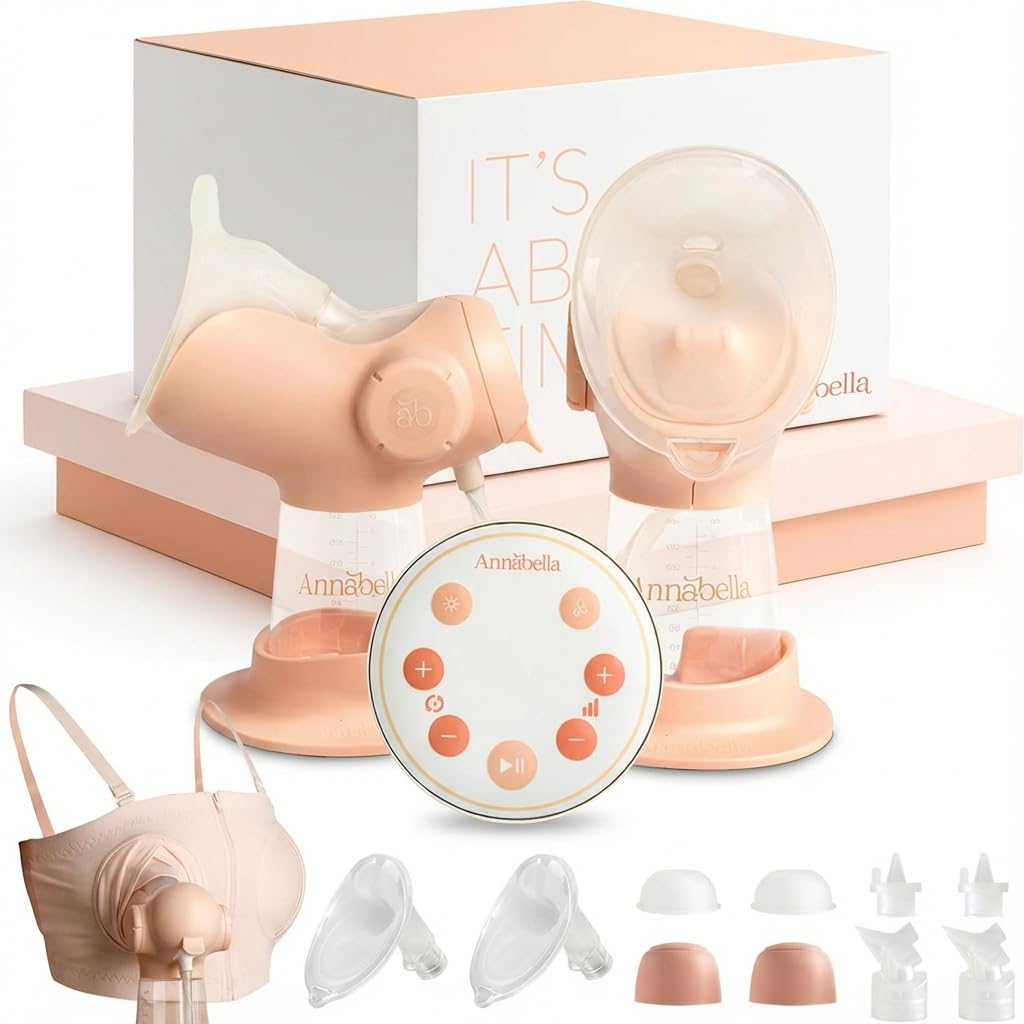
The Annabella uses a patented tongue-simulating mechanism that replicates the wave-like motion of a baby’s tongue against the breast — a fundamentally different approach from standard vacuum-only pumps. This motion is designed to trigger the release of oxytocin and prolactin more effectively, and user reports indicate average milk production increases of around 50% compared to traditional pumps. The pump includes a pumping bra, a washable silicone flange that adjusts from 18 to 24mm, a night-light ring, and nine suction levels plus multiple tongue-height settings.
This is a wearable unit with a USB-C rechargeable battery that lasts up to 2 hours per full charge. The kit includes two 5-ounce BPA-free bottles, massage units, a vacuum tube, and a connector set. The adjustable silicone shield eliminates the need to buy multiple flange sizes, which is a significant cost and convenience advantage. The pump operates quietly, and the gentle suction profile appeals to mothers with sensitive nipples or those who experienced pain with higher-vacuum pumps.
Some users point out that the pump has many parts with intricate shapes, making thorough cleaning and drying more time-consuming than simpler designs. At least two sets of parts are recommended if you pump multiple times daily to avoid rushing the drying cycle. Despite this, mothers who respond poorly to traditional suction patterns consistently report that the tongue-simulating motion feels more natural and yields better results, making Annabella a compelling alternative for hard-to-please pumpers.
Why it’s great
- Unique tongue-simulating motion boosts natural letdown
- Adjustable silicone shield fits 18-24mm without inserts
- Night-light ring and quiet operation for night pumping
Good to know
- Many small parts require thorough cleaning
- Needs extra part sets for frequent pumping sessions
- Relatively new model with less long-term reliability data
8. Ardo Alyssa-To-Go Hospital-Grade Pump
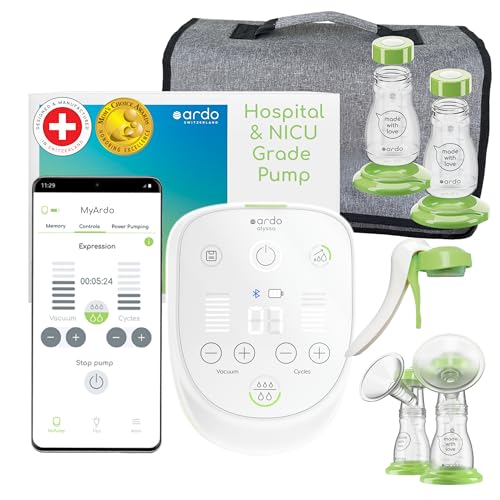
The Ardo Alyssa-To-Go is the first personal pump to bring NICU-level capabilities directly home, marketing itself as the world’s first personal NICU pump. Its standout feature is the built-in automatic Power Pumping programme — pre-set phases of suction and pauses that mimic a baby’s cluster feeding pattern, designed to increase milk supply in mothers who need to boost production. The Memory Plus function saves your entire session settings, so you can replay the exact vacuum levels and timing with one press during your next pump.
The pump connects to the MyArdo app via Bluetooth, giving you control over vacuum modes, cycle levels, Memory Plus, and Power Pumping from your phone. The rechargeable battery supports up to eight pumping sessions per charge, which is among the highest battery capacities in this category. The unit is Swiss-made and lightweight, making it easy to carry between rooms or pack for travel. Dishwasher-safe components also simplify the cleaning routine.
User feedback is generally positive, though some purchasers have received units that appeared to be used or had minor cosmetic issues. The pump’s interface is intuitive, but the app functionality is still being expanded with future updates. For mothers of preemies or those struggling with low supply, the automatic Power Pumping programme eliminates the mental load of tracking session timing, and the Swiss manufacturing quality provides confidence in motor longevity.
Why it’s great
- Automatic Power Pumping programme boosts supply
- Memory Plus recalls exact session settings
- Battery supports up to 8 pumping sessions per charge
Good to know
- Some units have arrived with cosmetic use marks
- App features are still being expanded
- Brand is less widely available than Medela or Spectra
9. Elvie Stride Plus Hands-Free Wearable Pump

The Elvie Stride Plus delivers hospital-grade suction (up to -300 mmHg) in a fully wearable, hands-free design that fits inside your bra. The pump connects to the Elvie app so you can control suction levels, switch between Stimulation and Expression modes, and track pumping history without reaching into your bra. Each cup weighs under 5 ounces, and the discreet silhouette creates a natural shape under clothing, making it one of the most wearable medical-grade options available.
The set includes two 24mm breast shields, a 3-in-1 carry bag with a wet bag, cool bag, and ice pack for storing milk on the go. The pump offers 10 intensity settings per mode, giving you fine-grained control over the pumping experience. The closed system design and app-based tracking make it suitable for regular use, and the quiet motor ensures discretion in shared spaces or during late-night sessions.
Some users find that achieving the right flange fit is critical — while the standard 24mm shields work for many, other sizes must be purchased separately. The wearable cups also require careful positioning to maintain optimal suction alignment. Overall, the Elvie Stride Plus represents the best overall balance of medical-grade suction strength, true hands-free convenience, and practical portability for mothers who want to move freely during pumping sessions.
Why it’s great
- Wearable, hands-free design with -300 mmHg suction
- App control for remote suction adjustment
- Compact cups under 5 ounces with natural silhouette
Good to know
- Alternate shield sizes must be purchased separately
- Wearable fit requires careful positioning for seal
- Milk storage bottles not included with pump
FAQ
What qualifies a breast pump as medical grade?
Can I use a medical-grade pump for exclusive pumping?
How often should I replace pump parts on a medical-grade pump?
Is a wearable pump as effective as a traditional medical-grade pump?
Does insurance cover medical-grade breast pumps?
Final Thoughts: The Verdict
For most users, the best medical grade breast pump winner is the Elvie Stride Plus because it delivers the strongest hospital-grade suction in a wearable, app-controlled design that fits naturally in your bra. If you want independent left-and-right suction control, grab the Spectra Synergy Gold Portable. And for unmatched clinical NICU-grade performance with proven milk-yield increases, nothing beats the Medela Symphony.