Choosing a safety device for an aging parent or loved one is a decision layered with anxiety — you need something that actually detects a fall, reaches help without a smartphone in hand, and doesn’t get left in a drawer after the first week. A dedicated medical alert watch solves this by combining automatic fall detection, an SOS button, and two‑way calling in a form that stays on the wrist all day.
I’m Emma — the founder and writer behind Baby Bangs. I’ve spent years analyzing the medical alert and wearable safety market, comparing everything from cellular connectivity and battery endurance to the real‑world reliability of fall‑detection algorithms and caregiver app interfaces.
After reviewing nine leading models, I’ve separated those that deliver genuine emergency protection from those that fall short on reliability. This guide to medical alert watches for seniors breaks down exactly what to look for so you can choose a device that actually keeps your loved one safe.
How To Choose The Best Medical Alert Watch For Seniors
Not every device labeled a “smartwatch for seniors” has the core safety features that matter in a real emergency. You need to look past the marketing and focus on four critical areas: fall detection reliability, connectivity type, battery life, and caregiver app usability. A watch that fails on any of these puts your loved one at risk.
Fall Detection That Actually Works
Auto fall detection is the single most important feature, but not all implementations are equal. The best watches use a combination of accelerometer and gyroscope data to distinguish a hard fall from a normal movement like bending over or sitting down quickly. Look for a device that includes a countdown before alerting — typically 10 to 30 seconds — so the wearer can cancel a false alarm. Avoid models that only send a notification without automatically contacting a caregiver or monitoring center.
Cellular Connection vs. Bluetooth Dependence
A true medical alert watch must have its own cellular connection (4G LTE or 5G) so it can place an SOS call without needing a smartphone nearby. Some cheaper options rely on Bluetooth tethering, which means the watch is useless if the senior leaves their phone in another room. Check whether the cellular SIM is pre‑installed, whether there is a monthly subscription fee, and whether the network covers your area. This is the difference between a device that works anywhere and one that only works at home.
Battery Life That Matches Daily Wear
A watch that needs charging every day is a safety risk — seniors often forget to plug it in. Look for a minimum of three to four days of real‑world battery life with location tracking and fall detection active. Some premium models stretch to 10 or even 30 days, which drastically reduces the chance of the device running out at the wrong moment. Magnetic charging cradles also help seniors with limited dexterity avoid fiddling with tiny cables.
Caregiver App and Remote Monitoring
The caregiver app is your window into the senior’s safety. It should show real‑time GPS location, receive fall alerts, and allow you to check health metrics like heart rate and SpO2 remotely. Avoid apps with confusing navigation or missing save buttons — you do not want to discover app flaws during an actual emergency. A clean dashboard that works on both iOS and Android is essential for multi‑caregiver households.
Quick Comparison
On smaller screens, swipe sideways to see the full table.
| Model | Category | Best For | Key Spec | Amazon |
|---|---|---|---|---|
| COCO BT2-X | Mid-Range | Health tracking + caregiver app | 1.85” HD display, 280mAh battery | Amazon |
| Medical Guardian MGMove | Premium | 24/7 monitoring center | 4G, 24-hour battery, one-touch SOS | Amazon |
| Fitbit Sense 2 | Premium | Advanced health metrics + sleep | cEDA, ECG, SpO2, 6+ day battery | Amazon |
| August Audar E2 | Premium | No phone/app required, cloud dashboard | Built‑in eSIM, 10‑day battery | Amazon |
| Nomo Smart Care | Mid-Range | In‑home WiFi monitoring system | Camera‑free, motion + fall tags | Amazon |
| SecuLife Pendant | Budget | Simple pendant + GPS tracking | 1000mAh battery, IP67, 4G LTE | Amazon |
| Seculife Smartwatch | Budget | Wrist SOS + geofencing | 680mAh, 4G/5G, auto‑answer | Amazon |
| Fajocru 4G Watch | Budget | HD video calling + fall detection | 600mAh, 4G, pre‑installed data SIM | Amazon |
| Withings ScanWatch Nova | Luxury | Classic watch + medical grade tracking | 30‑day battery, ECG, SpO2 | Amazon |
In‑Depth Reviews
1. COCO Emergency Alert Smartwatch BT2-X

The COCO BT2-X strikes an excellent balance between comprehensive health monitoring and senior‑friendly usability. It automatically detects falls and triggers a 20‑second countdown before alerting the Emergency Care Team, giving the wearer time to cancel a false alarm. The 1.85‑inch HD display is large enough for aging eyes, and the rotating crown makes navigation intuitive without needing to swipe or tap tiny icons.
Beyond safety, this watch tracks heart rate, SpO2, sleep, stress, and breathing trends — all visible inside the CoCo App for caregivers. The battery reaches about four days with typical use, which places it above most daily‑charge devices. The remote medication reminder feature is a standout detail for managing daily routines without phone calls.
Some users report the initial setup with the app can be a bit finicky, especially when adding emergency contacts. The 280mAh battery is modest compared to the 600‑1000mAh cells found in simpler pendant‑style devices. For a mid‑range smartwatch that prioritizes both health data and reliable fall alerts, the COCO BT2‑X is the strongest all‑rounder.
Why it’s great
- Reliable auto‑fall detection with countdown cancellation.
- Excellent 1.85‑inch HD display simplifies daily use.
- Caregiver app tracks health metrics and sets remote medication reminders.
Good to know
- App setup can be frustrating, particularly contact entry.
- Battery life of roughly four days requires regular charging.
- Silicone band may be too short for larger wrists.
2. Medical Guardian MGMove Smartwatch

The MGMove is built around a 24/7 monitoring center — a trained operator answers when the wearer presses the emergency button. This is the closest you get to a traditional medical alert pendant in a smartwatch form factor. The one‑press SOS connects immediately to a human responder, who can stay on the line, call family, or dispatch emergency services.
Medical Guardian is a well‑established name with over 625,000 users. The watch includes GPS tracking so operators can pinpoint the wearer’s location, plus optional fall detection and step tracking. The companion MyGuardian App lets caregivers check location and set medication reminders.
The battery life is the weakest point — only about 24 hours per charge, which means daily charging is mandatory. The monthly plan after the free trial runs about , and fall detection adds to that cost. For families who want the reassurance of a professional monitoring center, the MGMove is a solid, if power‑hungry, option.
Why it’s great
- Direct connection to 24/7 monitoring center with trained operators.
- Proven brand with over 625,000 users and strong support.
- GPS location shared instantly with responders.
Good to know
- Battery life is only 24 hours — requires daily charging.
- Ongoing monthly monitoring subscription is required.
- Fall detection feature is optional and costs extra.
3. Fitbit Sense 2
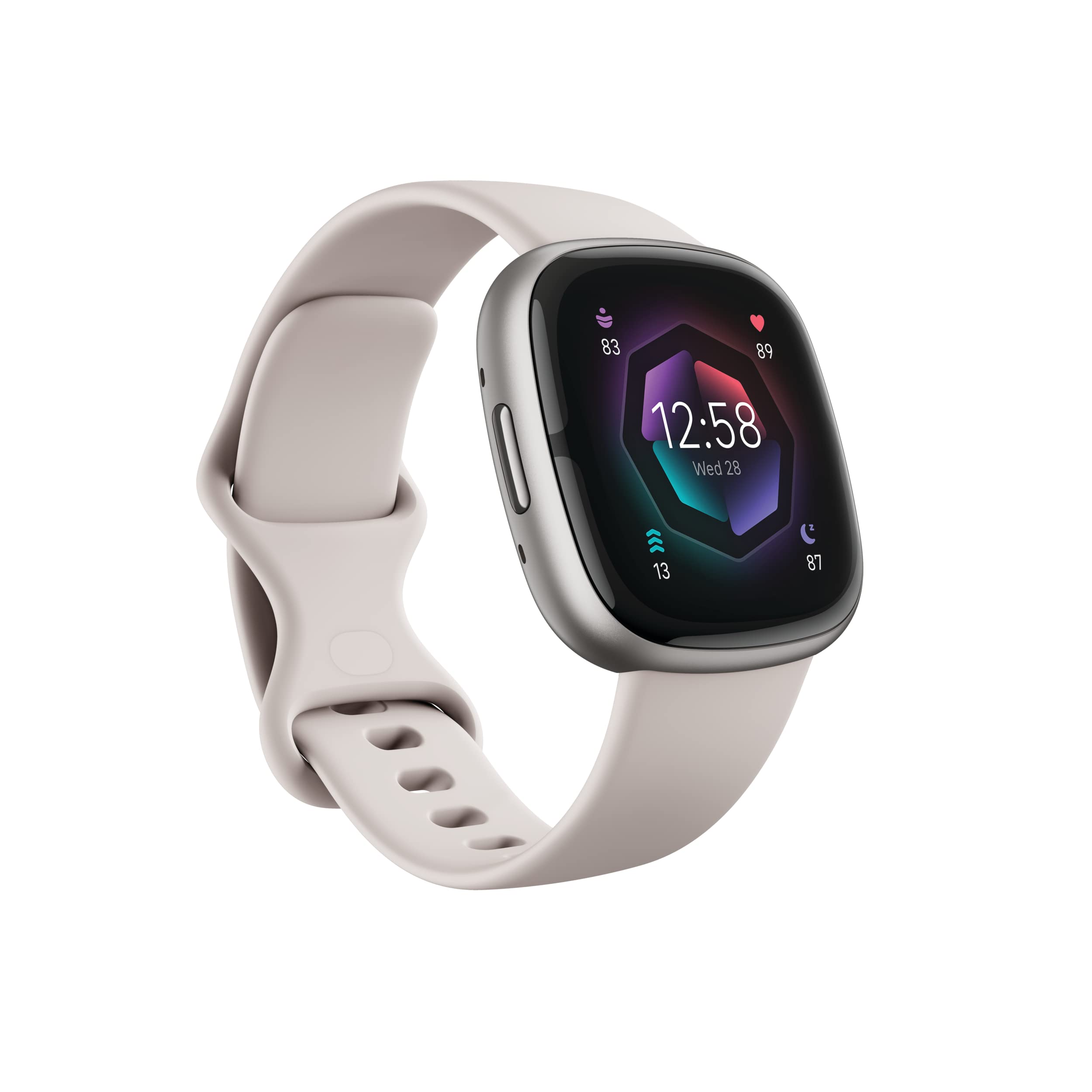
The Fitbit Sense 2 is not a dedicated medical alert device, but its advanced health‑tracking capabilities — including an ECG app for atrial fibrillation assessment, SpO2 monitoring, continuous cEDA for stress, and a 24/7 heart rate sensor — give it significant clinical‑grade credibility. The Daily Readiness Score and Sleep Profile help seniors and caregivers understand overall wellness trends over time.
It includes built‑in GPS for outdoor walks, 40+ exercise modes, and water resistance to 50 meters. The battery lasts over six days, which is excellent for a full‑function smartwatch. On‑wrist Bluetooth calls, text notifications, and Alexa integration make it useful beyond safety.
The Sense 2 lacks an automatic fall‑detection feature and a dedicated SOS button, so it cannot serve as a primary emergency device. It also requires a smartphone for setup and daily syncing. For seniors who want deep health insights and have a caregiver nearby, the Sense 2 is a premium companion, but not a standalone life‑alert system.
Why it’s great
- FDA‑cleared ECG and highly accurate heart rate monitoring.
- 6+ day battery life reduces charging anxiety.
- Sleep Stage tracking and Sleep Score provide actionable data.
Good to know
- No automatic fall detection or SOS button.
- Requires a paired smartphone for setup and notifications.
- Monthly Premium subscription needed for advanced analytics.
4. August Audar E2
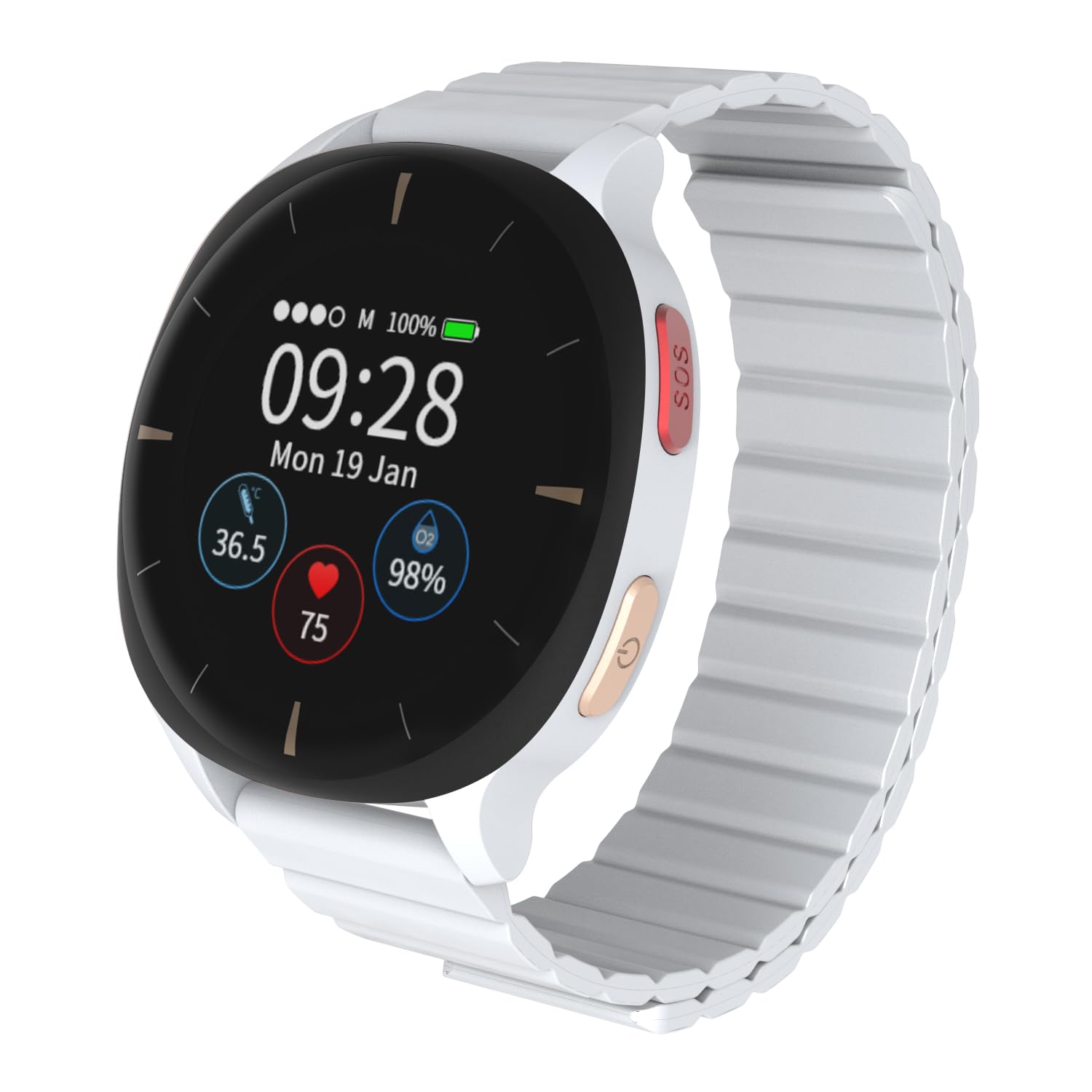
The Audar E2 is unique because it requires no smartphone or app for the wearer. A built‑in eSIM connects directly to a low‑cost IoT network, and all health data — heart rate, blood pressure, SpO2, body temperature — is uploaded to the Audar Health cloud dashboard for caregivers to view from any internet‑connected device. The battery lasts up to 10 days with hourly measurements, which is outstanding for a 24/7 wearable.
Fall detection and an SOS panic button trigger instant alerts to designated contacts, including SMS and phone call messages. The geofencing feature adds another layer of safety for wandering seniors. The watch is slim, waterproof, and uses magnetic straps for easy fitting.
The E2 does not call 911 directly — it sends SOS messages to preselected personal contacts, not public emergency numbers. Some landlines may not receive SMS alerts, and the optional AI wellbeing reports cost each after the first 10. The cloud dashboard interface also shows military time only, which may confuse some caregivers. This is a strong choice for families who want remote health tracking without burdening the senior with a smartphone.
Why it’s great
- Works independently with no smartphone or app required.
- Outstanding 10‑day battery life on hourly measurement schedule.
- Health dashboard accessible from any internet‑connected device.
Good to know
- Does not call 911 — only contacts preselected personal numbers.
- SMS alerts may not reach all landline phones.
- Cloud dashboard displays time in 24‑hour format only.
5. Nomo Smart Care Kit
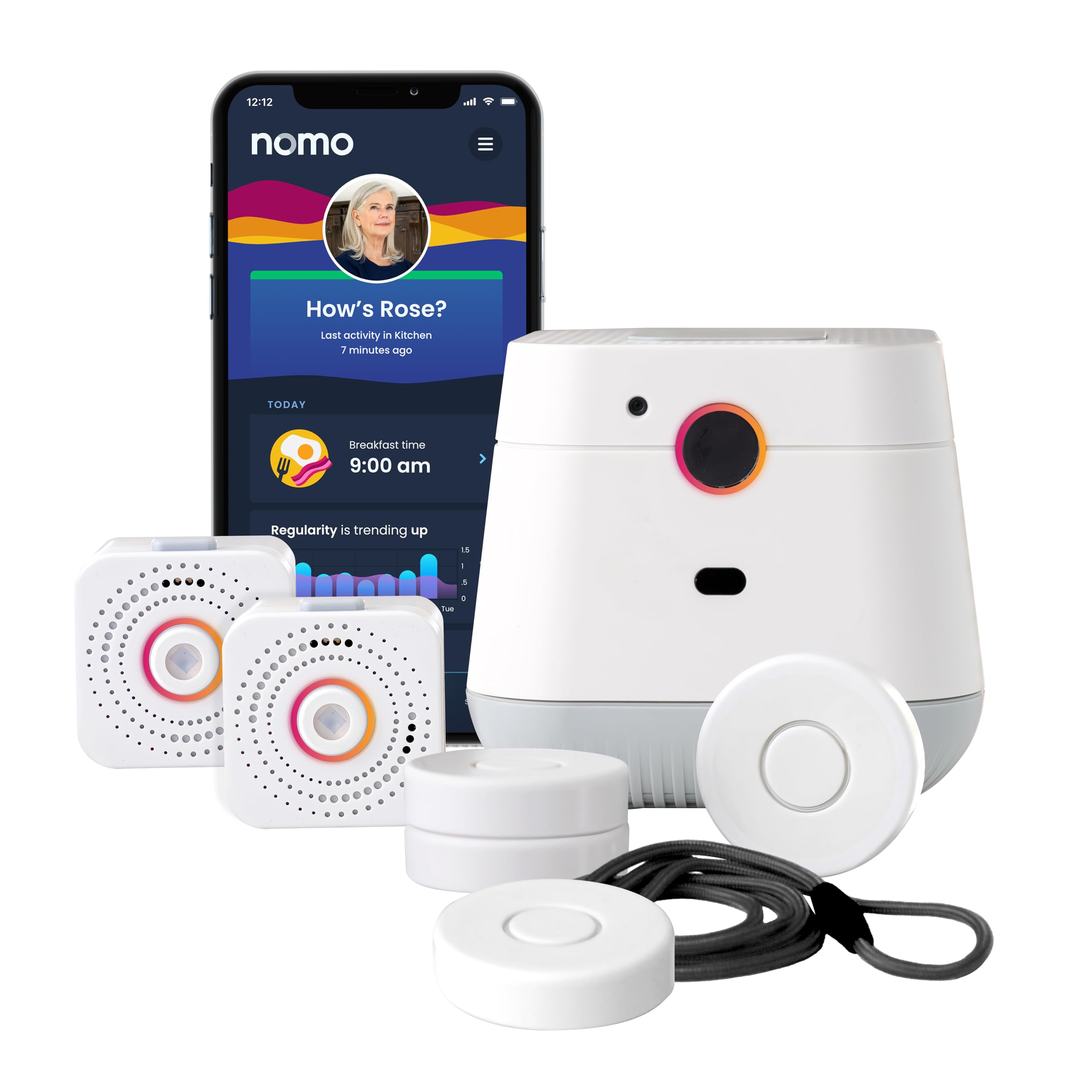
The Nomo Smart Care system is a different approach to senior safety: instead of a wristwatch, it uses a Smart Hub, two motion‑sensing Satellites, and wearable Tags that detect falls and movement. This camera‑free system monitors activity inside the home over WiFi, sending alerts when a fall is detected or when a Tag leaves a safe zone.
Setup is plug‑and‑play — no wiring or technician visits. Two‑way voice communication through the Hub lets caregivers talk to the senior during an emergency. The 60‑day trial of 24/7 monitoring with RapidSOS service gives families time to evaluate before committing to the monthly plan.
The Nomo system only works inside the home and relies on a stable WiFi connection. The Tags need to be worn or placed on key items, and the alert sensitivity must be tuned in the app to avoid false alarms. For seniors who rarely leave the house, this is a practical and privacy‑conscious option, but it cannot replace a mobile cellular‑based watch for outdoor protection.
Why it’s great
- Fast, no‑drill installation with plug‑and‑play setup.
- Camera‑free design respects privacy in the home.
- 60‑day free trial of 24/7 monitoring with RapidSOS.
Good to know
- Only works inside the home — no outdoor GPS protection.
- Requires reliable WiFi; Tags need sensitivity tuning.
- Monthly subscription needed after the trial period ends.
6. SecuLife Fall Alert Pendant
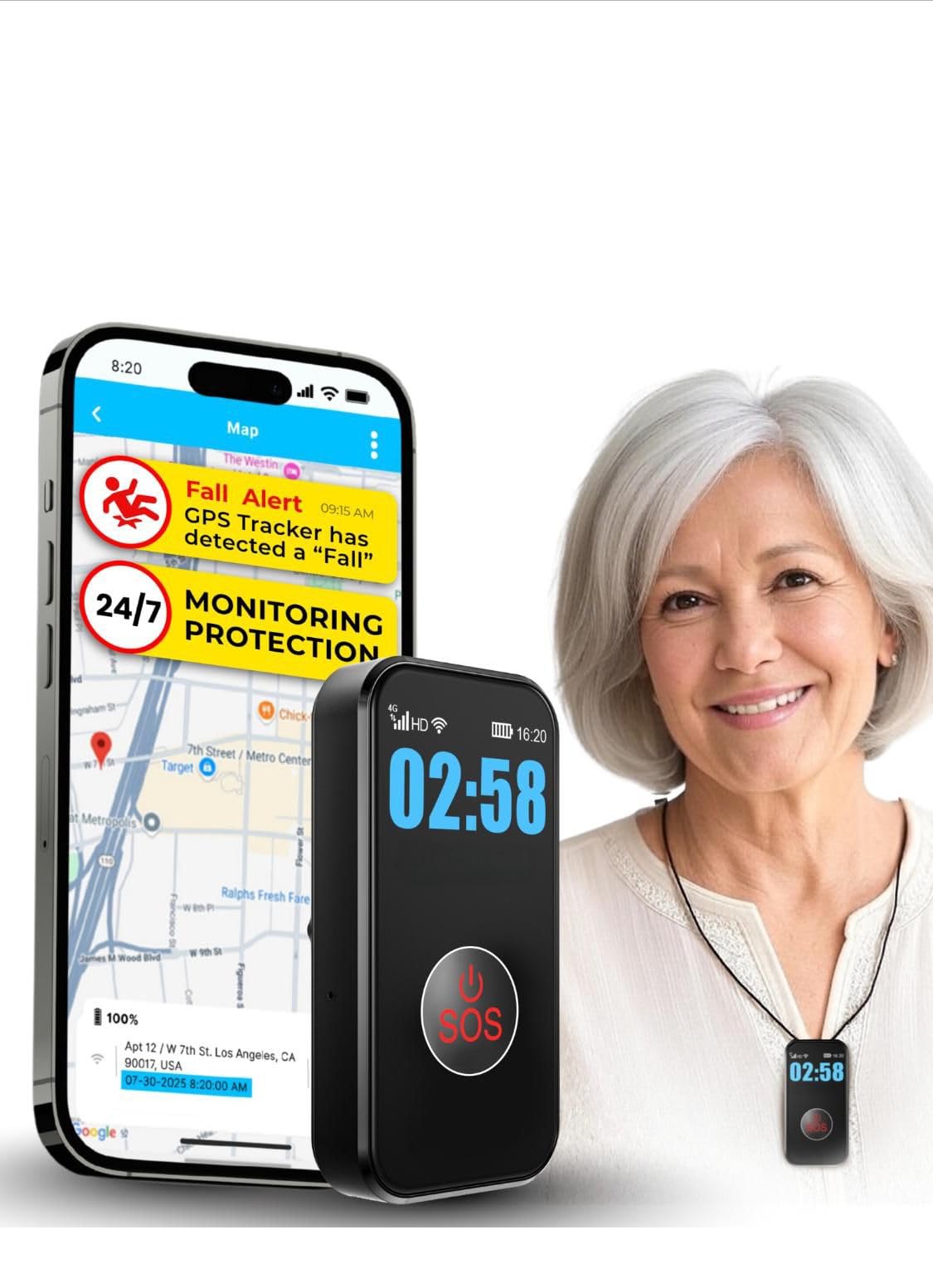
The SecuLife pendant is a simple, necklace‑style medical alert device with full fall detection and GPS tracking. It offers a large SOS button, two‑way speakerphone, and up to six days of battery life thanks to its 1000mAh cell. The IP67 rating means it can be worn in the shower or rain without worry — a critical factor for 24/7 wear.
Real‑time GPS tracking and geofence zone alerts work via the companion app, and the device uses 4G LTE cellular for independent operation. The monthly subscription covers unlimited fall alerts, live tracking, and customer support.
Setup can be a bit challenging initially, and there are scattered reports of the SOS button not triggering during an actual fall in some units. The pendant form factor is less discreet than a watch, and some seniors find the necklace uncomfortable during sleep. For a budget‑friendly entry into cellular‑based fall alert devices, the SecuLife works well once configured properly.
Why it’s great
- Excellent six‑day battery from a large 1000mAh cell.
- IP67 waterproof design for shower and rain use.
- Reliable GPS tracking with geofence zone alerts.
Good to know
- Initial setup can be complicated and time‑consuming.
- Some units have inconsistent fall detection performance.
- Necklace form factor may be less comfortable for sleeping.
7. Seculife Smartwatch (B0FJYKPS5X)
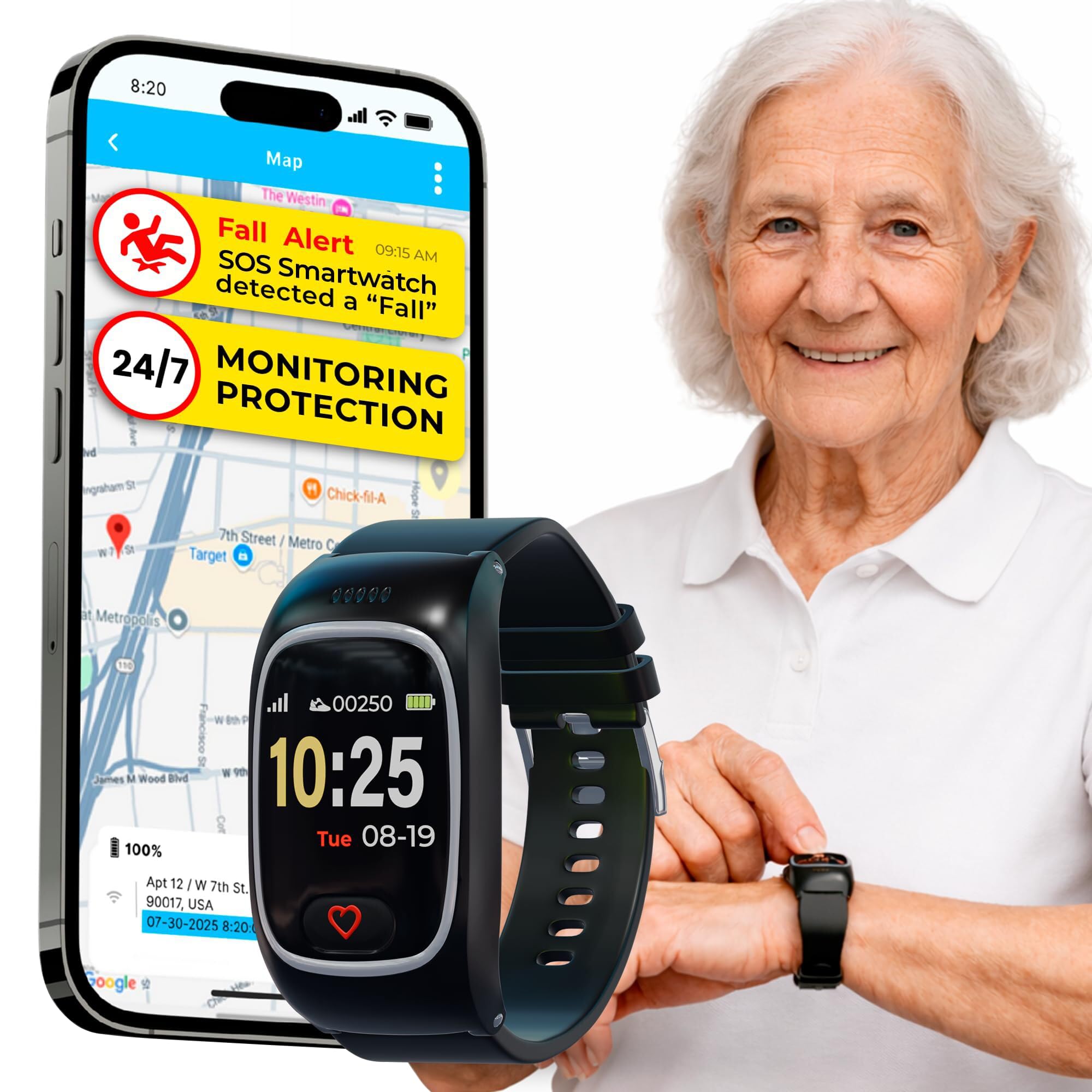
The Seculife Smartwatch brings the SOS functionality of the brand’s pendant into a wrist‑worn form. It supports both 4G and 5G LTE networks, which provides better coverage and future‑proofing than older 4G‑only devices. The auto‑answer feature means when a pre‑approved contact calls, the watch answers without any button press — ideal for seniors who struggle with touchscreens under stress.
GPS tracking and geofencing work through the Secupro app, and the IP67 splash resistance covers daily hand‑washing and rain exposure. The silicone band is comfortable for all‑day wear, and the large SOS button is easy to locate by feel alone.
The battery life is only about one day per charge, which is the biggest drawback — the 680mAh cell struggles to last through a full day with GPS and fall detection active. The monthly subscription start is slightly higher than the pendant version. If you prioritize wrist‑worn convenience over battery endurance, this is a capable entry‑level smartwatch alert.
Why it’s great
- Wrist‑worn form factor preferred by many seniors over a necklace.
- Auto‑answer feature for hands‑free communication in emergencies.
- 4G/5G LTE support ensures broad network coverage.
Good to know
- Battery lasts roughly one day — needs daily charging.
- Monthly subscription starts at per month.
- No in‑depth customer reviews are available yet.
8. Fajocru 4G Fall Detection Watch
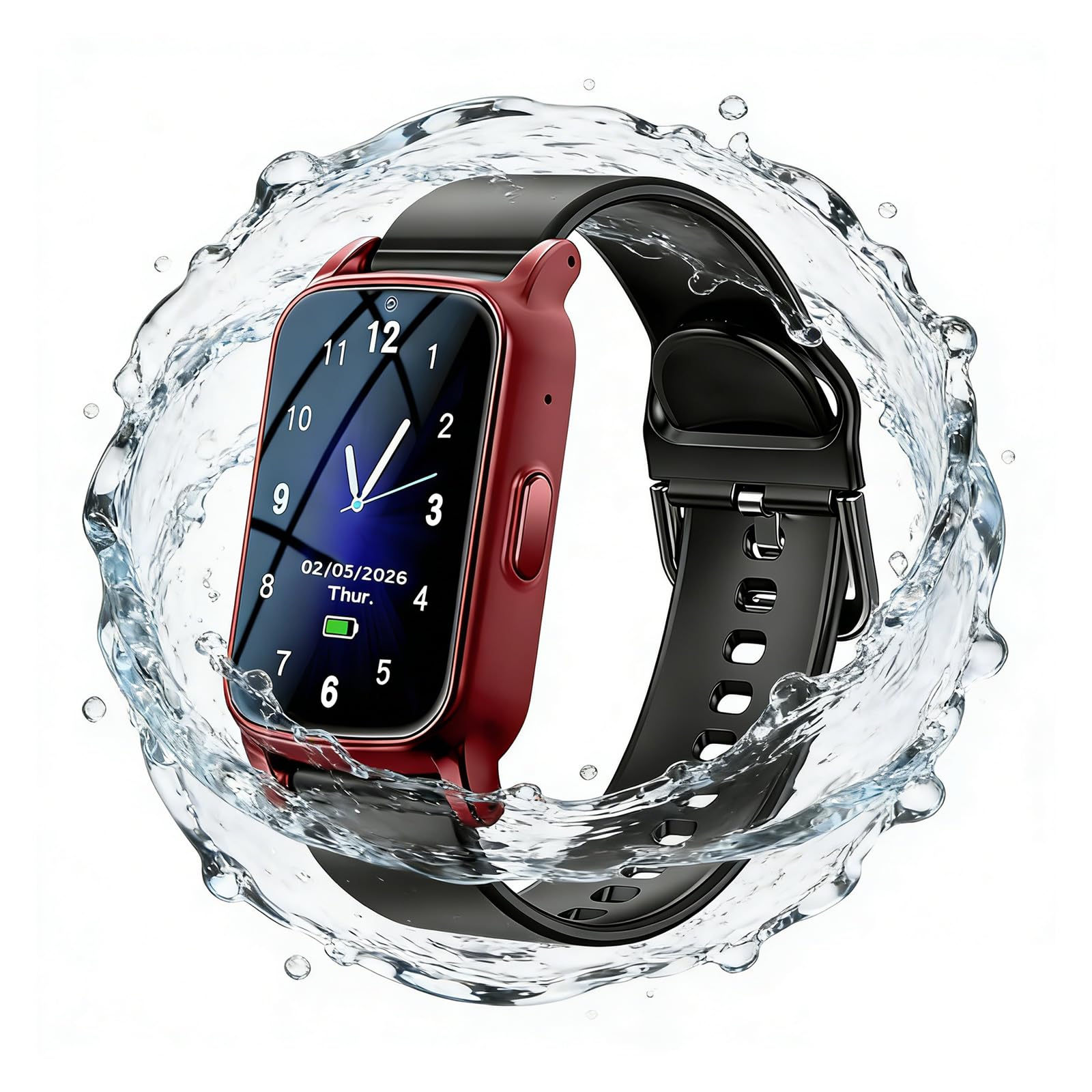
The Fajocru watch features 4G HD video calling, which goes beyond standard two‑way voice and lets family members see their loved one’s face during check‑ins. Fall detection triggers an SOS alarm and sends notifications to preset contacts. The watch also tracks heart rate, blood pressure, SpO2, and sleep stages, consolidating health monitoring into one device.
A major value point is the pre‑installed data‑only SIM that comes with one year of free data service — no monthly subscription for the first 12 months. The IP67 waterproof rating and magnetic charging cable cater to seniors with limited dexterity.
The pre‑installed SIM does not support voice calls, so if you want full phone‑call functionality you must install your own standard SIM with voice service. The 600mAh battery offers about two days of use. Some users report the setup process, especially inserting the SIM correctly, can be confusing. For families who want video contact and a year of free data, this is a compelling option.
Why it’s great
- 4G HD video calling for face‑to‑face check‑ins.
- One year of free data service included with the device.
- Comprehensive health monitoring: heart rate, SpO2, BP.
Good to know
- Pre‑installed SIM is data‑only — voice SIM installation can be tricky.
- Battery life of roughly two days is average at best.
- Setup requires careful SIM card handling to avoid errors.
9. Withings ScanWatch Nova

The Withings ScanWatch Nova is a hybrid smartwatch that looks like a classic stainless steel wristwatch but packs medical‑grade sensors inside. It offers on‑demand ECG, 24/7 heart rate tracking, SpO2, temperature monitoring via the TempTech24/7 module, and advanced sleep staging. The 30‑day battery life is unmatched by any other smartwatch in this roundup.
For seniors who want a stylish watch that tracks vital signs without a screen glowing on their wrist, the ScanWatch Nova is hard to beat. It automatically recognizes over 40 activities and estimates VO2 max for fitness level insights. The accompanying app stores long‑term trend data for health history review.
This watch is not a dedicated medical alert device — it has no fall detection, no SOS button, and no 24/7 monitoring center. The sleep tracking accuracy receives mixed reviews, and some users dislike that alarm management must be done through the app rather than the watch itself. At this premium price point, the Nova is a health‑tracking timepiece, not a primary safety device.
Why it’s great
- Outstanding 30‑day battery life — class‑leading.
- Medical‑grade ECG and comprehensive health tracking in an analog design.
- Stainless steel case and classic watch aesthetics.
Good to know
- No fall detection or SOS emergency button.
- Alarm settings require the app, not the watch interface.
- Sleep staging accuracy is inconsistent compared to dedicated trackers.
FAQ
Will a medical alert watch call 911 automatically?
How does fall detection work on a senior smartwatch?
Can a medical alert watch replace a traditional pendant system?
Final Thoughts: The Verdict
For most users, the medical alert watches for seniors winner is the COCO BT2-X because it combines reliable fall detection, a large senior‑friendly screen, and a comprehensive caregiver app with health tracking at a mid‑range price. If you want 24/7 professional monitoring with a human responder, grab the Medical Guardian MGMove. And for advanced health insights and clinical‑grade sensors in a classic watch design, nothing beats the Withings ScanWatch Nova.