Most meal supplements leave you hungry an hour later because the protein count is too low or the carb source spikes your energy then drops it. The difference between a supplement that acts like a snack and one that actually replaces a meal comes down to specific ratios of protein, fiber, and whole-food carbohydrates that most labels don’t explain clearly.
I’m Emma — the founder and writer behind Baby Bangs. I’ve spent years cross-referencing third-party lab test results, ingredient sourcing documents, and real user satiety reports across dozens of meal supplement brands to separate the formulas that deliver genuine nutrition from those that are just expensive protein powders in a bigger tub.
This analysis focuses on the seven most telling options on the market right now, from ready-to-drink medical-grade bottles to whole-food protein blends designed for body recomposition. Whether you are managing a medical need, trying to control your weight, or just trying to avoid the afternoon slump, finding the right meal supplement means looking past the marketing claims and checking the actual macronutrient breakdowns and ingredient quality markers that matter.
How To Choose The Best Meal Supplement
A true meal supplement must satisfy you for at least three to four hours. That requires a specific macronutrient structure that is different from a post-workout recovery shake. Here are the three non-negotiable factors to check before you buy.
Protein Quantity and Completeness
Look for at least 15 grams of protein per serving, and make sure the protein source is complete — meaning it contains all nine essential amino acids. Whey, egg white, pea protein, and soy protein are complete. Many plant-based blends combine pea and rice to achieve completeness. For a meal replacement, 20 to 25 grams per serving is the sweet spot for lasting satiety. Anything under 15 grams is functionally a snack, not a meal.
The Fiber Factor
Fiber is what turns a protein shake into a meal. Without at least 3 to 5 grams of fiber per serving, the drink will digest too quickly and leave you hungry. Prebiotic fiber like chicory root, acacia gum, or oat fiber also supports gut health. Some products use inulin or tapioca fiber, which can cause gas for sensitive stomachs — check your own tolerance.
Ingredient Integrity and Additives
Meal supplements are consumed daily, often more than once. That means every ingredient matters. Steer clear of products with artificial colors, hydrogenated oils, or proprietary blends that hide the exact dosage of key nutrients. Organic certification, non-GMO verification, and third-party testing for heavy metals and contaminants are markers of a brand that takes its supply chain seriously. If you have allergies, check for soy, dairy, gluten, and nut cross-contamination warnings.
Quick Comparison
On smaller screens, swipe sideways to see the full table.
| Model | Category | Best For | Key Spec | Amazon |
|---|---|---|---|---|
| Kate Farms Organic 1.0 | Senior/Specialist | Medical nutrition or tube feeding | 325 calories, 16g protein, no allergens | Amazon |
| Animal Meal | Whole Food Gain | High calorie muscle building | 46g protein, 5 lbs per tub | Amazon |
| Premier Protein + Fiber | Gut Health | Daily protein plus digestive support | 25g protein, 7g prebiotic fiber | Amazon |
| Orgain Organic Vegan | Plant Protein | Clean organic plant-based shakes | 21g protein, 6g fiber, USDA Organic | Amazon |
| PlantFusion Complete Meal | Allergen Free | Strict dietary restrictions | 20g protein, 21 vitamins and minerals | Amazon |
| Soylent Banana | Ready to Drink | On-the-go complete nutrition | 20g protein, 400 calories, 39 nutrients | Amazon |
| Optimum Nutrition Gold Standard | Whey Classic | Post-workout or lean diet supplement | 24g whey protein, low carb/fat | Amazon |
In‑Depth Reviews
1. Kate Farms Organic 1.0 Vanilla

Kate Farms sits in a category of its own because it is formulated for medically supervised nutrition — tube feeding or sole-source oral nutrition — but works perfectly as a daily meal supplement for anyone with severe allergies or digestive issues. Vanilla 1.0 delivers 325 calories per 11-ounce bottle with 16 grams of complete organic plant protein. The formula is completely free of dairy, soy, corn, gluten, and nuts, which makes it the safest choice for highly restricted diets.
Real user reviews consistently describe it as “the best tasting protein shake I’ve ever had” from people who tried dozens of other options and ended up pouring them down the drain. Several users report using it to regain weight after surgery, illness, or appetite loss from medications. The texture is thin enough for tube feeding but creamy enough for drinking straight from the bottle. The organic certification adds confidence for daily, long-term use.
The trade-off is that each bottle delivers only 16 grams of protein. Active adults trying to hit high protein targets for muscle building will need to pair this with additional protein sources. It also comes in ready-to-drink bottles only — no powder format — which makes it less flexible for customizing flavor or mixing into recipes. For medical-grade purity and unmatched allergen safety, this is the gold standard.
Why it’s great
- Medical-grade formula suitable for tube feeding and sole-source nutrition
- Completely free of dairy, soy, corn, gluten, and nuts
- USDA Organic with clean, plant-based ingredients
- Thin, drinkable texture that actually tastes good
Good to know
- Only 16g protein per serving — lower than most competition
- Ready-to-drink only, no powder option for flexibility
- More expensive per serving than powder alternatives
- Not ideal for high-protein muscle building goals
2. Animal Meal

Animal Meal is built for a very specific audience: performance athletes who need a true meal replacement that supports muscle maintenance or a body recomposition phase. Each serving delivers 46 grams of protein from a blend of pea protein isolate, instant egg white, whole egg protein, and beef protein isolate. That is nearly double the protein count of most typical meal supplements and makes this product effective for serious gains.
The carb blend uses sweet potato powder, pea starch, tapioca dextrose, and rolled oats — actual whole food sources rather than cheap maltodextrin or sugar. Users report that the flavor is naturally sweetened with stevia and monk fruit, with no artificial aftertaste. The powder mixes reasonably well but some residue from the pea protein is common, and the flavor is less sweet than standard protein powders, which is a deliberate choice for cleaner nutrition.
At 5 pounds per tub, this is a serious commitment in terms of both space and daily calories. It is lactose-free and non-dairy, so it avoids the bloating that many whey-sensitive users experience. The 46 grams of protein per serving can be overkill for smaller individuals or those with lower daily protein needs. For athletes and hardgainers who need dense, whole-food nutrition in a scoop, this is the strongest option in the list.
Why it’s great
- 46g high-quality protein from four whole food sources
- Carb blend uses sweet potato and oats — no maltodextrin
- Lactose-free and non-dairy for sensitive stomachs
- Third-party tested for quality and potency
Good to know
- Very high protein count may be too much for smaller individuals
- Flavor is less sweet than typical meal shakes
- Powder leaves some residue during mixing
- Large tub takes up significant cabinet space
3. Premier Protein Powder Plus Fiber
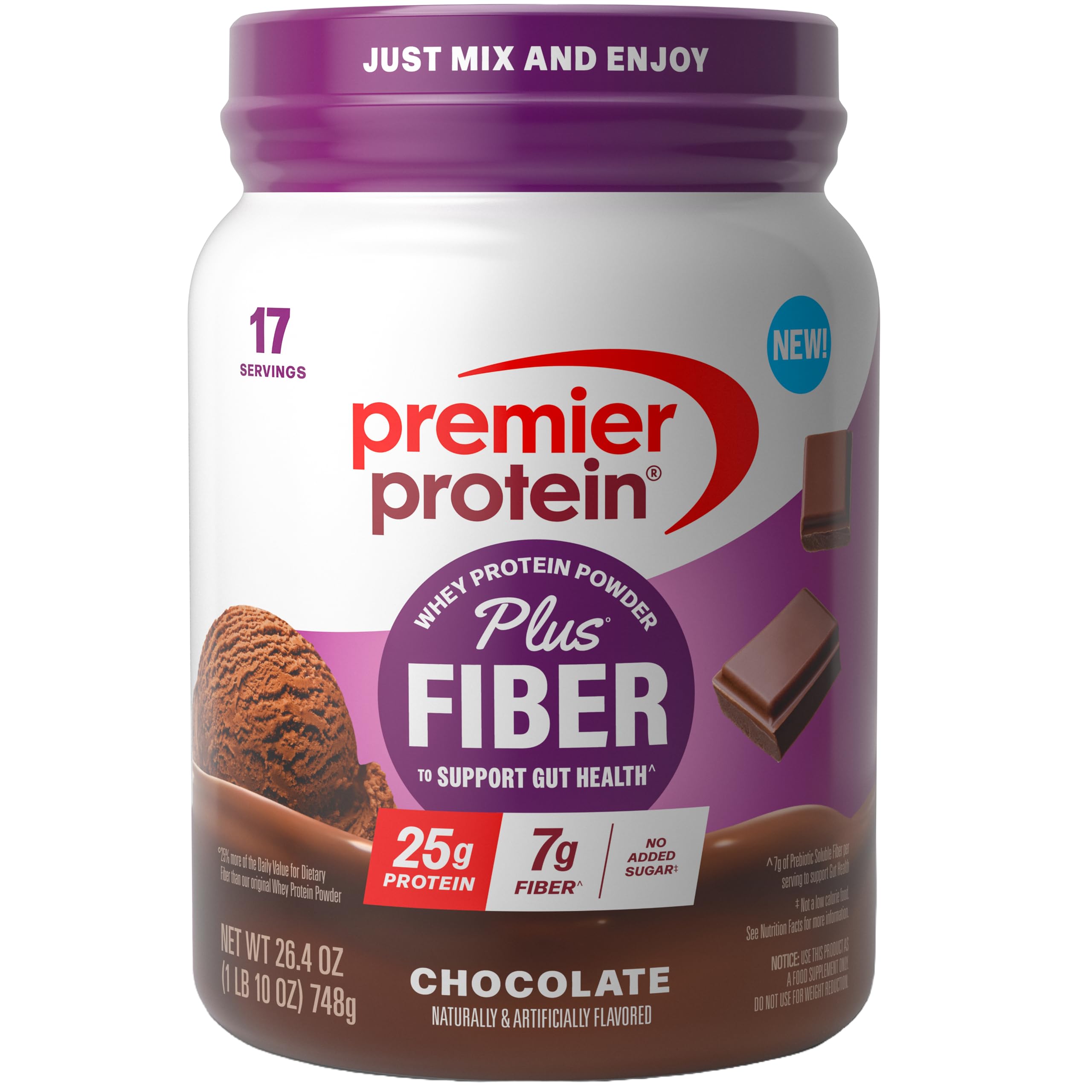
Premier Protein took its award-winning whey powder and added 7 grams of prebiotic fiber per serving to create a meal supplement that supports both muscle maintenance and gut microbiome health. The chocolate flavor earns genuine praise from users: “doesn’t taste like drinking chalk” and “like a soda fountain drink” are frequent comments. The American Masters of Taste Gold Medal backing confirms the flavor quality is above the industry average.
Each serving provides 25 grams of whey protein with no added sugar, making it suitable for low-carb and keto-inclined eaters. Users report it mixes exceptionally well — no clumps even with just a spoon or shaker bottle. The prebiotic fiber blend uses three different fiber types to nourish good gut bacteria, and several reviewers noted zero digestive discomfort, which is rare for fiber-fortified protein products.
The main caveat is that this is a whey-based product, which means it is not suitable for vegans or those with dairy sensitivities. It also uses sucralose as a sweetener, which some users prefer to avoid. The chocolate flavor works best as a coffee creamer or smoothie base — plain water mixing produces a thinner texture that some find less satisfying. For a daily protein boost with digestive benefits, this is a top-tier choice for omnivores.
Why it’s great
- 25g whey protein plus 7g prebiotic fiber per serving
- Award-winning chocolate flavor with no chalky aftertaste
- Mixes very easily without clumping
- No added sugar and low carb profile
Good to know
- Whey-based — not suitable for vegans or dairy-free diets
- Contains sucralose for sweetness
- Thinner texture when mixed with water alone
- Container size may deplete faster than expected for daily use
4. Orgain Organic Vegan Protein Powder
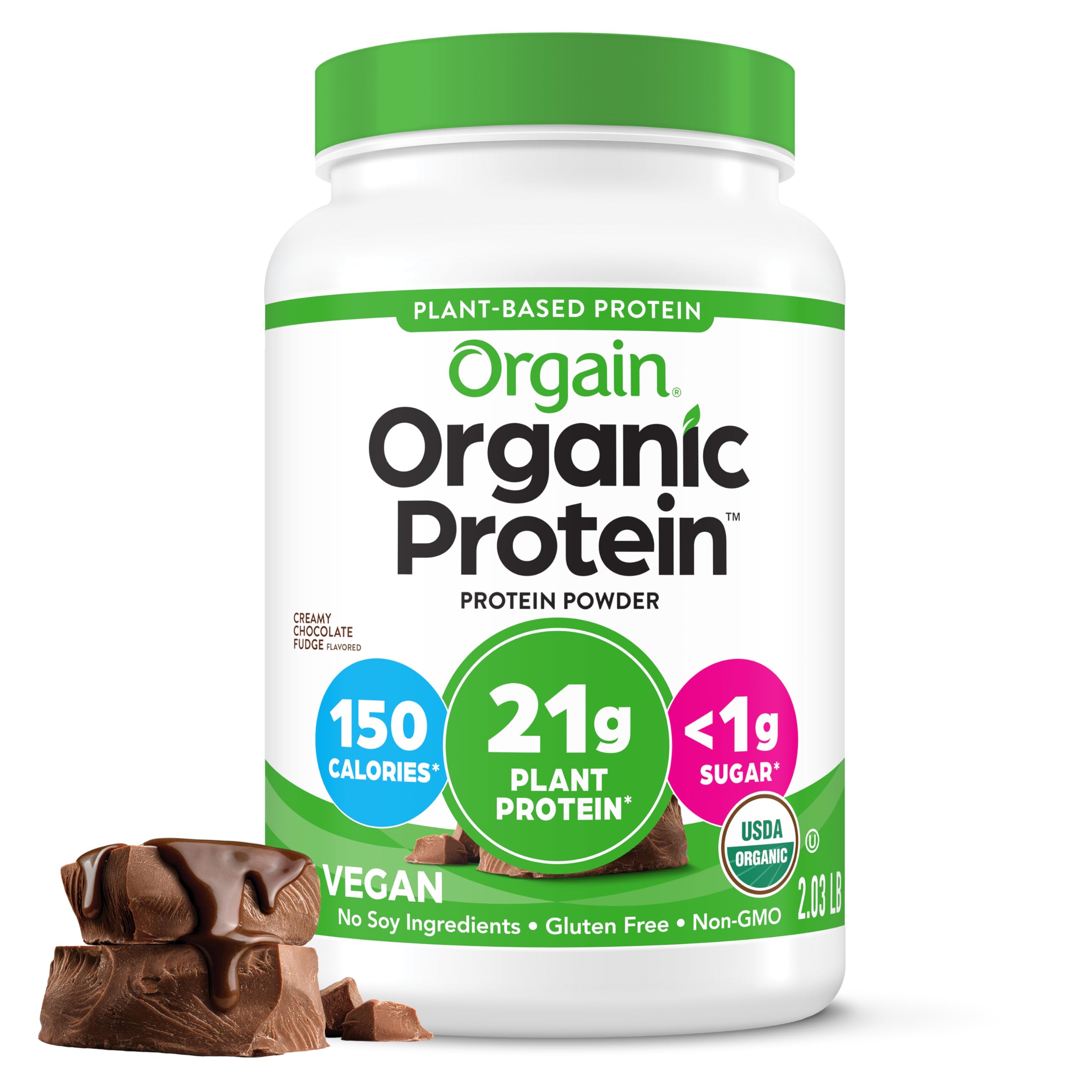
Orgain has built a loyal following by delivering a certified USDA Organic plant protein that actually tastes good — a combination that is harder to find than it should be. The creamy chocolate fudge flavor contains 21 grams of organic plant protein from peas, brown rice, and chia seeds, with 6 grams of prebiotic fiber and zero added sugar. Real users consistently call it “affordable” and “delicious,” noting that it blends smoothly into yogurt, oatmeal, chia pudding, and smoothies without grittiness.
The ingredient list is refreshingly clean: no erythritol, no carrageenan, no artificial anything, no soy, no dairy, no gluten. It is also kosher and Non-GMO verified. The protein blend covers all nine essential amino acids, so muscle repair and satiety are fully supported. Several long-term users report weight loss as a side benefit because the shake keeps them full for hours between meals.
Where it loses a step against some competitors is the texture. Multiple reviews mention that it can be gritty if shaken by hand in a standard blender bottle — a NutriBullet or high-speed blender solves this easily. The chocolate flavor is strong and natural, but the vanilla and other flavors are not as well-regarded. For the price and organic certification, this is the best budget-friendly plant option on the list.
Why it’s great
- Certified USDA Organic and Non-GMO verified
- 21g complete plant protein from peas, rice, and chia
- 6g prebiotic fiber with zero added sugar
- Very affordable for the quality of ingredients
Good to know
- Can be gritty if not blended with high-speed equipment
- Chocolate flavor is great, but other flavors are hit or miss
- Not a pure meal replacement — better as a protein supplement
- Some users need to experiment with liquid ratios for ideal texture
5. PlantFusion Complete Meal Replacement

PlantFusion positions itself as the ultimate allergy-friendly meal supplement, and the label backs it up: no dairy, no soy, no gluten, no nuts, no eggs, no rice, no fish, no shellfish, and no artificial anything. The Chocolate Caramel flavor delivers 20 grams of plant-based protein from a proprietary amino-acid-infused blend designed to compete directly with whey in terms of muscle repair. Each serving also includes flax and algae oils for essential fatty acids plus 21 whole-food vitamins and minerals from actual fruits and vegetables.
The digestive enzyme fortification is a smart addition for anyone who struggles with bloating from plant proteins. This formula is designed to be easy on the stomach, and the “Purity Promise” means it is also free of GMOs, gluten, and major allergens. Users describe the taste as “naturally delicious” without the chalkiness that plagues many plant-based powders.
The main limitation is serving size — the 1-pound tub is smaller than most competitors, making the price per serving higher than a bulk option like Orgain or Animal Meal. The protein count at 20 grams is solid but not exceptional, and the complete nutrition profile with vitamins and minerals is helpful but not unique. For someone with severe food allergies who needs a reliable, safe daily shake, PlantFusion fills a critical gap.
Why it’s great
- Completely free of the top eight allergens
- 20g plant-based protein with digestive enzymes for easy digestion
- Includes essential fatty acids from flax and algae oils
- 21 whole-food vitamins and minerals from real produce
Good to know
- 1-pound tub is smaller — higher cost per serving
- Protein count is good but not top-tier
- Chocolate Caramel flavor may not appeal to all palates
- Not USDA Organic like some alternatives
6. Soylent Banana Meal Replacement Shake

Soylent has been a pioneer in the meal replacement category for years, and the banana flavor is one of its most popular iterations. Each 14-ounce bottle delivers 400 calories with 20 grams of complete vegan protein from soy, 28 vitamins and minerals, 9 amino acids, and healthy omega-3 and omega-6 fats. The formula is gluten-free, dairy-free, nut-free, low glycemic index, and kosher — making it accessible to a wide range of dietary restrictions.
The biggest strength of Soylent is convenience. There is no powder to measure, no shaker to clean, no blender needed — you grab a bottle and it is a complete meal in seconds. The banana flavor is mild and pleasant, not artificially intense. With only 1 gram of total sugars and slow-burning carbs designed for sustained energy, this is an excellent option for busy professionals, travelers, or anyone who struggles to stop for a real meal.
The trade-off for that convenience is control. You are locked into the exact nutrient profile Soylent provides, and the primary protein source is soy, which some prefer to avoid. The 400-calorie count per bottle may be too high for some snack-style meal supplements or too low for those seeking a high-protein, lower-calorie option. For zero-effort complete nutrition that travels anywhere, Soylent is the most practical choice.
Why it’s great
- Ready to drink with zero preparation needed
- 400 calories with complete, balanced nutrition
- Low sugar, low GI, and free of major allergens
- Portable and shelf-stable for on-the-go use
Good to know
- Soy-based protein — not ideal for soy-free diets
- Fixed 400-calorie count limits customization
- More expensive per serving than powder alternatives
- Taste is mild but not as rich as some chocolate options
7. Optimum Nutrition Gold Standard Whey
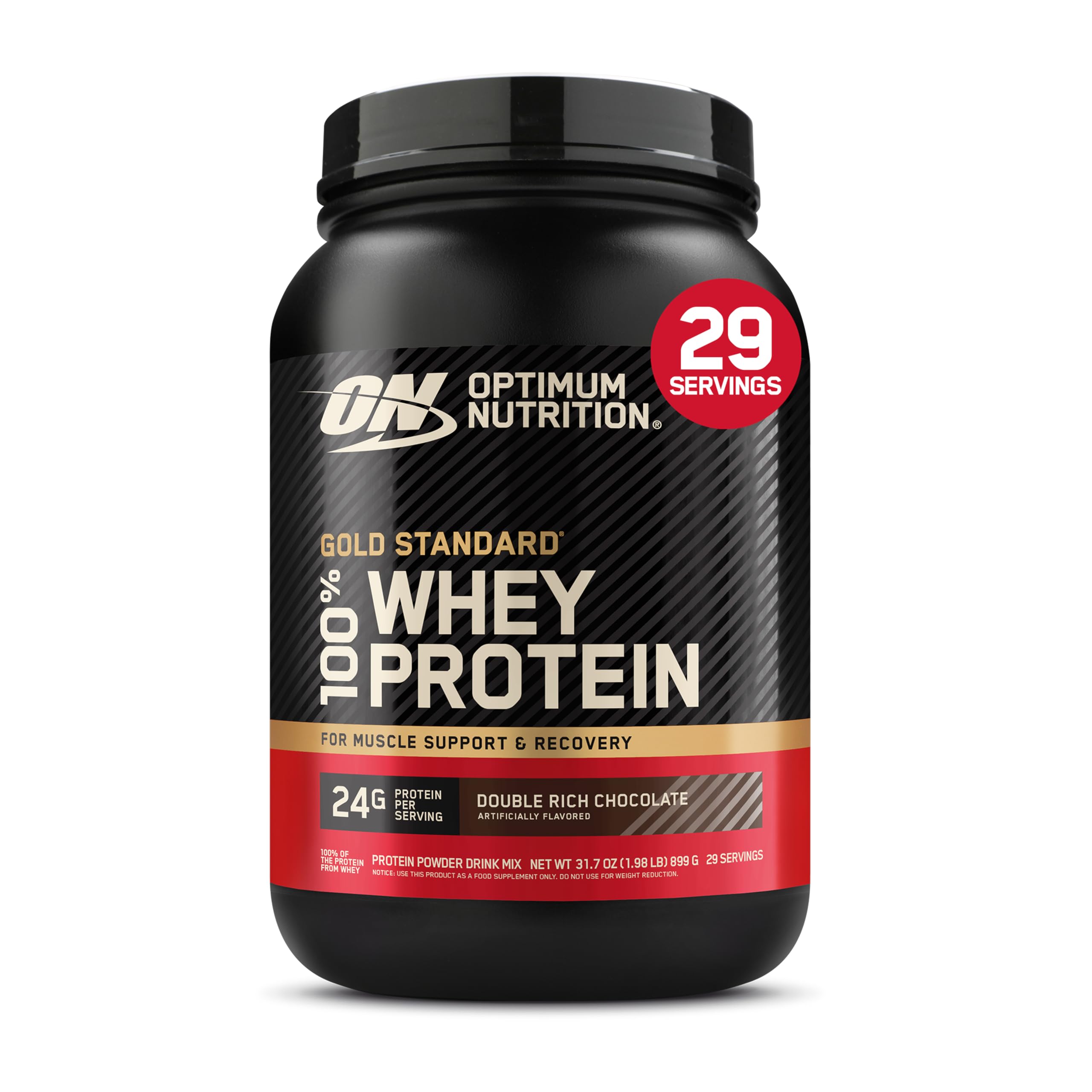
Optimum Nutrition Gold Standard is the most recognized whey protein in the world for good reason — it has been the benchmark for 35 years. The Double Rich Chocolate flavor delivers 24 grams of protein per scoop with whey protein isolate as the primary ingredient, meaning most of the fat and carbs have been filtered out. Each serving contains only about 1 gram of sugar and 3 grams of carbs, making it ideal for cutting phases or anyone tracking macros tightly.
The “instantized” formula dissolves smoothly in water, milk, or smoothies with minimal effort — no blender required. Users consistently report that it mixes without clumps and tastes genuinely good, unlike many budget whey powders that leave a chalky film. The 5.5 grams of naturally occurring BCAAs per scoop support muscle recovery, and the 11 grams of EAAs provide a complete amino acid profile.
This is not a standalone meal replacement — it lacks the fiber, fats, and broad vitamin profile that define a true meal supplement. It is a high-quality protein supplement that can be used as part of a meal shake if you add your own fat and carbohydrate sources. For pure protein quality, mixability, and trust in the brand, Gold Standard remains undefeated. It is simply not a complete meal in a scoop without home additions.
Why it’s great
- 24g premium whey isolate per scoop with minimal carbs and fat
- Industry-leading mixability — dissolves instantly with a spoon
- Double Rich Chocolate flavor is genuinely good
- Trusted brand with 35 years of consistent quality
Good to know
- Not a complete meal replacement without adding fats and fiber
- Whey-based — not suitable for vegans or dairy-free diets
- No fiber or digestive enzymes included
- Primarily designed for post-workout, not whole-meal satiety
FAQ
What makes a meal supplement different from a protein powder?
Can I use a meal supplement every day without side effects?
How much protein should a meal supplement have to keep me full?
Are plant-based meal supplements as effective as whey-based ones?
What certifications should I look for on a meal supplement label?
Final Thoughts: The Verdict
For most users, the meal supplement winner is the Kate Farms Organic 1.0 because it sets the standard for ingredient safety with medical-grade purity and no allergens — a true meal replacement that works for almost any dietary restriction. If you want the highest protein density for serious muscle building, grab the Animal Meal. And for zero-effort, grab-and-go complete nutrition, nothing beats the Soylent Banana — just open and drink.