Falling asleep on a deflating, wafer-thin pad after a long hike isn’t just uncomfortable — it ruins the entire trip. The secret to waking up rested isn’t a bigger tent or a softer sleeping bag; it’s a camping mattress that effectively separates you from the hard, cold ground. The right pad delivers genuine spinal alignment, thermal insulation with a solid R-value, and a packed size that won’t eat your gear space.
I’m Emma — the founder and writer behind Baby Bangs. I’ve spent years digging through field-test data, materials science, and real owner reviews to separate the camping pads that truly perform from those that just look good on a spec sheet.
After evaluating thickness, R-value, packed weight, and durability across dozens of models, these are my picks for the best mattress for camping that actually keeps you sleeping soundly all night long.
How To Choose The Best Mattress For Camping
The perfect camping mattress balances three variables: insulation against the ground, plush support for pressure points, and a packed size that fits your transport method. Car campers can prioritize thickness and width, while backpackers must obsess over weight and packed diameter. Four-season campers need an R-value above 5, while summer-only users can get away with a thinner, lower-R-value pad. A mattress that delivers on all fronts will have a dense foam core, a durable outer fabric, and a valve system that doesn’t fight you during setup or takedown.
R-Value and Insulation
R-value measures a pad’s resistance to conductive heat loss into the ground. A pad rated at 2.0 is acceptable for summer trips above 50°F, while a 4.0 rating pushes comfort into early spring and fall. Winter camping demands an R-value of 5.0 or higher. Beware of thin air-only pads that claim high R-values without the foam density to actually block ground chill — they can deflate or shift overnight, leaving you cold by 3 AM.
Thickness and Foam Density
Thicker isn’t always better if the foam quality is low. A 2.5-inch pad made of high-resilience open-cell foam can feel more supportive than a 4-inch pad stuffed with cheap polyurethane that compresses flat under your hips. Side sleepers need at least 3 inches of loft to keep the shoulder and hip from bottoming out. Stomach sleepers can get away with 2 inches, provided the foam density is 25D or higher. For couples, look for pads with side-connect systems so you don’t slide apart overnight.
Packed Size and Portability
The packed volume of a self-inflating pad is its biggest downside — foam takes up space. A typical 3-inch-thick rectangular pad rolls to about 8 inches in diameter and 28 inches long. That’s fine for car camping or a large duffel, but brutal for a 40-liter backpack. New Y-shaped or coring constructions reduce packed volume by up to 60%, making them viable for motorcycle or kayak camping where space is tight. Always check the rolled dimensions before buying, not just the weight.
Quick Comparison
On smaller screens, swipe sideways to see the full table.
| Model | Category | Best For | Key Spec | Amazon |
|---|---|---|---|---|
| Therm-a-Rest MondoKing 3D | Premium | Luxury car camping | 7.0 R-value, 4.25″ thick | Amazon |
| Exped MegaMat Medium Wide | Premium | Tent & SUV dual use | 8.1 R-value, 4″ thick | Amazon |
| Acacia 4″ Self Inflating | Premium | Compact premium sleep | 4.3″ thick, Y-shape core | Amazon |
| Hikenture 4″ Thick | Mid-Range | Tall sleepers | 9.5 R-value, 80″ long | Amazon |
| Therm-a-Rest BaseCamp | Mid-Range | Frontcountry comfort | 6.0 R-value, WingLock valve | Amazon |
| NYECHTO Self Inflating | Budget | Electric pump convenience | 9.5 R-value, 3.14″ thick | Amazon |
| Sea to Summit Camp Plus | Budget | 4-season backpacking | 4.3 R-value, 2.6″ thick | Amazon |
In‑Depth Reviews
1. Therm-a-Rest MondoKing 3D Self-Inflating Camping Sleeping Pad

The MondoKing 3D sets the benchmark for car-camping luxury. Its 4.25-inch StrataCore construction sandwiches a continuous layer of thermal foam between alternating ridges of air and foam, delivering a 7.0 R-value that handles sub-freezing ground without a second thought. The TwinLock valve system separates inflation and deflation into two dedicated one-way valves, cutting breakdown time dramatically compared to single-valve competitors.
The 3D vertical sidewalls create a true 80-by-30-inch sleep surface with zero taper — your feet and shoulders get the same generous width as your torso. The stretch-knit fabric layer adds a soft, almost sheet-like feel against skin, which is a rarity at this thickness. Rolled size is 31 by 10.3 inches, heavy at 5.5 pounds, but the included pump sack makes inflation effortless without an electric pump.
This pad is overkill for summer-only campers and too heavy for any backpacking trip. But if you drive to the campsite and want a mattress that rivals a home bed in comfort and warmth, the MondoKing 3D is the definitive choice. The limited lifetime warranty and made-in-USA construction add long-term confidence.
Why it’s great
- Exceptional 7.0 R-value for true winter use
- 3D sidewalls offer a full 30 inches of width
- TwinLock valves speed up inflation and deflation
- Stretch knit fabric feels like a real bed sheet
Good to know
- Heavy at 5.5 pounds — car camping only
- Premium-tier investment
- Requires a fully open area to self-inflate flat
2. Exped MegaMat Medium Wide – Self Inflating Soft Car Sleeping Mat
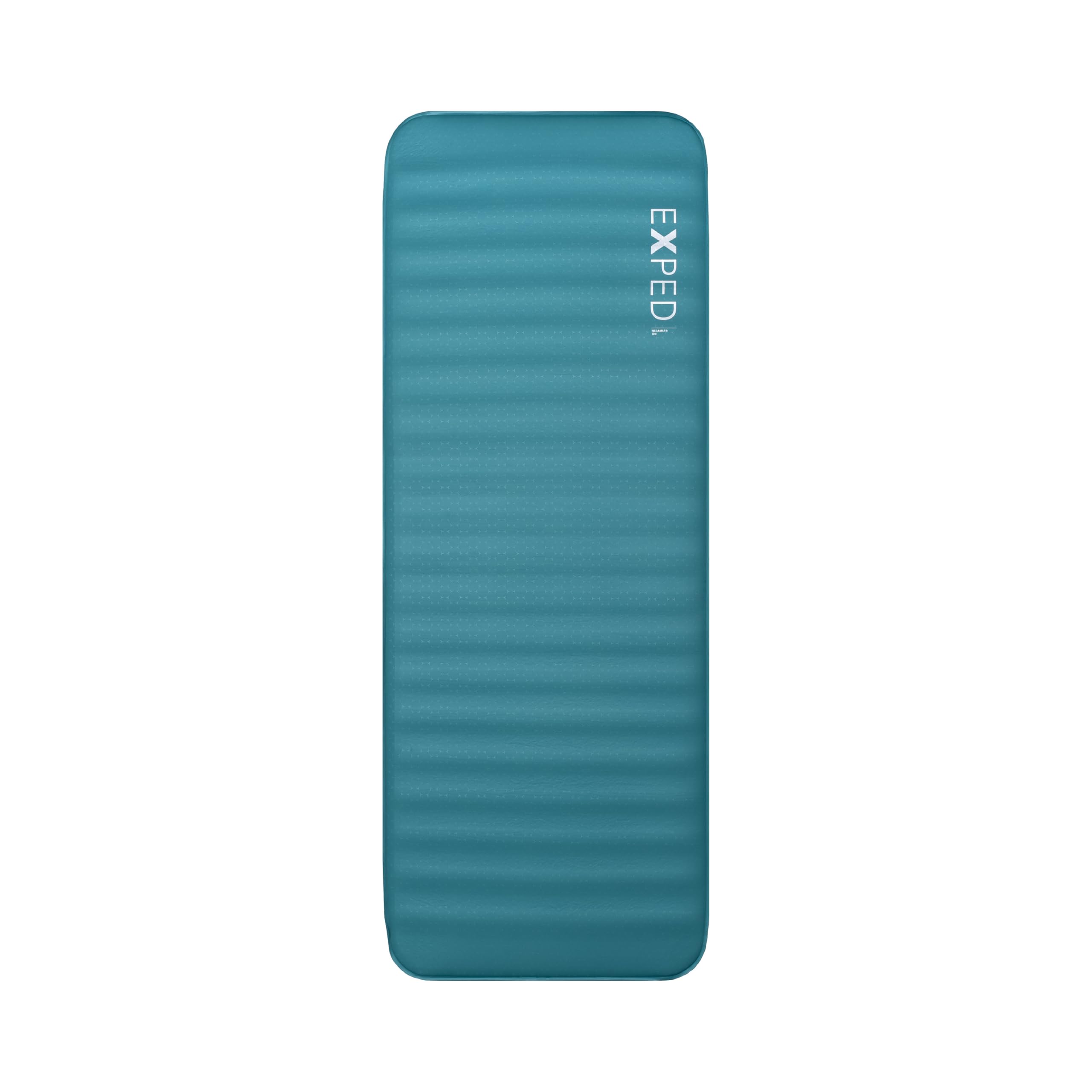
The MegaMat Medium Wide bridges the gap between tent ground pads and SUV mattress solutions. Its 4-inch open-cell foam core uses air-core-channeled insulation to achieve an impressive 8.1 R-value, making it one of the warmest self-inflating pads on the market. The 3D vertical sidewalls prevent any tapering, so you get a consistent 25.6-inch width from head to toe.
Exped uses 100% recycled 4-way stretch tricot polyester for the surface fabric, which feels soft against bare skin and doesn’t create that crinkly plastic sensation common to cheaper pads. The welded side handle makes repositioning the pad inside a tent or SUV much easier than griping the edge. It includes a Top-Up Pump for fine-tuning firmness, and the self-inflating core means you don’t have to blow into any valves.
At 73 ounces, this isn’t a backpacking pad — it’s built for vehicle-supported camping where weight doesn’t matter. The trade-off for that 8.1 R-value and plush surface is a packed volume that demands a larger stuff sack. The repair patch kit is a smart inclusion for multi-year durability.
Why it’s great
- Excellent 8.1 R-value for extreme cold
- 4-way stretch recycled fabric is quiet and soft
- Welded side handle for easy positioning
- Top-Up Pump for custom firmness control
Good to know
- Heavy for its size at 4.5 pounds
- Packed volume is substantial
- Best suited for car or SUV camping
3. Acacia 4″ Thick Self Inflating Sleeping Pad with Foam

The Acacia pad solves the biggest complaint about thick foam mattresses — packed size. Its Y-shaped telescopic foam structure reduces packed volume by up to 60% compared to conventional 4-inch foam pads, making it genuinely feasible for motorcycle, kayak, or tight car camping setups. The built-in crease line that forms during deflation guides a fast, tidy roll every time.
At 4.3 inches thick with high-resilience solid foam, the pad supports up to 440 pounds without bottoming out. The 30D elastic fabric with TPU-reinforced coating resists punctures and abrasions well, and the heat-molded seams prevent air loss at the edges. The 2-way valve handles the heavy lifting of self-inflation, and the included carry bag doubles as a pump sack for fine-tuning firmness.
Side buckles let you connect two pads together, which is a welcome feature for couples. The R-value of 6 is solid for three-season use and mild winter camping. Some early units experienced air retention issues, though Acacia’s customer service team has a strong track record of sending replacement pads quickly.
Why it’s great
- Y-shaped foam core cuts packed volume significantly
- 4.3-inch thickness rivals luxury home mattresses
- R-value of 6 handles cold three-season camping
- Side buckles for connecting two pads
Good to know
- Some users report air retention issues
- Fabric is durable but not silent against tent floors
- Best with an electric pump for full inflation
4. Hikenture 4 INCH Thick Self Inflating Sleeping Pad

The Hikenture pad stands out for its generous 80-by-28-inch footprint, which provides genuine extra room for taller campers and those who move a lot during sleep. The 4-inch memory foam core is paired with an air layer to achieve a 9.5 R-value, making it one of the most insulated pads in this segment. This foam-air hybrid design also helps it pack down smaller than a traditional all-foam pad of the same thickness.
The patented 2-way valve self-inflates in a few minutes, and the included pump sack tops it off without requiring lung power. On the deflation side, the valve stops air from re-entering the pad, so you can roll it up without fighting constant reinflation. The polyester surface is quiet and feels smooth against skin, though some users note a slight squeaking noise when the pad rubs against car interiors or tent floors.
At 6.5 pounds, this pad is heavy for backpacking but perfect for car camping. Real reviews consistently praise how the 4-inch thickness keeps hips and shoulders from touching the ground, even for side sleepers. The carry bag has a large opening for stuffing, which simplifies packing compared to bags with narrow necks.
Why it’s great
- 80 x 28 inches fits tall campers easily
- 9.5 R-value handles extreme winter conditions
- Valve prevents air backflow during deflation
- Memory foam-air hybrid packs smaller than pure foam
Good to know
- Heavy at 6.5 pounds
- Surface can squeak against certain materials
- Requires full 2-4 hour expansion before first use
5. Therm-a-Rest Basecamp Self-Inflating Camping Sleeping Pad

The Basecamp is Therm-a-Rest’s dedicated frontcountry pad, offering a balance of comfort and convenience for campers who drive to the site. Its WingLock valve inflates three times faster than classic twist valves and features a one-way deflect knob for lightning-fast deflation. The 6.0 R-value provides year-round insulation for most climates, keeping you warm down to about 15°F.
At 2 inches thick, this pad won’t match the plushness of 4-inch models, but the dense thermal foam supports sleepers up to 1440 pounds without sagging. The 77-by-30-inch X-Large size offers a generous 30-inch width that gives side sleepers room to bend a knee without falling off. The PFAS-free DWR coating on the stuff sack is a thoughtful environmental upgrade.
This pad is less bulky than many competitors, rolling to 31 by 7.5 inches at 4 pounds. That makes it a viable option for canoe or large backpack setups, though purist backpackers will still prefer a lighter air-only pad. The USA-made construction and Therm-a-Rest’s warranty back the build quality with confidence.
Why it’s great
- WingLock valve is fast and reliable
- 30-inch width offers generous sleeping space
- 6.0 R-value insulates year-round
- Compact rolled size for its category
Good to know
- 2-inch thickness may not suit side sleepers
- Not as plush as thicker foam pads
- Self-inflation takes a few minutes
6. NYECHTO Self Inflating Sleeping Pad with Electric Pump

The NYECHTO pad eliminates the physical effort of inflation entirely with a built-in intelligent air pump. One touch starts automatic inflation, and a second touch initiates powered deflation that compresses the pad to just 0.7 inches thick — a game-changer for anyone with limited hand strength or who hates wrestling a wet pad back into a stuff sack. The pump is rechargeable via USB-C and runs for about seven full inflation cycles on a single charge.
The 3.14-inch memory foam core uses 28D high-density resilient foam to support up to 665 pounds. The 50D elastic knit fabric is soft and quiet, avoiding the crinkle noise that ruins the peace of a quiet campsite. With a 9.5 R-value, this pad is overkill for summer but perfect for shoulder-season and winter trips where ground temperatures drop below freezing.
The built-in pillow is a nice touch for car campers but may not position correctly for all sleepers. At 5.95 pounds, this is strictly a vehicle-supported pad — you won’t want to carry it more than 100 feet. The pump’s battery adds weight but eliminates the need for separate inflation gear, making it a trade-off worth considering for families or older campers.
Why it’s great
- Built-in electric pump inflates and deflates automatically
- 9.5 R-value insulates across all seasons
- Memory foam absorbs bumps from uneven ground
- Compresses to 0.7 inches for storage
Good to know
- Heavy at nearly 6 pounds
- Pump battery must be charged before each trip
- Built-in pillow is not adjustable for height
7. Sea to Summit Camp Plus Self-Inflating Foam Sleeping Mat
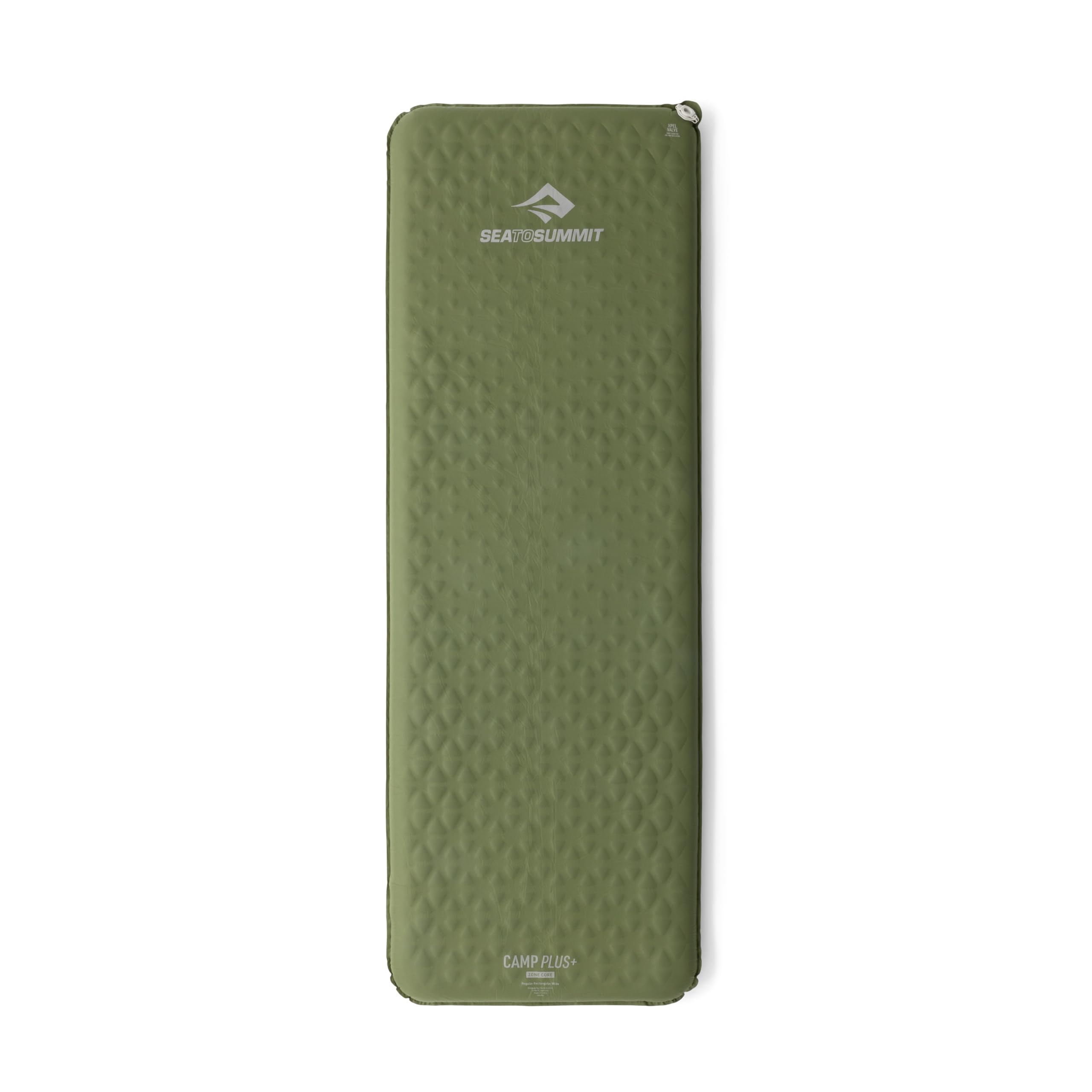
The Camp Plus is Sea to Summit’s answer to the backpacker who still wants self-inflating foam comfort. Its 2.6-inch thickness and 4.3 R-value place it firmly in the three-season zone, with enough insulation for early spring and late fall but not enough for deep winter. The innovative coring technique removes foam from the mat’s perimeter to reduce weight while keeping the torso-support areas dense and warm.
The multi-function Xpel valve offers both rapid one-way deflation and fine-tune pressure adjustments, all in a compact package that rolls tight to 13 by 7.5 inches at 3.2 pounds. The 75D polyester face fabric has held up well in real conditions, with multiple Amazon reviewers reporting years of use without punctures. The included PillowLock patches are a small but smart addition for keeping a compatible pillow from sliding off at night.
Several owners note that the pad doesn’t fully self-inflate straight out of the box — it needs a day to expand and may require a few breaths to reach full loft. This is common for foam pads shipped under vacuum. It’s not the most luxurious option on this list, but for the backpacker who wants foam insulation without the bulk of a car-camping mattress, the Camp Plus nails the niche.
Why it’s great
- Lightweight at 3.2 pounds for a self-inflating pad
- Packs tight at 13 x 7.5 inches
- Durable 75D polyester stand up to rough use
- PillowLock patches prevent pillow migration
Good to know
- R-value of 4.3 is not suitable for winter
- Needs a day to fully expand after unboxing
- 2.6-inch thickness may leave hips touching ground for side sleepers
FAQ
How does R-value affect my camping mattress choice for winter use?
Is a self-inflating foam pad better than an air pad for side sleepers?
What thickness should I look for if I only car camp?
Can I use a camping mattress on a cot or a truck bed?
Final Thoughts: The Verdict
For most users, the best mattress for camping winner is the Therm-a-Rest MondoKing 3D because it combines the highest insulation rating (7.0 R-value) with the most generous width and the most user-friendly valve system in a self-inflating package. If you want the best portable option that packs down small without sacrificing thickness, grab the Acacia 4-inch pad. And for the budget-conscious camper who wants electric pump convenience and top-tier insulation, nothing beats the NYECHTO pad for the price.