A stage 2 pressure ulcer can form in as little as two hours of unrelieved pressure on a bony prominence. For a bedbound loved one—or anyone recovering with limited mobility—the mattress beneath them isn’t a comfort feature; it’s a medical intervention. The wrong surface accelerates tissue breakdown; the right one redistributes load, wicks moisture, and reduces shear. This guide breaks down the foam densities, air-cell counts, and zone-specific firmness ratings that actually separate a clinical-grade pressure-redistribution surface from a general-purpose foam slab.
I’m Emma — the founder and writer behind Baby Bangs. I’ve spent the last 15 years analyzing the material science and clinical specifications behind durable medical equipment, focusing specifically on how construction details like IFD (indentation force deflection) and fluid-resistant cover technology translate into measurable outcomes for pressure injury prevention.
Whether you are a caregiver selecting a surface for home hospice care or a patient recovering from surgery, the mattress for bed sores you choose must balance immersion depth, support stability, and a cleanable barrier — three specs that vary wildly across the nine models reviewed here.
How To Choose The Best Mattress For Bed Sores
Selecting a pressure-redistribution surface involves more than picking a comfortable foam. The key is matching the mattress technology to the patient’s Braden scale risk level, their weight, and the care environment. Below are the three most critical decision points.
1. Foam vs. Alternating Air Pressure vs. Low Air Loss
Static foam mattresses (castellated or cross-cut) are the baseline for low-to-moderate risk. They rely on material density and cut patterns to redistribute weight passively. Alternating pressure systems cycle air between cells, creating a moving point of relief — ideal for patients who cannot turn themselves. Low air loss systems add a constant micro-flow of air to manage moisture, which is critical for stage 3 or 4 ulcers where exudate and sweat accelerate skin breakdown.
2. Heel Protection Design
The heel is the most common site for pressure injuries because the calcaneus sits on a thin layer of soft tissue. A mattress with a sloped or articulated heel section of open-cell memory foam — as seen on the ProHeal multi-tiered model — offloads the heel by redistributing load to the lower leg. Without this feature, even a 6-inch foam mattress can leave the heel at high risk.
3. Fluid-Resistant, Low-Shear Covers
A standard waterproof cover traps heat and creates friction (shear) when the patient is repositioned. Premium covers use 2-way stretch polyurethane or vapor-permeable nylon to allow the cover to move with the patient’s skin rather than against it. Check for welded zippers — sewn seams can leak — and a non-slip bottom to keep the mattress from shifting on the bed frame.
Quick Comparison
On smaller screens, swipe sideways to see the full table.
| Model | Category | Best For | Key Spec | Amazon |
|---|---|---|---|---|
| Livaclean Health Gel Memory Foam | Foam + Gel | Long-term home care with cooling needs | 30mm gel memory foam layer | Amazon |
| Invacare Solace Deep Fortress-Cut | Castellated Foam | High-risk patients needing 360° airflow | 3-zone IFD (35.4-40.5) | Amazon |
| Drive Medical Med-Aire Low Air Loss | Low Air Loss | Moisture management & exudate control | 20 replaceable 8″ bladders | Amazon |
| MedVance Low Air Loss with Alarm | Low Air Loss | Facility-grade with 24h power fail safety | 8″ deep cell-on-cell design | Amazon |
| Invacare Premier Softform | Foam | Very high risk patients up to 500 lbs | 3-zone U-core contoured insert | Amazon |
| ProHeal Multi-Tiered Memory Foam | Foam | Heel offloading & moderate-high risk | Sloped heel with open-cell memory foam | Amazon |
| Vive 5″ Alternating Pressure Air | Alternating Air | Active pressure relief at budget-friendly cost | 16 sealed air chambers | Amazon |
| Drive Medical Therapeutic Foam | Foam | Reliable mid-range zone support | 5 horizontal cross-cut zones | Amazon |
| Kölbs NSR Long Term Care Foam | Foam | Entry-level home care for sensitive skin | 5.5″ high-density foam | Amazon |
In‑Depth Reviews
1. Livaclean Health Gel Memory Foam Hospital Bed Mattress

The Livaclean marries a 30mm gel memory foam comfort layer over a high-density support foam base, hitting the sweet spot between pressure redistribution and stable support for long-term bed rest. The gel infusion actively conducts heat away from the body, reducing the microclimate moisture that softens tissue and increases ulcer risk. At 80 by 36 by 6 inches, it fits standard hospital bed frames and includes four corner straps to keep the mattress anchored during head-of-bed elevation.
The included waterproof cover is breathable and removable, which simplifies hygiene maintenance — a critical factor when managing incontinence or wound drainage. The 8-year extended protection on the foam layer signals confidence in long-term durability, though the cover warranty is a shorter 1-year window. Arrives compressed, so allow a full 48-hour expansion period before the patient sleeps on it; an early weight load before full recovery can permanently compress the gel cells.
Rated for up to 242 pounds, this is ideal for elder care and post-surgical recovery in a home setting. The medium-firm feel strikes a balance — soft enough to reduce peak pressure over the sacrum and hips, yet firm enough to prevent the “hammocking” that leads to shear injury during repositioning. If you need a single foam mattress that covers cooling, cleanliness, and comfort, this is the most complete package on the list.
Why it’s great
- Gel memory foam layer provides active cooling and pressure relief
- 8-year warranty on foam core
- Easy-to-clean, removable waterproof cover
Good to know
- Cover warranty is only 1 year
- Requires 48-hour expansion before use
- Weight limit of 242 lbs
2. Invacare Solace Deep Fortress-Cut Hospital Bed Mattress
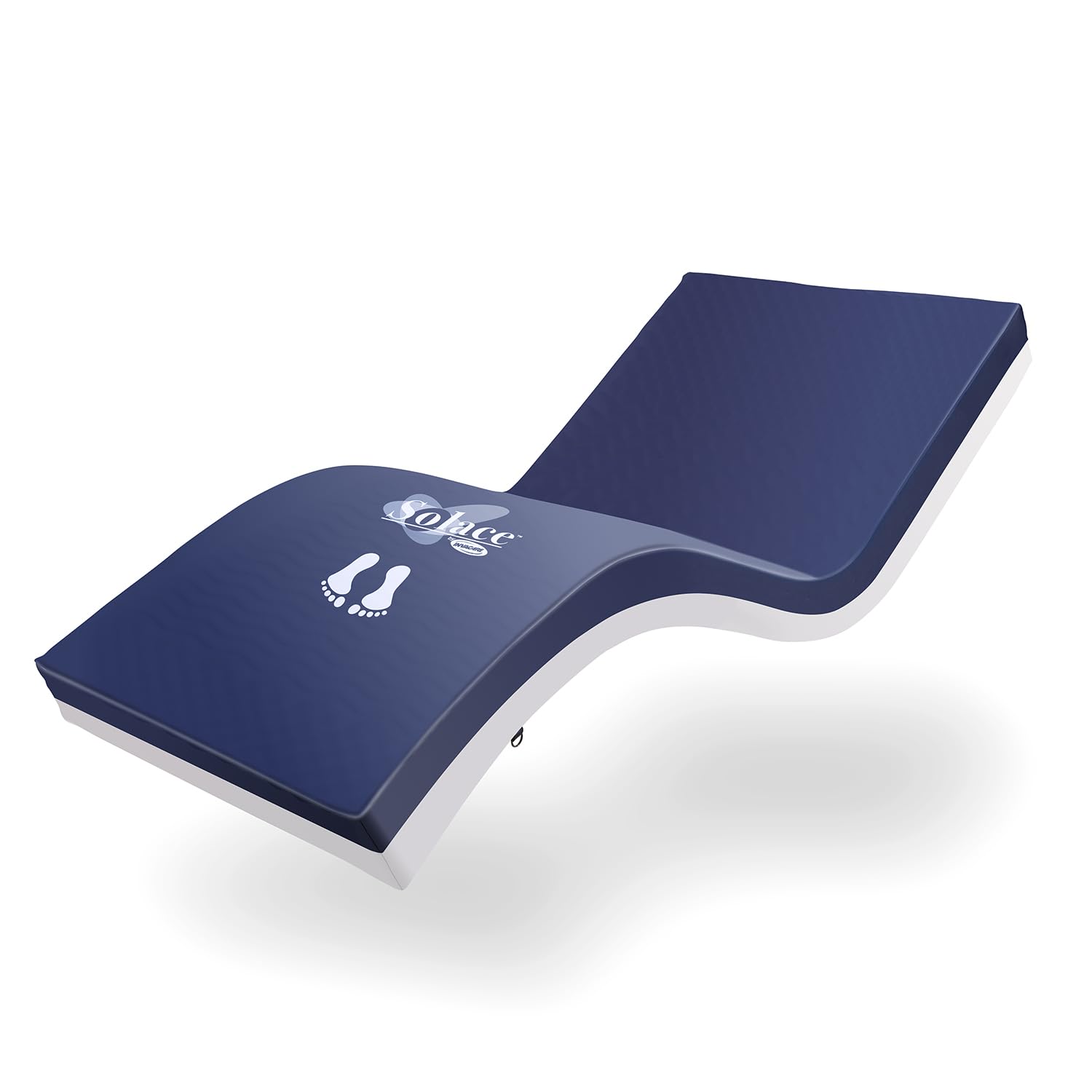
Invacare has engineered the Solace with ultra-deep fortress-cut cells (significantly deeper than standard egg-crate foam) to maximize 360-degree airflow around the contact surface. This design actively dissipates heat and humidity while the foam cells deflect laterally under load, reducing peak pressure over bony prominences. The three-zone construction uses precise IFD ratings — 36.2 for the head, 40.5 for the lumbar/hips, and 35.4 for the heels — delivering targeted support that prevents sacral sink and heel bottoming.
The dual-layer anti-bottoming base uses a high-density stable foundation topped with a plush immersion layer, creating what Invacare calls a “floating sensation.” The cover is the standout feature: a 2-way vertical stretch nylon that moves with the patient during repositioning, dramatically reducing shear force on fragile skin. The zipper is fully welded for fluid resistance, making it safe for incontinent care without the risk of leaks through stitches. Manufactured in America with integrated side handles for easy transfers.
One trade-off: at 84 inches, this mattress is designed for taller bed frames, so measure your existing deck length before purchasing. The welded cover is wipeable but not machine-washable, requiring spot cleaning. For a care facility or home setting where the patient is at high risk for pressure injuries and needs a foam surface that actively breathes and moves with the body, the Solace is best-in-class.
Why it’s great
- Ultra-deep castellations for superior airflow and immersion
- 2-way stretch cover reduces shear during repositioning
- Welded waterproof zipper prevents fluid ingress
Good to know
- 84-inch length may not fit standard 80-inch decks
- Cover is wipe-clean only
- Premium pricing for a foam model
3. Drive Medical Med-Aire Low Air Loss Mattress Replacement System
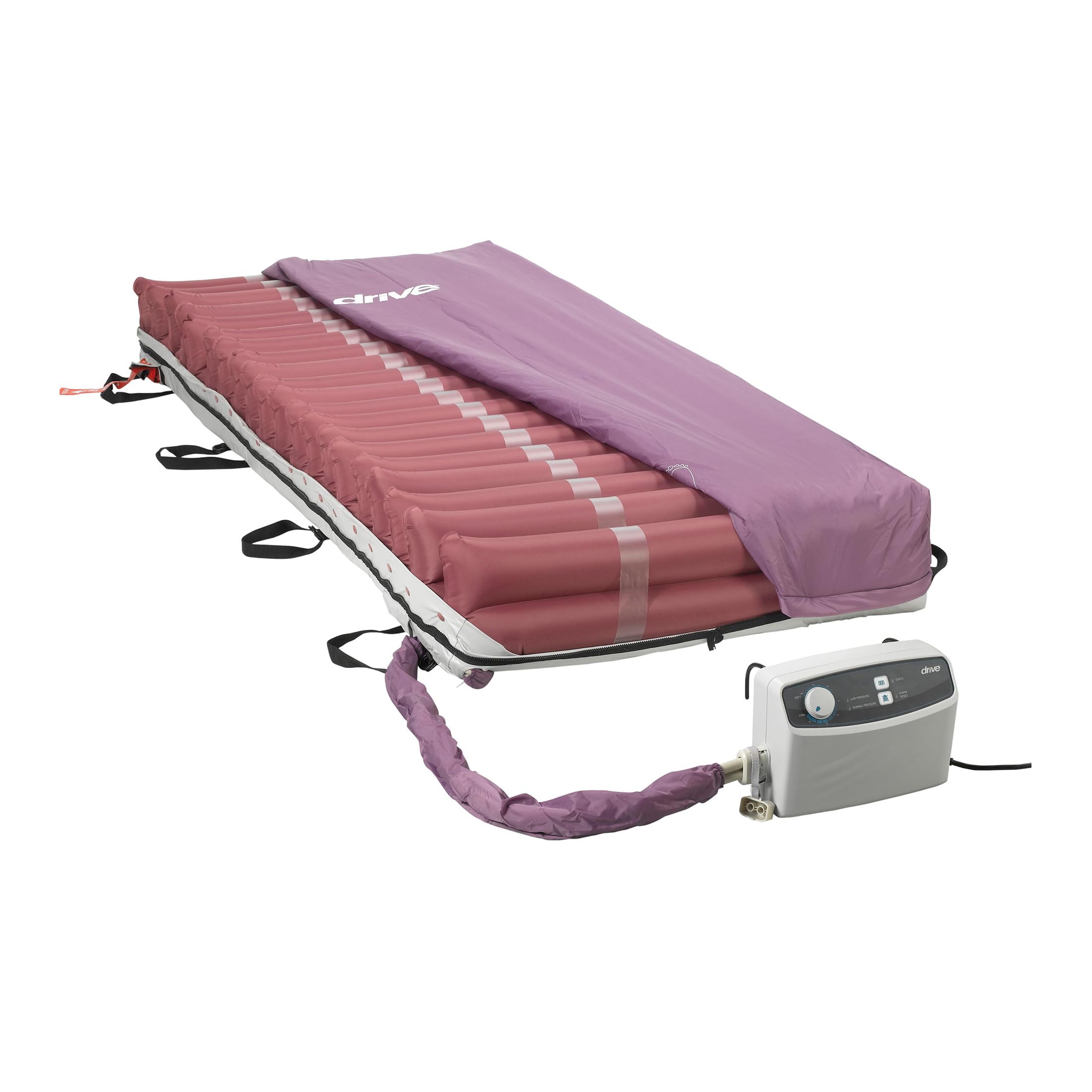
The Med-Aire moves beyond simple alternating pressure by adding a low air loss function: a continuous micro-flow of air exits through pinholes in the bladders to keep the patient’s skin dry. This is critical for stage 3 or 4 pressure ulcers where moisture from exudate or sweat accelerates tissue maceration. With 20 individual 8-inch air bladders, the system provides excellent immersion depth, and the replaceable cell design means a single failed bladder doesn’t scrap the entire mattress — a significant cost saving for long-term care.
The pump features an audio-visual alarm system that alerts caregivers to low pressure, plus automatic pressure monitoring to maintain consistent support even as the patient shifts. The cover is vapor permeable and includes shear friction reduction properties, though it is not a full fluid-proof barrier. The mattress attaches to standard hospital bed frames with adjustable straps, and the pump includes non-marking hooks for secure footboard mounting.
One consideration: the pump noise is moderate — described by some users as a consistent hum — and the low air loss flow means the pump runs constantly, not only during cycle changes. For a patient who is highly sound-sensitive, this may be disruptive. However, for a care facility managing multiple immobile patients with active wound care needs, the Med-Aire’s combination of alternating pressure and moisture management is unmatched in its price tier.
Why it’s great
- Low air loss flow actively dries skin
- 20 replaceable 8” cells for customized repair
- Audio-visual low-pressure alarm system
Good to know
- Continuous pump operation creates audible hum
- Cover is not fully fluid-proof
- Heavier pump unit requires stable footboard
4. MedVance Low Air Loss Mattress Replacement System with Alarm

The MedVance system is the most technologically advanced option on this list, featuring a fully digital LED display that shows patient weight and current pressure settings. The cell-on-cell design — 8-inch-deep air cells nested in a secondary support layer — prevents “bottoming out” even under a 450-pound weight capacity, and provides up to 24 hours of power outage protection if the pump fails. The emergency CPR function (a single pull tag) deflates the mattress in under a second, a critical safety feature for code situations.
The quilted polyurethane cover is water-resistant and machine-washable, which simplifies infection control in multi-patient facilities. The pump operates at less than 20 decibels, which is genuinely quiet — most users report no sleep disruption from the cycling. Dual pump cores provide maximum output for rapid inflation and recovery after position changes. The mattress measures 80 by 36 by 8 inches, fitting most standard hospital beds, with adjustable straps to prevent migration.
At the premium end of the pricing spectrum, this is the right choice for a nursing home or long-term acute care facility where documentation of pressure settings, patient weight input, and backup power are part of the wound prevention protocol. For a single home user, the advanced digital controls may be more than necessary, but the quiet operation and safety features make it a strong contender for high-risk home care.
Why it’s great
- Ultra-quiet pump under 20 dB
- 24-hour power outage protection
- Emergency CPR quick deflation tag
Good to know
- Premium cost may exceed home care budgets
- Digital controls have a learning curve
- Cover is water-resistant, not fully waterproof
5. Invacare Premier Softform Mattress (IPM1080)

The Softform Premier is Invacare’s best-selling institutional mattress, and for good reason: its dual-layer construction features a single-piece U-core base with a contoured foam insert that optimizes pressure redistribution for patients up to “Very High Risk” on the Braden scale. The three-zone construction provides firmer support in the mid-section to prevent pelvic sink while the head and foot zones use softer foam for comfort. The 500-pound weight capacity makes it the strongest option on this list, suitable for bariatric patients.
The cover is a 4-way stretch polyurethane — fluid-resistant and vapor-permeable — that reduces shear during repositioning. The tough coated polyurethane base extends the mattress’s lifespan by preventing degradation from bed frame friction. With an 8-year warranty on the foam and 4 years on the cover, Invacare backs this product with confidence that matches its institutional pedigree. The mattress takes up to 3 days to fully expand from its compressed shipping state, so plan ahead before the patient transitions.
One nuance: the 36-inch width fits standard hospital beds, but some users note the sides can feel a bit firm before the foam fully breaks in — plan for a week of use before the material softens to its intended feel. For a bariatric patient or a facility that needs a durable, high-capacity foam mattress with proven clinical outcomes, the Softform Premier is the gold standard.
Why it’s great
- 500 lb weight capacity — highest in review
- 8-year foam warranty
- Clinically proven for Very High Risk patients
Good to know
- 3-day expansion time required
- Side support is firm during break-in
- Premium investment for foam-only construction
6. ProHeal Multi-Tiered Memory Foam Hospital Bed Mattress
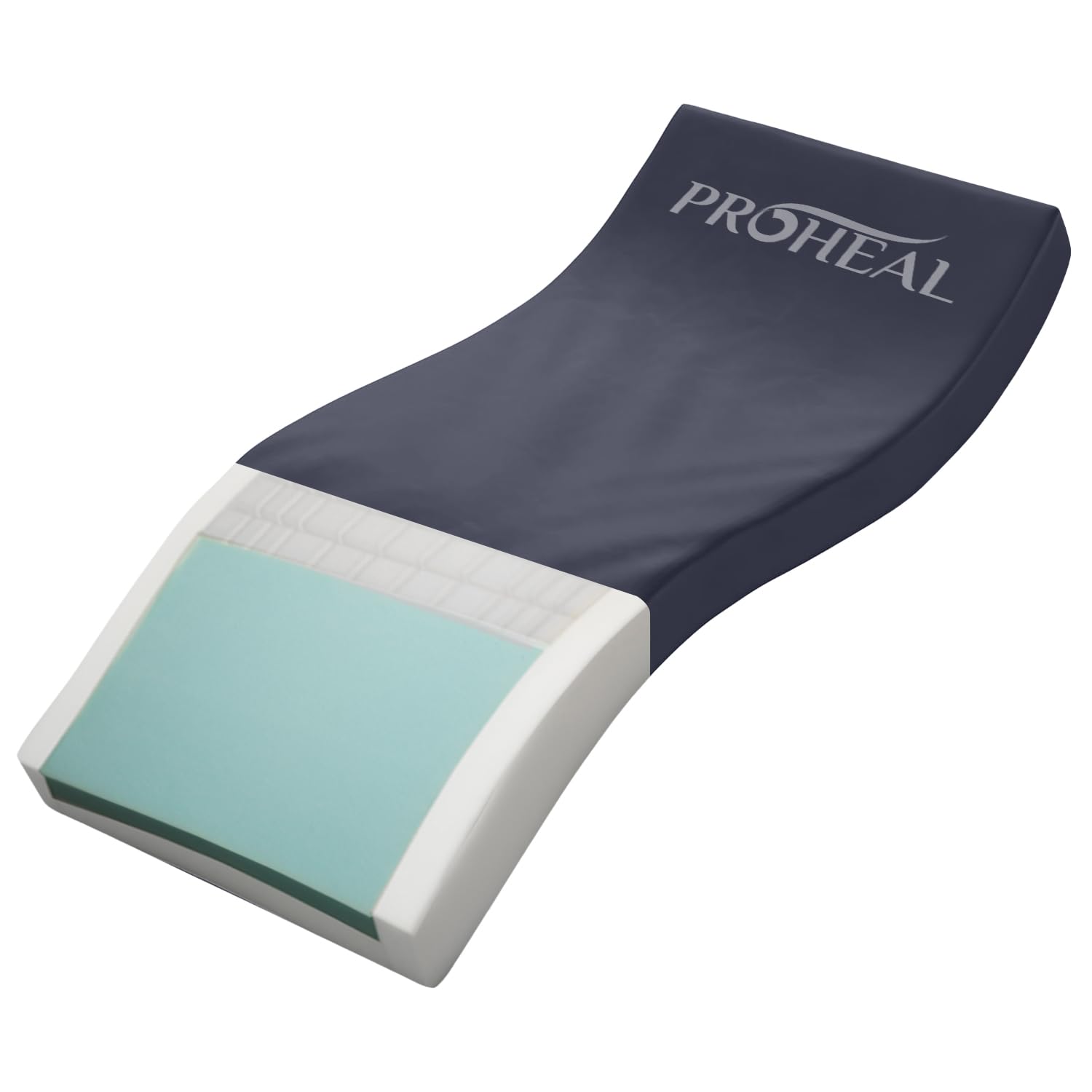
ProHeal tackles the single most common pressure injury site — the heel — with a sloped heel section of open-cell memory foam that redistributes load from the calcaneus to the less vulnerable lower leg. This design is rare in foam mattresses at this price point and makes the ProHeal a standout for any patient with limited leg mobility. The torso and head sections use high-density die-cut foam (28 ILD), which provides a stable platform without the deep sink of pure memory foam.
The removable nylon cover is vapor permeable, cooling, and low-shear — it reduces friction when the patient is repositioned, which is critical for preventing superficial skin tears. The cover is also waterproof and fire retardant, with a 360-degree zipper that allows easy removal for cleaning. The 7-year non-prorated core warranty is strong for a mid-range mattress, and the 2-year cover warranty is better than most in this tier. Measures 76 by 36 by 6 inches, so verify your bed deck length before purchasing.
Some users report that the memory foam heel section can develop a slight depression over time with consistent pressure, though this is typical of open-cell foam. The 28 ILD firmness is noticeably firmer than standard memory foam — this mattress does not “hug” the body as much as a softer foam would, which may require a brief adjustment period for the user. For a patient with existing heel ulcers or a high-risk heel assessment, the ProHeal’s targeted design is a clinical win.
Why it’s great
- Sloped heel section offloads the calcaneus
- Low-shear, vapor-permeable nylon cover
- 7-year non-prorated foam warranty
Good to know
- 76-inch length may not fit some 80-inch decks
- Open-cell memory foam can develop impressions
- 28 ILD is firmer than typical memory foam
7. Vive 5″ Alternating Pressure Air Mattress Topper Pad
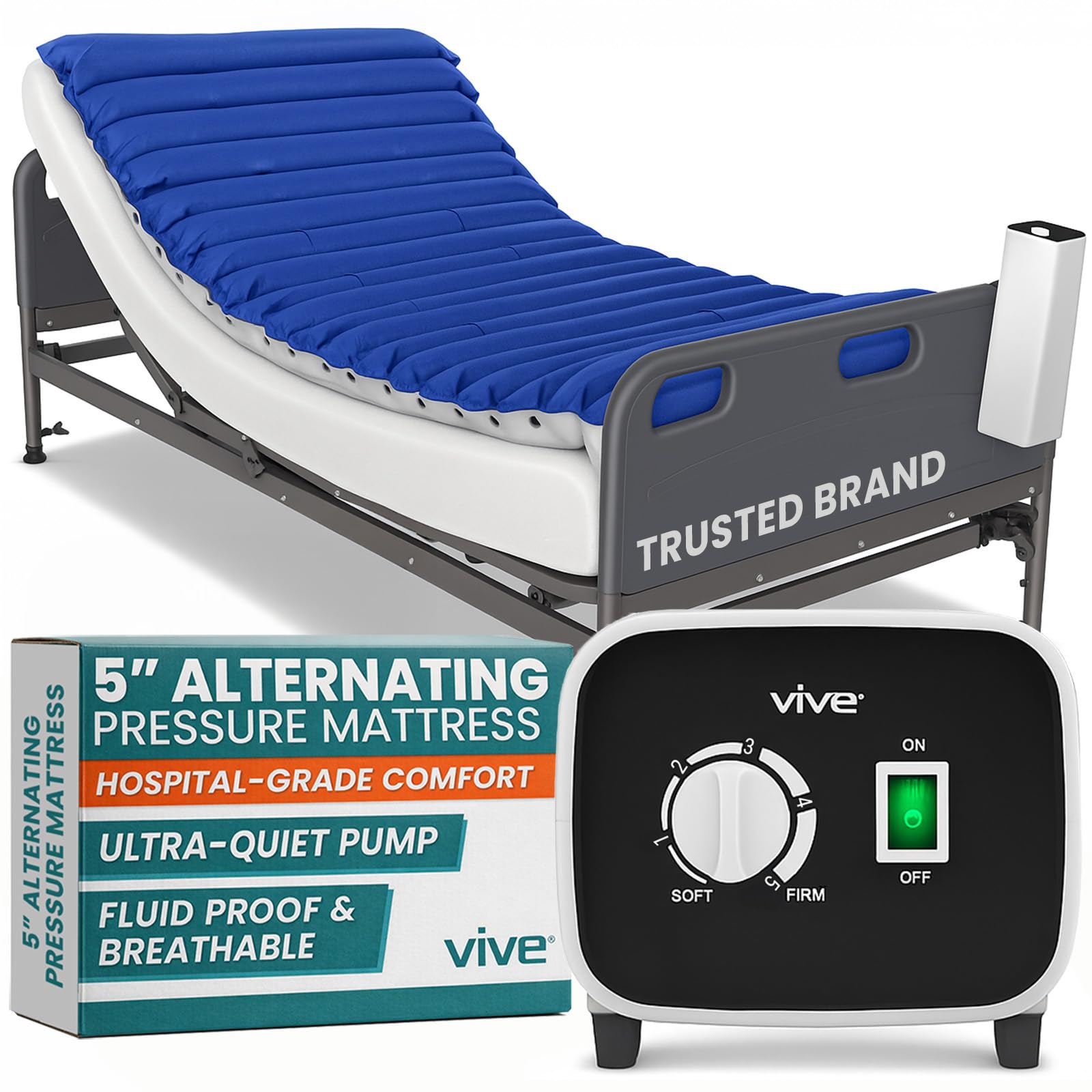
The Vive system is an alternating pressure air mattress topper (not a full replacement) that sits on top of an existing mattress, making it a budget-friendly entry point for home caregivers who need active pressure relief without replacing the entire bed. Its 16 sealed air chambers inflate and deflate in a cycling pattern to constantly shift pressure points — turning a standard foam surface into a active therapy surface. Users report significant healing of existing bedsores within weeks, and the variable pressure dial allows the caregiver to adjust firmness from soft to firm.
The pump is notably quiet for an alternating system, operating below the threshold of sleep disruption for most patients. The waterproof vinyl cover is latex-free and breathable, allowing heat to dissipate, though it does not have the low-shear properties of the nylon covers on premium models — so repositioning technique matters. Supports up to 300 pounds and is FSA/HSA approved, which is a significant financial advantage for eligible buyers.
One common complaint: the pump’s low-pressure alarm can be triggered if any of the 16 air cell plugs are not fully seated — ensure all plugs are pressed in on initial setup. The 5-inch height is lower than some full-replacement systems, so heavier patients may feel the bed frame underneath during deflation cycles. For a caregiver on a budget who needs immediate alternating pressure capability to treat existing ulcers, the Vive delivers proven clinical function at the lowest entry cost.
Why it’s great
- Alternating pressure actively shifts contact points
- FSA/HSA eligible for cost savings
- Quiet pump operation
Good to know
- 5” height may bottom out for heavier users
- Vinyl cover lacks low-shear properties
- Low-pressure alarm needs careful plug seating
8. Drive Medical 15019 Therapeutic Foam Mattress

The Drive Medical 15019 uses horizontal cross-cut foam to create five distinct therapeutic pressure zones, providing a simple but effective pressure redistribution design for low-to-moderate risk patients. The cross-cut channels allow the foam to deflect independently, reducing peak pressure over the sacrum and shoulders without requiring active power. The non-skid bottom keeps the mattress securely on the bed frame during head-of-bed adjustments, a safety feature that’s often overlooked.
The removable nylon stretch cover is fluid-resistant, low-shear, and vapor permeable — a strong cover specification for a mid-range foam mattress. Vapor permeability is key here: it prevents humidity buildup that can macerate vulnerable skin. The memory foam fill provides a medium feel, and the 5.5-inch height offers sufficient immersion for patients up to 350 pounds. Users report that the mattress lasts several years before needing replacement, though the foam can develop body impressions over time.
One caution: the 35-inch width is slightly narrower than the standard 36-inch hospital mattress, so there may be a small gap on the sides. The horizontal cross-cut channels are visible through the cover, which some caregivers find less visually clean than solid-top models.
Why it’s great
- 5-zone cross-cut design for targeted redistribution
- Low-shear, vapor-permeable cover included
- Non-skid bottom for safety
Good to know
- 35” width is narrower than standard 36” beds
- Horizontal cross-cut visible through cover
- Foam can develop impressions over years of use
9. Kölbs NSR Long Term Care Pressure Redistribution Foam Mattress

The Kölbs NSR (New Surface Replacement) is a straightforward high-density foam mattress designed specifically for long-term care in nursing homes and home settings. Its 5.5-inch thickness provides a solid base for pressure redistribution through even weight distribution rather than active foam sculpting. The fire-retardant, waterproof removable cover makes hygiene management simple — a critical feature for incontinent care. The non-slip underside is reinforced to keep the mattress from shifting on adjustable medical bed frames.
The 80 by 36 inch sizing fits standard hospital beds (not standard twin beds, which are 75 inches). Users consistently report that it is dramatically more comfortable than the thin mattresses provided with rental hospital beds, and the polyester cover wipes clean easily. The high-density foam does not have the same pressure redistribution performance as cross-cut or air-alternating systems, but for a patient who is at low risk for developing new ulcers and simply needs a stable, cleanable surface, this mattress delivers.
One practical note: the cover is slippery, and fitted sheets can slide off the surface — using a mattress topper or securing the sheets with elastic corner straps solves this issue. The 5.5-inch height is thinner than most premium models, and there is no specialized heel or zone support. For entry-level home care where the budget is the primary constraint and the patient is not at high or very high risk, the Kölbs provides a functional and cleanable foam foundation.
Why it’s great
- Affordable entry point for home care
- Waterproof removable cover for easy hygiene
- Fire retardant for safety compliance
Good to know
- 5.5” height is thinner than premium models
- Cover surface is slippery for sheets
- No zone-specific pressure redistribution
FAQ
Can I use a standard memory foam mattress for bed sore prevention?
How often should I replace a mattress for bed sores?
What is the minimum height I should look for in a pressure redistribution mattress?
Can I use a mattress topper instead of a full medical mattress?
Final Thoughts: The Verdict
For most users, the mattress for bed sores winner is the Livaclean Health Gel Memory Foam because it delivers the strongest balance of pressure redistribution, cooling gel technology, and an easy-to-clean waterproof cover at a mid-range investment. If you need active moisture management and alternating pressure for high-risk wounds, grab the Drive Medical Med-Aire Low Air Loss System. And for heel-specific offloading at a reasonable price, nothing beats the ProHeal Multi-Tiered Memory Foam with its sloped heel section.