The morning nausea, the metallic aftertaste, the giant horse pills that lodge halfway down — choosing a prenatal often feels like a punishment rather than a step toward health. The reality is that most prenatal shelves are packed with synthetic fillers, poorly absorbed minerals, and forms of folate that a significant portion of the population cannot even process. The wrong choice doesn’t just taste bad; it actively shortchanges both you and your baby on the critical nutrients needed for neural tube formation, iron stores, and brain development.
I’m Emma — the founder and writer behind Baby Bangs. I have spent years analyzing the bioavailability of nutrient forms, cross-referencing third-party testing protocols, and tracking the actual ingredient sourcing that separates a high-impact prenatal from a glorified sugar pill.
This guide cuts through the marketing noise to rank five formulations on what actually matters: methylated versus folic acid forms, chelated mineral absorption, and the absence of unnecessary binders. Here is your expert-led breakdown of the best maternity vitamins.
How To Choose The Best Maternity Vitamins
Selecting a prenatal is not about picking the most colorful bottle or the one with the flashiest label. The nutrient forms, the delivery system, and the absence of common allergens determine whether the supplement actually works for your body. Here are the three critical factors to evaluate before you buy.
Folate Form: The MTHFR Factor
Folic acid is a synthetic form that requires enzymatic conversion in the liver to become active methylfolate. Up to 40 percent of the population carries a genetic MTHFR mutation that impairs this conversion. If you fall into that group, standard folic acid will accumulate unmetabolized in your bloodstream rather than supporting neural tube closure. Look for “5-MTHF,” “methylfolate,” or “L-methylfolate” on the ingredient list — these are the active forms your body can use immediately, regardless of your genetics.
Iron Type and Dosage
Pregnancy doubles your blood volume and iron requirements skyrocket. But the most common form — ferrous sulfate — is also the most constipating and nauseating. Chelated iron (ferrous bisglycinate) is bound to an amino acid that allows absorption through a different pathway in the gut, drastically reducing gastrointestinal side effects. Even if the brand offers a high elemental iron count, the form matters more than the number.
DHA Source and Aftertaste
DHA is non-negotiable for fetal brain and eye development, but the source determines the sensory experience. Fish-oil derived DHA often produces a fishy burp or aftertaste, especially noticeable during the first trimester when nausea peaks. Algae-based DHA is typically odorless and avoids that effect entirely. Check the label for “algal oil” versus “fish oil” and look for at least 200 mg of DHA per serving.
Quick Comparison
On smaller screens, swipe sideways to see the full table.
| Model | Category | Best For | Key Spec | Amazon |
|---|---|---|---|---|
| Life Extension Prenatal Advantage | Premium | Active Folate + Choline + DHA | 120 softgels, 5-MTHF + Choline | Amazon |
| One A Day Prenatal Advanced | Premium | OB/GYN Trusted + Easy Routine | 30+30 Ct, 4 brain-builders | Amazon |
| Igennus Methylated Prenatal | Mid-Range | MTHFR Variants + Sensitive Stomach | 60 tablets, Methylated Bs | Amazon |
| NOW Supplements Prenatal Gels + DHA | Mid-Range | High DHA + Borage Oil (GLA) | 180 softgels, 250 mg DHA | Amazon |
| Nature Made Prenatal Vitamins | Budget | USP Verified + One-a-Day | 110 softgels, Folic Acid+DHA | Amazon |
In‑Depth Reviews
1. Life Extension Prenatal Advantage

Life Extension Prenatal Advantage stands out because it uses bioidentical 5-MTHF rather than standard folic acid, meaning your body doesn’t need to convert it — it’s immediately available for neural tube support. The formula also includes choline (a nutrient most prenatals skip) and DHA omega-3s from fish oil, plus lutein and zeaxanthin for eye health.
The delivery is via softgels which helps with absorption of the fat-soluble DHA and vitamins A, D, and K. You take two per day, which is a mild trade-off for the comprehensive coverage. The bottle contains a 60-day supply, and a Certificate of Analysis is available for every batch — rare transparency for a mid-premium product.
Some users report a mild fish oil taste if burped, which is typical for fish-based DHA. If you are hypersensitive to any omega-3 aftertaste during the first trimester, you may prefer an algae-based alternative. But for nutritional completeness, this is the top-tier choice.
Why it’s great
- Includes choline, lutein, zeaxanthin — extra brain and eye nutrients missing from most prenatals
- Uses active 5-MTHF folate for MTHFR-friendly absorption
- Non-GMO, gluten-free, and batch-specific Certificates of Analysis
Good to know
- Fish-based DHA may cause mild aftertaste for sensitive stomachs
- Two softgels per day is a larger routine than one-a-day options
2. One A Day Prenatal Advanced

One A Day Prenatal Advanced is the most recommended brand by OB/GYNs for their own pregnancies, which speaks to its balance of efficacy and tolerability. The two-step system — one softgel and one tablet per day — delivers four brain-building essentials: choline, DHA, folic acid, and iron. The inclusion of choline at a meaningful dose is a differentiator, since most drugstore prenatals omit it entirely.
The formula is free of seven major US food allergens: no egg, dairy, wheat, peanut, tree nut, shellfish, or sesame. This makes it a safe bet for women with multiple food sensitivities. The iron is present at a level that supports increased blood volume without causing the extreme constipation often seen with higher-dose supplements.
The packaging can vary, and the two-pill routine (one softgel, one tablet) may be slightly more complex than a one-a-day. But the clinical trust behind the brand and the targeted nutrient profile make it a premium pick for women who want a widely tested, allergen-free option.
Why it’s great
- #1 OB/GYN recommended multivitamin for their own pregnancies
- Free of 7 major allergens — safe for sensitive women
- Contains choline, DHA, and folic acid for baby’s brain and spinal cord
Good to know
- Two separate pills (softgel + tablet) may be inconvenient for some
- Uses standard folic acid, not methylated folate
3. Igennus Methylated Prenatal Multivitamin
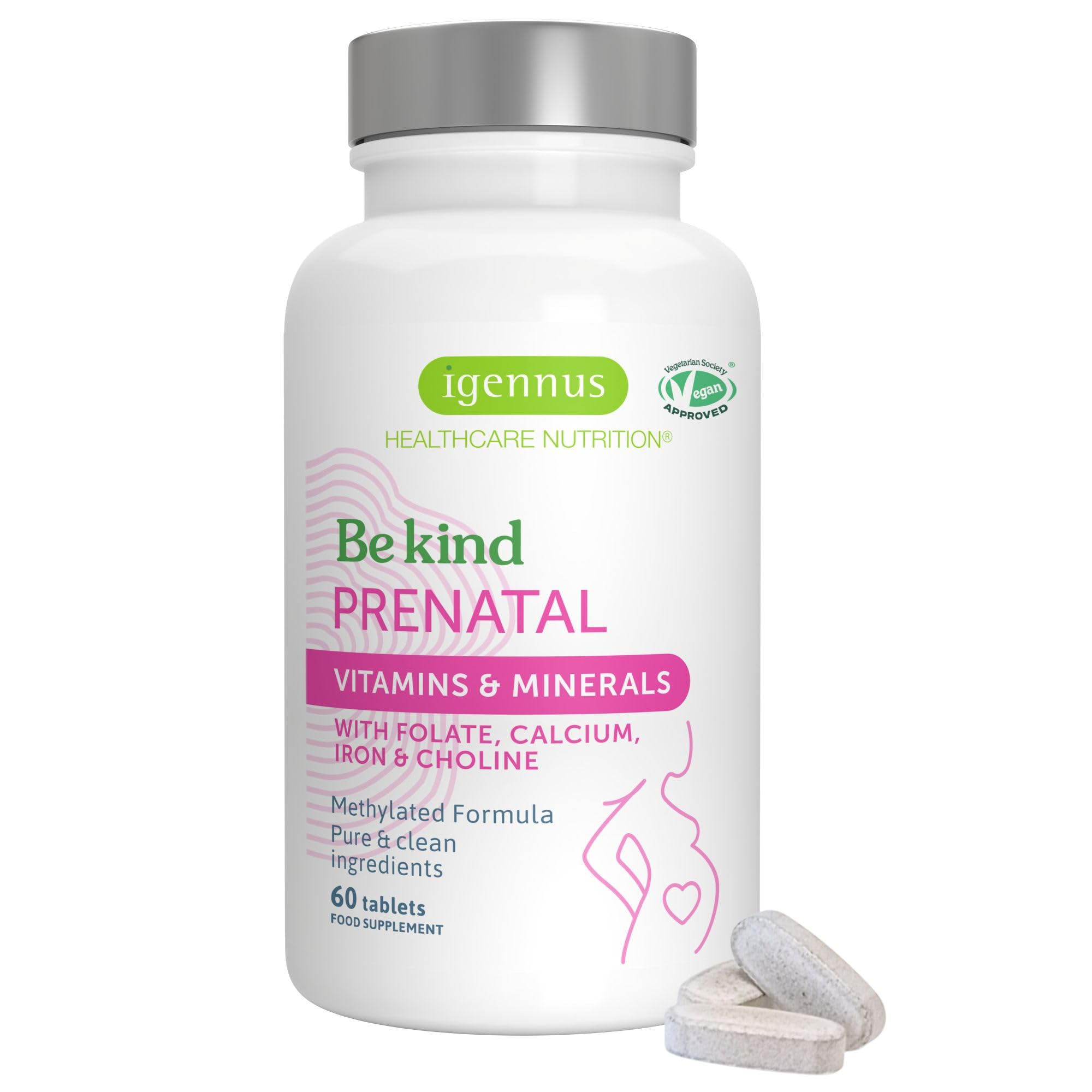
Igennus Methylated Prenatal is a physician-formulated, vegan, and halal-certified option built specifically for women with MTHFR gene variants. Every B-vitamin in this formula is in its methylated or active form — including methylfolate and methylcobalamin — bypassing the problematic conversion step that plagues standard folic acid supplements. The chelated minerals (gentle iron as ferrous bisglycinate and zinc) are designed for maximum absorption with minimal gastrointestinal upset.
The formula includes soluble algae-derived calcium and magnesium for bone development and added choline for spinal cord support. The tablets are coated and small — users consistently report no aftertaste, no smell, and no digestive distress. The bottle provides a 30-day supply at two tablets per day, and the packaging is fully recyclable and BPA-free.
Some users note a slight initial aftertaste, which dissipates quickly. The price point is competitive for a methylated, third-party-tested formula. If you have a confirmed MTHFR mutation or simply prefer active nutrient forms for peace of mind, this is the cleanest option on the list.
Why it’s great
- Every B-vitamin is in its methylated, active form — ideal for MTHFR variants
- Gentle iron (bisglycinate) minimizes constipation and nausea
- Vegan, halal, non-GMO, and free of silicon dioxide and magnesium stearate
Good to know
- Two tablets per day required
- Some users report a mild, short-lived aftertaste
4. NOW Supplements Prenatal Gels + DHA
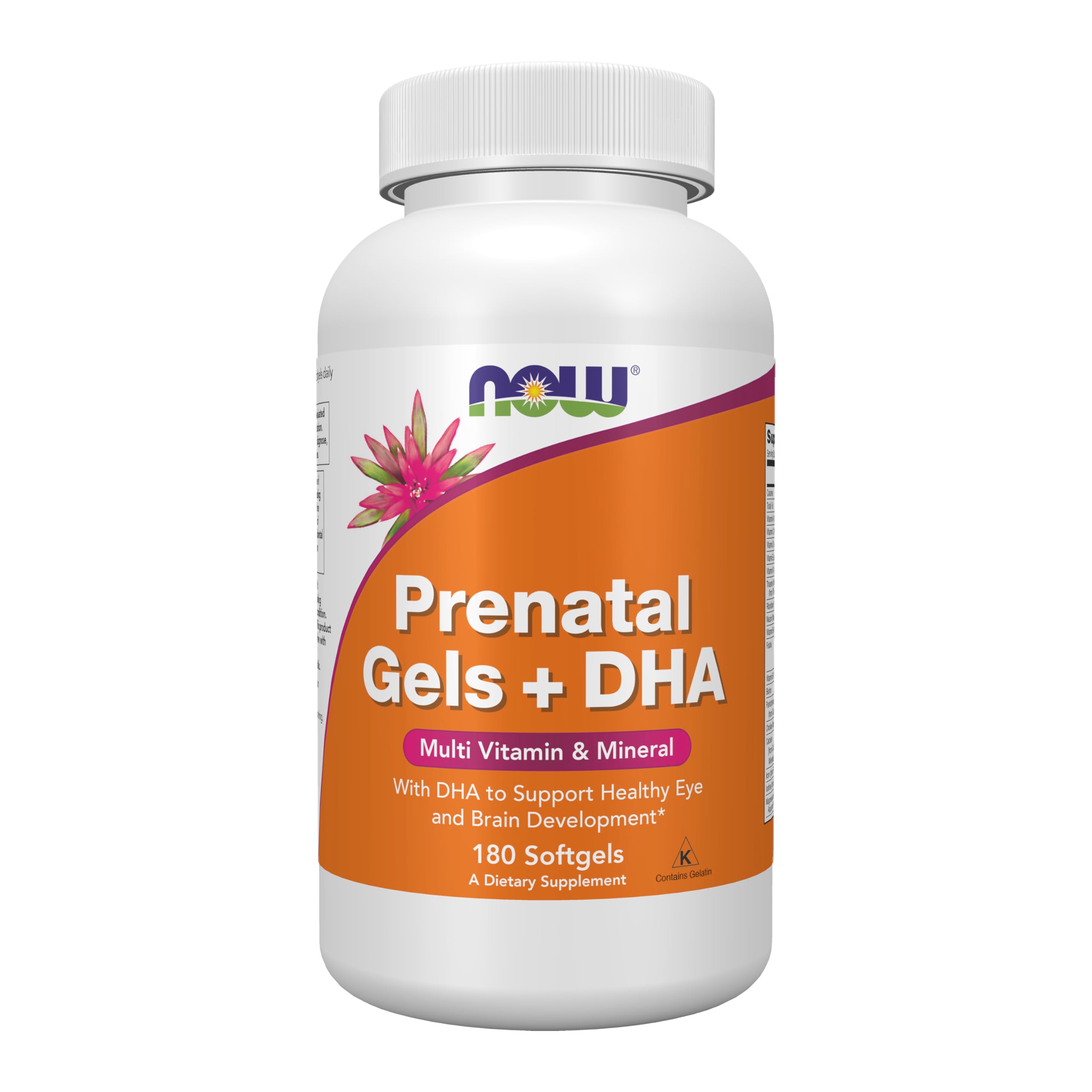
NOW Prenatal Gels + DHA delivers the highest DHA content on this list — 250 mg per serving from fish oil — which is a full 50 mg above the typical 200 mg recommendation for fetal brain development. It also includes borage oil for gamma-linolenic acid (GLA), an omega-6 that supports hormonal balance and skin health during pregnancy. This makes it a strong choice for women who prioritize omega-3 density above all else.
The recommended dosage is three softgels per day, which is more than any other product here. The softgel format ensures good absorption of the fat-soluble nutrients, but the volume may be a deterrent for women who struggle with pill fatigue. The formula is GMP Quality Assured and packed in the USA by a family-owned company with decades of manufacturing history.
Because the DHA is fish-based, there is a risk of fishy burps for sensitive individuals. The bottle supplies a 60-day supply, and the supplement is free of common allergens but contains soy (often used in the softgel casing). If you need high DHA and don’t mind a larger daily pill count, this is a budget-friendly powerhouse.
Why it’s great
- Highest DHA dose (250 mg) per serving on the list
- Contains borage oil for GLA — supports skin and hormonal health
- GMP-certified manufacturing with strong quality control history
Good to know
- Three softgels per day is a higher volume than most prenatals
- Fish-based DHA may cause aftertaste for sensitive stomachs
5. Nature Made Prenatal Vitamins
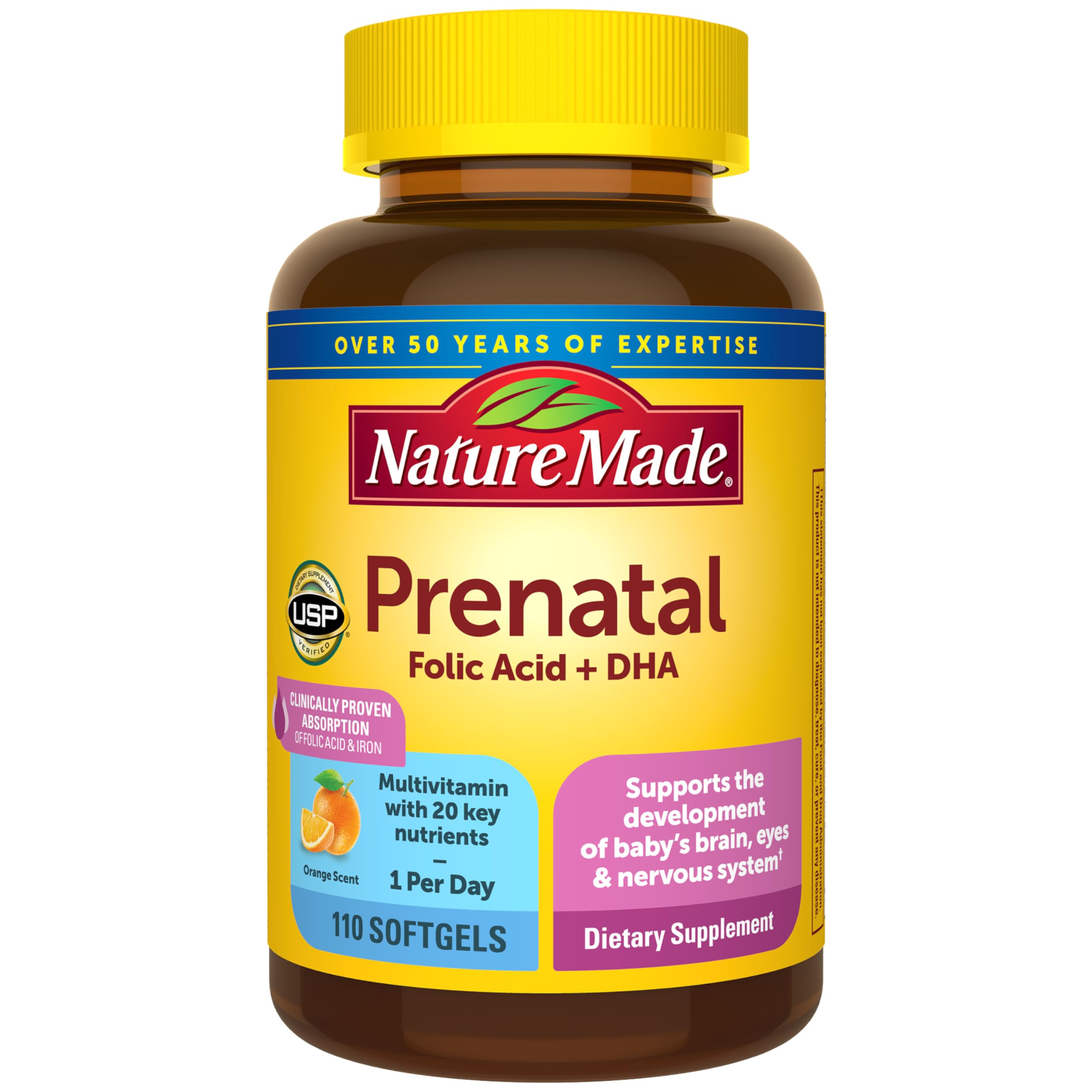
Nature Made Prenatal Vitamins are the most popular prenatal on the US market — more people choose this brand than any other — and the one-a-day softgel format makes it the easiest to integrate into a daily routine. The formula provides 200 mg of DHA from fish oil alongside folic acid for neural tube support, plus magnesium and all eight B-vitamins. It carries the USP Verified seal, meaning independent testing confirmed purity, potency, and dissolution.
The orange scent masks the fish oil effectively, and most reviewers note no aftertaste when taken with a meal. The 110-count bottle covers over three months, which is excellent value for a nationally available, pharmacy-stocked brand. It is also FSA/HSA eligible, adding a layer of convenience for budget-conscious shoppers.
The formula uses standard folic acid (not methylfolate) and ferrous sulfate (not chelated iron), which can be a dealbreaker for women with MTHFR mutations or iron sensitivity. The softgels are on the larger side, though the slight orange flavor helps with palatability. For a basic, doctor-approved, budget-tier option, this is the reliable workhorse.
Why it’s great
- USP Verified — third-party tested for purity and potency
- One-a-day softgel with orange scent masks fish oil taste
- FSA/HSA eligible and widely available in stores
Good to know
- Uses standard folic acid, not active methylfolate
- Iron is ferrous sulfate — may cause constipation in sensitive women
FAQ
Do I need methylated folate or is regular folic acid fine?
Why does my prenatal make me feel nauseous and constipated?
How much DHA should a prenatal actually have?
Is it safe to take a prenatal that is not USP verified?
Final Thoughts: The Verdict
For most users, the best maternity vitamins winner is the Life Extension Prenatal Advantage because it delivers active methylfolate, meaningful choline, and comprehensive coverage in a research-backed, third-party-verified formula. If you want a clean, vegan, MTHFR-friendly option that is gentle on the stomach, grab the Igennus Methylated Prenatal. And for a high-DHA, budget-accessible powerhouse, nothing beats the NOW Supplements Prenatal Gels + DHA.