That jarring bitterness that makes you wince when you sip your morning tea? That dull yellow-brown color that tells you your vitamins have already oxidized in the can? You bought stale dusty powder and didn’t even know it. Real matcha, the jade-green kind with deep vegetal sweetness and a creamy mouthfeel that lingers, is a completely different substance from the bitter brick dust sold in most stores. The gap between what you expect and what you get comes down to one thing: a supply chain that preserves freshness from the Japanese mountain to your mug.
I’m Emma — the founder and writer behind Baby Bangs. For the past five years I’ve tracked matcha harvest cycles, cross-referenced third-party lab reports, and ranked brands by their stone-grind quality, shade length, and JAS/USDA paperwork so you don’t have to become a tea obsessive to drink good matcha.
After blind-tasting fifteen-pound-order candidates I found five that survive every test: vivid color, no astringency, and balanced energy without caffeine jitters. This guide walks you through the details you need to know to pick the next pouch you will actually enjoy drinking. These are the best matcha tea options available right now, ranked by what matters most.
How To Choose The Best Matcha Tea
Most beginner buyers grab the bag with the prettiest label and end up with bitter, yellow-brown powder that clumps in water. Real matcha — the kind that delivers that calm-focused buzz and creamy umami flavor — depends on four non-negotiable specs you must check every time before you click add to cart.
Harvest Season: First Cut vs. Second Cut
Matcha comes from shade-grown tea leaves. The very first leaves picked in the spring (ichiban-cha) contain the highest concentration of L-theanine and the lowest level of catechins that cause bitterness. Second-harvest leaves (niban-cha) have more astringency and less umami. If your matcha tastes flat, metallic, or harsh, you’re almost certainly drinking second-harvest or blended leaves. First-harvest is non-negotiable for pure whisking.
Stone Ground vs. Blade Ground
Real ceremonial-grade matcha is ground slowly between two granite stones at about 40 rpm. The friction stays low enough that the leaf cells don’t overheat and oxidize. Blade-grinding (used for culinary-grade powders and many budget cans) generates heat that destroys color and aroma almost immediately after the bag is opened. If the label doesn’t say “stone ground,” the powder will taste dull before you finish the pouch.
Freshness System: Air-Freight vs. Warehouse Stock
The green pigment and L-theanine in matcha degrade within six months of grinding, even inside a sealed pouch. The best producers air-freight from Japan monthly and ship directly to you within days. Stale powder from a warehouse shelf develops a hay-like smell and yellow-brown tint. Check whether the brand publishes its harvest month or import schedule — secrecy about freshness is usually a signal of stale inventory.
Quick Comparison
On smaller screens, swipe sideways to see the full table.
| Model | Category | Best For | Key Spec | Amazon |
|---|---|---|---|---|
| Naoki Matcha Fragrant Yame Blend | Ceremonial | Award-winning daily sipping | First harvest, single region Yame | Amazon |
| FKRO Organic Okumidori | Ceremonial | Zero bitterness, traditional whisking | Single cultivar, Emperor’s Cup winner | Amazon |
| Republic of Tea Full-Leaf Matcha | Daily | Budget-conscious traditional drinkers | Organic, stone ground, 30 cups | Amazon |
| Jade Leaf Culinary Matcha | Culinary | Baking, smoothies, lattes | Second harvest, 100g bulk pouch | Amazon |
| NATUREBELL Organic Matcha | Culinary | Large-volume baking or daily lattes | 1 lb (454g) supply, zero sugar | Amazon |
In‑Depth Reviews
1. Naoki Matcha Fragrant Yame Blend
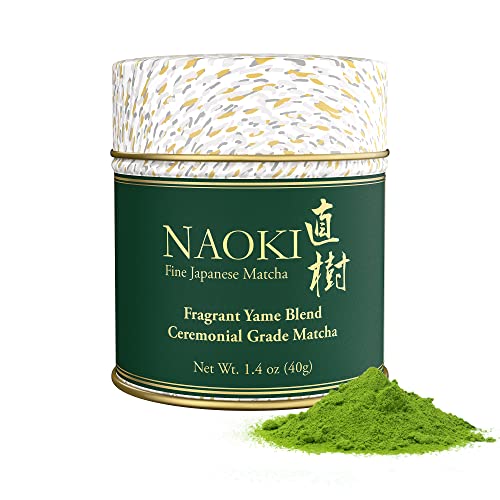
The Fragrant Yame Blend won a Silver medal in a Japanese national tea competition — a rare honor that signals both rigorous processing and exceptional raw leaf quality. Naoki sources exclusively from Yame, Fukuoka, a region known for wide day-to-night temperature swings that drive intense sweetness into the tencha leaves. This ceremonial-grade powder delivers a buttery, creamy finish with gentle sweetness that hits before any vegetal notes emerge. Silver medal packaging aside, the flavor profile is deliberately lighter on umami compared to Uji-style matchas, making it a forgiving choice for intermediate drinkers transitioning from latte-based consumption to straight whisking.
Naoki recommends drinking this blend straight — just matcha and water — to fully experience the natural sweetness. The shade-growing period in Yame produces a subtle, balanced caffeine release without the sharp spike typical of lower-grade powders. The 40g tin is enough for roughly 20 traditional usucha servings, which positions this as a daily drinker for people serious about their morning ritual. The resealable packaging also includes a double-layer foil pouch inside the can, preserving the jade-green color better than single-layer bags.
The one subtle trade-off: the smoothness means less of the classic deep umami punch that purists associate with single-cultivar matchas. If you want the thick, seaweed-like savory note that coats your tongue, you may prefer something with a heavier stone-grind setting. But for anyone who wants a consistently sweet, non-astringent cup that needs zero sugar, the Naoki Fragrant Yame Blend is the most reliable everyday ceremonial option on this list.
Why it’s great
- Award-winning Silver medal from Japanese tea competition
- Buttery, creamy finish with zero bitterness
- Single-origin Yame region with documented growers
Good to know
- Milder umami — less savory depth than single-cultivar options
- 40g tin yields about 20 servings; heavy drinkers may want more volume
2. FKRO Organic Okumidori Ceremonial Grade Matcha

FKRO’s Okumidori is one of the rarest single-cultivar matchas available on Amazon, grown by the Nishi family in Kagoshima — winners of the Emperor’s Cup, Japan’s highest tea honor. Only about two percent of Japanese tea is hand-harvested the way the Nishis do it, and their Okumidori cultivar (奥緑, meaning “deep green”) is shaded for three full weeks before the first spring pluck. The result is a matcha with an exceptionally smooth, velvety texture and a natural sweetness that completely eliminates any hint of bitterness — even when whisked slightly hotter than ideal.
The game-changer here is the supply chain: FKRO air-freights fresh stock from Kagoshima every month, so the powder you receive was ground weeks — not months — before you open the pouch. Most Amazon matcha sits in a fulfillment warehouse for six to twelve months, by which point the L-theanine and chlorophyll have degraded. The 30g pouch (roughly 15 usucha servings) comes packed with 19mg of L-theanine and 80mg of natural caffeine per serving, producing a calm, focused energy lift without the jittery crash associated with coffee or cheap tea powders.
The one practical limitation is the quantity: at 30g, this is a premium sipping matcha best reserved for traditional whisking sessions rather than daily latte-making. Dual-certified USDA Organic and JAS (Japan Agricultural Standards), with zero fillers or additives. If you want to taste what first-harvest single-cultivar matcha actually tastes like before oxidation kills it, this is the freshest representation you can buy without flying to Kagoshima.
Why it’s great
- Single-cultivar Okumidori from Emperor’s Cup-winning farm
- Air-freighted monthly — exceptional freshness, vivid jade color
- Zero bitterness regardless of whisking temperature
Good to know
- 30g pouch is smaller than bulk options; better for ceremonial use
- Pricier per serving than culinary-grade alternatives
3. The Republic of Tea Organic Full-Leaf Japanese Matcha
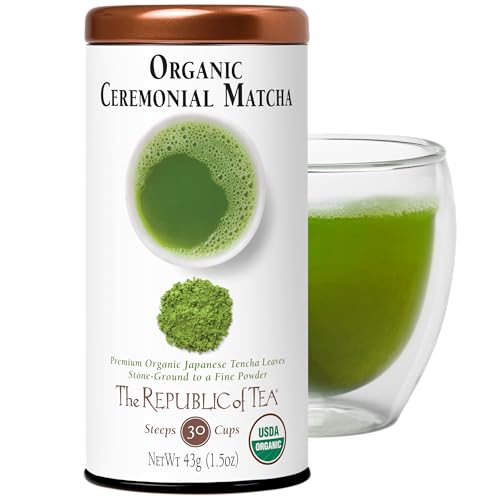
The Republic of Tea’s Full-Leaf Matcha is the entry-level champion for people who want real stone-ground matcha without the sticker shock of single-cultivar imports. The 1.5 oz tin provides roughly 30 cups when whisked traditionally, making it the most economical way to confirm whether you actually enjoy straight matcha before you invest in a premium pouch. The powder is organic and ground from premium tencha leaves, producing a smooth, vegetal sweetness with none of the astringency typical of blade-ground budget options.
The caffeine content is about half that of coffee per cup, which suits drinkers who want sustained alertness without the spike-and-crash pattern. The tin packaging blocks light effectively, though once opened you’ll want to finish it within four to six weeks to preserve the green color and L-theanine content. The profile leans more toward vegetal sweetness than creamy umami — a classic second-harvest trait that makes it versatile for both hot whisking and cold-brewed iced matcha.
This is not a single-cultivar or ceremonial-grade product, so the flavor lacks the deep savory complexity of higher-end options. But for the per-serving cost, the Republic of Tea delivers a consistently drinkable, non-bitter cup that outperforms nearly every loose-leaf green tea alternative. If you usually drink matcha from coffee shops and want to replicate that experience at home without spending premium money, this tin is your smartest starting point.
Why it’s great
- Stone ground from organic Japanese tencha leaves
- Smooth, vegetal sweetness with zero astringency
- Great per-cup value for daily drinking
Good to know
- Second-harvest leaves — less umami depth than first-harvest
- Tin should be consumed within 4-6 weeks after opening
4. Jade Leaf Matcha Organic Culinary Grade Matcha

Jade Leaf’s Culinary Grade is the most popular bulk matcha on Amazon for a simple reason: 100g of organic powder sourced from Uji and Kagoshima that works across baking, smoothies, lattes, and even face masks without breaking the bank. The second-harvest leaves yield a more assertive, earthy flavor profile with subtle nutty and umami notes that hold up beautifully against milk, banana, or chocolate — ingredients that would overwhelm a delicate ceremonial-grade powder. For muffin batters, pancake mixes, or protein shakes, this is the right tool.
The caffeine level sits around 16-24mg per serving, roughly one-quarter of a standard coffee cup, so you can add a generous scoop to your morning smoothie without overloading your nervous system. The resealable stand-up pouch is practical for frequent use, and the 3.53-ounce volume translates to roughly 50-70 culinary servings depending on how heavily you dose. Jade Leaf also publishes its third-party testing reports for pesticides and heavy metals, which is uncommon in the culinary-grade tier.
The trade-off is that this powder is not designed for traditional whisking with water alone. Straight preparation will reveal a slightly more astringent, less creamy taste compared to ceremonial-grade options. Some users also note that the color leans toward a duller green than first-harvest matchas, which is entirely normal for second-harvest leaves. But if your primary use case involves mixing matcha into other ingredients rather than sipping it straight, Jade Leaf’s Culinary Grade is the most versatile and trustworthy bulk option available.
Why it’s great
- 100g bulk pouch — great value for baking and lattes
- Earthy, nutty flavor that holds up against dairy and sweeteners
- Third-party tested for purity
Good to know
- Second-harvest leaves produce some astringency when whisked straight
- Not designed for traditional ceremonial preparation
5. NATUREBELL Organic Matcha Green Tea Powder
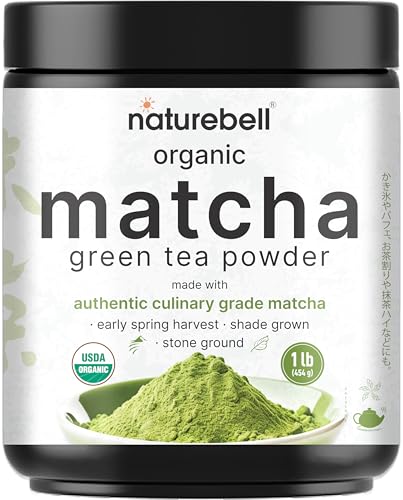
NATUREBELL’s one-pound bag (454g) is the volume king of this list, offering 151 servings from a single purchase — enough to power through months of daily lattes, smoothies, or baked goods without reordering. The powder is unsweetened, dairy-free, and derived from early spring leaf harvests, placing it above standard culinary-grade matchas in terms of freshness potential. The brand also third-party lab tests for radiation, GMOs, gluten, soy, dairy, and common allergens, which adds a layer of trust for sensitive eaters.
The flavor profile is more concentrated and potent than Jade Leaf’s culinary offering, making it suitable for recipes where you want a strong green tea taste without using extra powder. The zero-sugar, zero-filler formulation means you control exactly what goes into your drink. The bag is resealable but not light-blocking, so transferring the powder into an opaque tin after opening will protect the chlorophyll content better than leaving it in the pouch.
The main downside is that this is a culinary-grade product, not ceremonial-grade. Straight whisking in water can produce a noticeably bitter edge compared to first-harvest options. Given the bulk size, this is best suited for households that go through matcha quickly — a single person drinking one serving daily will take about five months to finish the bag, and by month three the powder will start losing its color vibrancy. If you’re committed to matcha-based lattes every morning and you want the lowest per-serving cost, the NATUREBELL bag delivers unbeatable volume.
Why it’s great
- 1-pound bag — 151 servings for high-volume users
- Third-party lab tested for purity and safety
- Unsweetened and contains no fillers
Good to know
- Best used within 2-3 months after opening for optimal color
- Straight whisking reveals some bitterness — best for lattes and baking
FAQ
Why does cheaper matcha turn yellow-brown after a month?
Can I use ceremonial-grade matcha for baking?
How can I tell if a matcha brand is actually fresh?
Final Thoughts: The Verdict
For most users, the best matcha tea winner is the Naoki Matcha Fragrant Yame Blend because it balances award-winning flavor, ceremonial-grade smoothness, and a supply chain from one of Japan’s best tea regions at a price that makes daily drinking sustainable. If you want zero bitterness with exceptional freshness from a single-cultivar farm, grab the FKRO Organic Okumidori. And for anyone cooking or baking at volume, nothing beats the bulk versatility of the Jade Leaf Culinary Grade.