The difference between a vibrant, frothy bowl of matcha and a dull, muddy cup comes down to one thing: the powder you choose. Grind fineness, harvest timing, and oxidation control separate a ceremonial-grade experience from a bitter letdown, and most supermarket tins fail on all three counts.
I’m Emma — the founder and writer behind Baby Bangs. I’ve spent the last four years analyzing matcha supply chains, reviewing lab tests for heavy metals, and cross-referencing customer experiences to map out which Japanese-origin powders actually deliver on their promises.
This guide breaks down five real contenders to help you find the best matcha powder for your daily ritual, whether you prefer it straight, whisked into a latte, or folded into baked goods.
How To Choose The Best Matcha Powder
Not all matcha is created equal. The color, taste, and caffeine profile shift dramatically depending on where and how the leaves were grown, when they were harvested, and how finely they were ground. Here are the three most important factors to lock in before you buy.
Harvest Timing: First Harvest vs. Second Harvest
First-harvest matcha comes from the youngest leaves picked in the spring, producing a naturally sweeter, creamier cup with deeper umami notes. Second-harvest leaves, picked later in the season, have a more assertive flavor with a hint of astringency — ideal for lattes and baking where the matcha needs to stand up to milk or other ingredients. For straight drinking, first-harvest ceremonial-grade powders are the standard; for mixed beverages, second-harvest culinary grades offer better value.
Grind Method: Stone Ground vs. Machine Milled
Traditional granite stone grinding rotates slowly enough to keep friction heat below 40°C, preserving chlorophyll, amino acids, and volatile aromatics. Machine-milled powders, common in cheap bulk brands, generate more heat and produce coarser particles that feel chalky on the tongue and leave a dull gray-green color. The particle size of properly stone-ground matcha averages under 5 microns — anything above 10 microns starts to taste gritty.
Certification and Origin Transparency
Authentic Japanese matcha should state the specific prefecture (Uji, Kagoshima, Yame, or Shizuoka) on the package. Organic certification from USDA or JAS (Japanese Agricultural Standard) ensures no synthetic pesticides were used, and third-party lab testing for lead and arsenic gives an extra layer of safety — especially for daily drinkers. Avoid blends that list “China” as the origin, as the terroir and processing differ significantly.
Quick Comparison
On smaller screens, swipe sideways to see the full table.
| Model | Category | Best For | Key Spec | Amazon |
|---|---|---|---|---|
| Midori Spring Gold No.2 | Ceremonial | Nutty roasted flavor, straight drinking | 5-cultivar blend, first harvest | Amazon |
| Naoki Matcha Fragrant Yame Blend | Ceremonial | Sweet, creamy daily straight matcha | Silver award, Yame Fukuoka | Amazon |
| Jade Leaf Organic Culinary Grade | Culinary | Lattes, smoothies, baking | Second harvest, 3.53 oz bag | Amazon |
| Handpick Japanese Organic | Culinary | Value daily lattes, big bag | 100 servings, resealable pouch | Amazon |
| The Republic of Tea Organic Full-Leaf | Culinary | Single-serve tins, beginners | Stone ground, 1.5 oz tin | Amazon |
In‑Depth Reviews
1. Midori Spring Gold No.2
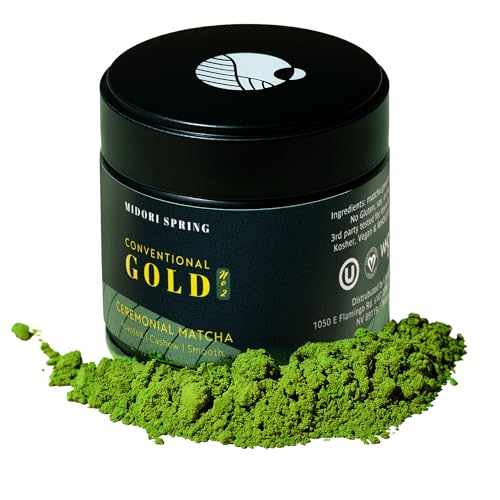
Midori Spring’s Gold No.2 stands apart because it uses a five-cultivar blend — Okumidori, Samidori, Kanayamidori, Yabukita, and Sayamakaori — from first-harvest young leaves grown in Kyoto prefecture. The result is a unique roasted, nutty flavor profile with warm toasty notes that feel more approachable than the grassy intensity of standard ceremonial matcha. Third-party lab testing for metals and toxins adds a layer of assurance that many powders at this level skip.
The deep green color and silky texture make it easy to whisk into a smooth foam with minimal clumping. Its mild umami and negligible bitterness work well both hot and cold, and the small-batch stone milling keeps the particle size consistent. The 2.47-ounce tin holds roughly 25 to 30 servings, which is reasonable for daily use without committing to a bulk pouch that might oxidize before you finish it.
Customer feedback consistently highlights the “full, round finish” and the fact that it foams beautifully with a traditional bamboo whisk. A few users mention that it is slightly more expensive per gram than culinary-grade options, but for a straight-drinking ceremonial matcha that wins on both flavor complexity and purity, the investment pays off in every bowl.
Why it’s great
- Five-cultivar blend delivers layered, roasted complexity
- Lab tested for heavy metals and purity
- Smooth, low-bitter finish ideal for straight drinking
Good to know
- Higher per-serving cost than culinary blends
- Smaller tin means faster repurchase cycle
2. Naoki Matcha Fragrant Yame Blend
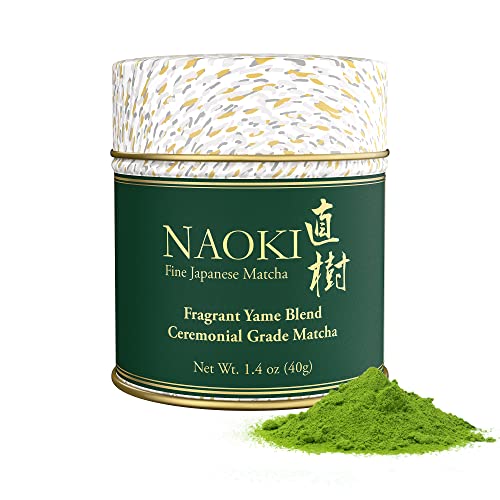
Naoki’s Fragrant Yame Blend earned a Silver award in a Japanese national tea competition, and tasting it makes that credential obvious. Sourced from Yame, Fukuoka — a region known for its wide diurnal temperature swings that concentrate sweetness in the leaves — this ceremonial-grade powder opens with a fresh natural sweetness and buttery, creamy notes that finish incredibly smooth with almost no astringency. The 1.4-ounce pouch is compact but potent, designed for those who drink matcha straight.
The powder sifts and whiskes effortlessly, producing a vivid emerald-green liquor with a frothy cap. Naoki recommends enjoying this blend without milk or sweetener so the Yame terroir shines through, and experienced matcha drinkers will appreciate the low astringency even when using hotter water. The umami is present but subtle — lighter than a heavy Uji-style matcha, making it a forgiving daily option for intermediate drinkers looking to deepen their palate.
Repeat buyers in the reviews mention that this has become their “everyday ceremonial” — a sign that the balance of quality and approachability hits a sweet spot. The only trade-off is the smaller 40-gram package size, which disappears quickly if you drink multiple bowls daily. But for those who prioritize flavor purity and award-winning provenance, the Yame Blend is a genuine standout.
Why it’s great
- Silver award-winning ceremonial grade from Yame
- Naturally sweet, buttery finish with low bitterness
- Whisks into a frothy, vibrant green foam
Good to know
- Small 40g pouch requires frequent restocking
- Best enjoyed straight — not ideal for lattes
3. Jade Leaf Matcha Organic Culinary Grade

Jade Leaf’s Culinary Grade matcha is built for versatility. Made from second-harvest leaves grown in Uji and Kagoshima, Japan, it delivers an earthy flavor with sweet, nutty, and umami undertones that hold up well when mixed with milk, oats, or flour. The 3.53-ounce bag is the largest in this lineup, offering roughly 100 grams — enough for around 50 lattes or dozens of smoothies, baked goods, and even homemade face masks.
This powder is USDA organic and direct-sourced from family farms, which gives it traceability that most bulk culinary blends lack. The caffeine content sits around 16–24 mg per serving — about a quarter of an 8-ounce coffee — and the L-theanine content helps produce steady energy without the sharp spikes or crashes. The grind is slightly coarser than ceremonial grade, but for mixing into batters or blending with milk, that texture works perfectly fine and helps keep the price accessible.
Users consistently report that this grade outshines other culinary matchas in color retention — it stays a vibrant green even after baking, which is a telltale sign of proper oxidation control. The main compromise is that drinking it straight with water reveals a slight astringency from the second harvest leaves. But for anyone using matcha as an ingredient rather than a standalone tea, Jade Leaf offers the best price-to-quality ratio in the category.
Why it’s great
- Large 3.53-ounce bag for heavy daily use
- Holds vibrant green color in baked goods
- USDA organic, direct from Uji and Kagoshima farms
Good to know
- Slightly astringent when drunk straight
- Coarser grind than ceremonial options
4. Handpick Japanese Organic Matcha
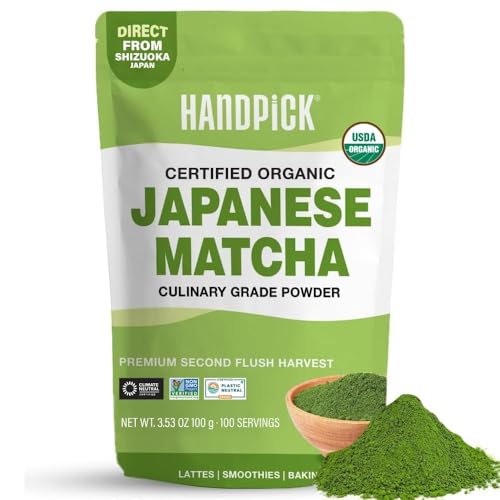
Handpick’s Japanese Organic Matcha focuses on volume and ethical sourcing. The resealable ziplock pouch holds 3.53 ounces — advertised as 100 servings — making it the most economical option for daily latte drinkers or smoothie enthusiasts. The matcha is Non-GMO Project Verified and sourced directly from Japan, with shade-grown leaves that produce a rich, earthy flavor with subtle sweetness and minimal bitterness for a culinary-grade powder.
What sets Handpick apart is the brand’s carbon-neutral and plastic-neutral certification — they measure and offset their environmental footprint through sustainability initiatives in India. For buyers who want a bulk matcha without compromising on origin transparency, this addresses a genuine gap in the market. The powder mixes well with oat milk and almond milk, producing a smooth latte without clumping, and customer reviews consistently note that it compares favorably to pricier brands like Jade Leaf.
The main trade-off is that the flavor profile leans toward the savory side — it works beautifully in matcha lattes where the milk rounds out the edges, but drinking it straight reveals a more vegetal, less sweet character than first-harvest options. Oxidation control is decent but not exceptional; if you take more than three months to finish the pouch, you may notice the color fading. Still, for value-driven daily consumption with a lower environmental footprint, Handpick delivers admirably.
Why it’s great
- 100 servings per pouch — best value in the lineup
- Carbon-neutral and plastic-neutral certification
- Non-GMO verified, direct from Japan
Good to know
- Savory flavor less suited for straight drinking
- Pouch size accelerates oxidation after opening
5. The Republic of Tea Organic Full-Leaf Japanese Matcha
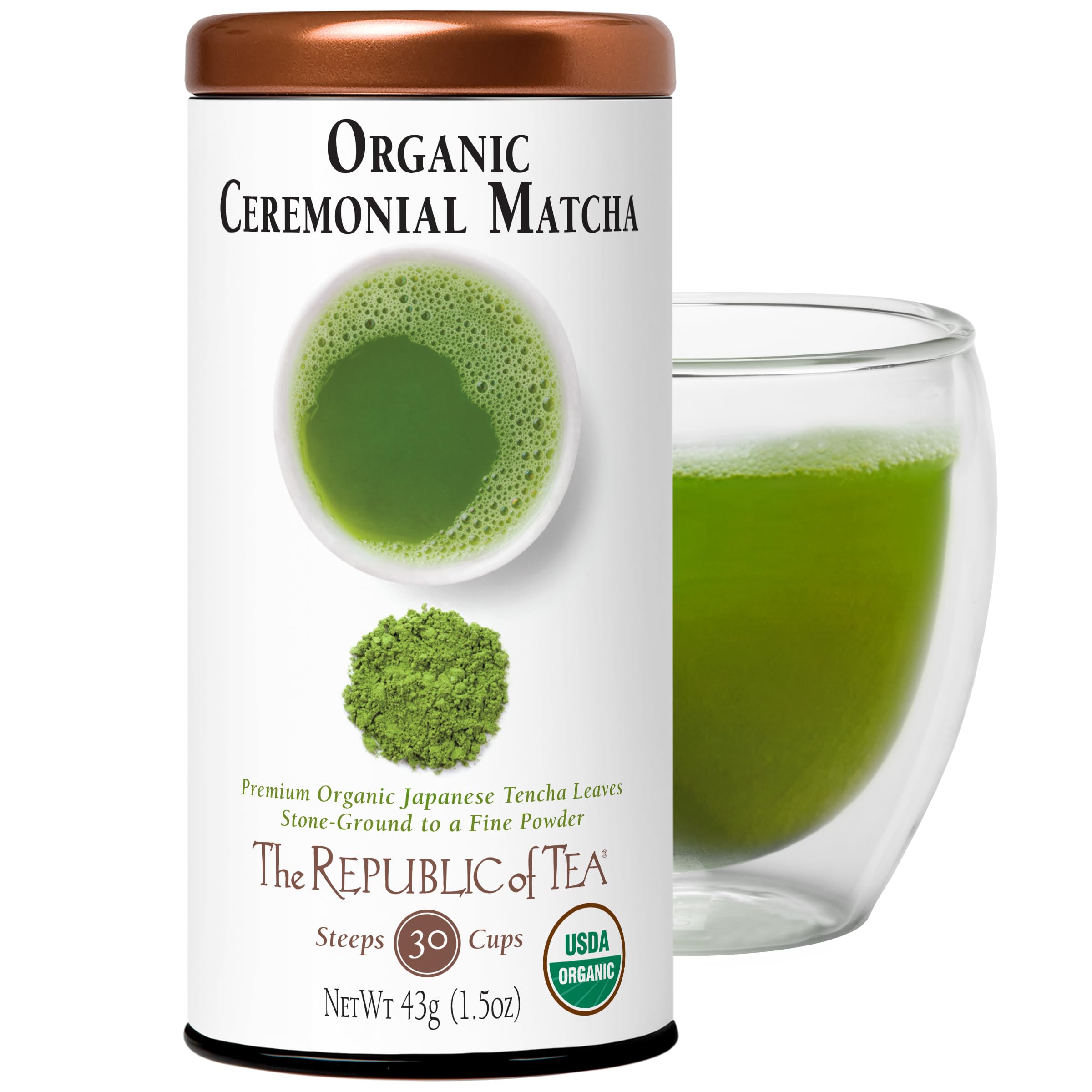
The Republic of Tea’s Organic Full-Leaf Matcha comes in a compact 1.5-ounce tin that steeps roughly 30 cups — a perfect trial size for newcomers who are not ready to commit to a larger pouch. The powder is stone ground from organic tencha leaves, producing a smooth cup with vegetal sweetness and no astringency when whisked into water just below boiling. The medium caffeine content sits well below coffee but provides a stable lift for a morning ritual.
This matcha is certified organic, gluten-free, kosher, and free of added sugar or carbs, making it a clean choice for dietary-sensitive buyers. The tin packaging does a better job protecting the powder from light and air than most zip-pouch alternatives, which helps preserve the vibrant green color over the life of the tin. Flavor-wise, it leans lighter and grassier than the roasted Midori Gold or the creamy Yame Blend, appealing to those who prefer a more traditional, no-fuss matcha taste.
The biggest limitation is the small tin size — frequent drinkers will run through it quickly, and the per-ounce cost is higher than bulk options. Additionally, some users note that the powder requires a bit more whisking effort to dissolve completely compared to finer micronized ceremonial grades. But for a beginner trying matcha for the first time, or for someone who wants a shelf-stable tin for occasional use, this is a solid, reputable entry point.
Why it’s great
- Great trial-size tin for beginners
- Stone-ground organic tencha, no bitterness
- Light-protective tin packaging preserves freshness
Good to know
- Small quantity means frequent repurchasing
- Requires more whisking effort to avoid clumps
FAQ
What is the difference between ceremonial and culinary matcha powder?
How can I tell if a matcha powder is high quality before opening it?
Does matcha contain as much caffeine as coffee?
Should I refrigerate my matcha powder to keep it fresh?
Final Thoughts: The Verdict
For most users, the matcha powder winner is the Midori Spring Gold No.2 because its roasted five-cultivar blend offers a uniquely approachable flavor profile that works beautifully for straight drinking without requiring a seasoned palate. If you want a sweet, award-winning ceremonial powder for mindful daily sipping, grab the Naoki Matcha Fragrant Yame Blend. And for budget-conscious bakers and latte lovers, nothing beats the bulk value and consistent color of the Jade Leaf Organic Culinary Grade.