That first sip of a matcha latte from your favorite café sets a high bar — velvety smooth, naturally sweet, with a grassy undertone that lingers without the harsh bite. Recreating that at home often ends in disappointment: a bitter, dusty, or dull-tasting cup that makes you wonder if you grabbed the wrong tin. The difference between a vibrant jade-green drink and a muddy, astringent one comes down to the specific grade, harvest timing, and freshness of the powder hitting your whisk.
I’m Emma — the founder and writer behind Baby Bangs. I evaluate matcha based on shade-growing methods, stone-grind fineness, L-theanine content, and the oxidation timeline from Japanese harvest to your doorstep.
Whether you are whisking a traditional usucha or blending a creamy iced latte, locking in the right matcha powder for drinks means prioritizing a vivid green hue, fine particle size, and a cultivar known for its natural umami sweetness.
How To Choose The Best Matcha Powder For Drinks
Not every green powder labeled “matcha” will deliver that silky, umami-rich experience you want in a drink. The two biggest mistakes buyers make are choosing a culinary grade for sipping (it turns bitter and gritty) and ignoring the harvest-to-ship freshness window, which kills both flavor and the calming L-theanine content. Here are the three filters that matter most.
Grade: Ceremonial vs. Culinary vs. Everyday
Ceremonial grade uses the youngest, most tender shade-grown leaves — hand-picked, de-veined, and stone-ground into an ultra-fine powder with a brilliant emerald color. It dissolves smoothly in water with zero grit, making it the only choice for a traditional hot water whisk or a clean latte base. Culinary grade, made from second-harvest leaves, contains more stem material and a coarser grind; it works for baking or smoothies but delivers a sharper, more astringent taste when drunk straight. “Everyday” or “daily” blends sit between the two — drinkable but not delicate.
Freshness & Supply Chain
Matcha oxidizes rapidly once ground. A pouch that sat in a warehouse for six months will look yellow-brown, smell like hay, and taste flat. The best matcha for drinking is stone-ground in small batches and air-flown from Japan within weeks of production — not shipped by sea. Look for brands that explicitly state monthly or weekly air freight, and check that the package reseals tightly or uses nitrogen flushing to block oxygen and light.
Single-Cultivar vs. Blend
Most commercial matcha is a blend of multiple leaf cultivars, which dilutes the unique flavor profile. Single-cultivar matcha — such as the rare Okumidori or the classic Samidori — expresses a specific, consistent taste: velvety, with natural sweetness and zero bitterness. These varieties also contain higher levels of L-theanine, the amino acid responsible for that calm-focused energy without the coffee jitters. If you are serious about the drinking experience, single-cultivar is the way to go.
Quick Comparison
On smaller screens, swipe sideways to see the full table.
| Model | Category | Best For | Key Spec | Amazon |
|---|---|---|---|---|
| FKRO Organic Okumidori Ceremonial Grade | Ceremonial Single-Cultivar | Traditional usucha & lattes | Stone-ground Okumidori, air-flown monthly | Amazon |
| Jade Leaf Organic Culinary Grade | Culinary/Premium Blend | Baking, smoothies, lattes | Second harvest, 100g bulk size | Amazon |
| Rishi Tea Everyday Matcha | Everyday Daily Blend | Daily hot or iced drinks | Organic daily blend, 1.05 oz tin | Amazon |
| The Republic of Tea Organic Full-Leaf | Mid-Range Everyday | Classic hot matcha | Stone-ground tencha leaf, 1.5 oz tin | Amazon |
| Naturebell Organic Matcha | Bulk Culinary | High-volume daily drinks & baking | 2 lb bulk, early spring harvest | Amazon |
In‑Depth Reviews
1. FKRO Organic Okumidori Ceremonial Grade Matcha

This is the matcha that turns first-timers into daily drinkers. The Nishi family in Kagoshima has been growing organic tea since 1954 and won the Emperor’s Cup, Japan’s highest tea honor. Their Okumidori cultivar is hand-shaded for three weeks, then hand-harvested and stone-ground in batches of just 150 kg per year. The result is a powder so fine and jade-green that when you whisk it into hot water, it forms a dense, creamy foam with a natural sweetness and zero bitterness — even if you accidentally use water just off the boil.
What sets this apart from the rest of the market is the supply chain. Most matcha on Amazon sits in warehouses for six to twelve months, oxidizing into a dull yellow-brown that kills L-theanine. FKRO air-freights fresh stock from Japan every month and ships it immediately. Each pouch carries 19 mg of L-theanine and 80 mg of natural caffeine per serving, delivering that calm, laser-focused energy without the spike-and-crash of coffee. The 30 g pouch yields about 15 traditional usucha servings, so you get a premium, fresh experience in a manageable size.
If you value a silky mouthfeel and a truly vegetal, umami-rich profile — whether for a traditional tea ceremony or a simple morning latte — this single-cultivar ceremonial grade is unmatched in this price tier. It also carries both USDA and JAS organic certifications, with no fillers or additives. The only catch is the 30 g pouch sells out quickly due to the limited production, so it pays to grab it when fresh stock lands.
Why it’s great
- Award-winning single-cultivar Okumidori — unmatched umami sweetness with zero bitterness
- Monthly air-freight from Japan means you get the freshest powder possible, not stale warehouse stock
- Dual USDA and JAS certified organic with high L-theanine for calm focus
Good to know
- 30 g pouch provides about 15 servings — good for daily use but not a bulk option
- Sells out quickly due to limited annual production of 150 kg
2. Jade Leaf Organic Culinary Grade Matcha

Jade Leaf has earned a loyal following for a reason: this 100 g pouch offers a massive amount of second-harvest culinary grade matcha at a per-serving cost that makes daily lattes or smoothies affordable without sacrificing all flavor. The powder is sourced directly from Uji and Kagoshima farms and is grown without pesticides or synthetic fertilizers. The flavor profile is earthy, with sweet nutty and umami notes that work well when mixed with milk or plant-based alternatives — but it is noticeably more astringent than a ceremonial grade, especially when whisked with just hot water.
The 100 g package is practical for high-volume use: you can bake matcha muffins, blend green smoothies, or whip up a batch of matcha ice cream without worrying about running out. However, the bag’s foil zip-lock closure is the only barrier against oxidation, and since this is a mid-range product rather than a premium single-cultivar, the color starts as a slightly duller green and fades faster after opening. Most user reviews praise its versatility and value, especially for matcha lattes, where the milk proteins soften the edge.
If you are building a home café routine and expect to drink matcha daily — or you want a single powder to handle both lattes and baking — this bulk culinary grade is the most practical buy in the mid-range. It is not the smoothest for a straight hot-water whisk, but for a creamy iced latte or a matcha shot mixed into a smoothie, it delivers reliable flavor at a budget-friendly price per gram.
Why it’s great
- Massive 100 g pouch at a very low per-serving cost — ideal for daily high-volume use
- Versatile for drinks, baking, smoothies, and even skin care applications
- Organic, pesticide-free sourcing from Uji and Kagoshima
Good to know
- Culinary grade means more astringency and a coarser texture when drunk straight with water
- Foil bag reseals but does not provide the same freshness lock as a nitrogen-flushed tin
3. Rishi Tea Everyday Matcha

Rishi positions itself as the bridge between premium café quality and everyday affordability. This “Everyday Matcha” is a blend of organic Japanese leaves designed to perform both hot and iced without the bitterness that plagues budget culinary powders. The 1.05 oz tin is small but fits neatly into a kitchen drawer, and the metal container helps preserve freshness better than a foil pouch. The powder itself is a medium-bright green with a fine grind that dissolves reasonably well with a bamboo whisk or a handheld frother.
Flavor-wise, this sits closer to a ceremonial profile than a culinary one — it has a smooth, slightly creamy mouthfeel with gentle grassy notes and a mild sweetness, but it lacks the deep umami and velvet texture of a true single-cultivar. It works best for hot lattes or iced matcha lemonades where the matcha is the star but not the only flavor. Several users note that it mixes well without clumping, which is a plus for busy mornings when you just want a quick, no-fuss drink. The caffeine content is moderate, making it a good coffee alternative for those who find matcha too stimulating.
If you want a reliable, everyday-drinker matcha that won’t punish you for imperfect whisking and works equally well hot or iced, Rishi’s blend is a solid middle-ground choice. The smaller tin size means you will run through it faster, but that also forces you to keep your stock fresh — a hidden advantage for flavor.
Why it’s great
- Smooth, drinkable flavor profile that works for both hot and iced preparations
- Metal tin keeps the powder fresher longer than pouches
- Clump-free mixing with a whisk or frother — ideal for fast daily prep
Good to know
- 1.05 oz tin provides fewer servings per dollar compared to bulk pouches
- Not single-cultivar — the blend lacks the deep umami of premium ceremonial grades
4. The Republic of Tea Organic Full-Leaf Japanese Matcha
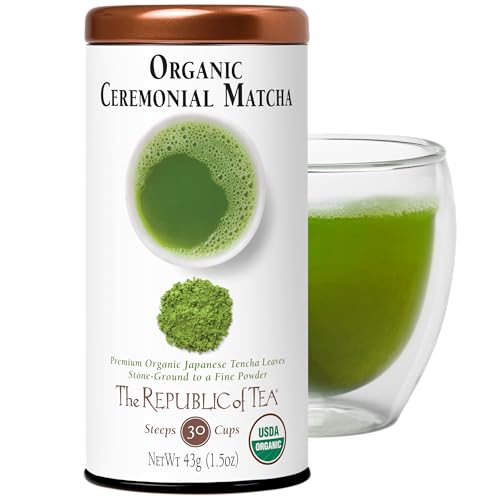
The Republic of Tea’s matcha is an accessible starting point for those new to the category. It is made from organic stone-ground tencha leaf (shade-grown green tea from Japan) and produces a cup with “vegetal sweetness” and “no astringency” according to the brand. The 1.5 oz tin yields about 30 servings per tin, which is a decent value for the entry-level price tier. The powder is a medium green — not as vivid as a ceremonial grade, but not dull enough to signal heavy oxidation.
Where this product shows its limits is in the depth of flavor. While it is smooth and avoids the harsh bitterness of basic culinary powders, it lacks the layered umami and creamy body that single-cultivar or premium ceremonial blends deliver. It is a reliable, no-surprises matcha for someone who wants to try daily matcha drinking without investing in a pricier tin. The caffeine is listed as “less than half of coffee per cup,” which falls around 40–50 mg, making it a gentle energizer.
If you are on a budget and want a drinkable hot matcha that does not require a master’s whisking technique, this tin is a safe entry. Just know that if you ever taste a fresh Okumidori or a high-end ceremonial, you may find this version thin by comparison.
Why it’s great
- Organic stone-ground tencha leaf with smooth, non-astringent flavor for the price
- Decent 30 servings per 1.5 oz tin — good for daily testing without commitment
- Low caffeine (less than half of coffee) for gentle energy
Good to know
- Flavor is thin and lacks the deep umami of premium single-cultivar matcha
- Medium green color suggests some oxidation occurred before packaging
5. Naturebell Organic Matcha Green Tea Powder (2 lb)

For the high-volume user who goes through matcha quickly, Naturebell’s 2 lb bag is the most economical option on this list — over 300 servings per container. It is a culinary grade powder derived from an early spring leaf harvest, which gives it a slightly better flavor profile than a typical late-season culinary. The powder is fine and dark green, with a concentrated taste that users describe as strong and “C-rank” on the quality scale (meaning it is not delicate but effective for mixing).
This matcha works best when combined with milk, plant-based milk, or blended into smoothies and baked goods, where its mild bitterness is masked by other ingredients. It mixes fairly well with a whisk, though some clumping occurs if you don’t invest a few extra seconds in stirring. The bag is large and resealable, but since this is a bulk container, you need to use it within a few months of opening to avoid significant flavor decline. Third-party lab testing confirms no GMOs, gluten, soy, or fillers, which is reassuring at this price point.
If you run a household where matcha lattes are a daily staple for multiple people, or you want a single powder that can handle baking, smoothies, and lattes without breaking the bank, this bulk option is the practical choice. Just keep your expectations realistic on the sipping quality — it is not a ceremonial experience, but it is a workhorse.
Why it’s great
- Massive 2 lb bag provides over 300 servings at a unmatched per-serving cost
- Early spring harvest gives better flavor than typical late-harvest culinary powders
- Third-party lab tested and free from GMOs, gluten, soy, and fillers
Good to know
- Culinary grade flavor — noticeably more astringent when drunk straight with water
- Large bag may lead to oxidation before you finish it; best for heavy daily use
FAQ
Can I use culinary grade matcha for drinking?
How can I tell if my matcha powder is fresh?
Final Thoughts: The Verdict
For most users, the matcha powder for drinks winner is the FKRO Organic Okumidori Ceremonial Grade because its single-cultivar, air-fresh supply chain delivers an unmatched velvety umami and zero bitterness that makes every cup a ritual. If you want a versatile bulk option that handles both lattes and baking at a low per-serving cost, grab the Jade Leaf Organic Culinary Grade. And for a dependable daily driver that mixes effortlessly and works hot or iced, nothing beats the Rishi Tea Everyday Matcha.