That first sip of matcha should taste like sweet, vegetal cream — not bitter dirt water. Beginners often grab the wrong powder, stir it into hot liquid, and get a harsh, gritty cup that kills any desire to try again. The real trick is knowing which grade and grind actually deliver the smooth, sweet experience you’re after without needing a barista’s whisking technique.
I’m Emma — the founder and writer behind Baby Bangs. I’ve spent years analyzing harvest seasons, stone-grind certifications, and organic sourcing claims to separate the genuinely beginner-friendly matcha from the overpriced or overly astringent options on Amazon.
This guide breaks down five carefully vetted matcha powders built for first-time users. After reading, you’ll know exactly which matcha powder for beginners fits your kitchen routine and taste expectations.
How To Choose The Best Matcha Powder For Beginners
Walking into matcha for the first time means navigating terms like ceremonial grade, culinary grade, first harvest, and stone-ground. These aren’t marketing fluff — each phrase tells you exactly how the powder will taste and behave in your cup. Understanding them is the difference between a morning ritual you look forward to and a jar you abandon after three sips.
Grade Matters More Than Price
Ceremonial grade uses the youngest, most tender shade-grown leaves ground to a micron-fine powder. It dissolves smoothly in water alone and tastes sweet with minimal bitterness. Culinary grade uses slightly older leaves and is designed for lattes, smoothies, and baking where milk or sugar masks any edge. For beginners planning to drink matcha straight or with just hot water, choose ceremonial grade — culinary versions will taste noticeably sharper.
Stone-Ground vs Machine-Ground Texture
Stone grinding preserves the leaf’s delicate flavor compounds by generating less heat during milling. The resulting powder is ultra-fine and dissolves almost completely when whisked. Machine-ground matcha is often slightly coarser, leaving a gritty sediment at the bottom of your cup. Beginners should look for “stone-ground” on the label — it’s the single best predictor of a smooth, clump-free drinking experience.
Shade-Growing and Organic Certification
True matcha comes from tea plants shaded for 20–30 days before harvest. This process boosts chlorophyll and L-theanine levels while reducing bitter catechins. Organic certification (look for USDA Organic or JAS) ensures you’re not consuming pesticide residues — especially important since you’re drinking the entire ground leaf. Beginners should prioritize shade-grown organic matcha for the gentlest flavor and cleanest ingredients.
Quick Comparison
On smaller screens, swipe sideways to see the full table.
| Model | Category | Best For | Key Spec | Amazon |
|---|---|---|---|---|
| Republic of Tea Organic | Ceremonial | Pure water drinking | Stone-ground, 1.5 oz tin | Amazon |
| HANDPICK Organic | Ceremonial | Daily lattes & plain tea | 100 servings, resealable pouch | Amazon |
| FGO Organic Latte Blend | Culinary/Sweet | Cafe-style lattes | Pre-mixed with cane sugar, 16 oz | Amazon |
| Midori Spring Gold No.2 | Ceremonial | Nutty, roasted flavor | 5-cultivar blend, third-party tested | Amazon |
| Jade Leaf Culinary Grade | Culinary | Baking, smoothies, skincare | Earthy & umami, 3.53 oz bag | Amazon |
In‑Depth Reviews
1. Republic of Tea Organic Full-Leaf Japanese Matcha
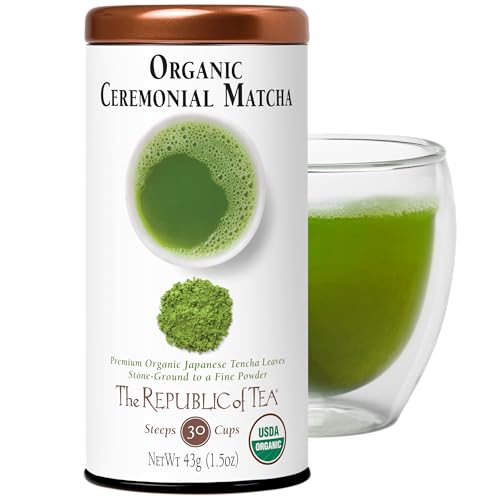
The Republic of Tea’s matcha is ground from premium Japanese Tencha leaves using traditional stone mills. That stone-grinding process keeps the powder so fine it whisks into hot water with minimal clumping, producing a smooth, vegetal sweetness with zero astringency — exactly what a beginner needs to build confidence.
Being shade-grown and USDA Organic, this powder delivers the high chlorophyll and L-theanine content that provides gentle, focused energy without caffeine jitters. The 1.5-ounce tin steeps about 30 cups, making it a manageable trial size that won’t go stale before you finish it.
Because it’s a pure ceremonial-grade product with no added sugar or milk powders, you control every variable. Whisk it with water heated just below boiling for a traditional cup, or add your preferred milk for a latte. The bright green color confirms the freshness and leaf quality.
Why it’s great
- Authentic stone-ground texture dissolves smoothly
- No bitterness or astringency — sweet and vegetal
- USDA Organic with shade-grown tencha leaves
Good to know
- Tin is compact — about 30 servings only
- Requires a bamboo whisk for best results
2. HANDPICK Japanese Organic Matcha Green Tea Powder
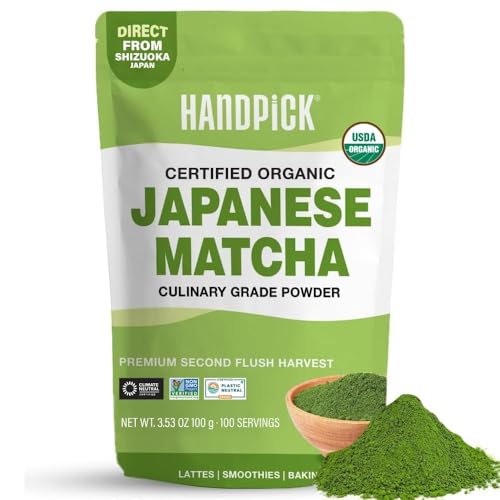
HANDPICK delivers 100 servings in a single 3.53-ounce bag, making it the most generous option for beginners who want to practice daily without constant repurchasing. The shade-grown Japanese leaves are hand-picked and stone-ground, with a vibrant green color that signifies fresh harvest and careful processing.
Customer reviews consistently praise its smooth, earthy flavor profile with a delicate natural sweetness — one reviewer switched from a premium brand and found no difference in taste, confirming this powder punches above its tier. The resealable ziplock pouch is a practical win for beginners because matcha degrades quickly when exposed to air and light.
The brand also emphasizes Non-GMO verification and carbon-neutral production. While this is a ceremonial-grade powder suitable for drinking straight with water, its robust character also holds up beautifully in lattes with oat or almond milk.
Why it’s great
- 100 servings per bag — excellent value for daily drinkers
- Resealable pouch preserves freshness between uses
- Smooth flavor works for both plain tea and lattes
Good to know
- Pouch packaging less airtight than a tin
- Some users prefer a slightly sweeter ceremonial grade
3. FGO Organic Matcha Latte Powder
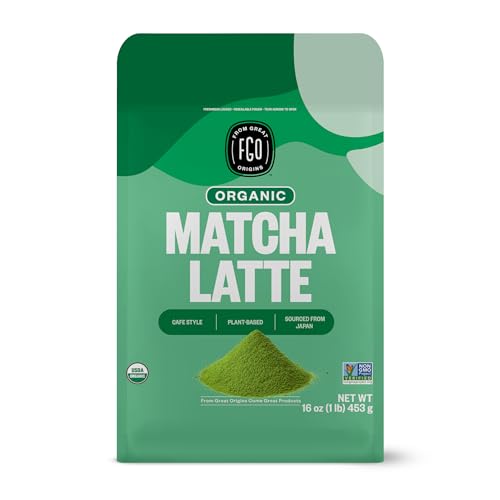
FGO takes a different approach by blending high-quality Japanese shade-grown matcha with organic Brazilian cane sugar, creating an instant latte mix. Beginners who find pure matcha too earthy or bitter will appreciate the pre-balanced sweetness that requires no additional syrup or honey.
The 16-ounce bulk bag is generously sized for frequent latte drinkers, and the USDA Organic certification from California Certified Organic Farmers ensures the matcha itself is clean even in a blended product. The grind is fine enough that it dissolves easily in milk without excessive whisking — a major convenience for busy mornings.
It’s important to recognize this is a sweetened product, so you lose control over sugar content. The matcha-to-sugar ratio is calibrated for a cafe-style latte, not for traditional tea preparation. If your goal is a straight matcha shot or a savory drink, go with an unsweetened ceremonial grade instead.
Why it’s great
- Instant cafe latte — just add milk and stir
- Large 16-ounce bag lasts through many servings
- USDA Organic with verified sourcing from Japan
Good to know
- Contains organic cane sugar — not sugar-free
- Not suitable for traditional hot water preparation
4. Midori Spring Gold No.2 Ceremonial Grade Matcha
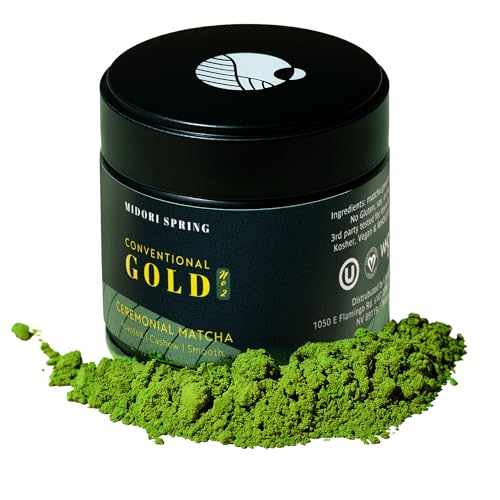
Midori Spring’s Gold No.2 stands apart from every other option here because of its roasted tencha leaves sourced from Kyoto. Instead of the classic grassy or vegetal flavor, you get a nutty, toasty profile with umami undertones — a more approachable taste for beginners who find traditional matcha too floral or intense.
The blend combines five cultivars — Okumidori, Samidori, Kanayamidori, Yabukita, and Sayamakaori — all from first harvest leaves grown in Kyoto’s premium tea farms. Third-party lab testing for metals and toxins adds peace of mind for anyone nervous about consuming ground tea leaves straight.
This is a medium-range ceremonial grade, meaning it works for both hot whisking and cold brew applications. The small 1-ounce tin is perfect for sampling before committing to a larger bag. Vegan, Kosher, and WHOLE3 APPROVED certifications round out the quality package.
Why it’s great
- Unique roasted, nutty flavor profile for a less grassy experience
- Third-party lab tested for purity and safety
- Multi-cultivar blend adds exceptional depth
Good to know
- Small 1-ounce tin — about 20–25 servings
- Higher price per serving compared to bulk options
5. Jade Leaf Matcha Organic Culinary Grade

Jade Leaf’s culinary grade is ground from second harvest leaves from Uji and Kagoshima, Japan. It’s designed specifically for baking, smoothies, lattes, and skincare uses rather than traditional water-only drinking. The earthier, slightly stronger flavor cuts through other ingredients without getting lost.
Each serving delivers 16–24 mg of naturally occurring caffeine plus L-theanine, providing gentle energy without the coffee crash. The organic certification ensures no pesticides ended up in the final powder, which matters extra when you’re using it in raw applications like smoothies or overnight oats.
Customer reviews consistently highlight how well it blends into recipes — one verified buyer uses it daily in lattes and praises the smooth texture and vibrant green color. Beginners who plan to experiment with matcha beyond just tea will appreciate the flexibility. Just remember this is not for straight hot water drinking; the flavor will be noticeably sharper than a ceremonial grade.
Why it’s great
- Versatile for baking, smoothies, lattes, and skincare
- High-quality second harvest from Uji and Kagoshima
- Organic with verified customer satisfaction
Good to know
- Not suited for traditional water-only preparation
- Earthy taste may be too bold for some beginners
FAQ
Should a beginner start with ceremonial or culinary grade matcha?
How do I prevent my matcha from tasting bitter?
How should I store matcha powder to keep it fresh?
What does shade-growing actually do to the flavor?
Final Thoughts: The Verdict
For most users, the matcha powder for beginners winner is the Republic of Tea Organic Matcha because it delivers authentic stone-ground ceremonial quality in a manageable tin that won’t go stale before you finish it. If you want maximum servings per purchase and a resealable pouch for daily lattes, grab the HANDPICK Organic Matcha. And for the beginner who wants a nutty, less grassy introduction to matcha, nothing beats the Midori Spring Gold No.2.