Your 26.2-mile race plan deserves a wrist companion that measures more than just lap time. Marathon pacing demands precision — every second of GPS drift, every heart rate spike, every step of energy waste alters your finish line equation.
I’m Emma — the founder and writer behind Baby Bangs. I’ve analyzed the latest GPS chipsets, battery endurance claims, and training algorithms across the most serious running wearables to separate race-day tools from casual fitness trackers.
Whether you target a sub-3 hour finish or a first-time PR, choosing the right marathon watches for runners comes down to satellite accuracy, battery capacity, and recovery intelligence that match your training load.
How To Choose The Best Marathon Watch For Runners
A marathon watch lives or dies by three pillars: satellite lock reliability, battery endurance under continuous GPS, and training insight that prevents overreaching six weeks before race day. Plaster a spec sheet with features like music storage or NFC payments and you still miss the point — marathon runners punish gear differently than daily joggers.
GPS Accuracy — Your Mileage Is Never Just a Number
Single-band GPS loses lock under tree cover, between tall buildings, or on winding trails. Dual-frequency (L1+L5) reception pulls signals from multiple satellite constellations, which means your recorded 26.2 miles is actually 26.2 miles — not 26.6 from drift or 25.8 from cut corners. Look for multi-band GNSS support (GPS + GLONASS + Galileo + QZSS) in any watch you plan to race with.
Battery That Lasts a Full Training Block
Manufacturers quote smartwatch-mode days, but marathon runners need GPS-on hours. A 20-hour GPS runtime covers a long run plus a few recovery jogs before recharging. If you train six days a week, target 30+ hours of continuous GPS — that eliminates mid-week charging stress and lets you track a full Sunday long run without battery anxiety.
Training Load and Recovery Metrics That Adapt
Heart rate variability (HRV), training stress score (TSS), and recovery time suggestions turn raw data into actionable decisions. A good marathon watch tells you when to push intervals and when to take an easy day — not just how fast you ran. VO2 max estimation and lactate threshold guidance are the difference between guessing your pace and knowing your zones.
Quick Comparison
On smaller screens, swipe sideways to see the full table.
| Model | Category | Best For | Key Spec | Amazon |
|---|---|---|---|---|
| COROS PACE 4 | Mid-Range | Serious daily training | 41h GPS, 32g weight | Amazon |
| SUUNTO Race S | Premium | Navigation & performance | Dual-band GNSS, offline maps | Amazon |
| COROS PACE Pro | Premium | Speed & battery endurance | 38h GPS, 1500-nit AMOLED | Amazon |
| Amazfit Active 3 Premium | Mid-Range | Marathon training + daily wear | 12-day battery, offline maps | Amazon |
| SUUNTO Run | Mid-Range | Lightweight daily runs | Dual-freq GPS, 21h training | Amazon |
| Wahoo ELEMNT Rival | Mid-Range | Triathlon transitions | Touchless T1/T2, multisport | Amazon |
| Garmin Instinct 2X Solar | Premium | Ultra-endurance & rugged use | Solar charging, infinite smartwatch | Amazon |
| Garmin Forerunner 970 | Premium | Elite marathon analytics | Running economy, multi-band GPS | Amazon |
| Apple Watch Ultra 3 | Premium | Ecosystem & cellular safety | 42h battery, dual-freq GPS | Amazon |
In‑Depth Reviews
1. COROS PACE 4
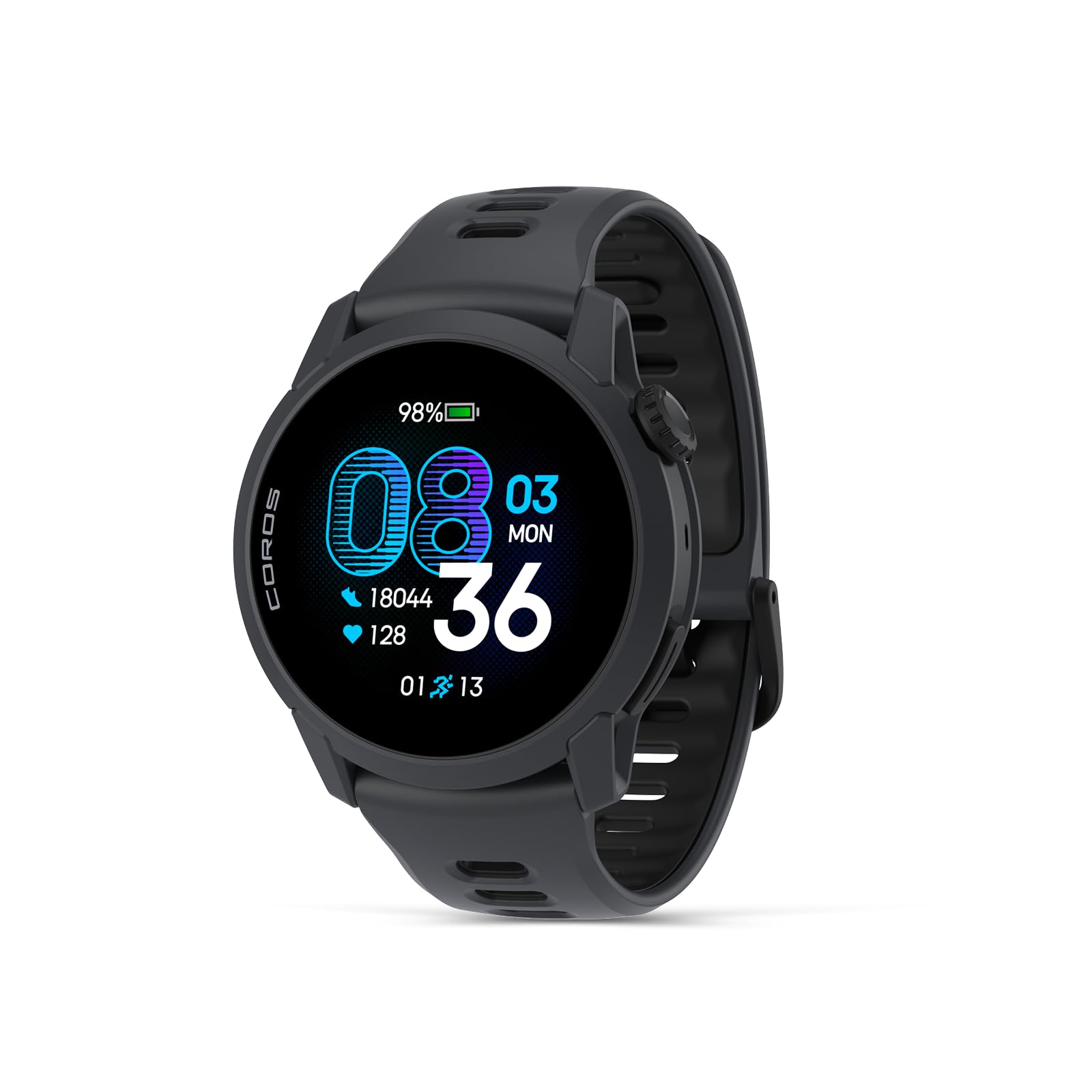
The COROS PACE 4 hits the sweet spot where GPS marathon watches live — ultralight at 32g with the nylon band, yet packing a 41-hour GPS battery that covers a full training week without a single charge. The 1.2-inch AMOLED touchscreen offers 164% higher resolution than the PACE 3, and the auto-adjusting brightness keeps your pace data legible under direct sun or pre-dawn gloom.
Dual-frequency GPS locks onto multiple satellite bands, which translates to accurate mile splits even when your route cuts through tree-lined park paths or urban canyon streets. The voice recording tool lets you capture notes mid-run about how that last hill felt, and voice control handles alarms or workout creation without thumbing through menus while your heart rate is peaking.
The COROS app tracks recovery time, HRV, sleep stages, and menstrual cycles — giving you a full picture of how your body is absorbing marathon training load. The combination of a digital crown, two buttons, and a smooth touchscreen offers tactile control even with sweaty fingers.
Why it’s great
- Class-leading battery for GPS mode
- Featherlight design reduces wrist fatigue
- Advanced training metrics for serious runners
Good to know
- No onboard music or storage for playlists
- Plastic case feels less premium than titanium rivals
2. SUUNTO Race S

The SUUNTO Race S brings a 1.32-inch 466dpi AMOLED touchscreen and a digital crown to marathon runners who also venture off the pavement. Dual-band reception from five satellite systems (GPS, GLONASS, Galileo, QZSS, BeiDou) ensures your track is recorded precisely even in high-rise cities or under dense canopy — a real advantage for trail marathoners.
The 32GB of global offline maps with 2km zoom-out and route navigation means you can explore new routes without depending on phone signal. The race-specific metrics include TSS, CTL, HRV, VO2 max, and AI Coach insights in the Suunto app, plus over 95 preset sport modes that go far beyond running.
With 30 hours of performance-mode GPS battery and fast charging that refills in an hour, you can travel for a destination marathon without hunting for outlets. The 60g weight and 11.4mm thin profile make it comfortable enough for 24/7 wear, and the menstrual cycle tracking adds another layer of readiness awareness.
Why it’s great
- Industry-leading offline maps and navigation
- Compact design with premium AMOLED screen
- Fast charging — 1 hour to full
Good to know
- Training metrics require app familiarity
- Silicone band may trap sweat on long runs
3. COROS PACE Pro

The COROS PACE Pro delivers the fastest processor in its class, with over 2x the performance of its predecessors and 3x zoom speed. The 1.3-inch always-on AMOLED display hits 1500 nits — bright enough to read your pace at a glance even under midday summer sun. The 38-hour GPS battery and 20-day smartwatch mode mean you can run every day for weeks without hunting for the charger.
USB-C charging is a forward-thinking inclusion — the same cable charges your laptop and your watch. The new satellite chipset delivers pin-point accuracy in all conditions, and the global offline topographical maps in the COROS app let you plan custom routes and sync them directly to the watch for turn-by-turn navigation.
The COROS app provides training status, custom workouts, and detailed sleep analysis. The 49g weight and 22mm silicone band keep it secure during high-cadence intervals. If you prioritize processor speed and display clarity for instant data access, this PACE Pro leaves little on the table.
Why it’s great
- Blazing processor performance
- USB-C charging convenience
- Excellent GPS accuracy with new chipset
Good to know
- No cellular or LTE option
- Music storage absent for phone-free runs
4. Amazfit Active 3 Premium
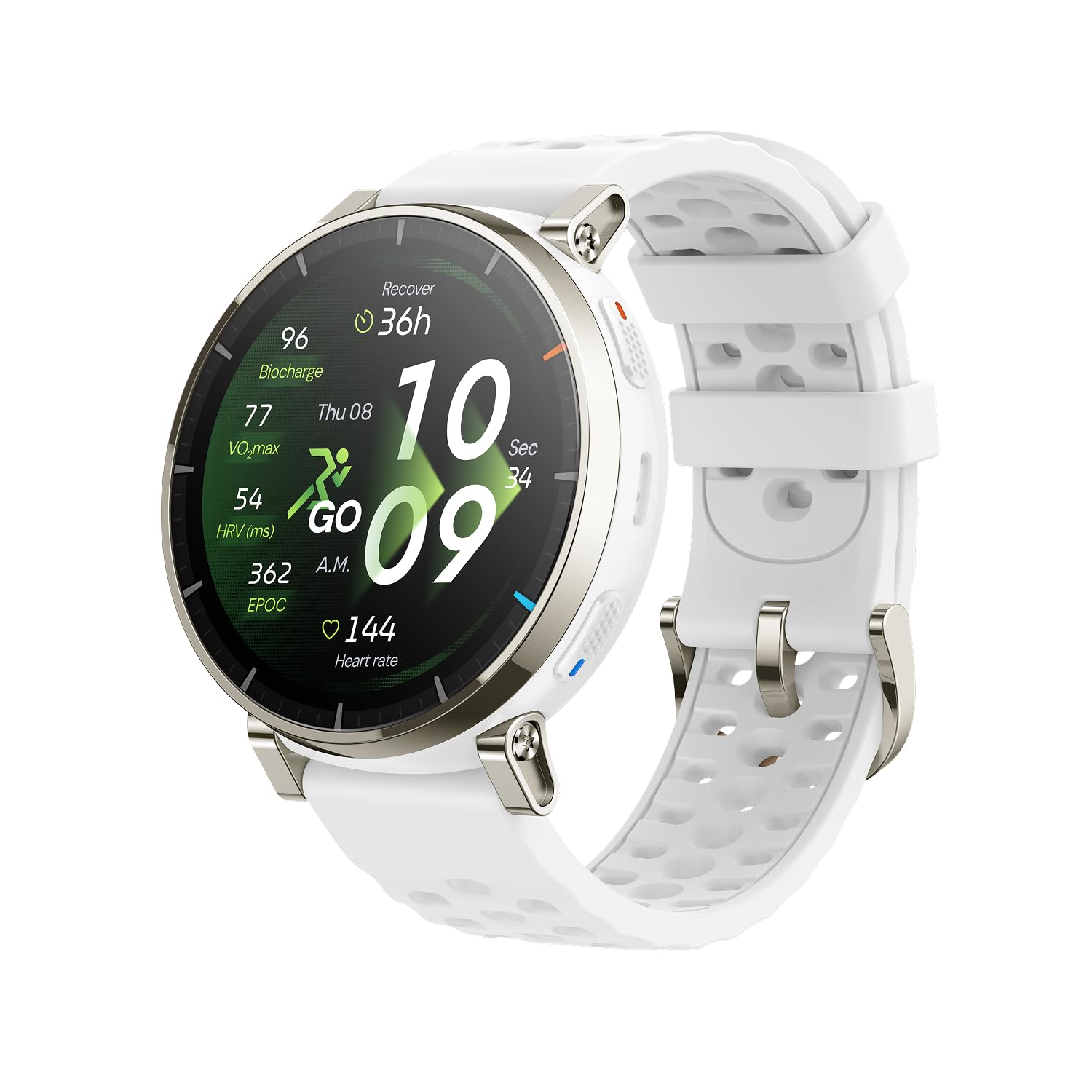
The Amazfit Active 3 Premium blends a rugged stainless steel frame and sapphire glass display with a lightweight build that stays comfortable during full marathon distance. The 1.32-inch AMOLED screen delivers vivid clarity under sunlight, and the six satellite system GPS ensures accurate route tracking whether you run city streets or park trails.
Zepp Coach provides personalized training plans from 5K to full marathon, and you can log gear like running shoes directly from your wrist — a small but thoughtful touch for tracking mileage on your favorite trainers. The BioTracker sensor monitors heart rate, blood oxygen, stress, and sleep, so you know when to push hard and when to recover.
Bluetooth calling, voice command support, and speech-to-text replies keep you connected without breaking stride. The 12-day battery life covers even ambitious training blocks with minimal charging interruption. For runners seeking a premium smartwatch experience alongside marathon-specific coaching, this is a strong mid-range contender.
Why it’s great
- Sapphire glass and stainless steel durability
- Integrated marathon training plans
- Strong battery for daily use and long runs
Good to know
- Zepp app interface has a learning curve
- No advanced running dynamics like ground contact time
5. SUUNTO Run
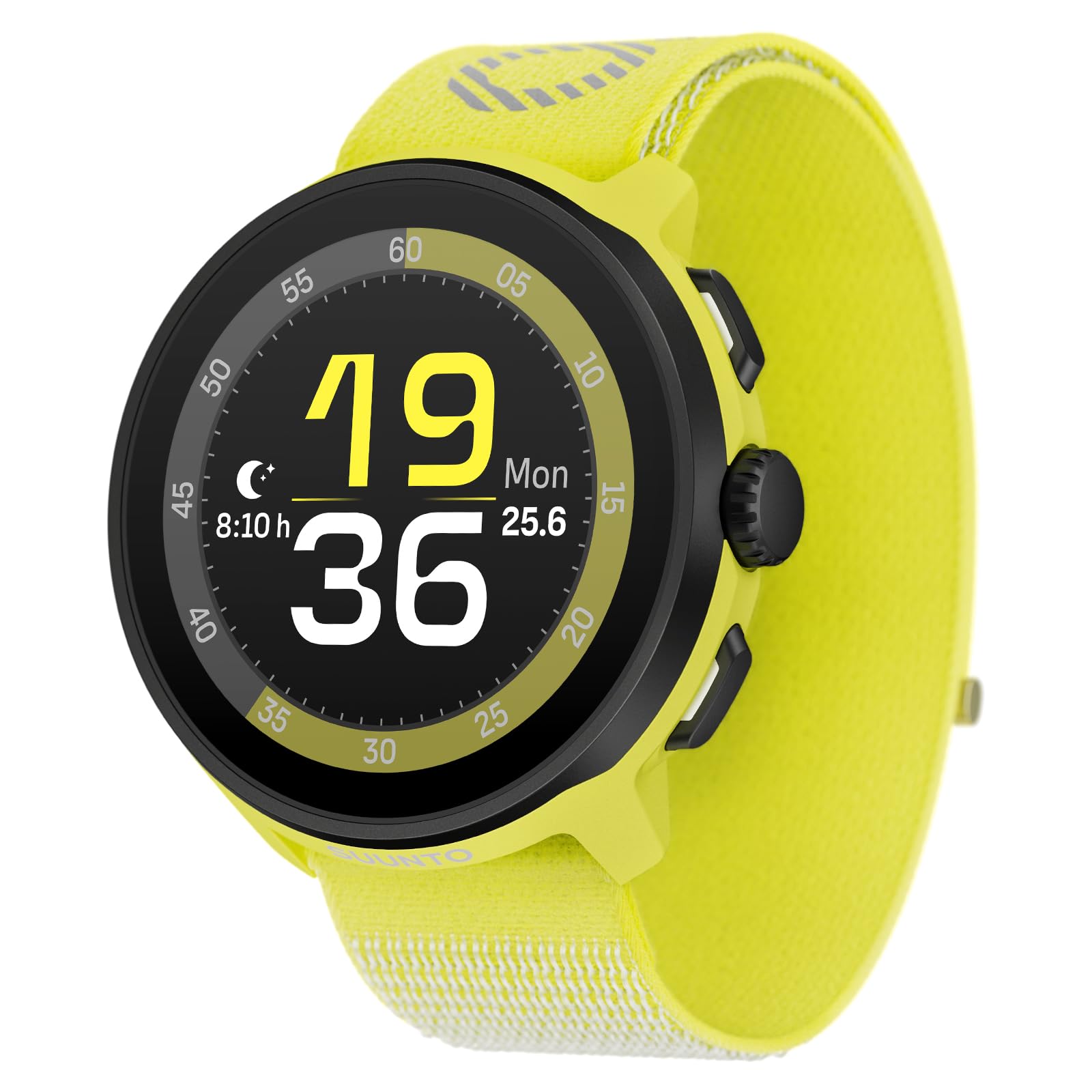
The SUUNTO Run is designed for runners who prioritize minimal wrist weight — at just 36g with the textile strap, you barely feel it during a 20-mile training run. Despite the featherlight build, it doesn’t cut corners on positioning: advanced dual-frequency GPS keeps your track precise, and the 1.32-inch AMOLED touchscreen with a crown button is easy to navigate mid-stride.
The 12-day daily battery life and 21 hours of high-precision GPS training give you enough endurance for a full marathon training week. Features like breadcrumb trail navigation and route tracking ensure you never lose your way during long exploratory runs. Training load monitoring, post-exercise heart rate tracking, and TSS measurement provide actionable insights for adjusting workout intensity.
With over 95 preset sport modes, the SUUNTO Run covers everything from cycling to yoga, making it versatile beyond marathon season. If the number-one priority is a watch that disappears on your wrist while delivering serious training feedback, this SUUNTO deserves a close look.
Why it’s great
- Extremely lightweight for all-day comfort
- Dual-frequency GPS delivers accurate tracking
- Breadcrumb navigation for safe exploration
Good to know
- No offline map storage for route planning
- Textile band may absorb sweat and odors
6. Wahoo ELEMNT Rival

The Wahoo ELEMNT Rival takes a different approach — it’s built for triathlon athletes who need seamless transitions between swim, bike, and run segments. The touchless T1/T2 transition tracking automatically records your times without any button pressing, letting you focus entirely on your race rather than fiddling with your wrist.
The 240×240 64-color LCD display with ambient light sensor and Perfect View Zoom keeps your key metrics readable in any condition, from a dim pre-dawn swim start to full sun on the bike leg. The Gorilla Glass construction ensures it can survive the inevitable scrapes during a transition or a trail run.
Pre-loaded with 12 Wahoo Sports Science designed sessions, and TrainingPeaks authentication syncs your entire training calendar wirelessly. The ELEMNT companion app integrates smoothly with third-party fitness platforms, making data centralization simple. For multi-discipline athletes who race with a bike computer, the handover capability with ELEMNT products is a unique advantage.
Why it’s great
- Automatic transition timer for triathlons
- Seamless data sharing with Wahoo bike computers
- Durable Gorilla Glass lens
Good to know
- Battery life is shorter than dedicated marathon watches
- Display resolution is lower than AMOLED rivals
7. Garmin Instinct 2X Solar

The Garmin Instinct 2X Solar Tactical Edition is built for runners whose marathon training extends into backcountry ultra territory. The Power Glass solar lens extends battery life indefinitely in smartwatch mode with just 3 hours of direct sunlight exposure per day — a game-changer for multi-day events or remote training blocks where charging is unavailable.
The 50mm fiber-reinforced polymer case meets U.S. military standard 810 for thermal and shock resistance, so it handles whatever conditions your run throws at it. Multi-band GPS delivers accurate positioning even in difficult signal environments, and the built-in LED flashlight with variable intensities and strobe modes is genuinely useful for early morning or late evening runs on unlit roads.
Wrist-based heart rate, advanced sleep monitoring, respiration tracking, and Pulse Ox round out the 24/7 health suite. The Tactical Edition adds stealth-mode operation and a ballistics calculator, but for marathoners the real value is the near-infinite battery life and uncompromising durability.
Why it’s great
- Solar charging for unlimited battery life
- Rugged design withstands extreme conditions
- Built-in flashlight enhances visibility
Good to know
- Monochrome display lacks color maps
- Large case may feel bulky for small wrists
8. Garmin Forerunner 970

The Garmin Forerunner 970 sits at the apex of marathon-specific analytics. The bright AMOLED touchscreen with button controls and a lightweight titanium bezel with sapphire lens provides the highest build quality in Garmin’s running-focused lineup. The built-in LED flashlight is a practical addition for low-light training sessions.
Running economy metrics — including step speed loss and how much you slow down on foot strike — go far beyond basic pace and heart rate data. When paired with the HRM 600 chest strap (sold separately), you get wrist-based running dynamics like cadence, stride length, and ground contact time, plus running power for continuous effort measurement.
Multi-band GPS with full-color built-in maps and dynamic round-trip routing means you can deviate from your planned route and the watch recalculates a new path matching your target distance. Training readiness, based on sleep quality, recovery, HRV status, and training load, tells you precisely when to push and when to hold back. The ECG app adds heart rhythm monitoring for health-conscious athletes.
Why it’s great
- Comprehensive running dynamics and economy metrics
- Premium titanium build with sapphire glass
- Dynamic round-trip route recalculation
Good to know
- Premium price positions it at the high end
- Best running metrics require extra chest strap
9. Apple Watch Ultra 3
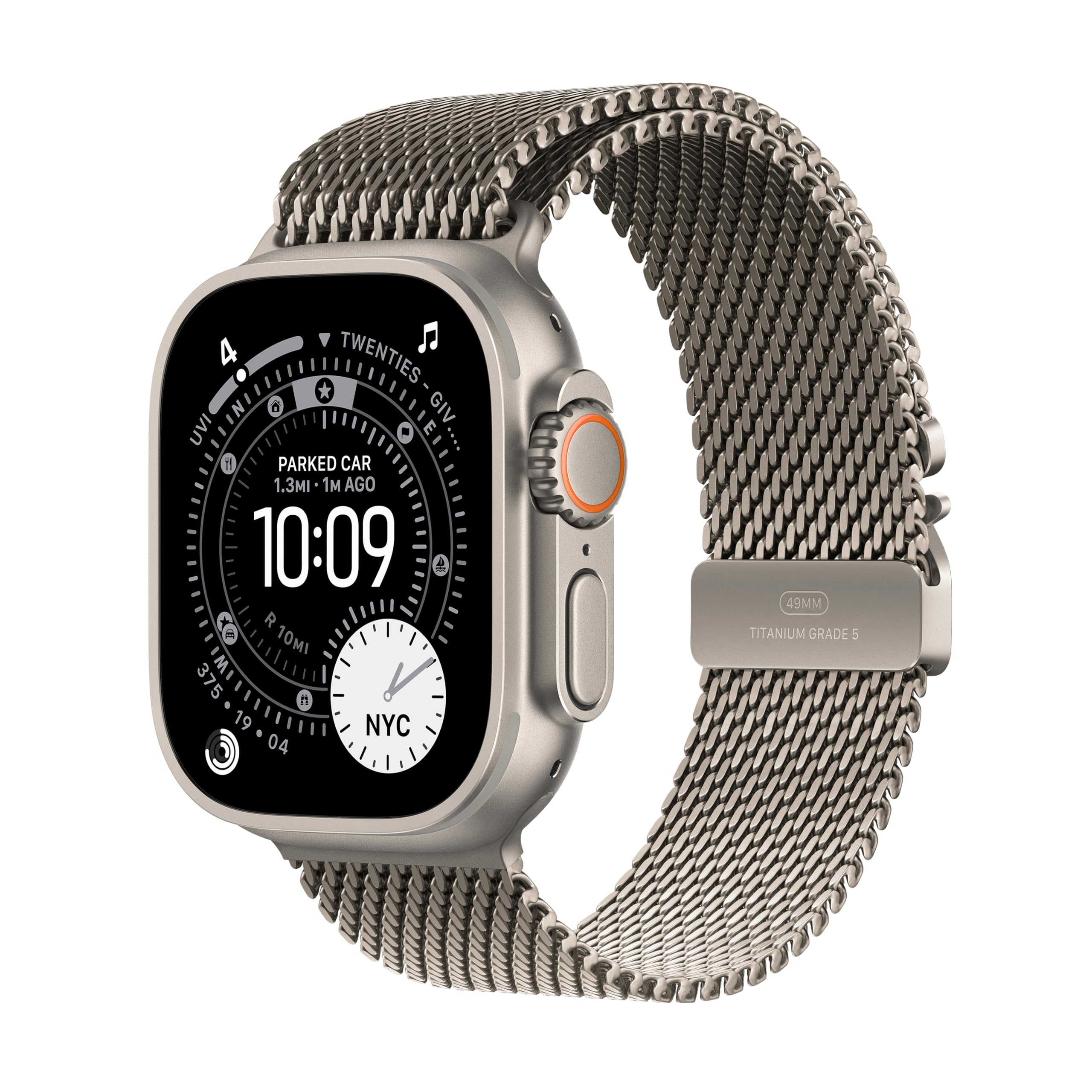
The Apple Watch Ultra 3 is the most complete smartwatch on this list, especially for runners embedded in the Apple ecosystem. The 49mm titanium case and sapphire crystal display are water resistant to 100m, making it capable for open-water swimming alongside marathon training. The large, bright display emits more light at wider angles, and it doubles as a flashlight for low-visibility runs.
Precision dual-frequency GPS works in concert with the Pacer feature, heart rate zones, custom workouts, and running power measurement. Training load tracking gives you a clear picture of cumulative fatigue across weeks of marathon prep. The customizable Action Button provides physical, tactile control to start a workout or toggle the flashlight without looking at the screen.
Up to 42 hours of normal use and 72 hours in Low Power Mode covers weekend-long events, and cellular connectivity with satellite text support means you can communicate even without your phone. Features like ECG, irregular rhythm notifications, sleep apnea detection, and the Vitals app add health monitoring that goes beyond standard marathon watch capabilities.
Why it’s great
- Deep ecosystem integration and cellular independence
- Premium titanium build and large sapphire display
- Health monitoring beyond fitness tracking
Good to know
- Battery life is lower than dedicated Garmin/Coros options
- Premium price with added cellular service cost
FAQ
Do I need a chest strap for marathon training or is wrist-based heart rate enough?
How important is offline map support for marathon runners?
What training metrics actually improve marathon performance?
Final Thoughts: The Verdict
For most marathon runners, the marathon watches for runners winner is the COROS PACE 4 because it delivers 41 hours of GPS battery, weighs just 32g, and provides advanced training metrics at a mid-range price that doesn’t compromise on satellite accuracy. If you want offline navigation and dual-band GNSS for trail marathon exploration, grab the SUUNTO Race S. And for the athlete who needs the deepest running economy analytics and premium build materials, nothing beats the Garmin Forerunner 970.