Every mile of a marathon is a negotiation between your body and the gear you chose that morning. A phone bouncing against your hip, a water bottle you grip tighter with every step, an ill-fitting belt that digs into your side — these aren’t minor annoyances. They are the small failures that compound over 26.2 miles, turning a strong start into a desperate finish. The right marathon gear vanishes from your awareness, letting you focus solely on your pace, your breathing, and the road ahead.
I’m Emma — the founder and writer behind Baby Bangs. I’ve analyzed hundreds of hours of runner feedback and cross-referenced hardware specs to find the gear that actually stays put, carries the load, and eliminates the friction that ruins long runs.
This guide breaks down the five essential pieces of marathon gear that solve the real problems of distance running — bounce, chafing, hydration access, and pocket organization — without adding weight or complexity.
How To Choose The Best Marathon Gear
Marathon gear lives or dies on three metrics: how it carries weight, how it interacts with your skin, and whether you can reach what you need without breaking stride. Most first-time marathoners over-prioritize storage capacity and under-prioritize the chafing risk of seams, buckles, and rigid materials that rub for hours.
Bounce Control Is Non-Negotiable
The best gear in the world is the worst gear if it moves independently of your body. Look for designs that spread weight across your torso or hips using wide elastic bands or adjustable shoulder straps. A belt that lacks a secure closure or a vest without a waist belt will shift with every foot strike, forcing you to adjust mid-run — a distraction that costs time and mental energy.
Material Breathability and Moisture Management
Polyester and nylon blends dry faster than cotton and resist absorbing sweat, which directly reduces the friction that causes nipple chafing and inner-thigh irritation. For vests and packs, look for breathable mesh back panels and 900D Oxford fabric for durability without added weight. Machine-washable fabrics save you from hand-washing your gear after every long run.
Hydration Access Without the Slosh
A water bladder with a high-flow bite valve allows hands-free drinking, but the bladder material matters. BPA-free and PVC-free bladders prevent chemical leaching into your water, especially when the bladder sits in a warm pack for hours. The tank volume should match your distance — 2 liters covers a half-marathon, while longer distances may require supplemental handheld bottles or planned aid stations.
Pocket Placement and Zipper Quality
Pockets are useless if you cannot access them while moving. Front-facing zippered pockets let you grab energy gels, your phone, or a key without removing the pack. Expandable pockets offer flexibility — a larger pocket for a phone and a smaller one for headphones reduces the need to dump everything out at security or aid stations. Zipper quality matters; a stuck zipper at mile 20 can ruin the entire race.
Quick Comparison
On smaller screens, swipe sideways to see the full table.
| Model | Category | Best For | Key Spec | Amazon |
|---|---|---|---|---|
| FlipBelt Classic Running Belt | Running Belt | Zero-bounce phone & key carry | 4 pockets, 3 oz weight | Amazon |
| Zelvot Running Vest with 2L Bladder | Hydration Vest | Hands-free hydration with gear storage | 2L BPA-free bladder, 3 waterproof pockets | Amazon |
| Criuage USA Patent Hydration Vest | Hydration Vest | Endurance events and trail running | 2L PEVA bladder, 5-liter total capacity | Amazon |
| SPIbelt Dual Pocket Pro Belt | Running Belt | Expandable storage for larger phones | 8″ x 4″ expandable pocket, 1.5″ wide belt | Amazon |
| OEBLD 2-in-1 Athletic Running Pants | Running Shorts | Compression support with quick-dry fabric | 2-in-1 design with compression layer | Amazon |
In‑Depth Reviews
1. FlipBelt Classic Running Belt

The FlipBelt Classic eliminates the single biggest complaint runners have about waist storage: bounce. Unlike buckle-based belts that shift with each stride, this polyester tube wraps around your hips with enough friction to stay stationary. The design is cleverly simple — no hard points, no metal buckles rubbing your hip bone — just a continuous loop with four separated access slots. At only 3 ounces, you forget it is there until you need your phone or key.
The multi-access pocket openings let you reach any slot without twisting the belt, which means you can grab a gel at mile 18 without breaking your rhythm. The reflective 3M logo adds a layer of safety for early-morning or evening runs when visibility drops. The entire belt goes into the washing machine and dryer without losing shape or elasticity — a practical advantage over belts that require careful hand-washing.
Where this belt truly earns its place in marathon gear is how it handles weight distribution. Because the pockets are integrated into the tube fabric rather than hanging off it, your phone stays flush against your body. No thumping, no sagging, no mid-run adjustments. For runners who want the lightest possible solution for carrying essentials, this is the benchmark.
Why it’s great
- Zero-bounce design with no hard buckles
- Machine washable and dryable for easy care
- Reflective 3M logo improves low-light visibility
- Ultra-light at 3 ounces
Good to know
- Does not accommodate a water bottle or bladder
- Pockets are not expandable — larger phones may feel snug
- May roll on very narrow hips if not sized correctly
2. Zelvot Running Vest with 2L Water Bladder
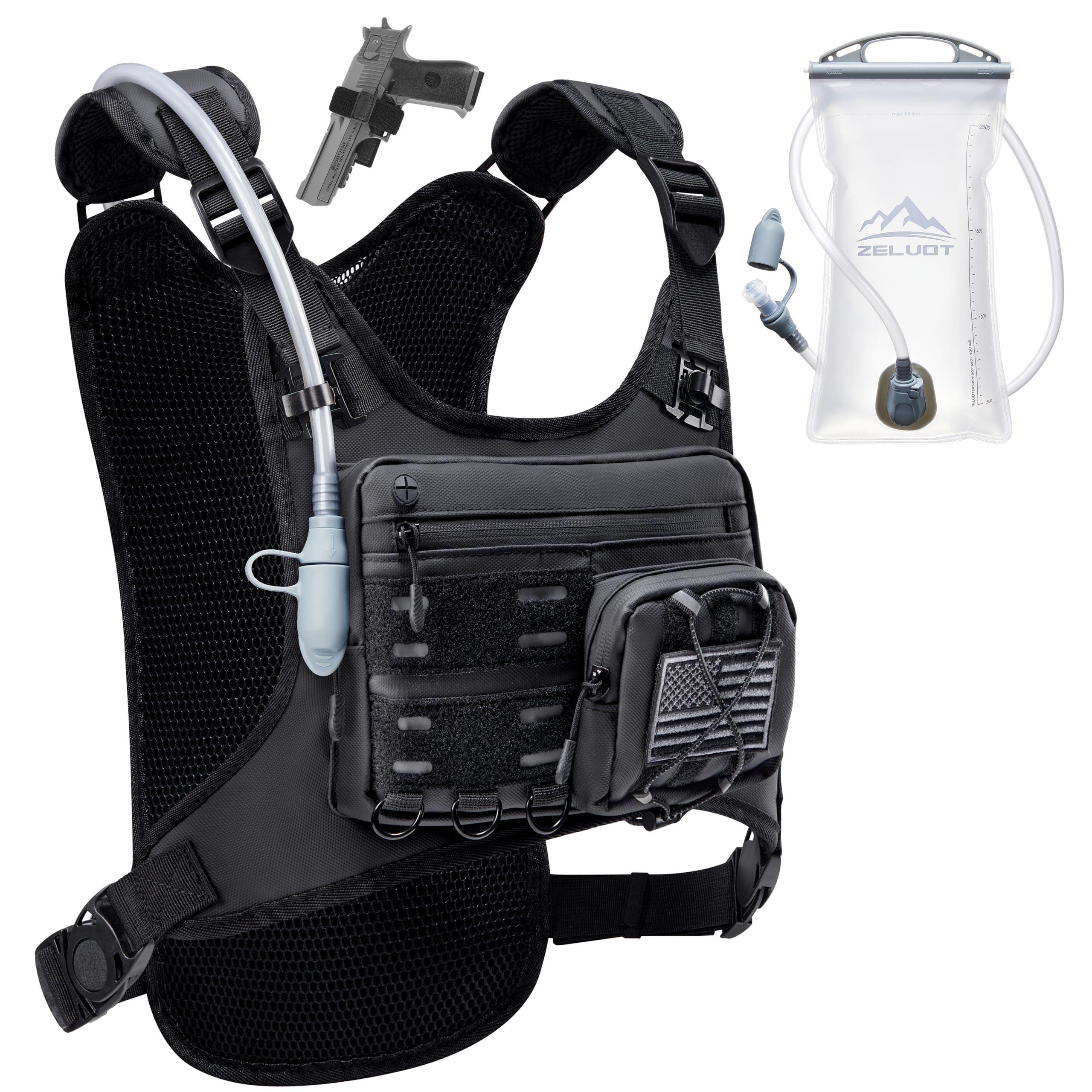
The Zelvot Running Vest solves a problem that every marathoner faces at some point: needing hydration without the slosh. The included 2-liter water bladder is made from food-grade, BPA-free and PVC-free materials, with a high-flow bite valve that lets you drink without tilting your head back or breaking stride. The bladder sits flat against your upper back, and the adjustable shoulder straps and waist belt keep the weight distributed evenly across your torso rather than pulling on your shoulders.
Storage is where this vest punches above its weight class. Three waterproof zippered front pockets keep your phone, keys, and gels dry even in rain or heavy sweat. The two large back pockets can hold a towel or extra clothing, bringing the total carry capacity well beyond just hydration. The 900D Oxford fabric on the front chest pack resists scratches and moisture — a durable choice for trail sections or rough urban courses.
The chest adjustability range (XS/S: 25-35 inches, M/L: 29-41 inches) accommodates a wide range of body types, and the reflective logo and strip on both the front and back improve visibility during low-light conditions. For runners who want a single pack that handles both hydration and gear storage without bouncing, this is a solid mid-range option that covers all the bases.
Why it’s great
- Included 2L BPA-free bladder with high-flow bite valve
- Three waterproof front pockets protect electronics
- 900D Oxford fabric for scratch and moisture resistance
- Wide chest adjustability fits multiple body types
Good to know
- Total storage capacity is moderate — not ideal for ultramarathons
- Bladder tube routing can be tricky to adjust mid-run
- Some users report the waist belt needs tightening to avoid bounce when fully loaded
3. Criuage USA Patent Hydration Vest Backpack
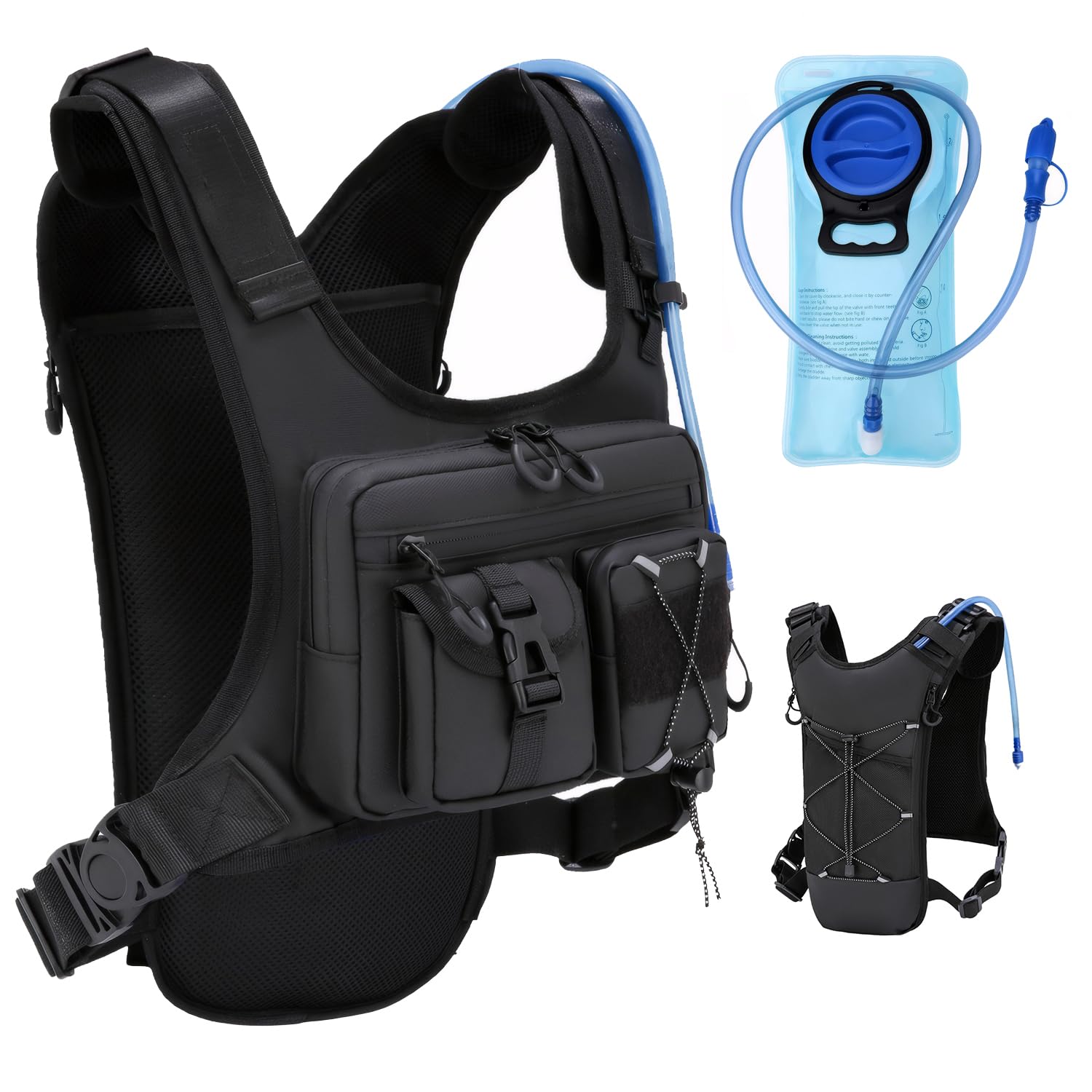
The Criuage Hydration Vest is engineered specifically for endurance athletes who need more than just water at their fingertips. With a total capacity of 5 liters — including a dedicated 2.0-liter PEVA bladder pocket on the back and multiple front pockets for phone, keys, cash, and snacks — it provides enough room for a full day of running, hiking, or cycling. The PEVA bladder is BPA-free and designed with an ergonomic shape that reduces the “slosh” effect common with cheaper bladders.
The adjustable cross-body straps and wide mesh shoulder pads distribute weight evenly, reducing the burden on your shoulders during long efforts. The nylon construction is lightweight and waterproof, offering better resistance to abrasion than standard polyester alternatives. This matters when you are on technical trails or navigating crowded aid stations where your pack might brush against rough surfaces.
What sets the Criuage apart is its USA patent protection, which means the design has been reviewed for uniqueness in how it balances front-pouch storage with back-bladder weight. The multi-pocket design includes a specific slot for a tactical pen or emergency gadget — a niche but appreciated detail for runners who carry safety items. For marathoners who also train on trails or run ultramarathons, this vest bridges the gap between minimal hydration packs and bulky hiking backpacks.
Why it’s great
- Generous 5-liter total capacity with 2-liter bladder
- Nylon construction is waterproof and abrasion-resistant
- Wide mesh shoulder pads reduce shoulder fatigue
- USA patent for balanced front/back weight distribution
Good to know
- PEVA bladder has a slightly different taste feel compared to TPU bladders
- Front pocket layout may feel busy for minimalists
- Not machine washable — requires hand cleaning
4. SPIbelt Dual Pocket Pro Running Belt

The SPIbelt Dual Pocket Pro addresses the exact pain point that marathoners with larger phones feel. Your iPhone or Samsung fits into the expandable main pocket (8 x 4 x 2 inches) without forcing the zipper, while the smaller secondary pocket holds headphones, keys, or a credit card. The 1.5-inch-wide soft elastic belt prevents the digging and rolling that narrower belts cause, and the nylon/spandex material combination stretches just enough to accommodate the 29-47 inch waist range.
Multiple verified reviews from marathon runners confirm the “no bounce” claim across different paces. The belt sits low on the hips, which keeps the phone weight below the natural center of mass, reducing the vertical oscillation that makes other belts thump with every step. The sturdy buckle and double-stitched zippers hold up to daily use without fraying or failing — a common failure point in cheaper belts.
One practical consideration is fit for smaller runners — some size 6 users report the belt is loose around the waist even when tightened, so runners with a very narrow frame may need to secure it to a waistband or wear it slightly higher. However, for the vast majority of marathoners who fall in the 29-47 inch waist range, this belt offers the best balance of expandable storage, comfort, and security. Designed by a woman-owned company in Austin, TX, it is built with real runner feedback.
Why it’s great
- Expandable main pocket fits all large phones
- 1.5-inch wide belt prevents chafing and rolling
- Confirmed no-bounce performance in real runner reviews
- Woman-owned US company with strong zipper construction
Good to know
- May run loose on very narrow waist sizes (under 28 inches)
- Hand wash only — not machine washable
- Smaller pocket is limited to small items like keys or headphones
5. OEBLD Mens 2 in 1 Athletic Running Pants
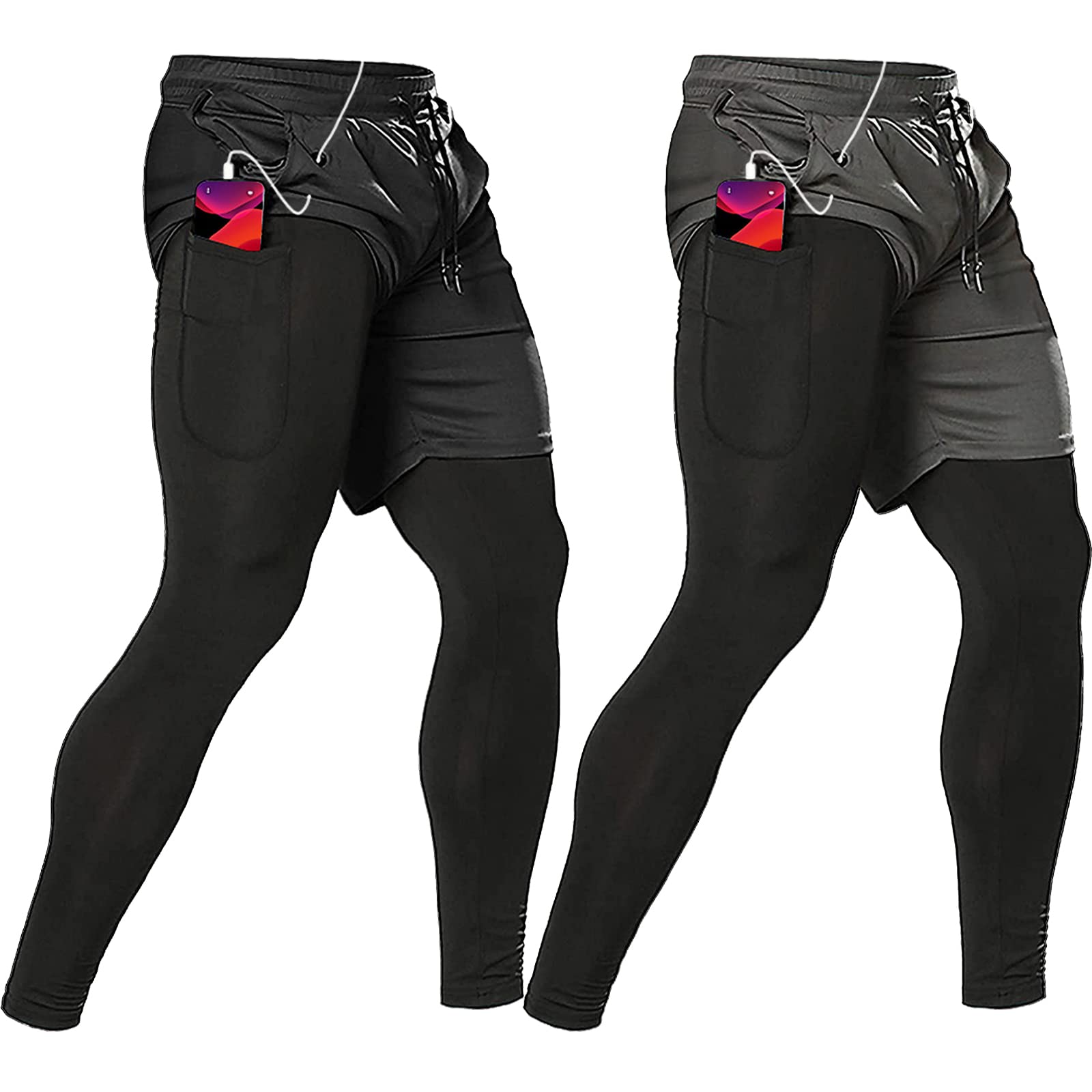
The OEBLD 2-in-1 Running Pants solve a problem that every male runner knows: the battle between outer shorts that flap and inner compression that constricts. This design layers a light, breathable outer short over a compression liner, giving you the modesty and pocket access of traditional shorts with the muscle support and chafe reduction of compression tights. The quick-dry material wicks moisture efficiently, which matters during a full marathon when even short periods of damp fabric can cause skin irritation.
Reviewers consistently mention the fit accuracy — a 5-foot-10, 145-pound male reported the medium fits perfectly, with the compression layer providing support without being restrictive. The fabric blend feels soft against the skin, reducing the friction that causes inner-thigh chafing during long runs. The outer short layer has pockets that are accessible for smaller items, though the 2-in-1 nature means they are less accessible mid-stride than a dedicated belt or vest pouch.
For marathoners who prefer not to run in tights alone, these shorts offer a solid middle ground. The compression layer reduces muscle oscillation — the micro-vibration of your quadriceps and hamstrings with each foot strike — which can delay fatigue over 26.2 miles. While not a substitute for a hydration pack or belt, this is an excellent foundational layer that works well paired with any of the waist or chest carriers above. Good value for runners who want a single garment that handles both support and coverage.
Why it’s great
- 2-in-1 design offers compression support with loose outer layer
- Quick-dry fabric reduces chafe risk on long runs
- Reviewers confirm accurate sizing and comfortable fit
- Good value for a dual-function garment
Good to know
- Pockets are less accessible than a dedicated belt or vest
- Not intended for water storage — must pair with a hydration solution
- Compression level may feel light for runners who prefer tight tights
FAQ
How do I prevent my running belt from bouncing during a marathon?
What size water bladder do I need for a full marathon?
Can I machine wash my hydration vest or running belt?
What is the best way to carry energy gels during a marathon?
Final Thoughts: The Verdict
For most runners, the marathon gear winner is the FlipBelt Classic Running Belt because it eliminates bounce entirely, weighs only 3 ounces, and carries your phone and keys without any hard points that cause chafing. If you need hands-free hydration on race day, grab the Zelvot Running Vest — its 2-liter BPA-free bladder and three waterproof front pockets make it the smartest mid-range hydration solution. And for runners who want the most total capacity for long trail efforts or ultramarathons, nothing beats the Criuage USA Patent Hydration Vest with its 5-liter total capacity and durable nylon construction. Pair any of these with the OEBLD 2-in-1 shorts for compression support, and you have a full marathon kit that handles every mile without adding friction.