Standard wound care often means dry gauze, slow healing, and bandages that tear at the scab each time they come off. A growing body of clinical evidence points to Manuka honey as an active treatment that changes that equation — creating a moist barrier, managing exudate, and actively supporting tissue repair rather than just covering the wound.
I’m Emma — the founder and writer behind Baby Bangs. I’ve spent years analyzing wound care product data, comparing medical-grade dressings and raw Manuka ratings to understand what actually moves the needle on healing time and patient comfort.
Whether you’re managing a diabetic foot ulcer, a post-op incision, or a stubborn burn, the right choice among manuka honey for wounds depends on matching the UMF or MGO rating to the wound type and choosing a dressing format that stays in place without secondary trauma on removal.
How To Choose The Best Manuka Honey For Wounds
Selecting Manuka honey for wound care goes far beyond picking a jar off the shelf. You need to consider the dressing format, the methylglyoxal concentration, the wound’s exudate level, and whether you require a medical-grade product that has been sterilized. Getting these variables right determines whether the honey actively accelerates healing or simply sits on top of the wound doing little.
Dressing Format: Raw Honey vs. Impregnated Dressings
The most critical fork in the road is choosing between a jar of raw Manuka honey that you apply directly and a pre-impregnated dressing like a honey alginate or honey gauze pad. Jars give you flexibility to control the dosage and treat oddly shaped wounds, but they require a secondary cover dressing and can be messy. Impregnated dressings offer standardized honey distribution, sterile application, and easier integration into a clinical wound care routine — making them the preferred choice for chronic or high-exudate wounds.
Potency: Matching MGO / UMF to Wound Severity
Wound-grade Manuka honey typically requires an MGO of 250+ (equivalent to UMF 10+) for measurable antibacterial activity. For infected or heavily colonized wounds, MGO ratings of 400+ (UMF 15+) are more appropriate. However, higher potency is not always better — very high MGO levels can cause stinging on sensitive granulation tissue. Match the rating to the clinical picture rather than assuming maximum potency is the safest choice.
Exudate Management and Dressing Material
Wounds produce fluid at different rates. A dry or low-exudate wound benefits from a honey gauze dressing that adds moisture. A moderate to heavy exudate wound needs an alginate-based dressing that absorbs fluid and transforms into a gel, preventing the skin around the wound from macerating. Choosing the wrong absorbency level leads to leakage in one direction or painful adhesion in the other.
Sterility and Medical Certification
Honey used on open wounds must be sterile — this is non-negotiable. Look for dressings labeled as “medical grade” and sold in individually sealed, sterile packages. Raw honey jars intended for consumption are not sterilized and may contain spore-forming bacteria that pose a risk to immunocompromised patients or deep wounds. Always verify that the product has been gamma-irradiated or processed to achieve sterility before applying it to broken skin.
Quick Comparison
On smaller screens, swipe sideways to see the full table.
| Model | Category | Best For | Key Spec | Amazon |
|---|---|---|---|---|
| Dr. Med Manuka Calcium Alginate | Alginate Dressing | Heavy exudate wounds | 2″x2″ calcium alginate + honey | Amazon |
| Ceeport Honey Gauze | Gauze Dressing | Dry to low-exudate wounds | 4″x4″ medical-grade Manuka gauze | Amazon |
| Manuka Emporium MGO 263+ | Raw Honey Jar | Daily immune support & minor scrapes | MGO 263+ (UMF 10+) raw honey | Amazon |
| Kastormed Honey Gauze | Gauze Dressing | Diabetic foot & post-op wounds | 4″x4″ sterile honey tulle dressing | Amazon |
| Blossom Essentials Honey Salve | Honey Balm | Dry, cracked skin & eczema | Waterless Manuka + botanical balm | Amazon |
In‑Depth Reviews
1. Dr. Med Manuka Honey Calcium Alginate Dressing 2″x2″ (10-Pack)

This dressing combines Manuka honey with calcium alginate fibers, a material that transforms into a hydrophilic gel upon contact with wound exudate. The gel-forming action is a game-changer for moderate to heavily draining wounds — it traps fluid away from the wound bed while delivering honey’s antimicrobial activity directly to the tissue. At 2″x2″ per pad, the size is appropriate for diabetic foot ulcers, pressure sores, and venous stasis wounds where managing heavy exudate without macerating the peri-wound skin is the primary challenge.
Users managing chronic wounds under the guidance of a wound care specialist report that these dressings stay in place better than standard gauze and do not adhere to the wound surface, making removal significantly less painful. The individually sealed packaging ensures sterility until the moment of application, which is critical when treating open wounds with a compromised epithelial barrier. Several long-term caregivers note that the 10-count box aligns well with the dressing change frequency for non-infected wounds — you get about three to five days of coverage depending on the wound size.
The primary trade-off is adhesion. While the dressing itself is non-adherent, the smooth alginate surface does not grip skin well without secondary tape or a wrap. For highly mobile areas like the ankle or heel, plan on using paper tape or a cohesive bandage to keep it snug against the wound. A small subset of users also mention wishing the honey content was more concentrated at the dressing’s surface — if the wound is extremely dry, pre-moistening with saline before application helps activate the alginate gel more quickly.
Why it’s great
- Calcium alginate gel manages heavy exudate without maceration
- Non-adherent design allows painless dressing changes
- Sterile, individually wrapped for clinical-grade safety
- Highly absorbent — a clear upgrade over plain gauze for draining wounds
Good to know
- Requires secondary tape or bandage to stay in place on curved body surfaces
- 2″x2″ size may be too small for larger wounds requiring multiple pads
- Some users report the honey content feels lower than that of pure honey paste dressings
2. Ceeport Honey Gauze Wound Dressing 4″x4″ (Pack of 10)

Ceeport’s honey gauze dressing is a direct, no-frills Manuka-impregnated gauze pad designed for wounds with low to moderate exudate. The 4″x4″ format gives you generous coverage without needing to layer multiple pads. The medical-grade Manuka honey is integrated into the textile weave, creating a moist environment that soothes dehydrated wound beds and helps soften dry eschar. For burns, abrasions, and post-operative incisions where the primary goal is maintaining moisture and reducing odor, this dressing does the job without the high cost of alginate-based options.
Users highlight the painless removal as a standout feature — the honey keeps the gauze from sticking to the wound bed, which reduces the tissue trauma that happens with dry gauze changes. The breathable mesh construction allows wound fluid to pass through into a secondary absorbent layer, keeping the honey in contact with the wound while the exudate moves away. Several customers managing venous leg ulcers report that this dressing helped eliminate the foul odor associated with colonized wounds, a sign that the Manuka’s antibacterial properties are working as intended.
The main critique centers on the adhesive — or rather, the lack of it. Like most impregnated dressings, the Ceeport gauze requires additional tape or a wrap to stay in place, especially on joints or the lower leg where movement tends to shift bandages. A small number of users also note that the clear backing can be tricky to peel off, particularly if your hands are gloved or if you’re dealing with a wound on your own body. For very dry wounds, dampening the pad with sterile saline before application improves honey release into the tissue.
Why it’s great
- Affordable pricing for a 10-pack of medical-grade honey dressings
- Painless removal reduces trauma to fragile healing tissue
- Breathable mesh allows exudate to pass through while keeping honey on the wound
- Effective at reducing wound odor associated with bacterial colonization
Good to know
- No adhesive backing — requires separate tape or bandage to secure
- Clear protective layer can be difficult to peel, especially with limited dexterity
- Not ideal for heavy exudate wounds that need alginate gel absorption
3. Kastormed Honey Gauze Dressing 4″x4″ (Pack of 10)

Kastormed’s honey gauze dressing uses a sterile mesh tulle construction coated with medical-grade Manuka honey from the Leptospermum species. The tulle format is distinct from standard gauze — it is an open-weave fabric that allows wound exudate to pass through while the honey gel stays in direct contact with the wound surface. This design is especially useful for wounds that produce a moderate amount of fluid because it prevents the dressing from saturating and sticking to fragile granulation tissue. The 4″x4″ size covers most diabetic foot ulcers, pressure wounds, and superficial burns without needing to cut or layer.
The clinical-grade approach here is evident in the dry-wound protocol included in the product design: the manufacturer recommends moistening the dressing with sterile saline before applying to dry wounds to activate the honey release. This level of specificity suggests the product was formulated with wound care specialists rather than general consumers in mind. Users managing surgical incisions and non-healing ulcers report that the tulle structure makes removal markedly less painful than woven gauze alternatives, and the sterile individual packaging eliminates any concern about introducing contaminants during application.
The trade-off is the same as most non-adherent dressings: you will need secondary fixation. For wounds on the foot or ankle, a cohesive wrap or silicone tape is necessary to keep the tulle in place between changes. Additionally, the honey layer is relatively thin compared to bulk honey applications — for deep cavity wounds or wounds with heavy slough, you may want to layer a Manuka honey gel underneath this dressing rather than relying on the gauze as the sole source of honey.
Why it’s great
- Sterile mesh tulle designed for clinical wound care protocols
- Open weave allows exudate to pass through while honey stays on the wound
- Dressings can be moistened with saline to activate honey on dry wounds
- Individually sealed packaging ensures sterility at point of care
Good to know
- Thin honey layer may require supplemental honey gel for deep or sloughy wounds
- No adhesive — must be secured with tape or wrap
- Premium pricing reflects the sterile tulle construction
4. Manuka Emporium Manuka Honey MGO 263+ (8.8oz Glass Jar)
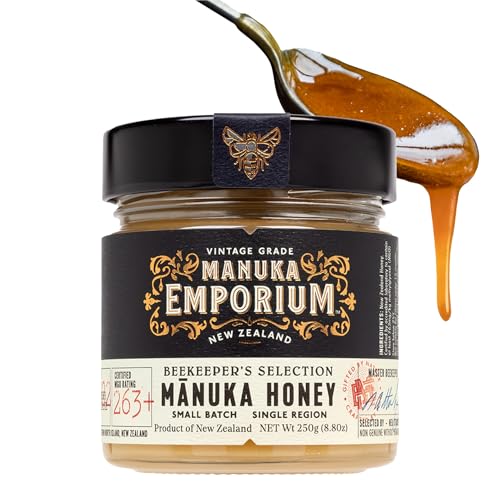
Manuka Emporium’s MGO 263+ raw honey is a jar-based product, not a medical dressing. This distinction matters because it changes how you would use it for wound care. At MGO 263+ (roughly UMF 10+), this honey has documented antibacterial activity suitable for minor cuts, scrapes, and superficial burns where you apply the honey directly and cover it with a sterile bandage. The raw monofloral certification from New Zealand and independent lab testing provide assurance of authenticity — a real concern in the Manuka honey market where counterfeit products are common.
The glass jar format offers flexibility that pre-impregnated dressings cannot match. You can spoon out exactly as much honey as the wound needs, spread it to cover irregular wound shapes, and adjust the layer thickness depending on the level of exudate. Users mixing this honey into their daily wellness routine — a spoonful for immune support or stirred into tea — also appreciate the dual-use value. The flavor profile is described as rich and complex, typical of monofloral Manuka, without the medicinal bitterness of higher MGO ratings.
The critical caveat is that this is not a sterile product. Raw honey can contain Clostridium botulinum spores and other environmental microbes that are harmless when ingested but dangerous if introduced into deep wounds or used on immunocompromised patients. For surface-level minor wounds in healthy adults, this is a reasonable option when used promptly. For chronic wounds, post-surgical incisions, or diabetic foot ulcers, a sterile, medical-grade dressing is the safer choice. Also note that jar-based application is inherently messier than a pad — you’ll want a non-stick cover dressing and medical tape to keep the honey contained.
Why it’s great
- Authentic monofloral Manuka with verified MGO 263+ potency
- Flexible dosing — apply as much or as little as the wound needs
- Dual-purpose: wound care plus daily immune and wellness support
- Glass jar packaging with FSC-certified labels reflects quality sourcing
Good to know
- Not sterile — avoid use on deep wounds or for immunocompromised individuals
- Messier application than pre-impregnated dressings
- Requires separate non-stick pad and tape to cover the wound
5. Blossom Essentials Honey Salve with Organic Manuka (4oz)
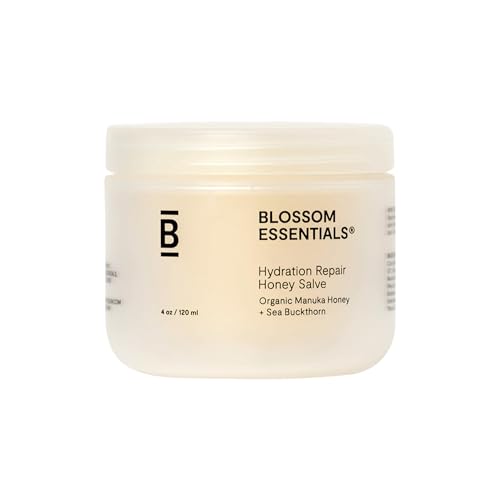
Blossom Essentials takes a different approach by combining Manuka honey with a waterless base of sweet almond oil, coconut oil, marula oil, sea buckthorn oil, and beeswax. The result is a dense balm that melts at skin temperature, designed for moisturizing dry, cracked, and eczema-prone skin rather than treating open wounds. The honey fraction provides humectant and soothing properties, but the oil-and-wax formulation creates an occlusive layer that traps moisture against intact skin — useful for preventing transepidermal water loss but not appropriate for wounds that need to drain or breathe.
The clinical testing and dermatologist approval cited by the brand suggest this salve is a solid option for managing the dry, irritated skin that surrounds wounds or for treating superficial skin damage like cracked heels, chapped lips, and cuticle fissures. Users with eczema or contact dermatitis report that the balm soothes itching and reduces redness without the sting associated with water-based moisturizers. The petrolatum-free formula avoids the comedogenicity concerns of petroleum jelly while providing comparable occlusion.
This is not a wound dressing — it lacks the sterile packaging, the antimicrobial potency, and the exudate management properties required for open wound care. Using it on a full-thickness wound or an actively infected lesion would be inappropriate. Its best role in a wound care context is as a post-healing moisturizer to support the skin barrier after the wound has closed, or as a protective balm for the brittle skin frequently seen around chronic wound sites. For its intended use case — dry, sensitive skin maintenance — the formulation is clean and effective.
Why it’s great
- Waterless formula delivers concentrated moisture without diluting the honey content
- Dermatologist-approved and formulated for sensitive, reactive skin
- Multi-use balm works on face, hands, feet, lips, and cuticles
- Petrolatum-free, cruelty-free, and made in the USA with clean ingredients
Good to know
- Not sterile and not intended for open wound care
- Occlusive balm texture traps moisture — unsuitable for draining wounds
- Manuka content is part of a blend, not the sole active ingredient
FAQ
Can I use any Manuka honey from the grocery store on a wound?
How often should I change a Manuka honey wound dressing?
Is Manuka honey dressing painful to remove?
Can Manuka honey treat infected wounds without antibiotics?
Final Thoughts: The Verdict
For most users managing chronic or moderate-to-heavy exudate wounds, the manuka honey for wounds winner is the Dr. Med Manuka Calcium Alginate Dressing because its alginate gel technology prevents maceration while delivering honey’s antimicrobial activity directly to the wound bed. If you have dry or low-exudate wounds and want a cost-effective option, grab the Ceeport Honey Gauze Dressing. And for minor scrapes plus daily immune support, nothing beats the flexibility of the Manuka Emporium MGO 263+ jar.