A manual breast pump is the most direct, portable, and quiet way to express milk, but the market is flooded with designs that pinch, leak, or simply fail to generate consistent suction. The difference between a pump that works and one that frustrates comes down to flange fit, valve seal integrity, and the handle’s mechanical advantage. This guide breaks down exactly what separates a reliable hand pump from a waste of money.
I’m Emma — the founder and writer behind Baby Bangs. I’ve spent years analyzing the engineering, materials, and real-world feedback on hundreds of manual pumps to find the models that actually deliver on their promises.
After testing dozens of models against strict criteria for suction strength, cleaning ease, and comfort, I’ve narrowed the field to the five most effective options on the market. This is the definitive guide to finding the best manual breast pumps for your specific needs.
How To Choose The Best Manual Breast Pumps
Choosing the right manual pump isn’t about picking the most expensive model. It’s about matching the pump’s suction mechanics, flange design, and cleaning simplicity to your daily routine. Here are the three factors that matter most.
Flange Fit and Material
The flange is the funnel-shaped piece that contacts your breast. If the diameter is too small, the nipple rubs against the tunnel wall, causing pain and reduced output. If it’s too large, areola tissue gets pulled in, leading to engorgement. Most pumps come with a standard 24mm or 25mm flange, but your ideal size may be smaller or larger. Look for pumps that either include multiple flange sizes or use a soft silicone shield that adapts to different breast shapes. A rigid plastic flange rarely seals as well as a pliable silicone cushion.
Suction Mechanism and Handle Ergonomics
Manual pumps create suction through a lever, trigger, or squeeze handle. The mechanical advantage of the handle determines how much force you need per pump. A well-designed ergonomic handle reduces hand strain and lets you maintain a steady rhythm for longer sessions. Pumps with a short, stiff handle force your thumb and fingers to work harder. Test the handle’s pivot point—a longer lever arm means you get more suction with less effort. Some newer designs incorporate a dual-mode approach that allows switching between active pumping and passive collection.
Cleaning Complexity and Part Count
Manual pumps should be simple to disassemble and sterilize, ideally in a steam bag or boiling water. Pumps with six or more small parts—valves, membranes, discs, rings—create crevices where milk residue hides, leading to bacterial growth and sour odors. The best manual pumps have four or fewer components and wide openings that allow thorough scrubbing. Silicone parts generally resist staining and odor better than polypropylene plastics. Also verify that the manufacturer confirms the pump is BPA-free and free from BPS, PVC, and phthalates.
Quick Comparison
On smaller screens, swipe sideways to see the full table.
| Model | Category | Best For | Key Spec | Amazon |
|---|---|---|---|---|
| Frida Mom 2-in-1 | Hand Pump/Suction Cup | Versatility on the go | Dual-mode tops for active and passive | Amazon |
| Philips Avent SCF430/03 | Manual Pump | Comfort and fast letdown | Natural Motion silicone cushion | Amazon |
| haakaa Gen 2 Lavender | Silicone Collector | Passive letdown collection | One-piece silicone design | Amazon |
| SMART MOMMY Manual Pump | Manual Pump | Budget-friendly starter | Anti-backflow hygiene system | Amazon |
In‑Depth Reviews
1. Frida Mom 2-in-1 Breast Pump
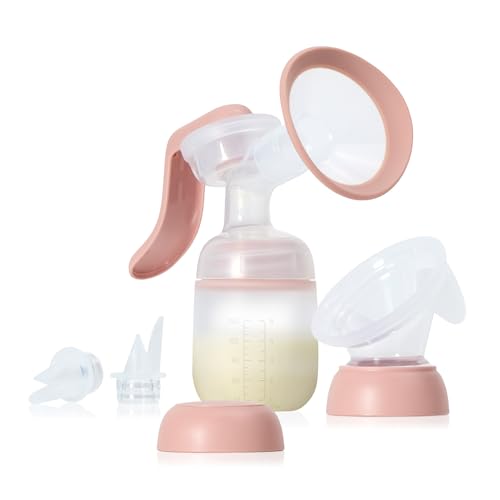
The Frida Mom 2-in-1 is the most flexible manual pump available because it physically converts between two distinct modes. The hand-pump top uses an ergonomic handle with a long lever stroke that produces strong suction with modest thumb pressure. Swap the top for the silicone suction cup, and the unit becomes a passive collector that works while you nurse on the other side or move around the house. The 24mm SoftFeel flange sits flush against the breast without the hard plastic edges that dig into tissue.
What sets this pump apart is the minimal part count—the body, valve, bottle, and two interchangeable tops. There are no tiny membranes or discs to lose. Cleaning takes under a minute, and the silicone suction cup collapses flat for storage in a diaper bag pocket. The materials are guaranteed BPA, BPS, PVC, and phthalate-free, so there is zero plastic taste or smell leaching into expressed milk.
The only limitation is that the suction cup mode does not offer adjustable tension—it delivers one fixed level of passive suction. For mothers who need a pure, fully adjustable manual pump without the extra components, a dedicated hand pump may be simpler. But for anyone who wants one device that handles both active pumping and hands-free letdown collection, this is the single best option available today.
Why it’s great
- Genuine dual-mode design with switchable tops
- Ergonomic handle reduces hand fatigue
- Very few parts, easy to wash
Good to know
- Suction cup mode has fixed tension
- Extra flange sizes sold separately
2. Philips Avent Manual Breast Pump SCF430/03
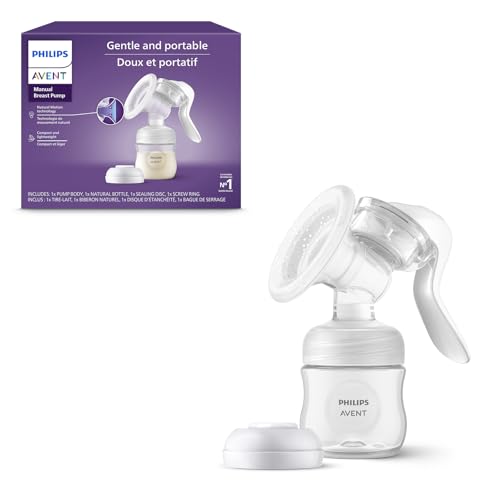
Philips Avent’s Natural Motion technology remains the gold standard for manual pump comfort. The soft silicone shield has five petal-like stimulators that massage the areola while the pump creates suction, mimicking the action of a nursing baby’s tongue and palate. This stimulation triggers faster letdown, which means shorter pumping sessions. The shield flexes to fit 99.98% of nipple sizes up to 1.18 inches, eliminating the need to buy separate flanges.
Build quality is what you expect from Philips—the handle has a smooth, spring-loaded pivot that returns to position without jarring. The 4oz Natural bottle that ships with the pump uses a wide neck and a screw ring that seals tight with the included sealing disc, allowing you to store milk directly in the same container. The pump disassembles into four parts (shield, handle assembly, valve, bottle) and holds up well to daily steam sterilization.
The trade-off is that the pump is entirely manual—there is no passive collection mode or hands-free option. The rigid plastic body is also heavier than all-silicone competitors, though it still fits easily in a pump bag. For mothers whose top priority is comfort and who prefer a traditional hand-pumping action, the Avent is still the benchmark after years on the market.
Why it’s great
- Unique petal stimulation speeds letdown
- One flange fits nearly all nipple sizes
- Durable build with smooth handle action
Good to know
- No passive collection mode
- Heavier than all-silicone pumps
3. haakaa Manual Breast Pump with Flower Stopper, Gen.2
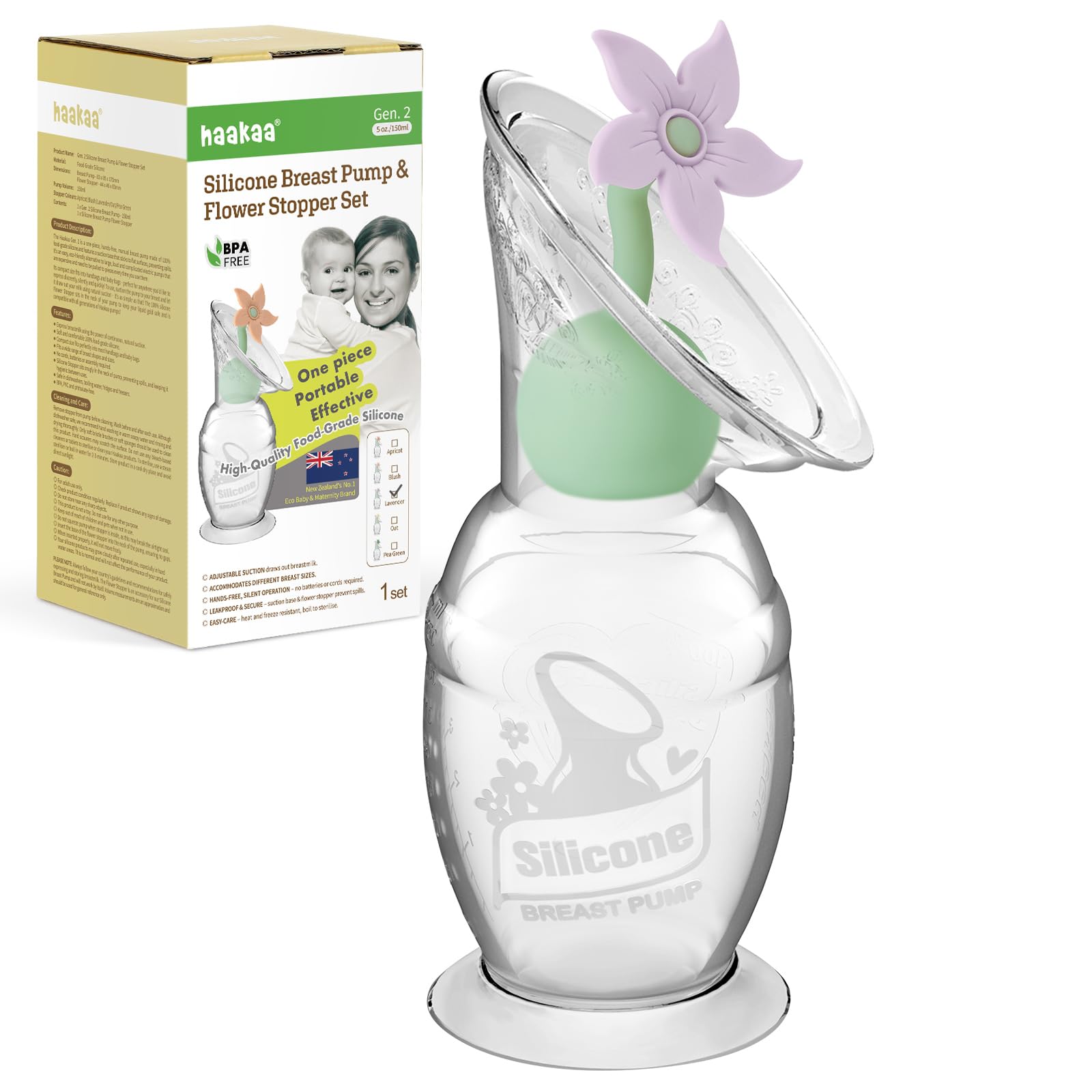
The haakaa Gen 2 is not a traditional hand pump—it is a one-piece silicone suction collector that uses negative pressure to passively draw milk. You squeeze the bulb, attach it to your breast, and the vacuum holds it in place. This design excels at catching letdown from the opposite breast while nursing, saving milk that would otherwise soak a nursing pad. The updated Gen 2 includes a flower-shaped stopper that prevents spills if the pump tips over, a major improvement over the original open-top design.
The 150ml (5oz) capacity is sufficient for a single session’s letdown, and the wide mouth makes pouring into a storage bag or bottle simple. Because there are zero mechanical parts—no valves, no handles, no membranes—cleaning is as straightforward as washing a silicone cup. The material is 100% food-grade silicone, BPA-free, and odor-resistant. The suction base lets the pump stand upright on any flat surface, reducing the risk of tipping.
The haakaa cannot replace an active manual pump for mothers who need to fully empty the breast or establish a pumping routine. The suction strength is determined entirely by how much air you squeeze out, and the hold is passive—you cannot actively pump while wearing it. For its intended job as a letdown catcher and gentle collector, though, it is unmatched in simplicity and price-to-value ratio.
Why it’s great
- Passive collection frees your hands
- Single-piece silicone, nothing to assemble
- Flower stopper prevents spills
Good to know
- Not designed for active pumping
- Fixed suction, no adjustment
4. SMART MOMMY Manual Breast Pump and Milk Collector

The SMART MOMMY pump proves that an entry-level price does not have to mean entry-level performance. The ergonomic handle provides a solid mechanical advantage, and the anti-backflow system prevents milk from traveling up into the handle assembly—a common hygiene failure in cheaper pumps. The 150ml collector bottle doubles as a storage container, and the pump is FSA and HSA eligible, making it an accessible option for mothers on a tight budget.
The flange is a hard plastic 24mm piece, which means fit is fixed. For mothers who measure smaller or larger than the standard size, the rigid edge may create discomfort during longer sessions. The silicone diaphragm inside the valve is effective at maintaining suction, but the multi-part design means there are more crevices to clean compared to simpler silicone pumps. The materials are confirmed BPA-free.
Suction control is responsive—you can vary the pull force by adjusting how far you squeeze the handle, and the release is smooth without sudden pressure drops. For occasional pumping or for establishing a small freezer stash, this pump delivers reliable performance at a lower cost than the Philips or Frida options. The trade-off is that the harder plastic and fixed flange make it less comfortable for daily exclusive pumping.
Why it’s great
- Effective anti-backflow protection
- FSA/HSA eligible
- Responsive handle for suction control
Good to know
- Fixed 24mm plastic flange
- More parts to clean than one-piece designs
FAQ
How do I measure my nipple to find the right flange size?
Can a manual pump fully empty the breast like an electric pump?
How often should I replace the valves on a manual breast pump?
Final Thoughts: The Verdict
For most users, the best manual breast pumps winner is the Frida Mom 2-in-1 because it provides both an active hand pump and a passive suction collector in one clean, low-part-count system. If you want the most comfortable traditional pumping experience, grab the Philips Avent SCF430/03 with its Natural Motion cushion. And for passively catching letdown while nursing without holding anything, nothing beats the haakaa Gen 2 with the flower stopper.