Every twelve-hour shift, every emergency dash down a linoleum corridor, every time you bend to check a line or lift a patient — your footwear either helps you recover or digs the ache deeper. Male nurses need shoes that blend the slip resistance of a work boot with the all-day forgiveness of an athletic trainer, and the wrong pair leads to plantar fasciitis, knee strain, and a slower recovery after shifts.
I’m Emma — the founder and writer behind Baby Bangs. I’ve spent years analyzing footwear material science, specifically how outsole rubber compounds, midsole density, and insole geometry affect fatigue in healthcare workers standing on unforgiving hospital floors.
This guide cuts through the marketing noise to recommend only the footwear engineered to handle standing, walking, and sudden pivots without sacrificing breathability or fit. Read on for a detailed breakdown of the best male nurses shoes currently available, reviewed by construction and ergonomic design.
How To Choose The Best Male Nurses Shoes
Nursing footwear demands more than a comfortable step-in — it has to resist fluid spills, cushion heel strikes on concrete subfloors, and provide a stable platform for sudden weight shifts. The three specs that separate a 12-hour shoe from a 4-hour shoe are the outsole’s slip rating, the midsole’s energy return, and the upper’s moisture management. Ignore these, and your shift will feel twice as long.
Outsole Slip Resistance
The most critical safety feature. Look for shoes tested to ASTM F2913 or marked with a “Mark II” oil- and slip-resistant rating. Healthcare shoes need rubber compounds that maintain grip on wet tile, sanitizer-slick floors, and grease spills from the cafeteria. A shoe with a flat, shallow tread will lose traction the moment a floor is mopped; a deep, directional lug pattern channels fluids away and keeps you upright.
Midsole Cushioning and Arch Support
Your plantar fascia absorbs roughly 1.5 times your body weight with every step. Over a 10,000-step shift, that cumulative load demands a midsole with real energy return — not just soft foam that bottoms out. Look for dual-density constructions: a firmer medial post to support the arch and a softer heel pad to absorb the initial strike. Removable insoles are a huge plus because they let you drop in custom orthotics if you have flat feet or high arches.
Upper Material and Breathability
Your feet sweat inside closed-toe shoes for 8 to 12 hours. A synthetic leather or mesh upper lets moisture escape and dries quickly between shifts. Avoid thick, non-porous leather unless you work in a high-splash environment — it traps heat and encourages fungal issues. Also check for seamless toe boxes; internal stitching near the pinky toe is a common source of hot spots that ruin a shift by hour six.
Quick Comparison
On smaller screens, swipe sideways to see the full table.
| Model | Category | Best For | Key Spec | Amazon |
|---|---|---|---|---|
| Orthofeet Tilos | Premium | All-day orthopedic support | Water-repellent upper + orthotic insole | Amazon |
| Skechers Max Cushioning Glide Step | Premium | Maximum cushion on concrete floors | Ultra-soft Glide-Step midsole | Amazon |
| Skechers Glide-Step Pro Work | Premium | Slip-resistance + hands-free entry | Slip-resistant outsole + heel kick | Amazon |
| Skechers Summits High Range | Mid-Range | Easy slip-on for long shifts | Hands-free slip-in design | Amazon |
| New Balance 608 V5 | Mid-Range | Dependable support with no break-in | ABZORB midsole cushioning | Amazon |
| Skechers Work Cessnock | Budget | Value slip-resistant for food service | Oil-resistant outsole | Amazon |
| Crocs On The Clock Work | Budget | Budget waterproof work sneaker | Closed-cell Croslite foam upper | Amazon |
In‑Depth Reviews
1. Orthofeet Men’s Orthopedic Tilos Hands-Free Water-Repellent Walking Sneaker

The Orthofeet Tilos is built specifically for healthcare workers who need medical-grade arch support without a prescription. The EVA midsole is paired with an orthotic insole that includes a firm medial post and metatarsal pad — features rarely found in off-the-shelf nursing shoes. The water-repellent mesh upper keeps your feet dry during quick hand-wash splashes, and the wide toe box accommodates feet that swell over a twelve-hour shift.
Customer reports consistently highlight the absence of break-in pain; the shoe supports from the first wear. The outsole uses a non-slip rubber that passed the Mark II test on wet tile, making it a top pick for ER and ICU nurses who move fast on unpredictable surfaces. The hands-free heel design eliminates bent-over lacing, a small convenience that matters when you’re gowned and gloved.
On the downside, the cushioning is firm rather than plush; it prioritizes stability over marshmallow softness. If you prefer a pillow-soft step, you may want to add a gel top layer. Also, the water-repellent treatment reduces breathability slightly compared to full mesh, so consider your hospital’s climate.
Why it’s great
- Orthopedic-grade arch support with removable insole
- Water-repellent mesh keeps feet dry
- Hands-free heel entry
Good to know
- Firm cushioning may need a gel add-on for some
- Water-repellent layer reduces airflow slightly
2. Skechers Men’s Max Cushioning Glide Step Advert Hands Free Slip-ins
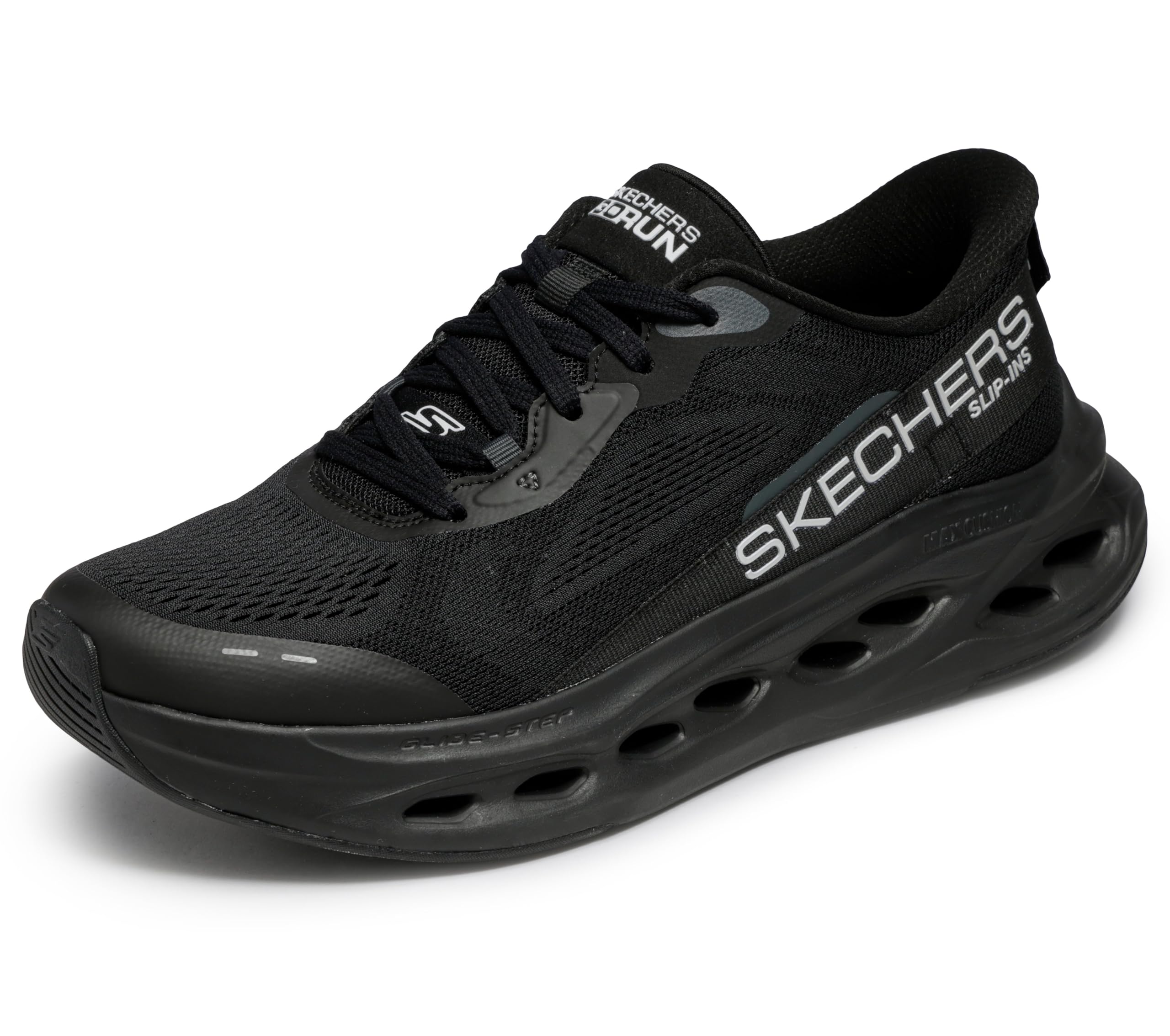
Skechers’ Max Cushioning line uses a proprietary Glide-Step midsole that delivers the softest heel-to-toe transition of any shoe on this list. Nurses walking on concrete or vinyl composite tile report a noticeable reduction in heel pain by hour ten compared to standard EVA foam shoes. The thick sole stack adds about an inch of height, which can reduce hip flexion strain during repetitive bending.
The hands-free slip-in design uses a reinforced heel panel that collapses for easy entry but snaps back securely during walking. This is particularly useful in sterile environments where tying laces after gloving is impractical. The upper is a combination of engineered mesh and synthetic overlays, striking a decent balance between airflow and structure for lateral stability during quick pivots.
Potential issues include the thin removable insole — several buyers swapped it for a thicker orthotic. The outsole also lacks the aggressive tread pattern of dedicated work-zone shoes; on very slick, freshly mopped floors, take an extra half-step to find grip. The soft foam also compresses significantly after six months of daily wear, so plan for replacement sooner than a firmer shoe.
Why it’s great
- Remarkably soft heel-to-toe cushioning
- True hands-free design with secure heel hold
- Extra height reduces hip strain
Good to know
- Insole is thin — swap for an orthotic
- Outsole grip is moderate on wet surfaces
- Foam lifespan is about six months
3. Skechers Men’s Slip-Resistant Glide-Step Pro Slip-ins Work Sneakers
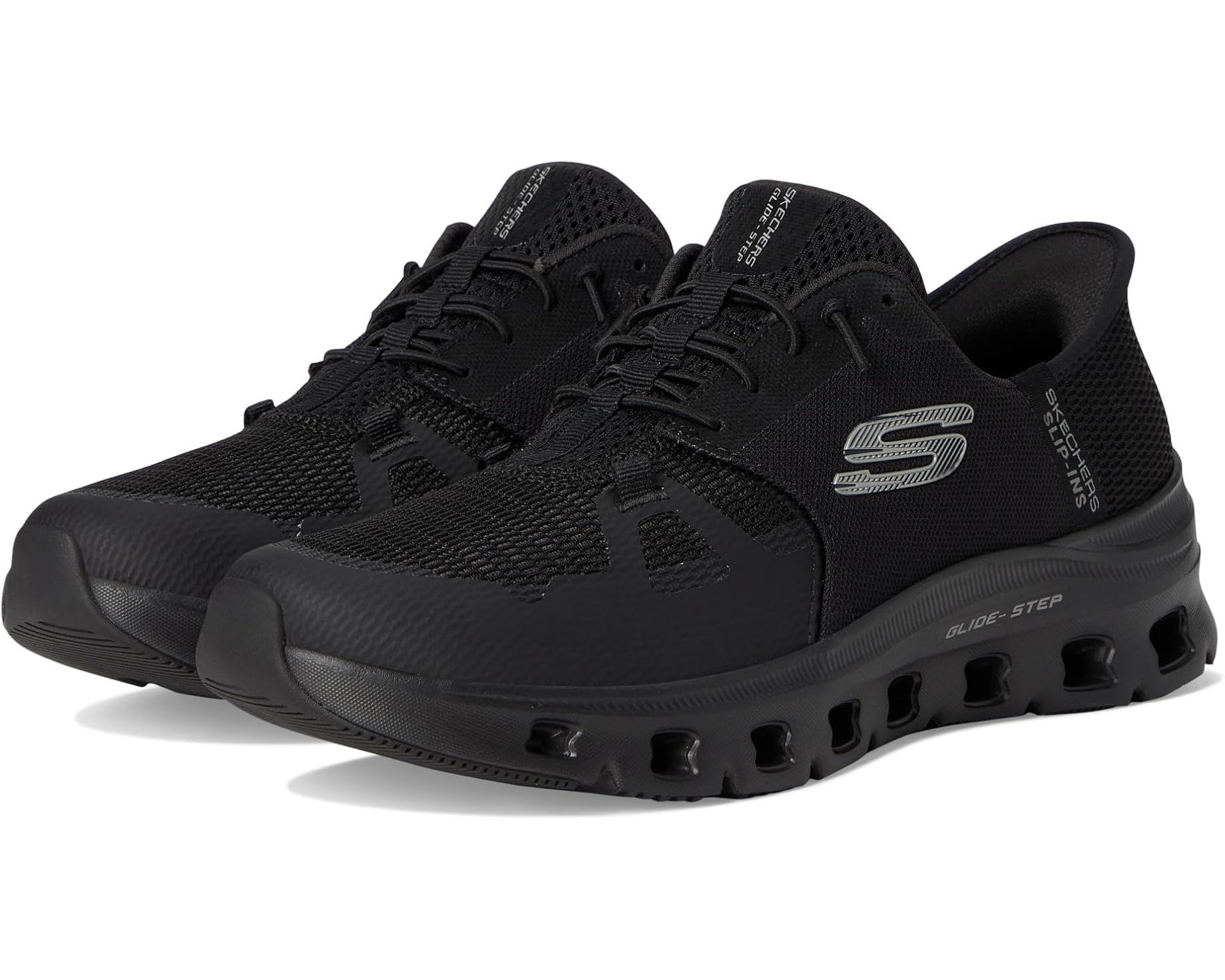
The Glide-Step Pro Work variant takes the soft cushioning of the standard Glide-Step and mates it with an outsole specifically formulated for slip resistance on oil and water. The multi-directional tread pattern is deeper than the non-Pro version, providing bite on hospital kitchen floors and wet patient bathrooms. The upper is a treated mesh that resists fluid absorption and dries quickly between shifts.
What sets this shoe apart in a busy unit is the combination of cushioning and grip. Nurses who split time between patient rooms (tile) and nurses’ stations (carpet) appreciate the transition smoothness without catching or sliding. The slip-in entry is the same reinforced heel design, and the shoe feels locked-in when walking at speed.
The main trade-off is breathability: the slip-resistant coating and denser outsole make the foot run warmer than a pure mesh trainer. If you tend to overheat, choose moisture-wicking socks. Also, the Glide-Step foam is softer than some nurse shoes; those with very high arches may want a supplemental insole for more medial support.
Why it’s great
- Certified slip-resistant outsole for wet/oil floors
- Soft Glide-Step cushioning for long shifts
- Fluid-resistant mesh upper
Good to know
- Lower breathability than standard athletic shoes
- Soft foam may lack arch support for some
4. Skechers Men’s Summits High Range Hands Free Slip-in Sneaker

The Skechers Summits High Range offers a more breathable, lightweight alternative to the Glide-Step Pro. The upper is a flexible mesh that lets significant airflow reach the foot, reducing sweat buildup during a full day on the ward. The hands-free slip-in mechanism works the same way — collapse the heel for entry, and it springs back — but the overall feel is less bulky and more flexible.
This shoe suits nurses who work in warm climates or hot units where foot ventilation is a priority. The midsole uses Skechers’ Air-Cooled Memory Foam, which is responsive but slightly less cushioned than the Glide-Step foam. That trade-off gives better ground feel and stability for nurses who prefer a lower stack height for balance during rapid movements.
The outsole is less aggressive than the work-specific Pro line; it’s fine for dry tile but should not be trusted on wet surgical residue or greasy cafeteria floors. Also, the foam insoles tend to flatten after four to five months and should be replaced if you start feeling the floor through them.
Why it’s great
- Highly breathable mesh upper
- Easy hands-free entry
- Lightweight and flexible for fast movement
Good to know
- Outsole grip is moderate, not for wet work zones
- Insole compresses over time
5. New Balance Men’s 608 V5 Casual Comfort Cross Trainer

New Balance’s 608 V5 has earned a loyal following among nurses for one simple reason: it delivers consistent arch support with zero break-in. The ABZORB midsole uses a polyurethane compound that absorbs impact without bottoming out, even during double-digit hour shifts. The upper features a leather and mesh combination that strikes the right balance between durability and breathability.
The real value here is the sizing range. New Balance offers the 608 in multiple widths (including 4E and 6E), which matters enormously for male nurses with wide feet or those who develop edema during long shifts. The internal toe box is spacious and seam-free, eliminating the pinky-toe hotspot that plagues narrower shoes.
On the con side, the 608 V5 is heavier than modern slip-in sneakers, and the lacing system is traditional — no hands-free entry. The outsole is slip-resistant but uses a flat tread pattern that can slide on standing water if you push hard. This is a solid shift shoe for dry floors, but less ideal for ER or OR environments where wet surfaces are constant.
Why it’s great
- Zero break-in with ABZORB cushioning
- Available in wide widths (4E, 6E)
- Seam-free toe box reduces friction
Good to know
- Heavier than slip-in alternatives
- Flat outsole reduces grip on wet floors
- Traditional laces, no slip-in option
6. Skechers Men’s Work Cessnock Food Service Shoe
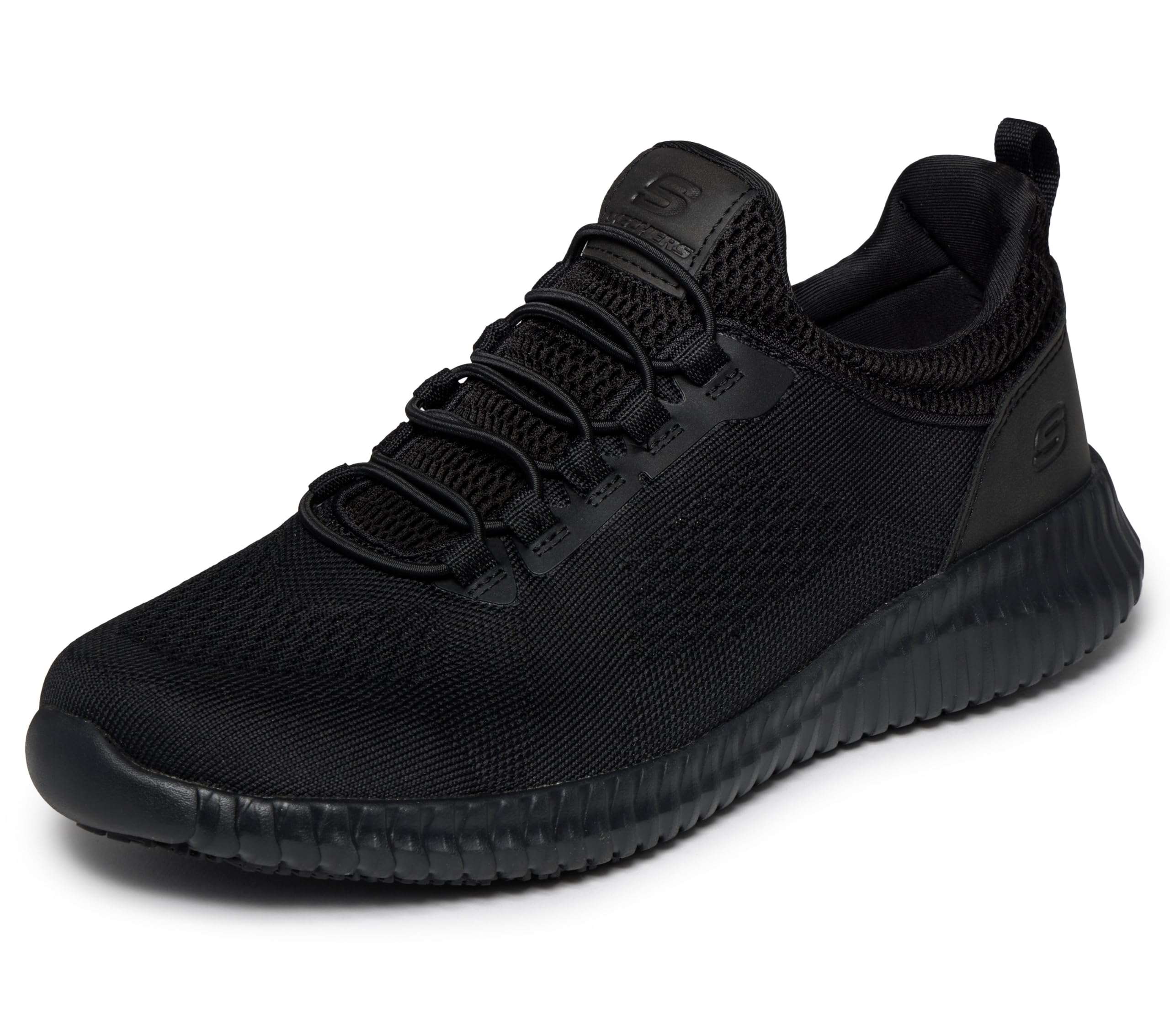
The Skechers Work Cessnock is an entry-level work shoe that covers the basics without frills. It features an oil-resistant rubber outsole with a shallow tread pattern that provides sufficient grip for dry or lightly misted floors, making it a candidate for outpatient clinics, administrative nursing roles, or food service areas within hospitals. The memory foam insole gives immediate plushness but lacks the structural support of a medical-grade orthotic.
The upper is a plain textile with synthetic overlays, which keeps the shoe lightweight and somewhat breathable. It lacks the fluid-resistance of premium models, so it’s not suited for direct patient care areas with splash risk. The construction is simple and cost-efficient, meaning you get a functional shoe that does not excel in any single area but covers the minimum requirements for light hospital work.
For nurses covering 12-hour ICU shifts, the Cessnock will feel under-cushioned by hour six, and the memory foam will compress within a few months. It is better as a backup shoe or for shorter shifts. The narrow width also may not suit men with wider feet.
Why it’s great
- Affordable oil-resistant outsole
- Lightweight and easy to pack as a backup
- Immediate memory foam comfort
Good to know
- Not built for 12+ hour heavy shifts
- Lacks arch support and fluid resistance
- Narrow fit, not wide-foot friendly
7. Crocs Men’s On The Clock Work Sneakers

Crocs’ On The Clock Work Sneaker turns the brand’s signature closed-cell Croslite foam into a low-profile work sneaker. The material is completely waterproof — no stitching, no porous fabric — so it is fully submersible and easy to sanitize after exposure to fluids. The outsole uses a deep, multi-directional lug pattern that customers report as exceptionally non-slip on grease and water, even in industrial kitchen conditions.
The single-piece foam construction means the shoe has zero seams to leak or irritate, and the wide toe box is a major plus for nurses who develop foot swelling. The minimal design is sleek enough to pass most hospital uniform policies. Reviews from 20,000-step-a-day users confirm that the shoe remains comfortable and the sole stays secure over time.
The big downside is breathability: Croslite foam is impermeable, so feet get hot and sweaty inside. Wear moisture-wicking socks, and be prepared to air them out between shifts. Also, the foam has minimal arch support — flat-footed nurses should add an aftermarket orthotic or choose a different shoe. There is also no lace adjustment to fine-tune fit mid-shift.
Why it’s great
- Fully waterproof and easy to clean
- Deep, oil-resistant outsole with strong grip
- Wide toe box and zero internal seams
Good to know
- Feet get hot and sweaty quickly
- Minimal arch support for long shifts
- No lace adjustment for fit changes
FAQ
Can I wear regular running shoes as a male nurse on a hospital floor?
How often should I replace my nursing shoes if I work 12-hour shifts five days a week?
What is the best way to clean and disinfect male nurses shoes without damaging them?
Final Thoughts: The Verdict
For most nurses covering 12-hour shifts on varied hospital floors, the best male nurses shoes winner is the Orthofeet Tilos because it combines orthopedic arch support, water-repellent protection, and a hands-free design that holds up shift after shift. If you prioritize maximum softness over firm support, grab the Skechers Max Cushioning Glide Step. And for a fully waterproof option that handles wet and greasy environments without breaking the bank, nothing beats the Crocs On The Clock Work Sneaker.