Waking up with a charley horse or lying awake with restless legs are not just annoyances after sixty — they are often the first sign of a magnesium deficit that worsens with age. Absorption drops, kidney retention changes, and dietary intake rarely compensates for the loss. Choosing a form that your mature digestive system can actually shuttle into cells makes the difference between a cabinet full of bottles and a single supplement that works.
I’m Emma — the founder and writer behind Baby Bangs. I have spent years analyzing supplement formulations and absorption science to identify which magnesium carriers actually deliver measurable benefits for women navigating the physiological shifts of their sixties and beyond.
Whether you prioritize gentle digestion, deep sleep support, or broad-spectrum mineral insurance, the right choice among the magnesium for women over 60 options hinges on matching the chelate form to your specific daily complaint.
How To Choose The Best Magnesium For Women Over 60
After sixty, the gut produces less stomach acid, which reduces the dissociation of magnesium salts. This means oxide forms that worked in your forties may now pass right through without delivering intracellular magnesium. The decision matrix narrows to three variables: the amino acid carrier, the dosage per unit, and the presence of absorption enhancers like BioPerine or vitamin C that compensate for age-related absorption drag.
Match the carrier to your dominant symptom
Glycinate is the form most women over sixty should start with because glycine itself promotes sleep and calms the nervous system. Citrate is a better choice if constipation accompanies the deficiency, but it can trigger loose stools at higher doses. Malate targets muscle energy and may help with daytime fatigue, though it is less common in budget-friendly bottles. A single well-chelated form nearly always outperforms a seven-form blend that forces your body to sort through competing absorption pathways.
Check the elemental magnesium per serving — not the total compound weight
Labels often tout 1000 mg of magnesium glycinate, but the actual elemental magnesium in that dose may be only 100 mg. Compare the elemental figure (the amount your body actually uses) rather than the gross capsule weight. For women over sixty, 200 mg to 300 mg of elemental magnesium daily from a highly absorbable form is usually sufficient without overloading the kidneys.
Demand third-party testing and a simple ingredient panel
Stomach sensitivity increases with age, so fillers, magnesium stearate from unknown sources, and artificial colors can cause bloating or discomfort. Look for a supplement that explicitly states third-party lab testing, non-GMO verification, and a short list of recognizable ingredients. Capsules should dissolve within thirty minutes — a quick test is to drop one in warm water and watch for breakdown.
Quick Comparison
On smaller screens, swipe sideways to see the full table.
| Model | Category | Best For | Key Spec | Amazon |
|---|---|---|---|---|
| Doctor’s Best High Absorption Magnesium Glycinate | Premium Chelated | Deep sleep & sensitive stomach | 200 mg elemental / 2 tablets | Amazon |
| Pure Magnesium Glycinate 1,000mg | High Dose Caps | Long-term supply & antioxidant pairing | 1,000 mg glycinate + vitamin C | Amazon |
| Magnesium 7 Complex Supplement | Multi-Form Blend | Total mineral insurance | 7 forms + D3, B6, zinc | Amazon |
| Now Supplements Magnesium Glycinate with BioPerine | Value Glycinate | Budget-friendly glycinate | 180 caps with BioPerine | Amazon |
| Nobi Nutrition Magnesium Citrate Gummies | Chewable Citrate | Digestion & taste motivation | 170 mg elemental / 2 gummies | Amazon |
In‑Depth Reviews
1. Doctor’s Best High Absorption Magnesium Glycinate Lysinate Supplement

Doctor’s Best pairs magnesium with both glycine and lysine — a dual-amino chelation that the brand claims delivers up to six times better absorption than standard glycinate alone. For women over sixty whose gastric pH runs low, this double-chelation bypasses some of the dissociation bottleneck that plagues oxide and basic citrate formulations. Each two-tablet serving provides 200 mg of elemental magnesium, which is a well-calibrated starting dose that will not overwhelm a sensitive lower GI tract.
The tablets are compact, uncoated, and free of the flow agents that sometimes cause bloating in older digestive systems. Users report noticeable improvement in sleep latency and a reduction in nighttime leg cramp frequency within the first week, which aligns with the calming effect of glycine on GABA receptors. The bottle holds 240 tablets, offering a four-month supply at a daily cost that undercuts many competing glycinate products by a significant margin.
One practical note: the tablets do contain a small amount of magnesium stearate as a lubricant. While this is standard for high-speed tableting, individuals with extreme stearate sensitivity may prefer a capsule alternative. Doctor’s Best also maintains a long track record in the supplement space, with third-party testing verifying potency and heavy-metal limits — a critical reassurance for daily mineral supplementation after sixty.
Why it’s great
- Lysinate-glycinate chelation provides higher bioavailability than standard glycinate
- 240-tablet count means fewer reorder cycles
- Well-tolerated by aging digestive systems with minimal GI side effects
Good to know
- Two tablets per serving may be awkward for those who dislike larger pills
- Contains magnesium stearate, which some users prefer to avoid
2. Pure Magnesium Glycinate 1,000mg, 300 Capsules
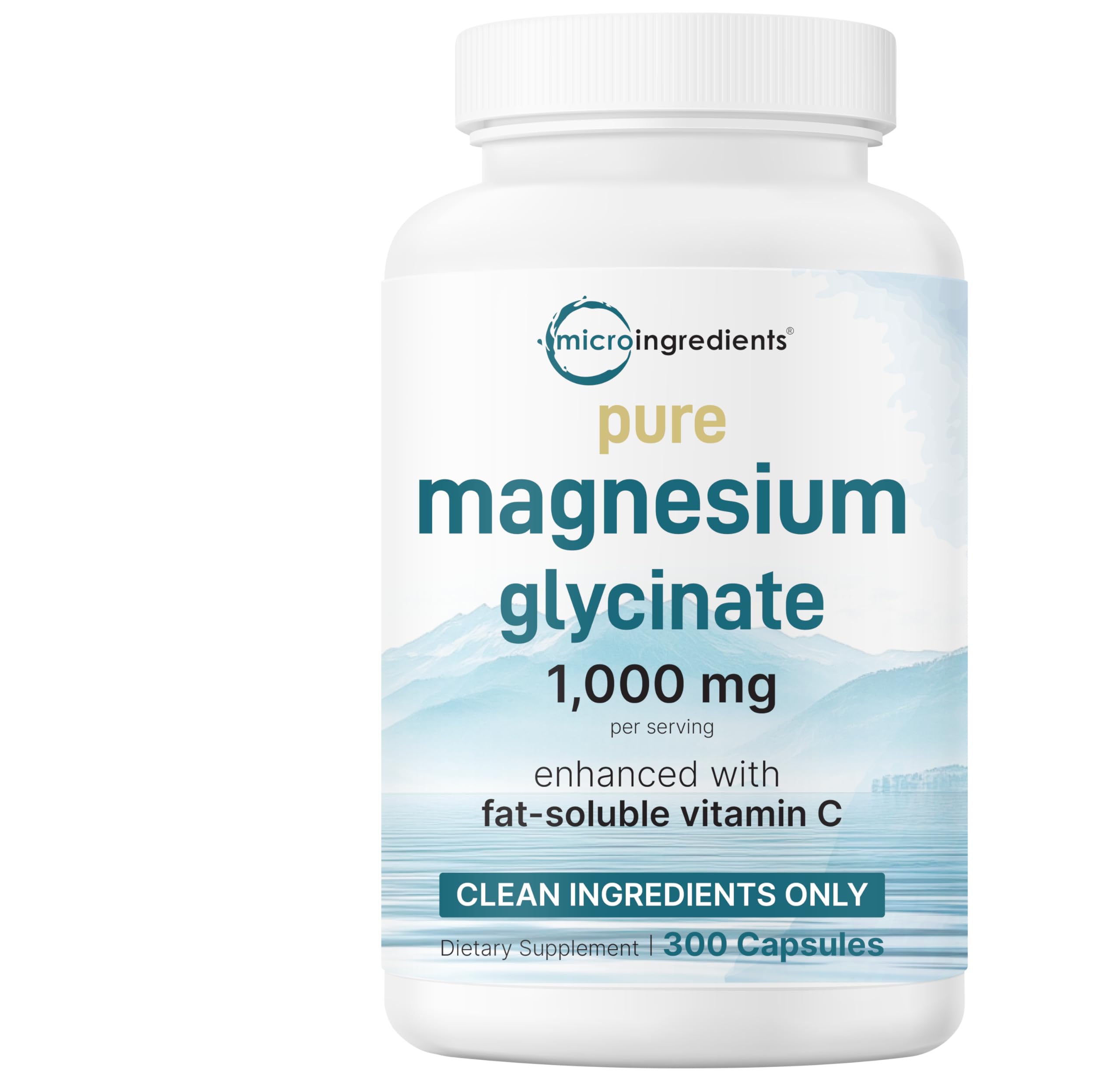
Micro Ingredients takes a minimalist approach — pure magnesium glycinate paired with vitamin C, no trace mineral blends, no proprietary matrices. The 300-capsule bottle delivers a full 150-day supply at a mid-range price point that makes this one of the most economical glycinate options for women who plan to supplement consistently. The vitamin C addition serves a dual purpose: it boosts antioxidant protection against age-related oxidative stress and may assist the gut in maintaining a slightly acidic environment that favors magnesium absorption.
Each two-capsule serving registers 1,000 mg of the glycinate compound, though the elemental magnesium content is not explicitly stated on the front label — a transparency gap that buyers should resolve by checking the supplement facts panel. The capsules themselves contain no fillers, no soy, no gluten, and no dairy, which is reassuring for women managing multiple dietary restrictions after sixty.
User reports highlight the absence of the laxative effect commonly associated with citrate forms, making this a stomach-friendly choice for those who need magnesium primarily for sleep and muscle relaxation. The bottle’s size also reduces the mental overhead of remembering reorders, which matters for supplement adherence in a demographic that often juggles multiple daily pills.
Why it’s great
- 150-day supply minimizes reorder frequency
- Combined with vitamin C for enhanced absorption and antioxidant coverage
- Free of common allergens and artificial fillers
Good to know
- Elemental magnesium per serving is not front-label prominent
- Two capsules per serving may feel like many for a single dose
3. Magnesium 7 Complex Supplement Advanced
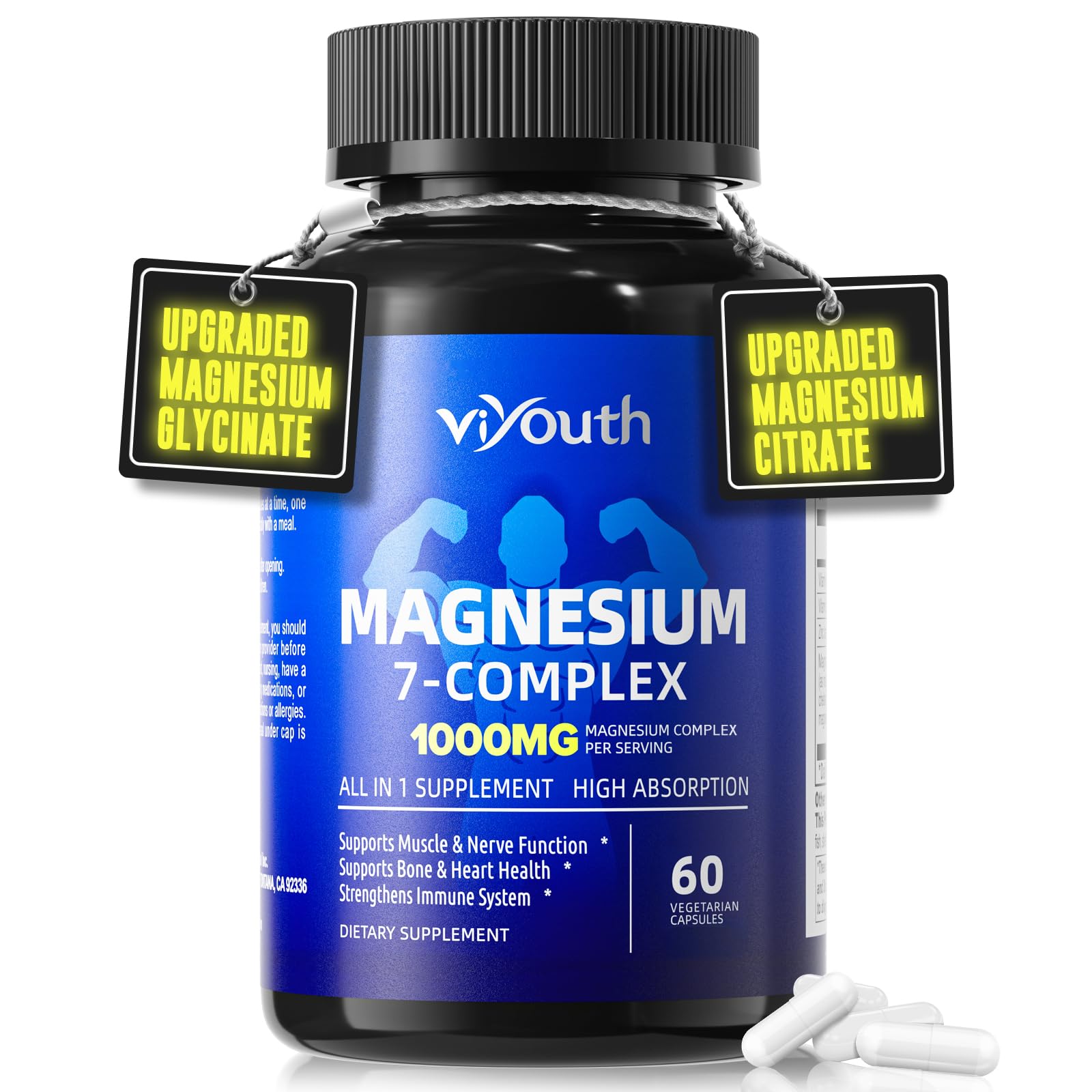
Viyouth’s Magnesium 7 Complex casts a wide net by including glycinate, malate, chelate, aspartate, orotate, taurine, and citrate in a single capsule. The theory is sound — different tissues prefer different magnesium carriers, and a blend theoretically covers the full spectrum of neurological, muscular, skeletal, and cardiovascular needs. The formula also adds vitamin D3, vitamin B6, and zinc, addressing three micronutrients that often decline in parallel with magnesium after sixty.
The practical trade-off is that a seven-form blend requires the body to manage multiple absorption pathways simultaneously, which may dilute the effect for any single symptom. For women over sixty who experience a broad constellation of issues (poor sleep, muscle twitching, occasional constipation, and low energy), this shotgun approach can deliver noticeable general improvement. Users who struggle with a single dominant complaint — nighttime cramps, for example — often get faster relief from a dedicated glycinate product.
Quality-wise, the manufacturer cites cGMP certification and third-party lab testing. The 60-count bottle supplies a 30-day dose at two capsules daily, placing it at a mid-range price per serving. The blend is also free of artificial additives and common allergens, though the proprietary nature of the exact form ratios means you cannot confirm how much of each chelate type is present per capsule.
Why it’s great
- Covers seven different magnesium forms for comprehensive tissue support
- Includes D3, B6, and zinc for synergistic bone and immune benefit
- Good for women with multiple, scattered deficiency symptoms
Good to know
- Blended forms may deliver slower relief for a specific symptom like leg cramps
- Proprietary blend hides exact ratios of each chelate type
4. Now Supplements Magnesium Glycinate with BioPerine

NOW is a decades-old family-owned manufacturer with a reputation for rigorous in-house testing, and their Magnesium Glycinate with BioPerine delivers a solid glycinate dose at one of the lowest per-capsule costs in the category. BioPerine — a patented black pepper extract — is included to enhance the absorption of the glycinate molecule by inhibiting enzymes that break down nutrients in the gut before they reach circulation. This is a meaningful feature for women over sixty whose natural absorption efficiency has declined.
The 180-count bottle provides a three-month supply at two capsules per serving. Users frequently report the elimination of nighttime leg cramps and a calmer pre-sleep state, which tracks with the combined effect of glycine and piperine on neurotransmitter regulation. The capsules are gel-based and smaller than many competitors, making them easier to swallow for those with dry mouth or reduced saliva production common in this age group.
Additionally, the presence of BioPerine means women taking medications with narrow therapeutic windows (such as certain blood thinners or thyroid drugs) should confirm with their pharmacist that piperine does not interact with their specific regimen.
Why it’s great
- BioPerine enhances absorption in aging digestive systems
- Compact gel capsules are easy to swallow
- Trusted brand with transparent in-house testing protocols
Good to know
- Elemental magnesium per capsule is on the lower side
- Piperine requires medication interaction check for some women
5. Nobi Nutrition Magnesium Citrate Gummies
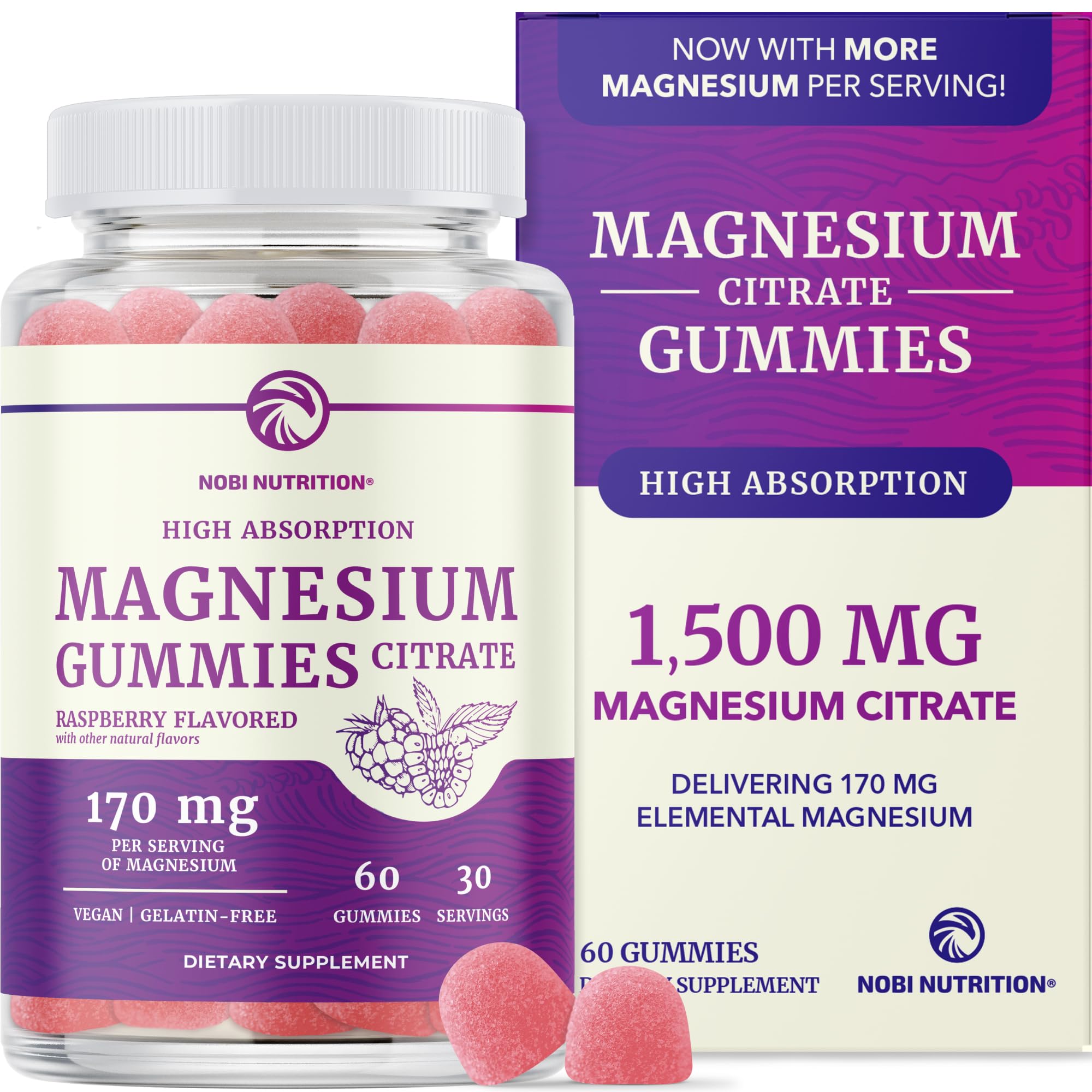
Nobi Nutrition delivers magnesium in a format that removes the swallowing barrier entirely — a raspberry-flavored pectin gummy that contains 170 mg of elemental magnesium per two-gummy serving, derived from magnesium citrate. Citrate is the most soluble magnesium salt, which means it dissolves rapidly in the stomach and offers high bioavailability even when gastric acid output is low. This form is also the gentlest on the digestive tract for those who need bowel regularity support, as citrate naturally draws water into the colon.
The pectin base (no gelatin) makes these suitable for vegetarian or kosher diets, and the brand explicitly avoids artificial colors and flavors. Women over sixty who struggle with pill fatigue or tablet aversion will find the gummy format significantly easier to maintain as a daily habit. Reviews consistently mention improved digestive regularity and an easier transition into sleep without the grogginess that some glycinate users report the next morning.
The trade-off is threefold: each gummy contains added sugar (about 2 g per serving) to achieve the palatable raspberry flavor, the citrate form can cause loose stools in sensitive individuals at the full two-gummy dose, and the 60-count bottle supplies only one month — the shortest supply window in this lineup. For women whose primary complaint is constipation rather than sleep disruption, this is a strong first-choice option, but those prone to loose bowels may prefer to start with a single gummy.
Why it’s great
- Gummy format eliminates swallowing difficulty for pill-averse users
- Citrate provides rapid dissolution and bowel regularity support
- Pectin-based, vegan, and free of artificial colors
Good to know
- Contains added sugar that may be a concern for some dietary plans
- One-month supply requires frequent reordering
- Citrate can trigger loose stools at higher doses in sensitive women
FAQ
What is the difference between magnesium glycinate and magnesium citrate for a woman over sixty?
Can magnesium supplements interfere with blood pressure medication?
How long does it take to feel a difference in leg cramps after starting magnesium?
Are 300 capsules of magnesium glycinate too much for a single month?
Final Thoughts: The Verdict
For most women over sixty, the magnesium for women over 60 winner is the Doctor’s Best High Absorption Magnesium Glycinate Lysinate because its dual-amino chelation delivers superior absorption without GI irritation, and the 240-tablet count balances economy with potency. If you need the longest possible supply with added antioxidant support, grab the Pure Magnesium Glycinate 1,000mg. And for a budget-friendly glycinate option that includes absorption enhancers, nothing beats the Now Supplements Magnesium Glycinate with BioPerine.