Whether it’s persistent joint ache, post-workout muscle tightness, or nagging nerve discomfort, your body’s magnesium level directly influences how you feel. The wrong form of this mineral passes through without doing much, leaving you frustrated. The right form, properly chelated and dosed, can quiet the noise your nervous system keeps sending.
I’m Emma — the founder and writer behind Baby Bangs. I’ve spent hundreds of hours cross-referencing supplement research, scrutinizing third-party lab reports, and comparing elemental magnesium content across dozens of formulations to separate the genuinely effective from the over-hyped fillers.
Choosing the right form is the single most important decision for relief, and my goal is to guide you to the best magnesium for pain with formulations that prioritize absorption, purity, and dosing that actually supports your nervous and muscular systems.
How To Choose The Best Magnesium For Pain
Not all magnesium is equal when pain is the target. Forms like magnesium oxide, common in cheap store brands, have absorption rates below 4% and will irritate your gut before ever reaching your muscles or nerves. The three forms that dominate the pain-support space are glycinate (for nerve calming and sleep), malate (for muscle and joint energy), and taurate (for cardiovascular and nerve conductivity). Many high-quality blends now stack multiple forms to cover the full spectrum.
Prioritize Chelated for Bioavailability
Chelation means the magnesium atom is bonded to an amino acid, creating a stable complex that bypasses stomach acid and enters your cells intact. Look for labels that say “100% chelated” or specify glycinate, malate, and taurate. Avoid magnesium oxide, carbonate, or sulfate if pain relief is your primary goal. The difference between a chelated form and a poorly bound one is the difference between relief and expensive urine.
Watch Elemental Magnesium Per Serving
Label math confuses many shoppers. A capsule may say “Magnesium Glycinate 1000mg” but the actual elemental magnesium — the amount your body uses — is closer to 100–200mg depending on the chelate. For pain support, look for a total elemental dose between 300mg and 420mg daily, split into two servings if needed. The best products transparently list the elemental value, not just the gross compound weight.
Check for Unnecessary Additives
Many brands add magnesium stearate, silicon dioxide, titanium dioxide, or rice flour as flow agents and fillers. While some are harmless, they add zero benefit and can mask low-grade raw materials. The cleanest formulations list minimal, active-only ingredients and pass third-party purity testing. Products that advertise being non-GMO, gluten-free, and soy-free also tend to have tighter manufacturing standards.
Quick Comparison
On smaller screens, swipe sideways to see the full table.
| Model | Category | Best For | Key Spec | Amazon |
|---|---|---|---|---|
| Micro Ingredients Pure Magnesium Complex | Triple Complex | All-day pain & energy | 400mg elemental, 300 caps | Amazon |
| Doctor’s Best Magnesium Glycinate | Glycinate | Sleep & nerve pain | 200mg elemental, 240 tabs | Amazon |
| Viyouth Magnesium 7 Complex | Multi-form | Comprehensive cellular support | 1000mg total blend, 60 caps | Amazon |
| Nutricost Magnesium Malate | Malate | Muscle ache & fatigue | 420mg elemental, 143 serves | Amazon |
| Micro Ingredients Magnesium Glycinate | Pure Glycinate | High-dose nightly support | 1000mg total, 300 caps | Amazon |
In‑Depth Reviews
1. Micro Ingredients Pure Magnesium Complex

The Micro Ingredients Pure Magnesium Complex combines three highly bioavailable forms — glycinate, malate, and taurate — in a single 400mg elemental dose per serving. This triad is deliberate: glycinate targets GABA receptors for nerve calm, malate supports ATP production for muscular energy, and taurate protects nerve conduction. The addition of vitamin C adds antioxidant synergy that can reduce oxidative stress associated with chronic pain conditions. With 300 capsules per bottle, this provides a generous 100-day supply, making it one of the most practical premium picks for daily pain management.
The formulation is notably clean. Micro Ingredients uses only raw, active ingredients with no fillers, no magnesium stearate, and no silicon dioxide. Each batch passes third-party testing for purity and potency, and the product is certified non-GMO and free of gluten, dairy, soy, and common allergens. The chelated mineral complexes ensure the magnesium is transported intact across the intestinal wall, bypassing the laxative effect typical of oxide-based supplements. For someone looking to cover nerve, muscle, and energy-related pain without stacking multiple bottles, this complex solves the problem elegantly.
One practical consideration: the 3-capsule serving may feel like a lot for those unused to swallowing pills. The capsules themselves are standard size, not oversized, but if you have a strong aversion to multiple pills, a powder form might suit you better. That said, the payoff in targeted bioavailability and long supply makes this the strongest “set and forget” option for pain-oriented supplementation.
Why it’s great
- Three chelated forms target different pain pathways
- 400mg elemental dose, 300 capsules, 100-day supply
- No fillers, third-party tested, allergen-free
Good to know
- Requires 3 capsules daily
- Newer brand, established track record still building
2. Doctor’s Best High Absorption Magnesium Glycinate Lysinate

Doctor’s Best has been a fixture in the supplement space for over 35 years, and their magnesium glycinate lysinate formula is one of the most trusted options for sleep and nerve pain. The key differentiator is the addition of lysinate — the amino acid lysine bonded alongside glycine. This dual chelation increases solubility and absorption, with the brand claiming up to six times better uptake compared to standard magnesium glycinate. Each serving delivers 200mg of elemental magnesium, a moderate but effective dose for those targeting nighttime muscle relaxation and cortisol regulation.
The tablets are 100% chelated, which means they are gentle on the digestive tract. Users with sensitive stomachs who react poorly to magnesium citrate or oxide typically tolerate this formula well. The 240-count bottle provides a substantial supply at a steady dose, and the vegan, non-GMO, gluten-free, and soy-free certifications add a layer of trust. For managing nerve-type pain — where tingling, cramping, or restless legs interfere with sleep — this glycinate-dominant formula works because it supports the GABA system and melatonin production simultaneously.
One limitation: 200mg elemental may be on the lower side for someone with significant chronic pain or heavy exertion. Those requiring 400mg elemental will need two servings. The tablets are also on the larger side, which could be a hurdle for some. However, for the specific use case of winding down at night and reducing nocturnal pain flare-ups, this remains a category gold standard with decades of market validation.
Why it’s great
- Dual glycinate/lysinate chelation for superior absorption
- Gentle on digestion, ideal for sensitive stomachs
- 35-year brand history with robust manufacturing
Good to know
- 200mg elemental may require double serving
- Tablets are larger than average
3. Viyouth Magnesium 7 Complex
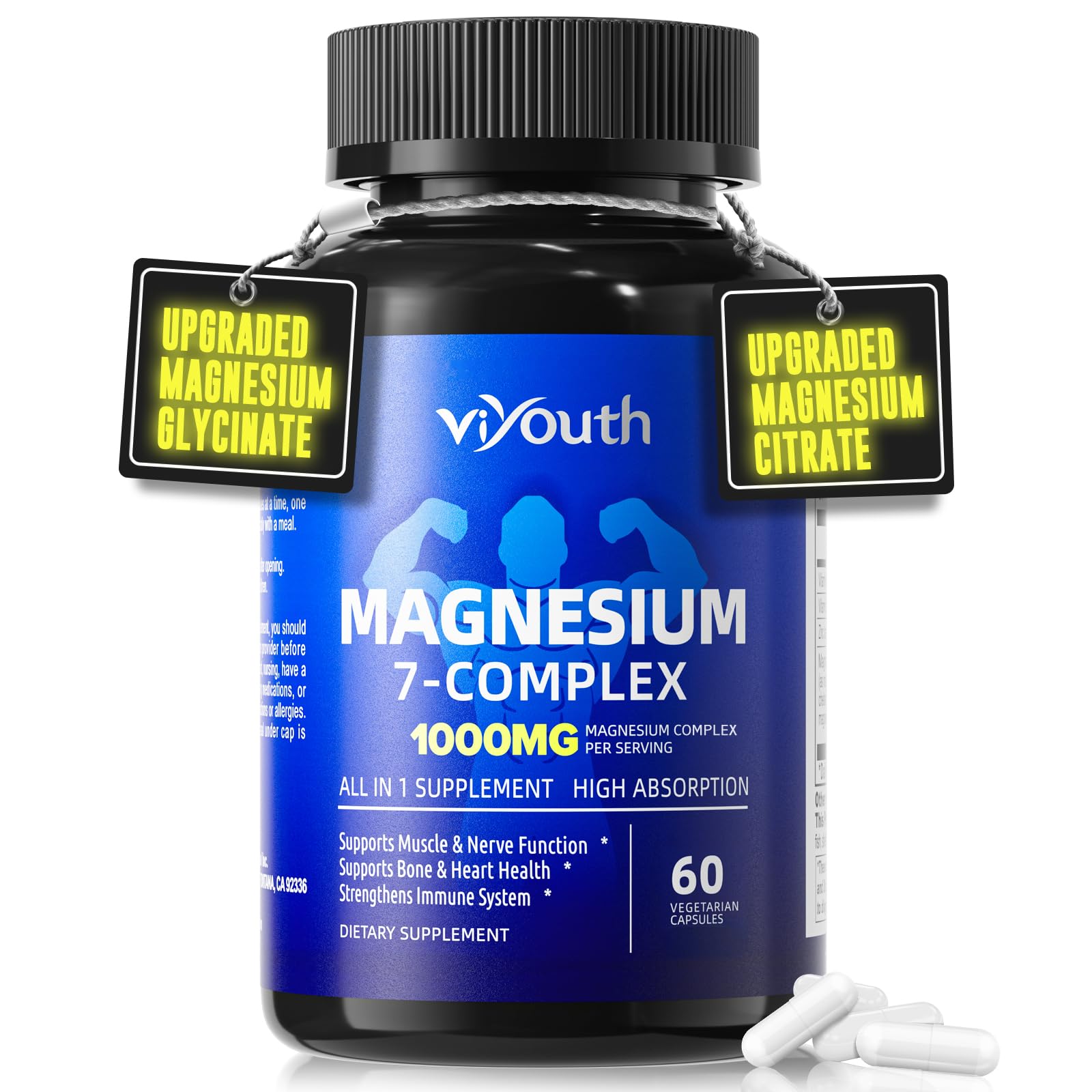
The Viyouth Magnesium 7 Complex takes a shotgun approach, packing seven distinct forms of magnesium into each serving: glycinate, malate, chelate, aspartate, orotate, taurine-bound, and citrate. This diversity ensures that regardless of where your deficiency lies — muscle, nerve, bone, or cardiovascular — some fraction of the dose hits its target. The formula boosts the 1000mg total blend with vitamin B6, vitamin D3, and zinc, creating a synergistic stack for energy metabolism, immune function, and muscle recovery. For pain that is accompanied by general fatigue or low immune resilience, this is a compelling all-in-one.
Manufactured in a cGMP-certified facility with third-party testing, the Viyouth product is clear about its ingredient transparency. The label lists individual milligram contributions for each form rather than hiding behind a proprietary blend. This is refreshing in a crowded market where opacity is common. The capsules are easy to swallow, and the recommended 2-capsule serving keeps the morning routine simple. The organic and gluten-free sourcing adds appeal for those who prioritize clean labeling.
The trade-off is supply: 60 capsules last 30 days, making this the shortest-duration bottle in this lineup. The 1000mg total compound weight looks impressive, but the actual elemental magnesium content is lower than the label suggests once you account for the molecular weight of each chelate. For a heavy user needing 400mg+ elemental daily, this bottle runs out quickly. It works best as a trial or rotation product for someone wanting broad-spectrum coverage without committing to a massive bottle.
Why it’s great
- Seven different magnesium forms for full-spectrum coverage
- Fortified with B6, D3, and zinc for added synergy
- Transparent dosing, no proprietary blends
Good to know
- 30-day supply runs short for high-dose users
- Elemental mg lower than total compound implies
4. Nutricost Magnesium Malate Powder

Nutricost delivers a no-nonsense magnesium malate powder that skips the capsule and goes straight to the source. Each scoop provides 420mg of elemental magnesium — the highest per-serving value in this lineup — derived from magnesium malate, the form most directly tied to ATP energy production. For muscle pain related to fibromyalgia, post-exercise soreness, or chronic fatigue, malate is the form that researchers have singled out for its ability to support mitochondrial function. The 300g container supplies 143 servings, making this the most cost-efficient option for consistent high-dose use.
The powder dissolves easily in water, though the taste is mildly sour with no added sweeteners or flavors — a clean slate for mixing into juice or smoothies. Nutricost operates from a GMP-compliant, FDA-registered facility, and the product is non-GMO, soy-free, and gluten-free. There is no magnesium stearate or silicon dioxide here, just pure magnesium malate. For those who struggle with capsule volume or want precise dose flexibility, this powder is the most flexible entry in the list.
The downside is convenience: you need to mix it, and the unflavored profile means some will find it unpalatable straight. The scoop is included, but you must store the bag or tub properly to avoid clumping in humid environments. Still, if muscle ache and low energy are your primary targets, the malate form combined with this elemental density makes Nutricost a serious contender that outperforms many capsule options.
Why it’s great
- Highest elemental dose: 420mg per serving
- 143 servings per container, exceptional value
- Ideal for fibromyalgia and exercise recovery pain
Good to know
- Needs mixing, not travel-friendly
- Taste is sour and unflavored
5. Micro Ingredients Pure Magnesium Glycinate
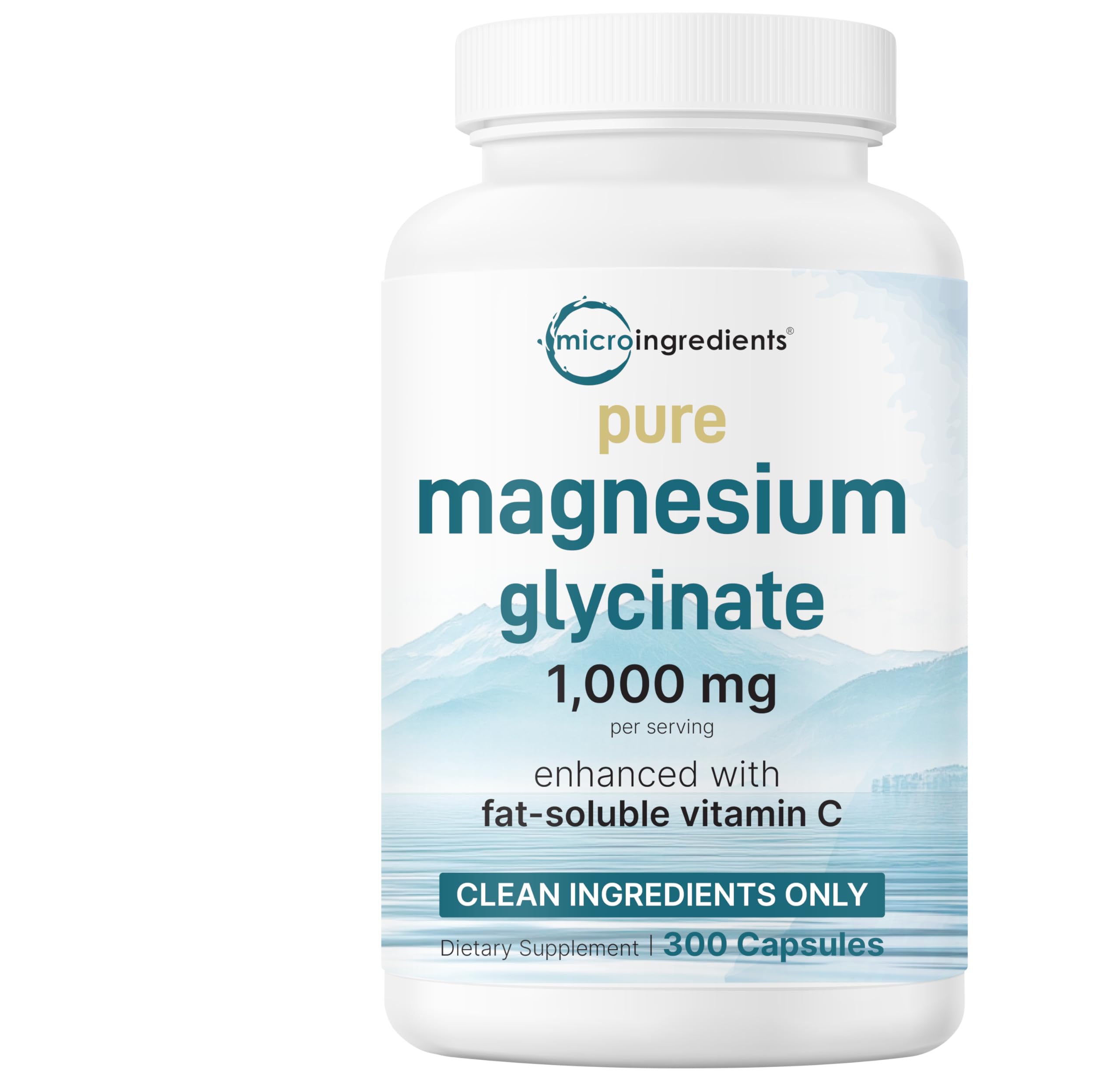
This glycinate-only offering from Micro Ingredients provides a 1000mg total compound dose per 2-capsule serving, resulting in a solid elemental level suited for nightly nerve support and relaxation. The formula pairs magnesium glycinate with vitamin C for antioxidant back-up, a smart addition given that chronic pain often correlates with higher oxidative stress. With 300 capsules per bottle, the 150-day supply is the longest in the comparison, making it a low-maintenance choice for consistent daily intake.
Like its sibling complex, this product uses only active ingredients with no fillers, soy, dairy, gluten, or common allergens. The chelated glycinate form is specifically chosen for its ability to calm the nervous system rather than stimulate it, making this an ideal pick for evening use. For people whose pain manifests as nighttime leg cramps, tension headaches, or general restlessness, glycinate dominates the research for sleep-quality improvement and muscle relaxation. The two-capsule serving is easier to swallow than the three-capsule complex version.
The key trade-off: glycinate alone does not provide the malate energy component needed for daytime pain related to movement or muscle weakness. Users who experience both nighttime and daytime pain may need a separate malate supplement or the triple complex version. Also, the 1000mg listed is compound weight, not elemental; the actual elemental dose per serving is approximately 140mg to 160mg, which may require a second serving for those needing higher elemental intake. For targeted nightly use, though, this is one of the most trusted glycinate formats available.
Why it’s great
- 150-day supply from 300 capsules
- Clean formula with no fillers or allergens
- Glycinate form specifically calms nerve pain
Good to know
- Elemental dose may need doubling for some users
- No malate component for daytime energy pain
FAQ
How long does magnesium glycinate take to work for nerve pain?
What form of magnesium is best for muscle pain and cramps?
Can I take magnesium with vitamin D and zinc together for pain?
Final Thoughts: The Verdict
For most users, the best magnesium for pain winner is the Micro Ingredients Pure Magnesium Complex because its triple-form chelation targets nerve, muscle, and energy pain in one bottle with a full 400mg elemental dose. If you want a glycinate-specific formula for nighttime nerve calm, grab the Doctor’s Best Magnesium Glycinate Lysinate. And for high-dose muscle recovery and energy support, nothing beats the Nutricost Magnesium Malate Powder with 420mg of elemental per scoop.