Slouching into an office chair for eight hours a day silently compresses your lumbar discs, tightens your hip flexors, and triggers that deep ache between your shoulder blades that coffee cannot fix. Without a properly positioned support pad behind your lower back, your spine defaults to a C-curve that accelerates fatigue and invites chronic discomfort.
I’m Emma — the founder and writer behind Baby Bangs. I have spent years dissecting the ergonomic hardware market, comparing foam densities, contour geometries, and adjustability ranges to identify which designs actually restore the natural S-curve of the spine during prolonged seated work.
After evaluating dozens of models across price tiers, I have narrowed the field to seven standout solutions. This guide delivers a practical, spec-focused breakdown of the best lumbar support for office chair options available right now.
How To Choose The Best Lumbar Support For Office Chair
Picking the wrong lumbar aid is worse than picking none at all. A pad that pushes too high or too low forces your pelvis into an unnatural tilt, exchanging one ache for another. You need to match the support to your torso length, chair back shape, and the specific pressure points your lower back carries.
Foam Type and Density
Memory foam offers slow-recovery contouring that molds to your exact curves, ideal for static sitting during focused work. High-density foam provides firmer resistance that keeps your spine from collapsing backward, which matters more if you recline frequently. Avoid low-density foams that bottom out within weeks, turning a supportive cushion into a pancake.
Adjustability vs. Fixed Shape
A fixed wedge works only if it matches your lumbar curve exactly — rare for most body types. Adjustable supports that move up, down, forward, and backward let you dial in the exact pressure point where your lower back needs to be held. For chairs without built-in lumbar controls, a separate adjustable cushion offers the most versatility across different seating positions throughout the day.
Breathability and Material
Sitting traps heat between your back and the support. Mesh panels or ventilated foam covers prevent sweat buildup during long sessions. Solid leather or non-breathable fabric covers look polished but turn uncomfortable in warm environments or during summer months, especially if your chair lacks airflow.
Quick Comparison
On smaller screens, swipe sideways to see the full table.
| Model | Category | Best For | Key Spec | Amazon |
|---|---|---|---|---|
| C CUSHION LAB Seat Cushion | Memory Foam Pad | Sciatica & tailbone relief | Extra-dense charcoal memory foam | Amazon |
| Nexthro Ergonomic Chair | Full Chair | Heavy users up to 400 lbs | 1″ forward/back + 3.15″ up/down lumbar | Amazon |
| QLTPLUS Desk Chair | Full Chair | 8-hour work shifts | 4″ thick molded foam cushion | Amazon |
| CASASIO Chair (Black) | Full Chair | Precise lumbar & neck alignment | Dual-direction adjustable lumbar cushion | Amazon |
| CASASIO Chair (Gray) | Full Chair | Virgin foam + 3D headrest comfort | 2D adjustable lumbar + 3D headrest | Amazon |
| Dowinx Big and Tall Chair | Full Chair | Plus-size users needing wide support | Pocket spring cushion + 135° recline | Amazon |
| Marsail Ergonomic Chair | Full Chair | Entry-level ergonomic upgrade | 2.4″ height-adjustable lumbar range | Amazon |
In‑Depth Reviews
1. C CUSHION LAB Patented Pressure Relief Seat Cushion

This standalone cushion delivers concentrated relief where most integrated chair supports fall short: the coccyx and sciatic region. The extra-dense charcoal memory foam maintains its shape over long sitting stretches, preventing the dreaded sinking sensation that aggravates tailbone pressure. Its proprietary contour was designed by in-house ergonomists, resulting in a forward-tilt wedge that cradles the thighs while lifting the pelvis into proper alignment.
Unlike many pads that slide forward during use, the non-slip bottom and angled geometry keep it locked onto your existing chair seat. The gray fabric cover resists odor even after months of daily use — a thoughtful detail for those who eat lunch at their desks. It works equally well on office chairs, car seats, and wheelchairs, making it a versatile addition rather than a permanent fixture.
Users with mild lower back tightness report noticeable relief within the first week. The cushion does add roughly two inches of height to your seated position, so check your desk clearance if you are on the shorter side. For anyone suffering from sciatica, tailbone sensitivity, or general lumbar fatigue, this pad punches well above its category weight.
Why it’s great
- Extra-dense memory foam resists sagging over months of use
- Ergonomist-designed contour supports both hips and tailbone
- Odor-free charcoal foam stays fresh
Good to know
- Adds noticeable seat height — may affect foot placement for shorter users
- Not designed as a full chair replacement; works best on existing firm seats
2. Nexthro Ergonomic Office Chair
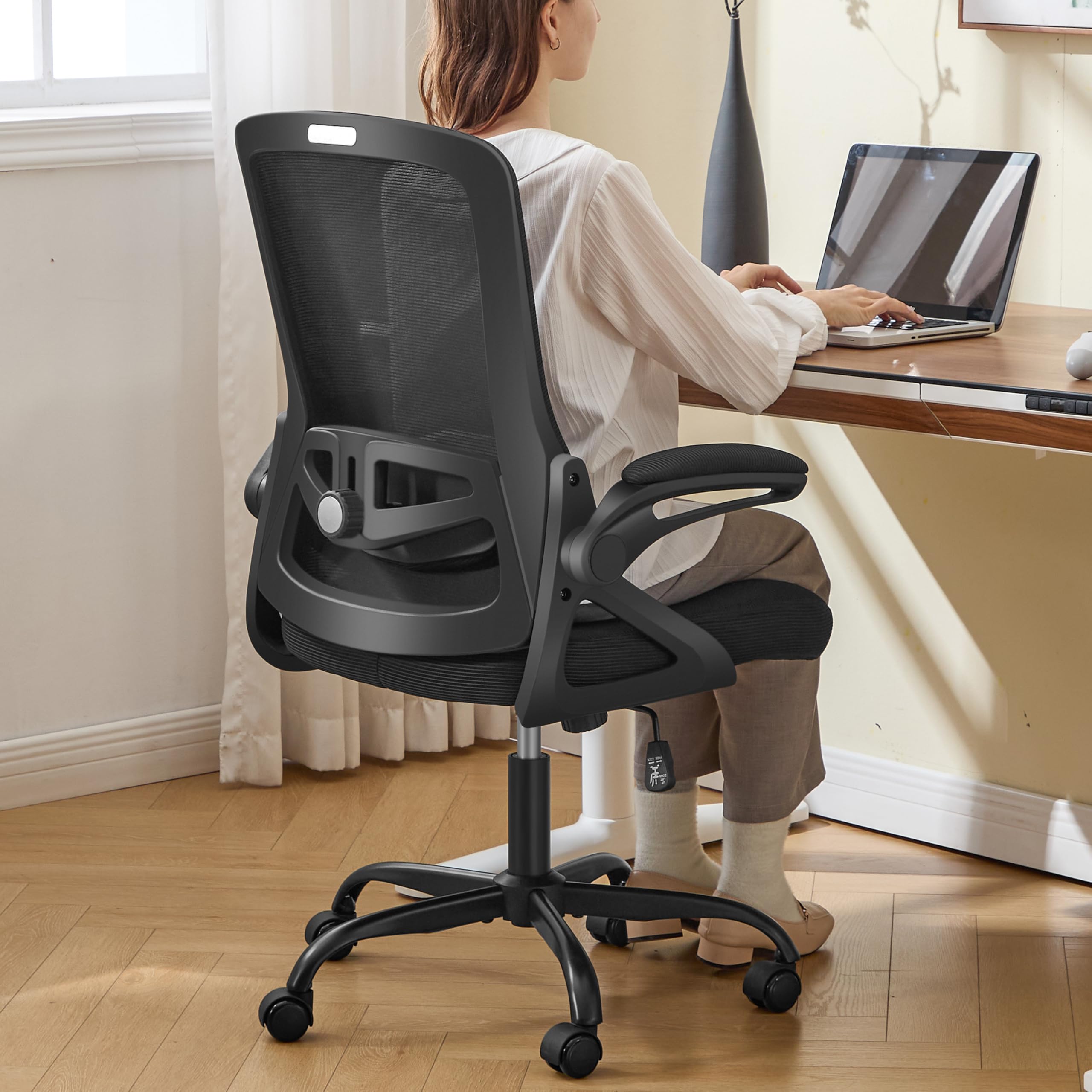
This full-chair solution offers the most comprehensive lumbar adjustment in its tier: the support pad moves one inch forward and backward and 3.15 inches up and down, giving you precise control over where pressure meets your lower spine. The wide seat measures 20.9 inches across, distributing weight evenly for users between 5’4″ and 6’3″ — an unusually generous fit range for a mid-priced ergonomic chair.
The double-layer breathable mesh back keeps airflow moving during long work sessions, while the 3.2-inch thick high-density foam seat cushion balances softness with enough firmness to prevent sink-through after five hours. Build quality stands out with a reinforced gas lift and heavy-duty base rated for up to 400 pounds, making this one of the few chairs in this category that accommodates larger body types without creaking or wobble.
Assembly takes roughly 15 to 20 minutes with clear instructions included. The split-back design supports the upper and lower back independently, which helps reduce mid-back fatigue for users who lean forward toward their monitors. If you need a complete chair with adjustable lumbar that actually changes shape instead of just ticking a spec box, this is the strongest contender.
Why it’s great
- Four-way adjustable lumbar with meaningful travel distances
- 400-pound weight capacity with stable metal base
- Breathable mesh prevents heat buildup
Good to know
- Armrests are non-adjustable in width, only height
- Seat depth may feel short for users over 6’2″
3. QLTPLUS Office Desk Chair
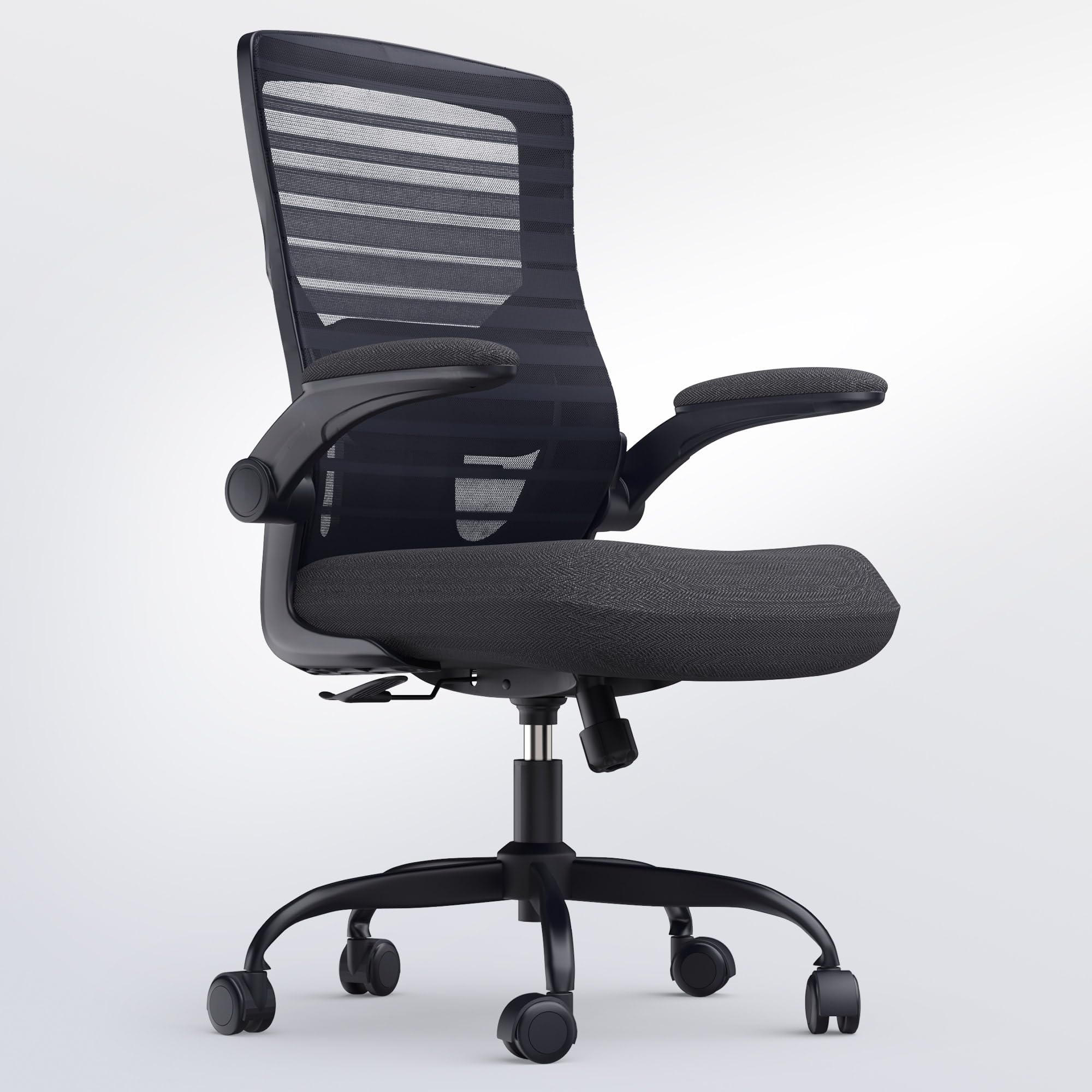
The standout feature here is the four-inch thick molded foam cushion — substantially thicker than the industry standard of two to three inches. That extra depth prevents your hips from bottoming out against the seat pan, a common complaint among heavier users and anyone with existing hip or thigh soreness. The foam is ergonomically contoured to guide your hips into a neutral position, reducing the sideways tilt that stresses the lower spine.
The lumbar support comes as an adjustable cushion attached to the contoured mesh back, allowing you to tweak its position relative to your spine curve. The flip-up armrests add workspace flexibility, letting you slide the chair completely under a desk when not in use. The tilt and rock functionality includes adjustable tension, giving you the option to lean back slightly while maintaining lumbar contact.
Backed by a five-year warranty, this chair signals confidence in its build quality. The 350-pound capacity and reinforced nylon base handle daily desk use without strain. The cushion density works particularly well for users who sit upright with feet flat on the floor — the thick foam fills the gap between the seat and the backs of your thighs, reducing pressure points that cause legs to fall asleep.
Why it’s great
- Extra-thick molded foam cushion relieves hip and thigh pressure
- Five-year warranty for long-term peace of mind
- Flip-up armrests free up desk space
Good to know
- Lumbar cushion adjusts vertically but not in depth
- Seat foam runs firm — may need break-in for lighter users
4. CASASIO Ergonomic Office Chair (Black/Silver)
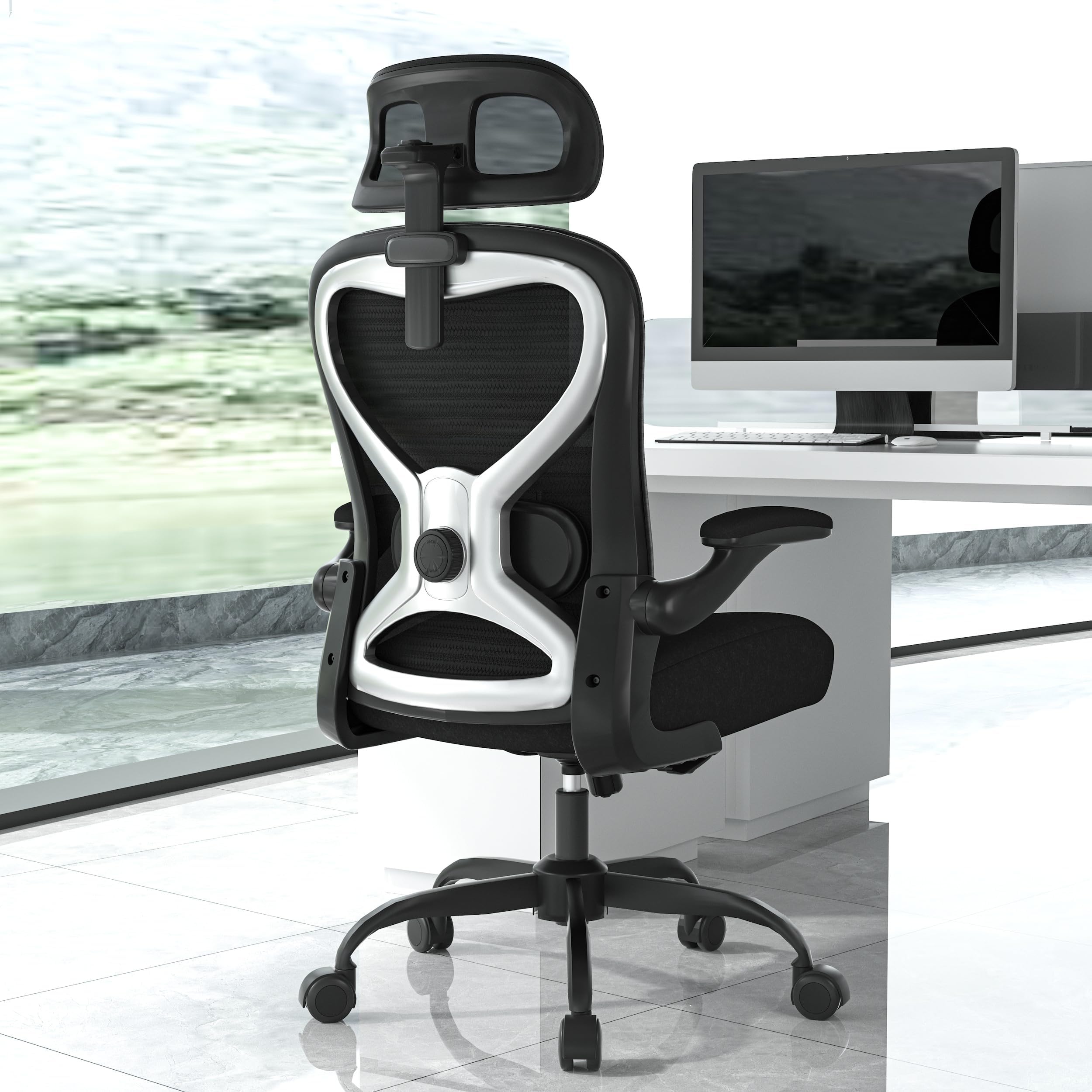
This model elevates the lumbar game with a dual-direction adjustable cushion that moves forward and backward in addition to vertical travel. That depth adjustment is critical for users with a pronounced lumbar curve — a pad that sits too far back leaves a gap where your spine arches inward, while one that pushes too far forward overcorrects and creates new tension. The virgin foam seat distributes weight evenly without the rapid compression typical of recycled foam blends.
The 3D headrest adds height, depth, and angle adjustments, creating a full spinal support system from neck to pelvis. The contoured mesh back follows the natural hourglass shape of the torso, keeping the lumbar pad aligned with the narrowest part of your waist where support matters most. The tilt and rock function includes adjustable tension, allowing micro-movements that keep blood flowing during eight-hour shifts.
The black and silver finish fits modern office aesthetics without looking bulky. The reinforced metal base and premium casters roll smoothly on carpet and hard floors alike. For users who want a complete ergonomic package — not just lumbar support but coordinated neck and head positioning — this chair integrates all three into one coherent system.
Why it’s great
- Dual-direction lumbar adjusts forward and backward for precise curve matching
- Virgin foam seat resists permanent sagging
- 3D headrest coordinates with lumbar for full spine alignment
Good to know
- Headrest adjustment can feel stiff initially
- Armrests only flip up — no width or depth adjustment
5. CASASIO Ergonomic Office Chair (Gray/Silver)
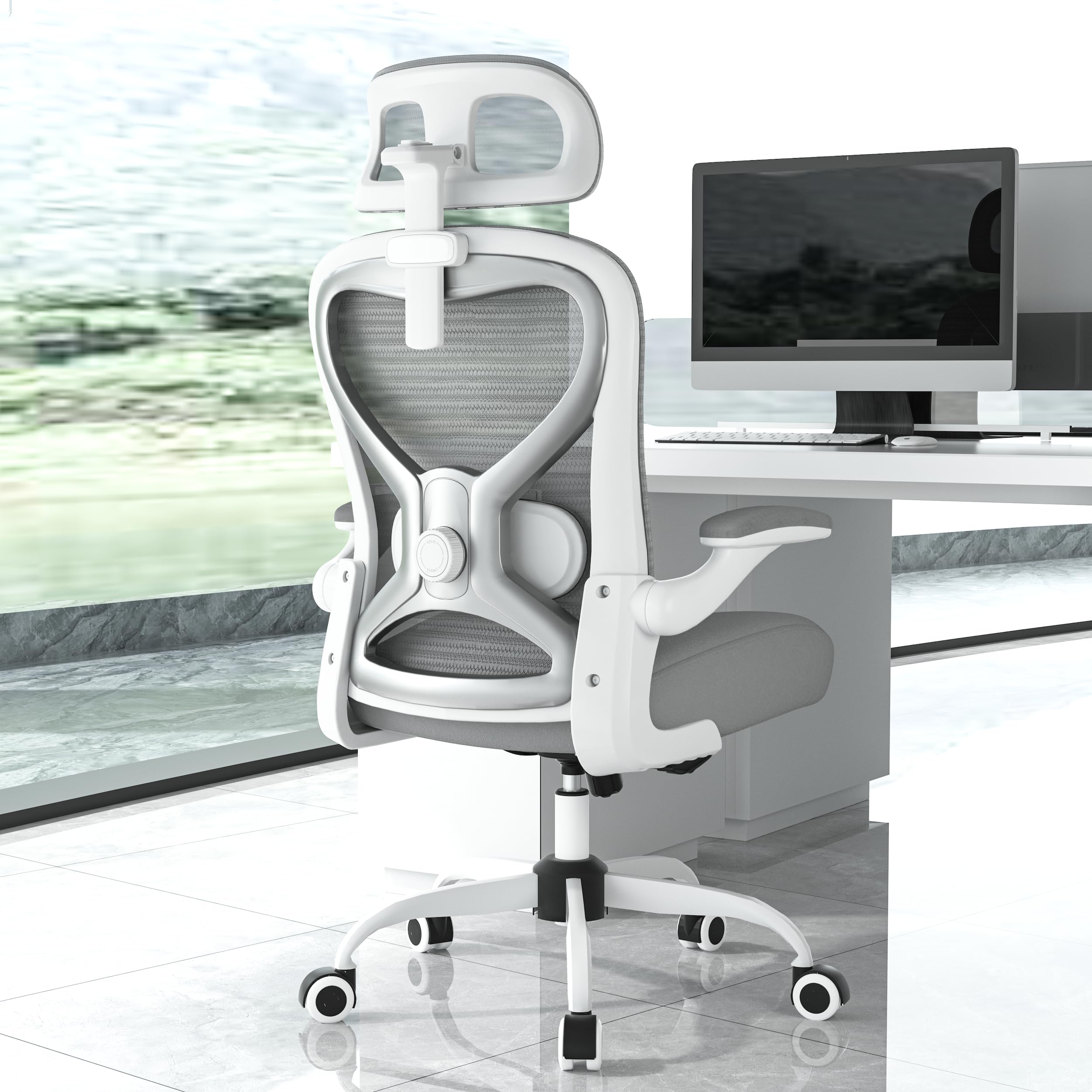
The gray variant of the CASASIO line shares the same virgin foam seat and dual-direction lumbar cushion as its black counterpart, but the color option appeals to lighter-toned home offices and studios where black furniture feels too heavy. The 2D adjustable lumbar — moving both vertically and in depth — remains the key differentiator from cheaper chairs that only allow up-and-down positioning. This level of customization directly addresses the variation in lumbar spine curvature across different body types.
The hourglass back shape narrows at the waist, which naturally keeps the lumbar support positioned correctly even when you shift sideways or cross a leg. The 3D headrest mirrors the adjustment found in the black model, allowing independent tuning of height, depth, and tilt angle. The flip-up armrests clear the way for desk tucking, and the overall silhouette is compact enough for smaller office footprints.
The weight capacity sits at 300 pounds, slightly lower than the Nexthro but still sufficient for most users. The nylon frame and swivel base glide smoothly, and the tension-adjustable rock function helps maintain motion without sacrificing lumbar contact. If the black aesthetic does not fit your workspace, this gray version delivers identical lumbar performance without compromise.
Why it’s great
- 2D lumbar cushion adjusts in depth and height for precise fit
- Hourglass back keeps support aligned during movement
- Virgin foam prevents premature seat collapse
Good to know
- Armrests lack width or pivot adjustment
- 300-pound limit is lower than some competitors in this tier
6. Dowinx Big and Tall Office Chair
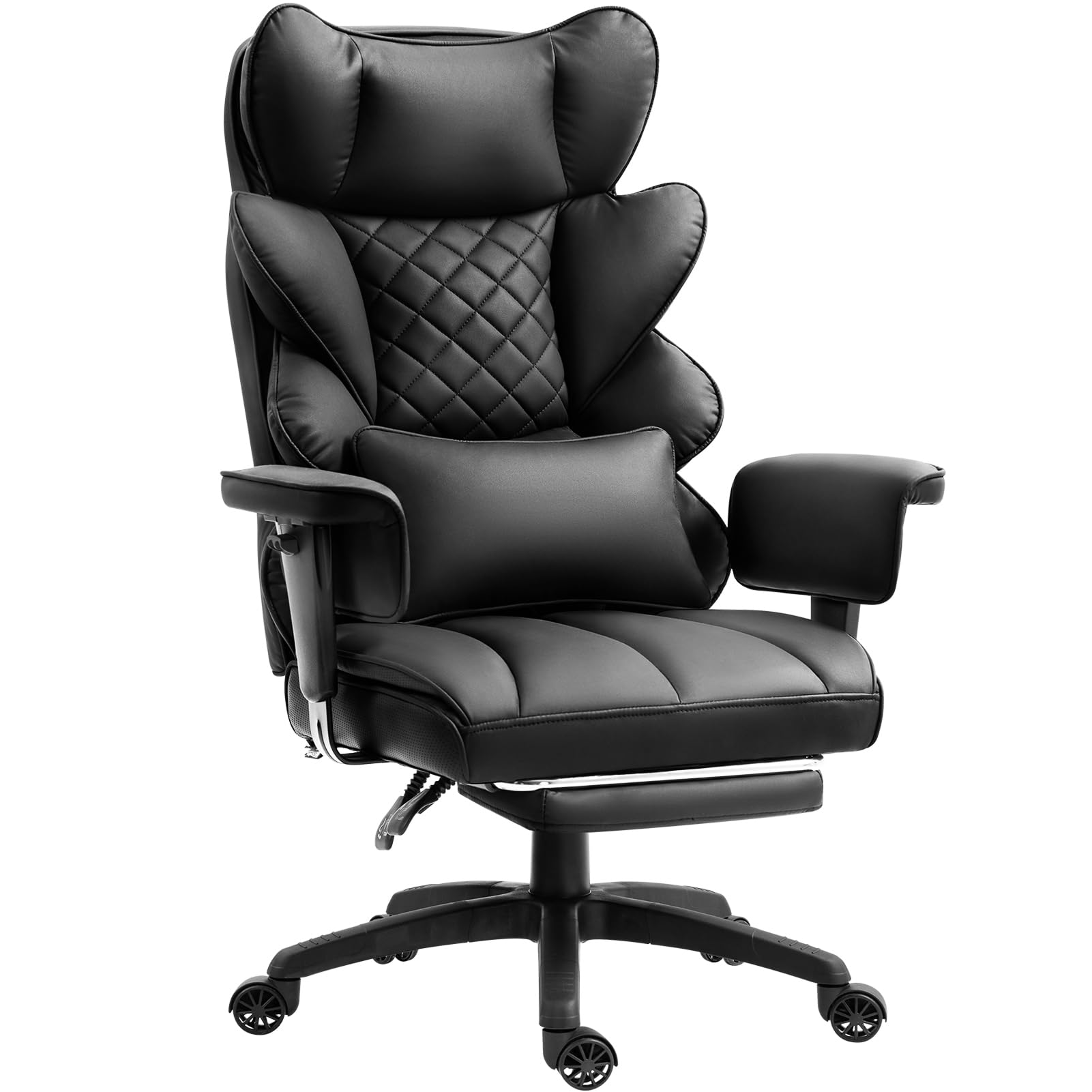
The Dowinx takes a radically different approach to lumbar support: instead of a foam pad, it uses individual pocket springs similar to those found in high-end sofas. Each spring responds independently to your weight, contouring to the exact shape of your lower back and hips without the uniform resistance of a foam block. This creates a sofa-like sensation that users with broader frames often prefer over the firmer feel of memory foam.
The double-layered backrest combines a soft cushioning layer against your spine with a supportive outer layer that prevents you from sinking too deeply into the recline. The chair offers a 90 to 135-degree tilt range, giving you the option to sit upright for work or lean back for reading without losing lower back contact. The padded armrests adjust in height but not width, which is a common limitation in this category.
Available in PU leather or breathable tech cloth, the Dowinx prioritizes durability and a premium appearance over strict ergonomic adjustability. The lumbar support here is more about the spring system’s adaptive contouring than manual dials or sliders. This works best for users who want a chair that feels like a lounge seat during long gaming or streaming sessions, with enough lumbar presence to prevent slumping.
Why it’s great
- Pocket spring system adapts to body shape for custom comfort
- Wide 135-degree recline supports both work and relaxation
- Double-layered backrest prevents lower back collapse
Good to know
- Lumbar support is passive, not manually adjustable
- PU leather can trap heat; tech cloth option is recommended for warmer climates
7. Marsail Ergonomic Office Chair
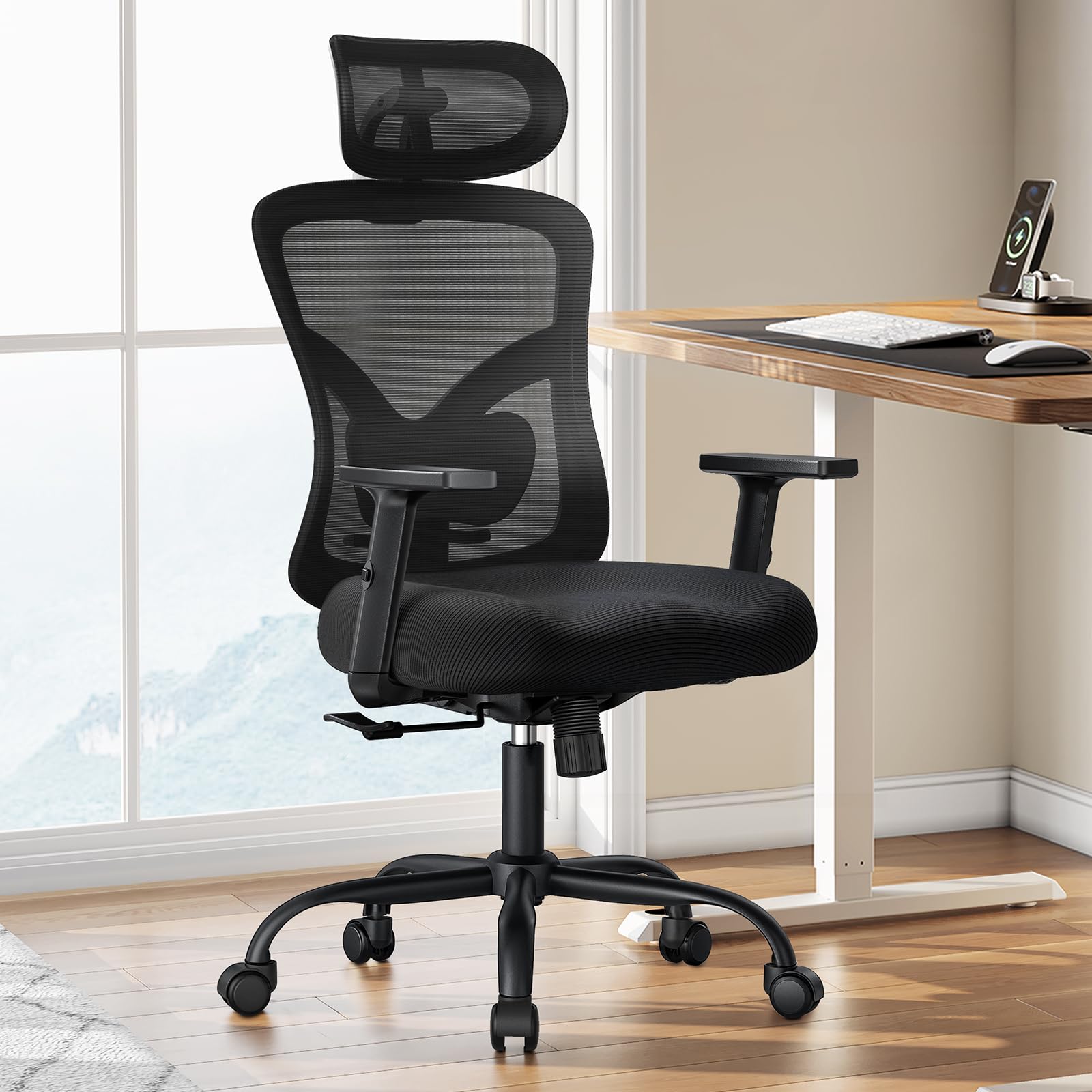
This chair brings genuine lumbar adjustability to a budget-conscious price point. The 2.4-inch vertical adjustment range on the lumbar pad lets you shift support up or down to target the hollow of your lower back, a feature rarely found in entry-level chairs. The soft, enhanced lumbar pad applies gentle forward pressure without feeling like a hard block is digging into your spine — important for users with pre-existing back sensitivity.
The 2D headrest tilts 45 degrees and adjusts 2.8 inches in height, providing coordinated neck support that pairs with the lumbar pad to maintain a straight spinal column. The 3.15-inch thick seat cushion uses high-density natural sponge foam that balances softness with enough rebound to avoid early sagging. The breathable mesh backrest keeps air moving, reducing sweat during longer sessions.
Optimized for users up to 5’11”, this chair sits at a slightly smaller scale than the Nexthro or CASASIO models. The 300-pound weight capacity and Class 3 gas lift provide solid stability, and the 90 to 130-degree tilt range covers standard work and break positions. For anyone stepping up from a basic unbranded task chair, the Marsail delivers measurable lumbar improvement at the lowest entry cost in this lineup.
Why it’s great
- Height-adjustable lumbar pad at a budget-friendly entry point
- 2D headrest coordinates with lumbar for neck support
- Breathable mesh back keeps you cool
Good to know
- Optimized for users up to 5’11” — taller frames may feel cramped
- Lumbar pad does not adjust forward or backward, only vertically
FAQ
How do I know if the lumbar support is hitting the right spot on my spine?
Can a standalone lumbar cushion replace a chair with built-in support?
Does firmer foam always mean better lumbar support?
Why does my current lumbar support make my back hurt more after an hour?
Is a memory foam lumbar cushion better than an inflatable one?
Final Thoughts: The Verdict
For most users, the best lumbar support for office chair winner is the Nexthro Ergonomic Chair because its four-way lumbar adjustment and 400-pound capacity cover the widest range of body types and sitting preferences in a single package. If you want adjustable forward-depth support that matches your exact lumbar curve, grab the CASASIO Ergonomic Chair (Black). And for pure pressure relief on your existing chair without buying a whole new seat, nothing beats the C CUSHION LAB Seat Cushion.