Standard disposable diapers often hide synthetic dyes, chlorine-bleached pulp, and fragrance chemicals against newborn skin. Parents searching for a cleaner alternative face conflicting labels and greenwashing claims. The difference between a “plant-based” diaper and a genuinely low-tox one comes down to material certifications and what touches the skin.
I’m Emma — the founder and writer behind Baby Bangs. Over the past decade I’ve cross-referenced ingredient lists, GOTS certification databases, and dermatological testing results to separate true low-tox diapers from clever marketing.
This guide walks through five thoroughly vetted options. Whether you prefer cloth or disposable, the common thread is verified material safety. low-tox diapers prioritize unbleached organic cotton, plant-derived topsheets, and third-party testing over vague “natural” claims.
How To Choose The Best Low-Tox Diapers
Low-tox diapering means prioritizing what touches your baby’s skin and what goes into the environment during manufacturing. That starts with material sourcing and ends with independent testing. Here are the three most critical factors to evaluate.
Certifications That Actually Mean Something
Not all “natural” labels are created equal. GOTS (Global Organic Textile Standard) certification for cloth diapers means the cotton is grown without synthetic pesticides and processed without toxic chemicals. For disposable options, look for OEKO-TEX Standard 100 certification, which screens for hundreds of harmful substances including heavy metals and formaldehyde. Dermatest approval adds an extra layer of skin-safety validation. Skip brands that use vague terms like “plant-based” without backing it with an independent certification.
What’s In the Core and Topsheet
The topsheet and absorption core are the two zones most likely to contain hidden toxins. Chlorine-bleached wood pulp can leave behind trace dioxins, which are known endocrine disruptors. True low-tox diapers use unbleached pulp or viscose from bamboo processed without chlorine. The inner absorbent layer should use fluff pulp or cotton rather than superabsorbent polymers laced with sodium polyacrylate, a known skin sensitizer for some babies.
Cloth vs Disposable: The Trade-Offs
Cloth diapers from organic cotton (like OsoCozy and Esembly) offer the lowest chemical load because you control what touches your baby’s skin and the wash routine eliminates buildup from synthetic additives. The upfront cost is higher but the per-wear cost drops significantly. Premium disposable low-tox options like Eco by Naty and ECO BOOM eliminate chlorine bleaching and synthetic fragrances, making them a practical alternative for families who cannot commit to laundering cloth diapers. Both approaches work if the materials are independently verified.
Quick Comparison
On smaller screens, swipe sideways to see the full table.
| Model | Category | Best For | Key Spec | Amazon |
|---|---|---|---|---|
| Esembly Inner 3-Pack | Cloth | Blowout prevention, reusable system | 100% GOTS organic unbleached cotton | Amazon |
| Eco by Naty Size 2 | Disposable | Hypoallergenic sensitive skin protection | 100% plant-based materials on skin | Amazon |
| Hello Bello Size 2 | Disposable | Budget-friendly premium disposable | Free from parabens and phthalates | Amazon |
| ECO BOOM Size 2 | Disposable | Bamboo-based softness, active babies | Viscose from bamboo topsheet, chlorine-free pulp | Amazon |
| OsoCozy Flat Dozen | Cloth | Multi-use cloth starter set | 27″x30.5″ GOTS organic birdseye cotton | Amazon |
In‑Depth Reviews
1. Esembly Cloth Diaper Inner – 3-Pack

Esembly’s two-piece cloth system starts with this fitted cotton inner, which uses a butterfly-layered absorbent core that stays trim while holding moisture away from skin. The unbleached organic cotton construction means no chlorine residues or synthetic top sheets touch your baby. Real reviews note zero blowouts even with skinny-legged babies who leaked through pocket diapers, which directly solves the most frustrating cloth diapering pain point.
The inner works with a separate waterproof outer (sold separately) and fits from 7 to 17 pounds using adjustable waist snaps and stretchy leg openings. OEKO-TEX 100 certification plus independent safety testing against both US and EU standards makes this one of the most verified low-tox options available. The three-pack gives you a solid trial run before committing to the full stash of 24-30 inners recommended for full-time use.
Parents switching from disposables to cloth often worry about leaks. Esembly’s design eliminates that fear — reviewers report hours of leak-free wear and better sleep for babies who previously woke from wetness. The inner washes clean without special soaking and dries quickly, reducing the laundry burden that turns some families off cloth diapering.
Why it’s great
- GOTS-certified unbleached organic cotton eliminates chemical concerns entirely
- Butterfly-core design prevents blowouts better than pocket diapers
- OEKO-TEX 100 and independent safety testing provide peace of mind
- Washes clean without special prep and dries quickly
Good to know
- Requires separate waterproof outer covers (sold separately)
- Full-time cloth diapering needs 24-30 inners, which is a significant upfront investment
- Size 1 only fits up to 17 lbs, meaning a second size is needed as baby grows
2. Eco by Naty Eco-Friendly Baby Diapers Size 2

Eco by Naty takes a different approach to low-tox than most disposable brands: the layer that touches your baby’s skin is made entirely from plant-based materials — sugar cane, corn, wood pulp, and cotton — rather than the polyethylene or polypropylene used in conventional diapers. That eliminates the plastic contact layer that can trap heat and moisture against sensitive skin. The brand has operated in Sweden since 1995 and backs its claims with independent sustainability certifications.
The absorption core uses chlorine-free pulp and superabsorbent fibers derived from plant sources, which tackles both the toxicity and the plastic-waste problems simultaneously. Parents of newborns with eczema or chronic diaper rash report noticeable improvement after switching. The flex-fit waist and leg elastics use natural rubber rather than synthetic alternatives, further reducing potential irritants.
The trade-off is absorbency speed. Real reviews occasionally note that overnight wear requires a change sooner than with synthetic competitors. For daytime use the performance is solid. The compostable outer layer (in industrial facilities) appeals to families who track landfill impact, though most home composting setups cannot process diapers.
Why it’s great
- No plastic layer touches baby’s skin — all plant-based topsheet
- Hypoallergenic with independent Dermatest approval and OEKO-TEX certification
- Chlorine-free pulp and no synthetic fragrances
- Plant-based materials are industrially compostable
Good to know
- Absorbency is slightly lower than synthetic competitors for overnight use
- Higher per-diaper cost at the premium tier
- Not suitable for home composting — requires industrial facility
3. Hello Bello Diapers Size 2 – 120 Count

Hello Bello has carved a niche as a mainstream disposable that avoids the worst chemical offenders without commanding premium-tier pricing. The brand explicitly avoids parabens, phthalates, and synthetic fragrances in the diaper core and back sheet. The cloth-like outer feel reduces the plasticky crinkle of standard disposables, and the surprise pattern packs add a bit of fun to diaper changes without resorting to chemical-ink prints.
The absorbency core uses fluff pulp and superabsorbent polymer, which is standard in the industry but not chlorine-free. For parents prioritizing low-tox, this remains a solid mid-range option because the elimination of phthalates and fragrances removes the two most common irritants linked to allergic contact dermatitis. The 120-count bulk pack brings the per-change cost down significantly versus premium disposables.
The wetness indicator strip is a practical feature for new parents who struggle to judge when a diaper needs changing. Real reviews praise the fit for babies with average builds, but some note the leg elastics can gap on very thin thighs, leading to leaks. The brand’s subscription model offers convenience but locks families into auto-delivery, so factor that into your buying decision.
Why it’s great
- No parabens, phthalates, or synthetic fragrances at a competitive price point
- Soft cloth-like feel reduces plastic noise and irritation
- Wetness indicator simplifies change timing for new parents
- Bulk 120-count pack lowers per-change cost significantly
Good to know
- Pulp is not chlorine-free, which may concern families avoiding all dioxins
- Leg elastics can gap on very thin legs, causing occasional leaks
- Subscription model requires active management to avoid unwanted auto-shipments
4. ECO BOOM Diapers Size 2 – 102 Count
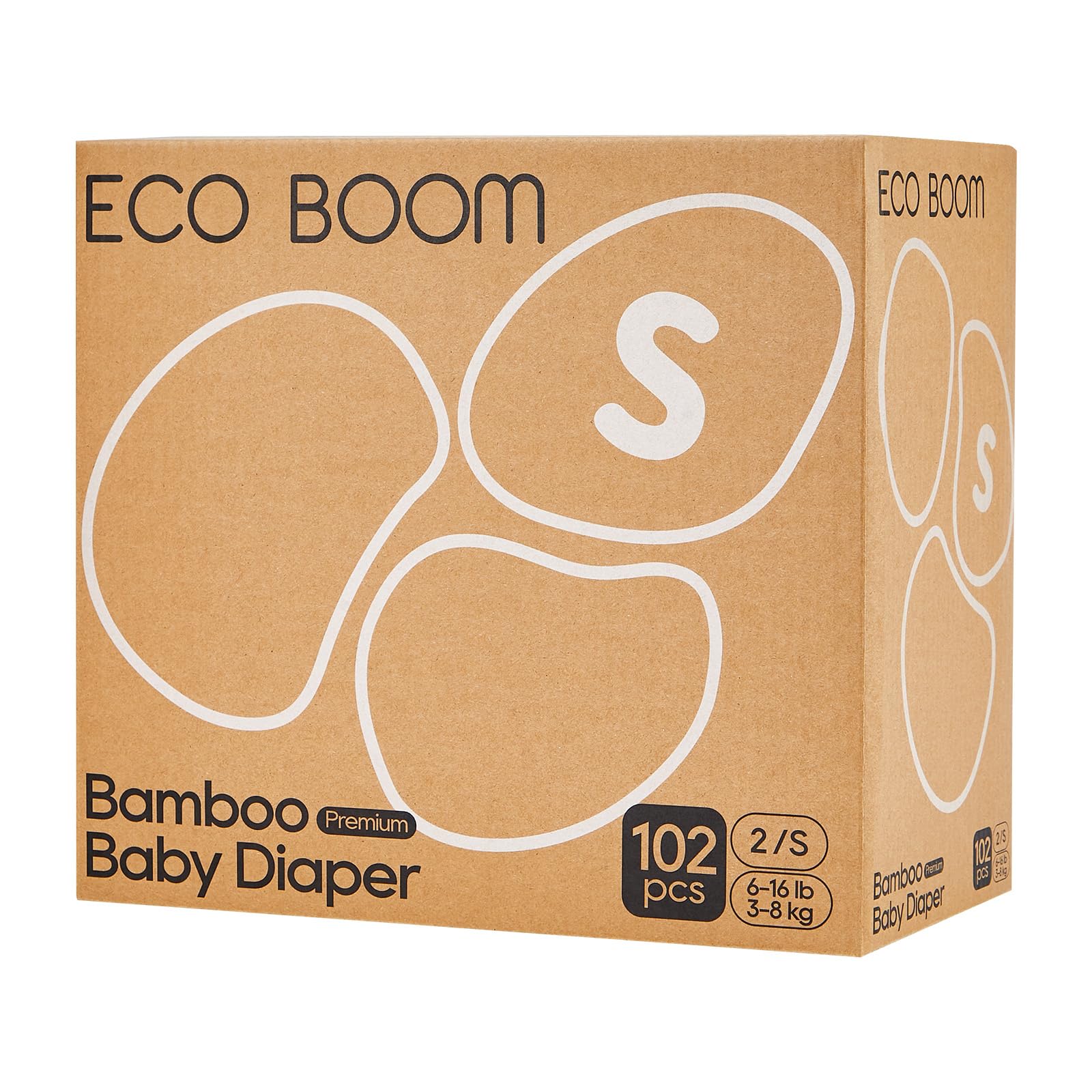
ECO BOOM takes the bamboo route: both the topsheet and back sheet are made from viscose derived from bamboo, which feels noticeably softer against newborn skin than standard polypropylene topsheets. The pulp used in the absorption core is processed with chlorine-free bleaching, eliminating the dioxin concern that plagues many conventional disposables. The brand has earned Dermatest certification for skin-friendliness and non-irritation, adding a meaningful independent check.
A smart detail is the inclusion of natural aloe oil in the diaper’s surface layer, which provides a gentle barrier for babies prone to irritation. The triple elastic eartips and velcro tape are designed to prevent the tight marks and cuts that active babies can get from stiffer diapers. The German-sourced absorption material handles typical daytime wetness without issue, and the bulk pack keeps the cost per change in the mid-range zone.
Real reviews consistently mention the softness as the standout feature, but a minority report that the absorbency core struggles with heavy overnight wetting. The bamboo viscose production process also has environmental trade-offs (water and chemical use during fiber processing) that some eco-conscious families might want to research. Still, for parents prioritizing baby skin feel over absolute environmental perfection, this is a strong low-tox contender.
Why it’s great
- Bamboo viscose topsheet is exceptionally soft against sensitive skin
- Chlorine-free pulp eliminates dioxin concerns
- Dermatest certified for non-irritation
- Natural aloe oil in surface layer provides gentle skin protection
Good to know
- Overnight absorbency may not match synthetic alternatives for heavy wetters
- Bamboo viscose processing raises environmental questions about water and chemical use
- Some users report a slight chemical smell upon opening the pack
5. OsoCozy Organic Flat Cloth Diapers – Dozen

OsoCozy’s flat cloth diapers strip away all complexity: a single layer of GOTS-certified organic birdseye cotton measuring 27 by 30.5 inches. No inserts, no snaps, no waterproof layers. You fold and fasten as needed, which makes these the most versatile low-tox option in the lineup. Beyond diapering, the dozen flats double as burp cloths, changing pads, bibs, and even household cleaning cloths, reducing the total number of items you need to buy.
The 100% organic cotton construction ensures zero chemical residues from pesticides or chlorine bleaching reach your baby’s skin. Birdseye weave provides superior absorbency and dries much faster than quilted prefolds because there is no bulk to hold moisture. This makes the wash routine simpler: no soaking, no special detergents beyond fragrance-free options. The dozen pack gives you enough for a full rotation if you are willing to wash every two days.
The learning curve is real. Flat diapers require a folding technique (like the origami fold or angel wing fold) and a separate fastener (snappi or pins) that disposable users find frustrating at first. Once mastered, the system is the cheapest per-wear option here and the most sustainable. Parent reviewers who stick with it praise the total absence of diaper rash and the ability to customize fit for their baby’s build.
Why it’s great
- GOTS-certified 100% organic birdseye cotton eliminates all chemical concerns
- Multi-use as burp cloths, bibs, changing pads — reduces total baby gear
- Fast drying time compared to quilted prefolds
- Lowest per-wear cost of any option on this list
Good to know
- Requires learning folding techniques and separate fasteners (snappi or safety pins)
- Single-layer flat means less absorbency than fitted diapers for overnight use
- No waterproof layer — requires separate cover for leak protection
FAQ
What does “low-tox” actually mean for diapers?
Are bamboo diapers automatically low-tox?
Can cloth diapers really be more low-tox than disposables?
What is the best disposable option for sensitive skin?
Final Thoughts: The Verdict
For most families seeking the most complete low-tox solution, the low-tox diapers winner is the Esembly Cloth Diaper Inner 3-Pack because it combines GOTS-certified organic cotton, OEKO-TEX safety verification, and proven blowout prevention in a reusable system that eliminates chemical concerns entirely. If you want a disposable that keeps plastic off the skin, grab the Eco by Naty Size 2. And for the lowest per-change cost with total material transparency, nothing beats the OsoCozy Organic Flat Cloth Diapers.